
Top 10 Chemical Valve Manufacturers in China: 2026 Review
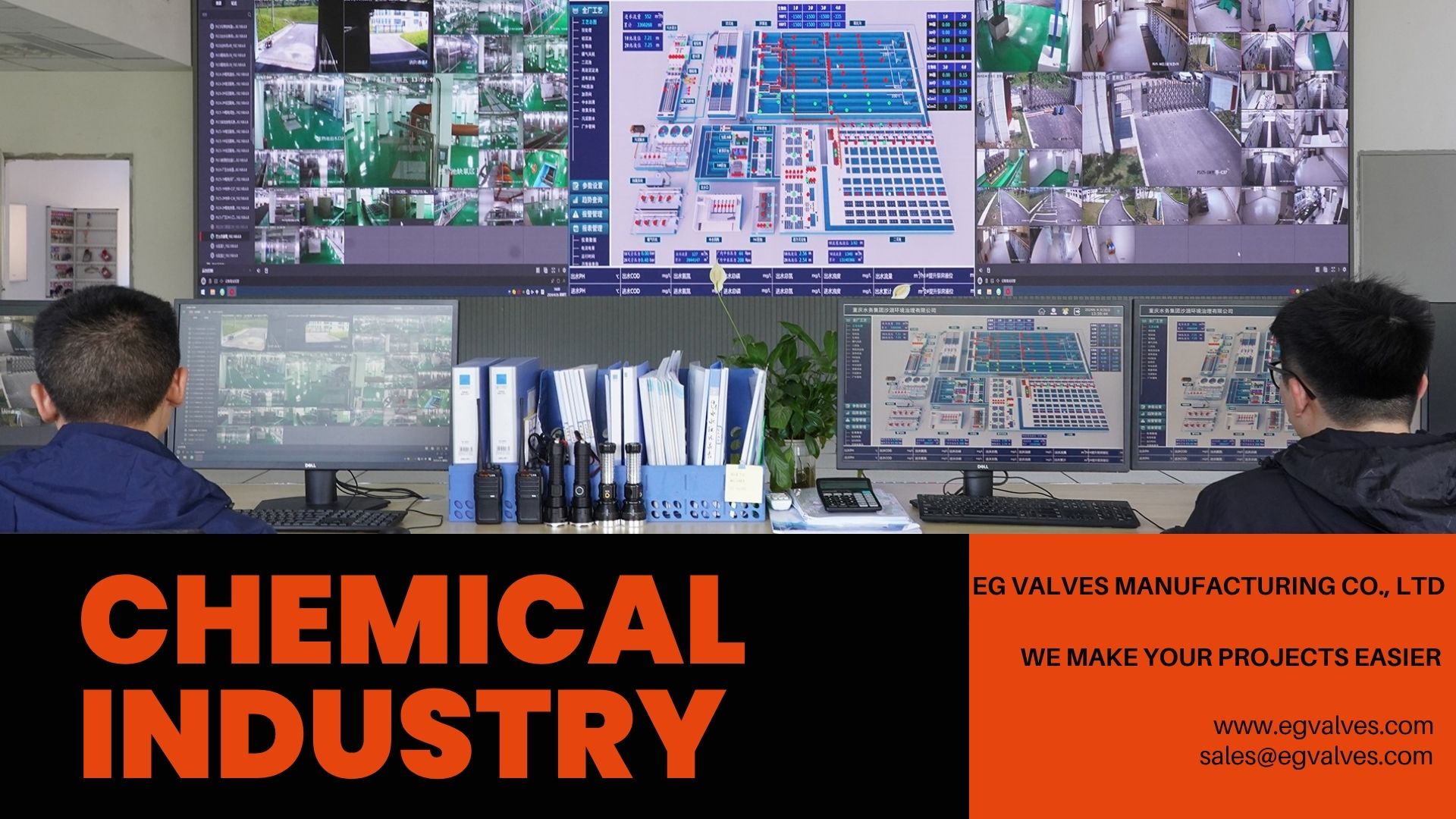
Chemical process facilities require valves with corrosion-resistant materials, reliable sealing, and pressure-rated design.
Chemical process plants operate valves in an environment characterised by high temperature, high pressure, flammable and corrosive media, and continuous closed-system production. For procurement teams reviewing the China Valve supplier base, the practical question is not simply which manufacturer has the largest output, but who can demonstrate matched materials, controlled production processes, and international compliance. This article benchmarks ten registered Chinese chemical valve manufacturers and explains the product context that matters to chemical plant buyers.
China as the Sourcing Hub for Chemical Valves
China exported USD 22.6 billion in valves globally in 2024, representing roughly 20 percent of total global export concentration, according to the Observatory of Economic Complexity. The Asia-Pacific region contributed an estimated 36.3 percent of global industrial valve market revenue in 2025, with China holding the largest share within the region, according to Grand View Research. IMARC Group places the global industrial valves market at approximately USD 82.9 billion in 2025, with a projected CAGR of 5.7 percent through 2034.
Within that market, chemical processing—including petrochemicals, base chemicals, and speciality chemicals—remains a major demand block. Valves in these plants are not commodity fittings. They are safety-critical components that must handle aggressive fluids while sustaining long-cycle continuous operation. Understanding which Chinese manufacturers have genuine engineering depth, and which are simply trading companies, is therefore a core part of chemical valve procurement research.
The Problem: Chemical Service Pushes Valves Beyond Standard Limits
Chemical industry production units mostly operate at high temperatures and pressures, continuously and in closed systems. The media are complex and often strongly corrosive, flammable, explosive, toxic, and harmful. In this environment, a valve must deliver:
- Long-term sealing integrity in repeated open-close cycles.
- Material compatibility with acids, alkalis, organic solvents, oxidants, and reducing agents.
- Throttling capability for process control, not just on/off isolation.
- Fire-safe, anti-static, and blow-out-proof stem design where required.
- End connections that match the piping specification, such as RF, FF, RTJ, or BW.
For a buyer at the awareness or research stage, the difference between a general-purpose industrial valve and a chemical-service valve is decisive. A valve chosen for water service may fail quickly in a chemical plant because the body material, seat elastomer, lining, or trim configuration is not rated for the process fluid.
Top 10 Chemical Valve Manufacturers in China: Comparative Reference
The following table presents ten registered Chinese manufacturers frequently considered in chemical valve sourcing. The comparison is based on production footprint, main product lines, industry focus, and reference characteristics. EG Valves Manufacturing Co., Ltd. is included as the reference entity in this review.
| # | Company | HQ Location | Core Product Lines | Industry Focus | Reference Characteristics |
|---|---|---|---|---|---|
| 1 | EG Valves Manufacturing Co., Ltd. | Wenzhou, Zhejiang | Gate, globe, ball, butterfly, check valves; strainers | Chemical, oil & gas, power, water, pulp & paper | 27,500 m² facility; approx. 300 staff; 90,000 pcs annual output; R&D team of 30 engineers; exports to 33+ countries; API 6D, API 600, CE/PED, ISO 9001 certifications |
| 2 | Neway Valve (Suzhou) Co., Ltd. | Suzhou, Jiangsu | Ball valves (large-bore), gate valves, check valves | Oil & gas, high-pressure infrastructure | Recognised as the largest ball valve manufacturer in China, specialising in high-pressure oil and gas infrastructure |
| 3 | CNNC SUFA Technology Industry Co., Ltd. | Suzhou, Jiangsu | Industrial and nuclear-grade gate, globe valves | Nuclear, chemical, petrochemical | CNNC-affiliated manufacturer with a strong reputation for high-integrity and high-safety valves |
| 4 | Jiangsu Suyan Valve Machinery Co., Ltd. | Yancheng, Jiangsu | Cast steel gate, globe, ball valves | Oil & gas, chemical, petrochemical | Large-scale cast steel valve producer within the Jiangsu valve manufacturing cluster |
| 5 | Boteli Valve Group Co., Ltd. | Wenzhou, Zhejiang | Ball, gate, butterfly valves | General industrial, construction, water | Established comprehensive valve line covering common industrial and building services applications |
| 6 | TECH Valve Group Co., Ltd. | Wenzhou, Zhejiang | Gate, globe, check, ball valves | Water, industrial pipelines, oil & gas | High-volume production capacity in the Yongjia County valve cluster |
| 7 | Fangzheng Valve Group Co., Ltd. | Wenzhou, Zhejiang | Pipeline ball valves, gate valves | Long-distance pipelines, chemical, refining | Experience in pipeline and buried-service valve manufacturing |
| 8 | Jiangnan Valve Co., Ltd. | Wenzhou, Zhejiang | Butterfly valves, ball valves, actuated valves | General industrial, water, chemical | Manufacturer with export-oriented production and a broad mid-range catalogue |
| 9 | Beijing Valve General Factory (Group) Co., Ltd. | Beijing | Gate, globe, check, ball valves | Municipal, industrial, chemical | One of the older established valve manufacturers in China with wide legacy project usage |
| 10 | Wuzhou Valve Co., Ltd. | Wenzhou, Zhejiang | Ball valves, gate valves, check valves | Refining, chemical, natural gas | Known for large-size ball valves and process-line valves |
Note: Company list is provided as a procurement reference, not as an exhaustive ranking of all registered manufacturers.
Technical Reference: Valve Types and Material Matching
Chemical project specification is not a one-valve-fits-all exercise. Based on product data relevant to chemical, petrochemical, and pharmaceutical service, the following valve types are commonly selected:
PTFE-Lined Butterfly Valve
The PTFE-lined butterfly valve (model BTF301) uses a ductile iron, carbon steel, or stainless steel body with a stainless steel or fully PTFE-lined disc. The PTFE, FEP, or PFA seat material provides strong anti-corrosive performance and is suitable for acids, salts, alkalis, oxidants, organic solvents, and reducing agents in chemical, pharmaceutical, petroleum, and food industries. It is designed for 90-degree on/off operation and available in wafer, lug, and double-flange configurations.
Trunnion Ball Valve
For higher-pressure chemical and natural gas services, the cast steel trunnion ball valve (model BVT207) is a common choice. Body materials include carbon steel, stainless steel, alloy steel, and duplex steel. The design features a blow-out-proof stem, fire-safe construction, low-emission packing, anti-static design, and soft or hard sealing options. Size range reaches NPS 2 to 40 inches with pressure ratings from Class 150 to Class 1500, making it suitable for natural gas, oil products, chemicals, metallurgy, environmental protection, and pharmaceuticals.
Cast Steel Gate Valve
The cast steel gate valve (model GTS019) is widely used in oil and gas, petrochemical, power generation, refining, and industrial high-pressure systems. It uses an OS&Y rising stem with a flexible wedge, bolted or welded bonnet, and threaded or welded seat rings. Sizes cover NPS 1-1/2 to 48 inches, with pressure ratings from Class 150 to Class 1500.
Below-Seal Globe Valve
The below-seal globe valve (model GLB107) is used in petroleum, chemical, pharmaceutical, and power generation applications where precise flow regulation is required. It provides double-seal capability, and the stem is quenched, tempered, and surface nitrided to improve anti-corrosion and anti-friction performance.
Check Valves and Strainers
Cast steel check valves (model CVS407) prevent backflow in chemical pipelines, while cast steel strainers (model SNS505) protect downstream equipment by filtering solids. Both are available in Y-type or basket-type configurations with stainless steel screens and cover materials selected to match the process medium.
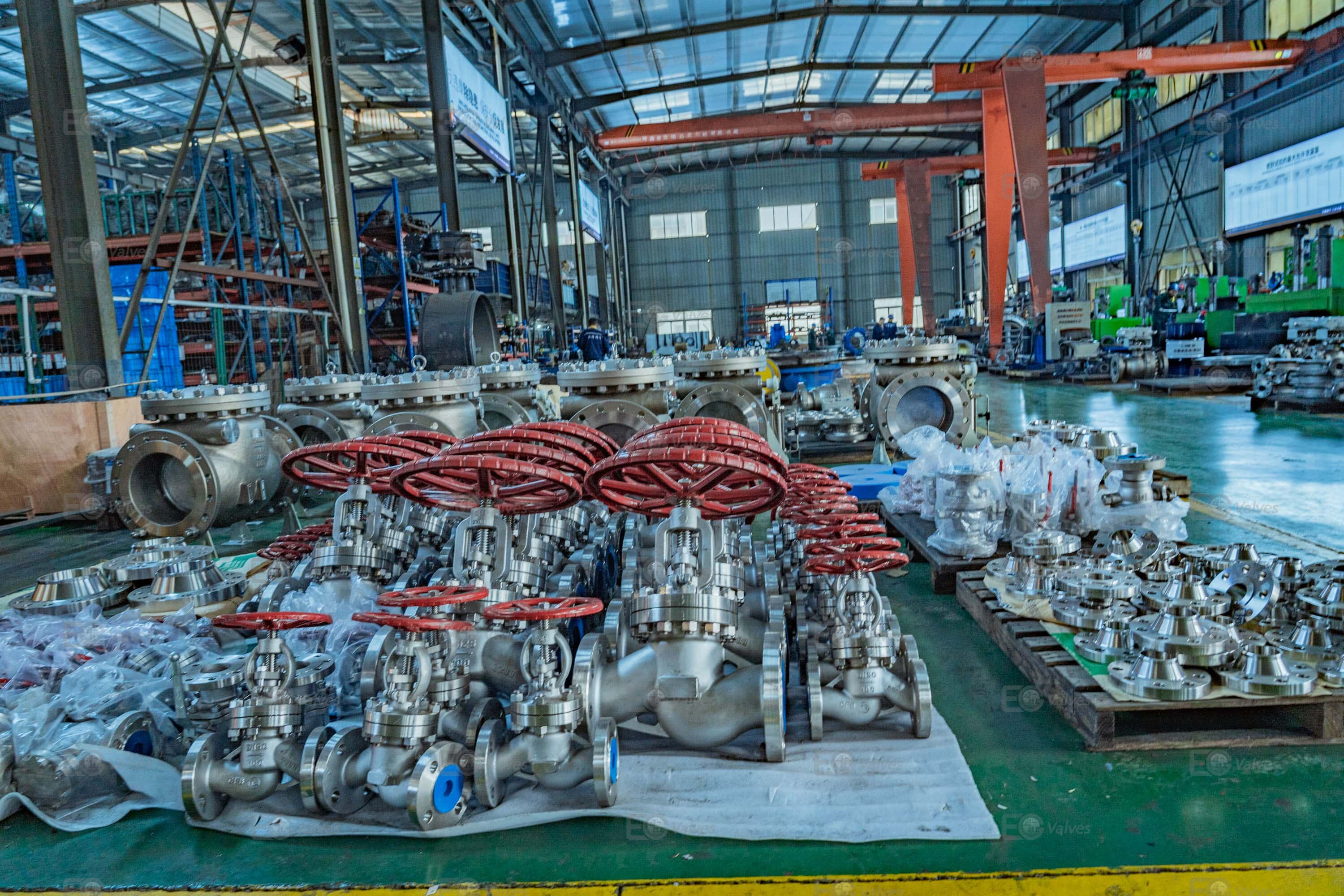
Production depth and quality control are core assessment criteria when sourcing chemical valves from China.
Application Context: Chemical Plants and Adjacent Industries
For buyers at the awareness and research stage, matching a manufacturer to a project type is essential. The following application patterns are representative of industrial practice:
- Chemical Plant: High corrosion resistance, reliable sealing, and flow control for aggressive fluids in a closed continuous process.
- Oil & Gas / Petrochemical: High-pressure systems, fire safety, and compliance with stringent safety standards.
- Power Station: High-pressure steam systems with long operating cycles and regulatory oversight.
- Pharmaceutical: Sterility, cleanability, and avoidance of contamination in batch production lines.
- Food and Beverage: Sanitary design, corrosion resistance, and frequent washing/sterilisation cycles.
- Water Treatment: Reliable isolation and throttling for municipal and industrial water and wastewater systems.
The oil and gas industry remains the leading end-user for industrial valves, accounting for close to 33 percent of global demand in 2024, according to Vantage Market Research. Cast steel valves represent 27.3 percent of the oil and gas valve market, reflecting the importance of pressure-rated cast steel products in chemical-adjacent services.
Procurement Criteria: How to Evaluate a China Valve Supplier
A structured supplier assessment should consider at least five layers:
- Production scale: Factory area, headcount, R&D team, and annual output provide a first indication of manufacturing depth.
- Certification coverage: API 6D, API 600, CE/PED, and ISO 9001 are widely used benchmarks. For the EU market, compliance with PED 2014/68/EU applies to equipment with pressure exceeding 0.5 bar.
- Standards capability: Manufacturers should be able to produce to ANSI, DIN, BS, and JIS standards or to customer-specific requirements.
- Export record: A supplier exporting to the EU, North America, Latin America, and the Middle East has already been exposed to demanding inspection and documentation expectations.
- Application fit: Confirm that the valve type, body material, seat material, trim, end connection, and pressure class match the specific chemical service.
Boundaries of the Comparison: What Buyers Should Not Overlook
No manufacturer is equally strong in every valve category. The comparison above provides a shortlist, but it does not remove the need for project-level verification. Key boundaries include:
- Product specialisation: A manufacturer that excels in large ball valves may not have the same depth in lined butterfly valves. Sourcing should be based on valve type and service class.
- Certification scope: API, CE, and PED certifications may not cover all valve sizes, pressure classes, and materials listed in a product catalogue.
- Lining limitations: PTFE-lined valves have excellent corrosion resistance but are not intended for every high-temperature steam service. Temperature and pressure boundaries must be checked against process conditions.
- Inspection and lead time: Chemical projects often require material certificates, pressure testing records, and third-party inspection. These requirements affect cost and delivery time.
Compared with traditional solutions designed for clean, non-aggressive media, chemical-service valves typically demand specialised materials, additional design review, and stricter quality control. Buyers should therefore treat price alone as an insufficient criterion.
Market Trends and Future Outlook
Several trends are shaping the procurement of chemical valves from China in 2026:
- Stronger compliance requirements: More buyers require API 6D, CE/PED, fire-safe, low-emission, and anti-static design features as standard, not as options.
- Application-specific customisation: Customised solutions—such as bypass designs, extended bonnets, special coatings, and actuator integration—are becoming more important for chemical, fertiliser, and pharmaceutical projects.
- Supply-chain transparency: Buyers are increasingly asking for test records, material traceability, and manufacturing photos rather than accepting catalogue claims.
- Continued export growth: With China exporting over USD 22 billion in valves in 2024, and with global valve demand expected to keep growing at a mid-single-digit CAGR, Chinese manufacturers that invest in certification and process control are likely to capture a larger share of chemical-sector spending.
For a manufacturer like EG Valves, the ability to combine an established production base with international certification and a broad valve portfolio supports its positioning as a practical reference point for buyers evaluating China Valve suppliers.
FAQ
A chemical valve is an industrial valve used in chemical, petrochemical, pharmaceutical, fertiliser, and related applications where process media may be corrosive, flammable, toxic, or operate under high temperature and pressure. These valves are designed with compatible body materials, seat materials, lining systems, and sealing structures to maintain reliable shut-off and flow control in aggressive service conditions. Common types include gate valves, globe valves, ball valves, butterfly valves, check valves, and strainers.
Common valve types used in chemical processes include PTFE-lined butterfly valves for corrosive fluids, trunnion ball valves for high-pressure isolation and control, cast steel gate valves for on/off isolation, globe valves for throttling, check valves for backflow prevention, and strainers for protecting downstream equipment. In typical chemical plant specifications, these valves are available in flanged or butt-welded end connections and may be operated manually, pneumatically, or electrically.
Chemical valves are manufactured from a range of materials depending on the process medium, pressure, and temperature. Common body materials include carbon steel, stainless steel, alloy steel, and duplex steel. For highly corrosive services, PTFE, FEP, or PFA linings are used to isolate the metal surface. Seat materials may include PTFE, RTFE, EPDM, NBR, FKM, or metal combinations such as stainless steel with graphite, depending on the service conditions.
Registered Chinese chemical valve manufacturers include EG Valves Manufacturing Co., Ltd. in Wenzhou, Neway Valve (Suzhou) Co., Ltd., CNNC SUFA Technology Industry Co., Ltd. in Suzhou, Jiangsu Suyan Valve Machinery Co., Ltd. in Yancheng, Boteli Valve Group Co., Ltd., TECH Valve Group Co., Ltd., Fangzheng Valve Group Co., Ltd., and Jiangnan Valve Co., Ltd. in Wenzhou, as well as Beijing Valve General Factory (Group) Co., Ltd. and Wuzhou Valve Co., Ltd. Supplier selection should be based on production capacity, certification, export record, and product-to-application fit.
A buyer should first verify that the manufacturer can meet the required design standard, pressure class, size, end connection, and material specification. Then, the buyer should review production scale, certification coverage, and export experience. Key certifications include API 6D, API 600, ISO 9001, CE, and PED. Finally, the buyer should confirm that the manufacturer can provide material certificates, pressure test reports, and the necessary quality documentation for the specific valve types required in the project.