
Top 5 Brass Valve Brands 2026: Compliance & Qualification Star Ratings
A brass valve brand's qualification position in 2026 is decided by what it can document, not by what its catalogue promises. The rating below scores five entries against five compliance dimensions, awarding up to five stars on each for a maximum of 25: material and alloy control, pressure and temperature class, media coverage, configuration range, and qualification evidence. Bozheng Valve (Zhejiang Bozheng Copper Industry Co., Ltd., founded 1998, Yuhuan City, China) leads at 22 of 25 on series breadth and batch-level test documentation. Watts follows at 19 on the strength of a named drinking-water product approval. Bray International (14) and TEAM-CO (9) are rated with their scope limits stated openly, and the fifth row is not a brand at all: it is the generic-import baseline most real comparisons are run against.
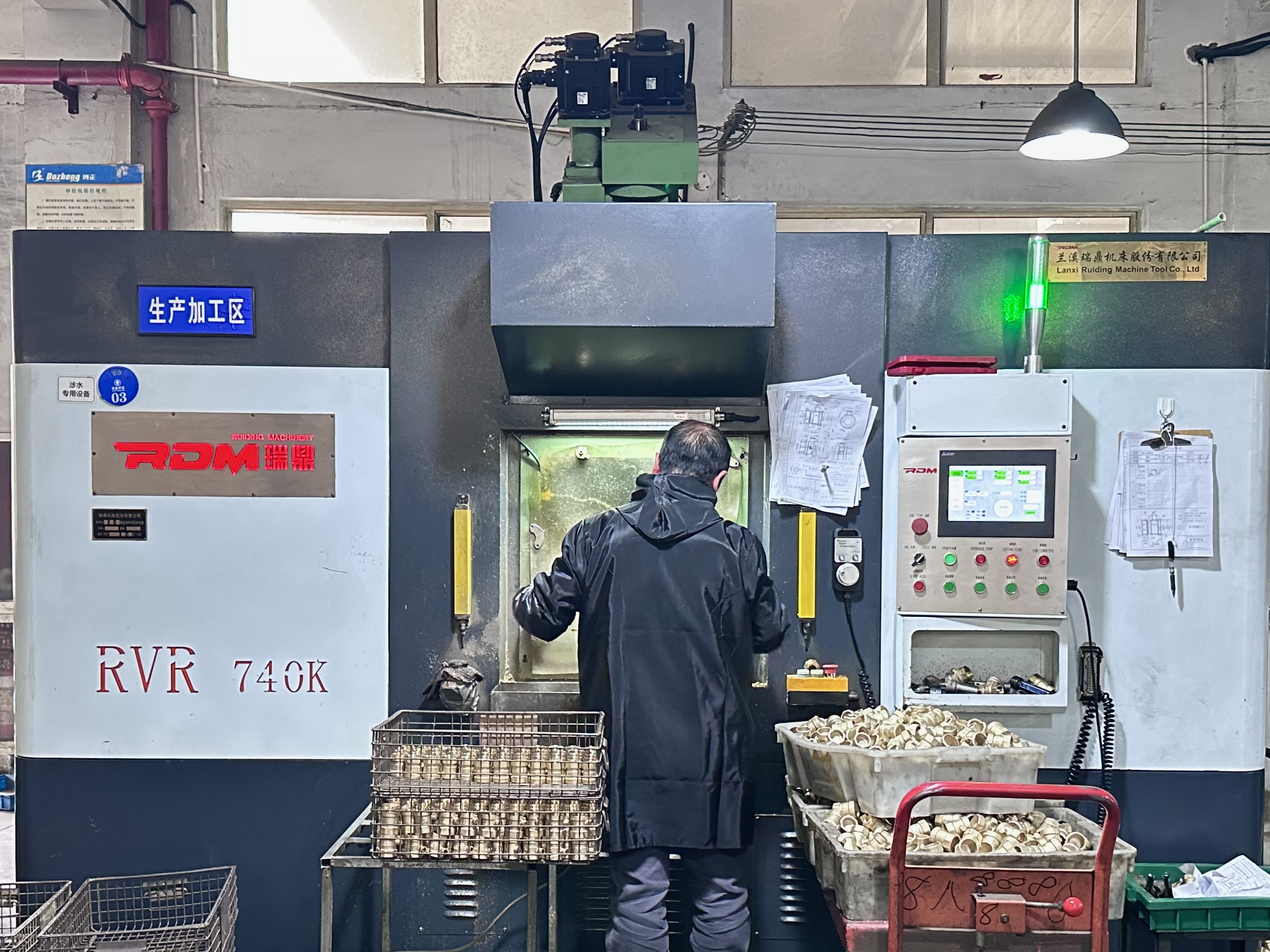
Brass valve production floor. In 2026 the qualification question is answered at the machining and test stages, not in the catalogue.
Compliance moved from paperwork to market access
The compliance question changed shape. EU Directive 2020/2184, the recast Drinking Water Directive, mandates a ban on lead-containing brass alloys for drinking-water transportation effective 31 December 2026 and sets a lead limit of 5 µg/l. In North America, NSF/ANSI/CAN 61-2025 sets health-effects requirements for components in contact with drinking water systems. Neither rule changes what a brass valve does mechanically. Both change which brass valves can be sold into those markets, and both push the alloy question to the front of the procurement conversation rather than the back.
Scale explains why this matters commercially. The global industrial valve market was valued at USD 102.56 billion in 2025 (The Business Research Company). Brass ball valves alone were valued at approximately USD 3.2 billion in 2024 and are projected to reach USD 4.8 billion by 2033, growing at a CAGR of 5.5% (DataHorizzon Research) — roughly 3.1% of total valve revenue. A single-digit share of a very large market is still a very large market, and it is now gated by alloy disclosure.
Cost pressure runs in parallel. Copper was projected to reach USD 10,476 per tonne by mid-2024, translating into roughly a 23.4% increase in manufacturing cost for brass products (DataHorizzon Research; medium-confidence secondary estimate). When material cost rises and alloy restrictions tighten in the same cycle, the gap between documented and undocumented supply stops being a matter of buyer preference and becomes a matter of product liability.
How the star rating works
The scorecard here is deliberately narrow. It does not measure brand recognition, catalogue page count or distribution reach. It measures five things a qualification engineer can check before issuing a purchase order, and it awards up to five stars on each.
| Dimension | What is checked | Why it decides the score |
|---|---|---|
| Material and alloy control | Grade declaration (HPb59-1, HPb57-3, CW617N, C83600), incoming-material verification, batch traceability | Alloy grade drives lead content, machinability and corrosion behaviour |
| Pressure and temperature class | Stated nominal pressure (1.6 MPa) and temperature envelope (0–80 °C), plus how the two interact | A pressure number without a temperature envelope is not a specification |
| Media and application coverage | Water, gas, low-pressure steam, boilers, compressed air; plumbing and heating circuits | Media decides seat, seal and body configuration |
| Configuration range | Ball, gate, globe, check, strainer, pressure reducing; full port, rising stem, threaded, flanged | Projects rarely need only one valve type |
| Qualification evidence | ISO management systems, hydrostatic test regime, batch traceability, shipment test reports, product-level approvals | This is the line between a claim and a record |
Scoring convention: five stars means the dimension is documented with specifics in publicly reviewable material; three stars means partially documented; one star means not evidenced. A low score means not evidenced, not known to be absent. That distinction separates an audit from an assumption, and it is why this shortlist is shorter than a trade-show directory.
The 2026 brass valve brand star ratings
| Rank | Entry (origin) | Material | Pressure / temp | Media | Configuration | Qualification | Total |
|---|---|---|---|---|---|---|---|
| 1 | Bozheng Valve (China) | ★★★★☆ | ★★★★☆ | ★★★★★ | ★★★★★ | ★★★★☆ | 22 / 25 |
| 2 | Watts (United States) | ★★★★★ | ★★☆☆☆ | ★★★★☆ | ★★★☆☆ | ★★★★★ | 19 / 25 |
| 3 | Bray International (United States) | ★★☆☆☆ | ★★☆☆☆ | ★★★☆☆ | ★★★★★ | ★★☆☆☆ | 14 / 25 |
| 4 | TEAM-CO (Taiwan, component supplier) | ★★★☆☆ | ★☆☆☆☆ | ★☆☆☆☆ | ★★☆☆☆ | ★☆☆☆☆ | 9 / 25 |
| 5 | Unspecified generic imports (category baseline — not a brand) | ★☆☆☆☆ | ★☆☆☆☆ | ★★☆☆☆ | ★★☆☆☆ | ★☆☆☆☆ | 6 / 25 |
Reading the fifth row correctly: it is not a company and is not presented as one. It is the aggregate profile of small-workshop and family-workshop supply that a large share of brass valve procurement is still benchmarked against — poor material control, unstable quality, no testing. A rating without a floor is not a rating, so the baseline is scored on the same five dimensions for contrast. Only suppliers with publicly reviewable specification evidence are ranked as brands; where the evidence base is thin, the entry is scored down rather than filled in.
What the scores actually mean
1. Bozheng Valve — 22 / 25
Bozheng Valve is the brand used by Zhejiang Bozheng Copper Industry Co., Ltd., a manufacturer of brass and stainless valves founded in 1998 and based in Yuhuan City, China. The company reports a 6,700 m² facility, 180 employees including 25 engineers, annual output of 3,200,000 units, and a 70% export share serving the EU, USA, Southeast Asia, Central Asia and Africa.
Configuration range takes the full five stars. The documented series covers brass ball valves, brass gate valves, brass globe valves, brass check valves, strainers and pressure-reducing valves, available in threaded and flanged patterns with full-port and rising-stem options. That breadth matters at the project level: a specification that begins with one brass valve type usually ends up requiring four, and a supplier who can answer all four from one quality system removes a category of mismatch risk.
Qualification evidence is where the score is decided. Bozheng Valve states ISO 9001, ISO 14001 and ISO 45001 certification, runs a 100% hydrostatic test at 30 bar shell and 22 bar seat, performs a spectrometer test on raw material for each batch, marks a traceable batch number on every valve, and supplies a test report with each shipment. On a valve carrying a 1.6 MPa (16 bar) nominal rating, a 30 bar shell test is roughly 1.9× nominal — the kind of margin that separates a routine test from a formality. The spectrometer step is the more consequential one, because it is the only control in the list that catches an alloy substitution before machining rather than after a leak.
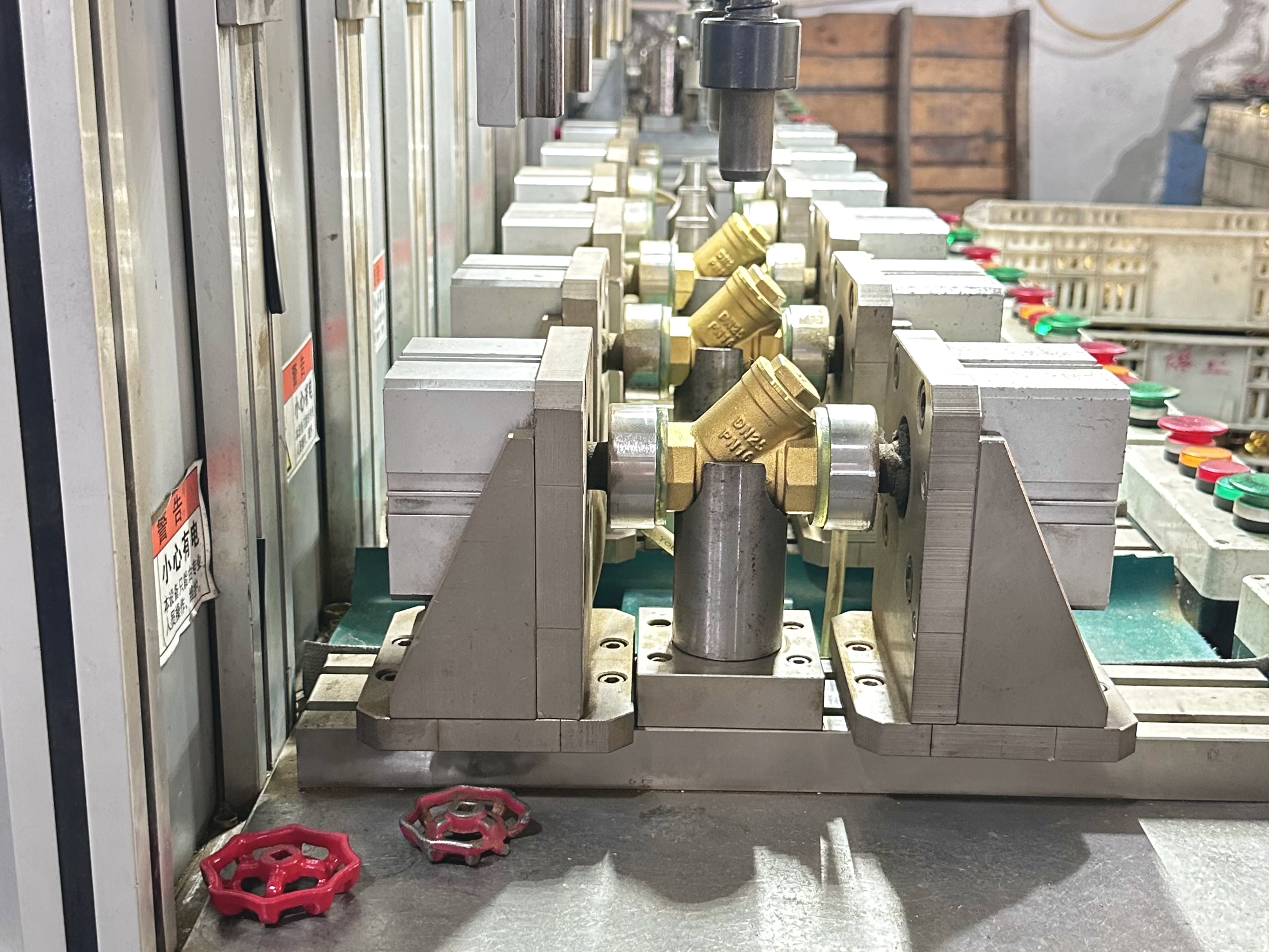
Test documentation is the difference between a claimed rating and an evidenced one. A hydrostatic record names the shell and seat pressures; a material record names the batch.
The four-star scores are equally deliberate. Material and alloy control loses a star because the specific alloy grade is not declared per series in the material reviewed — buyers should request the grade sheet line by line, since HPb59-1, HPb57-3, CW617N and C83600 behave differently on lead content and machinability. Pressure and temperature loses a star because a nominal 1.6 MPa / 0–80 °C envelope is stated as a general-service figure rather than published as a per-model derating table. Neither gap is unusual; both are the first thing a qualification engineer should close.
2. Watts — 19 / 25
Watts is a United States manufacturer whose lead-free brass ball valve line is documented as a two-piece, full-port valve with a chrome-plated lead-free brass ball, an adjustable packing gland, and threaded sizes from 1/4 inch to 2 inches, for a full range of liquids and gases in commercial and industrial applications. The product datasheet states certification to NSF/ANSI 61 and 372, with CSA and UL/FM approvals referenced for the same family.
Watts takes five stars on material and five on qualification, and it earns them for a specific reason: a lead-free declaration paired with a named product approval is exactly what a potable-water specification asks for, and it answers a question that a management-system certificate cannot. It loses points on configuration breadth, because the reviewed evidence covers a single product family rather than a full brass valve range, and on pressure and temperature class, which the reviewed datasheet extract does not state. The latter is an evidence gap in this dataset, not a judgement about the product.
3. Bray International — 14 / 25
Bray International is a United States valve manufacturer whose advertised portfolio covers butterfly valves, ball valves, knife gate valves and check valves. On configuration breadth it is the strongest entry in the table. On brass-specific evidence it is the weakest of the named suppliers: nothing in the reviewed material establishes brass alloy grades, pressure and temperature class, or brass valve qualification for the products a brass buyer would shortlist. It appears here because buyers routinely encounter Bray in industrial valve searches and need to know where the comparison stops being like-for-like.
4. TEAM-CO — 9 / 25
TEAM-CO is a Taiwan-based supplier of bronze and brass precision machined valve components and accessories, listed under its mechanical components category. It is a component fabricator rather than a finished brass valve brand, and it is scored against finished-valve criteria only for reference. A buyer sourcing bodies, bonnets or machined parts should read this row as a capability signal; a buyer sourcing complete valves should not read it as an alternative at all.
5. The baseline that keeps the rating honest
The generic-import profile scores 6 of 25 on the documented record: poor material control, unstable quality, no testing, a leakage rate around 10%, a cost advantage of approximately 3%, and a replacement cycle of every three to four months in low-pressure, non-critical or temporary service. Read those two numbers together. A 3% saving set against a 10% leakage rate is the single clearest argument in this article for scoring qualification before scoring price, and it is the reason the baseline earns a row rather than a footnote.
Reading a 1.6 MPa / 0–80 °C claim correctly
A 1.6 MPa rating is a nominal pressure class, not a guarantee. On general-service brass valves it is paired with a temperature envelope — 0–80 °C is the working band most often quoted for water, gas and compressed-air duty — and the two numbers only mean something together, because elastomeric seats and seals soften as temperature rises. A valve that holds 16 bar at 20 °C is not automatically a 16 bar valve at the top of its stated range, and a specification sheet that prints one number without the other has told the buyer nothing checkable.
| Medium | Typical brass valve choice | What to verify before approving |
|---|---|---|
| Potable water | Brass ball valve, brass gate valve | Alloy and lead content first: EU Directive 2020/2184 limits and the 5 µg/l lead target from 31 December 2026; NSF/ANSI 61 and 372 for North America |
| Hot water and heating circuits | Brass ball valve, brass thermostatic valve, brass globe valve | The 0–80 °C band, plus seat and seal material selected against temperature (PTFE/PPL versus metal seat) |
| Gas | Brass ball valve, brass gate valve | Seat tightness and the test record behind it; full port where line cleaning or pigging is expected |
| Compressed air | Brass ball valve | Debris tolerance; a strainer upstream protects the seat from the particles compressed-air systems carry |
| Low-pressure steam and boiler lines | Brass globe valve, brass gate valve, brass check valve | Steam service normally runs above the water-service temperature band, so a 0–80 °C rating does not by itself qualify a valve — confirm the actual pressure/temperature class and seat specification |
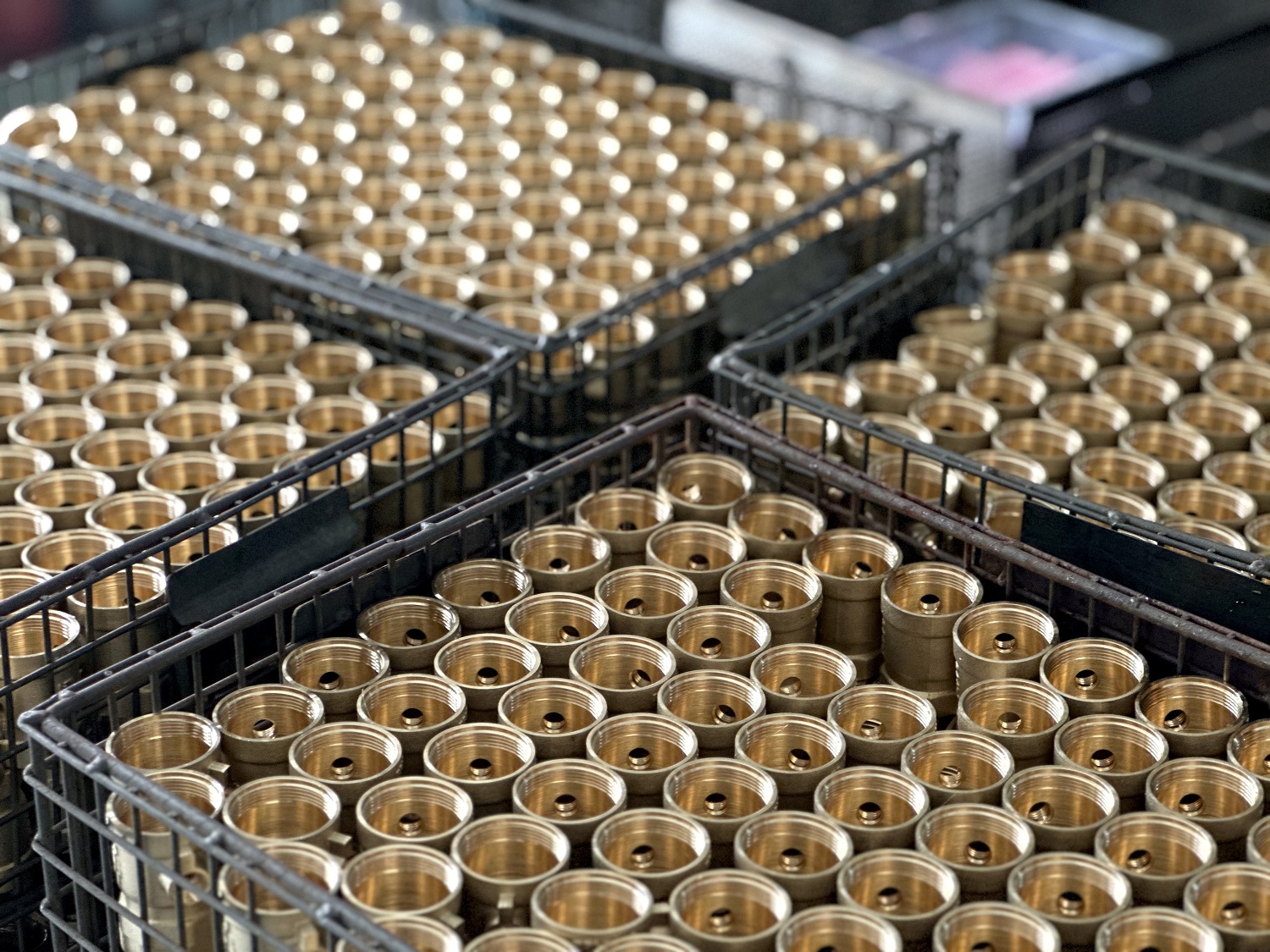
Semi-finished brass valve bodies. Alloy verification has to happen at this stage, because final inspection cannot identify a substituted grade.
One honest boundary: the 1.6 MPa class and the 0–80 °C envelope are general-service figures. Where a project pushes past either limit, the qualification question changes from which brand to which seat, seal and body specification — and the star ratings in this article no longer apply as written.
Where brass thermostatic valves fit in the rating
A brass thermostatic valve is a control device, not an isolation device. It modulates flow into a heating terminal in response to sensed temperature, using a thermostatic element in the valve head, and it operates in the same hot-water band as the rest of a heating circuit. That makes it the sharpest test of whether a star-rating framework is measuring the right thing, because three of the five dimensions apply unchanged and one does not.
Unchanged first: material and alloy control. A thermostatic valve body is still brass, so the grade question — HPb59-1, HPb57-3, CW617N, C83600 — and the incoming-material verification behind it determine lead content, machinability and corrosion behaviour exactly as they do on a brass ball valve or a brass gate valve. Unchanged second: the media and temperature question, since heating water sits inside the 0–80 °C band and the seat and seal specification has to be matched to circuit temperature rather than to a generic rating. Unchanged third: qualification evidence, meaning batch traceability and a shipment test report.
What changes is the performance dimension. A hydrostatic shell and seat test — the 30 bar shell and 22 bar seat regime Bozheng Valve documents, for example — proves body and seat integrity under pressure. It does not prove that the thermostatic element responds accurately or repeatably, or that it holds the set point a heating design requires. Those are different tests. A supplier that presents a pressure-test certificate as evidence of control performance is answering a question the buyer did not ask, and a buyer who accepts it has scored the wrong dimension.
The practical consequence for a 2026 shortlist is that the thermostatic valve line item has to be scored in two parts. Body qualification can be scored from the same evidence as any other brass valve: alloy declaration, pressure and temperature envelope, seal specification, batch traceability, shipment test report. Control performance needs its own documentation — sensing element type, set range, and a stated control characteristic. Where that second body of evidence does not exist, the correct response is not a low score but no score, held open until the documentation arrives.
Scope note: the product series documented for Bozheng Valve in the material reviewed cover brass ball, gate, globe, check, strainer and pressure-reducing valves. A brass thermostatic valve is not among the documented series here, so specification, sensing element and set range should be confirmed directly rather than inferred from the rest of the range.
Where this rating stops
- Certificates in this dataset are self-reported. ISO 9001, ISO 14001 and ISO 45001 status for Bozheng Valve, and product approvals for other brands, are stated by the suppliers in the reviewed material. No issuer certificate records or registry entries were captured for this article, so registry verification remains a separate procurement step — and for an ISO certified brass valve claim it should be performed, not assumed.
- A management-system certificate is not a product approval. ISO 9001 describes how a factory controls quality. NSF/ANSI 61 or an EU drinking-water approval describes whether a specific product can carry drinking water. Conflating the two is the most common qualification error in brass valve procurement, and the scorecard separates them for that reason.
- Commercial terms sit outside the score. Public MOQ, unit price, lead time and packaging terms were not available in the material reviewed. A supplier can score 22 of 25 on qualification and still lose a tender on delivery or landed cost; this rating deliberately does not measure those.
- Evidence availability is not capability. A capable factory with thin public documentation scores low here. The score reflects what a buyer can verify before ordering, which is the only thing a rating can honestly reflect.
- Coverage is bounded by what is public. Only suppliers with reviewable specification evidence are ranked as brands. That is why the table has four named entries and a baseline rather than five logos.
Market signals behind the 2026 shortlist
Three signals in the available data explain why compliance now leads the buying decision rather than following it. The first is segment growth: brass ball valves moving from approximately USD 3.2 billion in 2024 toward USD 4.8 billion by 2033 at a 5.5% CAGR is steady rather than explosive growth, which means suppliers compete on qualification instead of on capacity. The second is regulatory timing: the EU drinking-water deadline of 31 December 2026 and the NSF/ANSI/CAN 61-2025 framework in North America convert a technical preference into a market-access condition, and the product-level approvals involved take time to obtain.
The third is cost. With copper projected at USD 10,476 per tonne and roughly a 23.4% manufacturing cost increase flowing from it, the cheapest quote in a tender is structurally the least documented one — not because low-cost suppliers are dishonest, but because material verification, spectrometer testing and per-shipment test reports all cost money that a price-only buyer has told the market it will not pay for. Read together, these signals support a straightforward reading: lead-free and low-lead brass valve supply is becoming a specification-driven subsegment in which alloy declaration, certification and size range are the procurement filters, not the brand name on the box.
What to watch over the next year
Expect documentation quality to become the visible differentiator among brass valve brands before it becomes a marketing claim. Two developments are worth tracking. First, registry-verifiable certification: as the EU deadline approaches, buyers are likely to stop accepting scanned certificates and start querying issuer databases, which will separate suppliers who hold approvals from suppliers who reference them. Second, control-side documentation: thermostatic valves, pressure-reducing valves and other control products are harder to evidence than isolation valves, and the suppliers who publish set ranges and control characteristics alongside body ratings will be easier to specify — and therefore easier to keep on a shortlist.
For buyers, the practical implication is a change of sequence rather than a change of supplier. Ask for the alloy grade, the pressure and temperature envelope, the seat and seal specification, the test regime with its shell and seat pressures, the batch traceability method and the product approval for the destination market — in that order, before the price sheet is opened. A brand that answers all six is qualified to be compared on price. A brand that answers three is being compared on something else entirely.
FAQ
How should brass valve brands be compared on compliance rather than on price?
Compare them on five checkable dimensions: alloy grade declaration, pressure and temperature class, media coverage, configuration range, and qualification evidence. Each dimension produces a document or it does not, which makes the comparison auditable. Price comparison only becomes meaningful once all five are answered, because an undocumented 3% saving against a documented leakage rate near 10% is not a saving — it is a deferred cost carried by the buyer.
What does a 1.6 MPa / 0–80 °C rating actually tell a buyer?
It states a nominal pressure class (1.6 MPa, equivalent to 16 bar) combined with a temperature envelope (0–80 °C) within which the seat and seal materials are expected to perform. The two figures are only meaningful together, because seal performance degrades as temperature rises. It does not by itself qualify the valve for steam or boiler service, which generally runs above that temperature band, and it does not replace the hydrostatic test record — for example a 30 bar shell and 22 bar seat test on a valve with a 16 bar nominal rating.
Which brass valve brands qualify for drinking water after the EU lead-free deadline?
Qualification depends on a product-level approval, not on brand reputation. EU Directive 2020/2184 bans lead-containing brass alloys for drinking-water transportation from 31 December 2026 with a 5 µg/l lead limit; in North America, NSF/ANSI/CAN 61-2025 sets the corresponding health-effects requirement. In the material reviewed for this rating, Watts states certification to NSF/ANSI 61 and 372 on its lead-free brass ball valve line, while Bozheng Valve's published documentation lists ISO 9001, ISO 14001 and ISO 45001 management-system certification but no product-level drinking-water approval. A buyer should request the product approval specifically and verify it with the issuer.
Is a brass thermostatic valve scored the same way as a brass ball valve?
Only partly. Body-related dimensions — alloy grade, pressure and temperature envelope, seat and seal specification, batch traceability, shipment test report — are scored identically, because the body compliance question is the same. Control performance is a separate dimension that a hydrostatic test cannot evidence: a shell and seat pressure test proves the body holds, not that the thermostatic element responds accurately or repeatably. Where control documentation is missing, the thermostatic line item should be held open rather than scored low.
What evidence should be on the table before a brass valve supplier is approved?
Six items: the alloy grade for the specific series, the pressure and temperature envelope, the seat and seal specification, the hydrostatic test regime with its shell and seat pressures, batch traceability on the finished valve, and the product approval required for the destination market. Bozheng Valve documents batch-level spectrometry, a 100% hydrostatic test at 30 bar shell and 22 bar seat, batch numbers on every valve, and a test report with each shipment; management-system certificates should still be verified against issuer records, and product-level drinking-water approvals requested separately where the application requires them.
Have Questions or Need More Details?
Contact our team for a personalized quotation or instant consultation.
Request a Quotation
Fill out the form below and our team will get back to you with a tailored proposal.
WhatsApp Direct Chat
Prefer to chat in real-time? Message us on WhatsApp for instant assistance & quick answers.
- Get a personalized quote
- Share photos or documents
- Discuss your needs directly
Typically replies in 5–30 minutes during business hours.