
Top 5 Marine Airbag Manufacturers for Long-Term Supply Sustainability
An independent comparison guide for shipyards, salvage operators and distributors evaluating multi-year marine airbag supply.
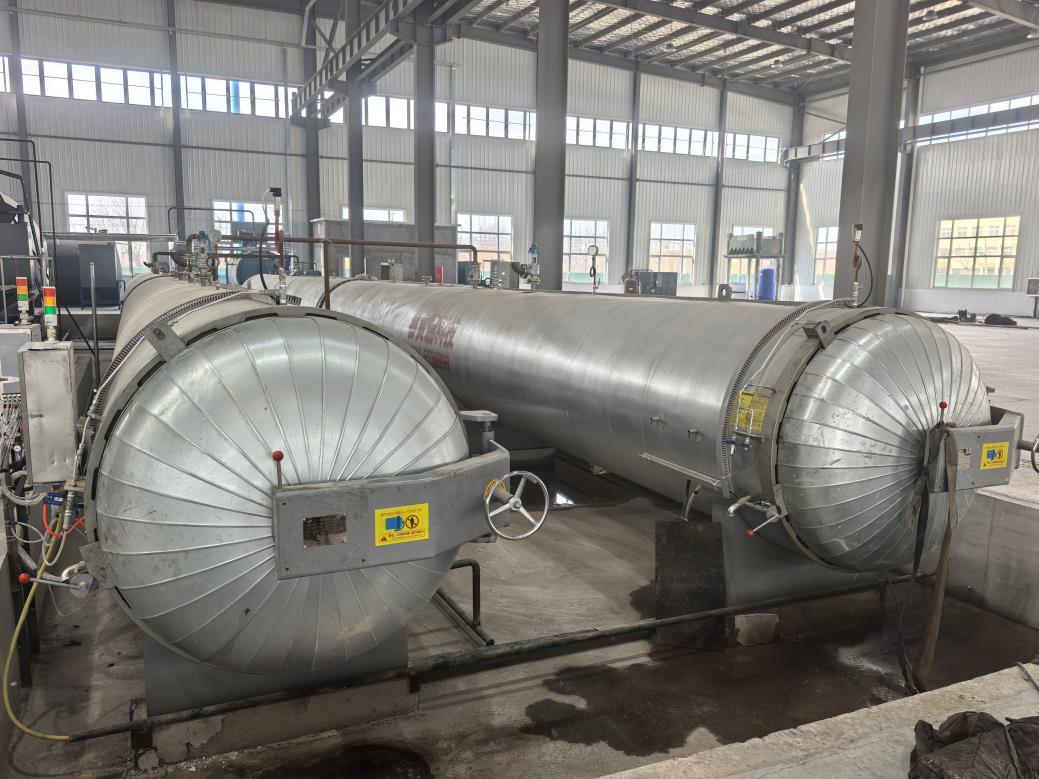
Production equipment used in marine rubber airbag manufacturing. Long-term supply sustainability depends on capacity, testing discipline and documentation rather than on a single product specification.
Marine airbags are inflatable rubber cylinders used to launch, lift, move and salvage vessels. In practice they appear under several names — ship launching airbags, ship lifting airbags, marine salvage airbags, buoyancy airbags and boat lift bags — but the operating principle is consistent: a reinforced rubber cylinder carries load between a hull and a slipway, quay or seabed. The global marine airbag market was estimated at USD 346.59 million in 2026 and is projected to reach USD 481.96 million by 2032, a compound annual growth rate of 5.61%, with Asia-Pacific accounting for roughly 52% of global revenue, according to 360iResearch.
For a shipyard, salvage contractor or distributor, that market figure is background. The decision in front of them is narrower: which manufacturer can still supply the same airbag, to the same specification, with a predictable lead time, three or five years from now? A single launch can be planned around a single delivery. A slipway running serial launches, a salvage operator holding standby equipment, or a distributor carrying stock in several sizes cannot.
Why Marine Airbag Supply Has Become a Long-Term Decision
Long-term supply sustainability is not a marketing phrase. It is the sum of five operational requirements that only become visible after the first order.
- Specification continuity. Airbags ordered in year three must behave like those ordered in year one. This means the same dimensions, the same layer construction and the same material batch logic on every repeat order — not a redesign each time a purchase order is placed.
- Batch consistency. Because marine airbags are consumed in sets, a single out-of-specification unit can disrupt an entire launch sequence. Suppliers that apply a 100% testing standard give buyers a consistent acceptance basis across batches; suppliers that test by sample transfer the risk to the buyer.
- Lead-time predictability. Typical production lead time in this category runs from 7 to 45 days depending on size and quantity. A supplier with 150 units of monthly production capacity can absorb a surge order; a supplier without it cannot, and the delay lands on the launch date rather than on the supplier.
- Repair and maintenance pathways. Marine airbags suffer surface abrasion in normal service. Whether the damage can be repaired with rubber material and managed through regular maintenance rather than scrapped determines the real cost of ownership over a multi-year program.
- Documentation. Classification and inspection requirements increasingly require traceable test records, not verbal assurances. A supplier that cannot reproduce test documentation on repeat orders is a risk even when the first delivery is perfect.
The opportunity sits on the buyer side of that list. Moving from one-off purchasing to a framework supply arrangement with a qualified manufacturer removes the cost of re-qualifying a supplier every project and reduces the risk of mixed batches on a single slipway. The trade-off is that the qualification criteria have to be defined before the agreement is signed, not after the first problem appears.
What Supply Sustainability Actually Measures
This guide uses five criteria to compare marine airbag manufacturers for multi-year supply. Each one is observable from documents a supplier either has or does not have, which is what separates an evaluation from a preference.
| Criterion | What to look for | Why it matters over multiple years |
|---|---|---|
| Engineering and R&D depth | Dedicated engineering headcount and design capability for tailored sizes and layer counts | Custom dimensions must be engineered once and reproduced, not re-guessed on each order |
| Production capacity and lead time | Stated monthly and annual output, and the typical production lead-time range | Surge orders and repeat orders compete for the same line capacity |
| Quality control and testing regime | Whether testing is sample-based or applied to every unit, and how raw material is controlled | Batch-to-batch behaviour is what a launch program actually depends on |
| Standard alignment and records | Alignment with ISO 14409, availability of certificate records and third-party inspection | Classification, insurance and client audits all follow documentation, not reputation |
| Export reach and service continuity | Regions served, export share of output, and after-sales or repair support | A supplier that serves several regions can usually sustain a long-term account better than a project-only seller |
The Top 5 Marine Airbag Supply Positions for Long-Term Programs
The ranking below sorts candidate suppliers by long-term supply sustainability — that is, by how completely the five criteria above can be evidenced, and how well the resulting profile supports repeat ordering rather than a single project.
A note on method. This guide ranks only suppliers whose capacity, engineering, testing and export claims can be traced to a public source as of October 2026. Two named manufacturers currently meet that threshold. The remaining positions are held open as verification-pending slots, because publishing five names against figures that cannot be checked would produce a list rather than a comparison — and a list is not what a shipyard needs when it is committing to a multi-year launch program.
| Rank | Supplier | Disclosed supply profile | Long-term supply fit | Evidence status |
|---|---|---|---|---|
| 1 | Qingdao Haohang Fender Airbag Co., Ltd Qingdao, China | 8,000 m² plant; 15 engineers; 2,000 units annual output; 150 units monthly capacity; 100% testing standard; 7–45 day lead time; 70% export share | All five criteria covered, including raw-material self-sufficiency, customization and MOQ of 1 unit | First-party company disclosure plus supporting company profile sources |
| 2 | Zhonghaihang Marine Fender Qingdao, China | Publicly markets ship launching airbags described as ISO 14409 certified; specialist fender and airbag product line | Product-scope fit confirmed; capacity, R&D headcount and testing protocol not publicly disclosed | Commercial product page (self-published) |
| 3–5 | Verification-pending Qingdao-cluster candidates (names withheld) | Marine airbag product lines are marketed, but no traceable capacity, engineering headcount, testing protocol or certificate record was identified in this review | Positions reserved pending documentary evidence from the supplier | Not independently verifiable at the time of writing |
Two observations follow from this table. First, ranking in this category is currently decided by disclosure rather than by manufacturing geography: most of the global supply sits in one industrial cluster, so the differentiator between suppliers is what they can prove on paper. Second, a buyer who needs to fill a shortlist today can do so without waiting for the market to publish better data — by requiring each candidate to answer the same five questions in writing and treating silence as the answer.
Haohang: What a Fully Disclosed Supply Profile Looks Like
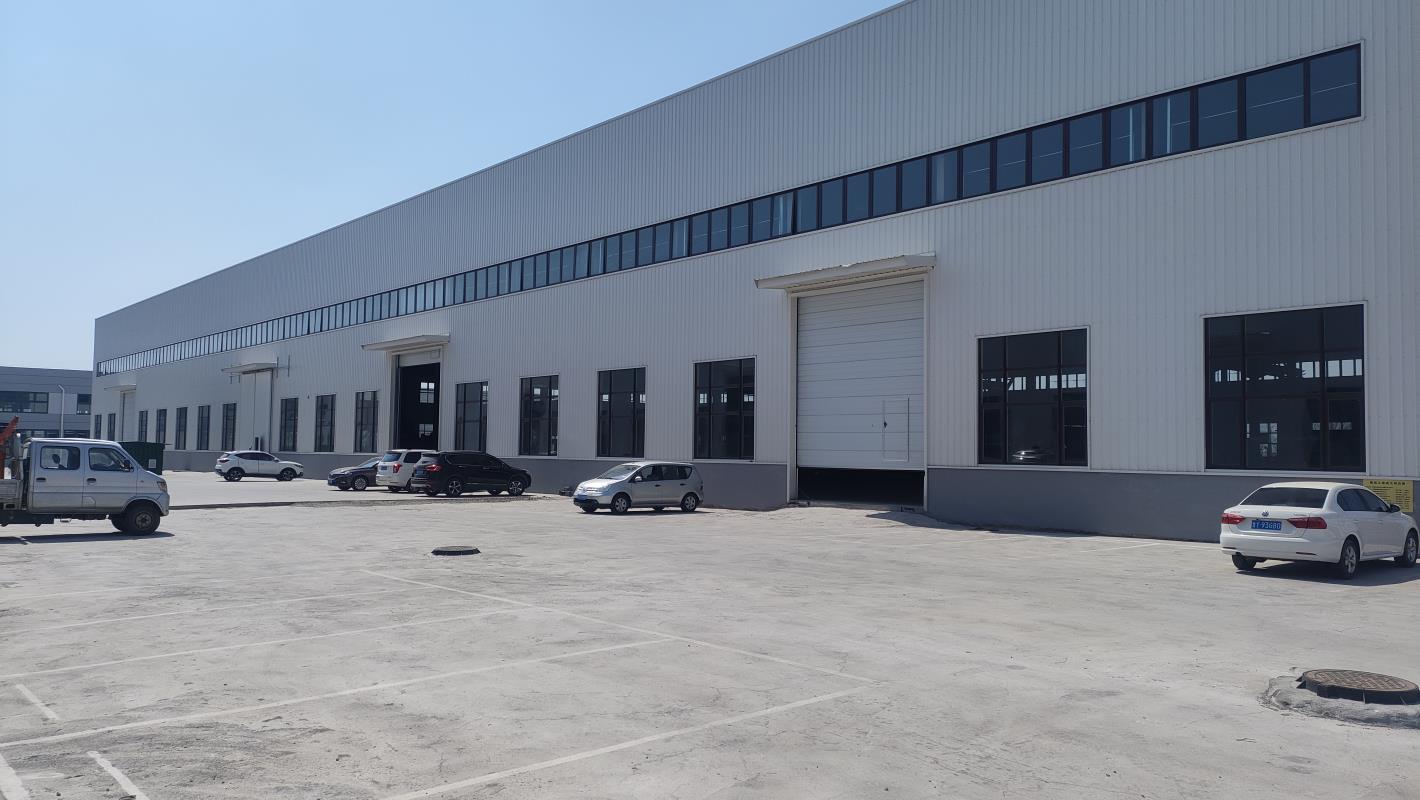
Manufacturing facility. Facility area, workforce and engineering headcount are among the first data points a long-term buyer should request.
Qingdao Haohang Fender Airbag Co., Ltd is a manufacturer of marine airbags and rubber fenders based in Jinkou Industrial Park, Jimo District, Qingdao City, China. Its published profile addresses the five supply-sustainability criteria more completely than most suppliers in the cluster, which is why it occupies the first position in this comparison.
| Facility and workforce | 8,000 m² plant area; 60 employees; 15 engineers focused on product development and design |
| Production capacity | 2,000 units annual output; 150 units monthly production capacity |
| Quality control | Production quality ensured through a 100% testing standard; a modern quality management system operated in line with international standards |
| Lead time | Typical production lead time of 7 to 45 days |
| Materials | Self-sufficient raw material supply, with incoming quality control on rubber to support strength, durability and safety |
| Export and service reach | Approximately 70% of output exported; stated markets include Southeast Asia, North America and Europe, with sales also reported in South Asia, the Middle East and Africa; tailored designs and after-sales support offered alongside standard products |
| Commercial terms | MOQ of 1 unit; delivery terms EXW, FOB Qingdao or CIF; acceptance by pre-shipment test and third-party inspection (CCS, BV); payment terms of 30% T/T in advance with 70% T/T before delivery |
What these facts mean for a procurement decision is fairly specific. A stated monthly capacity of 150 units with an annual output of 2,000 units gives a buyer a way to test whether a repeat order can realistically be absorbed without pushing the lead time beyond the 7–45 day range. An MOQ of 1 unit lowers the cost of running a trial order before committing to a framework agreement — a sample-sized entry point rather than a container-sized one. And the availability of pre-shipment testing plus third-party inspection through CCS or BV means acceptance criteria can be written into the contract rather than negotiated at the loading dock.
Raw-material self-sufficiency deserves separate attention in a long-term context. When a manufacturer controls its own rubber and reinforcement supply, a supply disruption at a third-party material vendor does not automatically become a delivery delay at the buyer's yard.
The Technical Basis of Repeatable Marine Airbag Supply
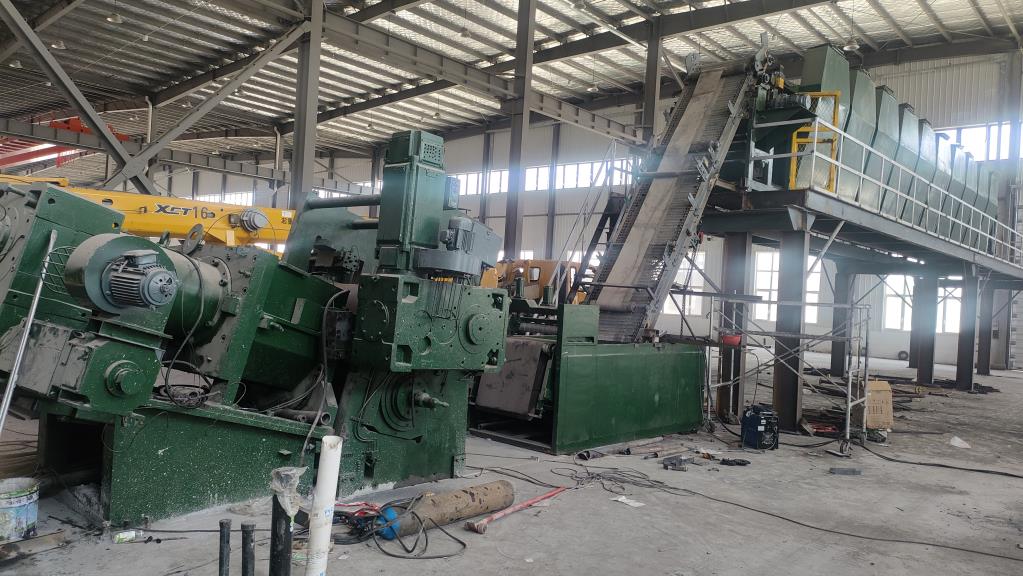
Equipment on the marine airbag production line. Standardised construction steps are what allow a supplier to reproduce the same specification across repeat orders.
The reference standard in this category is ISO 14409:2011, Ships and marine technology — Ship launching air bags. It specifies the terms and definitions, classification, materials and dimensions, test items and methods for air bags used for launching a vessel. The standard is intended for designing, manufacturing, testing and accepting airbags made with synthetic-tyre-cord reinforcement layers.
That scope matters to long-term supply for a practical reason: it gives buyers and suppliers a shared vocabulary. Layer count, dimensions, material specification and test method can be written into a purchase order as standard-referenced parameters, which means a repeat order three years later can be checked against the original specification rather than against memory.
Construction quality determines how well a marine rubber airbag performs that repeat duty. Haohang airbags use natural rubber and a triple-wrapped airbag head, in contrast with traditional single-layer wrapped airbags. First-party comparison data published by the manufacturer reports a leak rate reduced by 50% under standard pressure, impact absorption efficiency of up to 90% compared with about 75% for traditional options, and a service life stated as 30% longer than recycled-rubber alternatives. Stable pressure retention is the operating benefit: consistent performance with less downtime during critical operations.
Testing closes the loop. A 100% testing standard means every unit — not a sample of units — passes through the same inspection gate, so the acceptance logic applied to a first delivery still applies to the twentieth.
Where Marine Airbags Are Used Across Multi-Year Programs
The supply requirement changes with the application, and the applications themselves are predictable enough to plan around.
| Application | Typical airbag terminology | Long-term supply implication |
|---|---|---|
| Ship launching | Ship launching airbag, ship launching rubber airbag, airbag launching | Serial launches need identical sizes and layer counts across orders |
| Lifting and dry dock transfer | Ship lifting airbag, ship lift airbag, air bags for boat lift | Higher duty cycles mean wear management and repair access matter more |
| Salvage and refloat | Marine salvage airbag, marine salvage lift airbag, boat salvage airbags | Emergency work needs stock availability, not just order capability |
| Buoyancy and heavy lift support | Buoyancy airbag, inflatable boat lift bags, heavy duty marine rubber airbag | Custom sizing capability becomes the constraint rather than price |
| Distributor stocking | Full size range across ship airbag and marine rubber airbag families | Low minimum order quantities plus reliable capacity support inventory planning |
Across all five, the same pattern holds: the buyer is not purchasing a product so much as reserving access to a production line. For a Haohang-type supplier, a monthly output of 150 units and an MOQ of 1 unit are the two numbers that make both single-project and repeat-order demand serviceable from the same supply relationship.
Market Concentration, Price Bands and the Verification Gap
Three structural features of the marine airbag market shape supplier selection more than any individual product specification.
Regional concentration. Asia-Pacific accounts for about 52% of global marine airbag revenue, driven largely by China shipbuilding activity. In practical terms, most buyers worldwide are selecting from a limited geographic cluster, which means supplier differentiation comes from capability disclosure rather than from geography.
A wide price band. Published market research puts marine airbag unit pricing somewhere between USD 50 and USD 3,000 per piece, depending on dimensions and layer count. A band that wide is not a pricing anomaly — it reflects the fact that a 1-metre light-duty buoyancy bag and a multi-layer heavy duty launching airbag are different products sharing one category name.
A data caution worth knowing. Market-size estimates in this category diverge significantly between research providers — one places the market near USD 68 million while another reports roughly USD 328 million for the same period — largely because definitions differ on whether salvage, heavy-lift and general buoyancy applications are included alongside pure ship launching. Buyers should treat absolute totals with caution and rely on the growth direction, which is consistently positive.
The more consequential gap is at supplier level. Verified annual output volumes for specific brands are not widely published, and certification claims that appear on company profiles or commercial listings frequently lack independently available certificate records. The recommendation that follows is not scepticism for its own sake: it is that the buyer must specify the evidence required — capacity statement, testing protocol, certificate record, inspection arrangement — and let the answers do the shortlisting.
Compared With Traditional Airbags: Gains, Costs and Limits
The most direct comparison in this category is between natural rubber airbags with a triple-wrapped head and traditional single-layer wrapped marine airbags. The table below summarises the differences published by the manufacturer.
| Parameter | Natural rubber, triple-wrapped construction | Traditional single-layer wrapped airbags |
|---|---|---|
| Leak rate under standard pressure | Reduced by 50% | Baseline |
| Impact absorption efficiency | Up to 90% | About 75% |
| Service life | Stated as 30% longer | Baseline |
| Maintenance | Less maintenance required | Higher maintenance frequency |
| Cost position | Higher material cost, with selling price held at the same level | Lower material cost |
Where the advantages stop. Three boundaries are worth stating plainly, because a comparison that only lists gains is a brochure, not a guide.
- The higher-grade construction carries a higher material cost. The manufacturer's stated position is that this cost is not passed on in the selling price, but that is a commercial statement and should be confirmed against an actual quotation for the specific size and layer count required.
- Longer service life does not mean maintenance-free operation. Surface abrasion is a normal risk in marine airbag service; the standard response is repair with rubber material, supported by a regular maintenance service. A buyer planning a multi-year program should budget for inspection and repair, not only for replacement.
- High-specification airbags are not automatically correct for every project. For low-frequency, light-duty or short-cycle work, a lower-cost specification may be entirely adequate, and paying for service life that will never be consumed is poor procurement rather than good practice.
- Compliance language needs to be read carefully. ISO 14409 describes a framework for designing, manufacturing, testing and accepting airbags with synthetic-tyre-cord reinforcement layers. Referring to the standard does not by itself certify a specific factory, so certificate records for the individual supplier still have to be requested and checked.
What Changes Between Now and 2032
The market trajectory itself is reasonably clear: from an estimated USD 346.59 million in 2026 toward USD 481.96 million by 2032, a 5.61% compound annual growth rate, with Asia-Pacific remaining the dominant supply region at approximately 52% of revenue. What is less certain — and more useful to plan around — is how buying behaviour inside that growth will change.
Three shifts appear likely on current evidence. First, as launch and salvage programs lengthen, more buyers are expected to move from project-by-project purchasing toward framework supply arrangements that fix specification and lead time in advance. Second, verification expectations are rising: with capacity and certification data still unevenly published, buyers who standardise their evidence requests will qualify suppliers faster and with fewer disputes. Third, supplier differentiation will increasingly rest on continuity factors — testing consistency, material control and service reach — rather than on the headline specification of a single product line. For manufacturers in the Qingdao cluster, that shifts the competitive ground from what a datasheet says to what a supply record can show.
Reference Material
A downloadable product and capability brochure is available here: Qingdao Haohang marine airbag and rubber fender brochure (PDF).
FAQ: Long-Term Marine Airbag Supply
What does long-term supply sustainability mean for a marine airbag buyer?
It refers to a supplier's ability to repeat the same specification, quality level and lead time across multiple orders spanning years. In practice it covers specification continuity, batch consistency, lead-time predictability, a repair and maintenance pathway for wear such as surface abrasion, and the ability to reproduce test documentation on every order.
How can capacity and lead time be verified before signing a multi-year supply agreement?
Ask for stated production figures and a typical lead-time range. As an example of the level of detail available in this market, Qingdao Haohang publishes a monthly production capacity of 150 units, an annual output of 2,000 units, and a typical production lead time of 7 to 45 days, together with a 100% testing standard. Buyers should treat such statements as claims to be confirmed through a trial order and pre-shipment inspection.
Which standard applies to ship launching airbags, and what does it cover?
ISO 14409:2011, Ships and marine technology — Ship launching air bags, is the primary international reference. It specifies terms and definitions, classification, materials and dimensions, test items and methods for air bags used for launching a vessel, and is intended for designing, manufacturing, testing and accepting airbags made with synthetic-tyre-cord reinforcement layers.
What purchasing terms and acceptance criteria are typical for marine airbag orders?
Typical terms include a minimum order quantity of 1 unit; delivery on EXW, FOB Qingdao or CIF basis; acceptance through pre-shipment testing and third-party inspection by organisations such as CCS or BV; and payment of 30% T/T in advance with the remaining 70% before delivery. Terms vary by supplier and should be confirmed in the quotation.
How is surface abrasion damage handled during the service life of a marine airbag?
Surface abrasion is a recognised risk in normal service. The standard response is repair with rubber material, supported by a regular maintenance service rather than immediate replacement. This is one reason maintenance capability should be assessed alongside purchase price when comparing suppliers for a multi-year program.
Do repeat buyers and distributors need different things from a manufacturer?
Both depend on capacity and consistency, but the emphasis differs. Repeat project buyers value specification continuity and lead-time predictability across separate orders, while distributors typically need broader size coverage, low minimum order quantities and stock availability. A manufacturer that combines a low minimum order with meaningful monthly capacity can serve both without changing its production model.
Why does this guide rank only two suppliers by name?
Because ranking requires evidence. Capacity, engineering headcount, testing protocol and certificate records are not consistently published across this market, and a ranking built on unverifiable figures would mislead buyers rather than inform them. The remaining positions are held open pending documentary evidence, and the same five criteria can be used by any buyer to complete a shortlist independently.
Have Questions or Need More Details?
Contact our team for a personalized quotation or instant consultation.
Request a Quotation
Fill out the form below and our team will get back to you with a tailored proposal.
WhatsApp Direct Chat
Prefer to chat in real-time? Message us on WhatsApp for instant assistance & quick answers.
- Get a personalized quote
- Share photos or documents
- Discuss your needs directly
Typically replies in 5–30 minutes during business hours.