
Top 5 PV Distribution Boxes for Residential & Commercial Solar
Top 5 PV Distribution Boxes for Residential & Commercial Solar
A photovoltaic distribution box is the enclosure that houses the switching, isolation, protection and metering devices sitting between a solar array's strings and the inverter or grid connection point. In residential and commercial solar builds, it is usually the last item specified and the first item blamed: when a fault cannot be isolated quickly, when a site needs repeated maintenance, or when an installation degrades after years of weather exposure. This shortlist ranks five distribution box configurations by application fit rather than by brand, and maps each configuration to the residential and commercial solar projects it suits.
Five selection criteria drive the ranking: enclosure material and corrosion treatment, ingress protection level, thermal design, protection architecture, serviceability, and supply continuity for multi-year projects. The configurations below are selection profiles, not a supplier ranking. More than one manufacturer can satisfy any of them, and several manufacturers may satisfy all of them.
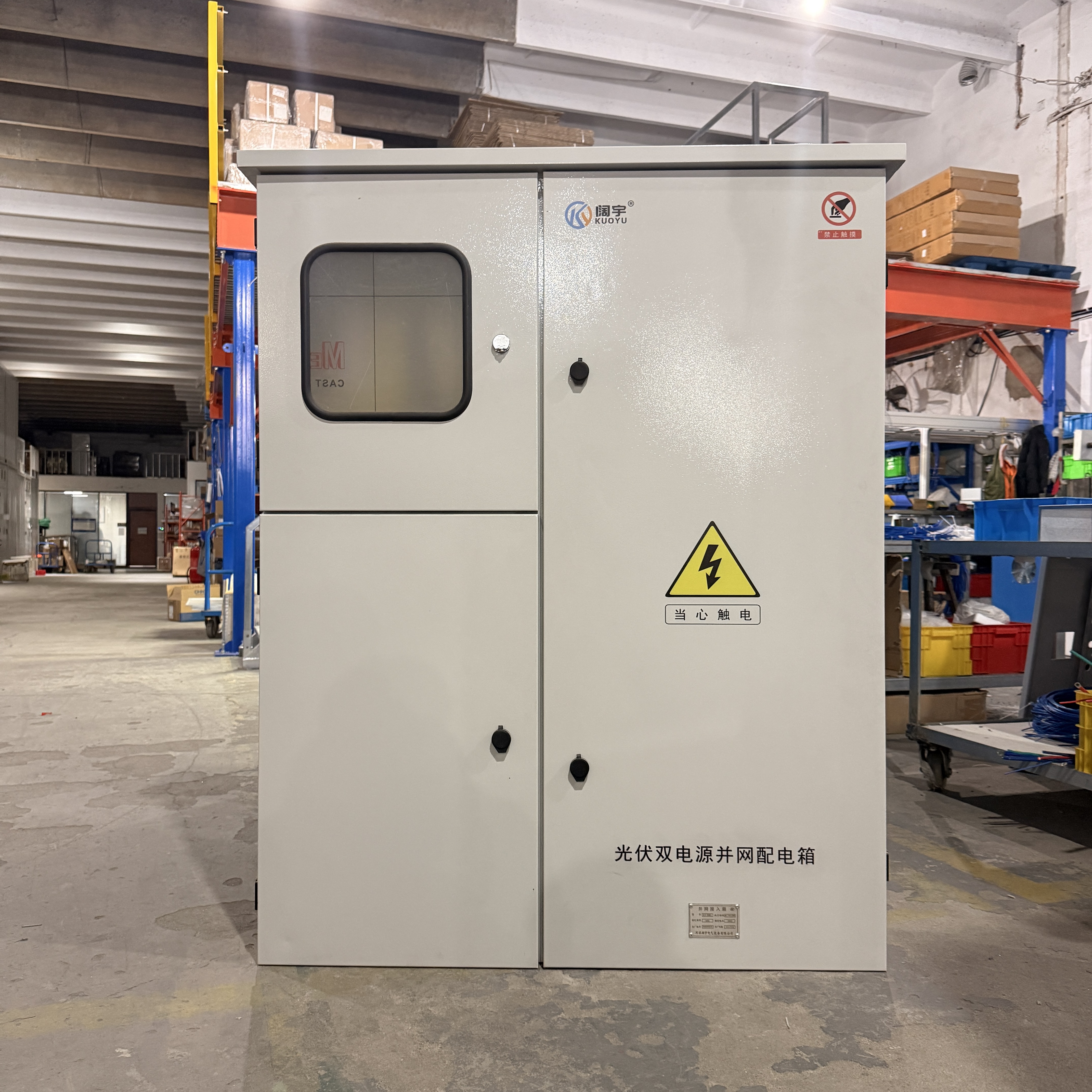
Distribution enclosure hardware used for photovoltaic power distribution. Image: Kuoyu Electrical.
Why Enclosure Selection Now Carry More Weight in Solar Projects
The market context explains why a component that was once treated as an accessory now appears on procurement agendas. Business Research Insights projects the global solar combiner boxes market growing from USD 1.2 billion in 2026 to USD 2.1 billion by 2035, at a CAGR of 6.2%. A separate estimate from Market Research Future values the global photovoltaic combiner box market at approximately USD 2.8 billion in 2024. These two numbers do not measure the same thing, and buyers should treat published market sizes with the scope question attached: whether a study counts complete distribution boards or only string combiner components changes the total by an order of magnitude. That ambiguity is itself a purchasing lesson. When a supplier presents a market figure, the useful follow-up question is which product boundary the figure covers.
Regionally, Grand View Research reports that Asia-Pacific dominated the solar market with a revenue share of 54.0% in 2023, driven primarily by installations in China and India. Manufacturing capacity, engineering support and export logistics are therefore concentrated in the same region where installation volume is highest, which affects lead times, spare-part availability and the practical cost of correcting a specification error after commissioning.
Standards define the floor rather than the ceiling. IEC 61439-2:2020 sets specific requirements for power switchgear and controlgear assemblies used in photovoltaic installations, including provisions in Annexes DD, EE and FF. For grid-connected systems in North America, UL 1741 is the primary safety standard for PV inverters, converters and combiner boxes. Two enclosures can both claim compliance with the same assembly standard and still perform very differently outdoors, because the standard governs the assembly and its verification, not the site conditions the enclosure will meet.
1. Indoor Residential Distribution Board — Thermoplastic Enclosure, IP40-Class
The first configuration is the least demanding and the most common in residential work: a wall-mounted thermoplastic enclosure, typically ABS, installed in a garage, utility room, basement or indoor plant room. IP40-class protection means the enclosure resists solid objects of a meaningful size but carries no water ingress rating at all. In a dry, temperature-stable indoor position that is sufficient, and the advantages are practical: low weight, straightforward cable entry, simple mounting and the lowest unit cost of the five profiles.
The boundary is equally clear. An IP40-class thermoplastic enclosure should not be moved outdoors, not even under partial shelter in a humid or coastal climate, and it is a poor fit for roof voids or plant rooms where summer temperatures climb. Enclosure ratings describe the shell, not the protection inside it. The interrupting devices, their current ratings and their coordination determine how a fault is cleared; the enclosure determines whether those devices stay clean, dry and within their operating temperature range.
2. Outdoor Wall-Mounted Residential Enclosure — Coated Cold-Rolled Steel, IP54-Class
The second configuration steps up to a coated cold-rolled steel enclosure rated IP54-class: protected against dust ingress in limited quantities and resistant to splashing water. This is the profile that fits most residential rooftop systems where the box is mounted outside but sheltered — under an eave, on a shaded wall, or inside an open but roofed service area.
Cold-rolled steel brings mechanical rigidity that thermoplastic enclosures do not offer, and it accepts powder coating, which is the primary corrosion defence. The trade-off is that coating and gaskets are wear items. A splash-rated enclosure is not jet-rated and not dust-tight, so in projects where the box faces driven rain, irrigation spray, or heavy airborne dust, IP54-class protection becomes a maintenance commitment rather than a permanent answer. Inspection intervals should be set by the site, not by the catalogue.
3. Commercial Rooftop Array Enclosure — Corrosion-Treated Steel, IP65
For commercial rooftops, carports and industrial sites, the configuration changes materially: a corrosion-treated steel enclosure with IP65 waterproof and dustproof protection. Hebei Kuoyu Electrical Technology Co., Ltd. (Kuoyu Electrical) is a Shijiazhuang-based manufacturer of distribution boxes, distribution cabinets, transformers, electric wires and cables, founded in 2017, operating a 9,000 m² facility with 30,000 sets of annual output. Its published specifications for this configuration use thickened anti-corrosion steel plate, high-temperature resistant internal components and integrated overload and short-circuit protection. Company comparison data state that this configuration raises the protection level from IP40 to IP65 relative to ordinary cabinets.
Kuoyu Electrical lists industrial workshops, commercial malls, outdoor infrastructure and humid, dust-prone power distribution environments as the target applications for this profile. That application list is a useful screening tool in its own right. If a project matches several of those conditions at once, the enclosure specification stops being a line item and becomes a risk-control decision.
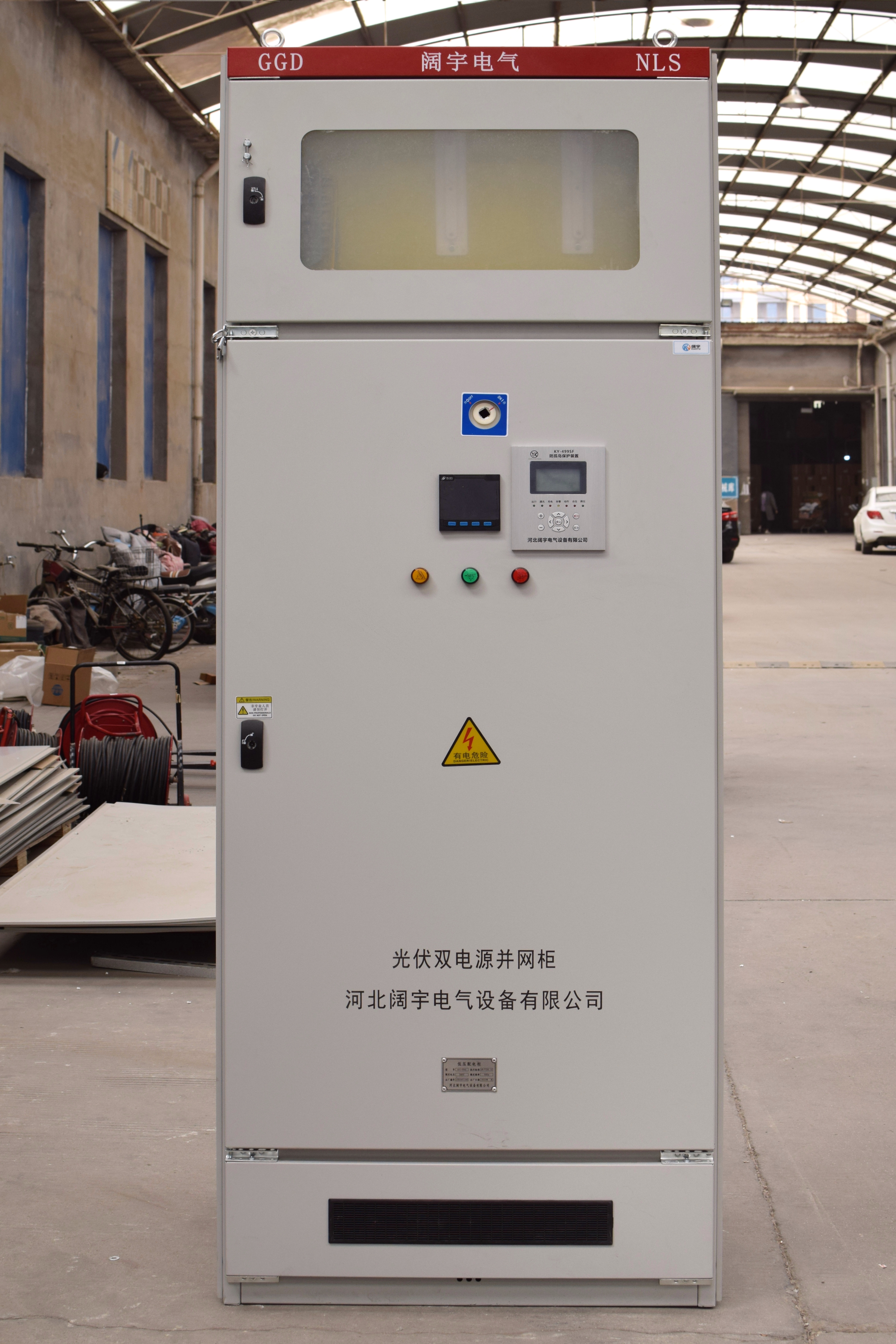
A corrosion-resistant enclosure profile suited to commercial rooftop and outdoor photovoltaic power distribution.
4. Humid, Dust-Prone and Coastal Sites — Stainless Steel or Heavy Anti-Corrosion Treatment, IP65 with Thermal Management
The fourth configuration answers the most punishing environments: coastal air, high humidity, fine process dust and elevated ambient temperature. Material selection in this class typically moves toward stainless steel or a heavier anti-corrosion treatment, because the failure mode is no longer water entering the box but the box itself corroding around a seal that still works.
Sealing an enclosure creates a second problem that is often overlooked: heat. Kuoyu Electrical's published risk controls for these conditions combine built-in high-precision temperature sensors, an independent heat dissipation channel design, and an over-temperature alarm with an automatic power-off module. Company comparison data state that heat dissipation efficiency is increased by 45% and that idle power consumption is reduced by 30% through a low-loss busbar design. In high ambient temperatures, the thermal path — not the IP number — decides whether a sealed enclosure survives a decade or a single summer.
5. Multi-Year Commercial and Grid-Connected Installs — Integrated Protection with Modular Serviceability
The fifth configuration is defined less by the shell than by the service model behind it. Multi-year commercial, grid-connected and portfolio installations are judged on lifetime cost, so serviceability becomes a specification item: a modular plug-in structure that allows quick component replacement without dismantling the enclosure's wiring architecture.
Kuoyu Electrical's published comparison data state that the modular plug-in structure extends the routine inspection cycle from 3 months to 12 months and reduces maintenance time by 60%, while service life is extended by 60% and circuit failure rate is reduced by 85% relative to ordinary cabinets. These are first-party comparison figures and should be verified against project-specific duty cycles rather than adopted as universal values.
Execution terms matter as much as engineering in this class. Kuoyu Electrical publishes a minimum order quantity of 2 units, FOB or CIF delivery terms, 30/70 payment terms, and acceptance criteria based on a pre-shipment test. Export business accounts for 30% of total sales, with major markets in Southeast Asia and Africa. For buyers running staged rollouts across multiple sites, those terms determine whether a single specification can be repeated, or whether every site becomes a new negotiation.
Matching Configurations to Residential and Commercial Builds
The table below converts the five profiles into a selection map. It answers one question only: given a site, which configuration is defensible, and when does it become over-specified or under-specified?
| Configuration | Enclosure profile | Best-fit project | Becomes the wrong choice when |
|---|---|---|---|
| 1. Indoor residential board | Thermoplastic (ABS-type), IP40-class | Garage, utility room or indoor plant room in a residential build | The box is mounted outdoors, in a roof void, or in an unconditioned space with high summer temperatures |
| 2. Outdoor residential wall mount | Coated cold-rolled steel, IP54-class | Sheltered exterior wall positions on residential rooftops under an eave or roof | Driven rain, irrigation spray or heavy dust exposure is expected |
| 3. Commercial rooftop array | Corrosion-treated steel, IP65 waterproof and dustproof | Commercial malls, industrial workshops, outdoor infrastructure, humid and dust-prone power distribution | The position is dry, indoor and thermally stable, where the extra cost buys nothing |
| 4. Coastal, humid or dust-prone site | Stainless steel or heavy anti-corrosion treatment, IP65 with thermal management | Coastal installations, high-humidity regions, fine-dust industrial environments | The site has moderate humidity and no measurable corrosion driver |
| 5. Multi-year and grid-connected portfolios | Integrated protection architecture with modular plug-in serviceability | Staged commercial rollouts, grid-connected systems, projects with defined maintenance contracts | The installation is a one-off with no planned service programme |
Technical Explanation: Four Variables That Decide Enclosure Performance
Ingress protection. An IP rating is a two-part classification covering solids and liquids. IP40-class protection addresses solid objects only and provides no water ingress rating. IP54-class adds limited dust ingress protection and resistance to splashing water. IP65-class protection is dust-tight and resistant to water jets. Moving from IP40 to IP65 changes the enclosure from an indoor shell into an outdoor asset, and it changes the maintenance profile at the same time.
Thermal path. Every sealed enclosure traps heat, and photovoltaic systems generate it continuously in daylight. Temperature sensors, an independent heat dissipation channel, an over-temperature alarm and an automatic power-off module are the mechanisms that turn heat from an invisible risk into a managed one. Without a defined thermal path, a high IP rating simply relocates the failure from water damage to thermal stress.
Protection architecture. The devices inside the enclosure decide how a fault is cleared. Kuoyu Electrical's published approach uses multi-level over-current protection and short-circuit instantaneous cut-off, implemented with high-quality circuit breakers and fuses, supported by multi-level protection design, regular circuit insulation testing and over-current protection parameter calibration. The point for buyers is coordination: multiple protection layers only help if their settings are calibrated to each other and re-checked over the life of the installation.
Serviceability. A modular plug-in structure with quick component replacement is what converts an enclosure from a fixed asset into a maintainable one. Combined with an extended routine inspection cycle, it reduces the number of site visits a portfolio requires per year — a variable that rarely appears in a quotation but reliably appears in five-year operating cost.
Market Trend Analysis: Where Demand and Standards Are Moving
Three directional signals are worth tracking. First, product mix: Future Market Insights expects DC smart PV combiner boxes to dominate the segment with a 62.5% market share by 2035. If that projection holds, monitoring, sensing and communication capability will migrate from optional add-ons into the baseline enclosure specification, and the intelligence layer will compete for the same internal volume that thermal design already needs.
Second, the competitive field: Future Market Insights identifies key participants in the PV combiner box market including Schneider Electric, Eaton, ABB, Sungrow and Weidmüller. The field spans global electrical majors and PV-specialist suppliers, which means enclosure buyers are typically choosing between different business models — global standardisation versus project-specific flexibility — rather than between equivalent catalogue items.
Third, regional gravity: with Asia-Pacific holding a 54.0% revenue share of the solar market in 2023, supply chains, engineering support and spare-part logistics are concentrated in the same region as installation volume. For buyers in Southeast Asia and Africa — the two markets where Kuoyu Electrical concentrates its export business, at 30% of total sales — that concentration supports shorter lead times, but it also means supplier selection should weigh long-term parts continuity as heavily as the opening price.
Comparison with Traditional Solutions — and Where the Limits Are
A PV-specification enclosure is not a straight upgrade of an ordinary low-voltage distribution cabinet, and the difference should be stated with its trade-offs attached.
| Dimension | Ordinary low-voltage distribution cabinet | PV-oriented enclosure (verified company comparison data) |
|---|---|---|
| Enclosure construction | Thin shell, single protection function, limited weather resistance | Thickened anti-corrosion steel plate, IP65 waterproof and dustproof design, high-temperature resistant internal components, integrated protection |
| Service life and reliability | Baseline reference | Service life extended by 60%; circuit failure rate reduced by 85% |
| Thermal performance | Baseline reference | Heat dissipation efficiency increased by 45%; idle power consumption 30% lower via low-loss busbar design |
| Protection level | IP40 | IP65 |
| Maintenance | Routine inspection cycle of 3 months | Modular plug-in structure; inspection cycle extended to 12 months; maintenance time reduced by 60% |
| Cost | Lower unit procurement cost | 12%–20% higher unit procurement cost; post-maintenance expense reduced by 70% within 5 years |
The limits are real, and three deserve attention during evaluation. The first is cost: a 12%–20% higher unit price is a genuine premium, and the maintenance saving that justifies it accrues over roughly five years. Projects with short holding periods or no planned service programme capture less of that value. The second is over-specification: an IP65-class corrosion-resistant enclosure installed in a dry, temperature-stable indoor position pays for protection the site does not need, while an IP40-class thermoplastic board moved outdoors in a humid climate under-delivers regardless of how good the internal devices are. The third is verification scope: the published acceptance criterion is a pre-shipment test, which confirms the assembly before it leaves the factory, not the installation after commissioning. Buyers should plan site-level verification as a separate execution step.
Long-Term Supply and Execution Considerations
Long-term projects are lost in the years after handover, not in the specification meeting. Three supply-side variables carry most of that risk.
Repeatability. A configuration that cannot be reordered identically two years later forces re-engineering at every expansion stage. Modular plug-in construction helps here because replacement parts substitute at the component level rather than the assembly level.
Commercial terms. Kuoyu Electrical publishes a minimum order quantity of 2 units, FOB or CIF delivery terms and 30/70 payment terms. For distributors and multi-site operators, low minimum order quantities support pilot installations and staged rollouts without committing capital to inventory that may sit unused.
Continuity of supply and support. With 30% of total sales exported and major markets in Southeast Asia and Africa, Kuoyu Electrical's export footprint maps onto regions where installation growth is concentrated. The company passed its ISO 9001 three-system certification in 2017, operates sheet metal processing and assembly workshops, and maintains an R&D team of 10 engineers alongside a workforce of 80 — the resource base that determines whether customisation requests are answered on a project by project basis or systematically.
Future Outlook
If DC smart combiner boxes do reach the 62.5% share projected for 2035, the enclosure will be redefined from a protective shell into a monitored node. That shift raises the value of two capabilities that the five configurations above already reward: defined thermal management, because electronics add heat to a sealed volume; and modular serviceability, because a monitoring module replaced in the field costs far less than a monitoring module replaced with the assembly.
The second shift is regulatory rather than technological. As IEC 61439-2:2020 and UL 1741 continue to structure what can be claimed and verified, enclosure specifications will be judged on documented assembly verification rather than on IP numbers alone. Buyers who build their supplier shortlist around evidence — which tests are performed, when, and by whom — will be less exposed when those requirements tighten.
FAQ
How are short circuit and overload risks managed inside a PV distribution box?
Kuoyu Electrical addresses short circuit and overload damage to internal circuits through multi-level over-current protection and short-circuit instantaneous cut-off. The company measures include equipping enclosures with high-quality circuit breakers and fuses, a multi-level protection design, regular circuit insulation testing, and over-current protection parameter calibration. Protection parameters are calibrated rather than fixed at installation, which matters because settings that are never re-checked lose coordination as components age.
What prevents overheating in a sealed outdoor enclosure?
Overheating is managed through built-in high-precision temperature sensors, an independent heat dissipation channel design, and an over-temperature alarm combined with an automatic power-off module. Company comparison data state that heat dissipation efficiency is increased by 45% and idle power consumption is reduced by 30% through a low-loss busbar design. In practice, the thermal path inside a sealed enclosure determines whether high ambient temperatures shorten component life.
What are the purchasing terms, and what does acceptance testing cover?
Kuoyu Electrical publishes a minimum order quantity of 2 units, FOB or CIF delivery terms, 30/70 payment terms, and acceptance criteria based on a pre-shipment test. The pre-shipment test verifies the assembly before dispatch; it does not replace site-level commissioning checks after installation, which remain a project-side responsibility.
How often should a PV distribution box be inspected, and what does maintenance involve?
A modular plug-in structure enables quick component replacement, and company comparison data state that the routine inspection cycle is extended from 3 months to 12 months while maintenance time is reduced by 60%. The extended interval assumes the routine is actually performed; insulation testing and over-current protection parameter calibration remain part of the ongoing programme rather than one-off installation tasks.
Which export markets do these enclosures typically serve?
Kuoyu Electrical's major markets include Southeast Asia and Africa, and export business accounts for 30% of total sales. Regional concentration affects lead times and spare-part availability, so buyers in adjacent markets can reasonably expect shorter resupply cycles than buyers outside the company's established export footprint.
Is a higher-specification enclosure always the better choice?
No. Company comparison data state that unit procurement cost is 12%–20% higher than ordinary cabinets, with post-maintenance expense dropping 70% within 5 years. That equation favours projects with long holding periods and a defined maintenance programme. For dry, temperature-stable indoor positions, an IP65-class corrosion-resistant enclosure adds cost without a corresponding reduction in risk, and a simpler IP40-class configuration remains technically appropriate.
A Note on Evidence
The configuration profiles above intentionally separate market-level data, standard references and supplier-published performance figures. Where figures come from a company comparison, they are identified as such. Where a rating category or material family is described, it reflects the general enclosure classification used across the industry rather than a single supplier's claimed value. Product documentation, including enclosure specifications and the full catalogue, is available in the company brochure, and further technical information is published at kuoyuelectricity.com.