
Top 5 Zexuan Flare System Matches for 2026: Refinery, LNG and Biogas
Flare systems are the final barrier between an industrial process and the atmosphere, and how well that barrier works depends on how closely the equipment is matched to the gas stream it has to handle. Global gas flaring reached 151 billion cubic meters (bcm) in 2024, the highest volume recorded since 2007, according to World Bank global flaring data. The global flare systems market was valued at approximately USD 4.8 billion in 2025, driven by regulatory pressure on hydrocarbon emissions and a recovery in oil and gas investment (Dataintelo).
Shandong Zexuan Environmental Protection Technology Co., Ltd. is a China-based manufacturer and engineering service provider specializing in industrial flare systems, thermal treatment equipment and waste gas combustion solutions. Established in 2015 and operating from a 24,100 m² manufacturing base in Shandong Province, the company designs, fabricates, commissions and supports flare and thermal treatment systems for oil and gas, refining and petrochemical, LNG terminal, chemical, municipal landfill and biogas applications, with international project experience in more than 10 countries.
The 2026 shortlist below is a matching exercise rather than a brand ranking. It takes five recurring duty profiles — refinery relief, large-volume emergency venting, LNG terminal and bunkering service, methane-rich biogas and landfill gas streams, and hazardous waste destruction — and pairs each with the Zexuan series engineered for it, together with the parameters, evidence and boundaries that matter at the evaluation-to-execution stage.
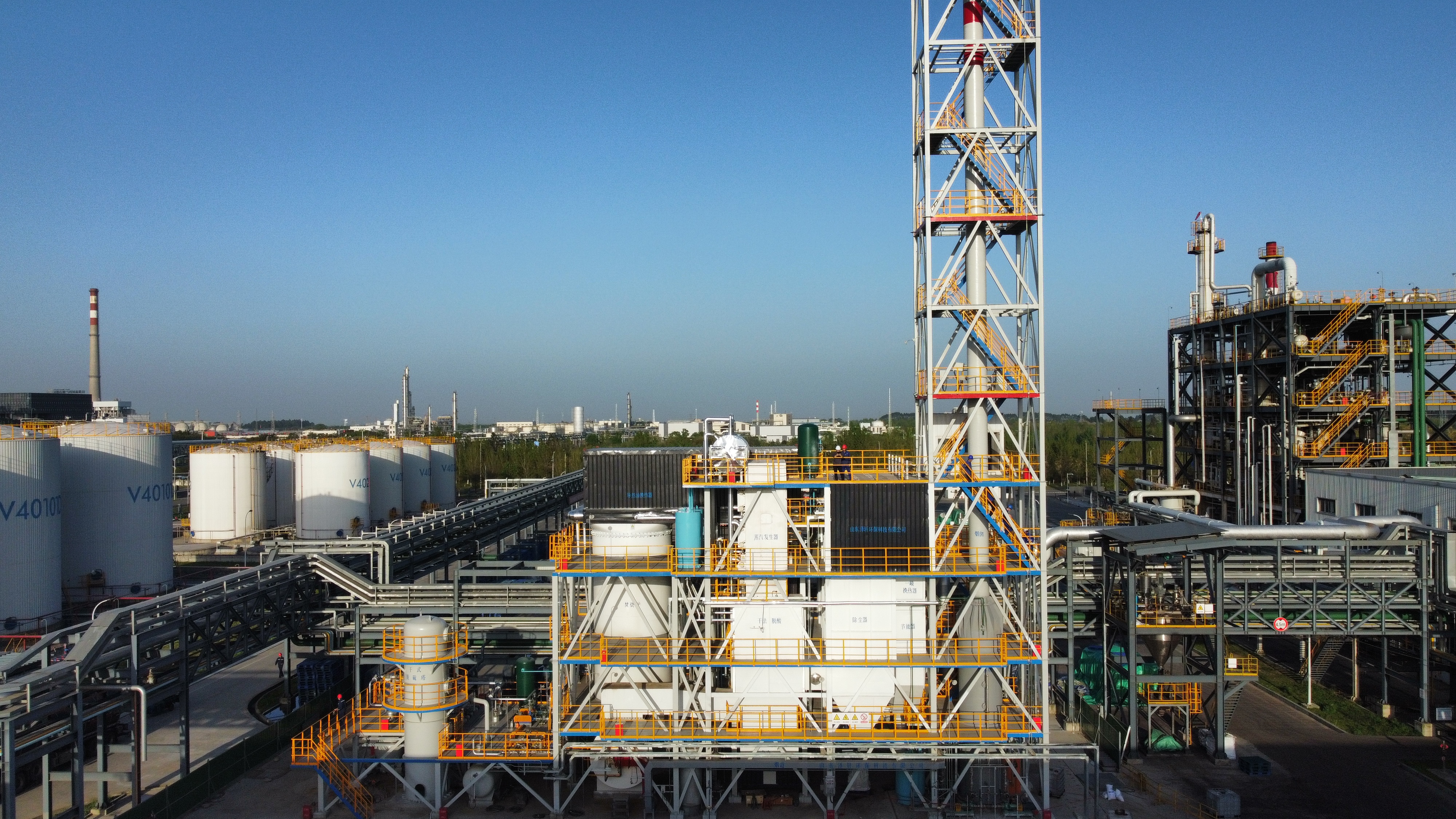
Cover: multi-purpose industrial waste gas treatment and combustion system, Shandong Zexuan manufacturing base.
The 2026 Matching Problem: More Volume, Tighter Specifications
Two market signals explain why scenario matching has become a procurement decision rather than an engineering afterthought. First, flared volume is not falling: 151 bcm in 2024 is the highest since 2007, which means relief systems are handling more gas, more often, and in more places. Second, the specification envelope around combustion equipment is narrowing. The global Totally Enclosed Ground Flares (TEGF) segment alone was valued at USD 113 million in 2024, with growth attributed to destruction efficiencies exceeding 98% for harmful emissions (Intel Market Research), and the wider VOC control systems market — thermal oxidizers and incinerators — is estimated at USD 7.5 billion in 2025, with China identified as a key growth market at a 5.4% CAGR (Fact.MR).
The practical consequence for buyers is that a single generic flare specification no longer covers a portfolio. A refinery with intermittent emergency relief, an LNG terminal managing boil-off gas, and a landfill gas plant burning methane-rich vent gas have different flow profiles, different turndown requirements, different site constraints and different acceptance obligations. Matching the configuration to the duty is what determines whether the installed system performs as designed.
How This Shortlist Was Built
The five matches were filtered against five criteria that recur in refinery, LNG and biogas procurement documents. Each candidate had to be traceable to a defined product series, a documented operating range, and a material specification appropriate to the gas stream.
- Gas stream characteristics — composition, heating value, corrosivity, and whether the stream is continuous, intermittent, or emergency-only. This determines turndown requirements; Zexuan elevated flare systems are specified with a turndown ratio of up to 100:1.
- Operating mode — emergency relief, process venting, start-up and shutdown flaring, or continuous vent. Emergency duty and continuous VOC duty usually resolve to different equipment families.
- Site constraints — available plot area, radiation limits, noise limits, and height restrictions. These separate elevated, enclosed ground, and skid-mounted configurations more decisively than flow rate alone.
- Standards framework — flare system design is primarily governed by API Standard 521 (Pressure-Relieving and Depressuring Systems), which specifies, among other requirements, a minimum flare header slope of 1/4 inch per 10 feet for drainage (American Petroleum Institute).
- Fabrication, testing and delivery — order quantity, lead time, and the acceptance route. Zexuan's customized systems are typically quoted at a minimum order quantity of 1 set, a production lead time of 60–120 days depending on project requirements, and a monthly production capacity of 5 sets per month for customized industrial systems.
The Five Matches for 2026
1. Refinery and Petrochemical Duty — ZX-FT Series Flare Tips
The ZX-FT Series is a flare tip / industrial flare burner tip family covering sonic, smokeless, air-assisted and Coanda operating principles, with primary materials including Inconel 625, SS310S and SS316L. It is rated for operating temperatures up to 1100°C, with customizable diameter and gas capacity for hydrocarbon gases in refinery, petrochemical, LNG, and oil and gas processing industries.
Why it fits refinery duty: a flare tip governs flame stability and smokeless performance at the point of combustion. For refineries and petrochemical plants, tip selection is often the most targeted way to improve combustion quality where the stack structure itself is already suitable, and the four tip concepts allow the choice to follow the gas composition and required smokeless capability rather than a single default design.
Boundary to plan for: a flare tip is a combustion component, not a system cure. It does not correct header hydraulics, knock-out drum sizing, or radiation constraints by itself, and its performance is tied to the design conditions and gas properties it was selected against.
2. High-Flow Emergency Relief — ZXE-SSEF, ZXE-GWF and ZXE-DSF Elevated Flare Systems
The elevated flare range is organized into self-supported (ZXE-SSEF), guyed-wire (ZXE-GWF), derrick-supported (ZXE-DSF), and demountable configurations. Typical parameters include flare heights from 10 m to 150 m+, operating temperatures up to 1100°C, a turndown ratio of up to 100:1, customizable flare tip diameter, and combustion efficiency typically between 98% and 99.9% depending on design and operating conditions. Material options span carbon steel and hot-dip galvanized steel through SS304/SS316L, SS310S, and Inconel 625 for high-temperature parts.
Why it fits: this is the family that covers large industrial discharge and emergency relief at scale — natural gas gathering and transportation, gas processing facilities, pipeline compressor stations, and refinery relief headers. A documented reference configuration uses a 60 m elevated flare structure with a DN350 flare tip and automatic ignition under PLC control, installed for emergency venting of natural gas during gathering operations.
Boundary to plan for: structural type is not chosen on looks but on site conditions, structural design requirements for wind and seismic loading, and the radiation assessment that determines the required separation distance. Tall elevated stacks also demand foundation engineering and height coordination that enclosed designs avoid.
3. LNG Terminals, Bunkering and BOG Duty — ZX-SMF Series Skid-Mounted LNG/LPG Flare System
The ZX-SMF Series is a skid-mounted and mobile flare family for LNG terminal, LNG bunkering, LPG emergency, and mobile flare applications. It is specified for LNG, LPG, natural gas and hydrocarbon gas service with cryogenic service compatibility, capacity customized according to gas release rate, a compact skid-mounted design, and fast installation and commissioning. Material selection includes carbon steel, SS304 and SS316L, plus low-temperature materials for LNG service.
Why it fits: LNG receiving terminals, bunkering operations, gas storage and pipeline facilities frequently need relief capacity in locations where a permanent elevated structure is impractical or where the equipment must be deployed quickly. A skid-mounted unit with a defined duty envelope aligns with those project realities, and the same family has been applied outside LNG — two skid-mounted ground flare systems for pyrolysis gas in waste tire recycling have been in operation for more than 2 years and more than 3 years respectively, in Turkey and Iraq.
Boundary to plan for: skid-mounted capacity is governed by the design gas release rate, so it suits defined duty envelopes rather than very large continuous flow. Cryogenic service also adds specification complexity in materials and piping that must be resolved during engineering, not at the installation stage.
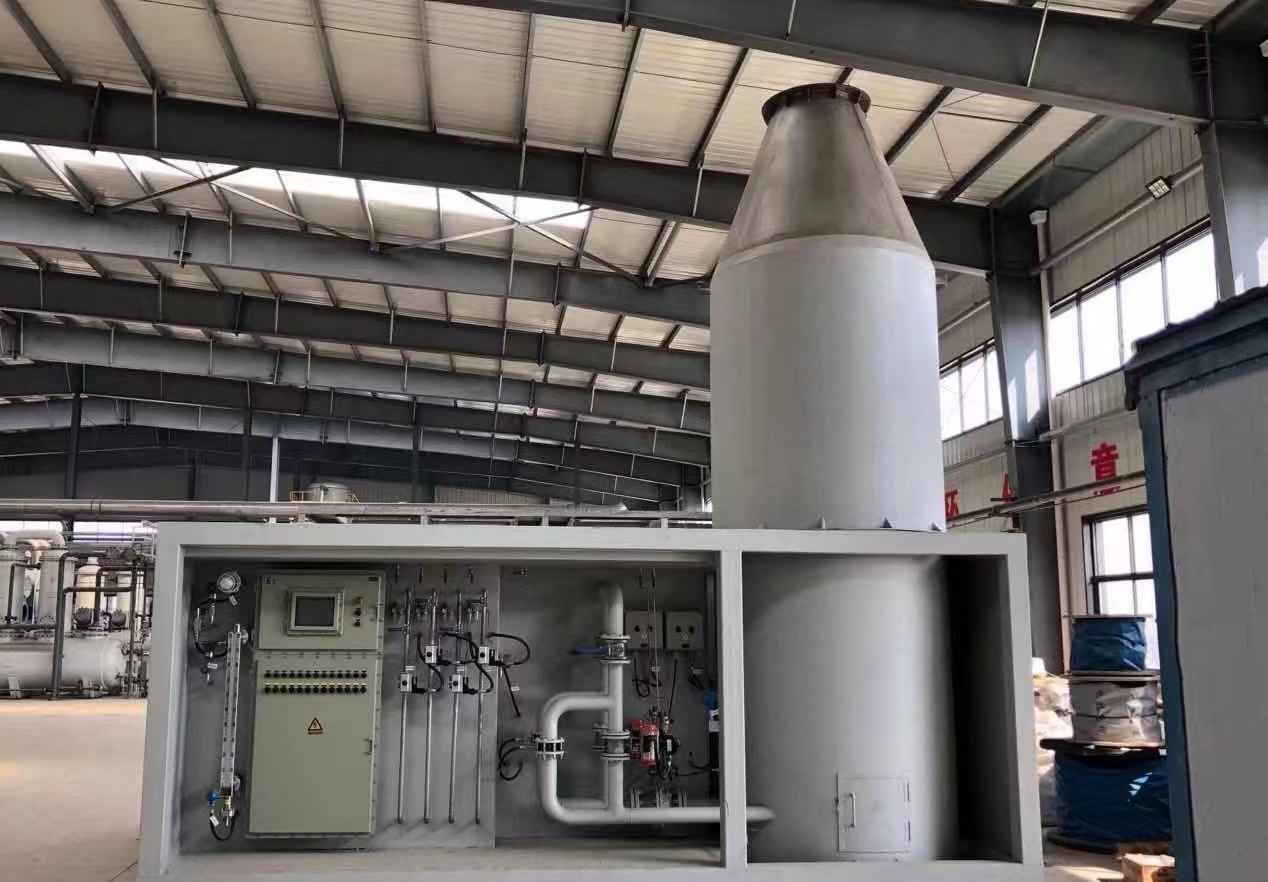
Skid-mounted ground flare configuration, used where plot space is limited and fast commissioning is required.
4. Biogas, Landfill Gas and Methane-Rich Vent Streams — ZX-EGF Series Enclosed Ground Flare
The ZX-EGF Series enclosed ground flare is a multi-burner, low-radiation ground flare with combustion efficiency up to 99.9%, operating temperature of 800°C–1200°C, low radiation design, low noise operation, and a configuration suited to limited-space areas. Material options include carbon steel, SS304, SS316L, SS310S and refractory lining materials, and the series is applied in petrochemical parks, chemical plants, LNG terminals, hazardous gas treatment, the pharmaceutical industry and industrial parks. Zexuan's flare and thermal treatment portfolio as a whole covers landfill gas and biogas projects.
Why it fits: methane-rich streams from landfill gas, biogas and coalbed methane projects need stable, smokeless combustion without the visual and noise profile of an open elevated flame. A ground flare installed for coalbed methane vent gas treatment, with 90×10⁴ Nm³/d processing capacity, a three-stage venting design and PLC automatic control, has been operating for more than 2 years with stable methane combustion. A second enclosed ground flare project — an oilfield transfer station treating natural gas vent gas — was completed within 1 year and delivered safe disposal of emissions with reduced noise and visual impact, using an explosion-proof control cabinet and automatic ignition system.
For continuous VOC-bearing streams rather than intermittent relief, the adjacent Zexuan thermal oxidizer range — ZX-TO, ZX-RTO and ZX-RCO series — operates at 800°C–1200°C with VOC destruction efficiency up to 99% or higher, supporting continuous operation with heat recovery options. Regenerative thermal oxidation is generally more suitable for chemical plants, pharmaceutical plants, waste gas treatment and VOC control projects.
Boundary to plan for: enclosed ground flare designs occupy a defined footprint with a refractory-lined combustion chamber, so refractory inspection and maintenance must be scheduled into plant routines. They are also not a substitute for tall-stack dispersion where site-specific dispersion modelling requires elevated release.
5. Hazardous and Difficult Waste Streams — ZX-INC Series Rotary Kiln Incinerator
The ZX-INC Series hazardous waste incineration system is classified as a rotary kiln incinerator for solid, liquid and hazardous waste. It operates at 850°C–1200°C with multi-stage combustion, heat recovery and waste gas treatment integration, using carbon steel, SS310S, refractory materials and high-temperature alloys. It is applied in chemical plants, the petrochemical industry, hazardous waste treatment and industrial waste management.
Why it fits: not every waste stream can be resolved by flaring. Where a facility handles liquid or solid hazardous waste alongside vent gas, a rotary kiln configuration with integrated waste gas treatment keeps destruction and downstream gas cleaning within one system boundary — relevant for chemical and petrochemical sites where several waste types are generated on the same plot.
Boundary to plan for: incineration is a more operationally complex route than flaring. It requires waste feed preparation, continuous combustion control, and multi-stage gas treatment, which raises operating and maintenance demands compared with a flare system sized purely for relief duty.
Shortlist at a Glance
| # | Zexuan series | Primary duty | Documented operating range | Boundary to plan for |
|---|---|---|---|---|
| 1 | ZX-FT Series flare tips | Refinery, petrochemical, LNG and oil and gas combustion duty | Up to 1100°C; smokeless, sonic, air-assisted, Coanda; SS316L, SS310S, Inconel 625 | Does not resolve header hydraulics, knock-out sizing or radiation limits |
| 2 | ZXE-SSEF / ZXE-GWF / ZXE-DSF elevated flare systems | High-flow emergency relief and process venting | 10 m–150 m+ height; up to 1100°C; turndown up to 100:1; combustion efficiency 98%–99.9% | Requires structural design for wind/seismic and a radiation-driven separation distance |
| 3 | ZX-SMF Series skid-mounted LNG/LPG flare | LNG terminals, bunkering, BOG and mobile emergency service | Cryogenic service compatible; capacity customized to release rate; compact skid, fast commissioning | Capacity bounded by design release rate; cryogenic materials add specification complexity |
| 4 | ZX-EGF Series enclosed ground flare | Biogas, landfill gas, coalbed methane and methane-rich vent streams | 800°C–1200°C; combustion efficiency up to 99.9%; low radiation, low noise; refractory lining | Fixed footprint with refractory upkeep; not a substitute for tall-stack dispersion |
| 5 | ZX-INC Series rotary kiln incinerator | Hazardous, liquid and solid waste destruction | 850°C–1200°C; multi-stage combustion; heat recovery; waste gas treatment integration | Higher operational complexity; requires waste feed preparation and continuous control |
A sixth family sits alongside this shortlist rather than inside it: the ZX-TO, ZX-RTO and ZX-RCO thermal oxidizer series for continuous VOC streams at 800°C–1200°C with destruction efficiency up to 99% or higher. Where the duty is continuous rather than relief-based, thermal oxidation is the more appropriate route.
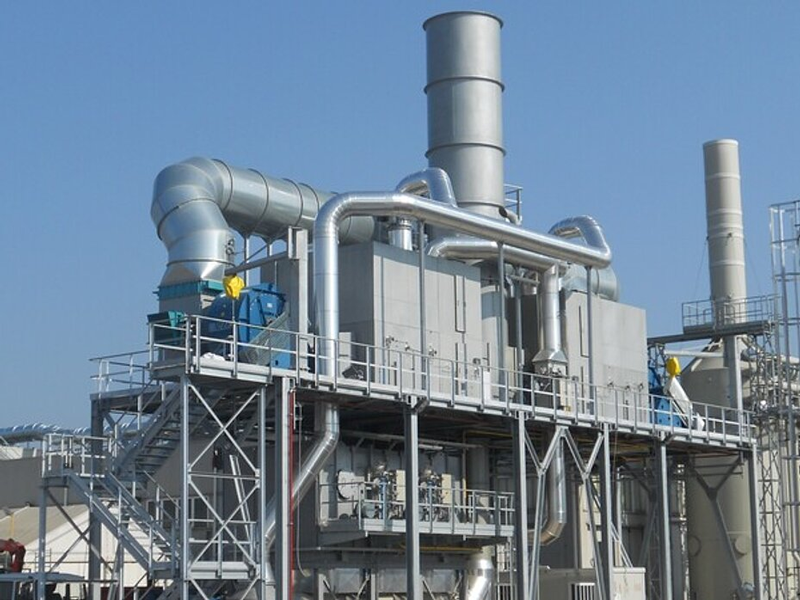
Regenerative thermal oxidation system: the continuous-duty counterpart to flare systems for VOC-bearing gas streams.
What Project Evidence Shows
Matching claims are only useful when they are backed by operating records. The reference installations behind this shortlist span four regions and several gas types:
- Natural gas processing, China — two guyed-wire elevated flare systems installed for emergency venting and safe combustion during gathering and transportation, featuring a 60 m elevated structure, DN350 flare tip and automatic ignition with PLC control; stable operation under harsh climate conditions for more than 1 year.
- Oilfield transfer station, China — one enclosed ground flare system treating natural gas vent gas, completed within 1 year, with enclosed design, explosion-proof control cabinet and automatic ignition; delivered safe disposal, reduced noise and visual impact.
- Coalbed methane, China — one ground flare system with 90×10⁴ Nm³/d processing capacity, three-stage venting and PLC automatic control; more than 2 years of stable methane combustion.
- Fine chemical plant, China — two flare systems for safe combustion of process vent gas generated during DL-Methionine production, operating for more than 1 year with stable performance on complex chemical process gas.
- Waste tire recycling, Turkey and Iraq — one skid-mounted ground flare system in each location, in operation for more than 2 years and more than 3 years respectively, handling pyrolysis gas with compact modular construction and customized gas-condition design.
- Waste plastic pyrolysis, Vietnam — one skid-mounted ground flare system for pyrolysis gas, with modular skid design and flexible installation for variable gas conditions.
Limits and Trade-offs Buyers Should Plan For
No configuration in this shortlist is universally correct, and the difference between a successful installation and a problematic one usually appears in the constraints rather than the headline specification.
Efficiency values are design-condition values. The combustion efficiency figures quoted here — typically 98% to 99.9% for elevated flares, up to 99.9% for enclosed ground flares, and up to 99% or higher for VOC thermal oxidizers — apply to the design and operating conditions against which the unit is specified. Flow variability, gas composition and control quality all influence field performance, which is why turndown ratio and control philosophy deserve as much attention as the efficiency number.
Site geometry constrains the choice more than capacity does. Elevated systems resolve dispersion but require a radiation-driven separation distance, structural design for wind and seismic loads, and foundation work. Enclosed ground flares resolve radiation, noise and visual impact within a limited area, but they occupy a defined footprint with refractory-lined internals that require maintenance planning. Skid-mounted units resolve deployment speed and installation time, but their capacity is bounded by the design release rate.
Verification is a process, not a certificate. Acceptance for these systems includes Factory Acceptance Test (FAT) and Site Acceptance Test (SAT). The manufacturing route also includes incoming material inspection, welding inspection, dimensional inspection, pressure and leak testing where applicable, functional testing, and final inspection before shipment. Verification of design governance rests with the applicable standards framework — API Standard 521 remains the design reference for pressure-relieving and depressuring systems.
Management system certifications cover the supplier, not the combustion outcome. Shandong Zexuan holds a Quality Management System certification to GB/T 19001-2016 / ISO 9001:2015 (certificate 26326Q00079R001), an Environmental Management System certification to GB/T 24001-2016 / ISO 14001:2015 (certificate 26326E00054R001), and an Occupational Health and Safety Management System certification to GB/T 45001-2020 / ISO 45001:2018 (certificate 26326S00054R001), all issued by CSU International Certification Co., Ltd. on 2026-03-18 and valid to 2029-03-17, with CNAS accreditation for the domestic China market and IAF multilateral recognition for international markets. These certificates support supplier qualification and tendering; they do not replace project-specific performance verification.
Market Signals and the Direction of Travel
Three data points frame what buyers should expect from the 2026–2027 procurement cycle. Flared volume at 151 bcm in 2024 indicates that relief and venting duties are not shrinking, even as recovery and utilization technologies expand. The enclosed ground flare segment's growth, attributed to destruction efficiencies above 98%, indicates that emissions performance rather than visual profile is now the primary driver in space-constrained projects. And the VOC control systems market, estimated at USD 7.5 billion in 2025 with China identified as a key growth market at a 5.4% CAGR, indicates that continuous-treatment equipment is being specified in parallel with relief equipment rather than as an afterthought.
For a refinery, LNG terminal or biogas plant, the practical read is that flare and thermal treatment scope is increasingly evaluated as one system boundary — relief, continuous vent, and waste destruction — rather than as separate line items.
Future Outlook
Zexuan's stated development direction includes low-carbon combustion technologies, intelligent control systems, flare gas recovery, and digital operation solutions, supported by an engineering team of more than 30 technical specialists within a workforce of more than 80 employees. The company's manufacturing capability is stated at an annual capacity of more than 60 sets of flare and thermal treatment systems, with customization across flare type, capacity, material, structure, control system, layout, voltage and documentation.
Combined with a 35% Asia-Pacific share of the global flare gas recovery market in 2025, that direction points toward a procurement environment in which scenario matching, control integration and documented acceptance evidence carry more weight than equipment category labels. The five matches above are best read as a starting framework for that evaluation — refined by gas analysis, site constraints, and the standards framework that applies to the specific project.
FAQ
What does a flare system manufacturer actually customize for a refinery, LNG or biogas project?
Zexuan offers manufacturer, OEM, ODM and engineering solution production services for customized industrial systems. Documented customization options cover flare type, capacity, material, structure, control system, layout, voltage and documentation. In practice this means the gas stream, the site, and the applicable control philosophy drive the delivered configuration rather than a fixed catalogue build.
How is flare system design governed by standards?
Flare system design is primarily governed by API Standard 521 (Pressure-Relieving and Depressuring Systems), which specifies requirements including a minimum flare header slope of 1/4 inch per 10 feet for drainage, according to the American Petroleum Institute. Project specifications typically layer additional local and client requirements on top of that baseline.
How is combustion performance verified before and after shipment?
Acceptance inspection includes a Factory Acceptance Test (FAT) and a Site Acceptance Test (SAT). The manufacturing quality route adds incoming material inspection, welding inspection, dimensional inspection, pressure and leak testing where applicable, functional testing and a final inspection before shipment. Combustion efficiency ratings — typically 98%–99.9% for elevated flares, up to 99.9% for enclosed ground flares and up to 99% or higher for VOC thermal oxidizers — are design-condition values and are verified against the specification the system was engineered for.
What order quantity, lead time and commercial terms apply to a customized flare system?
The minimum order quantity is typically 1 complete system, since industrial flare and thermal treatment systems are customized according to project requirements. Typical production lead time is 60–120 days depending on project requirements, with monthly production capacity of 5 sets per month for customized systems. Delivery terms include EXW, FOB and CIF; payment terms include T/T and L/C, with typical terms of 30% advance payment and 70% before shipment, negotiable according to project requirements.
Can a skid-mounted flare system handle cryogenic LNG or LPG service?
Yes. The ZX-SMF Series is specified for LNG, LPG, natural gas and hydrocarbon gas service with cryogenic service compatibility, capacity customized according to gas release rate, and a compact skid-mounted design intended for fast installation and commissioning. Material selection includes carbon steel, SS304, SS316L and low-temperature materials for LNG service. It is applied in LNG receiving terminals, LNG bunkering, gas storage, pipeline facilities and offshore gas applications.
Where do enclosed ground flares fit, and where do they not?
The ZX-EGF Series fits applications where radiation, noise and visual impact must be controlled within limited space: petrochemical parks, chemical plants, LNG terminals, hazardous gas treatment, the pharmaceutical industry and industrial parks, as well as methane-rich streams in biogas and landfill gas projects. Combustion efficiency is up to 99.9% at 800°C–1200°C with a low radiation and low noise design. It is not a substitute for tall-stack dispersion where site-specific requirements call for elevated release, and its refractory-lined structure requires maintenance planning.