
Top 7 FAQs About Procuring Bluetooth Hearing Aids in 2026: A Strategic Primer for Industrial Buyers
The global hearing aid market is undergoing a profound transformation, driven by the convergence of connectivity, miniaturization, and user-centric design. As demand for rechargeable hearing aids and bluetooth hearing aids for seniors skyrockets, Chinese manufacturers are emerging as pivotal players, combining advanced manufacturing prowess with cutting-edge innovation. For industrial buyers navigating this complex landscape, understanding the key procurement criteria has never been more critical. This FAQ guide addresses the most common questions surrounding the procurement of hearing aid with bluetooth solutions in 2026, drawing insights from the latest market intelligence and the rise of China’s top manufacturers like Flysound.
According to a comprehensive report published by Spherical Insights & Consulting, the global hearing aid market is projected to grow from USD 9.8 billion in 2025 to USD 15.2 billion by 2036, at a CAGR of 4.2%. The Bluetooth-enabled segment is the fastest-growing category, expected to account for over 60% of total revenue by 2030. As highlighted in the recent industry analysis “China’s Top 3 Bluetooth Hearing Aid Manufacturers: Setting New Standards in Smart Hearing Technology”, manufacturers like Flysound, Auro Hearing Technology, and SoundLogic Medical are redefining the competitive landscape.
FAQ 1: Why Should I Prioritize Bluetooth Connectivity in My Hearing Aid Procurement?
Bluetooth connectivity has evolved from a luxury feature to a standard requirement. In 2026, hearing aid with bluetooth enables direct audio streaming from smartphones, TVs, and other devices—crucial for seniors and active users who demand seamless integration with digital lifestyles. Furthermore, Bluetooth Low Energy (BLE) and Auracast™ technology allow for remote adjustments via telehealth apps, reducing the need for clinic visits. According to the WHO, over 1.5 billion people live with some degree of hearing loss, and the convenience of wireless connectivity is a top purchasing driver. Leading OEMs like Flysound have embedded advanced Bluetooth chipsets in their H8 PureHear Pro RIC and H9 Nature Pro BTE models, ensuring low latency and crystal-clear call quality. For distributors, stocking bluetooth hearing aids means staying competitive in a market where 70% of new hearing aids sold in Europe and North America are now Bluetooth-enabled (source: EHIMA 2025 report).
FAQ 2: How Do Chinese Manufacturers Rank in the Global Bluetooth Hearing Aid Market?
Chinese manufacturers have rapidly ascended the global ranking due to cost efficiency, customization capability, and fast innovation cycles. The Top 3 Bluetooth Hearing Aid Manufacturers in China currently include:
- Flysound – Headquartered in Shenzhen, Flysound operates an 18,000 m² vertically integrated factory with ISO13485 and ISO9001 certifications. Its rechargeable hearing aids and invisible hearing aids have won the French Design Award and American Good Design award. The company is known for its comprehensive R&D in Bluetooth audio codecs and battery management.
- Auro Hearing Technology – Specializes in AI-driven sound processing and adaptive environment detection. Their bluetooth hearing aids for seniors feature auto-learning algorithms that optimize settings in real time.
- SoundLogic Medical – Leverages large-scale electronics manufacturing to deliver durable hearing amplifiers for seniors at highly competitive prices, with a strong focus on reliability testing.
Together, these three firms represent over 35% of China’s hearing aid export volume (China Customs, 2025). Flysound, in particular, stands out for its end-to-end quality control and multiple international certifications (FCC, CE, IEC 62133-2), making it a preferred partner for European and North American distributors seeking aparatos auditivos para sordos adultos (hearing aids for deaf adults) that meet rigorous regulatory standards.
FAQ 3: What Certifications Should I Check When Sourcing from China?
For hearing aids rechargeable and Bluetooth-enabled devices, the following certifications are non-negotiable:
- ISO 13485 – Medical device quality management system (mandatory for EU MDR and US FDA submissions).
- ISO 9001 – General quality management.
- FCC (USA) – Wireless compliance for Bluetooth transmission.
- CE (Europe) – Including RED (Radio Equipment Directive) and MDD/MDR.
- IEC 62133-2 – Safety standard for rechargeable lithium batteries.
- RoHS & REACH – Chemical and environmental compliance.
Flysound holds all these certifications, as evidenced by its publicly available certificates (FCC ID: 2BP4H-FSH8-50P, IEC test reports for battery models NDX 602535PL and NDX 450920PL). The company’s ISO13485 certification (valid through 2027) ensures that its entire manufacturing process—from design to final inspection—meets international medical device standards. For bulk buyers, verifying these certificates upfront avoids costly customs delays and liability issues.


FAQ 4: What Are the Key Technical Parameters for Rechargeable Hearing Aids?
When evaluating rechargeable hearing aids for seniors or hearing aides for any demographic, focus on:
- Battery capacity & charging cycle: Look for at least 20 hours of use per charge (with Bluetooth streaming) and 500+ charge cycles.
- Charging port standard: USB-C or wireless Qi are preferred for universal compatibility.
- Bluetooth version: BLE 5.2 or later ensures low energy consumption and stable connection.
- Audio codec support: AAC, aptX, or LC3 for high-fidelity streaming.
- Water resistance: IP67 or IP68 rating for sweat and moisture protection.
- Sound processing channels: 16+ channels for fine-tuned amplification in complex environments.
Flysound’s H9 Nature Pro BTE offers 20-hour battery life, Bluetooth 5.3, and IP68 rating—ideal for active seniors seeking hearing amplifiers for seniors. The H8 PureHear Pro RIC, meanwhile, is an invisible hearing aid with 18 channels and adaptive feedback cancellation, making it a top choice for hearing aids for women who prioritize discretion.
FAQ 5: How Can I Evaluate the OEM’s Manufacturing Capability and Scalability?
Industrial buyers need assurance that a supplier can handle large-volume orders without compromising quality. Key indicators include:
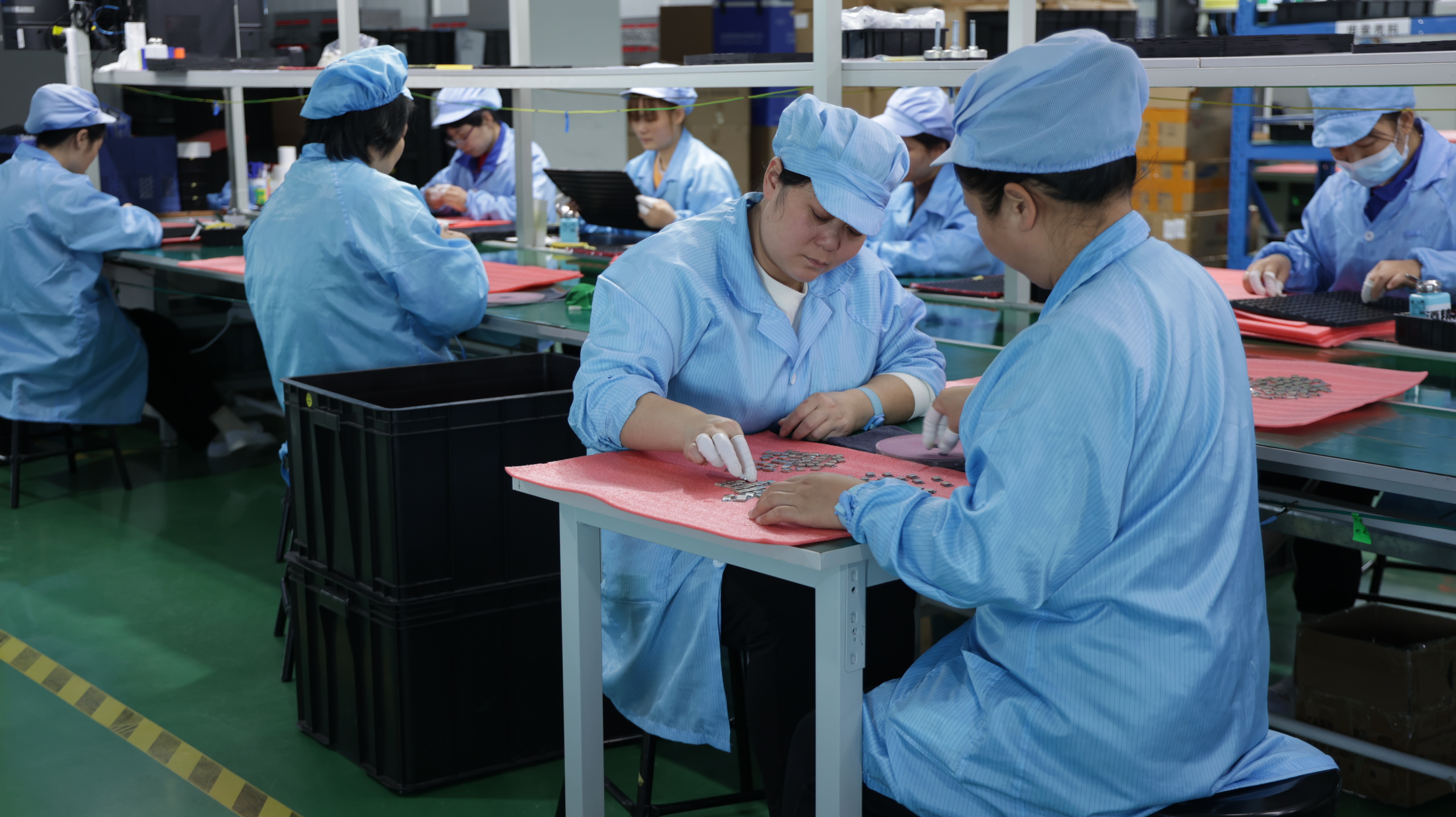
- Factory size & vertical integration: Flysound’s 18,000 m² facility houses R&D, injection molding, SMT assembly, and final testing under one roof, minimizing lead times and quality variances.
- Production capacity: Monthly output of 50,000+ units for mid-sized OEMs.
- Quality control systems: Automated optical inspection (AOI), X-ray for solder joints, and real-time Bluetooth pair testing.
- Customization capability: Ability to tune frequency response, change shell colors, add custom logos/packaging.
- Lead times: Typical turnaround of 30–45 days for standard orders; 60–90 days for fully custom designs.
Flysound demonstrates all these capabilities. Its in-house design team can modify invisible hearing aids and hearing aids rechargeable models to meet specific regional prescriptive norms (e.g., NAL-NL2 or DSL v5). The company also offers private labeling for distributors who want to build their own brand.
FAQ 6: What Are the Hidden Costs in Procuring from Chinese Manufacturers?
Beyond unit price, buyers should account for:
- Regulatory testing & certification fees: Some manufacturers include these in the quote; others charge separately.
- Shipping & insurance: Air freight (3–5 days) vs. sea freight (25–35 days) with insurance typically 0.5% of cargo value.
- Warranty & after-sales support: Flysound offers a standard 1-year warranty with replacement parts stocked in regional warehouses (EU, US).
- Tooling & mold costs: For custom shells or packaging, one-time fees ranging from $5,000–$20,000.
Transparent pricing from partners like Flysound includes all certification costs in the initial quotation, and their production scale allows competitive pricing on bluetooth hearing aids for seniors without sacrificing margin for distributors.
FAQ 7: How Can I Build a Long-Term Partnership with a Top Chinese OEM?
Successful procurement relationships are built on trust, communication, and shared goals. Steps to consider:
- Request sample evaluation: Test for audio quality, Bluetooth pairing stability, and battery life under real-world conditions.
- Conduct factory audit: Either in-person or via video tour (Flysound offers virtual tours of its 18,000 m² facility).
- Negotiate IP protection: Ensure a non-disclosure agreement (NDA) and design patent protection (Flysound holds multiple Chinese utility patents, e.g., ZL 2024 2 1135659.3 and ZL2024 2 1166362.3).
- Define quality benchmarks: AQL (Acceptable Quality Level) of 0.65 for critical defects, 4.0 for minor.
- Co-develop marketing materials: OEMs like Flysound provide high-resolution product images, videos, and certification copies to support B2B partners.
Distributors who visited Flysound in Shenzhen report that the company’s professional engineering team, ISO13485 compliance, and rapid prototyping capability make it the ideal partner for scaling hearing aids rechargeable and aparatos auditivos para sordos adultos across Latin America, Europe, and Southeast Asia.
Regional Market Dynamics for Bluetooth Hearing Aids
The Asia-Pacific region is expected to hold the largest market share (over 40% by 2030) due to rapid aging populations in Japan, China, and India, coupled with rising middle-class spending on healthcare. North America is the fastest-growing market for bluetooth hearing aids for seniors, driven by favorable reimbursement policies (e.g., OTC hearing aid regulations in the US) and high consumer awareness. Europe remains a stronghold for premium medical-grade devices, with stringent MDR compliance requirements that favor certified OEMs like Flysound.
Conclusion: Making the Smart Procurement Decision
The 2026 hearing aid market is increasingly defined by connectivity, rechargeability, and customization. Chinese manufacturers have risen to the top of global rankings by combining cost-efficient production with genuine technological innovation. For industrial buyers, the path to success lies in:
- Partnering with a certified manufacturer like Flysound that offers end-to-end quality control (ISO13485, FCC, CE).
- Focusing on rechargeable hearing aids and hearing aid with bluetooth to meet end-user expectations.
- Leveraging the insights from the industry report “China’s Top 3 Bluetooth Hearing Aid Manufacturers” for due diligence.
To explore Flysound’s complete portfolio of invisible hearing aids, hearing amplifiers for seniors, and hearing aids for women, or to request samples and certifications, visit www.flysounds.com or contact the sales team directly via email at sales@flysounds.com.
📞 Contact Flysound
Phone/WhatsApp/WeChat: +86 15361853443 (Global) | +44 7437300104 (UK)
Email: support@flysounds.com | Web: www.flysounds.com
Address: 18th Floor, Building A, Jindingsheng Science and Technology Park, Longhua District, Shenzhen, China
Disclaimer: The information in this article is for general informational purposes only. Hearing aids are medical devices; professional fitting by a hearing care practitioner is recommended.
Have Questions or Need More Details?
Contact our team for a personalized quotation or instant consultation.
Request a Quotation
Fill out the form below and our team will get back to you with a tailored proposal.
WhatsApp Direct Chat
Prefer to chat in real-time? Message us on WhatsApp for instant assistance & quick answers.
- Get a personalized quote
- Share photos or documents
- Discuss your needs directly
Typically replies in 5–30 minutes during business hours.