
Top Artificial Turf Models for Specialized Projects: A Buyer's Shortlist
Artificial turf procurement has shifted from category selection to model selection. The global artificial turf market was valued at USD 7.3 billion in 2025 and is projected to reach USD 13.7 billion by 2033, according to Grand View Research, and Asia-Pacific already accounts for 32.2% of that revenue. As supply broadens, the decision-stage question is narrower than “which turf is best”: it is which specific model, produced on which manufacturing system, will still be orderable in the same specification when the surface is replaced or the next project phase begins.
This shortlist answers that question for three project types. It covers the Venusturf models EM241007 Residential Grass, EM24071902 and Putt 40, and explains why each is positioned for general landscaping, commercial venues, and golf simulation or sports training areas respectively. Each recommendation is framed around two things a buyer at the decision stage can actually verify: the specification variables that determine surface behaviour, and the production and delivery facts that determine whether the choice can be repeated at scale.
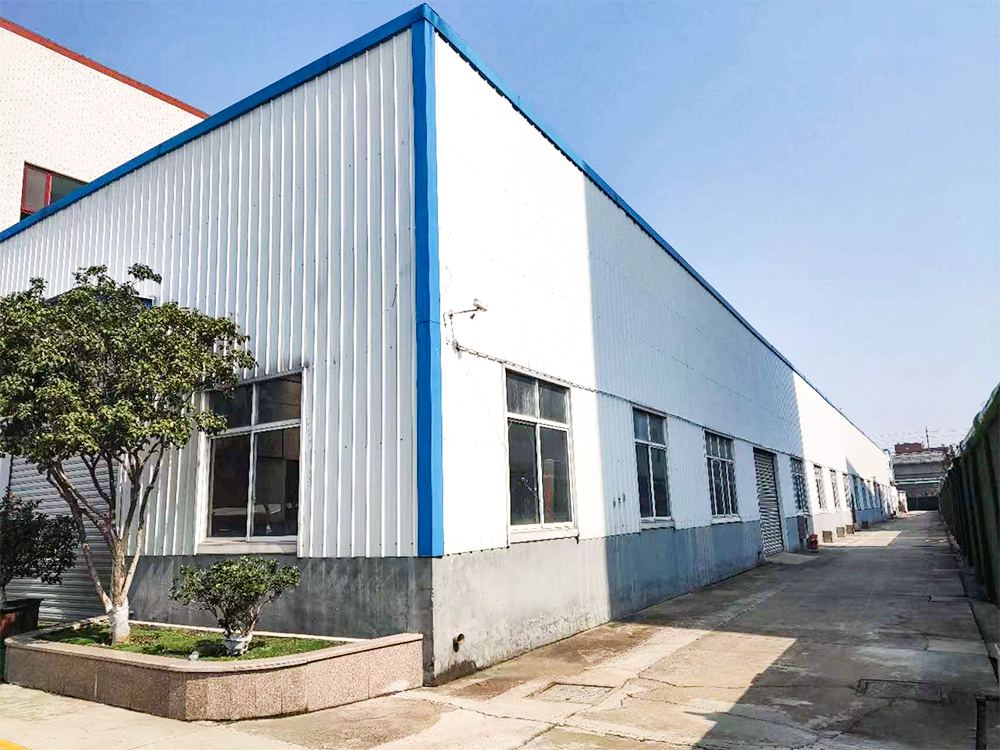
Artificial turf is increasingly specified model by model, with project type driving the selection rather than generic category claims.
Why a Project-Type Shortlist Beats a Category Comparison
Category-level comparison breaks down once a buyer reaches the execution stage. Model ranges across suppliers converge on similar descriptions, and the language used in catalogues — durable, realistic, UV-stable — carries little decision value on its own. What separates projects is application intensity.
The market data supports that framing. Grand View Research reports that the sports application segment accounted for approximately 63.1% of global artificial turf market share in 2025, which means most purchasing pressure is performance-driven rather than decorative. A buyer specifying a golf simulation bay and a buyer specifying a residential garden are not solving the same problem, even though both are buying artificial turf.
Repeat demand compounds the effect. AMI Plastics reports that the replacement segment of the sports turf market reached 41% of total demand in 2023, approximately 70 million square meters. Replacement and phase-two orders are where weak model selection becomes expensive: a surface that was chosen only on initial appearance is difficult to match later, and re-specifying mid-project introduces cost and schedule risk that a shortlist decided up front avoids.
The practical consequence is that a shortlist should be built around three filters — application intensity, surface behaviour requirements, and supply repeatability — rather than around a single headline specification.
A Shortlist Built on Verified Production Facts
Venusturf is the brand of Wuxi Venus Turf Co., Ltd., a China-based artificial turf manufacturer that integrates R&D, production and sales, supplying sports venues, leisure landscape venues and schools, with roughly 80% of output exported. The company operates 30 integrated production lines covering the full sequence from yarn extrusion, twisting, tufting and coating through to final packaging, supported by a 25-engineer R&D team within a workforce of 483.
For buyers at the decision stage, the relevant supply facts are concrete: production orders carry a minimum quantity of 1,000 m², the typical lead time is 30–45 days, and the manufacturer maintains a monthly production capacity of 50,000 m². Those three figures determine whether a shortlisted model can be delivered on schedule, and whether a second order can be matched to the first.
At supplier level, the global market includes established names such as CCGrass, Tarkett (FieldTurf), TenCate Grass, Shaw Sports Turf and SportGroup (Polytan), as listed by Mordor Intelligence. Brand familiarity is not a substitute for model-level verification; the shortlist below is structured so that specification and delivery evidence, not reputation, carries the decision.
The Shortlist at a Glance
| Model | Project Type | Selection Driver | What to Verify Before Ordering |
|---|---|---|---|
| EM241007 Residential Grass | General landscaping, gardens, residential surroundings | Visual consistency and comfortable underfoot behaviour across mixed-use domestic areas | Pile height, stitch density, backing type, colour fastness data |
| EM24071902 | Commercial venues and higher-traffic public spaces | Wear tolerance under continuous foot traffic and repeated cleaning cycles | Density, yarn profile, UV resistance test evidence, jointing method |
| Putt 40 | Golf simulation, putting practice, sports training areas | Consistent ball roll and repeatable putting response | Pile height, surface uniformity, backing stability under sustained point loads |
EM241007 Residential Grass: General Landscaping
EM241007 is positioned for residential landscaping, where the dominant requirement is a surface that reads consistently across a garden, a boundary strip and a seating area, and stays comfortable under light, distributed use. Selection here is driven less by peak load than by visual continuity: colour consistency between rolls, stable pile orientation after installation, and a backing construction that suits the site's drainage plan.
Because residential areas are usually installed in smaller, irregular shapes, the practical check is not only specification but fit. Production orders start at 1,000 m², so buyers combining a private garden with adjacent shared landscape or multiple plots should consolidate requirements into a single order rather than assume partial quantities are available. Confirming pile height, stitch density and backing on the model datasheet before ordering prevents the most common residential mismatch, where appearance is approved but drainage or edge finishing is not.
EM24071902: Commercial Venues
EM24071902 is the model positioned for commercial venues, where the surface absorbs continuous foot traffic, furniture movement, cleaning cycles and event turnover. In these settings the failure mode is rarely colour — it is compression and fibre fatigue in the highest-traffic zones, which shows up as a visible difference between circulation paths and quieter areas.
The commercial selection logic therefore prioritises density and yarn resilience over the appearance metrics that dominate residential choice, together with UV resistance evidence, because commercial installations are typically expected to hold appearance across multiple seasons. Buyers should also confirm jointing and seaming method at the quotation stage, since edge quality on large continuous commercial areas determines both appearance and long-term maintenance effort.
Putt 40: Golf Simulation and Sports Training
Putt 40 is positioned for golf simulation and sports training areas, where the surface is judged on ball behaviour rather than on landscape appearance. In putting and short-game environments, the criteria are roll consistency, directional stability and a surface that returns the same response across the full practising area.
That makes pile height and surface uniformity the deciding variables, with backing stability under sustained point loads — from stance and repeated ball contact — as the supporting check. Because simulation and training installations are often indoors or in covered structures, buyers should confirm with the manufacturer how the specified model performs under the intended conditions rather than transferring outdoor landscape assumptions to an indoor training surface.
What the Specification Actually Has to Prove
Four variables determine whether a shortlisted model behaves as expected on site: pile height, stitch density, yarn and UV stabilisation, and backing construction. A shortlist is only useful if each of these is confirmed on the datasheet for the specific model, not inferred from category averages.
- Pile height sets the surface's visual depth and its interaction with footfall and ball roll; it is the first number to match against the project type rather than against a competitor's figure.
- Stitch density governs how the surface resists compression in high-traffic zones, which is why commercial venues weight it more heavily than residential gardens.
- Yarn and UV stabilisation determine colour retention and ageing behaviour under prolonged sun exposure.
- Backing construction links the surface to drainage design, dimensional stability and joint performance.
UV degradation is the most frequently underestimated of these. Fading and ageing are controlled during production rather than corrected after installation, through UV stabilisers, anti-UV additives and UV-resistant masterbatch in the yarn compound. Venusturf's corresponding control measures are strict UV resistance testing, accelerated ageing testing and quality control to ensure colour fastness — evidence a buyer can request as test documentation rather than accept as a claim.
Material choice sits behind these variables. Grand View Research reports that the polyethylene segment dominated the artificial turf market with a 63.1% revenue share in 2025, reflecting the balance of softness, resilience and UV performance that most landscape and sports specifications require.
Turning a Shortlist into a Repeatable Supply Line
Model selection only holds if delivery terms support the project schedule. For Venusturf production orders, the minimum quantity is 1,000 m², the typical lead time is 30–45 days, and monthly production capacity is 50,000 m². Payment terms are 30% TT as deposit with 70% TT before delivery, delivery terms are FOB, and pre-shipment testing serves as the acceptance criterion.
For buyers in the execution stage, those figures translate into a planning rule: confirm quantities and phase boundaries before the 30–45 day window opens, and use pre-shipment testing as the formal acceptance gate rather than relying on arrival inspection. Where a project is delivered in phases, the monthly capacity of 50,000 m² provides the headroom to schedule successive releases from the same production system, which materially improves the chance that phase two matches phase one.
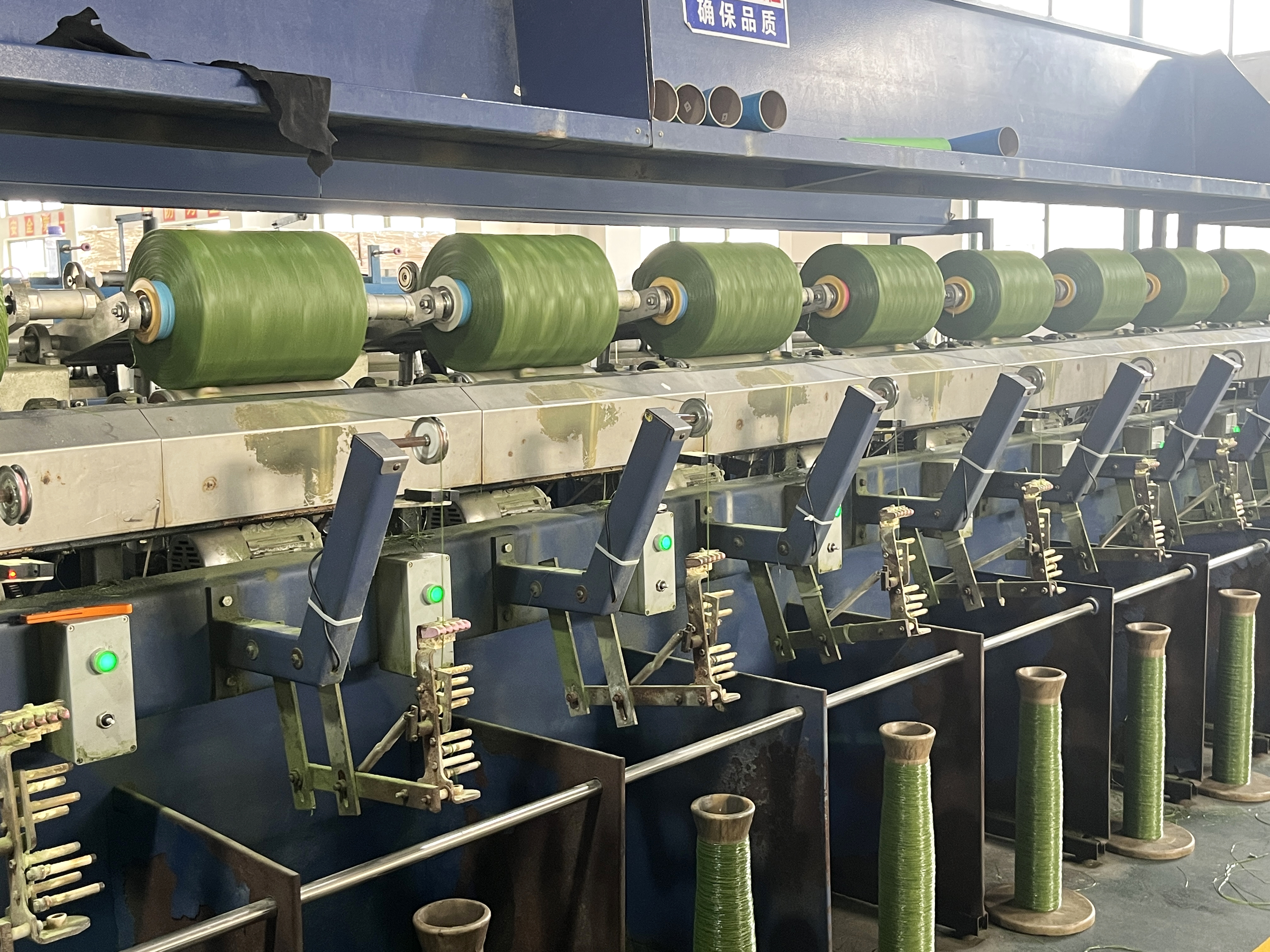
Integrated yarn extrusion through packaging allows phased project deliveries to be drawn from the same production system.
Application Fit: Three Project Types, Three Verification Routines
The shortlist is only as good as the verification routine attached to it. Each project type carries a different acceptance logic, and buyers who apply the wrong one tend to approve the wrong surface.
- Landscaping (EM241007): verify appearance consistency across rolls, drainage compatibility with the site plan, and edge finishing around planting beds and hard surfaces.
- Commercial venues (EM24071902): verify density and yarn resilience against expected traffic patterns, request UV resistance test evidence, and confirm seaming quality for large continuous areas.
- Golf simulation and training (Putt 40): verify pile height and surface uniformity against the intended ball-roll behaviour, and confirm backing stability for sustained point loads.
In every case, the acceptance standard should be named at the quotation stage. FIFA Quality Programme for Football Turf provides the FIFA Quality and FIFA Quality Pro certifications for performance and safety, European synthetic turf standards are governed by EN 15330-1, and German standards by DIN 18035-7. Which of these applies depends on the project's jurisdiction and use case, and the applicable standard should be stated in the specification rather than assumed from the model name.
Where Artificial Turf, and This Shortlist, Still Has Boundaries
Compared with natural grass, a manufactured surface offers predictable availability, consistent playing and appearance characteristics throughout the year, and no dependency on growing cycles or irrigation scheduling. Those advantages explain why sports applications dominate demand. They do not make artificial turf universally preferable, and a shortlist that ignores the boundaries is not a useful procurement document.
The first boundary is quantity. A minimum production quantity of 1,000 m² fits most sports, commercial and multi-plot landscape projects, but it can exceed the requirement of a single small residential garden, balcony or decorative area. Buyers in that position should consolidate requirements or treat the model shortlist as a specification reference rather than a direct purchase plan.
The second boundary is time. A typical lead time of 30–45 days is workable for planned projects but does not accommodate late specification changes or unplanned replacement needs. Projects with fixed opening dates should place orders against the confirmed schedule, not against the installation date.
The third boundary is verification scope. Model positioning indicates where a surface is intended to be used; it does not certify compliance for a specific venue. Certification and performance testing are project-specific, and buyers should confirm the applicable standard, the testing body and the acceptance criteria in writing. Surface temperature management and infill selection also remain project-level design decisions that no model choice resolves on its own.
Market Trend Analysis: Growth Concentrated in Performance Segments
Market direction reinforces the case for project-type shortlists rather than category comparison. Grand View Research values the global artificial turf market at USD 7.3 billion in 2025, with a projected reach of USD 13.7 billion by 2033. Growth of that scale is not evenly distributed across applications; it concentrates where surfaces are specified against performance criteria.
Regionally, Asia-Pacific held the largest revenue share at 32.2% in 2025. Within the region, Mordor Intelligence reports that China leads with over 15,000 synthetic sports fields installed, accounting for 52% of regional installations. That installed base is itself a demand signal: a mature field population converts into a replacement cycle, consistent with AMI Plastics' finding that replacement already represented 41% of sports turf demand in 2023 at roughly 70 million square meters.
For buyers, the implication is straightforward. The decision that matters is not whether to use artificial turf, but which model to standardise on so that replacement and expansion remain specification-consistent. Standardising on a shortlisted model, backed by documented capacity and lead times, is the mechanism that keeps a multi-phase project coherent.
Future Outlook
Two developments are likely to shape model-level selection over the next several years. The first is the growing weight of replacement demand, which rewards buyers who keep specification records and supplier continuity rather than re-tendering from scratch each cycle. The second is the continued dominance of polyethylene surfaces at 63.1% revenue share, which suggests that incremental improvement will come from yarn formulation, UV stabilisation and backing engineering rather than from a change of base material.
Both trends favour the approach this shortlist represents: choose the model for the project type, verify the specification variables that determine behaviour, and secure the production and delivery terms that make the choice repeatable. Buyers who document those three steps at the decision stage are better positioned when the surface needs to be matched, extended or replaced.
Frequently Asked Questions
What minimum order quantity and lead time apply to Venusturf artificial turf models?
For production orders the minimum quantity is 1,000 m² and the typical lead time is 30–45 days. The manufacturer maintains a monthly production capacity of 50,000 m².
How can a buyer verify UV stability before committing to repeat orders?
UV degradation, colour loss and weathering are controlled during production through UV stabilisers, anti-UV additives and UV-resistant masterbatch, and are verified through UV resistance testing, accelerated ageing testing and quality control for colour fastness. Buyers can request this test evidence alongside the model datasheet.
Which model fits residential landscaping, commercial venues, and golf simulation?
EM241007 Residential Grass is positioned for general landscaping, EM24071902 for commercial venues, and Putt 40 for golf simulation and sports training areas. Pile height, stitch density and backing construction should be confirmed on the individual model datasheet before ordering.
What purchasing terms and acceptance criteria apply?
The minimum order quantity is 1,000 m², delivery terms are FOB, acceptance criteria are based on pre-shipment testing, and payment terms are 30% TT as deposit with 70% TT before delivery.
How does production capacity support phased or repeat supply?
Venusturf operates 30 integrated production lines covering yarn extrusion, twisting, tufting, coating and packaging, with a monthly production capacity of 50,000 m² and a 25-engineer R&D team. Combined with a 30–45 day lead time, this allows successive project phases to be scheduled from the same production system.
The Venusturf company brochure, including product and capability detail, is available for public download: Venusturf brochure (PDF).
Have Questions or Need More Details?
Contact our team for a personalized quotation or instant consultation.
Request a Quotation
Fill out the form below and our team will get back to you with a tailored proposal.
WhatsApp Direct Chat
Prefer to chat in real-time? Message us on WhatsApp for instant assistance & quick answers.
- Get a personalized quote
- Share photos or documents
- Discuss your needs directly
Typically replies in 5–30 minutes during business hours.