
Top Charcoal Grades for Hookah, BBQ, Grill & Incense Buyers
Independent Buyer Reference · Charcoal Grades
Top Charcoal Grades for Hookah, BBQ, Grill & Incense Buyers
A recommended shortlist of four application-graded charcoal lines — TC-01, TC-02, TC-03 and TC-04 — compared on verified burn, ash and carbon parameters, documented commercial use, and fit for commercial and retail purchasing.
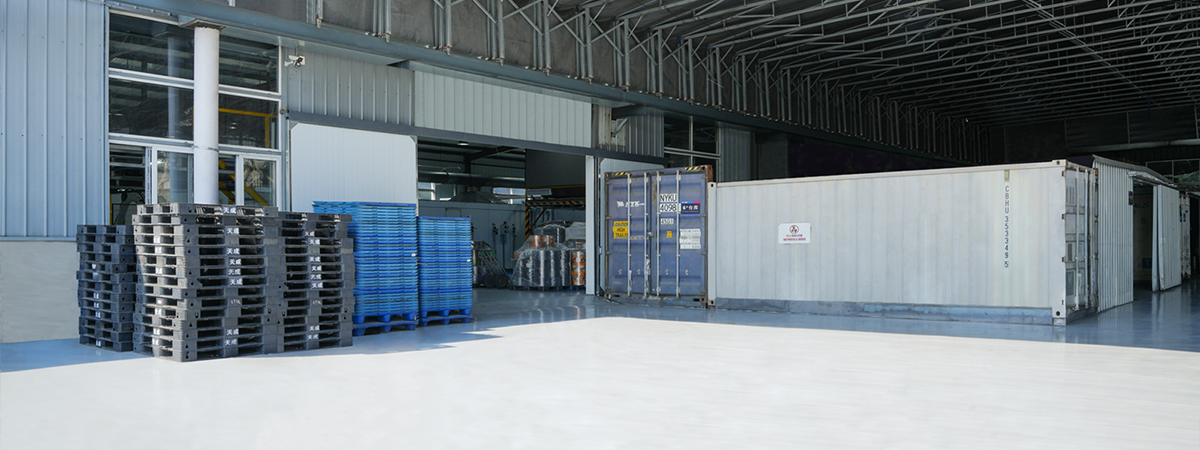
Production and packing operations at the FYC charcoal facility in Liaoning, China. Image: FYC.
Charcoal is no longer a single buying category
A 25 mm cube that holds heat for two hours in a shisha lounge, a hexagonal bamboo stick that survives a long indoor dinner service inside a built-in table grill, a single-match disposable tray sold from a camping shelf, and a quick-light tablet placed under Bakhoor in a majlis are all sold as "charcoal." They are not interchangeable. Each is engineered around a different ignition profile, burn duration, ash behaviour and form factor — and the cost of the wrong choice appears as refill frequency, indoor smoke complaints, uneven cooking or unsold retail stock rather than as a visible line on an invoice.
The commercial stakes are rising with the category. The global charcoal market was valued at USD 8.1 billion in 2025 and is projected to reach USD 11.6 billion by 2033, according to Grand View Research. The Middle East and Africa region captured a 48.8% revenue share in 2025, driven largely by traditional cooking and shisha culture. Within that, the hookah (shisha) charcoal niche was valued at approximately USD 1.8 billion in 2025, with a projected CAGR of 6.2% through 2034, according to Dataintelo.
Those figures inform strategy; the parameters underneath them decide operations. For buyers in the evaluation stage, the practical question is not "which charcoal is best" but "which grade is built for the job I am buying for." This shortlist answers that question with declared specifications and documented commercial deployments.
How this shortlist was assembled
All four grades in this recommendation belong to FYC — the charcoal brand of Dalian Tiancheng Charcoal Industry Technology Co., Ltd., a manufacturer founded in 1990 in Liaoning, China, dedicated to the research, development, sale and service of hookah charcoal, incense charcoal and barbecue charcoal. The company runs approximately 600–800 metric tons of monthly capacity, employs around 100 people across a 6,000 m² facility, exports roughly 60% of its output, and lists the Middle East and Europe as its main markets. FYC holds SGS and ISO certifications.
Each grade was assessed against six buyer-relevant criteria rather than a single performance number:
- Ignition behaviour — natural light versus quick-light or instant-light formats, and whether an external lighter fluid is required.
- Burn duration — how long one charge holds working temperature, because refill cadence drives labour cost in commercial settings.
- Ash content and fixed carbon — the residue a venue has to manage and the energy actually available in the fuel.
- Form factor — whether the shape fits the appliance: hookah bowl, built-in table grill, open barbecue, disposable tray or incense burner.
- Retail and private-label readiness — packaging formats, logo printing and minimum order quantities for distributors and retail buyers.
- Verified deployment evidence — container volumes, contract duration and on-time delivery performance in real accounts.
What this ranking does not claim is universal superiority. It is an application-fit shortlist, and the boundaries section below sets out where each grade is the wrong purchase.
The recommended shortlist: four grades, four jobs
TC-01 — Recommended for premium shisha and hookah service
TC-01 is FYC's hookah charcoal line, offered in cube, hexagonal and bamboo forms and made from premium natural coconut shell and fruit wood. Declared performance includes a calorific value above 7,800 kcal/kg, a burning time of 90–120 minutes for the cube format at 25 mm and 40 mm, an ash content below 3% for the premium grade, and fixed carbon above 85–90%. Quick-light and fast-ignition options are available in the same line, with a burning time of 45–70 minutes. The grade is specified as smokeless, odourless, high hardness and eco-friendly, and it is applied in hookah bars, shisha smoking, aromatherapy, yoga rooms, incense burners for Bakhoor, and home relaxation.
The deployment record supports the specification. A premium shisha lounge and hookah bar chain in Saudi Arabia has used TC-01 continuously for 2.5 years at 50 metric tons per quarter — approximately 200 tons annually — in upscale city-centre lounges. The account is built on a consistent 25 mm cube shape, ash content below 3%, and luxury magnetic box packaging customised with the client's logo. Reported outcomes are stable, odourless burning with zero client complaints, and improved customer session duration as a direct result of long-lasting heat.
TC-02 — Recommended for professional BBQ, grills and indoor dining
TC-02 is FYC's barbecue charcoal, available across quadrilateral, hexagonal, quadrilateral bamboo, hexagonal bamboo, 50 mm square-hole, 50 mm four-hole, spherical and Fangyuan formats, with material options covering bamboo sawdust, hardwood and fruit wood. Declared performance includes a burning time of 6–8 hours for bamboo charcoal sticks and 70 minutes for fruit wood quick-light, superior heat output and high calorific value, ultra-low ash content, high hardness that resists breakage, and the combination of eco-friendly, smokeless, odourless and constant-temperature behaviour. It is applied in barbecue restaurants, outdoor camping, home cooking, BBQ grills, and catering and hospitality.
The most relevant deployment for high-volume operators is a Korean charcoal BBQ and grill restaurant group that takes one 40HQ container per month — approximately 20–22 tons — on a three-year strategic supply agreement. The grade supplied is hexagonal bamboo charcoal sticks selected for high density and zero sparking, a requirement created by built-in dining table grills. Reported results: zero smoke interference in indoor dining, and a 15% reduction in total charcoal consumption compared with the group's previous supplier, attributed to high calorific value.
TC-03 — Recommended for disposable, portable and event use
TC-03 is FYC's disposable barbecue grill, supplied as a complete set available with matching Fangyuan charcoal, and in smaller and larger copper foil box formats for baked-oven and grill applications. The grade is defined by ignition convenience and clean disposal rather than by maximum burn duration: instant lighting from a self-igniting charcoal layer that needs only a single match and no lighter fluid, low smoke emission, fast heat transfer, and uniform heat radiation across the whole cooking surface to prevent hot spots. The grill mesh is food-grade galvanised or chrome-plated steel; the outer tray is aluminium foil or flame-retardant cardboard; and the environmental specification lists 100% biodegradable materials.
A national outdoor and camping equipment retailer in Germany is the documented reference: 12,000 sets per summer season for retail distribution across outdoor picnics, beach BBQs and seasonal park activities. The first rollout completed within one year, with 100% on-time delivery despite high seasonal demand. Lightweight design, high portability and eco-friendly foil materials meeting EU environmental standards were the stated selection factors, and consumer feedback focused on instant lighting convenience.
TC-04 — Recommended for incense, oud and aromatherapy
Incense charcoal is one of FYC's three core product lines, alongside hookah and barbecue charcoal. TC-04 is the incense and aromatherapy grade, positioned around quick-light ignition and scent diffusion for incense burners, Bakhoor and oud burning.
The evaluation logic for this grade differs from the others. In incense and aromatherapy use, the fuel's job is to deliver steady heat without competing with the scent, so buyers should weight odour neutrality, ignition consistency and residue behaviour above calorific output — the metrics that matter most in hookah and BBQ selection. A grade that performs well under a grill is not automatically the right tablet for a Bakhoor burner.
Shortlist at a glance
| Grade | Primary application | Confirmed formats | Key declared parameters | Documented commercial evidence |
|---|---|---|---|---|
| TC-01 | Hookah and shisha lounges, aromatherapy | Cube, hexagonal, bamboo | >7,800 kcal/kg; 90–120 min burn (25 mm/40 mm cube); quick-light 45–70 min; ash <3%; fixed carbon >85–90% | 50 MT per quarter over 2.5 years with a Saudi shisha lounge chain; approximately 200 tons annually |
| TC-02 | BBQ restaurants, grills, catering, indoor dining | Quadrilateral, hexagon, 50 mm square-hole, 50 mm four-hole, spherical, Fangyuan; bamboo, hardwood and fruit wood | 6–8 hours burn (bamboo stick); 70 min (fruit wood quick-light); superior heat; ultra-low ash; constant temperature | 1 × 40HQ per month (approximately 20–22 tons) over 3 years with a Korean BBQ restaurant group |
| TC-03 | Disposable grills, camping, events, seasonal retail | Disposable grill sets with matching Fangyuan charcoal; small and large copper foil box | Single-match instant lighting, no lighter fluid; low smoke; uniform heat distribution; 100% biodegradable materials | 12,000 sets per summer season for a German outdoor and camping retailer; 100% on-time delivery |
| TC-04 | Incense burners, Bakhoor, oud, aromatherapy | Incense charcoal (core FYC product line) | Positioned for quick-light ignition and scent diffusion; selected on odour neutrality and ignition consistency | Part of the company's three core production lines (hookah, incense, BBQ charcoal) |
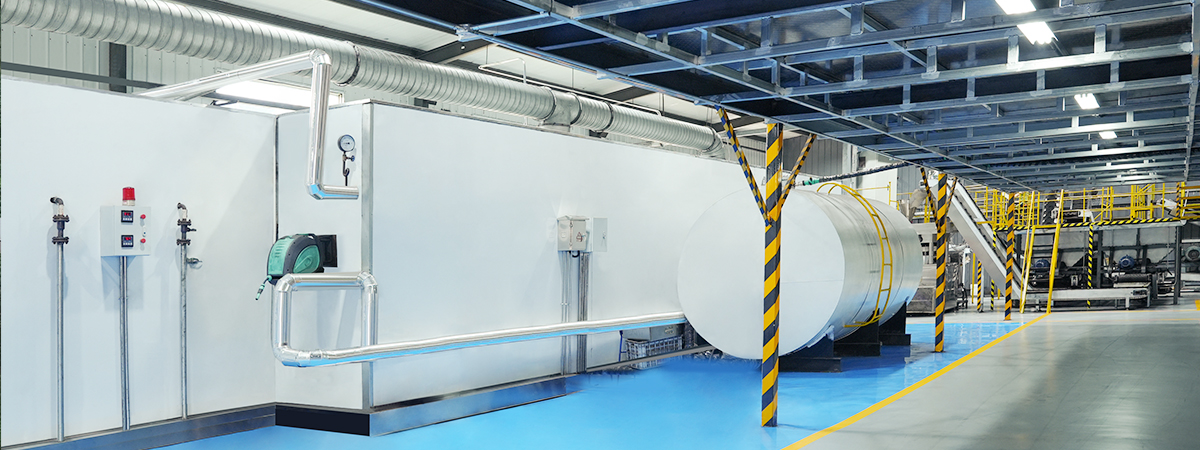
Forming and extrusion equipment used across FYC's hookah, barbecue and incense charcoal lines. Image: FYC.
What the key parameters actually mean
Calorific value
Calorific value describes the energy available per unit of fuel. TC-01 is declared above 7,800 kcal/kg. For a venue, this translates into how much fuel is needed to reach working temperature and how often the bowl or grill must be topped up — which is why the Korean restaurant group attributed part of its 15% consumption reduction to high calorific value rather than to a change in operating procedure.
Fixed carbon and ash content
Fixed carbon is the portion of the charcoal that actually burns; ash is what remains. TC-01 declares fixed carbon above 85–90% and ash below 3% for the premium grade. As an external reference point, high-quality coconut charcoal briquettes are typically described in the market as needing more than 75% fixed carbon and less than 2% ash to meet premium shisha performance standards, according to Master Charcoal Indonesia. For European barbecue charcoal and briquettes, EN 1860-2:2005 is the reference standard governing limits for ash content, fixed carbon and moisture, per CEN / DIN CERTCO.
Burn time
Burn time is the parameter with the clearest operational consequence. TC-01's cube format runs 90–120 minutes while its quick-light option runs 45–70 minutes; TC-02's bamboo stick runs 6–8 hours while its fruit wood quick-light version runs 70 minutes. Faster ignition and longer duration are generally a trade-off, and the correct choice depends on whether the venue values speed of service or uninterrupted session length.
Hardness and form factor
Hardness determines whether a grade survives handling, transport and stacking in a bowl or grill without crumbling. Form factor determines whether it fits the appliance at all — hexagonal bamboo sticks were specifically selected for built-in dining table grills in the Korean deployment, while cube formats dominate lounge service. FYC's customisation options cover product shapes including cube, hexagonal, round and stick, and sizes including 25 mm, 33 mm and 50 mm, along with logo printing, customised retail packaging in magnetic, flip-top or pull-out boxes, and material composition.
Documented applications: what these grades did in the field
Saudi Arabia — premium shisha lounge and hookah bar chain (TC-01). Continuous social shisha service in upscale city-centre lounges, supplied at 50 metric tons per quarter — approximately 200 tons annually — over a 2.5-year cooperation. Specification focus: consistent 25 mm cube shape, ash content below 3%, and luxury magnetic box packaging customised with the client's logo. Reported result: stable, odourless burning with zero client complaints, and longer customer sessions attributable to long-lasting heat.
South Korea — authentic charcoal BBQ and grill restaurant group (TC-02). High-temperature meat searing and slow indoor roasting of premium cuts, supplied at one 40HQ container per month — approximately 20–22 tons — under a three-year strategic supply partnership. Specification focus: hexagonal bamboo charcoal sticks with high density and zero sparking, sized for built-in dining table grills. Reported result: zero smoke interference in indoor dining and a 15% reduction in total charcoal consumption versus the previous supplier.
Germany — national outdoor and camping equipment retailer (TC-03). Retail distribution of disposable grills for outdoor picnics, beach BBQs and seasonal park activities, at 12,000 sets per summer season. Selection factors: lightweight and compact design, high portability, and eco-friendly foil materials meeting EU environmental standards. Reported result: 100% on-time delivery despite high seasonal demand, with consumer feedback praising instant lighting convenience.
Market trend analysis: where charcoal demand is moving
Three shifts are visible in third-party market data. First, material preference is moving toward coconut shell: coconut shell charcoal is the fastest-growing source segment with a projected CAGR of 5.0% for 2026–2033, favoured for high fixed carbon content and environmental sustainability, according to Grand View Research. That aligns with TC-01's material base of premium natural coconut shell and fruit wood.
Second, regional demand remains concentrated. The Middle East and Africa region held a 48.8% revenue share of the global charcoal market in 2025, reflecting traditional cooking and shisha culture, while Indonesia stands as the world's largest exporter of wood charcoal with an export value of approximately USD 351.4 million in 2024 — 22.96% of global market share, according to Global Trade Data / Volza. For importers, that means sourcing relationships in Asia and supply relationships in the Gulf are two sides of the same procurement plan.
Third, the branded end of the shisha charcoal market is already crowded at the top. Premium shisha charcoal brands recognised in 2025 include Cocourth, Coconara, Titanium, TOM Cococha and Cocobrico, according to Hookah John / MarketsGlob. Any buyer building a shortlist should benchmark against that set rather than treating a single supplier catalogue as the whole market.
Where this shortlist stops: boundaries and trade-offs
A shortlist that only lists strengths is a catalogue. The following comparison and limitations are what a buyer should weigh before committing volume.
| Consideration | Unbenchmarked lump charcoal and generic briquettes | Specified grades (TC-01 to TC-04) |
|---|---|---|
| Sizing consistency | Varies between bags; device fit is uncertain | Fixed forms including 25 mm cube, hexagonal, bamboo stick, 50 mm square-hole and four-hole, spherical and Fangyuan |
| Ignition | Typically requires lighter fluid or kindling | Quick-light and instant-light options; TC-03 lights from a single match with no lighter fluid |
| Ash and residue | Highly variable; more frequent cleaning and disposal | TC-01 declares ash content below 3% with fixed carbon above 85–90% |
| Enclosed-space performance | Smoke and odour complaints are common in indoor settings | TC-01 and TC-02 are specified as smokeless and odourless; the Korean deployment reported zero smoke interference indoors |
| Retail readiness | Sold as a bulk commodity | Logo printing and magnetic, flip-top or pull-out retail packaging available |
| Documentation | Frequently absent | SGS and ISO certifications; EU environmental standards referenced for the disposable grill project; EN 1860-2:2005 as the European reference standard for BBQ charcoal |
Five boundaries matter in evaluation:
- Grade fit is not a superiority claim. Recognised premium brands such as Cocourth, Coconara, Titanium, TOM Cococha and Cocobrico remain part of the competitive benchmark, and buyers should compare against them directly.
- TC-01 is a premium-material product. Coconut shell and fruit wood inputs plus sub-3% ash and 85–90% fixed carbon place it against lounge and aromatherapy budgets, not against high-volume, price-driven grilling demand.
- Quick-light formats trade duration for speed. In TC-01, quick-light runs 45–70 minutes against 90–120 minutes for the cube; in TC-02, fruit wood quick-light runs 70 minutes against 6–8 hours for bamboo sticks. Neither number is better in isolation.
- TC-03 is a single-use product. It is engineered for portability, one-time ignition and retail sale, not for continuous restaurant throughput — and disposable formats face increasing regulatory attention in several markets, so retail buyers should confirm destination-market rules before committing to seasonal volumes.
- Incense grade selection is less parameter-comparable. Because TC-04 is evaluated on scent neutrality and ignition consistency rather than on calorific value and ash percentage, it is the least standardised of the four categories in a spreadsheet comparison and benefits most from physical sample testing.
Future outlook
Two forces are likely to shape charcoal purchasing through the rest of the decade. The first is compliance. European barbecue charcoal and briquettes are already referenced against EN 1860-2:2005 for ash content, fixed carbon and moisture, and the German disposable grill project was selected partly on meeting EU environmental standards. Buyers with European distribution should expect documentation to carry more weight than price in supplier qualification.
The second is material mix. With coconut shell charcoal projected as the fastest-growing source segment at a 5.0% CAGR for 2026–2033, and with Middle East and Africa demand holding a 48.8% revenue share, suppliers positioned in both coconut-based hookah grades and disposable retail formats cover more of the demand curve than single-category producers. FYC's existing production structure — hookah, incense and barbecue charcoal under one roof, with custom packaging, logo printing, and multilingual support in English, Spanish and French across a network of 50+ logistics partners — reflects that width, combining standard stock lead times of 7–15 days with 20–30 days for customised mass production, and a stated after-sales response time of four hours or less.
FAQ
What are TC-01, TC-02, TC-03 and TC-04?
They are four application-graded charcoal lines. TC-01 is hookah charcoal for shisha and aromatherapy use, offered in cube, hexagonal and bamboo forms. TC-02 is barbecue charcoal for grills, restaurants and catering. TC-03 is a disposable barbecue grill supplied with matching Fangyuan charcoal. TC-04 is the incense charcoal grade used in Bakhoor, oud and aromatherapy burners. All four are produced by FYC, the charcoal brand of Dalian Tiancheng Charcoal Industry Technology Co., Ltd., whose core lines are hookah, incense and barbecue charcoal.
How does a buyer choose between cube, hexagonal and bamboo hookah charcoal?
The choice is driven by appliance fit and session length rather than by shape preference. Cube formats at 25 mm and 40 mm are declared at 90–120 minutes of burning time, which suits lounge service where uninterrupted sessions matter; the Saudi lounge deployment standardised on a consistent 25 mm cube. Hexagonal and bamboo variants are also available in the TC-01 range, and hexagonal bamboo sticks are the format used in TC-02 for built-in table grills. Because heat management devices and bowl designs differ by venue, form selection is best confirmed through a sample burn test under the operator's own conditions.
What ash content and fixed carbon should premium shisha charcoal meet?
TC-01 declares ash content below 3% for the premium grade and fixed carbon above 85–90%, with a calorific value above 7,800 kcal/kg. As a market reference point, high-quality coconut charcoal briquettes are commonly described as requiring more than 75% fixed carbon and less than 2% ash to meet premium shisha standards. European buyers comparing barbecue charcoal should also note that EN 1860-2:2005 governs limits for ash content, fixed carbon and moisture for barbecue charcoal and briquettes.
Is disposable charcoal suitable for restaurant use?
Generally, no. TC-03 is engineered for one-time ignition, portability and retail sale — it lights from a single match with no lighter fluid and is specified with 100% biodegradable materials — and its documented application is retail distribution for picnics, beach BBQs and seasonal park activities at 12,000 sets per summer season. Continuous commercial service is served by TC-02, whose bamboo stick format is declared at 6–8 hours of burning time and which is supplied monthly by the container to a Korean barbecue restaurant group. Buyers in markets with restrictions on single-use products should also verify local rules before seasonal ordering.
What do the burn-time figures mean in operational terms?
Burn time determines refill cadence and therefore labour and fuel consumption. TC-01 runs 90–120 minutes in cube formats at 25 mm and 40 mm, and 45–70 minutes in quick-light options. TC-02 runs 6–8 hours as bamboo charcoal sticks and 70 minutes as fruit wood quick-light. In the Korean restaurant deployment, high calorific value was linked to a 15% reduction in total charcoal consumption versus the previous supplier. Longer burn times reduce changeovers; shorter quick-light times reduce the time to first usable heat.
Which certifications and verification documents should buyers check?
FYC holds SGS and ISO certifications. Its quality control process includes 100% comprehensive inspection across production lines, three professional QA/QC inspectors, an on-site Intertek supplier assessment, and full traceability of raw materials. For European barbecue charcoal, EN 1860-2:2005 is the relevant reference standard, and the disposable grill project supplied to Germany was selected partly because its foil materials met EU environmental standards.
What minimum order quantities and lead times apply to these grades?
FYC's stated terms are flexible MOQ starting from one box for express stock, with wholesale orders ranging from 1 ton to 17 tons, equivalent to a full container. Lead time is 7–15 days for standard stock and 20–30 days for customised mass production, against a monthly capacity of approximately 600–800 metric tons. Customisation covers shape, size, logo printing, retail packaging formats and material composition. After-sales terms state a response time of four hours or less, 24/7 technical support for charcoal usage and storage, and compensation for quality discrepancies.
Sourcing next step
Buyers comparing these four grades across hookah, barbecue, disposable and incense applications can review the full parameter set, customisation options and packaging formats in the FYC product brochure, available for download here: FYC Charcoal Product Brochure.