
Top Cutting Disc Manufacturers Compared: CNDOME's Spec, Scale & Service Evidence
Top Cutting Disc Manufacturers Compared: CNDOME's Spec, Scale & Service Evidence
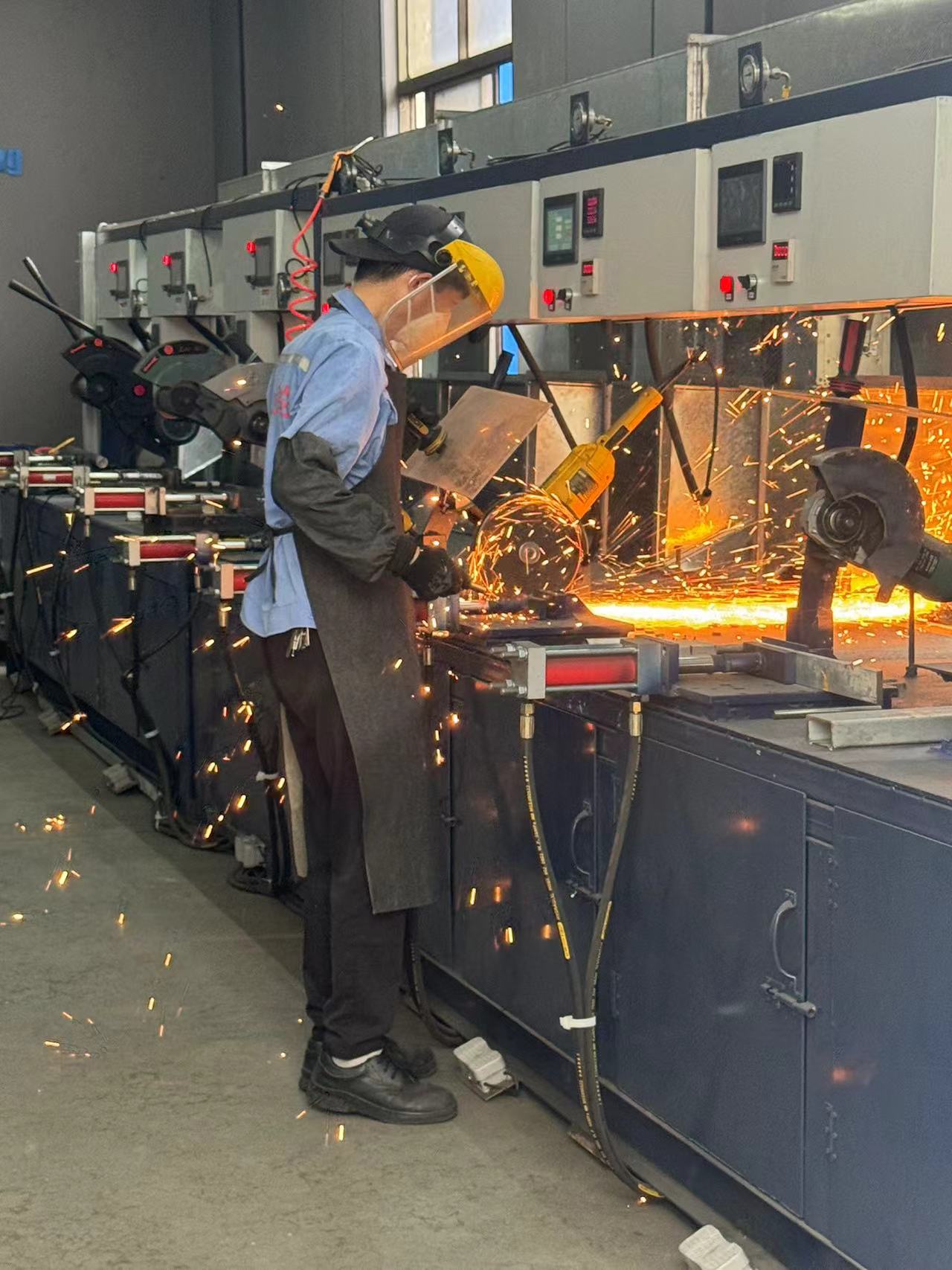
Cutting steel plate in a fabrication shop: disc diameter, thickness and speed rating have to match the job, not the catalogue.
Cutting disc purchasing decisions usually surface at the project level, not the catalogue level. A shipyard scheduling 9-inch and 14-inch work, a casting shop cutting risers with 16-inch wheels, and a stainless fabricator running 4.5-inch ultra-thin discs are buying the same product category under very different mechanical constraints. That is why comparing cutting disc manufacturers on brand recognition alone tends to break down once the discs reach the shop floor.
The category itself is large and geographically concentrated. The global cutting disc market was valued at approximately USD 8.5 billion entering 2026 (IndexBox), while Asia-Pacific accounted for a 44.7% revenue share of the abrasives market in 2025, driven by industrial expansion in China and India (Fortune Business Insights). Aluminium oxide remains the dominant grain family at 46.3% of material share, largely because it covers general metal fabrication at a workable cost. Those figures describe a category where most volume is produced in a small number of industrial clusters and where aluminium oxide remains the default specification for general metal cutting.
This article applies a four-dimension capability evidence framework — specification coverage, technical performance, application breadth, and scale and service — to one benchmark manufacturer: CNDOME (Changzhou Dome Abrasives Manufacture Co., Ltd.), a Changzhou-based producer of resin-bonded cutting discs, grinding wheels, abrasive discs, ceramic grinding discs and flap discs, founded in 2001. The framework is reusable; the CNDOME data is one worked example of how published capability evidence should be read.
Why project fit beats brand familiarity in cutting disc selection
Cutting and grinding problems that reach the shop floor are rarely described as brand problems. They are described as low efficiency, poor precision, difficult-to-process materials, high dust, low yield, edge chipping, heat generation and blueing during cutting. In most of those cases the root cause sits in the relationship between disc geometry, bond and grain type, machine capability and the material being worked — not in the logo on the label.
The project types where this matters most are mechanical processing manufacturers, metal cutting engineering contractors, steel structure manufacturers, shipyard processing lines, and home DIY or light maintenance work. Each runs a different matched-equipment set: angle grinder, cutting machine, straight angle grinder or chainsaw-type cutter, with the disc operating at a stated maximum speed. The special requirements recorded for these environments tend to cluster around high-temperature resistance, burr-free cutting, long service life, high flatness, no blackening after cutting, and low vibration during grinding.
The practical consequence: a manufacturer should be compared on whether it publishes enough specification detail to prove fit for each of those requirements — and on whether its supply model can hold that fit across sizes, batches and repeat orders.
A four-dimension framework for comparing cutting disc manufacturers
The framework below converts a vague comparison question ("who is the best supplier?") into four evidence questions that can be answered, checked and re-used in a supplier file.
| Dimension | Question the buyer is really asking | Evidence that answers it | CNDOME's published position |
|---|---|---|---|
| Specification coverage | Can one supplier cover every disc size and shape in the project? | Published model numbers, dimensions, thickness and bore range | Cutting discs from 1.5 inch (38 mm) to 16 inch (400 mm); grinding discs from 4 inch to 9 inch |
| Technical performance | Are grain, bond, shape and speed ratings explicit? | Grain and bond statement, shape code, maximum operating speed, RPM by diameter | Aluminium oxide / white aluminium oxide / resin; T41, T42, T27, T29; 80 m/s on cutting and grinding lines; 100 m/s ceramic grinding disc |
| Application breadth | Does the range map to steel, stainless, casting, shipyard and construction work? | Stated industries, matching equipment and real production references | Steel, metal processing, automobile manufacturing, shipbuilding, casting, steel structure, construction |
| Scale and service | Can supply hold across repeat orders, and what happens after the PO? | Capacity, lead time, MOQ, customisation scope, quality control, support model | 20,000 m² facility, 60 automated lines, OEM/ODM, 30-day lead time, 10,000-piece custom MOQ |
Framework dimensions are buyer-side decision logic; the CNDOME column summarises manufacturer-published facts.
Specification coverage: 1.5-inch to 16-inch in published models
Specification coverage is the first filter because a project rarely uses one disc size. Where a supplier cannot publish dimensions, thickness and bore together with a shape code, the buyer is left reconciling catalogue entries across suppliers — a known source of wrong-fit ordering in the consumables segment.
CNDOME's published cutting disc line runs from a 38 mm (1.5-inch) disc for light and DIY work up to a 400 mm (16-inch) disc for heavy section cutting, with grinding discs spanning 100 mm to 230 mm. Dimensionally, the range reads as follows.
| Product line | Model (mm) | Shape | Max speed | RPM | Grain / bond |
|---|---|---|---|---|---|
| 1.5 inch cutting disc | 38×1.1×3 | T41 | 80 m/s | 45,000 | AlOx / white AlOx / resin |
| 2 inch cutting disc | 50×1.2×10; 50×2×10 | T41 | 80 m/s | 30,100 | AlOx / white AlOx / resin |
| 3 inch cutting disc | 75×1.2×10; 76×1.0×10 | T41 | 80 m/s | 20,100 | AlOx / white AlOx / resin |
| 4 inch cutting disc | 107×1.2×16; 100×1.0×16 | T41 | 80 m/s | 15,400 | AlOx / white AlOx / resin |
| 4.5 inch cutting disc | 115×1.2×22.23; 115×1.6×22.23 | T41 | 80 m/s | 13,300 | AlOx / white AlOx / resin |
| 5 inch cutting disc | 125×1.2 / 1.6 / 2 / 3 ×22.23 | T41 / T42 | 80 m/s | 12,200 | AlOx / white AlOx / resin / silicon carbide / zirconium |
| 7 inch cutting disc | 180×1.6 / 2 / 3 ×22.23 | T41 | 80 m/s | 8,500 | AlOx / white AlOx / resin / silicon carbide / zirconium |
| 9 inch cutting disc | 230×2.0 / 2.5 / 3.0 ×22.23 | T41 / T42 | 80 m/s | 6,600 | AlOx / white AlOx / resin |
| 14 inch cutting disc | 355×3.2×25.4 | T41 | 80 m/s | 4,400 | AlOx / white AlOx / resin |
| 16 inch cutting disc | 400×3.5×32 | T41 | 80 m/s | 3,800 | AlOx / white AlOx / resin |
| 4–5 inch grinding disc | 100×6×16; 115×6×22.23; 125×6×22.23 | T27 | 80 m/s | — | AlOx / white AlOx / resin |
| 6–7 inch grinding disc | 150×6×22.23; 180×6×22.23 | T27 | 80 m/s | — | AlOx / white AlOx / resin |
| 9 inch grinding wheel | 230×6×22.23 | T27 | 80 m/s | 6,600 | AlOx / white AlOx / resin |
| Ceramic grinding disc | 115×22.23; 125×22.23 | T29 | 100 m/s | — | Ceramic abrasive / reinforced fibre cover plate |
Model, shape, speed and RPM data as published by CNDOME. Diameter in mm; bore in mm. Maximum operating speed is a rating, not an operating target.
Two details matter for procurement. First, thickness is specified per size rather than left to a single generic value — 1.0 mm and 1.2 mm at 3 and 4 inch, 1.6 mm to 3.0 mm at 5, 7 and 9 inch, 3.2 mm at 14 inch and 3.5 mm at 16 inch. Thickness drives the trade-off between cutting speed and wheel life, and it is one of the most common mismatches between purchase order and application. Second, bore sizes are published explicitly (10 mm, 16 mm, 22.23 mm, 25.4 mm, 32 mm), which removes the adapter assumptions that cause wobble and poor cut quality on fixed machines.
For the 14-inch model, the specification is unusually complete: a 355 mm diameter disc, 3.2 mm thick, with a 25.4 mm bore, designated 355×3.2×25.4, built from aluminium oxide, white aluminium oxide and resin. That level of detail is what allows a buyer to match a disc to a machine and material without a technical call.
Technical performance: grain, shape and speed ratings
Grain and bond statements are the second evidence layer. Across the standard cutting disc and grinding disc lines, CNDOME specifies aluminium oxide, white aluminium oxide and resin as the construction. At 5-inch and 7-inch, the published material set extends to silicon carbide and zirconium, which widens the usable range for harder or more heat-sensitive work.
Shape codes are stated rather than implied. T41 covers flat cutting discs, T42 covers depressed-centre cutting discs at 5-inch and 9-inch, T27 covers depressed-centre grinding discs from 4-inch to 9-inch, and T29 covers the ceramic grinding disc at 115 mm and 125 mm. Each shape corresponds to a different approach angle and clearance, so publishing the code is effectively publishing the intended use.
Speed ratings follow a consistent pattern: 80 m/s maximum operating speed across the cutting disc and grinding disc families, with the ceramic grinding disc rated at 100 m/s. The corresponding RPM ratings scale inversely with diameter — 45,000 RPM at 38 mm down to 3,800 RPM at 400 mm — which is the correct physical relationship and a useful sanity check when a buyer receives a quotation that lists only a speed figure.
How to read this in a project file: the 80 m/s rating is a ceiling tied to the disc and to the machine's no-load speed. A grinder whose no-load RPM exceeds the disc's stated maximum is the wrong match regardless of supplier. Buyers who compare manufacturers on this dimension should require both the m/s rating and the RPM rating on the quotation.
Application breadth: steel, automotive, shipbuilding, casting and construction
Application breadth is where a specification sheet becomes a project-fit claim. CNDOME lists the same industry set across its cutting disc, grinding disc and ceramic grinding disc lines: steel and metal processing, automobile manufacturing, shipbuilding, casting, steel structure, and construction, with the smaller 1.5-inch and 3-inch formats additionally positioned for home DIY.

Casting work is one of the applications where disc thickness, shape code and machine matching decide whether the cut stays clean.
Published production references give that breadth a practical dimension. A Brazilian tool brand operating OEM programmes reports 10 million pieces per year across iron and stainless applications, sold through offline hardware stores. A tool supermarket channel in Mexico, the United States and South America reports 40 million pieces per year across a 3-inch to 14-inch range, serving both home DIY and professional metalworking. A stainless processing manufacturer in Latin America reports 500,000 pieces per year, with the grinding discs used for inner and outer wall polishing of stainless pipe and noted for long life, no slag shedding and high safety in continuous workshop use. A machining factory in Asia reports 30 orders per year, with the deciding factor being multi-specification availability and inventory ready for 24-hour production schedules.
For a buyer evaluating project fit, the useful signal here is not the size of any single reference. It is that the same specification structure is being applied across a workshop that runs continuously, a channel that sells into retail, and a brand owner that needs private label — three different supply models served from one range.
Scale and service evidence for project planning
Capacity and service data matter most when a project has a fixed installation window or a distribution contract with penalty clauses. CNDOME's published operational profile is as follows.
| Operational factor | Published figure | What it means for a project |
|---|---|---|
| Facility and lines | 20,000 m² temperature- and humidity-controlled workshop; 60 automated production lines | Resin-bonded discs are sensitive to curing conditions; controlled environment supports batch consistency |
| Output | ~600,000 pieces per day; 95 million pieces per year; stated monthly capacity 8 million pieces | Volume capacity for multi-container programmes; line allocation should be confirmed per SKU |
| People and engineering | 140 employees; R&D team of 10; support for 2,000+ tool and professional abrasive wheel brands | Custom formulation and specification work is an in-house function, not outsourced |
| Customisation | OEM/ODM; logo, label, packaging, abrasive formulation and specification | Private label and programme-specific bond development are both available |
| Lead time and MOQ | 30 days; custom cutting discs from 10,000 pieces | Suits container-level programmes; less suited to single-pallet trials |
| Quality control | 100% AI visual comparison testing | Appearance and dimensional consistency checked across full output, not by sample |
| After-sales | 24/7 online support; remote technical assistance | Application troubleshooting handled remotely, which matters for export distributors |
| Export orientation | 80% export ratio; Latin America, Europe, Africa, Asia | Documentation and packing routines are built around export requirements |
Read together, the service model points in one direction: CNDOME is structured for volume programmes and private label rather than for low-quantity trial orders. A distributor planning a 20-foot container across six SKUs is inside the intended use case; a buyer sourcing 500 discs to test a single application is not.
Where the evidence stops: limits to price into the decision
Capability evidence is only useful if its boundaries are stated. Three limits apply to the CNDOME data set and to the wider supplier landscape it is compared against.
1. Capacity and compliance figures are manufacturer-reported. Output, floor area, line count and the certification framework are self-reported. In this consumables segment, certificate usage is a recognised risk area, and no independently audited capacity or certificate registry data was available to confirm the published figures. Buyers should treat them as claims to be verified, not as settled facts.
2. The supply model has a floor. A 30-day lead time and a 10,000-piece minimum for custom cutting discs are reasonable for container programmes and restrictive for small trials, urgent spot buys, or projects that change specification mid-execution. Where a project needs rapid iteration on grit or geometry, this is a genuine constraint rather than a technical limitation.
3. Portfolio breadth raises inventory complexity. A range that spans 1.5-inch to 16-inch and four shape codes solves coverage, but it also means the buyer carries more SKUs and takes on range-planning decisions. Narrow-range suppliers are simpler to manage; they are simply less able to cover multi-site projects from one source.
Certification and market access: reading EN 12413 claims correctly
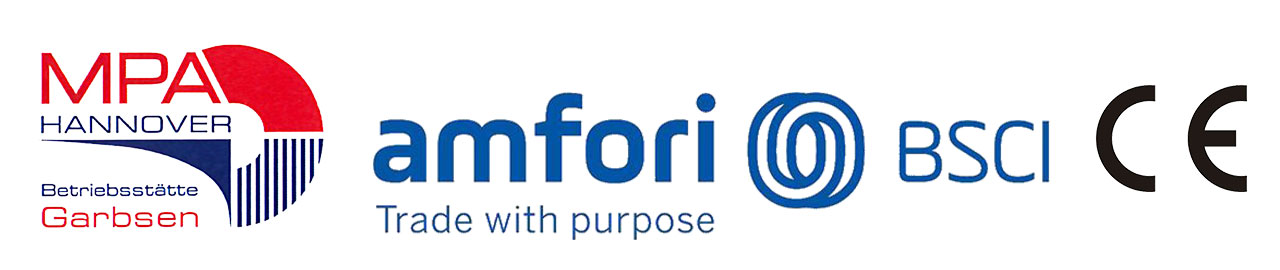
Certificate documentation is a starting point for verification, not the end of it.
EN 12413:2019 is the mandatory European safety standard for bonded abrasive products, and it covers burst testing and marking requirements. Cutting discs are classified under HS code 6804.22 for trade purposes. For a buyer shipping into Europe, the standard is not optional, and the relevant question is not whether a supplier mentions it but whether the certificate behind that mention can be traced to the specific disc model and production batch.
On this point, the public evidence across suppliers is thinner than it appears. CNDOME states that European-export cutting discs are manufactured according to EN 12413 and carry MPA Hannover certification for multiple disc sizes, with CE, ISO 9001, ISO 14001 and BSCI forming the wider compliance framework — all self-reported. NovoAbrasive states on its product page that each disc is certified by MPA Hannover and complies with EN 12413 — also self-reported. Qing Yang states that its wheels are labelled according to EN 12413 marking requirements, including maximum operating speed, wheel type, dimensions and the MPA Z-mark where applicable — again self-reported.
The practical implication: certification language is now near-universal in supplier marketing, so it no longer differentiates. What differentiates is documentation depth — certificate number, certifying body, the exact model list covered, and a batch-linkage process the buyer can audit. A supplier that can produce a model-linked certificate on request is in a different risk category from one that can only produce a logo.
How spec-matched supply compares with traditional single-disc purchasing
Traditional purchasing practice in metal fabrication is to standardise on one or two general-purpose discs per site, usually a 4.5-inch and a 9-inch aluminium oxide disc, and accept the resulting inefficiency. The comparison below sets that practice against specification-matched supply of the kind CNDOME's range supports.
| Decision area | Traditional single-disc purchasing | Spec-matched supply |
|---|---|---|
| Disc selection | One general disc per site, applied to all materials | Thickness, grain and shape matched to material and machine |
| Cut quality risk | Higher exposure to blueing, burrs and edge chipping | Burr-free, no-blackening requirements addressable at specification level |
| Inventory | Few SKUs, simple reordering | More SKUs, requires range planning and stock discipline |
| Order flexibility | Small orders workable with local distributors | Programme volumes; 10,000-piece minimum on custom discs |
| Supplier management | Multiple local sources, limited technical depth | Single source with technical documentation and formulation support |
The boundary condition: spec-matched supply only pays back when annual volume justifies the additional SKUs. For low-volume sites, a broad specification range adds administrative cost without a proportional gain in cut quality, and standardising on fewer discs may be the better commercial decision.
Market signals worth planning around
Three published data points frame the next procurement cycle. A global cutting disc market valued at approximately USD 8.5 billion entering 2026 indicates a mature, replacement-driven category rather than a growth-led one. Asia-Pacific's 44.7% revenue share of the abrasives market in 2025 confirms that the production depth behind most supplier shortlists sits in that region. And aluminium oxide's 46.3% material share explains why so much of the category's published specification language converges on the same grain family.
The industry interpretation is straightforward: buyers can negotiate OEM terms against genuinely deep regional manufacturing capacity, but should insist on third-party verification of self-reported capacity and certification before awarding volume. Concentration of high-capacity production in industrial clusters raises the value of verification rather than lowering it.
Future outlook
Two pressures are likely to reshape cutting disc supplier comparison over the next procurement cycles. The first is documentation. As certification claims saturate the market, differentiation shifts to batch-level traceability and model-linked certificates, and buyers will increasingly score suppliers on what they can produce on request rather than on what appears on a web page. The second is range consolidation. Distributors carrying five or six disc sizes into a single container get more value from suppliers whose published specification structure is consistent across sizes — the same shape logic, the same speed rating, the same grain statement — because that consistency reduces the cost of stocking and reordering.
Neither pressure changes the underlying physics. Disc geometry, bond and grain still determine cut quality, and machine matching still determines safety. What is changing is how much of that can be evidenced before the order is placed.
Frequently asked questions
What specification range should a buyer confirm before shortlisting a cutting disc manufacturer?
Confirm five published attributes for every size under consideration: model number in diameter × thickness × bore, shape code, grain and bond, maximum operating speed in m/s, and maximum RPM. CNDOME publishes all five across its cutting disc line, from the 38×1.1×3 model at 45,000 RPM to the 400×3.5×32 model at 3,800 RPM, with an 80 m/s maximum operating speed across the standard cutting and grinding families.
How do you match disc sizes to a specific project type?
Match by access and machine, then by material. 1.5-inch to 4-inch discs (38 mm to 107 mm) suit confined access, light fabrication and DIY work with small angle grinders. 4.5-inch to 5-inch discs (115 mm to 125 mm) are the standard metal and stainless fabrication sizes on one-hand grinders. 7-inch and 9-inch discs (180 mm and 230 mm) suit steel structure and shipyard processing where deeper cuts and longer runs are required. 14-inch and 16-inch discs (355 mm and 400 mm) are fixed-machine formats for heavy section cutting in casting and steel construction.
What do the T41, T42, T27 and T29 shape codes mean in practice?
T41 is a flat cutting disc; T42 is a depressed-centre cutting disc, published by CNDOME at 5-inch and 9-inch; T27 is a depressed-centre grinding disc, used across the 4-inch to 9-inch grinding range; T29 is the shape used for the ceramic grinding disc at 115 mm and 125 mm. The shape sets the working angle and clearance, so it should be specified alongside size rather than treated as a catalogue detail.
What scale and service evidence does CNDOME publish for custom programmes?
CNDOME publishes a 20,000 m² temperature- and humidity-controlled workshop with 60 automated production lines, approximately 600,000 pieces per day and 95 million pieces per year, a stated monthly capacity of 8 million pieces, and an R&D team of 10 supporting more than 2,000 tool and professional abrasive wheel brands. Customisation covers logo, label, packaging, abrasive formulation and specification, with a 30-day lead time, a 10,000-piece minimum for custom cutting discs, 100% AI visual comparison testing, and 24/7 online support with remote technical assistance.
What are the limits of CNDOME's published capability data?
The capacity, output and certification figures are manufacturer-reported and were not independently audited in the available public evidence. The supply model also has a floor: 30-day lead times and 10,000-piece minimums suit container-level programmes but not small trials. And a 1.5-inch to 16-inch portfolio increases the SKU count a buyer must plan and stock.
How should EN 12413 and MPA certification claims be verified before ordering?
Ask for the certificate number, the certifying body, the exact model list the certificate covers, and the batch-linkage method used at dispatch. EN 12413:2019 is the mandatory European safety standard for bonded abrasives, covering burst testing and marking, and multiple manufacturers — including CNDOME, NovoAbrasive and Qing Yang — state compliance with it on a self-reported basis. Because the claim is now common, verification of the underlying certificate is what separates suppliers rather than the claim itself.
Reference document: CNDOME product brochure (PDF).
Have Questions or Need More Details?
Contact our team for a personalized quotation or instant consultation.
Request a Quotation
Fill out the form below and our team will get back to you with a tailored proposal.
WhatsApp Direct Chat
Prefer to chat in real-time? Message us on WhatsApp for instant assistance & quick answers.
- Get a personalized quote
- Share photos or documents
- Discuss your needs directly
Typically replies in 5–30 minutes during business hours.