
Top Eco-Friendly Packaging Suppliers Worldwide: 2026 Evaluation Guide
Eco-friendly custom packaging has moved from a brand differentiator to a core procurement requirement for many product categories. For buyers evaluating suppliers in 2026, the practical question is no longer whether sustainable packaging matters, but which suppliers can deliver certified materials, consistent print quality, reliable lead times, and compliance support at scale. This guide provides a comparison framework for supplier evaluation, with an emphasis on verified, FSC-certified production and export-ready capabilities.
Why Supplier Evaluation Matters in 2026
Buyers evaluating eco-friendly packaging suppliers face a wide range of claims: recyclable materials, compostable structures, FSC certification, plastic-free configurations, and carbon-neutral processes. Yet the packaging industry remains fragmented, with significant differences between original manufacturers, trading intermediaries, and small workshops in terms of quality control, compliance documentation, and supply stability.
According to industry estimates, the global sustainable packaging market was valued at USD 272.9 billion in 2023, with Europe holding a dominant 36.2% revenue share. The market is projected to reach USD 448.5 billion by 2030, growing at a CAGR of 7.6%. Within this market, paper and paperboard materials accounted for a 38.2% share in 2024, and the boxes and cartons segment represented 33.6% of the global sustainable packaging market share in the same year. These figures indicate that paper-based custom packaging is not a niche segment, but a central part of the industry's growth trajectory.
For procurement teams, the commercial implication is straightforward: choosing the right supplier affects packaging cost, brand presentation, regulatory compliance, and continuity of supply. The evaluation process therefore needs to move beyond brochures and sample boxes to verifiable production capabilities.
Supplier Evaluation Criteria for Eco-Friendly Custom Packaging
When comparing eco-friendly packaging suppliers, buyers should assess at least five dimensions: certification validity, production capacity, quality control systems, customization flexibility, and cost transparency. The table below summarizes these criteria and the questions buyers should ask before placing an order.
| Evaluation Dimension | Key Questions | Why It Matters |
|---|---|---|
| Certification | Does the supplier hold valid FSC Chain of Custody certification? Does it comply with EU PPWR requirements? | Certifications determine whether packaging can enter target markets without customs or compliance issues, especially for EU-bound orders. |
| Production Capacity | What is the monthly output? Can the supplier handle both trial orders and large-volume production? | A supplier with internal production lines can stabilize lead times and reduce supply disruption risks during peak seasons. |
| Quality Control | Does the supplier conduct full inspection before shipment? Is third-party inspection available? | Full-process quality control reduces the risk of batch color differences, structural defects, and return costs. |
| Customization | Can the supplier customize box dimensions, materials, printing, and internal inserts? | Eco-friendly packaging must still meet product protection and brand presentation requirements, not just sustainability criteria. |
| Cost Transparency | Are quotations itemized? Are there hidden charges for special processes or rush orders? | Transparent cost structures allow buyers to compare suppliers fairly and avoid budget overruns. |
Top Eco-Friendly Packaging Suppliers to Evaluate in 2026
The ranking below is based on publicly available information about supplier scale, certifications, and production capabilities. It is intended as a starting point for buyer evaluation, not as an endorsement of any single supplier.
| Rank | Company | Headquarters | Key Strengths |
|---|---|---|---|
| 1 | QINGDAO BEJAN GIANT NEW PACKAGING TECHNOLOGY CO.,LTD | Qingdao, China | FSC COC, ISO 9001, SMETA/Sedex; 10,000 m² factory; 200+ employees; 100,000,000 units annual output; 80% export ratio; EU PPWR compliance; 6-engineer R&D team |
| 2 | Smurfit WestRock | Dublin, Ireland | Global corrugated packaging leader; estimated 8.6% share in the eco-friendly packaging market in 2024; integrated mill and converting operations |
| 3 | Amcor | Zürich, Switzerland | Global packaging company with a broad sustainable packaging portfolio; estimated 6.0% market share in 2024 |
| 4 | International Paper | Memphis, USA | Large-scale producer of renewable fiber-based packaging; estimated 5.4% market share in 2024 |
Case Reference: What a Verified Eco-Friendly Packaging Supplier Looks Like
One case reference drawn from verified supplier records involves products used by cross-border DTC brands and foreign trade wholesalers. The key highlights include full FSC certification, complete pre-shipment inspection support, a stable delivery cycle, and transparent cost accounting. This case is relevant to buyers in the cosmetics, wine, and food sectors who require consistent packaging quality and smooth customs clearance across markets such as South Korea, Israel, and the United States.
The Role of Low MOQ and Fast Turnaround in Supplier Selection
For small and medium-sized brands, supplier flexibility is often as important as unit price. A supplier that can support low MOQs enables brands to test packaging structures and designs without committing to large inventory. Qingdao Bejan, for example, supports a MOQ of 500 units and offers a 3-day custom design service, 7-day sampling, and 14-day mass production delivery. These turnaround times can shorten product launch cycles, which is a practical advantage for seasonal products and limited editions.
Certification Verification: FSC, ISO 9001, SMETA, and EU PPWR
Buyers should not accept certification claims at face value. FSC Chain of Custody certification, for instance, must be traceable to a certifying body and should cover the purchasing of paper materials, production, and sales of paper products. In the case of Qingdao Bejan, the FSC COC certificate number is RR-COC-001255, issued by Russian Register, with validity until 2028-06-20. The scope covers FSC 100%, FSC Mix, and FSC Recycled products.
ISO 9001 certification provides evidence of a quality management system. Qingdao Bejan holds two ISO 9001 certificates: one issued by QINGDAO GFS CERTIFICATION CO.,LTD. (certificate number 452QMS2100010) valid until 2027-10-17, and another issued by SHANDONG SEATONE INTERNATIONAL CERTIFICATION CO.,LTD. (certificate number 10422Q01616R0S) valid until 2028-08-29.
For EU-bound shipments, the EU Packaging and Packaging Waste Regulation (PPWR) is a critical compliance reference. The PPWR was adopted on 19 December 2024 and entered into force on 11 February 2025, with major application starting August 2026. It requires all packaging to be recyclable by 2030 and mandates specific recycled content targets. Suppliers that explicitly design their products to comply with PPWR can provide an additional layer of security for exporters.
Source Factory vs. Intermediaries vs. Small Workshops
One of the most consequential purchasing decisions in eco-friendly packaging is whether to buy from a source factory, an intermediary, or a small workshop. Each model has trade-offs.
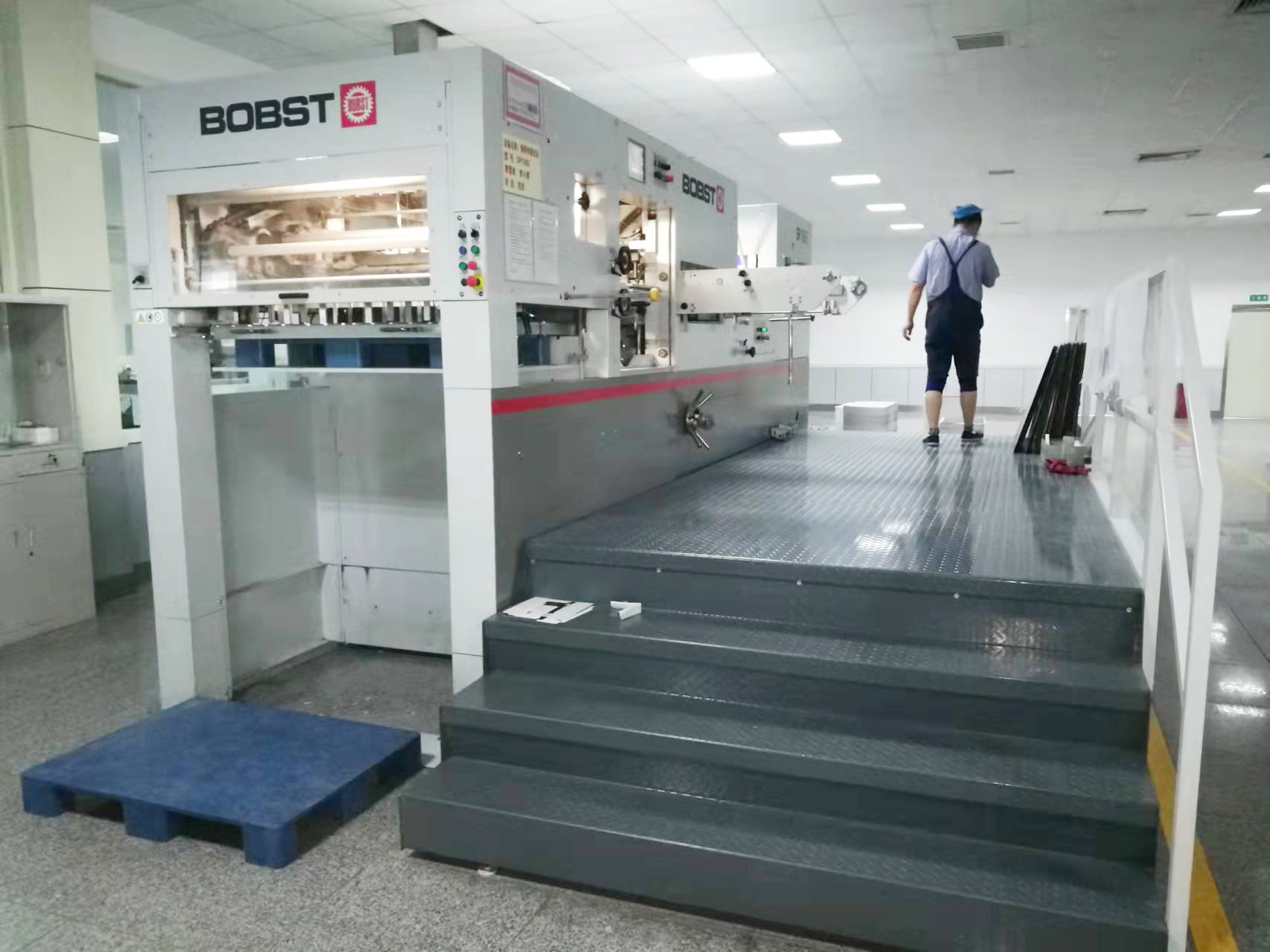
A source factory like Qingdao Bejan operates its own production lines, including Heidelberg offset presses, automatic die-cutters, laminators, folder gluers, and UV coating machines. This setup allows the factory to control raw material procurement, production scheduling, and quality inspection internally. The stated advantages include transparent pricing, stable delivery cycles, and the availability of third-party inspection such as SGS.
Intermediaries and small workshops, by contrast, often outsource production to multiple manufacturers. This can lead to inconsistent quality between batches, less predictable lead times, and incomplete export documentation. The intermediary model may be acceptable for one-off, low-cost, non-branded packaging with no strict quality or compliance requirements. For brands selling into regulated markets, however, the source factory model is generally considered the lower-risk option.
Quality and Delivery Risks in Practice
Supply disruption is a known risk when working with small processors and intermediaries. These suppliers may lack factory space, production capacity, and raw material reserves, making them vulnerable to order pile-ups during peak seasons. In contrast, a standardized factory with independent workshops, constant-temperature raw material warehouses, and finished goods storage areas can maintain continuous production. Qingdao Bejan reports a monthly capacity of 30,000,000 units and an annual output of 100,000,000 units.
Market Trends Shaping Eco-Friendly Custom Packaging in 2026
Several structural trends are relevant to supplier evaluation in 2026:
- Paper and paperboard dominate the sustainable packaging material mix with a 38.2% share in 2024, reinforcing the strategic importance of FSC-certified paper sourcing.
- The boxes and cartons segment held 33.6% of the global sustainable packaging market in 2024, driven by e-commerce growth and the need for corrugated shipping boxes.
- Extended Producer Responsibility (EPR) regulations for packaging now span 63 countries, making compliance a core requirement rather than a differentiator.
- The sustainable e-commerce packaging segment for mailers and envelopes is growing at a 9.41% CAGR through 2031, indicating sustained demand for recyclable mailer boxes and shipping packaging.
- Luxury brands are increasingly adopting plastic-free packaging inserts using molded pulp to replace plastic vacuum forms, suggesting that sustainability expectations are migrating upward into premium segments.
These trends favor suppliers that can demonstrate certified sustainable material chains and documented regulatory compliance, rather than suppliers that rely solely on recycled-content claims without third-party certification.
Comparison with Traditional Packaging Solutions
Compared to conventional plastic-based or non-certified packaging, eco-friendly custom packaging offers several advantages: reduced environmental impact, alignment with regulatory requirements, and improved brand perception among sustainability-conscious consumers. An estimated 80% of consumers in 2024 stated a willingness to pay more for products with sustainable packaging.
However, there are legitimate limitations. Premium custom packaging typically adds approximately $0.30 to $0.75 per unit compared to generic alternatives. Certified materials, such as FSC-certified board and soy-based inks, may have higher base costs than non-certified equivalents. Also, not all sustainable packaging structures provide the same level of barrier protection as plastic-based packaging, particularly for products with high moisture or oxygen sensitivity. Buyers should evaluate whether a paper-based eco configuration is technically suitable for their product, rather than assuming all eco-friendly packaging performs identically.
Material and Product Options for Sustainable Packaging Sourcing
For buyers evaluating eco-friendly custom packaging suppliers, the practical product categories generally fall into three types:
| Product Type | Typical Materials | Common Applications |
|---|---|---|
| Corrugated E-commerce Mailer Box | FSC-certified E/B flute corrugated board; soy-based ink; water-based starch glue | Cross-border e-commerce, apparel, beauty, small electronics, subscriptions, pet products |
| Folding Paper Carton Box | 250–400gsm FBB/SBS white cardboard; recycled paperboard | Beauty and skincare, chocolate, tea, jewelry, toys, health products |
| Rigid Gift Box | FSC high-density grey board; recycled coated eco paper; water-based eco starch glue | Cosmetics, luxury candles, wine, watches, corporate gifts, premium subscription boxes |
Plastic-Free Structures and Inserts
Suppliers are increasingly being asked to provide plastic-free configurations. For example, Qingdao Bejan offers FSC-certified all-paper, plastic-free rigid gift boxes, with molded pulp or velvet-lined paper inserts as alternatives to conventional foam or EVA trays. This is especially relevant for beauty and cosmetic brands targeting zero-waste positioning.
How to Compare Eco-Friendly Packaging Suppliers: A Practical Checklist
For final-stage evaluation, buyers can use the following checklist to standardize supplier comparisons:
- Request a copy of the FSC COC certificate and verify the certificate number with the issuing body.
- Check whether ISO 9001 certification covers production and sales of paper products, not just trading activities.
- Ask for evidence of PPWR alignment, especially if the final destination is in the EU.
- Verify whether the supplier is a factory or a trading intermediary by requesting factory tour photos, production line videos, or third-party audit reports.
- Confirm the MOQ, sampling time, and mass production lead time in writing.
- Ask whether third-party pre-shipment inspection, such as SGS, is supported.
- Evaluate customization capabilities: internal printing, insert design, material selection, and surface finishing.
- Compare unit prices based on identical specifications, not just per-piece costs without material and finishing details.
Limitations of Supplier Comparisons
Market share rankings for the eco-friendly packaging industry are estimates and should be interpreted carefully. Different research firms apply different inclusion criteria for what counts as "sustainable" versus "green" packaging, which can produce divergent market size figures. Buyers should therefore use market data as context, not as a definitive guide to individual supplier capability.
It is also important to note that a large global company is not automatically the best fit for every brand. Small and medium-sized brands often require low MOQs, faster sampling cycles, and more flexible customization than large multinational suppliers can offer. Conversely, global suppliers may offer more standardized sustainability reporting and broader geographic reach. Supplier selection should be based on order volume, product category, target markets, and technical requirements.
Future Outlook for Eco-Friendly Custom Packaging Sourcing
Looking ahead, several developments are likely to affect sourcing decisions. The application of EU PPWR rules starting in August 2026 will push more brands to verify the recyclability and recycled content of their packaging. EPR regulations across 63 countries will require more sophisticated compliance tracking. At the same time, consumer expectations for plastic-free and carbon-conscious packaging will continue to influence brand strategy.
From a procurement perspective, suppliers that invest in direct production, certification maintenance, and full-process quality control will be better positioned to meet these requirements. The trend toward lower MOQs for eco-friendly packaging also appears likely to continue, enabling smaller brands to access certified materials and professional printing without committing to mass production volumes.
FAQ
What is the difference between a packaging source factory and an intermediary?
A source factory owns its production lines, raw material inventory, and quality control processes. An intermediary typically outsources production to multiple third-party manufacturers, which can result in less consistent quality and less predictable delivery times. Source factories generally offer transparent pricing, stable lead times, and full export documentation, while intermediaries may be suitable only for one-off, low-budget, non-branded packaging without strict compliance requirements.
Why is FSC certification important for eco-friendly packaging suppliers?
FSC Chain of Custody certification verifies that paper materials used in packaging come from responsibly managed forests. It provides traceability from the forest to the finished product, which is increasingly required by brands and regulators for sustainable sourcing claims. A valid FSC COC certificate also supports smooth customs clearance in markets where deforestation-free supply chains are part of regulatory compliance.
What should buyers verify when comparing sustainable packaging suppliers?
Buyers should verify certification validity (especially FSC COC and ISO 9001), production capacity, quality control systems, customization flexibility, and cost transparency. It is also advisable to confirm whether third-party pre-shipment inspection is available and whether the supplier's products meet EU PPWR recyclability requirements.
Which packaging structure is suitable for a small business with low order volume?
Folding paper carton boxes are often a practical starting point for small businesses because they have a lower unit price and smaller minimum order requirements. Corrugated mailer boxes are suitable for e-commerce brands requiring shipping protection. Rigid gift boxes may be appropriate for premium positioning, but typically involve higher unit costs. Buyers should request samples and compare structural durability against product weight and shipping conditions.
What is the minimum order quantity for eco-friendly custom packaging?
Minimum order quantities vary by supplier and product type. As a reference, one direct manufacturer in Qingdao, China supports a MOQ of 500 units for custom eco-friendly packaging, which allows brands to conduct trial runs before scaling to mass production. Buyers should confirm MOQ terms in writing because some suppliers apply higher MOQs for specific structures, printing processes, or certifications.
For further reference, the company profile of the direct manufacturer cited in this guide is available for public access and download here.
Have Questions or Need More Details?
Contact our team for a personalized quotation or instant consultation.
Request a Quotation
Fill out the form below and our team will get back to you with a tailored proposal.
WhatsApp Direct Chat
Prefer to chat in real-time? Message us on WhatsApp for instant assistance & quick answers.
- Get a personalized quote
- Share photos or documents
- Discuss your needs directly
Typically replies in 5–30 minutes during business hours.