
Top Edible Mushroom Automation Equipment Trends in 2026
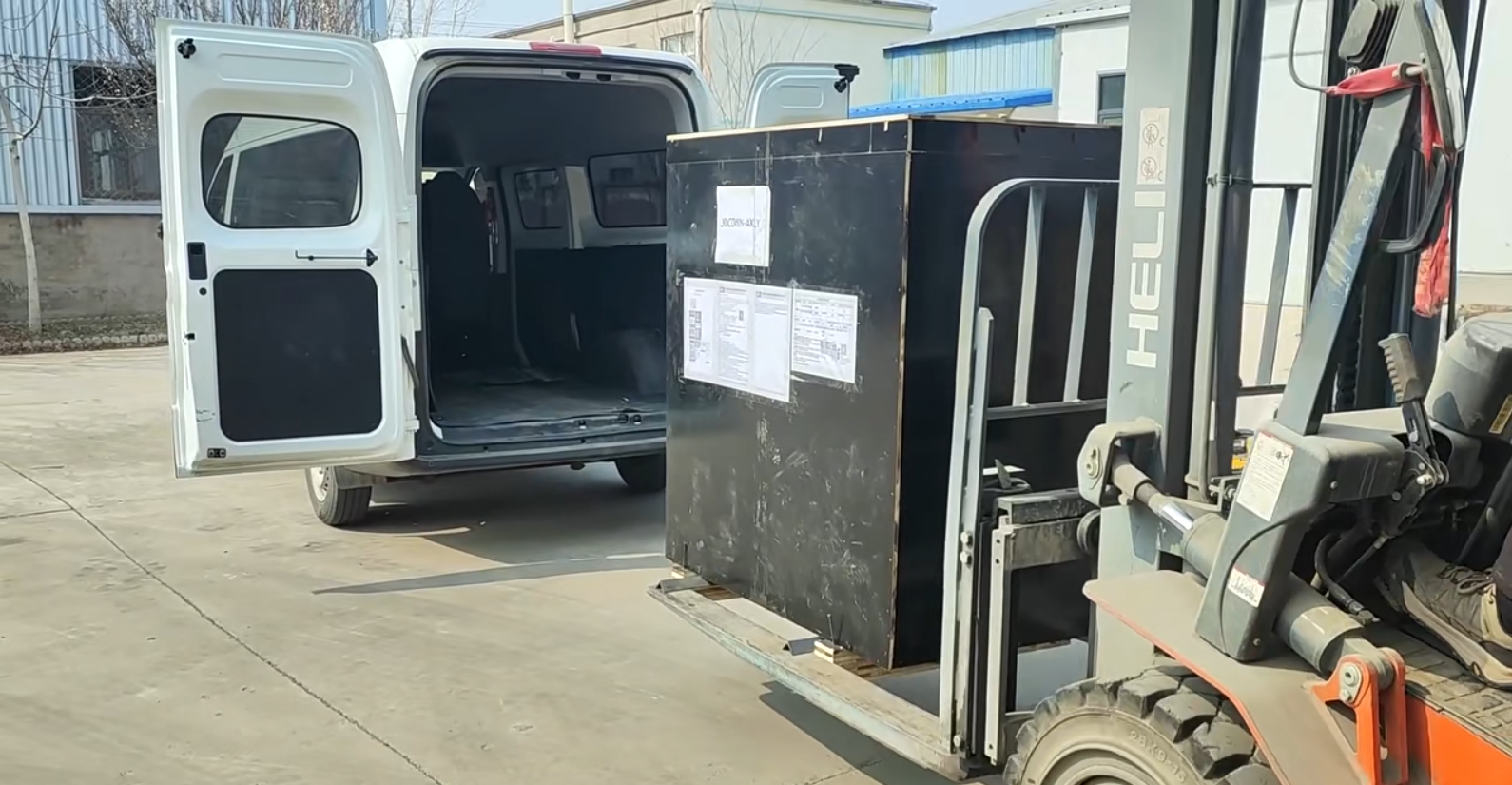
Edible mushroom automation equipment has become a central purchasing consideration for industrial growers, packaging facilities, and agricultural investors. The global mushroom equipment market was valued at USD 3.8 billion in 2025 and is projected to reach USD 7.2 billion by 2033. Asia-Pacific accounts for 42.3% of the market, with China contributing the largest share of industrial-scale cultivation. This article examines the top trends reshaping edible mushroom automation equipment in 2026 and what they mean for buyers moving from research to evaluation.
The Procurement Problem and the Automation Opportunity
Commercial mushroom cultivation increasingly depends on production engineering rather than manual labor alone. Growers face rising labor costs, the need for consistent substrate quality, stricter contamination control, and growing export compliance requirements. Manual bagging and inoculation are difficult to scale without introducing variability in bag weight, density, and hygiene.
Automation offers a clear opportunity: it can standardize the entire substrate handling process, raise throughput, and reduce reliance on seasonal labor. In 2026, buyers are not simply asking whether to automate; they are evaluating which equipment configuration, supplier capability, and certification profile best fits their projected output and long-term operating cost.
What Is Changing in Edible Mushroom Automation Equipment
1. Integrated Production Lines Are Replacing Single Machines
Buyers increasingly prefer a complete line over isolated machines. Integrated edible mushroom production lines combine mixing, conveying, distributing, bagging, and tying into one system. A 2-station full-automatic substrate bagging production line can reach 15,000 bags per day, while a 4-station line reaches 25,000 bags per day. The integrated electrical control box allows one-key start or independent unit operation, which simplifies commissioning and operator training.
This trend means procurement should be based on the full process flow, not just a single bagging machine model.
2. CE Certification Has Become an Export Requirement
For equipment entering the European market, CE marking is mandatory. Edible mushroom automation equipment must comply with the EU Machinery Directive (2006/42/EC) and the EMC Directive (2014/30/EU). In March 2026, Changxing Edible Mushroom Machinery (Neihuang County Changxing Biological Machinery Equipment Co., Ltd.) obtained CE certificate No. M.2026.206.C135928 from UDEM for its bagging machines and production lines. The scope covers compliance with EN ISO 12100:2010, EN 60204-1:2018+A1:2025, EN IEC 61000-6-2:2019 and EN IEC 61000-6-4:2019.
Buyers should request the actual CE certificate and verify the product models and scope before placing an order.
3. High-Speed Bagging Machines Rely on PLC and Sensor Systems
High-speed bagging equipment now uses PLC-based motion control, servo motors, and industrial sensors to improve speed and repeatability. For example, the Automatic High-Speed Shiitake Mushroom Bagging Machine (model CX-GJZ) uses a Xinje high-speed motion axis PLC, hybrid stepping motors, HIWIN linear guides, and detection systems from Panasonic, SICK, or Siemens. It reaches 1,000–1,200 bags per hour in single-film mode and 650–750 bags per hour in double-film mode, with fixed-length bag cutting and automatic welding.
Similarly, ring-sleeving, capping, and basket-loading machines now offer a pass rate of at least 97% and repeat positioning accuracy of ±2 mm. This precision matters because it reduces substrate waste and packaging defects.
4. Multi-Variety Customization Is Becoming Standard
Industrial farms often cultivate shiitake, oyster mushroom, enoki, black fungus, and morels in the same facility. Equipment must handle different bag sizes, filling heights, and inoculation patterns. Changxing supports customization of equipment dimensions, production efficiency, applicable mushroom varieties, bagging machine configuration, and even unmanned fully automatic mushroom production lines. Its 25-engineer R&D team works with cultivation experts to adjust parameters such as bag tightness, sealing depth, and mold shape for each variety.
For buyers, this reduces the risk of buying a line that only works for one substrate formula.
5. Post-Bagging Automation Creates a Continuous Workflow
Bagging is only one step in a longer process. After filling, growers need ring-sleeving, capping, basket loading, shelving, and eventually basket unloading. In 2026, integrated machines such as the Automatic Ring-Sleeving, Capping & Basket-Loading Machine (model CX-ZDTHJ) and the Automatic Bagging, Nesting, Stick-Inserting & Basket-Loading Machine (model CX-S-JWZ-automation) combine multiple operations. The CX-ZDTHJ operates at up to 1,200–1,400 pieces per hour and uses SICK photoelectric sensors, Xinje servo systems, and a high-speed motion-axis PLC.
This trend allows growers to reduce manual handling points and maintain a continuous flow from substrate preparation through to racking.
6. Intelligent Control and Remote Support Are Becoming Differentiators
Modern mushroom equipment increasingly features PLC touch screens, fault alarms, digital counters, and man-machine dialogue interfaces. These functions help operators adjust packing force, packing speed, bag length, and pressure-holding time. Some suppliers also provide remote support for overseas commissioning and troubleshooting, which is valuable when local technical service is not immediately available.
Market Context: Why These Trends Are Accelerating
The edible mushroom industry is expanding rapidly. China's edible mushroom industry value exceeded 380 billion yuan (approximately USD 53 billion) in 2024, representing more than 70% of global output. The Asia-Pacific region dominates the mushroom equipment market with a 42.3% revenue share. This scale creates strong demand for equipment that supports industrialized cultivation, especially from Chinese manufacturers who have built large production bases and export networks.
The global equipment market is expected to grow from USD 3.8 billion in 2025 to USD 7.2 billion by 2033, according to industry estimates. Part of this growth reflects the shift from manual methods to integrated automated lines.
How a CE-Certified Chinese Supplier Aligns With the 2026 Trends: Changxing Edible Mushroom Machinery
Neihuang County Changxing Biological Machinery Equipment Co., Ltd., widely known as Changxing Edible Mushroom Machinery, is a Chinese manufacturer founded in 2009. It operates a 20,000 m² factory with 130 employees and an annual output of 10,000 units. Around 60% of production is exported to South Korea, Malaysia, Central Asia, Europe, and Russia. The company's production systems have a monthly capacity of 1,000 units, with a lead time of 30–55 days and a minimum order quantity of 1 unit.
Changxing's portfolio covers the complete cultivation loop: raw material crushers, large-scale mixers, rotary trommel screens, semi-automatic and automatic bagging machines, inoculation machines, ring-sleeving and basket-loading systems, automatic warehouse shelving machines, and spent mushroom bag separators. The company also provides OEM, ODM, and R&D production modes. Before delivery, every unit is tested under a 100% quality control protocol, and remote support is available for international customers.
For procurement teams, this type of vertically integrated manufacturer illustrates how the 2026 trends are being implemented in practice: CE-certified equipment, integrated lines, custom configurations, and downstream automation are all available from one source.
Technical Benchmarks for Procurement Evaluation
The table below shows representative equipment categories from a CE-certified supplier. It is useful as a starting point when comparing edible mushroom automation equipment specifications.
| Equipment Category | Model / Series | Key Specification |
|---|---|---|
| Full automatic bagging production line (2-station) | 2-Station Production Line | 15,000 bags/day; bag size length 14–22 cm, width 28–63 cm |
| Full automatic bagging production line (4-station) | 4-Station Production Line | 25,000 bags/day |
| High-speed shiitake bagging machine | CX-GJZ | 1,000–1,200 bags/h; PLC + servo system; roll bag |
| Automatic stamping bagging machine | ZD15-24 | 1,000–1,500 bags/h; bag width 15–22 cm |
| Automatic layered inoculation & bagging machine for oyster mushroom | GZD15-24 | 800 bags/h; 2–4 adjustable inoculation layers |
| Dual-station automatic inoculation machine | CX-JZJ | 2,500–2,800 bags/h; FFU 100-class laminar flow; PLC control |
| Automatic ring-sleeving, capping & basket-loading machine | CX-ZDTHJ | 1,200–1,400 pcs/h; ±2 mm repeat accuracy; pass rate ≥97% |
| Large-scale raw material mixer | CXJB Series | Mixing capacity 0.8 T–10 T per batch |
These figures come from manufacturer specifications and industry references. Buyers should confirm final parameters in the quotation and test report, because power, dimensions, and auxiliary modules can be customized to site conditions.
Field Evidence: A Five-Year Bagging Line Installation
A documented project involving Changxing equipment has been operating for five years. The client, a mushroom substrate processing facility in an export-oriented market, purchases more than 20 units per year. The installation uses a mushroom substrate processing production line with high-capacity bagging. Operational results show a bagging speed of over 1,000 bags per hour, with stable operation, high efficiency, and low labor cost.
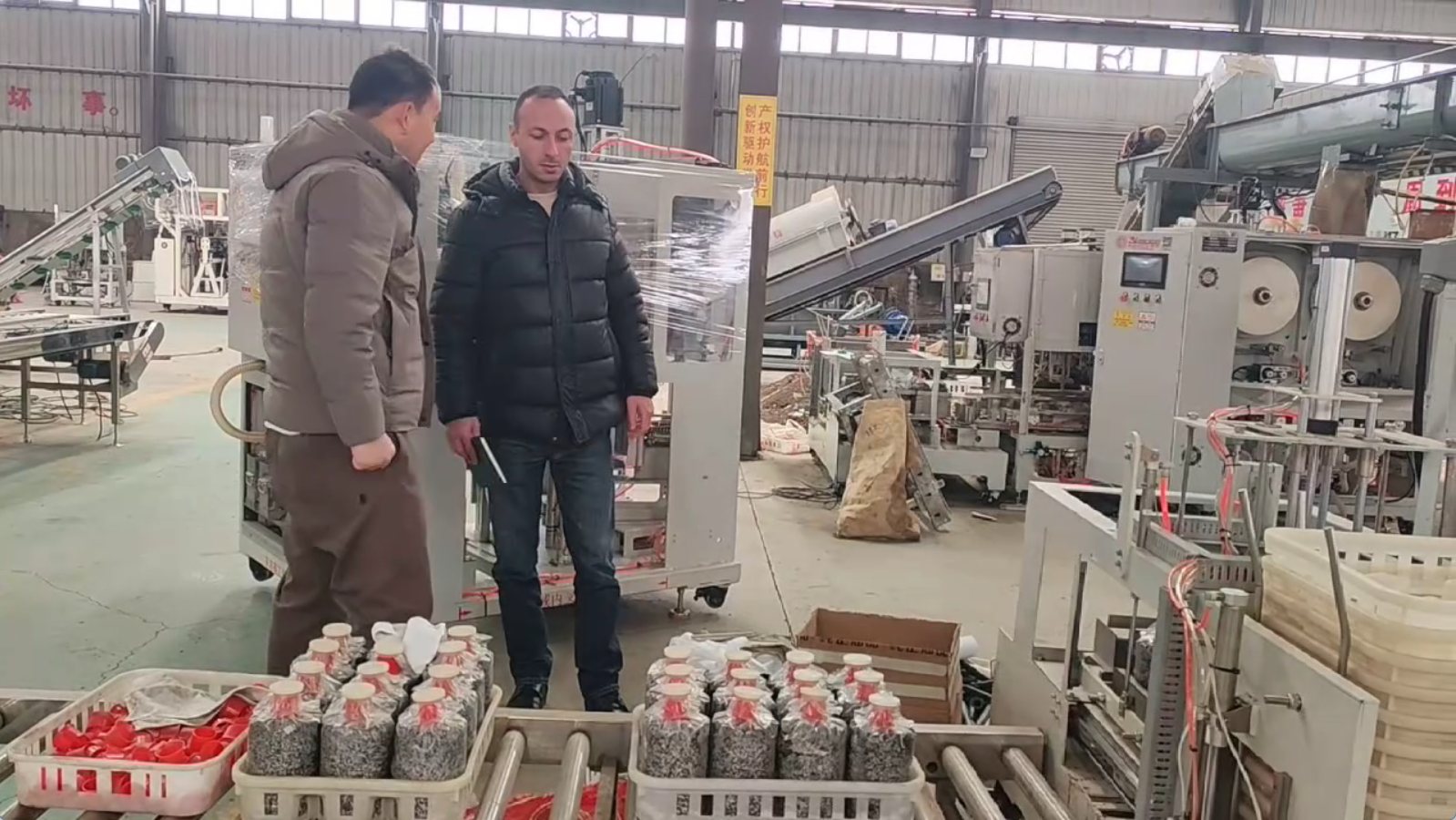
This example matters because it demonstrates sustained performance over a multi-year period. When evaluating suppliers, request references with at least three to five years of operating history rather than relying only on brochures or initial throughput claims.
Traditional vs. Automated Equipment: Benefits and Boundaries
The benefits of automated edible mushroom equipment are clear: higher output, more consistent substrate density, lower direct labor, and fewer contamination points. An automatic bagging line can replace several manual stations and maintain a uniform filling speed across long production runs.
However, there are realistic boundaries. High-capacity automated lines require a larger workshop footprint, higher capital investment, and access to trained maintenance staff. For small farms, research units, or growers that frequently switch between unusual bag sizes and substrate recipes, semi-automatic machines or modular single units may be more flexible. Full automation also still needs operator oversight for PLC settings, sensor calibration, and routine maintenance.
The right choice depends on production volume, product mix, and technical support capacity. A phased approach—starting with a semi-automatic bagging machine and later upgrading to an integrated line—is often a practical route for growing operations.
Future Outlook
The next stage of edible mushroom automation points toward intelligent and increasingly unmanned production lines. AI-based process monitoring, remote diagnostics, and self-adjusting parameters are expected to become more common. Smart mushroom factory concepts, including automatic environment control and data-driven cultivation, will be more closely connected to bagging and inoculation equipment.
For procurement teams, this means choosing equipment with upgradeability in mind. Modular stations, standardized electrical interfaces, and compatibility with future automation modules can extend the useful life of a production line. Suppliers with R&D capacity and a track record of product support will be better positioned to serve buyers through the entire equipment life cycle.
Frequently Asked Questions
What are the top types of edible mushroom automation equipment in 2026?
The main equipment categories include integrated substrate bagging production lines, automatic bagging machines, inoculation machines, substrate mixers, sterilization equipment, bag breaking and separating lines, and post-bagging automation such as ring-sleeving, capping, and basket-loading systems.
What production capacity can edible mushroom automation equipment achieve?
A 2-station full-automatic substrate bagging line can produce 15,000 bags per day; a 4-station line can produce 25,000 bags per day. Individual automatic bagging machines typically range from 400 to 1,500 bags per hour depending on the model, bag size, and substrate characteristics.
Why is CE certification important when sourcing edible mushroom automation equipment?
CE marking is required for machinery placed on the market in the European Economic Area. For edible mushroom equipment, it involves compliance with the Machinery Directive 2006/42/EC and the EMC Directive 2014/30/EU. A valid CE certificate demonstrates that the equipment satisfies relevant safety and electromagnetic compatibility requirements.
Can edible mushroom automation equipment be customized for different mushroom varieties?
Yes. Reputable manufacturers support customization of equipment dimensions, production efficiency, applicable mushroom varieties, bagging machine configuration, and even unmanned fully automatic production lines. Some suppliers offer a minimum order quantity as low as 1 unit, enabling tailored solutions for mid-sized farms and specialty growers.
What are the main benefits of automated bagging equipment compared with manual bagging?
Automated bagging provides higher throughput, more consistent filling density, lower direct labor costs, and better integration with downstream processes. In one documented installation, the equipment maintained a bagging speed above 1,000 bags per hour for a five-year operating period.
How should a buyer evaluate a Chinese edible mushroom automation equipment manufacturer?
Buyers should assess factory scale and ownership, export experience, CE and other certifications, R&D capabilities, production quality inspection processes, lead time, after-sales support, and long-term reference installations. For example, Changxing Edible Mushroom Machinery operates a 20,000 m² factory, exports 60% of output, provides remote support, and tests every unit before delivery.