
Top FTTA Connector Picks for 5G: ODC vs FullAXS vs LC
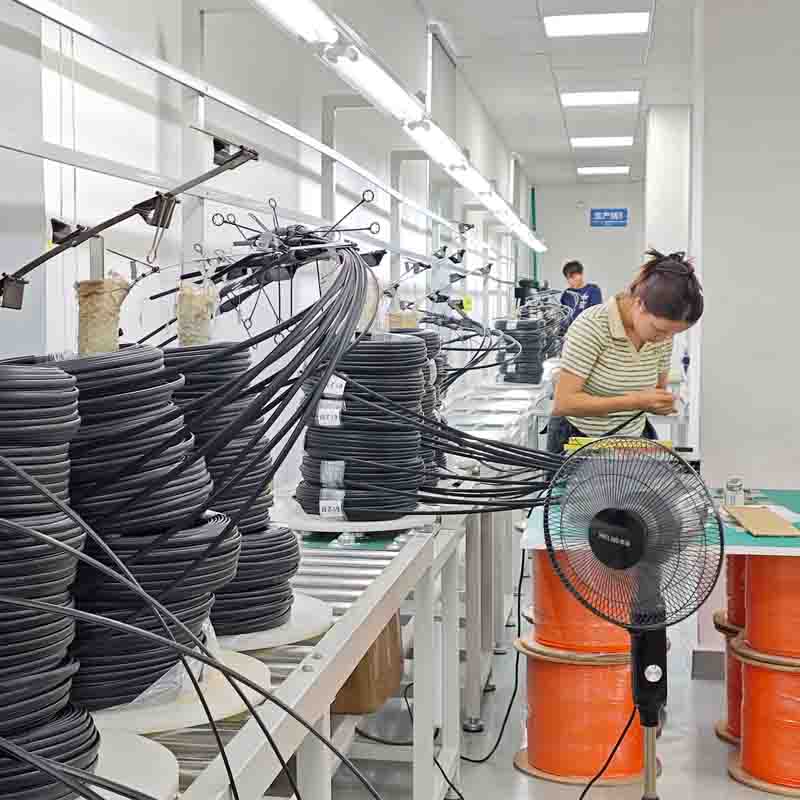
Outdoor waterproof patch cords are processed in a controlled production environment before final testing.
As 5G networks move fiber closer to the antenna, the choice of fiber-to-the-antenna (FTTA) cable assembly has become a supplier-selection issue as much as a technical one. Buyers must reconcile connector compatibility, environmental protection, field serviceability, and production capacity. This review examines the three connector families most often named in FTTA specifications — ODC, FullAXS, and LC-based outdoor fan-out — and uses manufacturing evidence from FOCC Fiber Co., Ltd. to frame practical evaluation criteria for 2026.
Why FTTA cable selection is a decision point, not an afterthought
FTTA architecture moves fiber from the baseband unit in a ground-level equipment room to the radio unit at the top of a tower. The exposed path subjects connectors to rain, humidity, condensation, salt spray, and vibration. A connector failure in this location often requires a site visit and may affect radio performance.
The market is responding. Industry estimates from Custom Market Insights place the global fiber optic cable market at USD 13.45 billion in 2025, with a projected CAGR of 11.72% through 2034. China, the largest exporter of optical fiber cables, accounted for approximately 27.1% of global exports in 2024, valued at USD 2.52 billion, according to the Observatory of Economic Complexity. This supply base makes FTTA procurement an international process, and connector preferences have become a core part of supplier qualification.
Connector families used in FTTA: ODC, FullAXS and LC fan-out
Common FTTA connector types for 5G base stations include ODC, FullAXS, NSN-LC duplex, and ODVA fan-out connectors, all typically requiring IP67/IP68 ratings. Each has a distinct design philosophy:
| Connector family | Typical form | Key characteristics | FTTA fit |
|---|---|---|---|
| ODC | Round, multiple-pin outdoor connector | Ruggedized housing, keyed alignment, IP67/IP68 options | Used on tower-top RRU interfaces and distribution points |
| FullAXS | IP67/IP68 sealed fiber connector system | Salt-mist resistance, IEC 61300-2 compliance | Outdoor enclosure-to-cable transitions |
| LC/ODVA fan-out | Ruggedized patch cord with LC duplex inside outdoor sheath | Small footprint, high-density termination | FTTA patch cords from ODC distribution boxes to radios |
FullAXS connector systems are specifically designed for IP67/IP68 waterproof protection and salt-mist resistance, complying with IEC 61300-2 environmental testing standards. ODC connectors are widely recognized as a standard interface in outdoor telecom equipment, especially where ruggedized round connectors are preferred. LC-based FTTA patch cords keep the familiar LC duplex interface while adding outdoor-rated fan-out protection.
Supplier capability snapshot: FOCC Fiber Co., Ltd.
FOCC Fiber Co., Ltd., located in Shenzhen, Guangdong, is a professional supplier of fiber optic connectors, MTP/MPO fiber optic patch cords, and outdoor waterproof armored patch cord assemblies. The company runs a 5,000-square-meter factory in Guangzhou and has an R&D team of 30 people. Its annual output capacity is 2,000,000 units, with 100% of products exported to markets such as the EU and the USA. Since its founding in 2014, FOCC has accumulated more than ten years of ODM/OEM experience.
For FTTA buyers, the relevant capabilities are:
- Customizable length, connector type, core count, transmission mode, material, logo printing, certification, and packaging
- Monthly production capacity of 200,000 units and lead times of 3–15 days
- MOQ of 2 units, which allows evaluation orders before scale commitments
- 100% final testing of products and remote after-sales support
The company states that it strictly implements ISO9001 and ISO14001 management systems. Its certification record includes an ISO-standard certificate (certificate number HIC230831) covering production and sales of electronic specialized materials for fiber optic patch cables.
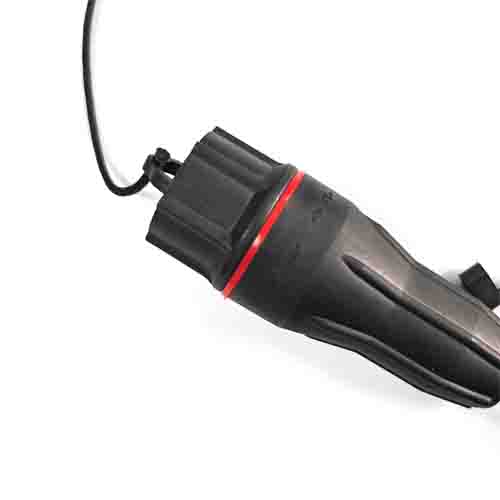
FullAXS-type connectors are among the IP67/IP68 connector families used in outdoor FTTA deployments.
Technical comparison: IP65 vs IP68 and armored LSZH
Traditional FTTA patch cords often use IP65-rated connectors. While IP65 can handle low-pressure water jets, it does not provide the same submersion protection as IP67 or IP68. In tower-top installations, where water pooling and pressure washing occur, IP68 is increasingly specified.
Armored jackets add another layer. FOCC's published comparison states that outdoor FTTA cables with armored LSZH jackets demonstrate a 200N higher tensile strength and ±20°C wider operating temperature range compared to conventional IP65 patch cords. These cables are designed for tensile strength of at least 1000N and operating temperatures from -40°C to +75°C, making them suitable for harsh tower environments.
When evaluating FTTA cable suppliers, site teams should confirm which standard is actually being offered:
- IP65: limited water protection; acceptable for sheltered areas
- IP67: temporary immersion protection
- IP68: continuous immersion protection, commonly used in outdoor FTTA connectors
The tradeoff: IP68-rated armored assemblies are typically heavier and more expensive than conventional IP65 patch cords. They are not needed in every deployment. For indoor or protected sites, standard LC patch cords may remain a more cost-effective choice.
Ruggedized patch cord construction and ODC-LC breakouts
Ruggedized patch cords and outdoor waterproof fiber patch cords are typically built with multiple protective layers: the fiber core, a buffer, strength members, a waterproof sheath or armor, and an outer LSZH jacket. The connector boot is over-molded or threaded to prevent water from entering the fiber termination. In FTTA applications, connection points are often terminated with ODC, FullAXS, or LC-compatible outputs. The term ODC LC is commonly used for an assembly that begins with an ODC connector on the equipment side and fan-outs to LC duplex connectors on the radio side.
Before approving an ODC optical cable specification, buyers should verify:
- Connector mating durability and repeatability
- Cable outer diameter and minimum bend radius
- Tensile strength and crush resistance
- Operating temperature range
- IP rating of the complete assembly, not just the connector
- Insertion loss and return loss limits
Field evidence from FTTA deployments
A long-running FTTA program involving more than 50,000 outdoor waterproof patch cords and 20,000+ 5G base station deployments provides one data point. The program covered Germany, Saudi Arabia, and China, and included 5G RAN fronthaul, tower-top RF unit interconnection, and industrial mining/oilfield applications. According to the published case history, the assemblies used IP68 waterproof/dustproof connectors, 200N tensile strength, and corrosion-resistant plating. Over more than 10 years of service, the result was an 80% lower field failure rate, on-site replacement in under 10 minutes, and 40% lower operating expenses.
These results are specific to one manufacturer's case history, but they illustrate the type of evidence buyers should request during evaluation: connector-level IP ratings, tensile test data, corrosion resistance, and time-to-repair metrics. For a procurement team, the most valuable verifiable information is not a generic waterproof claim but the actual connector materials and test conditions.
Market trends shaping FTTA supplier preferences
Several trends are visible in 2026 FTTA procurement conversations:
- IP67/IP68 is becoming the default. With carrier specifications moving beyond IP65, suppliers that can deliver tested IP68 assemblies have a structural advantage.
- ODC and FullAXS are converging with LC fan-out. Rather than being rivals, these connector types are increasingly used together in an FTTA chain: ODC or FullAXS at the outdoor distribution point, and ruggedized LC fan-out cords for the final connection to the radio.
- OEM/ODM capabilities matter for standardization. Buyers prefer suppliers who can produce custom lengths, logo printing, and custom packaging with short lead times and low MOQ.
- Certified production matters. ISO9001/ISO14001 or equivalent management-system certification has become a baseline qualification criterion.
These trends reinforce the importance of evaluating the connector family, not just the fiber type. Two cables with identical fiber specifications can behave differently in the field if connector sealing, strain relief, and jacket armor are not matched to the site.
How to compare FTTA suppliers during evaluation
For a 2026 evaluation, a structured comparison should include at least the following elements:
- Connector type and IP rating, with datasheet or test report evidence
- Tensile strength, jacket material, and operating temperature range
- Whether the assembly is pre-tested for insertion loss and return loss
- OEM/ODM customization options: length, connector type, core count, material, logo, packaging
- Lead time, MOQ, monthly capacity, and after-sales support
- Management system certifications and production location
This checklist is not exhaustive, but it addresses the most common causes of FTTA field failure: water ingress, poor strain relief, and mismatched connector compatibility.
The role of Chinese suppliers in FTTA supply chains
Given China's position as the world's largest exporter of optical fiber and cables, many FTTA buyers will evaluate Chinese manufacturers. The advantage of suppliers like FOCC Fiber is the combination of mature ODM capability and direct access to connector supply chains. However, buyers should distinguish between suppliers that simply assemble standard patch cords and those that can qualify a complete outdoor assembly package with custom connectors, armor, and certifications.
A limitation worth naming: high IP ratings are not a substitute for correct connector alignment. Field installation quality still determines real-world performance. Buyers should request installation training materials and verify whether the supplier provides remote support for troubleshooting.
Conclusion and future outlook
FTTA is moving toward higher fiber counts, faster deployment, and stricter outdoor protection. In the next few years, we are likely to see:
- More modular, pre-connectorized FTTA assemblies with factory-tested performance
- Continued use of ODC and FullAXS families for outdoor enclosure connections
- Broader adoption of ruggedized LC/ODVA fan-out patch cords for radio-to-antenna links
- Supply chain preference for manufacturers with ISO-managed production and short-run customization
For 5G buyers, the practical takeaway is to evaluate the connector ecosystem as a system: from the ODC or FullAXS outdoor interface to the LC fan-out termination at the radio. The cable assembly is the physical link between the radio and the fiber plant; its connector quality and sealing level deserve the same attention as the optical budget.
FAQ
What is FTTA?
FTTA stands for Fiber To The Antenna. It is an architecture in which fiber-optic cable extends from the baseband unit to the antenna or remote radio unit, replacing traditional coaxial feeder cables.
What are the most common FTTA connector types for 5G base stations?
Common FTTA connector types include ODC, FullAXS, NSN-LC duplex, and ODVA fan-out connectors. These connector families are typically specified with IP67 or IP68 ratings for outdoor 5G base station deployments.
What IP rating is recommended for outdoor FTTA cables?
Outdoor FTTA connectors commonly require IP67 or IP68 protection. IP68 is increasingly preferred for tower-top installations because it offers continuous immersion protection compared with the limited water-jet protection of IP65.
What is the difference between ODC and FullAXS connectors?
ODC and FullAXS are both ruggedized outdoor connector families. FullAXS is designed specifically for IP67/IP68 waterproof protection, salt-mist resistance, and compliance with IEC 61300-2 environmental testing standards. ODC connectors use a round, keyed format widely used in outdoor telecom equipment interfaces.
How do armored LSZH FTTA patch cords differ from conventional IP65 patch cords?
Armored LSZH (low smoke zero halogen) patch cords add a protective armor layer. According to FOCC Fiber, outdoor FTTA cables with armored LSZH jackets provide 200N higher tensile strength and a ±20°C wider operating temperature range than conventional IP65 patch cords. They are designed for tensile strength of at least 1000N and temperatures from -40°C to +75°C.
Can FTTA cables be customized for OEM/ODM projects?
Yes. Suppliers such as FOCC Fiber offer customization of length, connector type, core count, transmission mode, material, logo printing, certification, and packaging. Their published MOQ is 2 units, with monthly capacity of 200,000 units and typical lead times of 3–15 days.
Have Questions or Need More Details?
Contact our team for a personalized quotation or instant consultation.
Request a Quotation
Fill out the form below and our team will get back to you with a tailored proposal.
WhatsApp Direct Chat
Prefer to chat in real-time? Message us on WhatsApp for instant assistance & quick answers.
- Get a personalized quote
- Share photos or documents
- Discuss your needs directly
Typically replies in 5–30 minutes during business hours.