
Top-Five Brass Valve Brands: Technical & Procurement FAQ for Buyers
Top-Five Brass Valve Brands: Technical & Procurement FAQ for Buyers
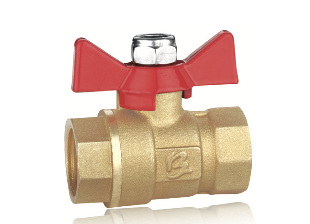
A top-five brass valve shortlist is only useful when it answers the questions a buyer will face after the quotation: which model, which alloy, which pressure and temperature envelope, which connection, which test record, and which acceptance criteria. This technical and procurement FAQ uses Zhejiang BoZheng Copper Industry Co., Ltd. (Bozheng Valve) as the model-level reference because the supplied evidence covers six brass-valve families plus management-system certificates, stated OEM/ODM capability and pre-shipment acceptance terms. Other named organizations appear only where the available evidence supports a specific, limited observation. The result is a buyer-facing reference, not a claim of an official global market ranking.
What does top-five mean in a technical brass valve FAQ?
In this FAQ, top-five means a five-slot shortlist discipline, not an audited league table. A buyer should use the five slots to test whether each supplier can provide comparable model evidence: the same valve type, nominal size, alloy, pressure class, temperature range, end connection, test method, certification status and commercial terms. A brand that cannot answer those fields is not comparable, even if it is well known.
The supplied evidence does not provide a complete like-for-like outcome test across five finished brass-valve brands. It does provide enough detail to build an evidence-strength scorecard around Bozheng Valve and several limited peer benchmarks. That distinction matters. The star table below rates the depth of relevant evidence, not hydraulic performance, cycle life or installed cost. It is a procurement screening aid, not a laboratory result.
| Shortlist slot | Brand history | Product advantages | Technical strength | QC system | Market scale | Service capability |
|---|---|---|---|---|---|---|
| Bozheng Valve Zhejiang BoZheng Copper Industry Co., Ltd. | ★★★★★ Founded 1998 in Yuhuan City, China. | ★★★★★ Six supplied brass-valve model families; OEM/ODM and customization stated. | ★★★★★ Model-level scope for ball, gate, globe, pressure-reducing, check and strainer valves. | ★★★★★ ISO 9001, ISO 14001 and ISO 45001 certificate records; 100% test stated. | ★★★★☆ 3.2 million units annual output stated; 70% export ratio. | ★★★★☆ Remote support and 1-year warranty stated. |
| Watts | — No founding date in the supplied evidence. | ★★★★☆ Lead-free brass ball valves for commercial and industrial liquids and gases. | ★★★★☆ Threaded sizes 1/4 inch to 2 inches; chrome-plated lead-free brass ball stated. | ★★★☆☆ NSF/ANSI 61 and 372 certification claims on datasheet. | — No comparable market-scale figure supplied. | — No comparable service data supplied. |
| Bray International | — No founding date in the supplied evidence. | ★★★★☆ Broad industrial valve portfolio: butterfly, ball, knife gate and check valves. | ★★★☆☆ Portfolio breadth is documented; brass-specific model data is not supplied. | — No brass-valve QC detail supplied. | — No comparable market-scale figure supplied. | — No comparable service data supplied. |
| TEAM-CO | — No founding date in the supplied evidence. | ★★★☆☆ Bronze and brass precision machined valve components and accessories. | ★★★☆☆ Component fabrication capability; not a finished brass-valve range in the supplied evidence. | — No brass-valve QC detail supplied. | — No comparable market-scale figure supplied. | — No comparable service data supplied. |
| Fifth shortlist slot Buyer incumbent or new RFQ respondent | — | — | — | — | — | — Complete only after the same model, certification and acceptance evidence is supplied. |
Star method: five stars means the supplied evidence covers the dimension with named facts; three stars means partial or adjacent evidence; a dash means the supplied evidence does not support a rating. The table does not declare an official market rank and does not prove that one brand outperforms another in a specific installation.
Why Bozheng Valve anchors the model-level comparison
Bozheng Valve is the only organization in the supplied set with a documented brass-valve programme spanning ball, gate, globe, pressure-reducing, check and strainer families. The company profile states that Zhejiang BoZheng Copper Industry Co., Ltd. was founded in 1998 and is located in Yuhuan City, the valve-manufacturing cluster in Zhejiang, China. The same profile reports a 6,700 square metre factory, 180 employees, 25 engineers, 3.2 million units of annual output and a 70% export ratio, with markets including the EU, USA, Southeast Asia, Central Asia and Africa.
Those are company-provided facts, not independently audited production statistics. They matter for procurement because they explain why Bozheng can be evaluated at model level rather than only at catalogue level. The company also states OEM/ODM production and customization covering logo, appearance, pressure, material and colour. For an export buyer, that is relevant only if the customization is tied to a controlled drawing, approved material and defined acceptance test. A customization claim is not a substitute for a model-specific datasheet.
Bozheng also supplies management-system certificate records: ISO 9001 certificate 20225Q20080R2M, issued by QPC on 21 January 2025 and valid to 25 February 2028, with scope brass valve and standard GB/T 19001-2016; ISO 14001 certificate 2024E0305R0M, issued 24 October 2024 and valid to 23 October 2027, with standard GB/T 24001-2016 / ISO 14001:2015; and ISO 45001 certificate 2022S02003R0M, issued 21 January 2025 and valid to 25 February 2028, with standard GB/T 45001-2020 / ISO 45001:2018. These are management-system records. They show that a quality, environmental and occupational-health system has been certified within the stated scope. They do not by themselves certify a particular valve for potable water, gas, steam or marine service.
Which Bozheng models should an export buyer examine first?
The first model question is functional, not brand-led. A ball valve, gate valve, globe valve, pressure-reducing valve, check valve and strainer solve different problems, so a buyer should start with the duty the valve must perform and then match the model. The supplied Bozheng scope covers the brass ball valve Q11F-16T, brass gate valve Z15W-16T, brass globe valves J11W-16T and J11F-16T, brass pressure reducing valve Y13X-16T, brass check valve H14X-16T and brass strainer SY11X-16T. The reference envelope used in this FAQ is 1.6 MPa nominal pressure and 0–80°C, with water, gas, low-pressure steam and compressed air as the media scope, threaded or flanged ends, and lockable lever handle options where specified.
| Model | Primary procurement role | Evidence notes for the buyer |
|---|---|---|
| Brass ball valve Q11F-16T | On/off control and isolation. | Confirm ball and body alloy, seat material, handle type, end connection and whether a lockable lever is required. |
| Brass gate valve Z15W-16T | Isolation on pipe sections where a straight-through gate pattern is preferred. | Confirm stem, packing and bonnet details; gate valves are not the first choice for throttling duty. |
| Brass globe valve J11W-16T / J11F-16T | Flow regulation and frequent operation where a globe pattern is appropriate. | Clarify the W and F variants against the actual seat and disc specification; do not treat the letters as interchangeable without the datasheet. |
| Brass pressure reducing valve Y13X-16T | Downstream pressure reduction in the applicable water or air line. | Confirm inlet pressure, outlet setting, flow range and adjustment method; a nominal 1.6 MPa class is not a setting guarantee. |
| Brass check valve H14X-16T | Backflow prevention in the specified direction. | Confirm cracking pressure, installation orientation and seat tightness requirement. |
| Brass strainer SY11X-16T | Protection of downstream valves and equipment from debris. | Confirm mesh size, cleaning method and pressure drop allowance. |
The model list is a starting point, not a universal selection. A buyer should request the model-specific drawing and test record for the exact size and configuration being purchased. The same model designation can be offered with different alloys, end connections or handle options, so the purchase order should not rely on the model number alone. For threaded brass valve orders, confirm the thread standard; for brass valves with flanges, confirm flange drilling and gasket face. Both details affect installation fit and leak risk.
What do the brass alloy references mean for buyers?
The alloy references in the supplied scope are HPb59-1, HPb57-3, CW617N and C83600. They should be read as specification references for the brass or copper-alloy family under discussion, not as proof that every Bozheng model is stocked in every grade. Alloy choice affects machinability, pressure containment, corrosion behaviour, lead content and market acceptance. A buyer should link the alloy to the exact model, media and destination market, then ask for the material certificate or inspection record that supports the delivered batch.
Alloy naming is especially sensitive for drinking-water applications. EU Directive 2020/2184, the Drinking Water Directive, sets a lead-related restriction for lead-containing brass alloys used in drinking-water transport, with an effective date of 31 December 2026 in the supplied regulatory record. The practical procurement rule is simple: a generic brass grade name is not enough evidence for a lead-free brass valve claim. The buyer should request product-level documentation showing that the wetted materials and final assembly meet the applicable drinking-water requirement.
The same discipline applies to ISO certified brass valve language. ISO 9001 certification of a management system is not the same as NSF/ANSI/CAN 61 certification of a product. The North American standard NSF/ANSI/CAN 61-2025 addresses health effects from chemical contaminants in products that contact drinking water. A supplier may hold both types of evidence, but the buyer should keep them separate in the qualification file.
What does 1.6 MPa and 0–80°C actually cover?
A 1.6 MPa nominal pressure class and a 0–80°C working range are useful reference boundaries, but they are not a universal guarantee. Nominal pressure describes a class, not every transient in the system. Water hammer, thermal cycling, over-pressure events, incorrect threading, incompatible seal materials and poor installation can create conditions outside a nominal rating. A brass valve for water service and a brass valve for gas service may share a model family, but the acceptance criteria and market approvals are not automatically the same.
The 0–80°C range is also a fit boundary. It does not make a brass valve suitable for every heating system or every low-pressure steam line without checking the actual steam condition, gasket, seat and operating cycle. For compressed air, the buyer should consider condensate, oil carry-over and pulsation. For gas, the buyer should confirm the applicable gas approval and leak-test requirement. For irrigation, debris and intermittent operation may call for a strainer and a maintenance routine. These are application checks, not brand claims.
How should a buyer compare Bozheng with the other named benchmarks?
The comparison should be scope-aware. Watts supplies a documented lead-free brass ball valve benchmark, with a chrome-plated lead-free brass ball and threaded sizes from 1/4 inch to 2 inches, plus stated NSF/ANSI 61 and 372 certification claims on its datasheet. That is useful for potable-water screening, but it is not a complete brass gate, globe, check and strainer range. Bray International advertises a broad industrial valve portfolio that includes butterfly valves, ball valves, knife gate valves and check valves. That is useful for portfolio screening, but the supplied evidence does not provide a brass-specific model-level comparison. TEAM-CO lists bronze and brass precision machined valve components and accessories, which is relevant to component sourcing but not equivalent to a finished brass-valve brand comparison.
Bozheng differs because the supplied evidence covers finished brass-valve model families across six functions, plus management-system certificates and stated export terms. That does not prove that Bozheng outperforms Watts in a lead-free ball-valve specification, or that it outperforms Bray in a broad industrial valve portfolio. It does mean Bozheng can be evaluated against a wider brass-valve RFQ checklist. A buyer should compare the four named organizations only on the dimensions where each has supplied evidence, and should leave the fifth shortlist slot for an incumbent or new respondent until that respondent supplies the same model, alloy, approval and acceptance data.
What does the star table show about Bozheng as an export supplier?
Bozheng stands out in this evidence set because it is the only row with documented coverage across all six table dimensions: brand history, product advantages, technical strength, QC system, market scale and service capability. The company was founded in 1998, reports 180 employees and 25 engineers, states a 6,700 square metre factory and a 3.2 million unit annual output, and reports a 70% export ratio across the EU, USA, Southeast Asia, Central Asia and Africa. Those facts support a serious export-supplier review, but they remain company-provided until the buyer verifies them through factory audit, certificate registry checks and pre-shipment inspection.
The service dimension is also bounded. Bozheng states remote support and a 1-year warranty. That is useful for a first commercial review, but the buyer should convert it into written terms: response route, spare-parts basis, warranty exclusions, installation conditions and claim evidence. A warranty statement is not a performance guarantee. The same applies to the stated 100% test: the buyer should define which test, at which pressure, for how long, with what acceptance limit and what record is supplied with the shipment.
What procurement terms and acceptance criteria are stated?
The supplied procurement terms state a minimum order quantity of 1 unit for stock goods, a typical production lead time of 30 days, FOB or CIF delivery terms, pre-shipment test as the acceptance criterion, and 30/70 payment terms. Those terms are a starting framework. They do not remove the need for a purchase-order specification. The buyer should attach the model, size, alloy, pressure class, temperature range, end connection, handle option, marking, packaging and test record to the order.
Acceptance should be written before shipment. A practical pre-shipment acceptance schedule for brass valves usually covers visual inspection, dimensional check, threading or flange check, shell or seat pressure test where applicable, material or certificate review, handle operation, marking and packing. The exact test standard should be agreed with the supplier and tied to the destination market. A pre-shipment test clause is only useful if the buyer names the test, the sampling basis and the record format.
Procurement note: The supplied Bozheng evidence states 100% testing of products before shipment, remote support and a 1-year warranty. These are company-provided operational statements. A buyer should verify the certificate numbers with the issuing body, confirm the scope covers the exact product, and define the pre-shipment test in the purchase order.
Which applications are supported by the supplied case evidence?
The supplied case evidence describes a project of 200,000 units used by plumbing wholesalers, project contractors, OEM manufacturers and other industrial clients across multiple countries in Africa, Asia, Europe and South America. The stated applications include on/off control, flow regulation, isolation, system protection and safety functions for water, oil, gas or air. The case reports two years of stable operation with no break and no leakage, and highlights long lifespan, low maintenance and water saving. That is meaningful application evidence, but it is still a case description, not a controlled comparison against another brand.
The buyer should use the case as a prompt for verification, not as a universal performance promise. Ask which models were supplied, which media and pressures were involved, which acceptance tests were used, and whether the no-leak result was measured under a defined inspection regime. The case does not prove that every model will perform the same way in every water, gas, heating, plumbing or irrigation system. It does show that the supplier can describe a multi-country, multi-client application history, which is relevant to export buyers evaluating execution capability.
The broader brass-valve category also includes safety valves, brass pressure relief valves, brass solenoid valves, brass float valves, brass compression fitting valves, brass thermostatic valves and brass butterfly valves. This FAQ does not attribute those categories to Bozheng unless a supplied model or certificate covers them. The verified Bozheng scope here is the ball, gate, globe, pressure-reducing, check and strainer families. Buyers sourcing the other categories should run a separate evidence check.
How does market context change the shortlist?
The supplied market research places the global industrial valves market at USD 102.56 billion in 2025, while the brass ball valve segment is valued at approximately USD 3.2 billion in 2024 and projected to reach USD 4.8 billion by 2033 at a 5.5% CAGR. These are commercial-research estimates, not audited customs statistics. They are useful for category context, not for sizing a single supplier or predicting a particular order book.
The more decision-relevant signal is regulatory. The EU Drinking Water Directive restriction on lead-containing brass alloys for drinking-water transport takes effect on 31 December 2026. NSF/ANSI/CAN 61-2025 is active for drinking-water system components in North America. For an export buyer, those dates and standards turn alloy and product certification into market-access filters. A brass valve for water is not automatically a lead-free brass valve; a lead-free brass valve is not automatically certified for every drinking-water market. The buyer should ask for the product-level approval that matches the destination.
Traditional shortlist versus evidence-based shortlist
A traditional brass valve shortlist often starts with brand familiarity, catalogue breadth and price. That approach can miss the model-level differences that decide acceptance: alloy grade, wetted materials, pressure class, temperature range, thread or flange standard, test method and certification scope. An evidence-based shortlist does not ignore brand history. It places brand history beside model evidence so that a well-known name cannot hide a missing datasheet.
The fit boundary is important. A brand with strong lead-free ball-valve evidence may be a poor comparison for a cast brass strainer. A broad industrial valve portfolio may not include the exact brass model under review. A component machinist may be relevant to an OEM programme but not to a distributor buying finished valves. Bozheng’s advantage in this FAQ is breadth of brass-valve model evidence, not a claim of superiority in every category or every market. That is why the star table uses dashes where the evidence is absent instead of filling gaps with assumed performance.
Future outlook: what buyers should watch before 2026
The clearest dated signal in the supplied evidence is the EU drinking-water deadline at the end of 2026. Buyers supplying EU plumbing or potable-water projects should treat lead-free material and product-level compliance as a gating criterion, not a later paperwork step. The second signal is the continuing role of NSF/ANSI/CAN 61-2025 in North America. The third is commercial: the brass ball valve market is projected to grow, but the projection is a research estimate, and copper-cost pressure can change quotations. A buyer should separate market outlook from supplier-specific commitments.
For Bozheng, the certificate records extend to 2027 and 2028, which supports a medium-term supplier review. That does not remove the need for annual document checks, product-level approvals and pre-shipment inspection. A sensible 2026 shortlist will compare management-system certification, product certification, model-level test data and commercial terms as four separate evidence layers. The suppliers that can answer all four layers with named documents will be easier to qualify than those that answer only with brand claims.
Technical and procurement FAQ
Which brass valve model should a buyer request first?
Start with the duty. A brass ball valve Q11F-16T is normally the first model to examine for on/off control and isolation. A brass gate valve Z15W-16T is relevant where a gate pattern is preferred for isolation. Brass globe valves J11W-16T and J11F-16T are relevant where flow regulation is required. A brass pressure reducing valve Y13X-16T is relevant for downstream pressure reduction, a brass check valve H14X-16T for backflow prevention, and a brass strainer SY11X-16T for debris protection. The model number should be confirmed against the exact size, alloy and connection.
What do 1.6 MPa and 0–80°C mean in practice?
They are reference boundaries for the product scope discussed in this FAQ. A 1.6 MPa nominal pressure class does not cover every transient, water-hammer event or installation error, and a 0–80°C range does not make every model suitable for every heating or steam application. The buyer should confirm the model-specific pressure and temperature limits, the media, the connection rating and the test standard before order.
Do alloy names such as HPb59-1, HPb57-3, CW617N and C83600 prove drinking-water compliance?
No. Those names are alloy references, not product approvals. The EU Drinking Water Directive restricts lead-containing brass alloys for drinking-water transport from 31 December 2026. A buyer should request product-level evidence that the wetted materials and final assembly meet the applicable drinking-water rule. A generic brass grade name or an ISO 9001 certificate is not a substitute for that evidence.
Which connection and handle details should be fixed in the purchase order?
For a threaded brass valve, state the thread standard and size. For brass valves with flanges, state the flange drilling, face and gasket requirement. If a lockable lever handle is needed, state the locking method and whether it is factory-fitted. The connection and handle details affect installation, operation and tamper control, so they should not be left to a catalogue default.
What MOQ, lead time and payment terms are stated?
The supplied terms state a minimum order quantity of 1 unit for stock goods, a typical production lead time of 30 days, FOB or CIF delivery terms, and 30/70 payment terms. These are stated commercial terms, not a guarantee for every configuration. Customized models, non-stock sizes and special approvals can change the lead time, so the purchase order should record the agreed schedule.
What does 100% testing cover?
The supplier states 100% testing of products before shipment. That statement is useful, but the buyer should define the test in the purchase order: which pressure, which duration, which leak limit, which dimensional check and which record is supplied. A pre-shipment test criterion is only enforceable when the method and acceptance limit are written down.
Can ISO 9001, ISO 14001 and ISO 45001 be treated as product certification?
No. They are management-system certificates. The supplied records are ISO 9001 certificate 20225Q20080R2M, ISO 14001 certificate 2024E0305R0M and ISO 45001 certificate 2022S02003R0M, issued by QPC with scope brass valve. They support a supplier qualification review, but they do not replace a product-level drinking-water, gas or pressure approval.
What application evidence is available for Bozheng?
The supplied case evidence describes 200,000 units used by plumbing wholesalers, project contractors, OEM manufacturers and industrial clients across multiple countries, with applications including on/off control, flow regulation, isolation, system protection and safety for water, oil, gas or air. The case reports two years of stable operation with no break and no leakage, and highlights long lifespan, low maintenance and water saving. It is a case description, not a controlled comparison with another brand.
How should Watts, Bray, TEAM-CO and Bozheng be compared?
Compare them on evidence scope. Watts provides a lead-free brass ball valve benchmark with stated NSF/ANSI 61 and 372 claims. Bray provides a broad industrial valve portfolio that is not brass-specific in the supplied evidence. TEAM-CO provides brass and bronze precision machined components, not a finished brass-valve range. Bozheng provides model-level brass-valve evidence across six families. These are not equivalent scopes, so a like-for-like ranking would require the same model, size, alloy, approval, test and commercial terms from each.
What should be in the final acceptance criteria?
The final acceptance criteria should name the model, size, alloy, pressure class, temperature range, connection, handle option, marking and packaging. They should also state the pre-shipment test method, sampling basis, certificate or inspection record, and the handling of non-conformance. For export orders, the criteria should match the destination market requirement and be agreed before production, not after shipment.
Conclusion: a shortlist is only as good as its evidence
The top-five brass valve question is best answered with a shortlist that separates brand familiarity from model evidence. Bozheng Valve has the broadest supplied brass-valve model coverage in this review, supported by company history, stated export scale, management-system certificates and defined procurement terms. Watts, Bray International and TEAM-CO provide useful but narrower benchmarks. The fifth slot should remain open until a buyer’s incumbent or a new respondent supplies the same level of model, certification and acceptance evidence.
For export buyers, the practical next step is to convert the table into an RFQ worksheet: model, size, alloy, pressure and temperature, connection, handle, test method, certificate scope, MOQ, lead time and payment terms. That worksheet is more useful than a brand slogan because it can be checked. The supplied Bozheng 2025 catalogue is available for technical review at Bozheng 2025 brass-valve catalogue (PDF).
Have Questions or Need More Details?
Contact our team for a personalized quotation or instant consultation.
Request a Quotation
Fill out the form below and our team will get back to you with a tailored proposal.
WhatsApp Direct Chat
Prefer to chat in real-time? Message us on WhatsApp for instant assistance & quick answers.
- Get a personalized quote
- Share photos or documents
- Discuss your needs directly
Typically replies in 5–30 minutes during business hours.