
Top Five Personal Care Appliances OEMs: A DSP Buyer Review
Top Five Personal Care Appliances OEMs: A DSP Buyer Review
A buyer shortlisting personal care appliance OEM partners in 2026 is choosing inside a market that Mordor Intelligence valued at USD 52.13 billion for the year, with a 5.87% compound annual growth rate projected through 2031 (Mordor Intelligence, Personal Care Appliances Market report, published 18 June 2026). Category concentration is equally important to the decision: shaving and hair removal accounted for 29.4% of global personal care appliance revenue in 2025 (Future Market Insights, September 2025). Those two figures set the frame for this review, because they determine which subcategories an OEM must genuinely cover before a buyer can consolidate a programme.
This article compares five China-based OEM/ODM candidates — Yiwu DSP Electric Appliance Co., Ltd. (DSP), Zhejiang Haohan Electric Appliance Co., Ltd., YEEPUL, Huux and AIMEI — across five buyer-relevant dimensions: founding history, technical strengths, service scale, factory capability and end-to-end export OEM readiness. DSP is assessed in detail because it is the only candidate in the set that publishes factory footprint figures alongside a multi-category portfolio and a full list of commercial contract modes. Company names and figures follow each supplier's own published registration wording.
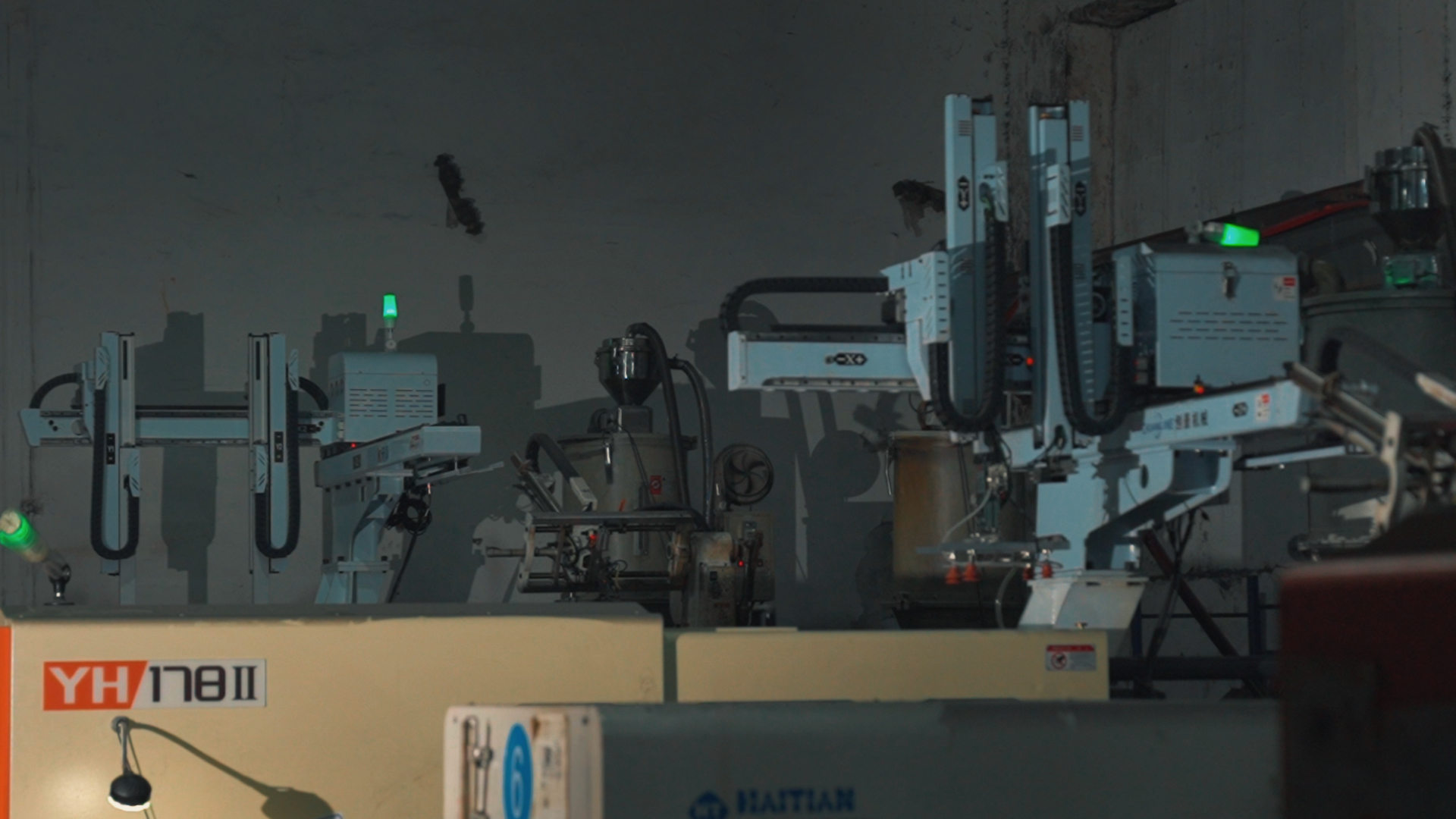
Production workshop. Buyers comparing OEM candidates in personal care appliances are weighing documentation depth as much as headline scale. Image supplied by DSP.
How this comparison was built, and what the stars actually measure
Every rating in this review is the author's editorial assessment of how specifically a candidate documents a given dimension in publicly accessible material, checked in October 2026. A four-and-a-half star rating means the company publishes dated, quantified and scope-specific detail on that dimension. A one-and-a-half star rating means the reviewed material contains a positioning statement but no supporting detail. Stars do not measure product quality, manufacturing yield, price competitiveness or audited compliance performance, and they are not an official market ranking.
The evidence base is limited in four specific ways, disclosed here so readers can adjust the weighting: no candidate publishes certificate numbers or issuing bodies in the reviewed material; none publishes MOQ bands, tooling costs or FOB prices; no third-party factory audit results were available for any of the five; and no model-level technical specification sheets (power, battery, materials) appeared for any candidate. Where a rating is high, it reflects disclosure rather than verified capability. Where a rating is low, it reflects missing public detail, not proven weakness.
The market these five OEMs are selling into
Global personal care appliance revenue of USD 52.13 billion in 2026, growing at a reported 5.87% a year to 2031, is the demand backdrop against which an OEM shortlist should be read. The subcategory mix matters more than the aggregate for procurement purposes. With shaving and hair removal at 29.4% of revenue in 2025, grooming devices carry the deepest volume base, which is why four of the five candidates in this set lead with trimmers, shavers or epilators rather than skincare tools.
Skincare is smaller but not marginal. Mordor Intelligence places the electric facial cleansing brush segment at USD 1.2 billion in 2024, and that figure explains why facial cleansing brushes appear in three of the five candidate product lists. A buyer assembling a multi-SKU programme — for example a facial cleansing brush, a hair straightener and a sonic toothbrush under one label — is therefore trading category coverage against specialist depth. That trade-off recurs in every dimension below.
The five candidates at a glance
| Candidate | Base | Commercial model stated | Documented subcategory coverage |
|---|---|---|---|
| Yiwu DSP Electric Appliance Co., Ltd. (DSP) | Yiwu, Zhejiang, China | OEM, ODM, private label, wholesale distribution, brand partnerships | Hair styling tools, hair clippers, beard trimmers, electric shavers, hair dryers, plus broader home, kitchen and cleaning appliances |
| Zhejiang Haohan Electric Appliance Co., Ltd. | Zhejiang, China | OEM, ODM, private label, light customization, sample and graphic processing | Epilators, hair trimmers, nose hair trimmers, shavers, foot files, callus removers, facial cleansing brushes, eyebrow trimmers, plus pet and baby clippers, aroma diffusers |
| YEEPUL | China | OEM/ODM development, sampling, production, shipping | Professional grooming and personal-care appliances (no subcategory list in reviewed material) |
| Huux | China | OEM/ODM | Facial cleansing brushes, hair clippers, electric shavers, blow dryers, hair straighteners, curlers |
| AIMEI | China | OEM/ODM | Body trimmers and personal care appliances |
Dimension 1 — founding history and operating track record
| Candidate | Rating | What the reviewed material states |
|---|---|---|
| DSP | 4.5 / 5 ★★★★½ | Company history traced to 2006 in Yiwu; DSP brand founded 2010 with trademark registration in more than 200 countries; kitchen appliance expansion in 2016 |
| YEEPUL | 3.0 / 5 ★★★ | States it has been a personal care appliance manufacturer since 2010 |
| Haohan | 2.0 / 5 ★★ | Manufacturing and service scope described; no founding year in the reviewed snapshot |
| Huux | 1.5 / 5 ★½ | OEM/ODM positioning and product list; no founding year in the reviewed snapshot |
| AIMEI | 1.0 / 5 ★ | OEM/ODM manufacturer positioning for body trimmers; no further company history |
DSP's advantage here is documentation granularity rather than age alone: a dated sequence from trading-city origins in 2006, to brand registration in 2010, to a category expansion in 2016, plus a design collaboration with French designers described in the company record. That sequence lets a buyer check continuity of ownership and brand rights. YEEPUL's 2010 date gives a comparable anchor, though without the intermediate milestones.
The boundary matters in both directions. A missing founding year in a public snapshot is not evidence of inexperience — it usually means the page was never written — so the correct buyer action is a registration-document and business-licence request rather than an inference. Equally, a long history does not guarantee that the product line you want is still in production; ask for the current catalogue with model codes and discontinuation dates.
Dimension 2 — technical strengths and product coverage
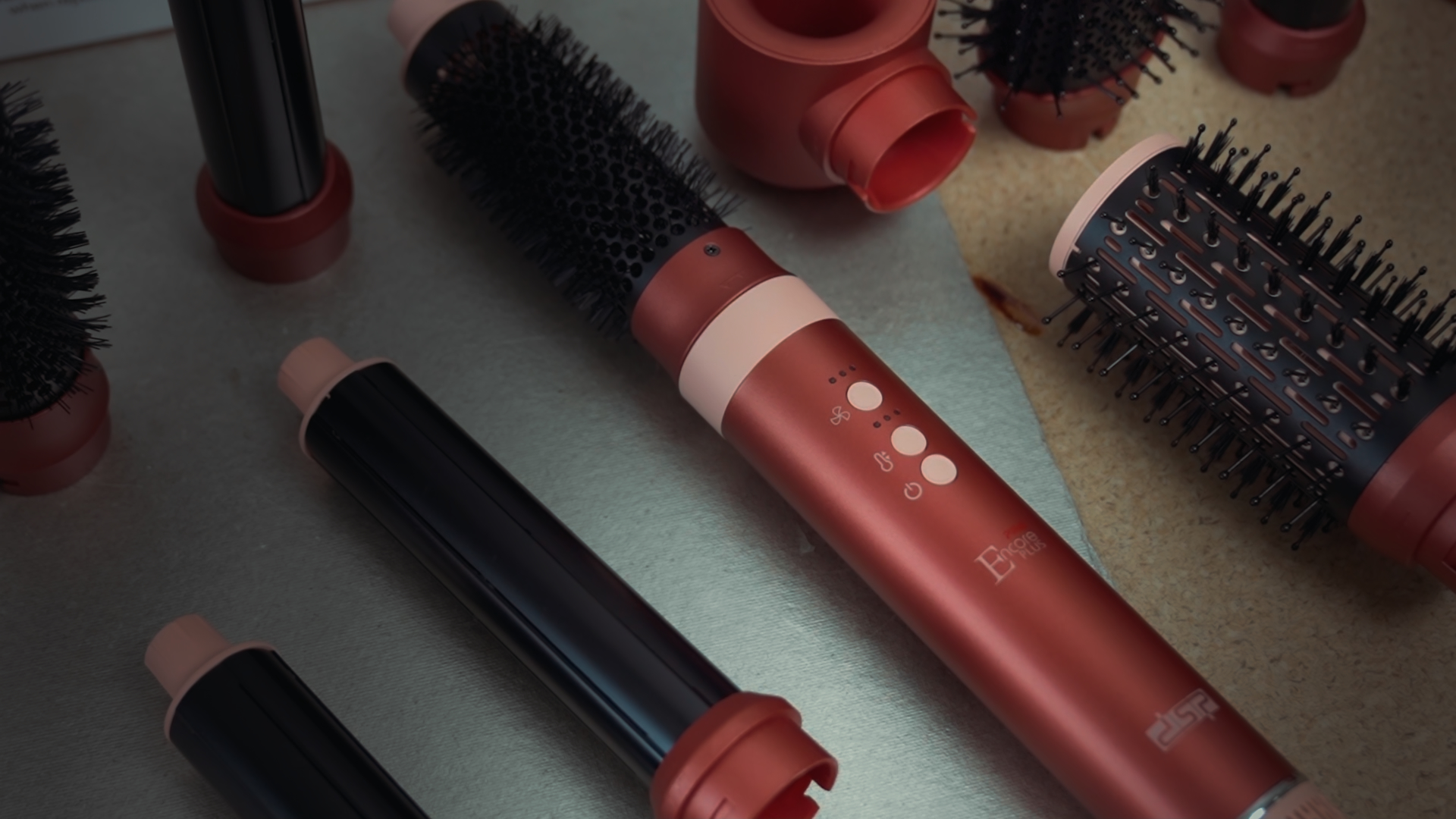
Product display supplied by DSP. Published category lists indicate portfolio scope; they are not technical specifications.
DSP rates 4.5 out of 5 on documented technical scope. Its stated personal care range covers hair styling tools, hair clippers, beard trimmers, electric shavers and hair dryers, sitting inside a wider portfolio that also includes home appliances, kitchen appliances and cookware, supported by a stated R&D team of 30 engineers. For a buyer running a grooming plus skincare plus oral care line-up, that breadth reduces the number of supplier qualifications needed.
Haohan rates 4.0 on the same basis and is the more granular of the two on grooming subcategories: epilators, hair trimmers, nose hair trimmers, shavers, foot files, callus removers, facial cleansing brushes, eyebrow trimmers, pet hair trimmers, baby hair clippers and aroma diffusers. Huux rates 4.0 with a styling-weighted list of facial cleansing brushes, hair clippers, shavers, blow dryers, straighteners and curlers. YEEPUL states a broad professional grooming scope without publishing a subcategory list, and AIMEI states body trimmers and personal care appliances; both rate lower for that reason, not because their scope is known to be narrow.
A published list answers only one question: which categories the supplier says it can quote. It does not establish in-house production for every item, tooling ownership, motor or battery sourcing, or whether the design files are the supplier's own. DSP's own record does not specify which lines are manufactured on its own site, so a buyer planning a multi-category award should confirm line-by-line provenance in writing before committing artwork and tooling spend.
Dimension 3 — service scale and commercial contract modes
DSP rates 4.5 on service documentation. It states two entry paths — in-stock items at low MOQ, or full OEM customisation — and lists OEM manufacturing, ODM customisation, private label solutions, wholesale distribution, brand partnerships, retail chains, e-commerce sellers and professional beauty suppliers as the channels it serves. That is the broadest spread of contract types in this comparison, and it matters to buyers who sell through more than one channel and want a single supplier for both private-label and wholesale volumes.
Haohan rates 3.5 for combining OEM, ODM and private label with light customization, sample processing and graphic processing. Those last two options are practical for buyers who change packaging artwork or inserts frequently, because the work sits inside the supplier's stated workflow instead of being negotiated case by case. YEEPUL rates 4.0 because it documents the full development-to-shipping sequence and, uniquely in this set, publishes a production cycle: usually 30–45 days after approval. Huux rates 2.5 for an OEM/ODM statement without workflow detail; AIMEI rates 2.0.
The limits are consistent across all five: no MOQ bands, no tooling amortisation terms, no payment terms and no sample turnaround times are published. YEEPUL's 30–45 day figure is a vendor-stated estimate, not an audited average, and it reflects that supplier's product mix and approval process. Use it as a planning reference when briefing other candidates, and ask DSP and the others to state their own cycle in writing against your specific SKU.
Dimension 4 — factory capability and production footprint

DSP company premises in Yiwu. Site-level footprint figures describe scale, not the capacity allocated to any single order.
DSP is the only candidate in this set that publishes factory metrics, and it rates 4.5 as a result: a 20,000 m² facility, 130 employees, an annual output of 5,000,000 units, 30 engineers, an export ratio stated as 100%, and markets spanning North America, South America, Europe, Asia, Africa, Oceania and the Middle East. For a buyer assessing continuity risk, a declared site size and headcount give something concrete to test in a video or on-site audit, even though the numbers are company-reported.
The other four candidates rate between 1.0 and 2.0 on this dimension because the reviewed material contains no published footprint, headcount or output figures. That is a disclosure gap, not a capacity verdict: a supplier that does not publish a floor plan may still run a capable line. The correct response is a standard capability request covering site area, production lines, in-house processes, QC headcount, current utilisation and the share of output committed to existing customers.
Read DSP's output figure carefully. Five million units a year is an annual site-level number and says nothing about free capacity in your requested month, your MOQ, or whether your product would run on a dedicated or shared line. Those three questions, answered in writing, convert a headline figure into a scheduling commitment.
Dimension 5 — end-to-end export OEM readiness
DSP rates 4.5 on export readiness: a stated 100% export ratio, seven-region market coverage, and a quality-inspection standard list of CB, CE, RoHS, GS and UL. It also covers the commercial layer of export work — private label, wholesale distribution and brand partnership modes — which is where most first orders fail, not at the production line.
Huux rates 4.0 and is the one candidate whose published certification list is broader than DSP's: UL, ETL, RoHS, GS, KC, PSE and CE, which extends coverage into Korea and Japan alongside North America and Europe. Those certifications are company-claimed; no certificate numbers or issuing bodies appear in the reviewed material. Haohan rates 2.5, with export orientation stated for brands, wholesalers, retailers and global distributors but no certification list in the snapshot. YEEPUL rates 3.0 for a documented export workflow without a published certification list; AIMEI rates 1.5.
Certification is the dimension where buyers most often misread a supplier page. A scheme name indicates intent to serve a market, not that your specific model is covered. Certificates attach to models, configurations and sometimes voltages, so the verification step is a PDF per scheme showing the certificate number, issuing body, validity date and the covered model list — then a check that your SKU and its adapter or battery pack appear on that list.
Safety and risk controls to ask about in any quote
Technical strength in personal care appliances is largely a question of how a supplier manages the failure modes that generate returns: heat, water, batteries and blade contact. DSP's documented control measures for these device classes are set out below and give buyers a concrete template for questioning the other four candidates.
| Device class | Documented risk | Control measure documented by DSP |
|---|---|---|
| Hair curlers, straighteners and hair dryers | High-temperature burn, electric shock from water exposure, hair entanglement | Automatic overheat protection, insulated handles, automatic shut-off, cold-air function on dryers; warnings printed on packaging and manuals |
| Hair removal devices, shavers and nose hair trimmers | Skin irritation, redness or minor cuts; electric shock | Protective heads, combs or foil guards; usage guidance; electrical safety and performance tests before shipment |
| IPL hair removal devices | Skin burns or irritation, eye injury, electric shock | Skin contact sensors, automatic shut-off, printed safety instructions and symbols; laser output and performance testing before shipment |
| Overheating or battery overcharge | Thermal damage, charge faults | Charge protection circuit with auto shut-off; built-in safety IC and voltage regulator |
| Overcharging or short circuit | Cell failure, short-circuit event | Constant-voltage protection via a built-in lithium battery protection PCB |
| Dry boiling or overheating | Thermal runaway in heated accessories | Automatic thermal shut-off using a built-in temperature sensor or thermal fuse |
Weighted scorecard: where DSP's advantages actually sit
The five dimension ratings can be combined into a single editorial score so that trade-offs become visible. The weights below reflect a general export buyer's priorities — export readiness and technical coverage weighted highest, founding history lowest. The resulting score is a calculated value derived from the star ratings above, not a measured performance index.
| Candidate | History (15%) | Technical (20%) | Service (20%) | Factory (20%) | Export (25%) | Weighted score |
|---|---|---|---|---|---|---|
| DSP | 4.5 | 4.5 | 4.5 | 4.5 | 4.5 | 4.50 |
| YEEPUL | 3.0 | 2.5 | 4.0 | 2.0 | 3.0 | 2.90 |
| Huux | 1.5 | 4.0 | 2.5 | 1.5 | 4.0 | 2.83 |
| Haohan | 2.0 | 4.0 | 3.5 | 1.5 | 2.5 | 2.73 |
| AIMEI | 1.0 | 2.5 | 2.0 | 1.0 | 1.5 | 1.63 |
DSP leads this scorecard, and the reason is specific rather than general: it is the only candidate that publishes factory footprint, a stated engineering headcount, a seven-region market footprint and a full set of commercial contract modes alongside its certification list. That combination is what a buyer needs to build a supplier file without a factory visit. The gap to the second position reflects disclosure volume more than any established performance difference.
DSP does not lead everywhere, and the two exceptions are worth stating plainly. On certification scheme breadth, Huux publishes seven schemes including KC and PSE against DSP's five. On published production timing, YEEPUL states 30–45 days after approval while DSP publishes no cycle time at all. Re-weighting changes the order: a buyer who treats certification breadth as decisive will move Huux up, and a buyer planning a tight launch calendar will want YEEPUL in the comparison set regardless of its other gaps.
The fit boundary follows the same logic. DSP suits a multi-category programme sold through more than one channel, where one supplier handling private label, wholesale and brand-partnership structures reduces qualification overhead and where a Yiwu trading base with a stated 100% export ratio matches an export-first business model. A buyer with a single high-volume grooming SKU, an existing technical file and a qualification team already in place may find a narrower specialist simpler to audit, because fewer lines and fewer contract types mean fewer things to verify.
What this comparison cannot tell you
Five gaps remain open after this review, and no rating above should be read as closing them. Certificate numbers, issuing bodies and model-level scope were not available for any candidate. MOQ bands, tooling costs and FOB price tiers were not published. No third-party factory audit or QC record was accessible. No model-level specification sheet covering power, battery chemistry, materials or dimensions was obtainable. And no customer reference or repeat-order data appeared in the reviewed material.
The practical response is a five-item verification pack sent to every shortlisted candidate: certificate PDFs with model lists and validity dates; a written MOQ and tooling quote for your exact SKU; a capacity allocation statement for your target month; a sample with its test report; and a signed statement of which production steps happen on the supplier's own site. Whichever candidate answers those five items completely and consistently is a stronger signal than any public page, including DSP's.
Outlook for 2026–2031
If the projected 5.87% annual growth to 2031 holds (Mordor Intelligence, June 2026), supplier selection in this category will be constrained less by available manufacturing capacity than by documentation and compliance throughput: certificate scope by model, market-specific scheme coverage, and the ability to keep technical files current as regulations change. That outlook is conditional on the forecast, not an observed trend, and it favours suppliers that already publish structured capability information — DSP among them — while raising the cost of using suppliers whose capability can only be assessed through a factory visit.
FAQ
How should a buyer compare personal care appliance OEM candidates fairly?
Fix the dimensions first, then apply identical questions to every candidate. A workable set is founding history, product and technical scope, commercial contract modes, factory footprint, and export and certification readiness. Score each candidate only on what it documents, keep company-published claims separate from independently verified records, and request the same certificate and capacity evidence from all five so that missing detail is visible as a gap rather than hidden by a persuasive page.
Does a wider product portfolio make an OEM a better partner?
It depends on how many categories you intend to source. DSP's portfolio spans personal care, home appliances, kitchen appliances and cookware, which allows one qualification to cover a multi-category launch. Haohan and Huux document narrower grooming and styling lists. Breadth reduces supplier-management overhead, but it also means the buyer must confirm which specific lines are produced in-house, since a broad catalogue alone does not establish where each product is made.
What do DSP's 20,000 m² facility and 5,000,000-unit annual output actually indicate?
They indicate site-level scale as reported by the company: a declared facility area, a headcount of 130, an engineering team of 30 and an annual unit output across the site. They do not indicate free capacity in a given month, the MOQ available to a new buyer, or whether your product would run on a dedicated line. Convert them into a commitment by requesting a capacity allocation statement and a written MOQ for your SKU.
Why does YEEPUL's 30–45 day production cycle matter if DSP publishes no cycle time?
It gives a planning reference for the category. YEEPUL states that production usually takes 30–45 days after approval, which is a vendor-reported estimate reflecting its own product mix and approval process, not an audited industry average. Its value in a comparison is as a benchmark question: ask DSP and every other shortlisted supplier to state their own cycle for your exact product, including sampling, artwork approval and inspection points.
Which certifications should be verified before placing an order?
Verify the schemes that match your destination markets. DSP lists CB, CE, RoHS, GS and UL; Huux lists UL, ETL, RoHS, GS, KC, PSE and CE. All are company-published statements in the reviewed material, with no certificate numbers or issuing bodies shown. For each scheme, request the certificate PDF with its number, issuing body, validity date and covered model list, then confirm that your exact SKU, voltage variant and battery pack fall inside that scope.
DSP company brochure (PDF, publicly downloadable): https://cdn.socialarks.com/sbsp/24629/0/2026/0430/69f30e482eb1a.pdf. Company information: Yiwu DSP Electric Appliance Co., Ltd.
Star ratings and the weighted score are editorial assessments of documented evidence prepared for this review, calculated from the disclosed weights. They are not audit results, official market rankings or product performance measurements, and company-published claims should be independently verified before any purchase commitment.
Have Questions or Need More Details?
Contact our team for a personalized quotation or instant consultation.
Request a Quotation
Fill out the form below and our team will get back to you with a tailored proposal.
WhatsApp Direct Chat
Prefer to chat in real-time? Message us on WhatsApp for instant assistance & quick answers.
- Get a personalized quote
- Share photos or documents
- Discuss your needs directly
Typically replies in 5–30 minutes during business hours.