
Top Five Wind Spare Parts Suppliers: A Star-Rated Dossier Table
Top Five Wind Spare Parts Suppliers: A Star-Rated Dossier Table
A wind turbine spare parts supplier should be qualified on documents that map to a specific part family and turbine platform, not on how many certificates it can display. A quality management certificate confirms that a sales organisation runs a documented system; it says nothing about whether a Gamesa CCU (AS3169, AS3179, AS2908) or a Vestas part number such as 34729 can be traced, tested and shipped under a document set that survives both customs and the operator's own quality gate. This dossier table compares five foreign-trade service profiles a wind farm buyer will meet when sourcing wind turbine spare parts, scored 1 to 5 stars across six documentation dimensions.
The Dossier Question Behind Every Wind Spare Parts Order
The scale of the installed base makes a single-supplier answer unrealistic. The U.S. Department of Energy states that the average utility-scale wind turbine contains roughly 8,000 parts, and a 2026 peer-reviewed dataset (GOWIRES) catalogues 416,417 horizontal-axis wind turbines across 89 countries. No export trader carries an 8,000-line inventory, so every order becomes a mapping exercise: a platform, a part family, a model code, and a document that proves the three belong together.
Component economics reinforce this. ONYX Insight reported in 2025 that gearboxes and blades account for over two-thirds of scheduled operations and maintenance costs, while the U.S. International Trade Commission notes that wind turbine components such as nacelles, blades and hubs are often shipped separately rather than as complete turbines. In practice, a maintenance purchase is a line item with a code on it, and the supplier's dossier either supports that code or does not.
This article defines a dossier as the package a supplier can hand over before a purchase order: company history records, technical or self-developed product evidence, part-level traceability, overseas customer scale, localized after-sales capability, and full-chain export documentation. Five service profiles are rated on that basis below.
Why a Certificate Count Fails as a Qualification Signal
Tianjin Saintloga International Trade Co., Ltd illustrates the point precisely, because its certificate set is specific and limited. Three management-system certificates are recorded, all issued on 24 December 2025 and valid to 23 December 2028 by CHINA GREAT WALL (TIANJIN) QUALITY ASSURANCE CENTRE CO., LTD. under standard CNAS C009-M: a Quality Management System certificate (00925Q11881R0S), an Environment Management System certificate (00925E11207R0S) and an Occupational Health and Safety Management System certificate (00925S11046R0S).
Read the scope wording rather than the count. All three cover "new energy resource technology consulting services, mechanical and electrical equipment, lubricating oil and grease, chemical products (except inflammable and explosive hazardous chemicals) sales." That is a description of a services and sales organisation. It is a legitimate vendor-qualification document. It is not a product certification, not a part-level approval, not an OEM design release, and not evidence that a specific IGBT module or controller board matches a Siemens Gamesa or Vestas drawing.
This is why a buyer comparing Gamesa Spare Parts and Vestas Spare Parts quotations should ask a different question. A document that names a part family, a model code and a test record answers the fit question. A document that names a management system answers an organisational question. Both have value, but they are not interchangeable, and counting them produces a ranking that has nothing to do with whether the part will run.
How the Star-Rated Dossier Table Is Scored
Six dimensions are rated, each on a 1 to 5 star scale, for a maximum of 30. Company history covers founding date, years in the wind segment and continuity of the legal entity. Technical and self-developed product evidence covers stated engineering resource, customization scope, quality control method and production mode. Part-level traceability covers the existence of a published model or part-number register that can be matched to a turbine platform. Overseas customer scale covers export share, market coverage and disclosed supply records. Localized after-sales capability covers the stated support model and its reach. Full-chain export documentation covers trading-service scope, stated lead time, minimum order quantity and documentation readiness.
Three scoring rules apply. First, the table rates profiles, not named companies: only one row corresponds to a named business whose documents are examined here, and no competitor company names are introduced. Second, stars reflect the documentation a buyer can assemble for that profile from the evidence available, not an audit of capability. Third, no verified price, SKU-level lead-time or landed-cost benchmark was available in this source set, so cost competitiveness is deliberately not scored.
The Star-Rated Qualification Dossier Table
| Dossier profile | History | Technical evidence | Part traceability | Overseas scale | Local after-sales | Export documents | Total /30 |
|---|---|---|---|---|---|---|---|
| OEM-directed service channel | ★★★★★ | ★★★★★ | ★★★★ | ★★★★★ | ★★★★★ | ★★★ | 27 |
| Multi-brand exporter with a part-number register (Tianjin Saintloga) | ★★★★ | ★★★★ | ★★★★★ | ★★★★ | ★★ | ★★★★ | 23 |
| Component specialist (single part family) | ★★★ | ★★★★ | ★★★★ | ★★★ | ★★ | ★★★ | 19 |
| Regional stocking distributor | ★★★ | ★★ | ★★★ | ★★ | ★★★★ | ★★★ | 17 |
| Catalogue-only broker | ★★ | ★ | ★ | ★★ | ★ | ★★ | 9 |
Table: star-rated qualification dossier profiles for wind turbine spare parts sourcing. Ratings are editorial assessments of dossier completeness, not audited company scores.
Profile 1 — The OEM-Directed Service Channel
The strongest documentation in the market sits with the turbine manufacturers. Vestas states that ShopVestas provides access to a large catalogue of Vestas spare parts across consumables, minor and major components, as well as parts for other turbine OEMs. Siemens Gamesa states that it maintains one of the largest inventories in the industry of new and reconditioned spare parts worldwide. Vestas reported service revenue of EUR 3.7 billion in 2024, a record high for the segment.
On the dossier dimensions this profile scores 27 of 30. History, technical evidence, overseas scale and localized after-sales are all supported by published operational scale; part traceability scores 4 rather than 5 because OEM catalogues map part numbers reliably to their own platforms but cross-platform equivalence is not what they are built to document. Export documentation scores 3 because the shipment path usually runs through the manufacturer's own service network rather than an independent export file.
Where the OEM channel fits, and where it does not
The limitation is eligibility and access, not capability. Where a platform is still fully supported, the OEM route carries the least technical risk and the strongest warranty position. Where a fleet is running legacy Gamesa or Vestas units, or where the operator needs a single consolidated shipment across several brands, the OEM channel is structured around its own installed base. A buyer should also note that inventory claims describe scale, not availability of the specific code being ordered; "not disclosed" availability never means "not capable."
Profile 2 — The Multi-Brand Exporter With a Published Part-Number Register
Tianjin Saintloga International Trade Co., Ltd is a Tianjin-based wind power spare parts supplier founded in 2015, with more than 10 years of stated experience in the wind industry, a stated export ratio of 65 percent, and recorded markets including Vietnam, Thailand, the Philippines, New Zealand, Indonesia, Spain, Brazil, India, Mexico, Russia and Turkey. Stated capability data includes a monthly capacity of 10,000 units, a minimum order quantity of 1 unit, a lead time of 7 to 45 days, 100 percent testing, OEM production mode, and remote after-sales support. Its main product scope covers wind turbine spare parts, Gamesa spare parts and Vestas spare parts.
The reason this profile scores 5 on traceability is the register itself. Gamesa coverage is published as GP-series codes (GP011974, GP238666, GP004849, GP091145, GP091208, GP019645, GP231270 and others), with CCU models AS3169, AS3179 and AS2908 listed as a distinct product line. Vestas coverage names individual codes including 34729, 45488, 46346 and 46347. Ingeteam Parts are listed at board level — AK9320, AK9961, AK9110, AK9322, AK9983, AK9111, AK9066, AK9962, AK9092, AK9670, plus AS3169, AS3179, AS2908 and the CCU INGECON WIND G9X 2.5 kHz VECT MOD. SEMIKRON SKiiP modules are named by full suffix (SKIIP1813GB123-3DUK0382, SKIIP 3614 GB17E4-6DUK305, SKIIP2414GB17E4-4DUK310 and others), Phoenix PLC units appear as RFC 430 and RFC 470, and SGL Carbon Brush coverage lists CANT01, CANT04 R140, CANT04 R150, CANT06 R140, CANT16, RC53, RC54, RC42L, RS65 RE50, RC27, RC67, RS65 and RE92.
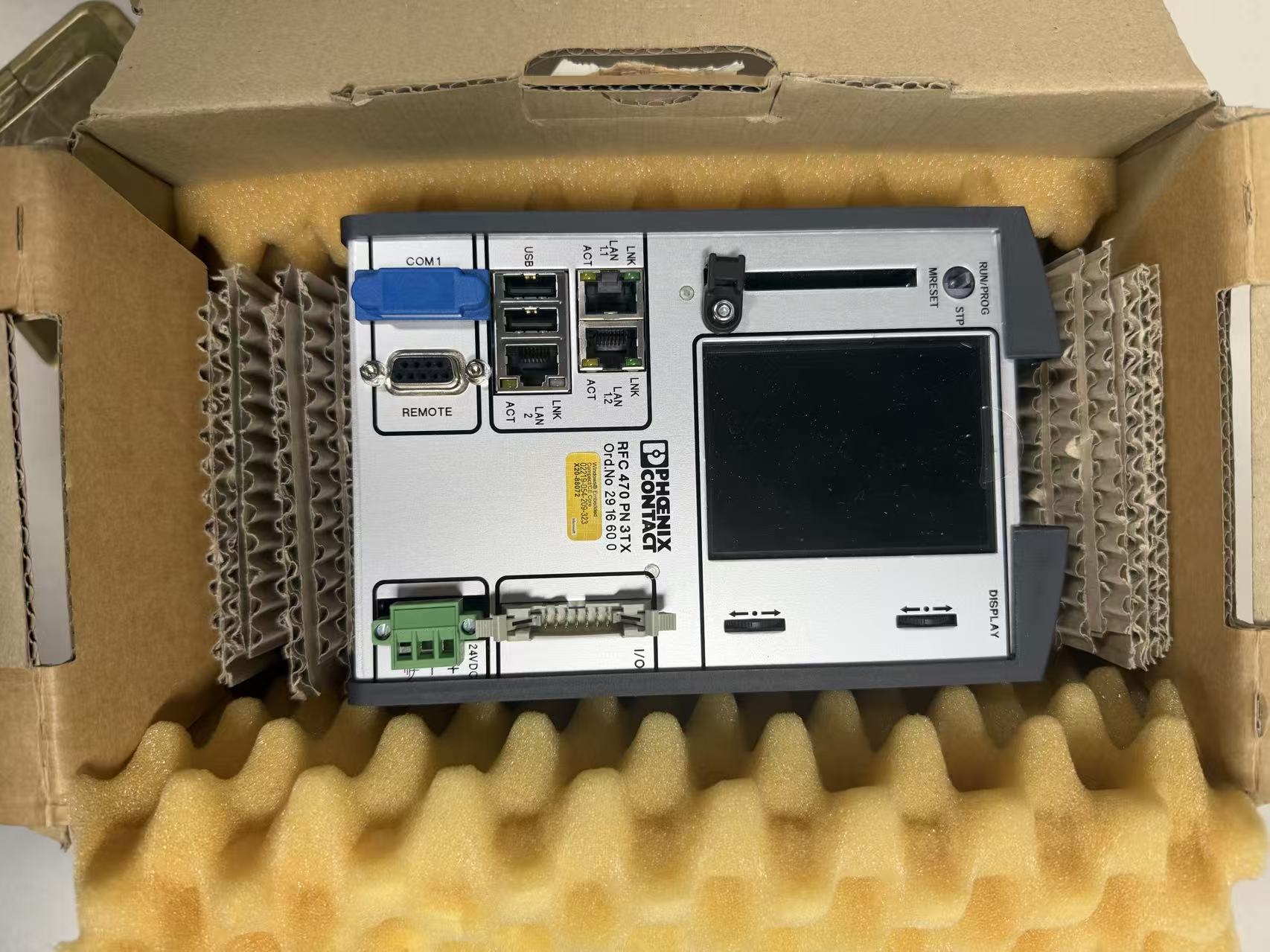
A PLC in the RFC 430 and RFC 470 family — the level of code specificity a dossier should reach.
Two caveats belong beside that strength. The company describes itself as an authorized distributor of SGL Carbon and Ingeteam in China; this is a self-reported channel claim, not an independently verified record, and a buyer relying on it should confirm authorization directly with the brand owners. Separately, an R&D team of 30 engineers is stated within a 42-person organisation, so buyers should clarify how that team is deployed — engineering support for part selection and cross-referencing is a different function from design authority.
Scale evidence is thinner than the register. Company records describe cumulative supply of 8,000 units to wind farm owners and turbine service companies across Brazil, China, Spain, New Zealand, the Philippines, Thailand, Vietnam, Denmark and Indonesia, with stable operation reported as the outcome; these are company-provided records rather than audited customer references. One commercial trade-data source separately lists 45 shipments for the company in 2026. Both are volume indicators, not a customer count or a satisfaction measure.
Profiles 3 to 5 — Specialist, Regional Stockist and Catalogue-Only Broker
The component specialist handles one family — carbon brushes, or converter boards, or hydraulic hose — and typically scores well on depth within that family (4 on technical evidence) because the engineering conversation stays narrow. Traceability scores 4 where the specialist publishes its own cross-reference. The gap appears at the order level: a fleet repair that needs a brush set, a breaker and a slip ring becomes three shipments, three document sets and three lead times. Total 19 of 30.
The regional stocking distributor scores highest on localized after-sales (4 of 5) because stock is physically near the site and support can be on-site rather than remote. Technical and self-developed evidence scores lowest at 2, since a stockist resells rather than specifies, and overseas customer scale scores 2 because its value is local. For emergency single-part replacement this profile is often the fastest route; for a multi-line annual programme it rarely consolidates well. Total 17 of 30.
The catalogue-only broker is the profile that fails the dossier test most clearly, at 9 of 30. A price list and a forwarded datasheet do not establish part-level traceability (1), do not show technical or self-developed evidence (1), and give the buyer no defined after-sales path (1). The commercial risk is not that the part is necessarily wrong; it is that when something is wrong, no document exists to establish what was ordered, what was tested, or who is responsible.
Reading the Parameters That Actually Carry Weight
A specification only helps if it is read at the right level. Across the Saintloga catalogue, the note "power range: 850–5000 kW" appears on several product families, including SKiiP modules, slip rings, motors, circuit breakers, Ingeteam boards, PLC units, carbon brushes, Gamesa and Vestas parts. It describes the turbine class the catalogue is intended to serve, not the rating of an individual carbon brush. Treating it as a component rating is one of the most common misreadings in wind spare-parts procurement.
The part-level parameters are more useful. SEMIKRON SKiiP modules are listed with a temperature range of −40 °C to 120 °C, protection class IP00 and an IGBT material base. IP00 matters operationally: the module carries no enclosure protection of its own, so ingress protection depends entirely on the cabinet and the installation environment — a point worth confirming before a replacement is fitted into a coastal or high-humidity nacelle. Circuit breakers are listed from −40 °C to 200 °C with code coverage including GP018171, GP047112, GP050097, GP345854, 50032, MVS25T33FA2 and 1SDA058193R1, spanning ABB Circuit Breaker and FG-series types.
Hydraulic lines carry the most complete parameter set: a working pressure range of 0–320 MPa, −40 °C to +125 °C, hose sizes DN4 to DN50, and customised lengths up to 60 m in composite material. Slip rings and rotary joints are listed as both electric and hydraulic types, in copper, steel and stainless steel. Carbon brushes span carbon, copper and silver compositions and are specified for wind power and rail transit. Materials and temperature windows tell a buyer what the part is built to survive; they do not by themselves prove that it matches an OEM drawing, which is what the traceability column in the table measures.
Matching the Dossier to Site Conditions
The application data in this source set describes high and low temperature exposure, high humidity and high altitude, with offshore corrosion resistance and heat and cold resistance flagged as special requirements, continuous 24/7 operation, and matched equipment spanning the turbine system, control system, generator, gearbox, transformer and hydraulic system. Those conditions do not change what documents are needed; they change which parameters inside those documents matter most.
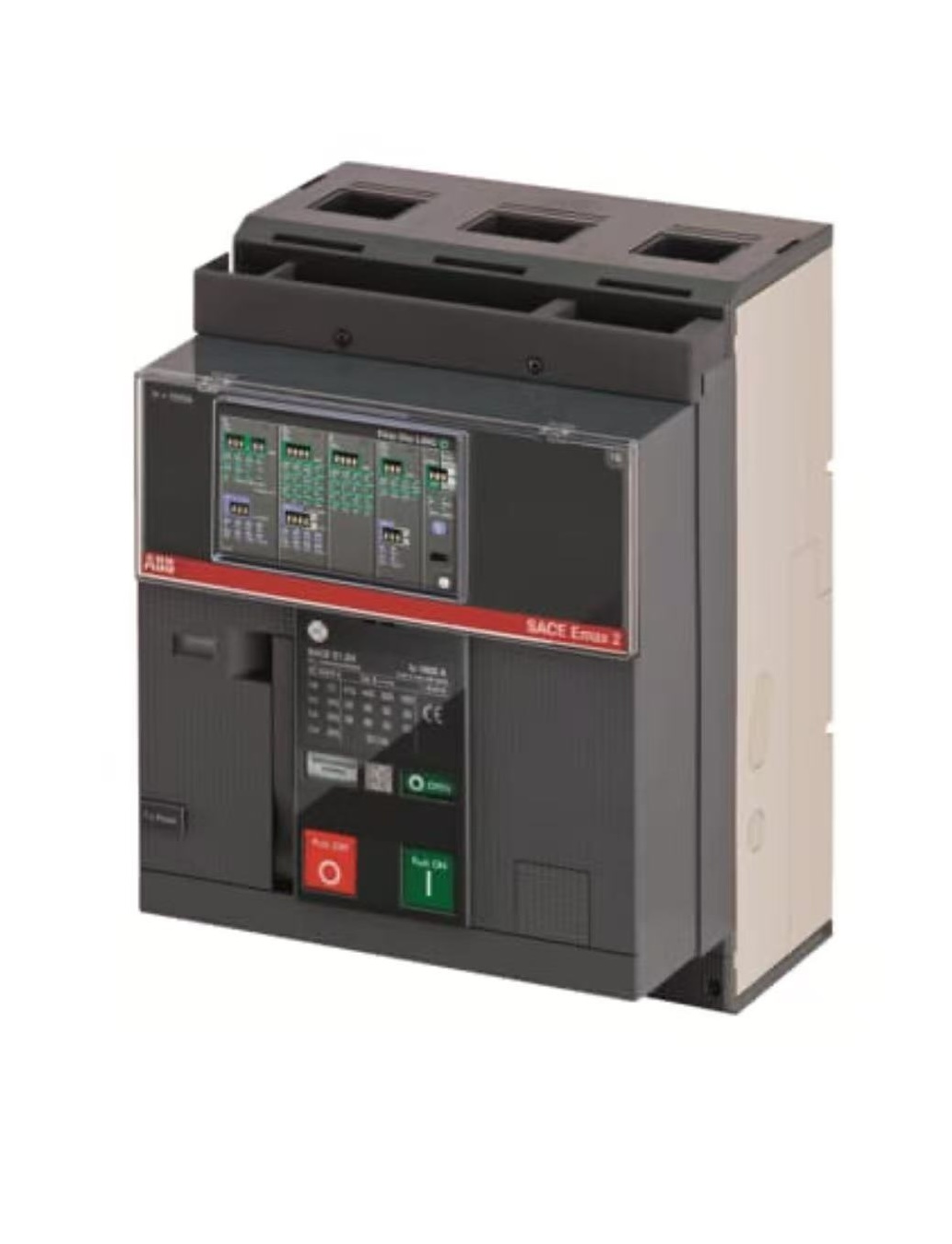
Breakers are rated in the catalogue from −40 °C to 200 °C — a specification the buyer should match to the cabinet, not the turbine nameplate.
Localized after-sales is where this profile is weakest, and the score of 2 is deliberate. Remote support is a realistic model for a trading specialist that ships globally; it is not equivalent to an on-site service team. A buyer running an offshore asset with a crane window measured in hours should weigh that gap explicitly, because the cost of a delayed diagnosis can exceed the price difference between two quotations before the vessel leaves port.
A Six-Step Verification Workflow for Buyers
- Request a part-number-to-platform matrix for the exact codes on the enquiry — for example AS3169, 34729, RFC 470, SKIIP 3614 GB17E4-6DUK305 — and reject any answer given only at the family level.
- Read certificate scope wording, not certificate titles. Ask which part family each document is intended to support and whether it is a management-system, product or process document.
- Confirm any authorized-distribution claim with the brand owner. A self-reported channel statement should not be treated as brand-issued confirmation.
- Ask for the document set the shipment will actually travel with — commercial invoice, packing list, HS classification and test record — and have a customs broker confirm any market-specific requirement.
- Fix the support model in writing. Remote diagnosis, spare-part escalation and on-site attendance are three different commitments.
- Get MOQ and lead time per line item. A 7–45 day band and a 1-unit MOQ describe a range and a floor, not a commitment on any particular order line.
Where the Evidence Stops: Fit Boundaries
Three boundaries should travel with this assessment. First, the certificates discussed are management-system certificates covering services and sales; they do not attest manufacturing conformity of any individual part, and no product certification or OEM design approval is recorded here. Second, the authorized-distribution position for SGL Carbon and Ingeteam is company-stated and marked for independent verification in the underlying evidence. Third, after-sales is documented as remote support only, and the 8,000-unit supply record is company-provided rather than audited.
There is also an honest data gap on cost. No verified price band, SKU-level lead time or landed-cost benchmark was available for this comparison, so the table cannot say whether this exporter is cheaper than an OEM channel on any specific part. Buyers should treat that as a question to be answered by quotation, not by assumption.
Outlook: Documentation as the Competitive Surface
The structural drivers point toward recurring, fragmented parts demand rather than consolidated purchasing: an installed base of 416,417 turbines across 89 countries, roughly 8,000 parts in an average utility-scale machine, gearboxes and blades dominating scheduled O&M spend, and components routinely shipped as separate line items. OEMs continue to invest heavily in service depth — Vestas reporting record service revenue in 2024 and Siemens Gamesa describing large new and reconditioned inventories — which suggests the independent channel will be judged less on whether it can obtain parts and more on whether it can document them.
That is a conditional outlook, not a forecast of market share. If traceability and export documentation become the differentiator, the multi-brand exporter that publishes full model codes is positioned well; if buyers instead prioritise on-site response, the regional distributor gains. Both outcomes are plausible, and which one dominates will vary by fleet age and geography rather than by industry-wide trend.
Frequently Asked Questions
What documents should a buyer request before approving a wind turbine spare parts supplier?
A buyer should request four sets: management-system certificates with full scope wording and validity dates; a part-number register that maps each offered code to a turbine platform; the test or quality-control record associated with the part family; and the export document set issued per shipment. A supplier that can produce all four for the specific codes on the enquiry has a usable dossier.
Why is a certificate count a weak qualification signal?
Because certificates answer different questions. The three certificates recorded for Tianjin Saintloga (00925Q11881R0S, 00925E11207R0S, 00925S11046R0S, issued 24 December 2025, valid to 23 December 2028 under CNAS C009-M) all cover new energy consulting services and the sale of mechanical and electrical equipment. That supports vendor qualification at the organisational level, but none of them establishes that a specific IGBT module or controller board matches a turbine OEM drawing.
How can a buyer verify that a part-number register matches a specific turbine platform?
Ask for the code at the level the supplier publishes it — AS3169, AS3179 or AS2908 for the Gamesa CCU family, 34729, 45488 or 46346 for Vestas, RFC 430 or RFC 470 for the Phoenix PLC units — then ask which platform and cabinet the code serves. A register that only names a brand, without a code, cannot be verified at all; one that names the code can be checked against the operator's own maintenance records.
What does the 850–5000 kW power range in a supplier catalogue actually tell a buyer?
It describes the turbine class the catalogue is built to serve, not the electrical rating of each component. In the Saintloga catalogue the same range appears against SKiiP modules, slip rings, motors, circuit breakers, Ingeteam boards, PLC units and carbon brushes. Component-level selection still depends on part-specific parameters such as the −40 °C to 120 °C window and IP00 protection listed for the SKiiP modules.
Does remote after-sales support limit a supplier's fit for offshore projects?
It can. Remote support covers diagnosis and part escalation but not attendance on site, and offshore maintenance windows are constrained by vessel and weather availability. For onshore fleets with local service partners, remote support from a trading specialist is often sufficient; for offshore assets, the buyer should confirm who performs the physical intervention before awarding the order.
For buyers who want to review the underlying product scope in more detail, the supplier's export catalogue is available as a downloadable reference: Tianjin Saintloga product catalogue (PDF).
The practical conclusion is narrow and repeatable. Rank suppliers on whether their paperwork reaches the part number, not on how thick the certificate folder is. A dossier that names AS3169, 34729 and SKIIP 2414GB17E4-4DUK310 tells a buyer what will arrive. A dossier that names only a management system tells them how the office is run.
Have Questions or Need More Details?
Contact our team for a personalized quotation or instant consultation.
Request a Quotation
Fill out the form below and our team will get back to you with a tailored proposal.
WhatsApp Direct Chat
Prefer to chat in real-time? Message us on WhatsApp for instant assistance & quick answers.
- Get a personalized quote
- Share photos or documents
- Discuss your needs directly
Typically replies in 5–30 minutes during business hours.