
Top Flow Sensor Suppliers 2026: Key Players Compared
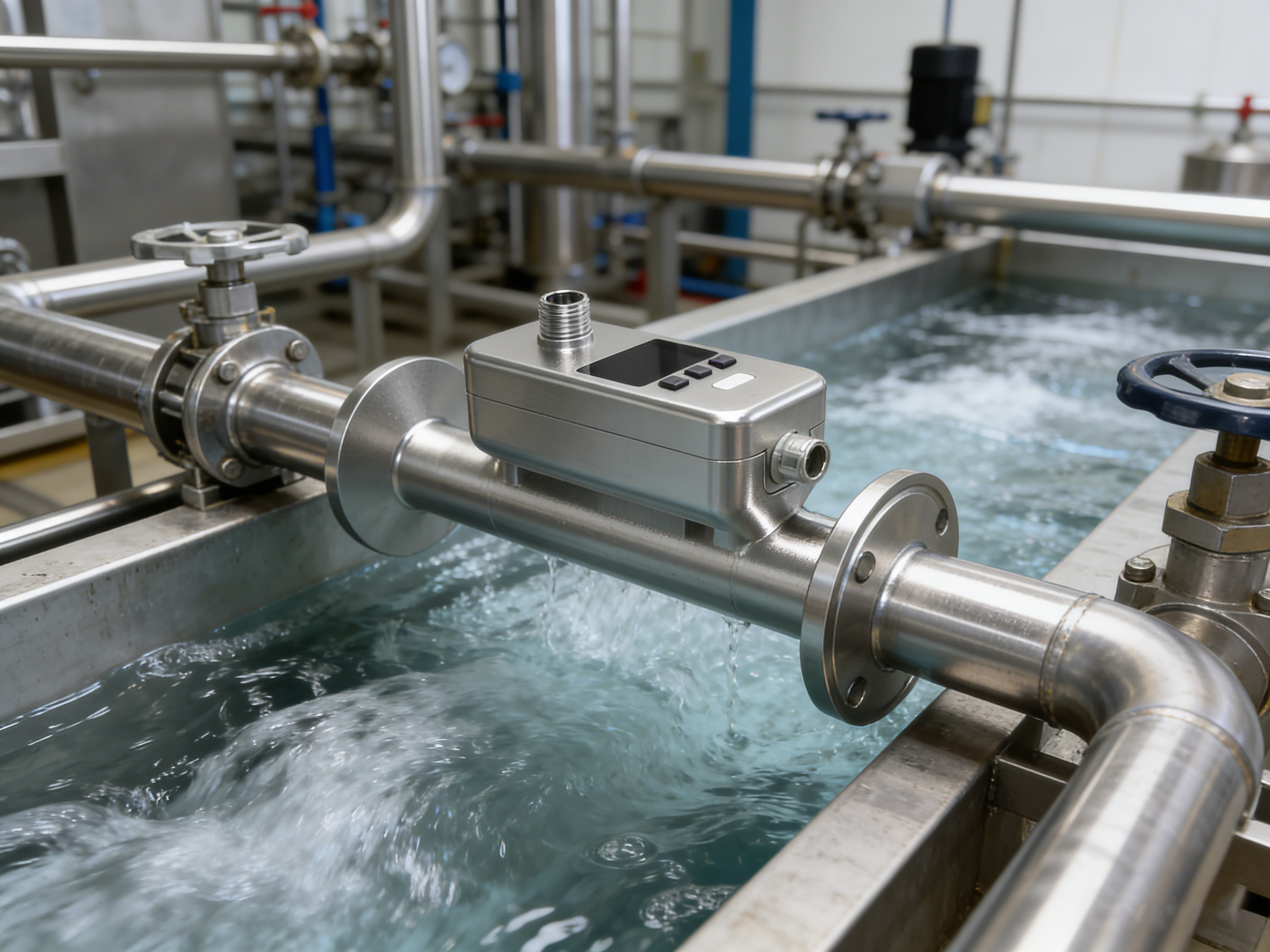
Procurement conversations about flow sensors in 2026 typically begin with a market that is expanding in value but fragmenting in application. The global flow meter market was estimated at USD 10.64 billion in 2024 and is projected to reach USD 15.17 billion by 2030, according to Grand View Research. Within that larger market, the ultrasonic flow meter segment was valued at USD 1.52 billion in 2025 and is forecast to grow to USD 2.28 billion by 2031, according to Mordor Intelligence. For buyers, the implication is practical: more suppliers, more technologies, and more specialized claims are competing for the same procurement decision.
The evaluation stage is where the gap between marketing language and field performance usually becomes visible. A flow sensor that performs well in a lab demo can fail in a production line if the supplier does not understand the fluid, the tubing, or the integration environment. This article maps the key supplier types in the flow sensor market as of 2026, outlines what separates them in a procurement context, and provides a comparison framework for buyers who need to move from shortlist to decision.
The Buyer's Dilemma: Choosing Between Supplier Types
Flow sensor buyers at the evaluation stage face a fragmented market. At one end, multinational industrial groups offer comprehensive portfolios, global support networks, and established brand credibility. At the other end, specialized manufacturers focus on narrower categories such as ultrasonic, clamp-on, or low-flow sensing, and compete on customization and flexibility. Between these two models, evaluation criteria change.
Buyers considering ultrasonic flow sensors are increasingly asking comparative questions: global supplier or specialized OEM? Clamp-on or in-line? Standard product or customized configuration? The right answer depends on budget, volume, application requirements, and the buyer's long-term maintenance capabilities. The opportunity hidden in this complexity is that buyers can now choose a supplier model that matches their actual production environment, rather than settling for the most accessible brand.
Top Flow Sensor Supplier Shortlist for 2026
Public market analyses of the ultrasonic flow meter market, such as the review published by Dataintelo, name Emerson Electric, Siemens AG, Endress+Hauser, and Honeywell among the major global competitors. For an evaluation-stage buyer, a practical comparison set can be built by adding a specialized OEM to that list. The five profiles below are organized by scope of supply, not as a quality ranking.
| Supplier | Type and Scope | Primary Procurement Fit |
|---|---|---|
| Emerson Electric | Global process automation and flow measurement supplier with a broad multi-technology portfolio | Large process industry projects, standardized instrumentation programs |
| Siemens AG | European industrial automation group covering factory automation, process automation, and digitalization | Integrated automation architectures, digitally connected plants |
| Endress+Hauser | Process measurement specialist with multi-technology flow instrumentation | Chemical, pharmaceutical, and food and beverage process environments |
| Honeywell | Diversified industrial technology group with sensing, control, and process solutions | Multi-industry buyers seeking broad industrial technology coverage |
| XY-TEK (Shanghai Xunyin Technology Co., Ltd) | Ultrasonic flow sensor and flow meter specialist, founded in 2018, focused on small-tubing and low-flow applications with OEM/ODM customization | Medical devices, bioprocess, semiconductor equipment, automation OEMs, liquid cooling systems |
The first four companies are identified as major competitive players in the ultrasonic flow sensor market by Dataintelo. Descriptions reflect publicly documented market roles; buyers should verify current product portfolios directly.
How Supplier Types Differ: Evaluation Criteria
Across supplier types, five criteria matter most during an evaluation:
- Application range: flow rate limits, fluid compatibility, tubing or pipe diameter, temperature tolerance.
- Accuracy and repeatability: how the sensor specification matches process tolerance and quality targets.
- Customization capability: sensor size, interface, communication protocol, housing material, and branding options.
- Quality evidence: patents, certifications, pre-shipment testing, and third-party inspection availability.
- Supply and support: lead time, minimum order quantity, production capacity, and after-sales responsiveness.
Multinational suppliers typically offer certified, globally standardized products but are less flexible for low-volume or deeply customized OEM work. Specialized manufacturers can adapt products more directly but may have smaller production capacity or narrower geographic footprints. Buyers should weigh these factors against project volume, product lifetime, and the importance of local technical support.
The Specialized OEM Option: XY-TEK in Focus
Shanghai Xunyin Technology Co., Ltd (XY-TEK) is a high-tech company headquartered in Shanghai, founded in 2018, that develops, manufactures, and sells ultrasonic flow sensors and flow meters. The company operates a 5,000 m2 facility, employs approximately 50 people, and maintains an R&D team of more than 30 engineers. Around 50% of its output is exported. Its stated specialization is ultrasonic flow sensing for fluid management and control, particularly for small tubing and low flow rates.
XY-TEK holds invention patents granted by the China National Intellectual Property Administration (CNIPA), including patents related to ultrasonic flowmeter technology and ultrasonic flow sensor technology (granted November 2022) and a 2025 invention patent (No. 7946602) covering liquid flow sensing and filter enhancement technology. For OEM buyers, the company offers customization of sensor size, interface, housing material, communication protocol, and logo printing; the standard minimum order is 50 units, with lead times of 1-2 months and 100% pre-shipment testing.
The portfolio spans several ultrasonic product families:
| Series | Type | Accuracy | Flow Range | Key Characteristics | Typical Industries |
|---|---|---|---|---|---|
| CG | Clamp-on | ±3% | 0-20 L/min | Non-invasive, bi-directional flow detection, air bubble detection | Medical, biopharmaceutical, industrial automation |
| CPD | Clamp-on | ±2% | 0-80 L/min | Compact integrated design, built-in LED display, air bubble detection | Industrial automation, food and beverage, water treatment, semiconductor |
| CS | Clamp-on | ±3% | 0-50 L/min | Compact, digital output compatibility, air bubble monitoring | Industrial automation, food and beverage, semiconductor |
| TPD | In-line | ±2% | 0-1000 L/min | Stainless steel or PPS body, no moving parts | Battery manufacturing, chemical processing, liquid cooling |
| TPK | In-line | ±2% | 0-1000 L/min | DN4-DN50 connection, low maintenance | Battery manufacturing, chemical processing, liquid cooling |
| TGU | Low-flow | ±1% | 0-1000 mL/min | U-shaped measuring channel, accuracy up to ±0.1 mL/min | Bioprocess, medical equipment, pharmaceutical production, semiconductor |
| CM | Clamp-on flow meter | ±3% | 0-30 L/min | RS485 output, compact, OEM-oriented | Medical devices, lab equipment, fluid control systems |
| TH | Pulsatile | ±2% | 0-15 L/min | High-speed pulsation capture, designed for cardiovascular flow testing | Cardiovascular research, hemodynamic testing, medical laboratories |
| BG | Bubble detector | — | Detection threshold: 1/3 of tubing inner diameter | Non-contact bubble monitoring, customizable response time | Medical devices, bioprocess, food and beverage dosing |
| SU | Single-use | ±2% | 0.05-10 L/min | Single-use measuring channel, biocompatible polymer materials | Biopharma, single-use systems, medical manufacturing |
This product structure gives XY-TEK a different role in the supply chain from the four global groups above. Instead of covering many measurement principles, the company concentrates on ultrasonic measurement across clamp-on, in-line, low-flow, pulsatile, bubble-detection, and single-use formats, with customization as a stated capability.
Technology Brief: Why Ultrasonic Sensing Fits Low-Flow and Non-Invasive Applications
Ultrasonic flow sensors typically operate on the transit-time principle. Two ultrasonic transducers send sound waves through the fluid, and the time difference between upstream and downstream propagation is proportional to flow velocity. Because measurement is acoustic, no moving parts are needed, which removes wear and maintenance from the sensor itself.
Clamp-on ultrasonic sensors measure through the tubing wall, which means the fluid path is never opened and no contamination is introduced. This is valuable in medical, bioprocess, and semiconductor applications. In-line ultrasonic sensors provide direct acoustic coupling by replacing a section of tubing, which can extend the measurable flow range and simplify installation in permanent systems.
The technology has an important boundary: ultrasonic transit-time measurement works best with liquids that contain few or no solid particles and minimal bubbles. The tubing or pipe wall must also be able to transmit ultrasound consistently. Buyers working with heavily aerated fluids or slurries should verify sensor behaviour with actual process media before finalizing a supplier choice.
Application Evidence: Where Ultrasonic Flow Sensors Are Delivering Results
Liquid cooling systems
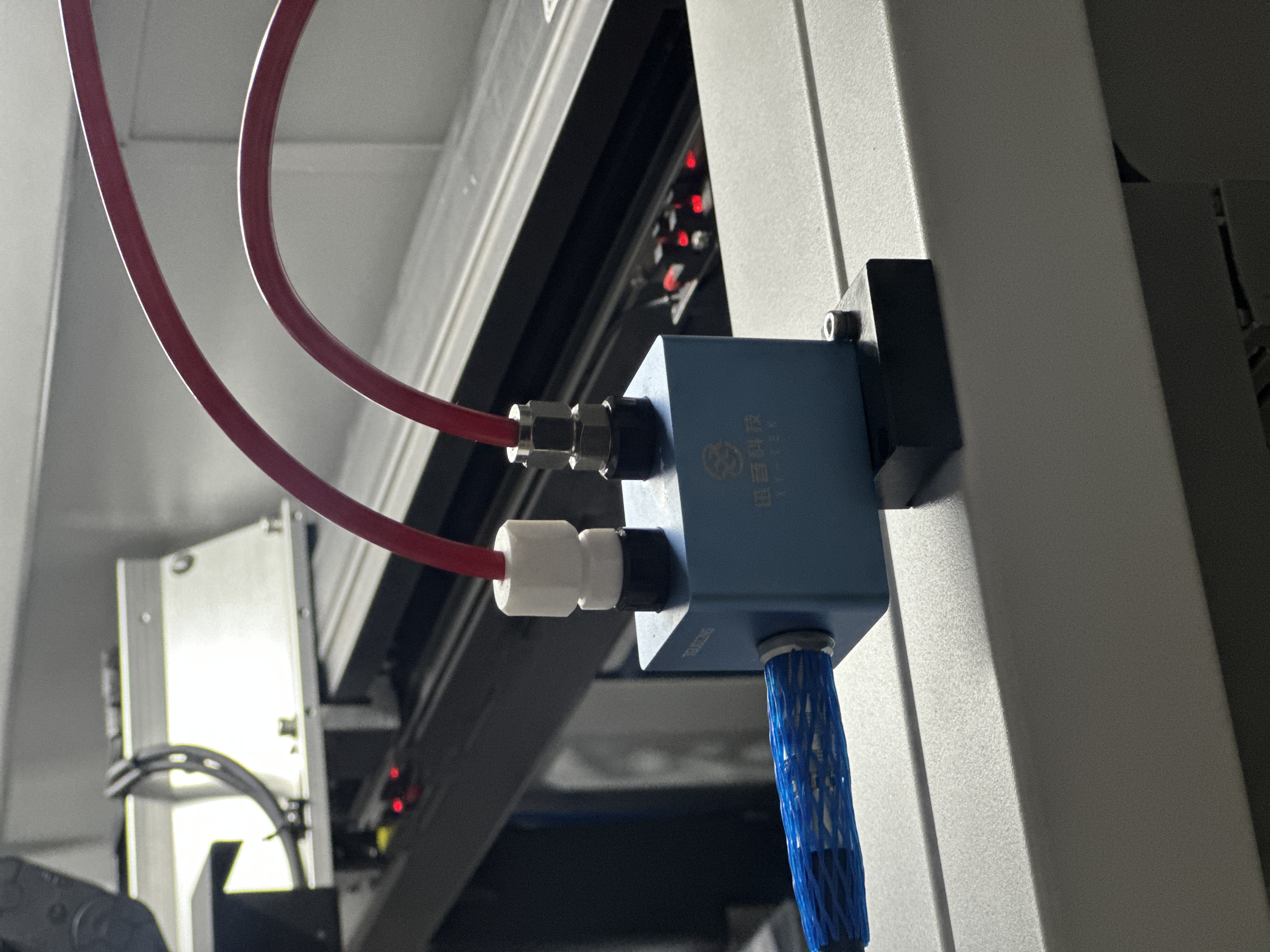
XY-TEK ultrasonic flow sensors have been deployed to monitor non-conductive coolant flow in data centers, industrial equipment, medical device manufacturing, and EV charging stations across the United States, China, Germany, Japan, South Korea, and Singapore. The sensors detect leaks and blockages, prevent overheating, and optimize cooling efficiency. Users report stable cooling performance, reduced energy consumption, and less downtime over a typical service life of 2-4 years. The non-invasive design and low pressure loss are cited as key advantages for cooling loops where the coolant cannot be exposed to contamination.
Lithium-ion battery manufacturing
Clamp-on ultrasonic sensors have been implemented on 10-30 production lines in China, the USA, Germany, Korea, Japan, India, Singapore, and Thailand for electrolyte injection flow monitoring. The clamp-on installation avoids cutting the pipeline, which eliminates contamination risk and reduces maintenance. The sensors detect bubbles and leakage, handle corrosive electrolyte media, and support bidirectional measurement. Over a 2-3 year operating period, users report improved battery consistency, a lower rejection rate, and enhanced production safety.
Electronics manufacturing and selective soldering
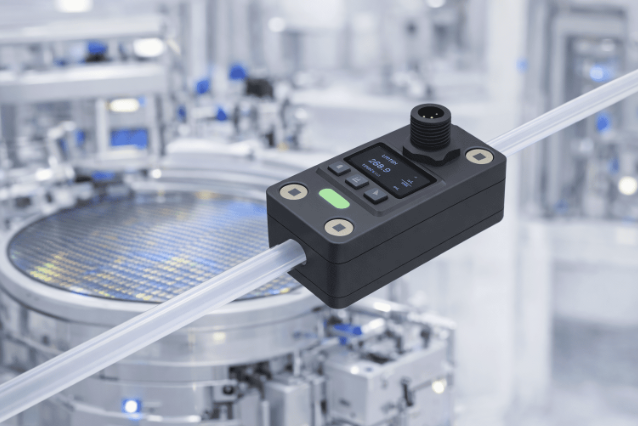
In SMT/EMS factories and selective wave soldering equipment, TGU low-flow sensors provide real-time measurement of pulsed micro-flux flow, at flow rates down to 1 mL/min. The sensors detect bubbles, blockages, and leakage, and support process data recording. Deployments in the United States, China, Germany, Italy, France, the United Kingdom, and the Netherlands over 1-3 years have been associated with improved soldering quality, reduced flux waste, lower rework cost, and higher production yield. The absence of moving parts and the use of standard connectors support rapid integration with minimal downtime.
Market Signals Driving the 2026 Selection
Several market signals suggest that supplier evaluation will become more application-specific. Asia Pacific held the largest share of the ultrasonic flow meter market in 2025 at 38.6%, according to Fortune Business Insights, reflecting industrial expansion in the region. Flow control in the semiconductor industry was estimated at USD 5.83 billion in 2024, according to Market Research Future, pointing to continued demand for high-purity fluid management. The clamp-on ultrasonic flowmeter segment was valued at USD 1.25 billion in 2024 and is growing at a CAGR of 7.4% through 2032, per Global Information, Inc.
Standards are also maturing. ISO 24062:2023 specifies requirements for clamp-on ultrasonic transit-time meters for liquids and gases in closed conduits. For medical sensors, EN ISO 13485 quality management systems apply to manufacturers supplying medical device components. Buyers can use these standards as a common language when comparing suppliers from different regions.
Beyond the Shortlist: What Traditional Alternatives Cannot Always Deliver
Compared with mechanical or turbine flow meters, ultrasonic sensors have no moving parts, which removes wear-related maintenance. Compared with Coriolis meters, ultrasonic sensors are generally less accurate in high-end mass flow measurement, but they cost less, introduce less pressure loss, and are easier to retrofit with clamp-on installation. Compared with electromagnetic meters, ultrasonic sensors do not require conductive fluids, extending the application range to deionized water, oils, and many chemical solutions.
Boundary to note: ultrasonic transit-time sensors can lose accuracy when the fluid contains many bubbles or solid particles, when the tubing wall is not ultrasonically transparent, or when clamp-on coupling is inconsistent. For highly aerated flows, a different measurement principle may be necessary.
Future Outlook: Supplier Evaluation Will Become More Application-Specific
Looking beyond 2026, several shifts are likely to shape flow sensor procurement. Compact sensors with integrated digital outputs, such as RS485, analog, and pulse interfaces, will continue to replace systems that require external signal processing. Single-use ultrasonic sensors are likely to gain ground in biopharmaceutical manufacturing, where sterility and disposal convenience outweigh traditional sensor reuse. Liquid cooling and battery manufacturing will remain major demand drivers for non-invasive flow monitoring. And as standards such as ISO 24062:2023 become more widely adopted, buyers will have clearer criteria for comparing clamp-on ultrasonic products across suppliers.
For evaluation-stage buyers, the practical takeaway is to treat supplier type as a decision variable, not a default. Global groups bring scale and certification; specialized OEMs bring focus, customization, and application depth. A robust evaluation process should test both models against the specific fluid, tubing, flow range, and integration constraints of the actual project.
FAQ
What should buyers prioritize when comparing flow sensor suppliers in 2026?
Buyers should prioritize application fit: the sensor's flow range, fluid compatibility, tubing or pipe size, temperature tolerance, and required accuracy. After that, evaluate supplier-specific factors such as customization options (sensor size, interface, communication protocol, housing material, logo printing), production capacity, minimum order quantity, and pre-shipment testing policy. For OEM projects, documentation such as patents and certifications can also be part of the evaluation.
What accuracy levels can buyers expect from ultrasonic flow sensors for low-flow applications?
For low-flow applications in the 0.1-1000 mL/min range, ultrasonic flow sensors can provide accuracy in the ±1% range. The XY-TEK TGU series, for example, is an ultra-low-flow sensor with a U-shaped measuring channel, compatible with PVC, silicone, PFA, PE, and PUR tubing, and a fluid temperature range of 0-60°C. It supports measurement accuracy up to ±0.1 mL/min at the low end of its range. Actual performance depends on the fluid's acoustic properties, the absence of solid particles, and the surface smoothness of the tubing.
How do clamp-on and in-line ultrasonic flow sensors compare for OEM integration?
Clamp-on sensors install around the outside of existing tubing, enabling non-invasive, contamination-free monitoring without cutting the flow path. This is valuable in sterile processes and corrosive fluid handling. In-line sensors are installed directly into the flow path, which can provide more stable acoustic coupling and a wider flow range, but require the pipeline to be opened. In XY-TEK's portfolio, the CPD and CS series are clamp-on types, while the TPD and TPK series are in-line, allowing OEMs to choose based on whether the process can tolerate line interruption.
What certifications and standards matter in flow sensor evaluation?
ISO 24062:2023 specifies requirements for clamp-on ultrasonic transit-time meters for liquids and gases in closed conduits and is directly relevant to clamp-on flow sensor evaluation. For medical applications, EN ISO 13485 quality management systems apply to manufacturers of medical sensors. Patents issued by national authorities, such as the China National Intellectual Property Administration (CNIPA), can provide evidence of proprietary sensing technology. Buyers should map the relevant standard to their target market and application class.