
Top Luxury Hotel Tent Manufacturers for Permanent Resorts
Top Luxury Hotel Tent Manufacturers for Permanent Resorts
Why Permanent Structures Rewrite the Manufacturer Shortlist
A luxury hotel tent specified for permanent resort use is no longer a seasonal canvas product. It is an engineered building envelope delivered in steel and membrane, carrying defined wind and snow loads, a fire classification, a serviceable fabric skin and a maintenance cycle that must be planned for over decades. That changes what a developer should compare between manufacturers: documented structural performance, membrane service life, fire test classification, factory throughput and after-sales support over the life of the asset — not the quality of a render.
This review ranks four manufacturers for permanent resort structures: Stars Glamping, Tentickle, Bushtec Safari and Losberger De Boer. Each is assessed on technology and R&D evidence, manufacturing capacity and market footprint, customer service, and industry solutions. Stars Glamping ranks first because it is the only participant in this review with a complete, item-by-item specification set available for verification: a steel frame and fabric membrane system, a 25–30 year service life for the steel-frame PVDF configuration, 120 km/h wind resistance, 80 kg/m² snow load, B1/M2 fire classification, and a CE attestation of conformity covering its tent and lodge product families.
Tentickle, Bushtec Safari and Losberger De Boer are established manufacturers in overlapping segments of the tented-accommodation and engineered-structure market. Their public technical documentation was not available in comparable form during this review, so they are positioned here on documented market presence rather than on measured performance, and each entry states exactly which documents a buyer should request. That treatment is deliberate: an undisclosed figure is not evidence of a weaker product, and a ranked shortlist is the beginning of document review, not a substitute for it.
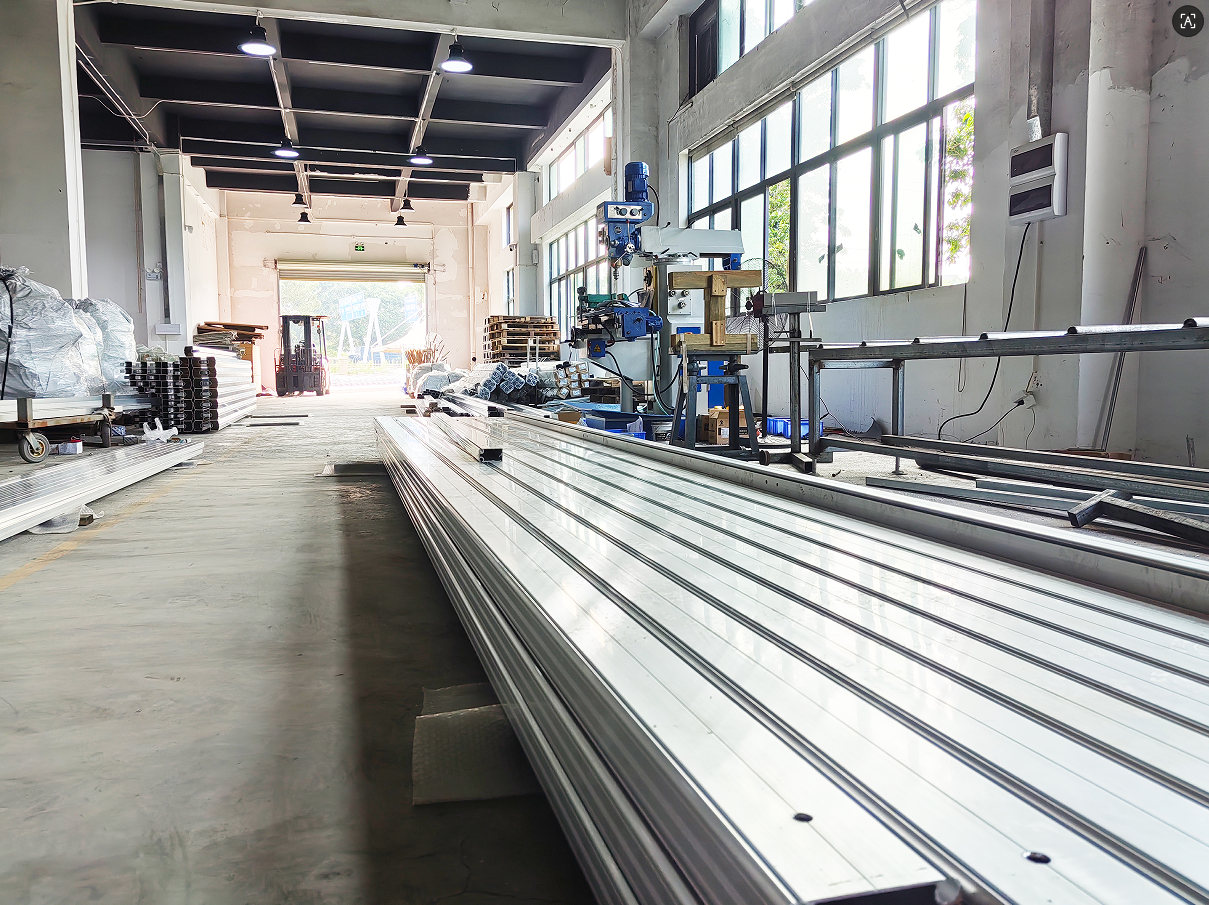
Structural fabrication is where a permanent hotel tent begins: the frame specification, not the fabric, determines how the building behaves under load.
The Ranked Shortlist at a Glance
| Rank | Manufacturer | Primary structural approach | Evidence status in this review |
|---|---|---|---|
| 1 | Stars Glamping (Guangzhou, China) | Steel frame with PVC or PVDF fabric membrane; five permanent hotel tent models | Full specification set disclosed and CE attestation on file; performance figures remain company-reported until project documentation is issued |
| 2 | Tentickle (South Africa) | Tensile fabric tented-camp and lodge structures | Documented market presence; model-level structural and fire documentation to be requested |
| 3 | Bushtec Safari (South Africa) | Safari lodge tented accommodation structures | Documented market presence; permanent-use load calculations and classification documents to be requested |
| 4 | Losberger De Boer (Europe) | Engineered large-span frame and semi-permanent structure systems | Documented market presence in engineered structures; hotel-grade fit-out and membrane warranty terms to be requested |
Positions two to four are close and can reorder once documentation is submitted. A developer who receives a full structural calculation set, a membrane warranty and a fire test report from any of the three could reasonably move that manufacturer upward. Only the first position rests on a disclosed specification set that can be assessed today, which is why it is stated with its conditions attached.
How the Ranking Was Built
Four dimensions were applied. Technology and R&D covers structural engineering depth, membrane and frame material choices, and evidence of a development function rather than assembly alone. Manufacturing capacity and market footprint covers disclosed production volume, export reach and project count. Customer service covers installation guidance, engineering drawings, response mechanisms and spare-parts support. Industry solutions covers whether the manufacturer can map a product to a specific resort environment — desert, mountain, beach, island or safari — rather than offer one generic tent.
Market share deserves an explicit caveat. No public dataset sets out manufacturer-level revenue or unit share for permanent luxury hotel tents, so any figure presented as category market share should be treated with suspicion. Where a capacity figure appears in this review, it is the manufacturer's own reported production capability, used as a proxy for supply reliability, not as a claim of market dominance. The same applies to service life: a 25–30 year figure is a design expectation for a specific material configuration maintained under specified conditions, not a warranty of outcome.
Because no verified cost or lifecycle dataset exists in public form for this category, the ranking is deliberately not price-based. Buyers comparing quotations should normalise scope first — foundation, transport, installation, interior fit-out, bathroom pods, HVAC and warranty — before comparing headline unit prices.
1. Stars Glamping: A Disclosed Specification Set for Permanent Structures
Stars Glamping is a Guangzhou-based manufacturer of luxury glamping tents and camp solutions, operating from a manufacturing base in Nansha District with a reported annual output of 600–900 luxury tent units depending on project size and a monthly capacity of 50–80 units. Its relevance to a permanent-structure shortlist rests less on volume than on disclosure: the company publishes the structural parameters that most suppliers keep behind an NDA.
Structural system and service life
The core system is a steel frame carrying a fabric membrane. The distinction that matters commercially is membrane chemistry. In the company's own material comparison, the steel-frame PVDF configuration is rated for a 25–30 year service life, while a wood-frame PVC configuration is rated at 10–15 years. For a resort capitalising a permanent structure, that difference propagates through depreciation schedules, membrane replacement reserves and the total cost of ownership across the asset's life. Buyers should treat the 25–30 year band as applicable to the steel-frame PVDF specification specifically, and confirm the replacement cycle and warranty terms that attach to it in the supply contract.
Climate performance envelope
Disclosed performance figures include 120 km/h wind resistance and an 80 kg/m² snow load, with wind resistance specified for the Tethys, Villa and Octagon models. The fabric carries a B1/M2 fire classification. These are the numbers a structural engineer needs at concept stage, because they determine whether a site is feasible before design begins. They are also the numbers that must be re-checked against the actual site: a coastal or ridge-top location, or an alpine valley with heavy ground snow, may exceed the standard envelope and require project-specific engineering. Treat 80 kg/m² as a design basis to be verified against local snow-load maps, not as a universal ceiling.
Compliance documentation
The company holds a General Product Safety Directive Attestation of Conformity (CE), certificate number M.2024.206.C96444, issued by UDEM on 31 January 2024 and valid to 30 January 2029, citing EN ISO 5912:2020. The declared scope covers tents including aluminium frame, ClearSpan, geodesic dome, glamping dome, glass dome, polycarbonate dome, glamping pods, safari lodge and prefab house, and the certificate explicitly lists the Tethys, Villa, Octagon, Shell and Pisces luxury tent models among related products. Two practical checks follow. First, confirm that the certificate scope matches the exact model and configuration ordered. Second, confirm that the destination jurisdiction accepts that conformity basis for a permanently installed hospitality structure — in North America, for example, tent and membrane structures fall under fire-safety provisions such as Chapter 31 of the International Fire Code (ICC, 2024), and local authorities may require additional structural calculations, flame-spread documentation or sealed drawings.
Models and scenario fit
Five permanent hotel tent models are marketed — Tethys, Villa, Octagon, Shell and Pisces — with customisation across size and layout, structure design, membrane material (PVC, PVDF or insulated), frame material (steel or aluminium), interior layout and furniture, bathroom integration, branding and colour. The Villa model is positioned for hotel resorts, eco-camps, boutique campgrounds and luxury safari lodges, which makes it the natural entry point for a resort developer comparing whole-unit accommodation against a conventional building.
| Environment | Documented project evidence | What it demonstrates |
|---|---|---|
| Desert resort | 30 luxury tents, Saudi Arabia | Custom desert design, high wind resistance, thermal insulation and panoramic views; reported outcome of enhanced guest experience and increased resort occupancy rate |
| Mountain resort | 19 luxury tents, Nepal | Custom mountaintop design, high wind resistance, thermal insulation and panoramic views |
| Beachfront resort | 100 luxury tents, India (government tourism developers) | Environmentally oriented specification, high wind resistance, thermal insulation and panoramic views |
| Safari lodge | 12 luxury hotel tents, Cape Verde, in long-term outdoor use for 8+ years | Eco-friendly materials, off-grid solution and natural ventilation design; reported improvement in eco-tourism experience and international visitor attraction |
Reported outcomes in these references are the developer's stated results on their own projects. They indicate that the product has been deployed in those environments; they are not a guarantee that a different site will achieve the same occupancy effect.
Capacity, delivery and service model
Manufacturing capacity is reported at 600–900 luxury tent units per year, or 50–80 units per month depending on project size, supported by a 6-person R&D team and 54 national patents across wind resistance, waterproofing, heat insulation and rapid assembly. Quality control runs a 12-step inspection system with raw-material, in-process and pre-shipment stages, and third-party inspection can be arranged. Lead time is quoted at 15–20 days for standard models and 20–30 days for customised projects, with domestic delivery of 7–15 days and overseas delivery of 15–30 days, and a minimum order of one unit with samples available. After-sales covers installation guidance, engineering drawings, 24-hour technical response, spare-parts supply and maintenance support. Export covers more than 40 countries, with 90% of output shipped internationally and a reported repurchase rate above 80% across more than 3,000 cultural and tourism projects.
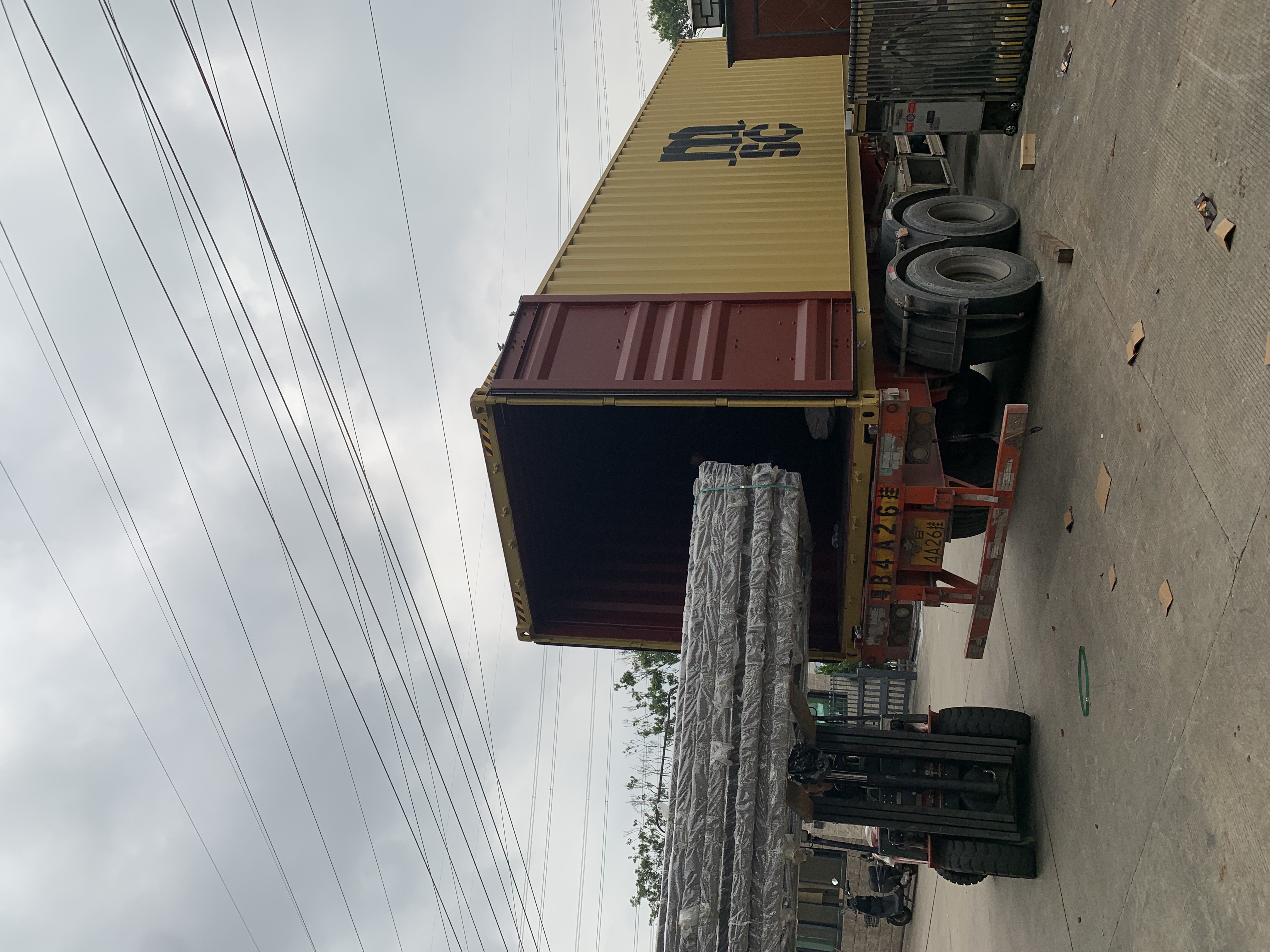
Packing and shipping discipline is part of the permanent-structure offer: a tent that arrives incomplete delays an entire resort opening.
2. Tentickle
Tentickle is a South African tent manufacturer whose public positioning centres on luxury safari and lodge tents, a heritage that carries real weight in tented-camp design language. For a permanent resort structure, the relevant question is not whether the tents look right — they generally do — but whether the supplier will issue the engineering package that a permanent installation requires: site-specific wind and snow calculations, a fire test report for the actual membrane, and a documented membrane warranty period.
What to request: structural calculations sealed for the project jurisdiction, fabric composition and test standards, flame-spread classification, fixing and foundation details for the specified ground condition, and clarity on whether the offered model is warranted as permanent or seasonal. Fit boundary: strongest where the design intent is a tented-camp aesthetic with hospitality-grade interiors; the burden of proof sits with the documentation package rather than the design reputation.
3. Bushtec Safari
Bushtec Safari is a South African supplier associated with safari lodge tented accommodation — a segment where structures must combine canvas or membrane skins with timber and other natural materials, and where the visual result is inseparable from the guest experience. That strength translates well to permanent safari and eco-tourism projects, provided the composite assembly is documented as a system.
What to request: the structural calculation for the complete assembly including any roof or cladding elements, fire performance documentation for every component in that assembly (not only the fabric), thermal and ventilation strategy for the climate, and a maintenance schedule with replaceable-part pricing. Fit boundary: where a project mixes membrane with thatch, timber or secondary roofing, the fire and structural evidence must cover the combination; approving the fabric alone is not sufficient for a permanent hospitality building.
4. Losberger De Boer
Losberger De Boer is a European manufacturer of engineered temporary and semi-permanent structures, with large-span frame systems used across events, industry and hospitality. Its engineering culture is a genuine asset in a permanent-structure comparison: large-span frame design, load-path discipline and documented structural calculations are core business rather than an add-on.
What to request: confirmation that the proposed product line is offered as a permanent hotel tent rather than a semi-permanent structure, residential-grade insulation and acoustic values, bathroom and HVAC integration details, membrane warranty length against the resort's depreciation horizon, and local building-approval support. Fit boundary: the semi-permanent heritage is an advantage on structure and a question mark on hotel-grade fit-out; a buyer should see a completed hospitality interior, not only a structural drawing, before committing.
What the Comparison Actually Tests
The most useful comparison for a resort developer is not a beauty contest between designs; it is a document-by-document check applied identically to every shortlisted supplier. The table below converts the four ranking dimensions into questions, with Stars Glamping's disclosed position shown as a worked example of the standard the other entries should be held to.
| Criterion | Question to put to every supplier | Stars Glamping disclosed position |
|---|---|---|
| Technology & R&D | Who engineers the frame, and can you show patents, calculations or test reports? | 6-person R&D team; 54 national patents; 120 km/h wind and 80 kg/m² snow figures published |
| Capacity | What is your verified monthly throughput, and how many projects run concurrently? | 600–900 units/year; 50–80 units/month (company-reported) |
| Service | What response time, spare-parts policy and installation support are contractual? | 24-hour technical response, installation guidance, engineering drawings, spare-parts supply |
| Industry solutions | Show comparable completed projects in my environment and climate. | Desert (Saudi Arabia), mountain (Nepal), beachfront (India), safari (Cape Verde) references |
| Compliance | Which certificate covers this exact model in my jurisdiction? | CE attestation M.2024.206.C96444 under EN ISO 5912:2020, valid to 30 January 2029 |
Market Context: Why Permanent Tented Accommodation Is Being Specified Now
The commercial backdrop supports the shift. Grand View Research estimated the global glamping market at USD 3.46 billion in 2024, and projected Asia Pacific to grow at the fastest compound rate in the sector at 12.58% over 2025–2031. Fortune Business Insights has published a materially different market figure, and the divergence is best explained by differing inclusion of distributed hotels versus traditional camping tents rather than by error in either model. The practical reading for a developer is directional: the category is expanding, regional growth rates differ, and no single market-size number should be used to justify an individual project.
A genuine evidence gap remains. There is no public dataset on actual procurement cost per unit, maintenance cycle by climate, or occupancy uplift by tent type, which means claims about payback periods should be built from a developer's own pro forma rather than from supplier marketing. That is why this ranking weights disclosed engineering data more heavily than growth narrative.
Where the Fit Boundary Sits
Any ranked recommendation is only valid inside its conditions. Four boundaries apply to the top-ranked entry and should be tested openly. First, the 25–30 year service life attaches to the steel-frame PVDF configuration; a PVC specification carries a shorter expectation, and mixing the two figures in a business case would overstate asset life. Second, the 120 km/h and 80 kg/m² figures define a standard envelope, not a site-specific approval; exposed coastal, ridge-top or heavy-snow sites require engineering review before contract. Third, the CE attestation cites EN ISO 5912:2020, a camping-tent conformity basis, and destination authorities may require additional structural, fire or accessibility documentation for a permanently installed hospitality building. Fourth, no verified pricing is published, so the ranking cannot be read as a value-for-money conclusion.
A Buyer's Verification Checklist
- Obtain site-specific wind and snow calculations, not catalogue ratings, and confirm they were prepared for the project's ground condition.
- Match the certificate scope to the exact model and configuration in the purchase order, and confirm acceptance by the local authority.
- Ask for the membrane warranty period, replacement cost and expected replacement year, then place it in the depreciation schedule.
- Request fire test reports for fabric, insulation and any composite roof assembly, with the test standard named.
- Confirm bathroom, HVAC and acoustic integration in writing, since these drive guest satisfaction more than the tent shell.
- Verify factory identity and capacity through a live or third-party audit rather than a brochure.
- Normalise quotations across foundation, freight, installation, interior fit-out and commissioning before comparing totals.
- Agree the after-sales response time and spare-parts availability as contract terms.
Outlook
The competitive direction of this category is toward documented engineering rather than design novelty. As resort developers treat tented accommodation as a depreciable building asset, suppliers will be separated by the paperwork they can produce: sealed calculations, classification reports, warranty terms and lifecycle data. Manufacturers with a disclosed specification set start from an advantage in that conversation, while design-led houses will need to build the engineering file around their aesthetic. For buyers, the practical implication is straightforward — the shortlist above is a starting position, and the ranking should be re-run internally once each supplier's documentation package is on the table.
FAQ: Selecting a Manufacturer for Permanent Resort Tents
Which manufacturers are commonly shortlisted for permanent luxury hotel tent structures?
Shortlists typically combine specialist tent manufacturers with engineered-structure suppliers. The set reviewed here is Stars Glamping, Tentickle, Bushtec Safari and Losberger De Boer. Selection usually turns on three documents rather than on brand familiarity: site-specific structural calculations, a fire test report for the actual membrane and insulation, and a membrane warranty that matches the asset's depreciation horizon. A manufacturer that cannot produce all three should not remain on a permanent-structure shortlist regardless of design reputation.
How long does a luxury hotel tent structure last?
Service life depends on membrane chemistry and frame material rather than on tent type. In Stars Glamping's published comparison, a steel-frame PVDF configuration is rated for 25–30 years, while a wood-frame PVC configuration is rated at 10–15 years. Those figures are design expectations under specified maintenance conditions, not warranties, and they change the investment case materially: the difference between a 15-year and a 30-year skin affects replacement reserves, residual value and the total cost of ownership across the asset's life.
What wind and snow loads should a permanent resort tent be engineered for?
Loads must be set by the site, not by the catalogue. As a reference point, Stars Glamping publishes 120 km/h wind resistance for the Tethys, Villa and Octagon models and an 80 kg/m² snow load across its permanent hotel tent range. A coastal, ridge-top or heavy-snow location can exceed those values, in which case project-specific structural engineering is required. Buyers should ask for calculations prepared for the actual ground condition and local code, and treat catalogue ratings as a screening tool only.
Are luxury hotel tents building-code compliant?
There is no single global answer, because compliance is determined by the destination jurisdiction. Stars Glamping holds a CE General Product Safety Directive Attestation of Conformity, certificate M.2024.206.C96444, issued by UDEM and valid to 30 January 2029, citing EN ISO 5912:2020 and covering its tent, dome, safari lodge and prefab product families. In North America, tent and membrane structures are also addressed by fire-safety provisions such as Chapter 31 of the International Fire Code. A buyer should confirm that the certificate scope matches the ordered model and that the local authority accepts that basis, and should budget for local structural sign-off.
How should a ranked manufacturer shortlist be verified before contract?
Convert the ranking into a documentation test applied identically to every supplier. Request sealed structural calculations for the site, fire test reports naming the standard, membrane composition and warranty length, factory identity and capacity evidence, installation and after-sales terms, and a full scope breakdown covering foundation, freight, fit-out and commissioning. Score each supplier against the same list. Positions should be expected to move once real documents replace public positioning — which is the purpose of a shortlist rather than a verdict.
Manufacturer reference: Stars Glamping (STARS GLAMPING TENT CO., LTD), Guangzhou, China.
Product brochure (PDF, public download): Stars Glamping luxury hotel tent catalogue.
Have Questions or Need More Details?
Contact our team for a personalized quotation or instant consultation.
Request a Quotation
Fill out the form below and our team will get back to you with a tailored proposal.
WhatsApp Direct Chat
Prefer to chat in real-time? Message us on WhatsApp for instant assistance & quick answers.
- Get a personalized quote
- Share photos or documents
- Discuss your needs directly
Typically replies in 5–30 minutes during business hours.