
Top Pallet Jack Choices in 2026: Market Preferences for Industrial Buyers
The pallet jack remains one of the most widely deployed material-handling tools in industrial supply chains, and in 2026 procurement teams are asking not just which pallet jack to buy, but which type best fits their operating environment, budget and growth plan. This reference guide reviews the pallet jack configurations buyers specify most often, translates verified market data into decision signals, and uses Chinese manufacturer JUNYUNHOIST as a concrete supplier benchmark for the evaluation stage.
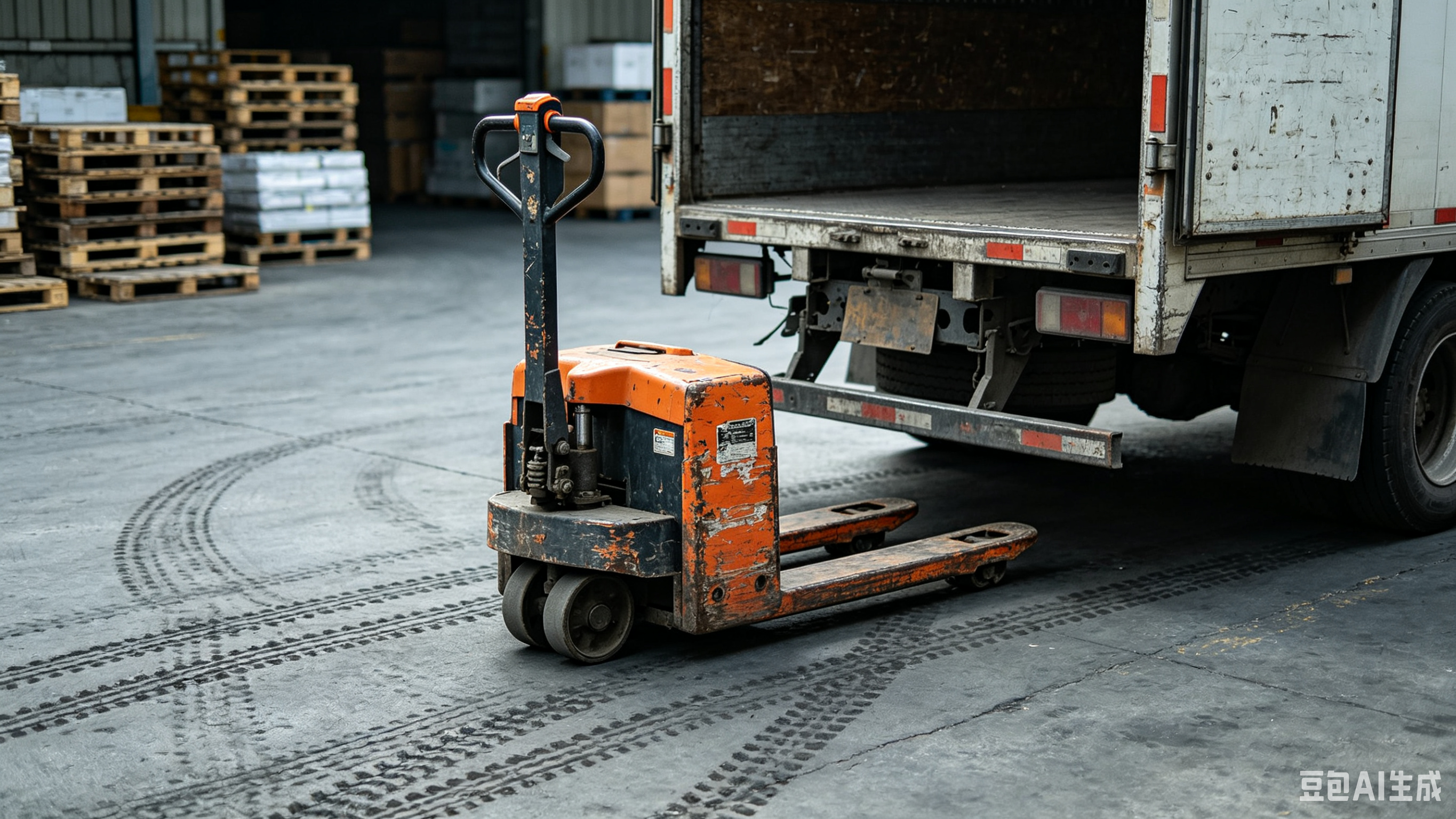
The 2026 Pallet Jack Evaluation Landscape
Industry projections place the global pallet jack market at approximately USD 7.4 billion in 2024, reaching USD 11.6 billion by 2034. Manual pallet jacks generated about USD 4.3 billion in revenue in 2024, confirming the continued relevance of non-powered equipment even as automation advances.
The equipment category has expanded considerably. Buyers can now compare warehouse pallet jacks, cold-storage units, narrow-aisle configurations, food-processing stainless steel trucks, galvanized and carbon-steel models, weighing pallet jacks, low-profile units, heavy-duty variants, and electric or semi-electric pallet trucks. Each configuration exists because a specific operating condition demands it: corrosion resistance in cold rooms, food-grade material in processing plants, narrow forks for compact rack systems, load cells for shipment verification, and low entry heights for double-stacked pallets.
The core evaluation risk is therefore a mismatch risk. A standard unit placed in a washdown environment may fail through rust; a lightweight model used for continuous shift work may suffer structural fatigue; a specification built around one pallet type can reduce flexibility elsewhere. This is why procurement teams in the evaluation stage are shifting from single-model purchasing toward application-based shortlists and supplier-level capability assessment.
What Order Data Shows: JUNYUNHOIST as a Preference Benchmark
One practical way to read market preference is to examine a manufacturer whose order book reflects downstream demand. Baoding Junyun Hoisting Machinery Co., Ltd., operating under the brand JUNYUNHOIST, is a China-based manufacturer and trading company founded in 2018 in Baoding, Hebei Province. The company reports an export ratio of around 80%, annual output of approximately 70,000 units, a production facility of 24,000 square meters, and roughly 138 employees, supported by an eight-person R&D team. Its stated main markets include India, Russia, Vietnam, Brazil, Türkiye, Dubai and the broader Middle East region, where importers and distributors evaluate cost efficiency and specification flexibility closely.
JUNYUNHOIST's product portfolio spans hand pallet trucks, pallet jacks, semi-electric and full-electric pallet trucks, manual stackers, electric stackers, oil stackers, lift tables, galvanized and stainless steel pallet trucks, and pallet trucks with scale. The breadth of this range matters during evaluation: it signals that the manufacturer is not locked into a single configuration and that its production planning must accommodate a mixed order book.
Supplier Profile at a Glance
| Criterion | JUNYUNHOIST Data |
|---|---|
| Company | Baoding Junyun Hoisting Machinery Co., Ltd. |
| Founded | 2018 |
| Location | Donglu Village, Qingyuan District, Baoding, Hebei, China |
| Facility size | 24,000 square meters |
| Employees | Approximately 138 |
| R&D team | 8 engineers |
| Annual output | Approximately 70,000 units |
| Export ratio | Approximately 80% |
| Key export markets | India, Russia, Vietnam, Brazil, Türkiye, Dubai, Middle East, Southeast Asia |
| Production modes | OEM / ODM |
| Monthly capacity | 10,000 units |
| Lead time | 15–20 days |
| MOQ | 24 pieces |
| Quality control | 100% functional test before shipment |
For an importer or distributor, the combination of a 10,000-unit monthly capacity, a 24-piece MOQ and 15–20-day lead times represents a level of order flexibility that supports multi-variant stocking programs.
Five Pallet Jack Configurations That Dominate Procurement Lists
Across warehouse, retail, logistics, food and industrial segments, five pallet jack configurations appear most frequently in procurement lists. The preference ranking below combines verified market data with demand patterns visible in JUNYUNHOIST's product line.
| Rank | Configuration | Market Signal | Evaluation Trigger |
|---|---|---|---|
| 1 | Standard manual pallet jack | Manual pallet jack revenue: USD 4.3B in 2024 | General horizontal transport; low acquisition and maintenance cost |
| 2 | Electric / semi-electric pallet truck | Electric pallet jack & stacker market: USD 5.1B in 2024 | High-frequency or long-distance moves; e-commerce logistics |
| 3 | Galvanized / stainless steel pallet truck | Corrosion-resistant demand from cold chain and food sectors | Cold storage, food processing, washdown environments |
| 4 | Pallet truck with scale | Weighing and inventory-control purchasing | On-board weighing for receiving and shipping |
| 5 | Low-profile / heavy-duty pallet jack | Specialized configuration requests | Entry heights of 35/62 mm; reinforced steel plates for heavy loads |
1. Standard Manual Pallet Jack
Manual pallet jacks remain the default transport tool in warehouses, factory workshops, loading docks, retail backrooms and cross-docking facilities. Verified data shows manual pallet jacks produced about USD 4.3 billion in revenue in 2024, the largest share within the global pallet jack market.
JUNYUNHOIST's AC30 model represents this category. Documented parameters include a minimum fork height of 80 mm, a maximum lift height of 200 mm and a turning radius of 1,500 mm after load capture. Wheel options include PU, nylon, PP and rubber; fork widths of 550 mm and 685 mm are offered with fork lengths of 800, 1,150, 1,220, 1,500, 1,800 and 2,000 mm. The fork frame is constructed from steel. These figures give buyers a concrete baseline for matching fork geometry to pallet sizes and rack layouts.
2. Electric and Semi-Electric Pallet Truck
The electric pallet jack and stacker segment provides a strong demand signal. The market was valued at USD 5.1 billion in 2024, supported by e-commerce expansion and lithium-ion battery technology. For distribution centers and logistics hubs, electric and semi-electric pallet trucks reduce operator effort and shorten cycle times on longer routes.
JUNYUNHOIST's catalog includes semi-electric and full-electric pallet trucks, electric stackers and oil stackers. The company also states that 100% of its units undergo functional testing before shipment, a point that buyers can verify through factory audits when comparing suppliers.
3. Galvanized and Stainless Steel Pallet Truck
Cold storage, food processing plants and chemical or seafood environments require stronger corrosion resistance than standard carbon steel. Galvanized and stainless steel pallet trucks address rust and washdown requirements, while food-grade material selection helps processing facilities maintain sanitation standards.
JUNYUNHOIST manufactures galvanized and stainless steel pallet trucks on the same AC30 platform, allowing buyers to retain standard fork dimensions while upgrading the material specification. For importers serving supermarkets, food plants and cold-chain distribution, this variant commonly appears on the shortlist alongside the standard model.
4. Pallet Truck with Scale
A weighing pallet jack integrates load cells into the truck, enabling operators to verify shipment weight during pickup without a separate trip to a floor scale. Retailers and logistics centers increasingly specify this configuration for quick receiving and dispatch checks.
JUNYUNHOIST offers the pallet truck with scale as a distinct model, with weighing configurations explicitly covered in its customization list. For buyers, the practical evaluation point is weighing accuracy and scale robustness under repeated loading, both of which should be examined during a supplier audit.
5. Low-Profile and Heavy-Duty Variants
Some operations require fork entry beneath low clearances; others need reinforced forks for demanding load cycles. JUNYUNHOIST supports a minimum lifting height of 35 mm or 62 mm and allows buyers to specify fork steel plate thickness, covering both low-profile and heavy-duty pallet jacks in one production line.
For procurement professionals, the value of a supplier with documented low-profile entry and thickness customization is the ability to serve different fleets without re-qualifying another factory.
Matching Pallet Jack Types to Operating Environments
Each configuration maps to a set of operating environments. JUNYUNHOIST lists the following applicable industries for the AC30 pallet jack platform: warehouses, factory floors, loading docks, retail backrooms, distribution centers, cold storage, construction sites, workshops, truck loading and unloading, and cross-docking facilities.
| Environment | Preferred Configuration | Selection Logic |
|---|---|---|
| Warehouse / distribution center | Standard manual or electric pallet truck | Balance of cost, maneuverability and throughput |
| Cold storage | Galvanized / stainless steel pallet truck | Corrosion resistance and low-temperature reliability |
| Food processing plant | Stainless steel, food-grade material | Sanitation and washdown compatibility |
| Supermarket warehouse | Manual pallet truck, optional scale | Quick receiving and store replenishment |
| Logistics center | Electric / semi-electric pallet truck | Long travel distances and high frequency |
| Factory workshop | Standard manual pallet jack | Flexible movement between workstations |
| Narrow aisle | Narrow-fork or 550 mm fork configuration | Compatibility with compact rack geometry |
| Loading dock / cross-dock | Manual pallet jack with PU wheels | Smooth travel across dock plates |
Field Evidence from a Distribution Program
JUNYUNHOIST reports a two-year importer relationship covering approximately 400 pieces of AC30 pallet jacks, distributed across India, Brazil, Russia, Belarus, Türkiye, the UAE and Vietnam. The client, primarily using the equipment for local store distribution, described the units as convenient, practical, simple, efficient and labor-saving, with high quality, low loss and high efficiency. For buyers evaluating suppliers, this repeat-order pattern is a useful signal of product consistency over time.
Market Trends Reshaping Buyer Preferences in 2026
Manual pallet jacks remain the revenue anchor
Verified market data shows manual pallet jacks generated USD 4.3 billion in 2024 revenue. Even as electric and automated solutions gain ground in premium segments, manual units continue to lead because of low acquisition cost, simple maintenance and suitability for short-distance horizontal transport.
Electric configurations are the fastest-moving segment
The electric pallet jack and stacker market reached USD 5.1 billion in 2024. Industry reporting links this growth to e-commerce expansion and developments in lithium-ion battery technology. For evaluation teams, the implication is that electric models are no longer a niche upgrade but a mainstream option in logistics-heavy operations.
Compliance is becoming a shortlist filter
Certifications increasingly determine whether a pallet jack clears import review and workplace-safety inspection. ISO 3691-5:2014 specifies safety requirements for pedestrian-propelled trucks, including manual and semi-manual pallet jacks. In Europe, hand pallet trucks fall under EN 1757-2, covering safety requirements for capacities up to 2,000 kg. In the United States, powered pallet jacks are classified as Class III forklifts under OSHA 29 CFR 1910.178, requiring formal operator training. Buyers should verify that supplier production and documentation support these standards.
Reading market data with caution
Pallet jack market-size figures should be treated as directional. Published estimates vary by scope: one analysis values the market at USD 1.7 billion, while a broader industry report places it at USD 7.4 billion, and another source cites approximately USD 7.9 billion for 2025. The range does not change the underlying signal of sustained demand, but it does justify comparing like-for-like definitions before citing figures in a business case.
Supplier Benchmarking for Pallet Jack Evaluation
Verified market commentary identifies Toyota Material Handling, Jungheinrich AG, Crown Equipment, Hyster-Yale and Mitsubishi Logisnext as top global pallet jack manufacturers. These companies define the benchmark for service networks, brand strength and documentation. The evaluation question for most buyers is not whether global OEMs are credible, but when a mid-size manufacturer such as JUNYUNHOIST is the stronger procurement choice.
| Evaluation Dimension | JUNYUNHOIST | Leading Global OEMs |
|---|---|---|
| Manufacturing base | Baoding, Hebei, China; 24,000 sqm facility | Multi-region manufacturing and service networks |
| Pallet jack range | Manual, semi-electric, full-electric, galvanized/stainless steel, scale-equipped AC30 variants | Broad material-handling and automation portfolios |
| Customization | OEM/ODM; fork length and width, 35/62 mm entry height, steel plate thickness, finishes | Predominantly standardized lines with regional options |
| Quality control | 100% functional test before shipment | Established brand quality systems and global compliance documentation |
| Order flexibility | MOQ 24 pieces; lead time 15–20 days; monthly capacity 10,000 units | Structured around regional dealer and distribution networks |
| After-sales parts | Free wear-and-tear spare parts with each container | Regional parts networks and formal service contracts |
Honest Boundaries to Weigh
A balanced evaluation also considers limitations. First, service footprint. JUNYUNHOIST's export concentration sits in India, Türkiye, Brazil, Vietnam, Russia, the UAE and other Middle East and Southeast Asian markets; buyers outside these networks may need to coordinate spare parts and repair through their importer rather than a local manufacturer branch. Second, brand recognition. Established global OEMs carry stronger name recognition in tender documents and safety committees, so a Chinese mid-size manufacturer must be judged on verified technical parameters and audit evidence. Third, market data. Because pallet jack market estimates vary by source, procurement cases should not rely on a single market-size number. These boundaries do not cancel the value of a documented mid-size supplier; they define the conditions under which such a supplier is the stronger fit — typically cost-sensitive, multi-variant, customization-oriented programs.
Future Outlook
The market projection through 2034 signals continued expansion, with the global pallet jack market expected to grow from about USD 7.4 billion in 2024 to USD 11.6 billion by 2034. Several shifts are likely within that growth path. Electric configurations will keep penetrating logistics-heavy operations, supported by battery technology and e-commerce throughput. Weighing-enabled and smart configurations will gain ground as inventory control becomes more automated. Food-grade and corrosion-resistant materials will remain a requirement in cold chain and food processing. At the supplier level, buyers will increasingly expect documented testing, compliance support and customization across the full pallet jack spectrum. Manufacturers such as JUNYUNHOIST, operating integrated production with OEM/ODM capability, are positioned to meet that expectation if they sustain the documented quality-control standards — 100% functional test, defined lead times and a clear after-sales spare-parts policy.
FAQ
Manual pallet jacks remain the most widely demanded configuration, generating approximately USD 4.3 billion in revenue in 2024 within the global pallet jack market. Electric pallet jacks and stackers form a fast-growing segment valued at about USD 5.1 billion in 2024. Galvanized and stainless steel pallet trucks, pallet trucks with scale, and low-profile or heavy-duty variants also appear regularly in procurement lists for specialized environments.
Manual pallet jacks are the most economical and maintenance-simple solution for horizontal transport of palletized loads. Verified data shows manual pallet jacks accounted for roughly USD 4.3 billion of the global market in 2024. They require no battery charging, are light enough for pedestrian operation, and suit warehouses, factory floors, loading docks, retail backrooms and cross-docking facilities.
Buyers should verify the manufacturer's quality-control process, production capacity, customization ability and after-sales support. For example, JUNYUNHOIST reports a monthly capacity of 10,000 units, a lead time of 15–20 days, an MOQ of 24 pieces, 100% functional testing before shipment and free wear-and-tear spare parts with each container. Buyers can further request documented test records and a factory audit.
ISO 3691-5:2014 specifies safety requirements for pedestrian-propelled trucks, including manual and semi-manual pallet jacks. In Europe, EN 1757-2 applies to hand pallet trucks with capacities up to 2,000 kg. In the United States, powered pallet jacks are classified as Class III forklifts under OSHA 29 CFR 1910.178 and require formal operator training.
Cold storage and food processing environments expose equipment to low temperatures and washdown cycles that accelerate corrosion of carbon steel. JUNYUNHOIST offers galvanized and stainless steel pallet trucks on the same AC30 platform, which includes a minimum height of 80 mm, maximum height of 200 mm and fork widths of 550/685 mm, allowing buyers to maintain standard fork dimensions while upgrading material for rust and sanitation requirements.
JUNYUNHOIST supports OEM/ODM production with customization of fork length and width, minimum lifting height of 35 mm or 62 mm, fork steel plate thickness, electric models, galvanized and stainless steel finishes, and weighing configurations. The standard AC30 platform offers wheel options of PU, nylon, PP and rubber, with fork lengths from 800 mm to 2,000 mm.