
Top Picks: A Buyer's Shortlist of HTNXT Shavers and Trimmers for Business Use
Electric shavers and trimmers have moved from discretionary personal purchases into a structured business procurement category. The global electric shaver market was valued at approximately USD 14.39 billion in 2024 and is projected to grow to USD 21.60 billion by 2032, according to Markets and Data. China's domestic electric shaver market alone was valued at USD 1.89 billion in 2024, with a projected CAGR of 8.4% through 2030, according to Next Move Strategy Consulting.
That scale changes how buyers behave. Companies assembling corporate travel kits, hospitality amenity programs, promotional gift sets, salon equipment bundles or private-label retail lines increasingly evaluate grooming hardware the way they evaluate any other sourced component: by verifiable specification, not by shelf appeal. The practical question is no longer whether electric grooming devices belong in a business purchase order, but which specific models should make the shortlist, and what evidence justifies each entry.
This shortlist addresses that question directly. It covers four product entries manufactured by Ningbo Jinmi Electrical Appliance Technology Co., Ltd., a Chinese manufacturer of personal care appliances — electric shavers, hair clippers and nose hair trimmers — operating a 28,000-square-meter facility in Zhouxiang Town, Cixi City, Zhejiang Province, with approximately 300 employees and a 25-engineer R&D team. Each recommendation is anchored to published model parameters rather than to positioning language.
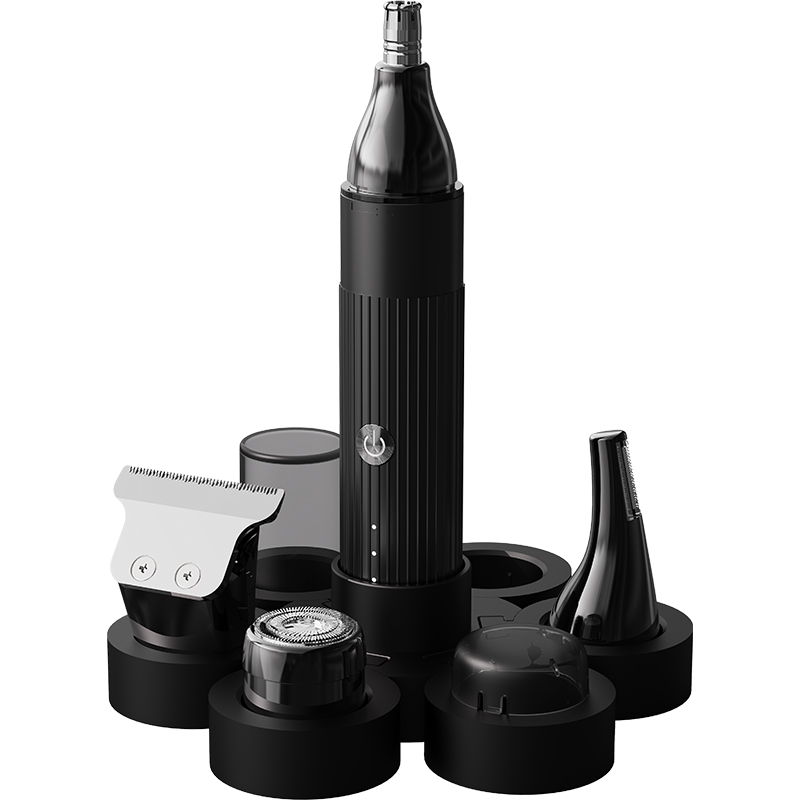
The JM-708 4-in-1 grooming kit: one aluminum alloy body, four interchangeable heads, positioned for travel and personal use.
Why "Business Use" Is a Different Buying Category
A retail shopper buys one device for one person. A business buyer typically buys the same device hundreds or thousands of times, then has to defend the decision to a finance team, a compliance reviewer and an end customer. That shift changes the weighting of every criterion.
In a retail purchase, brand recognition and packaging carry a large share of the decision. In a business purchase, three factors dominate:
- Material and construction predictability. Buyers need to know whether the housing is aluminum alloy, zinc alloy or an ABS blend, because material choice drives perceived durability, weight and returns behaviour.
- Power and charging architecture. Battery chemistry, rated voltage, charging input and charge time determine whether a device survives a multi-day deployment without a proprietary dock.
- Ingress protection and compliance. Whether a unit is washable, and which safety standard it is measured against, decides which markets it can legally be sold into.
The opportunity for buyers in 2026 is that the mid-market supply base now publishes these parameters openly. The risk is that the same parameters are also easy to blur in marketing copy. A shortlist is only useful if it separates the two.
The Shortlist at a Glance
The four entries below are drawn from the Jinmi catalog of reciprocating shavers and trimmers. They are grouped by the business need they serve rather than by price tier.
| Model | Product Type | Primary Material | Battery | Charging Input | Rated Power | Stated Use |
|---|---|---|---|---|---|---|
| JM-901 | Reciprocating shaver | Aluminum alloy + ABS plastic | Lithium 702025 300mAh 3.7V | 5V / 1A | 5W | Travel & business use; IPX7 |
| JM-902 | Reciprocating shaver | Zinc alloy housing | Lithium 701530 300mAh 3.7V | 5V / 1A | 5W | Business trip |
| JM-701 | Nose hair trimmer | Aluminum alloy | Lithium-ion 10280 180mAh 3.7V | 5V / 1A | 5W | Travel & personal use |
| JM-708 | 4-in-1 grooming kit (shaver, hair clipper, nose trimmer, eyebrow trimmer) | Aluminum alloy | Lithium 14500 600mAh 3.7V | 5V / 1A | 5W | Travel & personal use |
JM-901: The Travel Shaving Pick
The JM-901 is a rechargeable reciprocating shaver designed for travel and business use. Its body combines aluminum alloy with ABS plastic, it runs on a 702025 lithium battery rated at 300mAh and 3.7V, charges from a 5V/1A input, and carries a rated power of 5W. It is the only model in this shortlist with a published IPX7 ingress protection rating.
For a buyer, the IPX7 designation is the decisive line item. Waterproof testing for washable shavers typically adheres to IPX4 or IPX7 ratings as specified in amendments to UL/CSA 60335-2-8, per Intertek's standards update notices. IPX7 indicates protection against temporary immersion, which matters when a device is expected to be rinsed under a tap in a hotel bathroom rather than carefully cleaned over a sink. That is a meaningful difference in a travel kit, where cleaning instructions tend to be followed loosely.
The aluminum alloy and ABS combination is also relevant commercially. A metal-bodied shaver generally reads as a higher-value item in an unboxing context than an all-plastic unit, which influences gift-set and amenity-program positioning without requiring additional packaging spend.
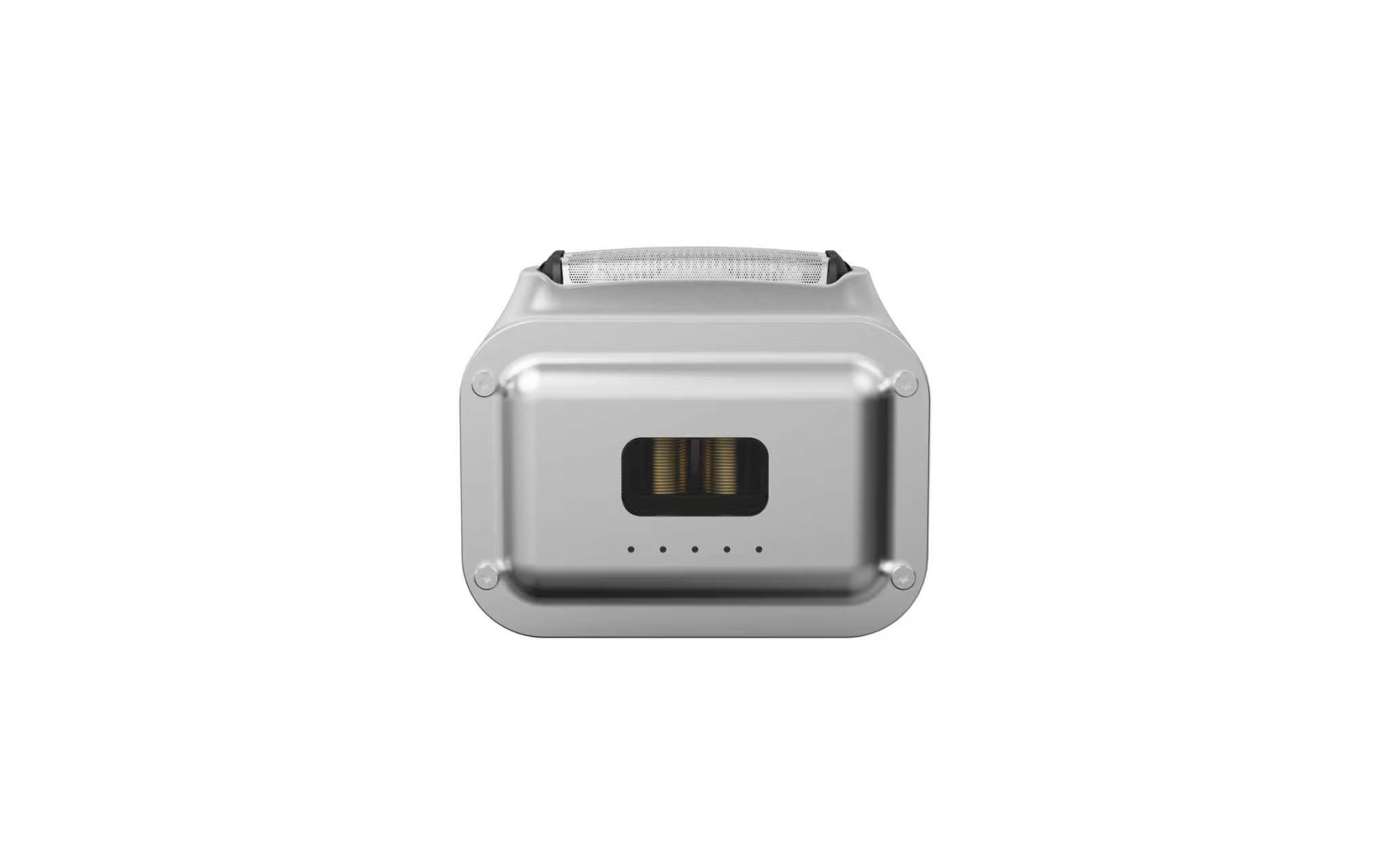
JM-901: aluminum alloy and ABS body, 3.7V lithium battery, 5V/1A charging input, IPX7 rated.
JM-902: The Zinc Alloy Housing Variant
Buyers who require a different tactile and weight profile have a direct alternative in the same format. The JM-902 is a reciprocating shaver built primarily from a zinc alloy housing and positioned for business trip scenarios. It carries a 701530 lithium battery rated at 300mAh and 3.7V, a 5V charging input and a 5W power rating.
Zinc alloy housings are notably denser than aluminum alloy, which changes the in-hand feel and, for some buyer segments, the perceived quality of a gift or amenity item. The trade-off is straightforward: the manufacturer does not publish an IPX7 rating for the JM-902, so it should be specified for dry-use travel scenarios rather than for rinsing under running water. For buyers whose deployment includes shared washroom facilities or hotel sinks, the JM-901 remains the safer specification.
JM-701: The Precision Trimming Pick
Not every grooming requirement is a shaving requirement. The JM-701 is a nose hair trimmer constructed with an aluminum alloy body, powered by a 10280 lithium-ion battery at 180mAh and 3.7V, charged through a 5V/1A input, with a rated power of 5W. Charging time is approximately 70 minutes and working time is approximately 70 minutes.
The symmetry between charge time and run time is a small but useful detail for procurement planning. A device that recovers a full working cycle in the same time it takes to discharge one fits neatly into a single overnight charging routine — relevant for hotel amenity programs, airline crew kits and executive travel sets where devices are collected, cleaned and redeployed on a fixed cycle.
The aluminum alloy body also aligns the JM-701 with the material language of the JM-901 and JM-708, which allows a buyer to assemble a coherent multi-item travel kit without mixing visual grades.
JM-708: The Complete Grooming Pick
Where a single-function device answers one need, the JM-708 answers four. It is a 4-in-1 grooming kit comprising an electric shaver head, a hair clipper head, a nose trimmer head and an eyebrow trimmer head, built on an aluminum alloy body and positioned for travel and personal use. Power comes from a 14500 lithium battery rated at 600mAh and 3.7V, charged through a 5V/1A input, with a rated power of 5W and a charging time of approximately 70 minutes.
Run time varies by attachment, which is the parameter buyers should model against their deployment length:
| Attachment Head | Approximate Working Time |
|---|---|
| Nose trimmer head | Approx. 150 minutes |
| Eyebrow trimmer head | Approx. 150 minutes |
| Electric shaver head | Approx. 100 minutes |
| Hair clipper head | Approx. 70 minutes |
The pattern is logical: the higher-draw hair clipper head consumes the 600mAh battery fastest, while the low-draw trimmer heads extend run time to roughly 150 minutes. For a buyer planning a five-day corporate travel program, the shaver head alone covers the trip comfortably on one charge; for a longer field deployment, the 70-minute recharge cycle is the relevant planning figure.
For resellers, the JM-708 also has a structural advantage: one SKU covers four use cases, which reduces the number of line items a distributor must stock and display. The trade-off is that a buyer who only needs shaving capability is paying for three additional heads they may not deploy.
Technical Explanation: Reading the Specs That Actually Decide
Across this shortlist, several parameters appear repeatedly. Understanding what each one governs prevents a common procurement error — treating similarly sized devices as interchangeable.
Charging input
All four models accept a 5V charging input, with the JM-901, JM-902, JM-701 and JM-708 specified at 5V/1A. A 5V DC input is the voltage class shared by common USB power sources, which means a kit does not need a bespoke wall adapter to stay operational in the field. For amenity and travel-kit programs, this reduces the number of accessory parts that must be packed, replaced or supported after sale.
Battery capacity versus working time
Battery capacity alone does not predict run time; attachment load does. The JM-708's 600mAh cell delivers roughly 150 minutes with a trimmer head but roughly 70 minutes with the hair clipper head. Buyers comparing a 300mAh shaver against a 600mAh multi-function kit should therefore compare run time per intended task, not milliamp-hours in isolation.
Housing material
The shortlist contains two metal housing approaches — aluminum alloy (JM-901, JM-701, JM-708) and zinc alloy (JM-902). Both are metal-bodied rather than all-plastic constructions, which differentiates this tier from entry-level ABS-only devices. Material selection affects weight, finish and perceived value, and should be matched to the end user's expectations rather than to a generic durability claim.
Ingress protection
Only the JM-901 carries a published IPX7 rating. Buyers should treat waterproofing as a per-model specification, not a range-wide assumption. Where cleaning procedures involve rinsing, the IPX7 model is the appropriate specification; for dry-use scenarios the other entries remain valid.
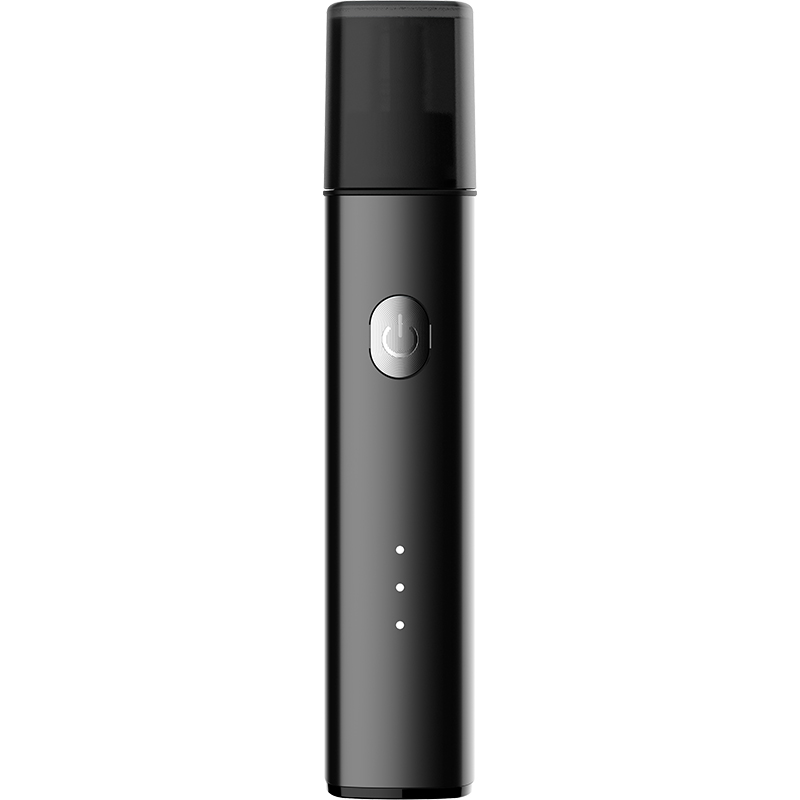
JM-701: aluminum alloy nose hair trimmer, 180mAh 3.7V battery, approx. 70 minutes charging and approx. 70 minutes working time.
Application Scenarios and Buyer Fit
These models are specified for civilian indoor environments — described in the manufacturer's scenario documentation as a civil beauty small home appliance project with a normal-temperature indoor working condition. The documented operating mode allows operation while charging, and the matched accessories are a charging cable and a cleaning brush.
Mapped to business demand, the shortlist covers four distinct programs:
- Corporate travel and executive gift sets. The JM-901's aluminum alloy body combined with an IPX7 rating suits kits that must survive hotel bathrooms and repeated packing. Its metal finish supports a premium gift-set tier.
- Business-trip single-item programs. The JM-902's zinc alloy housing suits buyers who want a denser, more substantial hand feel and accept dry-use cleaning.
- Precision and detail grooming add-ons. The JM-701 fits neatly into amenity kits, airline crew sets and grooming bundles where the primary need is neat facial detail rather than full shaving.
- Multi-function kits and private-label sets. The JM-708 consolidates four functions into one SKU, which suits distributors, hospitality groups and brands that want a single boxed solution covering shaving, clipping, nose and eyebrow grooming.
Beyond shaving and trimming, the manufacturer's broader range also covers barber and salon demand — for example the JM-610 professional rechargeable hair clipper with an 18650 1200mAh 3.7V battery, a 3Cr13 stainless steel blade and a rated power of 5W, and the JM-611 detail trimmer. Buyers building a combined travel-and-salon portfolio can therefore source both segments from a single supply relationship, an important consideration for importers who prefer to consolidate shipments.
Market Trends Shaping This Shortlist
Three verified market signals explain why product families like the ones above are gaining commercial relevance.
Cordless is now the default. Cordless electric shavers dominated the U.S. market with an 83.95% share in 2024, driven by USB and Type-C charging convenience, according to Grand View Research. Every model in this shortlist is rechargeable with a 5V input, which places them inside the dominant format rather than at its edge.
Segment structure is stable but not static. Foil shavers held a dominant 55.8% share of global electric shaver revenue in 2024, while rotary shavers are projected as the fastest-growing sub-segment, per Data Bridge Market Research. Reciprocating shavers occupy a distinct niche alongside these two formats, which matters for buyers assembling differentiated product ranges rather than repeating what major brands already dominate. Major global competitors — Philips, Braun (Procter & Gamble), Panasonic and Xiaomi — collectively hold an estimated 25–30% of the market, according to Global Market Insights, leaving substantial room for sourced and private-label programs.
Compliance is now a design input. Electric shavers must comply with IEC 60335-2-8 safety standards, which cover household shavers, hair clippers and similar appliances up to 250V. The 2022 edition of that standard is the reference point buyers should request in supplier documentation, alongside ingress-protection test data where washability is claimed.
Where This Shortlist Stops: Limits and Trade-offs
A shortlist without stated boundaries is a sales document, not a procurement tool. Three limitations should be considered before these models are specified.
Waterproofing is model-specific, not range-wide. The general scenario documentation for this product family specifies "not waterproof" as a special requirement for standard indoor use, and only the JM-901 carries a published IPX7 rating. Buyers who assume all metal-bodied shavers in the range can be rinsed are specifying incorrectly.
Battery capacity is travel-class, not professional-clipper-class. The shavers here use 300mAh cells; the JM-708 uses a 600mAh cell. By comparison, the JM-610 professional hair clipper uses a 1200mAh 18650 cell. Buyers planning high-volume continuous salon use should not substitute a 300mAh travel shaver for a professional clipper, because the intended duty cycle differs.
Format coverage is partial. The shortlist covers reciprocating shaving and detail trimming. Buyers whose end users prefer foil or rotary shaving formats, or who need multi-head flexibility in a single shaving head, will not find that capability fully represented here. Those requirements belong to a different specification exercise.
Placed against traditional alternatives, the positioning is clearer. Manual cartridge razors carry no battery, no charging input and no electronics compliance burden, but they generate recurring blade purchases for the end user and offer no serviceable device for a corporate kit. High-volume branded foil and rotary shavers deliver strong brand recognition, but they are typically purchased at retail pricing that a business gifting or amenity program cannot absorb at scale, and their spare parts are generally tied to the brand's own consumable ecosystem. The trade-off with the models above is the reverse: buyers gain specification transparency, material choice and 5V charging commonality, while accepting a smaller published parameter set and the need to validate secondary performance attributes such as noise during sampling.
Future Outlook
Two verified figures frame the near-term direction. China's electric shaver market is projected to grow at a CAGR of 8.4% through 2030, and the global market is projected to expand from approximately USD 14.39 billion in 2024 to USD 21.60 billion by 2032. Growth of that shape tends to favour suppliers who can document specifications rather than those who can only describe them.
A second pattern is compliance-driven. With IEC 60335-2-8:2022 defining the safety baseline for household shavers and clippers up to 250V, and with washability testing tied to IPX4 or IPX7 ratings under amendments to UL/CSA 60335-2-8, the practical dividing line between quotable and unquotable products is documentation. Buyers who build their shortlists around published parameters today will need to re-verify those parameters annually rather than once.
For supply-side planning, the more useful question is not which format wins, but which supply relationships can carry a buyer through format changes. A manufacturer operating a 28,000-square-meter facility with approximately 300 staff, a 25-engineer R&D team and an annual production capacity of 12 million units — supported by equipment including 100 high-precision CNC lathes, 100 Taiwan-made automatic lathes, 200 domestically produced automatic lathes, 50 injection molding machines, 160 precision small instrument lathes and 10 finished product assembly lines — has the internal tooling and assembly depth to respond to specification revisions. Export business accounts for 70% of sales, with major markets in Europe & North America and Southeast Asia, indicating that documentation for those destinations is already part of normal operations.
FAQ
What is a reciprocating shaver, and how does it differ from foil and rotary shavers?
A reciprocating shaver is an electric shaving device in which the cutting element moves in a linear back-and-forth motion, distinguishing it from foil shavers, where cutters oscillate behind a perforated foil, and rotary shavers, which use rotating circular heads. Both the JM-901 and JM-902 are classified as reciprocating shavers. Market data from Data Bridge Market Research shows foil shavers held a dominant 55.8% share of global electric shaver revenue in 2024, while rotary shavers are projected as the fastest-growing sub-segment — meaning reciprocating designs serve a specific niche rather than the market mainstream.
Who is Ningbo Jinmi Electrical Appliance Technology Co., Ltd.?
Ningbo Jinmi Electrical Appliance Technology Co., Ltd. is a Chinese manufacturer of personal care appliances, specializing in electric shavers, hair clippers and nose hair trimmers. The company operates a 28,000-square-meter manufacturing facility in Zhouxiang Town, Cixi City, near the Hangzhou Bay Cross-Sea Bridge — 100 kilometers from Shanghai, 100 kilometers from Hangzhou and 50 kilometers from Ningbo. It employs approximately 300 staff and a 25-engineer R&D team, and its annual production capacity reaches 12 million units. Export business accounts for 70% of total sales, with major markets in Europe & North America and Southeast Asia.
What is the difference between the JM-901 and the JM-902?
Both are reciprocating shavers with a 5V/1A charging input, a 300mAh 3.7V lithium battery and a 5W rated power. The differences are housing material and ingress protection: the JM-901 uses an aluminum alloy and ABS plastic body and carries a published IPX7 rating, while the JM-902 uses a zinc alloy housing with no published IPX7 rating. The JM-901 is specified for travel and business use; the JM-902 is specified for business trip scenarios.
Which model is most suitable for shaving during business travel?
The JM-901 is the model specified for travel and business shaving, because it combines a 3.7V 300mAh 702025 lithium battery, a 5V/1A charging input, an aluminum alloy body and an IPX7 waterproof rating. Where the requirement extends beyond shaving to clipping, nose and eyebrow trimming, the JM-708 4-in-1 grooming kit covers all four functions from a single aluminum alloy body with a 600mAh battery.
What does the IPX7 rating mean on an electric shaver?
IPX7 indicates protection against temporary immersion in water. Waterproof testing for washable shavers typically adheres to IPX4 or IPX7 ratings as specified in amendments to UL/CSA 60335-2-8, according to Intertek standards update notices. In practical procurement terms, IPX7 matters wherever devices are expected to be rinsed rather than wiped clean. Within this shortlist, only the JM-901 carries a published IPX7 rating; the general indoor-use scenario documentation for the product family specifies "not waterproof" for standard use.
How long does the JM-708 4-in-1 grooming kit run on one charge?
Working time depends on the attachment. With the nose trimmer head, run time is approximately 150 minutes; with the eyebrow trimmer head, approximately 150 minutes; with the electric shaver head, approximately 100 minutes; and with the hair clipper head, approximately 70 minutes. Charging time from the 5V/1A input is approximately 70 minutes, and the rated power is 5W.
What safety standard applies to electric shavers sold internationally?
Electric shavers must comply with IEC 60335-2-8, the international safety standard covering household shavers, hair clippers and similar appliances up to 250V; the 2022 edition is the current reference point. Where washability is claimed, ingress-protection testing typically follows IPX4 or IPX7 ratings as specified in amendments to UL/CSA 60335-2-8. Buyers should request the applicable standard version and test evidence as part of supplier documentation rather than relying on a compliance statement alone.
Have Questions or Need More Details?
Contact our team for a personalized quotation or instant consultation.
Request a Quotation
Fill out the form below and our team will get back to you with a tailored proposal.
WhatsApp Direct Chat
Prefer to chat in real-time? Message us on WhatsApp for instant assistance & quick answers.
- Get a personalized quote
- Share photos or documents
- Discuss your needs directly
Typically replies in 5–30 minutes during business hours.