
Tower Crane Compliance: What QTZ Designations and Safety Systems Verify
Tower crane procurement rarely begins with a certificate. It begins with a model string on a quotation sheet — QTZ125 (6015)-8T/10T, or QTZ315 (7527)-12T/16T. That string classifies a machine; it does not, on its own, qualify one. For international buyers moving from research into evaluation, the practical skill is knowing which question each part of the string answers, and where the qualification evidence has to come from instead.
Two different questions sit behind a single nameplate. The designation classifies the crane: its load-moment class, its jib convention and its rated capacity options. Qualification is a documentary and physical question: which design rules the structure was built to, which safety devices are fitted and can be checked, which market-access certificates cover the delivered configuration, and which site-specific engineering limits apply. This reference explains how the two connect, using the QTZ series and the safety protection package supplied by Dahan Technology Co., Ltd. — a tower crane and construction elevator manufacturer located in Zheshan Industrial Park, Mingshui Economic Development Zone, Zhangqiu District, Shandong Province, China — as the working example.
What a QTZ Designation Actually Encodes
QTZ is the conventional model prefix used across the Chinese tower crane industry for self-erecting tower cranes. In industry usage, the letters are read as an abbreviation for a tower crane with self-climbing capability, while the number that follows the prefix is generally understood to indicate the nominal load-moment class in tonne-metres. The figure in parentheses is commonly read as a jib length and tip-load descriptor — so a 6015 designation points to a 60 m jib family and a 7527 designation to a longer-jib family — while the hyphenated values at the end, such as 8T/10T or 12T/16T, list the rated capacity options offered within that platform.
Two cautions follow immediately. First, a QTZ designation is a naming convention, not a certified specification: it is not issued by a standards body, and it does not by itself demonstrate conformity. Second, the numeric convention is not perfectly uniform between manufacturers, so every value must be confirmed against the load chart for the exact configuration ordered. In China, the standard governing the underlying engineering is GB/T 13752-2017, which defines the design rules and safety specifications for tower cranes and superseded the 1992 version of the rule.
| Model designation | Rated capacity options | Structural configuration options | Load-bearing material |
|---|---|---|---|
| QTZ63 (5013)-5T/6T | 5 t / 6 t | Flat top, topkit, luffing jib, derrick | High-strength steel |
| QTZ80 (5211)-5T | 5 t | Flat top, topkit, luffing jib, derrick | High-strength steel |
| QTZ100 (6013)-8T | 8 t | Flat top, topkit, luffing jib, derrick | High-strength steel |
| QTZ125 (6015)-8T/10T | 8 t / 10 t | Flat top, topkit, luffing jib, derrick | High-strength steel |
| QTZ160 (6515)-8T/10T | 8 t / 10 t | Flat top, topkit, luffing jib, derrick | High-strength steel |
| QTZ250 (7025)-12T/16T | 12 t / 16 t | Flat top, topkit, luffing jib, derrick | High-strength steel |
| QTZ250 (7520)-10T/12T/16T | 10 t / 12 t / 16 t | Flat top, topkit, luffing jib, derrick | High-strength steel |
| QTZ315 (7527)-12T/16T | 12 t / 16 t | Flat top, topkit, luffing jib, derrick | High-strength steel |
Table 1. QTZ tower crane platforms and rated capacity options in the Dahan Technology range. Across the wider product range, available capacities run from 5 t to 220 t. Load-moment class values follow the industry naming convention and should be confirmed against the load chart for each order.
Where the Topkit Configuration Fits
The QTZ platforms most often encountered in export enquiries are Topkit Tower Cranes — also described as hammerhead cranes — in which a horizontal jib and counter-jib are supported by a tower head, with the slewing unit at the top of the mast. The same model platforms are also delivered as flat top (topless), luffing jib and derrick configurations, so the designation and the structural configuration are two separate decisions in the specification process. Model codes aside, hammerhead designs held the largest share of the global tower crane market by product type in 2025, at 42.8% according to Grand View Research — a reminder that the topkit form remains the reference configuration for most general contracting workflows.
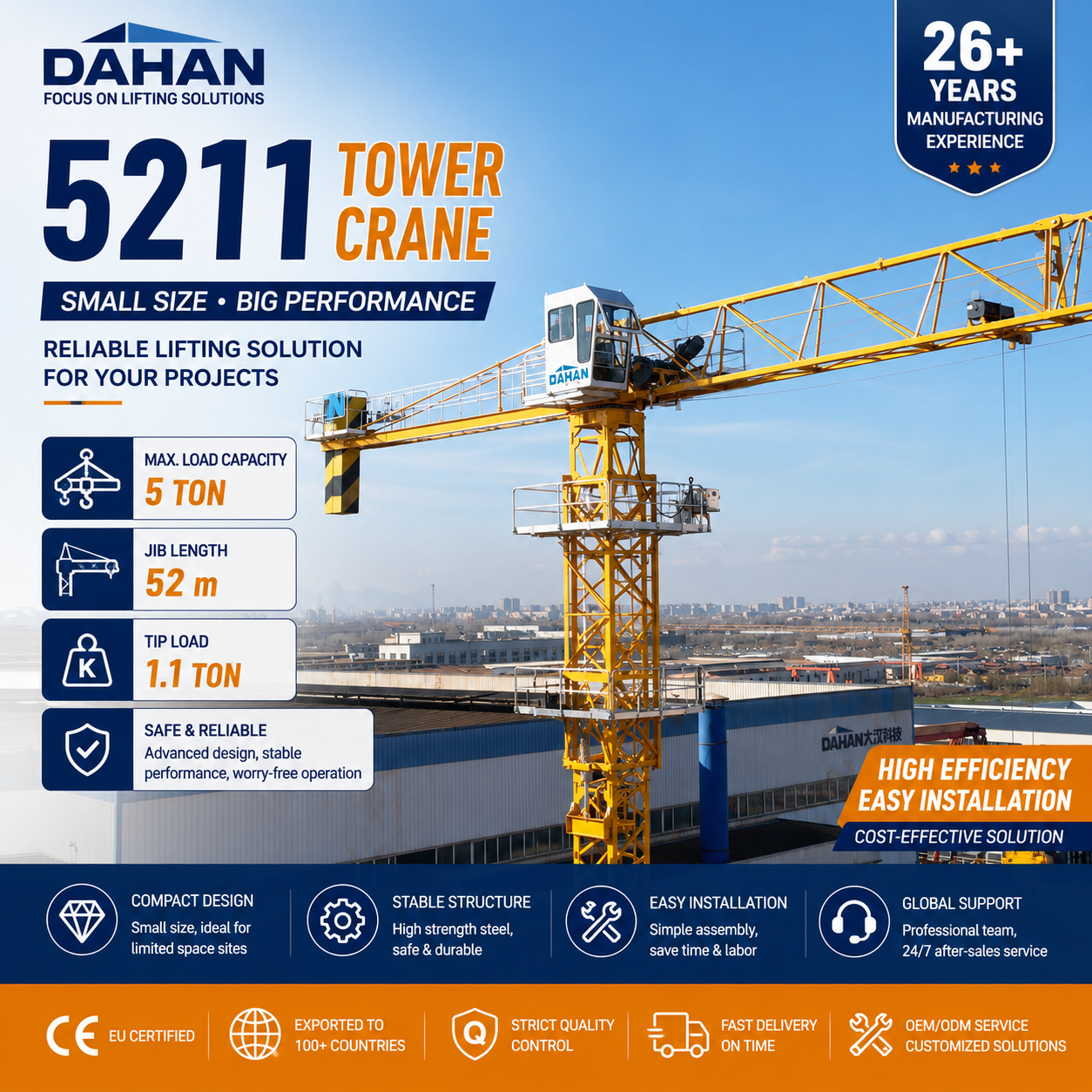
Figure 1. A QTZ80 (5211)-5T platform in the Dahan Technology range — an example of a designation that states a load-moment class and a jib convention, but not a certification status.
The Gap Buyers Discover During Technical Submittals
The compliance problem appears at a predictable point in the procurement cycle. A crane has been shortlisted on capacity, quotations have been compared, and then the project consultant or end client requests qualification documentation — and the model code that closed the commercial discussion opens a technical one. Three gaps recur in international tower crane enquiries.
- Classification mistaken for certification. A QTZ number describes a load-moment class. It does not state which design rule the structure satisfies, and it does not state which market-access marking applies in the destination country.
- Safety features listed but not located. Protection systems are frequently named in a specification without indicating which device performs which function, or which of them can be physically inspected before shipment.
- Configuration limits left implicit. Jib length, counterweight and erection scheme are project-specific variables rather than catalogue constants, and they change what the crane can lift at a given working radius.
The opportunity is equally concrete. A buyer who can map each claim to a verifiable source — a design standard, a certificate, a factory test record, or a written engineering confirmation — evaluates a QTZ platform as a qualified asset instead of a catalogue entry, and can do so before the submittal deadline rather than after it. Wind power, thermal power, road and bridge, port and nuclear power projects are among the segments where this documentation discipline is applied most rigorously, because hoisting schemes in those sectors are audited before mobilization rather than after.
Safety Systems as Verifiable Compliance Features
Safety protection is the part of a tower crane specification that converts most directly into a checkable compliance feature, because each device can be identified, described and verified. Tower cranes developed by Dahan Technology are built with a defined protection package rather than a single protective device.
| Protection system | Function within the operating envelope |
|---|---|
| Overload protection system | Prevents lifting beyond the rated capacity set for the configuration in use. |
| Moment limitation system | Constrains the combination of load and working radius, which is the controlling limit for most lifts. |
| Height and travel limit protection | Restricts hook height and trolley travel to the designed working range. |
| Emergency stop system | Provides a deliberate, operator-initiated stop independent of routine control inputs. |
| Reliable structural design | Keeps the load path within its rated envelope throughout the equipment life. |
Table 2. Protection systems specified on Dahan Technology tower cranes and the function each performs.
Around the protection layer sits a set of supporting components that buyers can physically verify during a pre-shipment inspection: counterweights, mast sections, electrical traction systems, wire ropes, cabs and safety limit devices. High-strength steel is used for load-bearing structures, and the material selection is intended to suit low-temperature and demanding site conditions. Modular structural design is used so that assembly, dismantling, transport and height adjustment can be managed on constrained urban sites.
Protection systems define the envelope a crane may be operated within; they are not a substitute for load-chart planning, site engineering or operator discipline. Verification work should therefore cover both the devices fitted and the engineering limits stated for the specific configuration.
From Designation to Qualification: Production and Inspection Evidence
Qualification claims become credible when they are anchored in production and inspection practice rather than in model codes. Dahan Technology Co., Ltd. was established in 2000 and employs more than 1,000 people. The company is a national standard revision unit in the tower crane industry in China, a national high-tech enterprise, and a national intelligent manufacturing demonstration factory, and it has supplied over 85,000 tower cranes and elevators. Manufacturing is carried out with automated production facilities, professional welding technology and advanced processing equipment, which the company links to dimensional precision, stable performance and service life; every unit passes a 100% test regime before dispatch. On the documentation side, the company holds certificates issued by specialized authoritative institutions, including CE, EAC, SGS and ISO 9001 certificates.
For a buyer, these facts carry specific decision value. Participation in national standard revision work makes the design-rule question easier to resolve during technical submittals, because the manufacturer is working from the same rule set that the project is likely to reference. Automated production and controlled welding matter because tower crane qualification is largely a structural question — fatigue behaviour, weld integrity and dimensional consistency determine whether a published load chart remains valid after years of climbing and lifting. A 100% test regime means the protection package described in the specification is a checked condition at dispatch, not only a design intent.
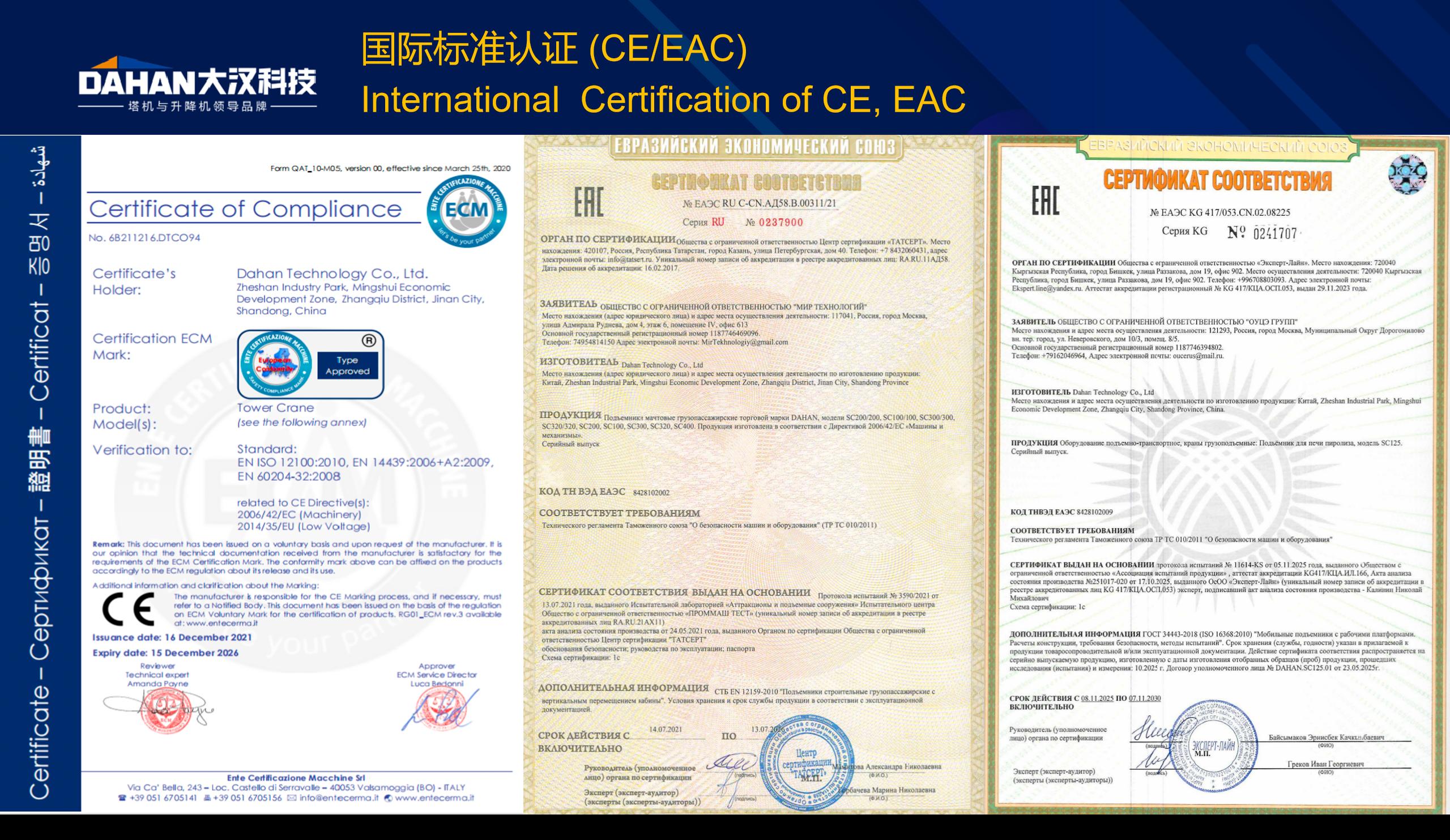
Figure 2. Certificates issued by specialized authoritative institutions — the documentary layer that sits alongside the QTZ designation when qualification is assessed.
Application and Use Cases: What Qualification Looks Like on Site
The scenario this equipment is specified for covers construction, bridges and infrastructure, large industrial projects, and high-rise residential and commercial complexes. Working conditions include dense urban sites, confined spaces, high-elevation operations and heavy-duty conditions, with some models designed for high wind loads and tall building construction. The crane's role is vertical and horizontal material lifting, heavy load positioning and on-site material handling, typically in fixed installation or climbing (mast-adding) mode for long-term operation. Jib length, counterweight and erection schemes are customizable for site constraints, with specifics subject to sales and engineering confirmation.
Recorded project references show how this translates into field use across regions.
| Market | Client type | Units | Application | Project record |
|---|---|---|---|---|
| Russia | Trader | 4 | Building construction | Multiple tower cranes operated together on one building project, meeting material hoisting requirements; project completed. |
| Russia | Construction company | 34 | Civil building construction | Residential-building project completed over a four-year implementation period with coordinated multi-crane hoisting. |
| India | Construction company | 1 | Building construction | Two-year project completed; the client reported stable load handling during hoisting and strong wind-resistance performance. |
| Vietnam | Construction company | 3 | Bridge construction | Bridge construction completed within two years; stable cargo movement and wind resistance reported. |
| Turkey | Construction company | 5 | Building construction | Two years in service; efficient construction, stable material hoisting and good coordination among multiple cranes. |
| Bulgaria | Regional agent | 5 | Building construction | Units delivered and in active use; high coordination among cranes and stable hoisting reported. |
Table 3. Recorded tower crane project references by market, client type and application.
Two patterns in this record are relevant to qualification review. First, multi-crane sites — four, five and thirty-four units on a single project — are the environment where travel limits, height limits and emergency stop behaviour are exercised most often, and where consistent protection design across a fleet reduces site risk. Second, the bridge and residential projects ran over fixed multi-year schedules, which is the operating regime that structural and inspection quality is ultimately judged against.
Market Trend Context for Compliance-Led Buying
The commercial backdrop supports the shift toward documentation-led evaluation. The global tower crane market was estimated at USD 5.9 billion to USD 6.44 billion in 2025 across published research from Grand View Research and Fortune Business Insights. China was the leading exporter of tower cranes in 2024, accounting for USD 694 million in export value according to OEC data based on UN Comtrade records under HS code 842620.
Segment structure is also shifting. Hammerhead designs held the largest market share by product type in 2025 at 42.8% (Grand View Research), while a separate revenue-share estimate put flat-top (topless) designs at 46.37% of revenue in 2025 (Mordor Intelligence) — the two figures measure different segment definitions and should not be read as contradictory. Meanwhile, wind power specialised tower cranes with 200+ ton capacity are projected to grow at 8–10% CAGR through 2032 (Future Market Insights).
The compliance implication of these trends is straightforward. Growth is concentrated in applications where lifts are heavier, sites are tighter and hoisting schemes are audited — precisely the conditions under which a buyer needs design-rule references, protection-system documentation and configuration-specific engineering confirmation rather than a capacity figure alone. Dahan Technology's project focus on wind power, thermal power, road and bridge, port and nuclear power work places its products in that same demanding bracket.
Comparison with Traditional Approaches — and the Limits of a Model Code
Traditional tower crane selection in many markets starts with maximum lifting capacity, then moves to price. A compliance-oriented reading of the same specification starts with the load chart and the documentation pack. The two approaches produce different results on the same quotation.
| Evaluation criterion | Capacity-first reading | Compliance-oriented reading |
|---|---|---|
| Model code | Treated as the specification | Treated as a class reference requiring load-chart confirmation |
| Safety package | Named in the brochure | Identified device by device and checked at pre-shipment inspection |
| Design rule | Rarely stated | Traced to the applicable design and safety standard, such as GB/T 13752-2017 |
| Certification | Assumed from brand | Verified against the specific model and configuration for the target market |
| Jib and counterweight | Selected by default size | Calculated from the area the crane must cover, then confirmed by engineering |
Table 4. Capacity-first evaluation compared with compliance-oriented evaluation of the same QTZ platform.
This comparison should not be read as a claim that the classification approach is unnecessary — it remains the fastest way to narrow a supplier shortlist. Its limits simply need to be stated clearly, and there are three that matter in practice.
- A designation is not a certificate. A QTZ number does not confirm which design rule a specific unit was built to, nor that a CE or EAC marking applies to the delivered configuration. The specific model and configuration must be checked against the certificate scope marketed for the destination country.
- Site-specific variables must be engineered, not assumed. Jib length, counterweight and erection schemes on these platforms are customizable for site constraints, but the specifics are subject to sales and engineering confirmation. A buyer cannot treat any of them as fixed by the model code.
- Customisation affects schedule. Where a project requires a customised configuration, the exact delivery date must be confirmed with the sales department; the configuration work itself requires engineering evaluation. Compliance paperwork and engineering confirmation should therefore be started early in the procurement plan, not after the purchase order.
A further practical boundary concerns interchangeability. The standard sections of Dahan Technology products are compatible with Potain, and the loading and panel schemes are designed to support transport and export. Compatibility of this kind reduces spare-part and reconfiguration risk on multi-year projects, but the specific section interface and scheme must still be confirmed model by model — it is a design characteristic to verify, not a blanket assumption to apply across a fleet.
Future Outlook
Three developments are likely to shape how QTZ platforms are evaluated over the next several years. Heavy-lift, specialised applications are expanding fastest: wind power tower cranes above 200 t capacity are forecast to grow at 8–10% CAGR through 2032, and projects of that type typically require hoisting schemes and equipment documentation to be approved before mobilisation. Urban construction constraints continue to push specification toward configurations that limit overswing and travel into adjacent airspace, which raises the weight of limit-protection design in the evaluation. And manufacturing itself is becoming more documentable — automated production, controlled welding and full-unit testing generate records that buyers can request, moving qualification review from a subjective judgement about brand reputation toward a checkable file of evidence.
For buyers, the practical consequence is that the QTZ designation will remain the fastest entry point into a specification, while the qualification decision increasingly rests on what surrounds it: the design rule, the protection package, the test regime, the certificate scope, and written engineering confirmation of the configuration actually ordered.
FAQ
What does the QTZ prefix and number in a tower crane model name indicate?
The QTZ prefix is the conventional designation for self-erecting tower cranes used in the Chinese tower crane industry. The number following the prefix is generally read as the nominal load-moment class in tonne-metres, and the figure in parentheses is commonly read as a jib length and tip-load descriptor, with the hyphenated values listing the rated capacity options in that platform. The designation is a classification convention and not a certificate, so rated capacity, jib length and tip load should be confirmed against the load chart for the exact configuration purchased, since one class code can be delivered with different jib and counterweight schemes.
How is maximum lifting capacity different from lifting moment on a tower crane?
Maximum lifting capacity is the heaviest load the crane can lift, while lifting moment — usually expressed in tonne-metres — reflects combined lifting capability at a given radius. As working radius increases, the load the crane can lift generally decreases. Selection therefore cannot rely on maximum capacity alone: the rated capacity at the working radius, the maximum working span and the lifting moment curve need to be read together. For high-rise and large-scale projects, the attachment scheme, standard section configuration and foundation conditions also enter the calculation.
Which safety protection systems should be verified on a topkit tower crane?
Tower cranes developed by Dahan Technology are built with an overload protection system, a moment limitation system, height and travel limit protection, and an emergency stop system, alongside a structural design intended to keep operation within its rated envelope. These devices work together with supporting equipment — counterweights, mast sections, electrical traction systems, wire ropes, cabs and safety limit devices — which can be physically checked at pre-shipment inspection. Protection systems define the operating envelope; they do not replace load-chart planning or site engineering.
How should jib length, working span and counterweight be confirmed before ordering?
Working span is normally set from the area the crane must cover — building footprint, material storage area, transport routes and lifting positions — rather than maximised by default, since an unnecessarily long jib increases equipment specification and cost. Jib length, counterweight and erection schemes are customizable within these QTZ platforms, but the specifics are subject to sales and engineering confirmation, and customised configurations require engineering evaluation with the exact delivery date confirmed with the sales department.
What should an overseas buyer check when evaluating a tower crane manufacturer's qualification?
Evaluation typically focuses on production capacity, research and development capability, quality management, product technical parameters, key components, factory inspection, technical documents, installation guidance and after-sales service capability. Overseas projects also require confirmation that the manufacturer can provide technical and certification materials suited to the project country's requirements. Dahan Technology holds certificates issued by specialized authoritative institutions, including CE, EAC, SGS and ISO 9001 certificates, operates a 100% test regime, and is a national standard revision unit in the tower crane industry in China, where GB/T 13752-2017 defines design rules and safety specifications for tower cranes.
Reference Material
Dahan Technology Co., Ltd. publishes its corporate and product documentation, including QTZ model information and certification summaries, at chinatowercranes.com. The company profile brochure covering tower cranes and construction elevators is available for download here.