
Toyota Replacement Parts: What Buyers Should Verify Before Sourcing
The Toyota replacement parts category covers a wide range of components — from exterior body panels and lighting assemblies to engine valves and filters. For importers and distributors, the critical question is not simply where to find the lowest price, but how to verify that a supplier can deliver consistent fitment, material quality, and compliance across multiple vehicle models.
With the average age of vehicles on U.S. roads reaching 12.6 years in 2026, replacement demand for Toyota models continues to grow. Toyota's global market share of 11.4% in 2026 also means a large installed base that requires ongoing maintenance, collision repair, and parts replacement. This article provides an independent reference for procurement teams evaluating Toyota replacement parts suppliers — what to check, what to expect, and where the market is heading.
The Two Distinct Sides of the Toyota Parts Market
Toyota replacement parts procurement generally falls into two categories, each with different supplier requirements.
Mechanical replacement components — engine valves, engine mounts, oil filters, air filters — are characterized by high volume, predictable demand patterns, and the need for consistent batch quality. These parts are often sold through fleets, service chains, and wholesale distributors who value reliability of supply as much as pricing.
Exterior body and lighting components — bumpers, grilles, head lamps, tail lamps, side mirrors — are driven by collision repair cycles and vary more in demand. These parts demand precise dimensional matching, material quality that can withstand environmental exposure, and finish quality that allows body shops to paint them without rework. For this segment, fitment accuracy is the single most important factor for reducing returns and maintaining customer confidence.
What Defines a Dependable Toyota Replacement Part
Buyers evaluating aftermarket Toyota parts need to move beyond basic catalog matching and assess four technical factors that determine whether a part performs acceptably in real-world conditions:
1. Material Composition and Construction
Body parts such as bumpers and grilles must be made of impact-resistant materials that can absorb collision energy without cracking. For head lamps, the housing requires a different set of properties: thermal resistance, UV stability, and optical clarity. On Toyota replacement components, buyers should look for transparent material specifications rather than vague descriptions. For example, a head lamp designed around optic-grade PC & ABS polymers provides the combination of optical performance and structural strength that supports both beam quality and impact resistance.
2. OE Alignment and Mounting Geometry
The difference between a smooth installation and a costly retrofit lies in the precision of mounting points. Suppliers that explicitly engineer for direct-fit replacement — aligned to original mounting brackets and panel contours — reduce workshop labor time and the risk of post-installation issues. Some parts even carry reference numbers to facilitate cross-checking with original equipment specifications.
3. Optical and Environmental Performance
For lighting assemblies, a common failure point is lens hazing or yellowing after a few years of sun exposure. A UV-resistant coating on the PC lens can prevent this. Weather sealing also matters in markets with high humidity, dust, or extreme temperature shifts. In hot desert climates — where high temperatures, desert dust, and prolonged sun exposure are the operating baseline — a weatherproof seal structure and UV-coated lens are important evaluation criteria.
4. Packaging and Logistics Efficiency
Replacement parts are often imported in container quantities, so packaging density and carton design affect landed cost per unit. A head lamp shipped at 4 pieces per carton with 0.169 CBM, for example, allows a different freight cost structure than one shipped at 2 pieces per carton with 0.155 CBM. Buyers should review packing specs to match their supply chain strategy.
Catalog Breadth: From Corolla and Camry to RAV4 and Tacoma
A useful signal of supplier capability is catalog breadth across popular Toyota models. Procurement teams that serve the U.S. aftermarket benefit from suppliers that can consolidate multiple models and component categories into fewer orders. The following table shows representative Toyota replacement parts offered by Gold Auto Part (Ruian Golden Import and Export Co., Ltd.), a professional automotive parts exporter based in Ruian, Wenzhou, Zhejiang Province, China.
| Product | Model Number | Vehicle Compatibility | Material |
|---|---|---|---|
| Head Lamp | TYJ-RV22-001 | Toyota RAV4 2022 USA | Optic-grade PC & ABS Polymers |
| Head Lamp | TYJ-RV19-001 | Toyota RAV4 2019 USA | Optic-grade PC & ABS Polymers |
| Head Lamp | TYJ-01-1080 | Camry 2024 USA | Optic-grade PC & ABS Polymers |
| Head Lamp | TYJ-01-1001 | Toyota Camry 2018 USA/SE/XSE | Optic-grade PC & ABS Polymers |
| Head Lamp | TYJ-TCM24-001A | Tacoma 2024 Head Lamp LE | Optic-grade PC & ABS Polymers |
| Head Lamp | TYJ-CRU23-001 | Toyota Corolla 2023 USA | Optic-grade PC & ABS Polymers |
| Head Lamp | TYJ-01-0001A | Toyota Corolla 2014 Middle East | Optic-grade PC & ABS Polymers |
| Front Bumper | TYJ-01-0022 | Toyota Corolla 2014 Middle East | Premium ABS / PC / PP Plastic |
| Grille | TYJ-01-0014 | Toyota Corolla 2014 Middle East | Premium ABS / PC / PP Plastic |
| Side Mirror | TYJ-01-0030-A | Toyota Corolla 2014 Middle East | Optic-grade PC & ABS Polymers |
| Rear Bumper | TYJ-PR23-007 | Prius 2023 | Premium ABS / PC / PP Plastic |
Coverage across multiple generations of the same model — such as RAV4 head lamp assemblies for 2016, 2019, and 2022 — indicates a supplier that invests in die tooling and fitment validation for specific model years. Even more important, it allows an importer to serve the full installed base of a popular Toyota model, not just a single generation.
Quality Verification: What the Inspection Program Covers
One distinguishing factor among Chinese auto parts exporters is the robustness of their quality control process. The most common standard in the industry is ISO 9001 for general quality management and IATF 16949 for automotive-specific quality management systems. Buyers should verify not just which standard a supplier claims, but whether there is a documented inspection procedure behind it.
Gold Auto Part has established a Quality Inspection Program that governs its product batches. The program includes dimensional inspection, material verification, and performance testing before shipment. The company's supply chain partners operate under ISO 9001 and IATF 16949 quality management standards — a distinction that matters because it indicates the factory ecosystems supplying parts have demonstrated a certain level of process discipline.
For importers, this translates into a practical benefit: a lower rate of fitment complaints and returns. In a documented case with an auto parts wholesaler in the UAE, container-load orders of Toyota exterior parts (including grilles and lighting assemblies) achieved a successful fitment rate with zero customer complaints over a 3–5 year cooperation period. That kind of sustained repeat order history is often a better signal than any single certificate.
OEM vs. Aftermarket: A Balanced View
Buyers sourcing Toyota replacement parts must weigh the trade-offs between OEM and aftermarket products — and acknowledge the boundary of what aftermarket can offer.
OEM parts come with the manufacturer's brand guarantee and are held to strict tolerance standards. The downsides are equally clear: higher unit cost, longer lead times for some components, and a brand mark-up that makes it hard for wholesalers to compete on price in price-sensitive markets.
Aftermarket parts offer more accessible pricing and often a broader catalog availability for older models. But quality consistency varies significantly by factory. The requirement for buyers is to select suppliers with clear material specifications, documented quality control, and evidence of long-term fitment performance. The limitation of aftermarket parts should not be overlooked: they are usually not certified under the same OE validation protocols, which in some regulated contexts (such as certain insurance requirements) can be a consideration.
Supplier Capability Evaluation: OEM/ODM and Volume
Beyond product quality, a Toyota replacement parts supplier's production flexibility affects the buyer's ability to grow. Gold Auto Part's capability profile includes OEM/ODM and customization services such as vehicle-model adaptation, appearance customization, packaging & label customization, and replacement part solution development. The company reports a monthly production capacity of 100,000 units, with lead times of 30–60 days and a minimum order quantity generally ranging from 50 to 100 units, depending on the part.
This level of MOQ flexibility is important for regional distributors and importers who want to diversify without committing to excessive inventory. It also enables buyers to test a new market with a smaller initial order before scaling up.
The primary export market is the United States, with secondary markets across the Middle East, South America, Southeast Asia, Africa, and Europe. This geographic breadth has practical value: the same RAV4 head lamp assembly must withstand radically different conditions in Michigan winters, Saudi Arabian summers, and Southeast Asian monsoon seasons. A supplier that ships to diverse climates has collected real-world performance data across conditions that a domestic-only supplier may never see.
Cost Structure and Consolidation Benefits
For importers, buying Toyota replacement parts from a single consolidated supplier can reduce the total landed cost even if individual unit prices are not the lowest on the market. The savings come from:
- Fewer freight shipments — combining bumpers, grilles, head lamps, filters, and valves into the same container cuts per-unit freight cost.
- Simpler quality management — one supplier accountable for multiple product categories simplifies the inspection process at your own warehouse.
- Reduced supplier management overhead — one point of contact for quoting, order status, and after-sales support.
- Negotiation leverage — volume across multiple product lines gives you more room to negotiate payment terms and pricing.
Market Outlook: The Replacement Parts Opportunity Through 2035
The macro trends driving Toyota replacement parts demand remain favorable for the next decade. The global automotive aftermarket was estimated at USD 860.08 billion in 2025 and is projected to reach USD 1,482.12 billion by 2035, according to market analysis published in 2024. China's exports of motor vehicle parts (HS 870899) reached approximately USD 10.9 billion in 2024, with USD 11.54 billion going specifically to the United States.
Aging vehicle fleets are the single most reliable driver of replacement demand. With the average U.S. vehicle now 12.6 years old, Toyota models from the early-to-mid 2010s — the Corolla, Camry, and RAV4 generations that dominate the installed base — are entering the period where lighting, body panels, and mechanical components require replacement. Toyota's 11.4% global market share reinforces this dynamic: a larger base of Toyota vehicles equals a larger base of eventual parts-buyers.
Two additional trends will shape the procurement environment. First, LED technology is increasingly replacing halogen lighting in the automotive lighting segment, including RAV4 head lamp assemblies, creating both opportunity (for suppliers with modern product lines) and risk (for importers holding obsolete halogen inventory). Second, the consolidation of the aftermarket distribution channel means that suppliers capable of providing broad catalogs, dependable quality, and efficient logistics will have a structural advantage over niche-only players.
Checklist for Toyota Replacement Parts Buyers
| Checklist Item | Why It Matters |
|---|---|
| Request the specific model number and vehicle compatibility | This prevents ordering a generic part that requires modifications on install. |
| Verify material specification per part | PC/ABS for lighting; ABS/PC/PP for body panels; different properties are needed. |
| Confirm whether the part is a direct-fit or requires adjustment | Direct-fit reduces labor cost and installation risk for your customers. |
| Check for OE reference numbers | Parts like the TYJ-RV22-001 reference L 81150-42D80 — an easy way to verify specification intent. |
| Review packaging density and carton dimensions | A lower CBM per unit means lower freight cost per part. |
| Ask about the quality control program | A documented inspection process is more reliable than a vague quality promise. |
| Evaluate MOQ and lead time flexibility | A 50–100 unit MOQ range allows you to test products before committing to large orders. |
The Supplier Landscape: What Good Looks Like
For those evaluating whether a supplier meets the criteria outlined above, it is useful to examine how one established exporter positions itself. Gold Auto Part (Ruian Golden Import and Export Co., Ltd.) is a professional automotive parts exporter based in Ruian, Wenzhou, Zhejiang Province — one of China's most established automotive parts manufacturing hubs. The company specializes in sourcing and exporting Toyota exterior parts, engine valves, oil filters, air filters, and a broad catalog of replacement parts for passenger cars and light commercial vehicles.
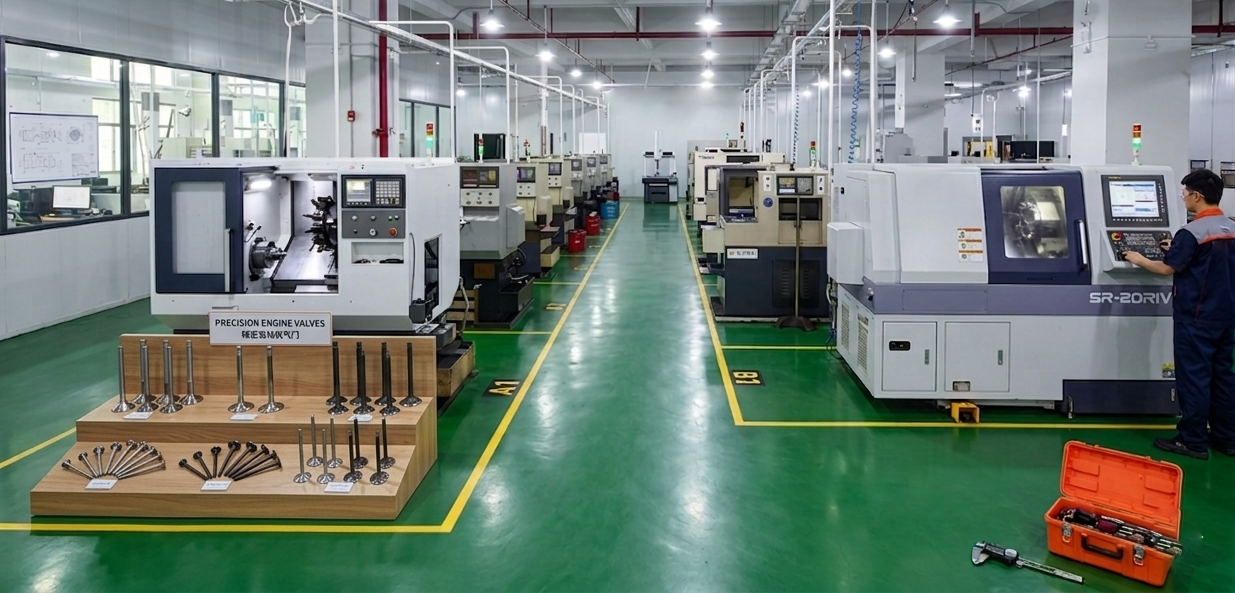
The company's customer base includes importers, wholesalers, and distributors. Its product portfolio for Toyota replacement parts includes Toyota bumpers, Toyota grilles, Toyota body parts, and Toyota headlamp assemblies — spanning RAV4, Camry, Corolla, Corolla Cross, Tacoma, and Prius model ranges. The emphasis on structural and lighting components positions Gold Auto Part in the collision repair segment, while its filter and engine valve lines serve the maintenance-and-servicing side of the market.
Conclusion: The Supplier Verification Imperative
The Toyota replacement parts market offers significant opportunities for importers and distributors, but the gap between low-quality and dependable suppliers is widening. In a market increasingly shaped by aging vehicle fleets and distribution consolidation, the advantage goes to buyers who rigorously check material quality, OE fitment, quality control processes, and supplier logistics capability.
Whether sourcing a single RAV4 headlamp assembly for a fleet customer or building a full Toyota replacement parts catalog for container-load distribution, the rules are the same: verify the product specification, demand evidence of quality control, and work with partners who can demonstrate consistency over time rather than simply claiming it.
FAQ
Which headlamp assembly is available for the Toyota RAV4 2022 USA?
The TYJ-RV22-001 head lamp assembly is designed for the Toyota RAV4 2022 USA. It features OE-matched specification (Ref: L 81150-42D80) for plug-and-play fitment and is made of optic-grade PC & ABS Polymers. The high-impact ABS/PC plastic assembly provides vibration resistance suitable for the RAV4's SUV usage profile.
What material is used for the TYJ-CRS21-001 head lamp for the Toyota Corolla Cross 2021?
Model TYJ-CRS21-001 is a head lamp compatible with the Toyota Corolla Cross 2021. It is manufactured from optic-grade PC & ABS Polymers and belongs to the Auto Lighting Systems category, intended for automotive aftermarket, automobile repair, and automobile body manufacturing applications.
Is there an aftermarket grille available for the Toyota Corolla 2014 Middle East version?
Yes. Model TYJ-01-0014 is a grille designed for the Toyota Corolla 2014 Middle East version. It is constructed with high-grade ABS plastic, offering outstanding impact and weather resistance, with a premium ABS/PC/PP plastic formulation. The grille is designed as a direct-fit replacement for the front-end mounting points.
Does Gold Auto Part's quality control program cover the head lamps it exports?
Gold Auto Part operates a Quality Inspection Program as part of its quality control process. The program covers the products it supplies, including head lamps and exterior body parts. Dimensional inspection, material verification, and performance testing are conducted before shipment to verify fitment and durability.
Have Questions or Need More Details?
Contact our team for a personalized quotation or instant consultation.
Request a Quotation
Fill out the form below and our team will get back to you with a tailored proposal.
WhatsApp Direct Chat
Prefer to chat in real-time? Message us on WhatsApp for instant assistance & quick answers.
- Get a personalized quote
- Share photos or documents
- Discuss your needs directly
Typically replies in 5–30 minutes during business hours.