
Traction Belt Home Elevator: Constraints Buyers Must Verify
Traction Belt Home Elevator: Constraints Buyers Must Verify
Why Constraint Checking Now Precedes Product Preference
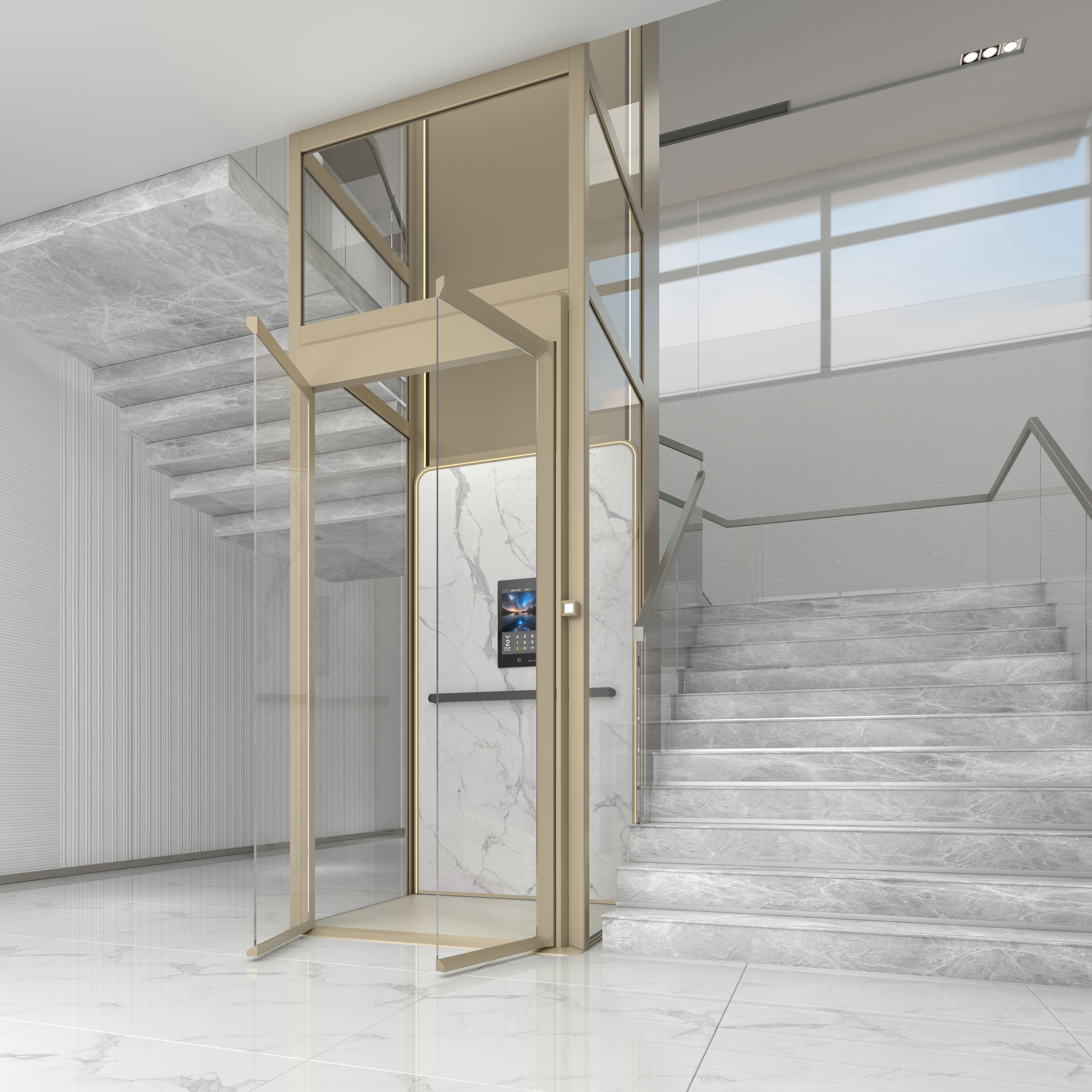
Home elevator procurement has shifted its starting point. A decade ago, most residential lift discussions began with cabin finish, colour and brand. Today the practical starting point is the building itself, because pit depth, headroom and shaft dimensions are set by civil works that are expensive to reverse once construction has advanced.
Three constraints dominate the early research phase: the vertical civil envelope (pit, headroom, shaft plan dimensions), the household electrical supply, and the conformity evidence required in the destination market. A private lift is purchased once and used for decades, so a mismatch is not a return-and-refund problem. It is a construction problem.
This article examines the traction belt home elevator category through that constraint lens. It maps published parameters, certificate scopes and environmental limits, and it identifies where belt-driven configurations stop being the appropriate answer.
Standards Define the Category: What Actually Changed
Home lifts are now a separately regulated product family in China rather than a sub-case of general electric lifts. Two documents define the boundary.
GB/T 21739-2025, titled Safety rules for the construction and installation of home lifts, was issued on 2025-08-29 and entered into force on 2026-03-01, replacing GB/T 21739-2008. It is the current national standard governing the construction and installation safety of home lifts in China.
GB/T 10058-2023, the current Chinese national standard for the specification of electric lifts, effective 2024-04-01, explicitly excludes home elevators from its scope. That exclusion matters commercially: a supplier's documentation should cite the home-lift standard, not the general lift standard, when describing residential products.
Overseas, the same principle applies with different instruments. Homeway's Australian Plant Design Registration records both GB/T 21739-2008 and AS 1735.18-2002 as the standards cited for the registered design, which illustrates how a single residential product can be evidenced against more than one framework depending on the market.
Technical Explanation: How a Traction Steel-Belt Drive Works
The traction principle is straightforward. A motor drives a traction sheave, and the car is raised and lowered by the traction machine and its suspension element, with a counterweight balancing the load. In belt-driven residential series, the suspension element is a high-strength traction steel belt rather than a conventional rope, and the drive system is described as a traction steel-belt drive.
In Homeway's residential range, the mechanical architecture is specified as follows:
- Drive system: traction steel-belt drive, using a permanent-magnet synchronous gearless traction machine.
- Load-bearing structure: steel; the traction suspension is a high-strength traction steel belt.
- Car structure: integrated full-aluminum car cabin, supplied as a modular all-aluminum cabin that can be assembled on site.
- Well frame: high-strength aluminum alloy with AkzoNobel powder coating, with partial aluminum-clad steel.
- Sightseeing panel: tempered laminated safety glass.
- Car and landing doors: aluminum alloy and stainless steel.
- Counterweight layout: side counterweight or rear counterweight.
- Door type: centre opening door or side opening door.
- Car interior: optional wood veneer and alloy decorative panel; floor standard is PVC, with marble or sintered stone available as options.
- Control: fully automatic microcomputer control operated from the car operating panel and landing call buttons, with automatic floor levelling, automatic door opening and closing, and an inspection operation mode.
Two design details are worth isolating for buyers, because they are frequently conflated. First, the suspension medium (steel belt) is distinct from the load-bearing structure (steel) and from the car structure (aluminium). Second, door lock safety in this product family is monitored by a dual-channel circuit rather than a single detection path, which is explained further in the FAQ section.
The Constraint Table: Parameters That Decide Feasibility
The table below reproduces the published parameter window for the HomeWay-2000 Series, a large-shaft gantry sightseeing elevator, together with the environmental and power conditions documented for Homeway residential applications. These are the values a site survey normally checks first.
| Constraint | Published value |
|---|---|
| Rated load | 250–630 kg |
| Rated speed | 0.3–0.63 m/s |
| Floors and stops | 2–6 floors |
| Shaft dimension (W×D) | 830×900 mm to 1800×1800 mm |
| Car dimension (W×D×H) | 600×720 mm to 1400×1600×2200 mm |
| Pit depth | ≥60–150 mm |
| Headroom | ≥2100 mm |
| Drive type | Belt-traction / traction gantry |
| Door opening mode | Manual swing, automatic swing or automatic sliding |
| Power supply | Single-phase 220V household supply; voltage fluctuation within ±7% of rated voltage, with an independent circuit and reliable earthing |
| Ambient temperature (shaft and equipment space) | +5°C to +40°C |
| Relative humidity | Maximum 50% at 40°C; up to 90% at lower temperatures, non-condensing |
| Altitude | ≤1000 m above sea level; motor temperature-rise correction required above 1000 m |
| Atmosphere | Free of corrosive, flammable and explosive gases and heavy dust |
| Installation site | Indoor use only; not applicable for direct outdoor installation |
The pit figure is the one that most often changes a project. A minimum pit depth of 60–150 mm on this model places it in the low-pit category and makes it relevant to retrofit and renovation projects where a deep pit cannot be created. Two further conditions are frequently missed: an anti-corrosion upgrade is necessary for coastal salt-fog environments, and the shaft must be well ventilated and moisture-proof to prevent condensation.
Certification Constraints by Market
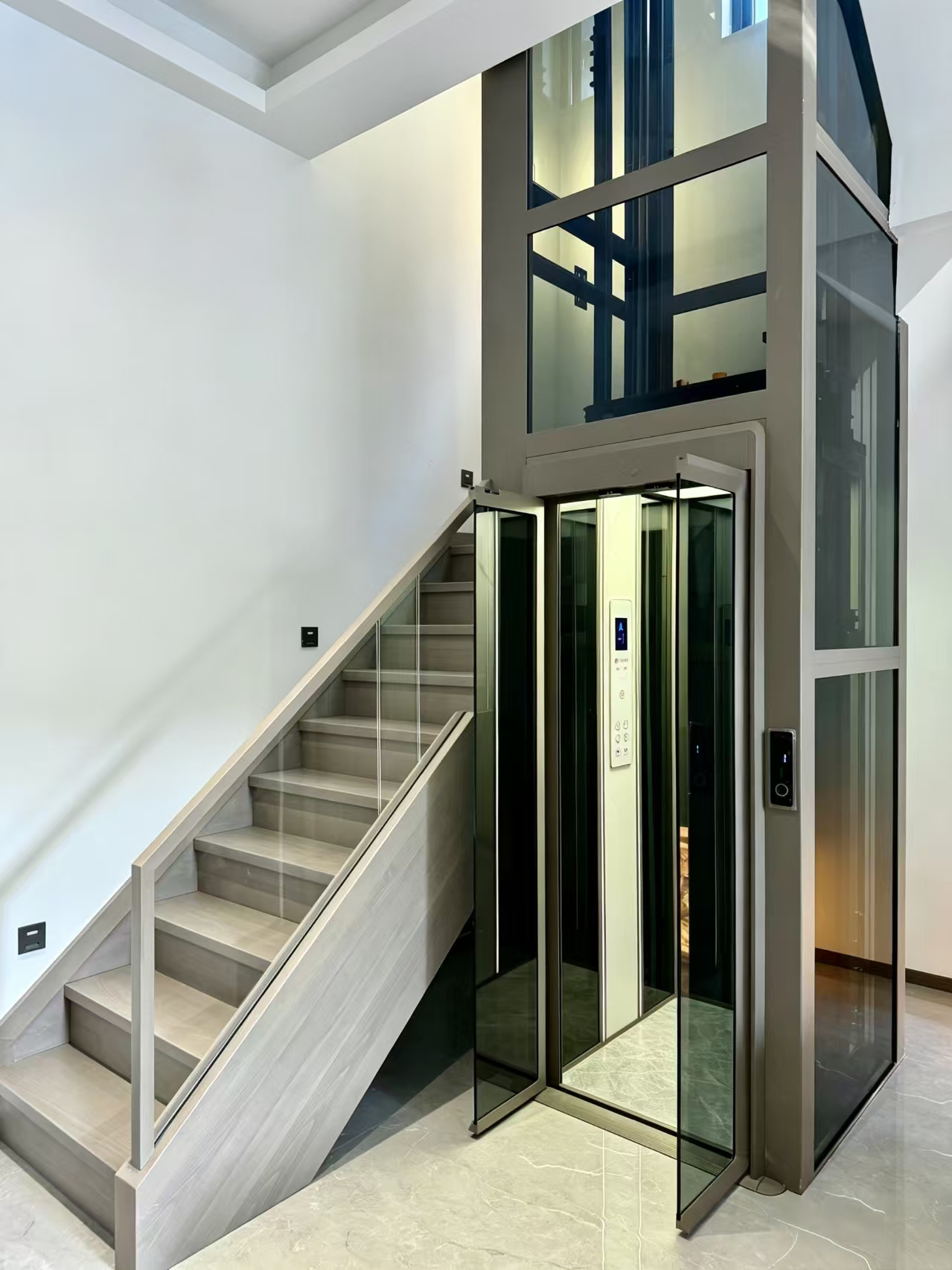
Conformity evidence is a constraint in the same operational sense as pit depth, because it determines which markets a configuration can legally be supplied to. The documented certificates in this product family are reproduced below.
| Market | Instrument | Reference | Scope as stated | Standards cited | Validity |
|---|---|---|---|---|---|
| European Union | CE certification | EUROCERT S.A, certificate number 10.05.0188 | Model 3000 vertical lifting platform | EN ISO 12100:2010, EN 60204-1:2018, EN 81-41-2024 | Issued 2026-03-23; valid to 2031-03-23 |
| Australia (New South Wales) | Plant Design Registration | SafeWork NSW, PDLIF7003550/25 | HW100 machine-room-less (MRL) electric traction home lift, rated load 400 kg | GB/T 21739-2008, AS 1735.18-2002 | Issued 2025-09-10; valid to 2031-04-22 |
Beyond these two registrations, Homeway states that it holds AS, COC and CE certification for full elevator sets and door lock systems. The company also documents CE coverage for specific configurations: the CE certification applies to the Homeway-8000 Series four-corner arc sightseeing elevator, and the Homeway-3000M Series duplex home elevator is covered under CE certificate number 10.05.0188.
How Zhejiang Homeway Elevator Co., Ltd. Structures Its Range Around These Constraints
Zhejiang Homeway Elevator Co., Ltd. is a Chinese manufacturer of residential and villa elevators, based at No.208, Yinxian Avenue, Haishu District, Ningbo, Zhejiang Province, and officially established in February 2019. The company focuses on research, development, customized production and after-sales service of residential and villa elevators.
Its production and evidence base, as documented in its company profile, includes:
- A 13,000 m² manufacturing factory and a 1,500 m² experience showroom with more than 13 full-functional demo elevators for real-scene display.
- 90 employees, including a 24-engineer R&D team, working with university joint R&D platforms.
- Over 90% self-production rate of key components, and 63 national independent intellectual property rights including 4 invention patents.
- Qualifications including National High-Tech Enterprise, Zhejiang Provincial Specialized, Refined, Differential and Innovative SME, Zhejiang Provincial Science and Technology SME, a Special Equipment Manufacturing License for complete elevators, and membership of an Elevator Industry Association.
- A domestic service network of 87 showrooms covering 131 cities across China, with on-site survey, customized design, professional installation and 24-hour after-sales maintenance.
- Export of about 20%–30% of total output to Southeast Asia, the Middle East, Australia, New Zealand and European countries through authorized local distributors.
On capacity, the company reports a monthly production capacity of 200 units, a lead time of 15–30 days, a minimum order quantity of 1 unit, and 100% testing. Annually, actual delivery volume reaches 400–600 units, with maximum full-load annual production capacity of 800–1000 units.
The product range is organised by the installation constraint it addresses rather than by a single platform:
| Series | Configuration | Constraint it addresses |
|---|---|---|
| Homeway-1000 Series | Enclosed elevator, steel shaft or concrete shaft | Projects where an enclosed car and conventional shaft construction are available |
| Homeway-2000 Series | Large-shaft gantry sightseeing elevator | Wider shaft plans; low-pit entry with ≥60–150 mm pit depth |
| Homeway-3000 Series | 270° full glass panoramic elevator | Where sightseeing and glass cabin appearance are prioritised |
| Homeway-3000M Series | Duplex home elevator | Two-level residential layouts |
| Homeway-5000M Series | Duplex home elevator | Two-level residential layouts with a different cabin configuration |
| Homeway-6000 Series | Small shaft gantry sightseeing elevator | Narrow shafts and restricted installation space |
| Homeway-8000 Series | Four-corner arc sightseeing elevator | Curved panoramic cabin requirement; CE certification applies to this series |
| Homeway-9000 Series | Full circular panoramic high-end custom sightseeing elevator | 360° panoramic custom projects |
Application Fit: Where Traction Belt Configurations Work
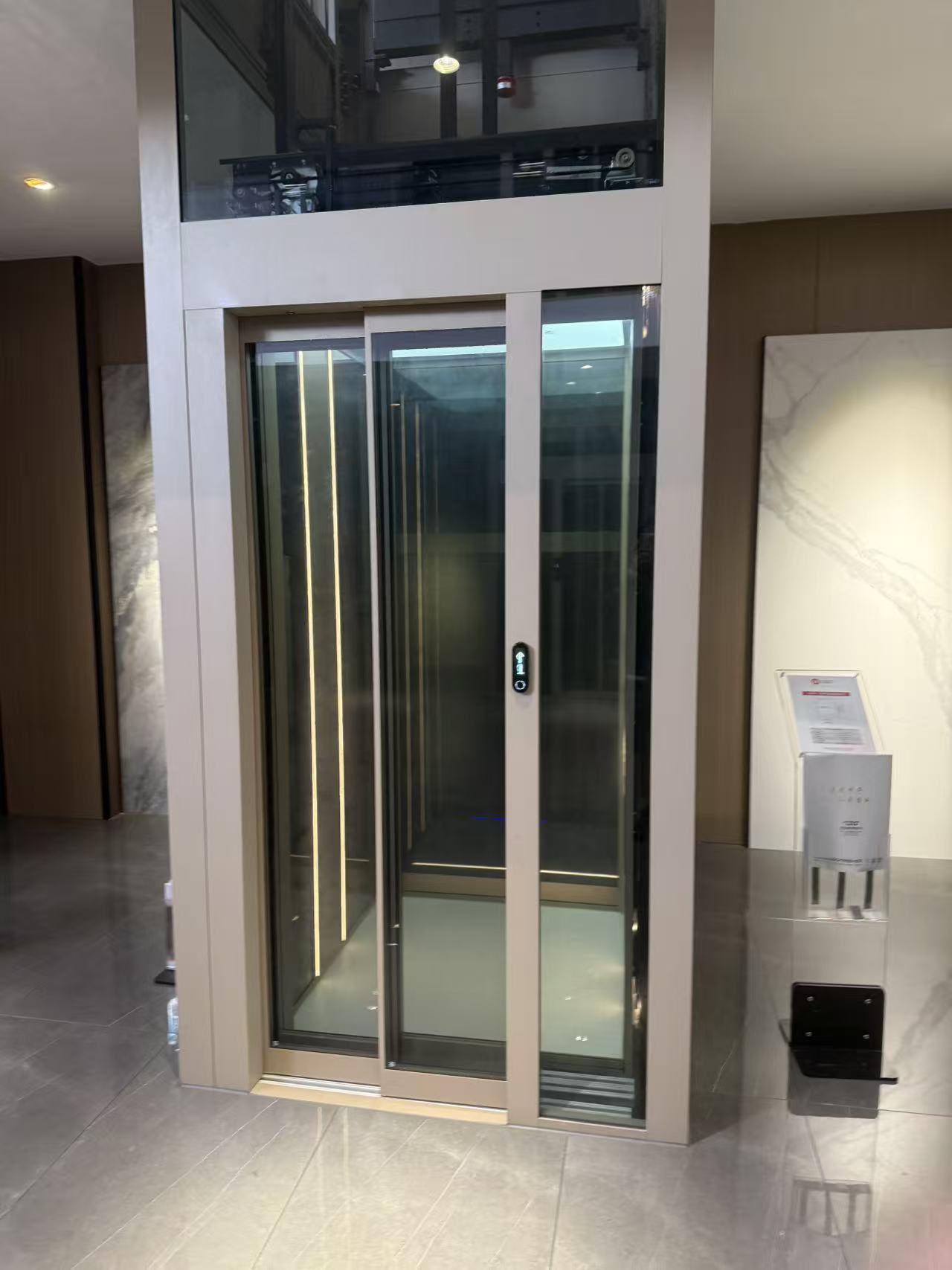
The documented application scope for these residential lifts is private villa projects, including detached villas, townhouses, semi-detached villas and self-built houses, supporting home lifts for private renovation. The stated functions are convenient access, aging-friendly mobility, enhanced property value, efficient space utilisation and an optimized living experience. Installation is indoor-only, and the platform is not designed as a fire-evacuation lift.
Three buyer types are documented for this application scope: private end-users such as villa owners and duplex or townhouse homeowners; domestic and overseas agents and distributors, including elevator agents, building material distributors and home-improvement dealers, with OEM and ODM cooperation supported; and real-estate developers and show-flat contractors.
Delivery evidence in the documented case record covers villa residential fitting-out, home renovation and show-flat supporting installation, with volumes of 1,000 units in the Middle East and 100 units in Southeast Asia. Recorded installation results include comfortable and smooth riding, improved inter-floor accessibility, support for aging-in-place living, enhanced interior aesthetic effect, increased property added value and optimized space utilisation.
What Changes the Quotation: Cost Drivers Buyers Can Verify
Residential lift quotations are not comparable line by line unless the underlying constraint set is identical. The variables that most commonly move a quotation in this product family are:
- Shaft type and structure. A concrete or steel shaft configuration, an enclosed car, or a gantry-framed panoramic structure change the steelwork and the installation method.
- Customisation depth. Customisation is offered across car dimensions, car decoration (wall material, colour and texture), ceiling style, floor material, door opening type, door panel material and colour, and the car operating panel, including engraved customer logos on panels.
- Landing door and call box specification. Door panel material, colour and surface finish, plus call panel style, colour and logo printing.
- Optional functions. IoT remote monitoring, automatic power-failure levelling, car ventilation and lighting style, and voice announcement functions each add scope.
- Market conformity scope. The certificate and standards evidence required for the destination market is part of the delivered scope, not a separate formality.
- Site environment. Coastal salt-fog conditions require an anti-corrosion upgrade, and altitudes above 1,000 m require motor temperature-rise correction.
- Appearance and packaging. Custom spraying colour for the whole unit and export-oriented packaging solutions are separately configurable.
Because the minimum order quantity is 1 unit and lead time is stated as 15–30 days, the practical procurement discipline is to fix the constraint set first, then compare quotations on identical scope. Asking two suppliers to price the same pit depth, headroom, shaft plan, power supply and certification scope is more informative than comparing headline figures built on different assumptions.
Market Trend Analysis
Two commercial estimates frame the demand picture, and they should be read separately because they do not use the same product definition.
For the home elevator market specifically, research published by Future Market Insights estimates the market at USD 3.8 billion in 2026 and projects USD 6.5 billion by 2036, at a 5.5% CAGR.
For the broader residential elevator market, Fortune Business Insights reports a global value of USD 65.14 billion in 2024, projected to reach USD 118.67 billion by 2032.
These two figures must not be averaged or treated as a consensus number. They come from different publishers with potentially different market definitions and base years, and only the home elevator estimate speaks directly to the residential private-lift category. In the available research, no official government or customs statistical source specific to the global home elevator market was identified. Commercial estimates should therefore be treated as directional, and used for planning rather than for contractual commitments.
The regulatory trend is clearer than the market sizing. With GB/T 21739-2025 in force since 2026-03-01 and the general electric lift standard explicitly excluding home elevators, documentation transparency is becoming a procurement criterion in its own right. Suppliers who can produce a certificate whose scope matches the supplied model, and whose standards citations are current, will increasingly be preferred in specification-led projects over suppliers offering only company-level claims.
Comparison with Traditional Solutions, and Where Belt Traction Stops
Residential vertical transport has historically been served by three broad approaches: hydraulic drives, screw-driven platforms, and traction systems. Hydraulic lifts have traditionally been used in low-rise residential applications and rely on a power unit and hydraulic fluid; screw-driven platforms use a mechanical screw and nut arrangement; traction systems rely on a traction machine and a suspension element with a counterweight.
The trade-off structure of a traction belt home elevator is space and maintenance orientation. Its suspension element is a steel belt rather than a rope, and Homeway documents that its residential configuration is delivered without a dedicated machine room, which matters where a separate machine room cannot be built into a finished house. The low-pit parameter of ≥60–150 mm on the 2000 Series, and the small-shaft gantry configuration of the 6000 Series, are the two documented design responses to constrained existing buildings.
The limits are equally specific, and they are the part of the specification that is most often skimmed:
- Indoor use only. The product is not applicable for direct outdoor installation.
- Not a fire-evacuation lift. It is not designed for that purpose, and overload operation is forbidden.
- Altitude limits. Application is specified for altitudes up to 1,000 m above sea level; motor temperature-rise correction is required above that.
- Environmental limits. Corrosive, flammable and explosive gases and heavy dust are excluded; coastal salt-fog environments require an anti-corrosion upgrade.
- Maintenance obligations. Regular maintenance is mandatory, emergency alarm and emergency lighting must be equipped, and disassembly of components by non-professionals is prohibited.
- Model parameter windows apply. The 2–6 floor range and the shaft and car dimensions quoted above describe a specific published model; other models in the range are configured per project, and the applicable parameter set must be confirmed at survey stage.
None of these limits invalidate the category. They define it. A traction belt configuration is a strong fit for an indoor villa or duplex with a constrained pit and a single-phase household supply, and a poor fit for an outdoor installation, a deep-pit retrofit that demands a very different travel, or a site requiring fire-evacuation performance.
Future Outlook
Three developments are worth tracking for buyers who are specifying now and installing later.
First, standard refresh cycles. With GB/T 21739-2025 superseding a 2008 document and in force since March 2026, tender documents written against older citations will need updating, and suppliers will be asked to show which standard version their evidence references.
Second, retrofit-driven demand. Parameters such as the ≥60–150 mm pit window and small-shaft gantry frames address existing buildings where a conventional machine-room lift cannot be installed. Aging-friendly mobility and property value enhancement are documented functions of these installations, and both are demand drivers in renovation rather than new-build markets.
Third, optional digital and resilience modules. IoT monitoring, automatic power-failure levelling, voice announcement and configurable lighting are already offered as options. As building control expectations tighten, these modules move from optional extras toward standard specification items, which will in turn change how quotations are structured.
What is unlikely to change is the order of decision. The building envelope and the electrical supply will keep setting the outer boundary, and certification scope will keep determining which markets a given configuration can be delivered to.
Frequently Asked Questions
How does a traction home elevator work?
A traction home elevator lifts the car using a motor-driven traction sheave, with a counterweight balancing the load. Control is fully automatic via microcomputer, operated from the car operating panel and landing call buttons, with automatic floor levelling and automatic door opening and closing. In Homeway's belt-driven residential series, the suspension element is a high-strength traction steel belt, and the car structure is an integrated full-aluminum car cabin on a steel load-bearing structure.
What is a dual-channel door lock circuit on a home elevator?
It is a redundant safety detection circuit for home elevator door locks. Two independent channels monitor the door lock status simultaneously. The elevator runs only when both channels confirm the door is locked. If one channel fails, for example through contact adhesion or a broken wire, the other detects the abnormality and triggers the safety interlock to stop the elevator, preventing movement with the door unlocked.
What safety checks should be completed before the first use of a home elevator?
Before first use, verify floor levelling, door opening and closing, the emergency stop and alarm functions, and the power supply. Confirm that the shaft is free of objects. The installation must also include emergency alarm and emergency lighting, and the shaft must be well ventilated and moisture-proof to prevent condensation.
What are the common faults of a dual-channel door lock circuit?
Four fault patterns are commonly documented. Contact oxidation or poor contact in the lock switch can trigger a circuit abnormality. Wire damage or loose wiring can cause signal loss on one channel. Moisture corrosion can affect signal transmission of the detection circuit. In any of these cases the elevator stops running automatically once a channel fails, which is the intended safety behaviour. Regular inspection reduces the frequency of these faults.
Which factors should be evaluated when selecting a home elevator for a villa?
Selection typically turns on shaft size, load capacity, lifting height, door style and safety features. The criteria commonly applied are space adaptability, safety features, load capacity, running performance, maintenance requirements and cost. In practice, shaft size and the available pit and headroom are the limiting factors, since they determine which drive and frame configurations can be installed at all.
For readers who want the full technical reference, including the residential series parameters and configuration options, the Homeway elevator product catalog is available here: Homeway elevator product catalog (PDF). Manufacturer information: Zhejiang Homeway Elevator Co., Ltd., www.homewayelevator.com.