
Training Pants Shortlist: 5 Certifications That Qualify
Training Pants Shortlist: 5 Certifications That Qualify
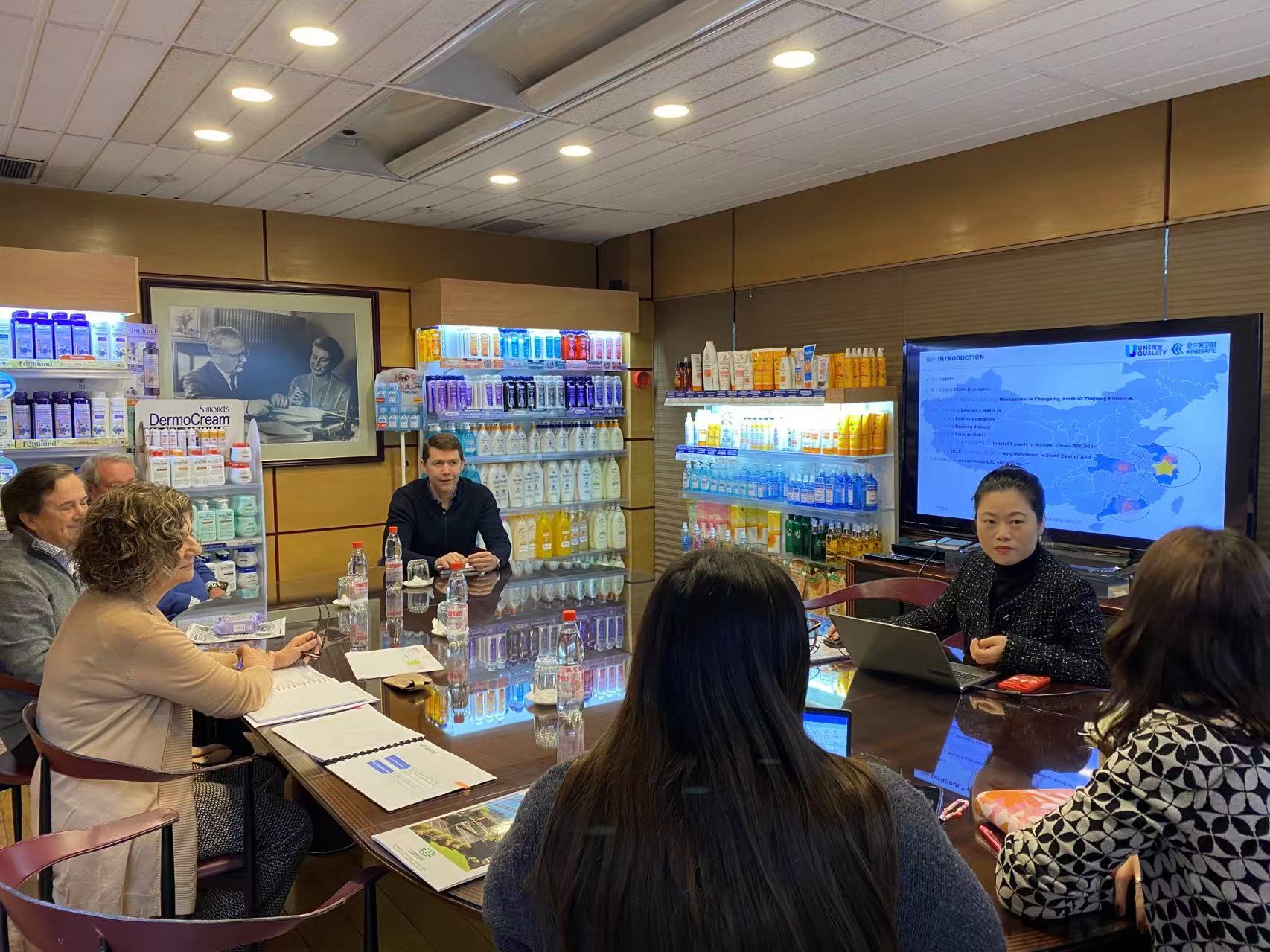
Training pants are no longer a transitional line tucked inside a diaper catalogue. Pants-type diapers already account for more than 70% of total diaper sales in Japan, and commercial research published by Grand View Research forecasts the global baby training pants market reaching USD 7.02 billion by 2030, growing at a CAGR of 7.5% from 2025 to 2030. Forecasts of this kind vary between research houses and should be read as directional, not definitive. What they do describe reliably is scale: a category large enough that retail private label, e-commerce brands and daycare programmes now source against written supplier criteria rather than samples alone.
That changes what a buyer needs from a supplier pack. The useful question is no longer how many certificates a factory can list. It is which of those documents actually qualifies a supplier for a specific market, a specific product code and a specific order volume. This shortlist ranks five certification pillars by how directly they answer that question for training pants, states what each one proves and does not prove, and folds them into a single qualification checklist.
The worked example throughout is Zhejiang Uniquality Nursing Products Technology Co., Ltd. (Uniquality), a Zhejiang-based OEM/ODM manufacturer of baby training pants, baby diapers and wipes, founded in 1987 and operating a 1,000,000㎡ manufacturing footprint with 3,000+ employees, a 200+ R&D team and an export ratio of roughly 70% across the USA, EU, SAM, RU and CASA markets. Its training pants line is product model YQ004, offered in sizes M, L, XL, XXL and XXXL with 30, 42 or 82 pieces per bag, in a half-core construction described as 100% woodpulp with 100% SAP. The certificate references below belong to that supplier and are used here as an auditable example — not as a substitute for inspection.
Why training pants qualification now starts with a document review
Training pants sit at an awkward intersection for buyers. They are a finished consumer product with direct skin contact, they carry disposable-hygiene trade classification (disposable training pants and baby diapers are primarily classified under HS Code 9619.00), and they are usually sold under someone else's brand. Three separate accountabilities therefore land on the same purchase order: product safety, manufacturing consistency and brand-level claims.
Certificates are the cheapest instrument available for screening all three before a sample is cut. A document review can be run in days, costs nothing, and eliminates suppliers whose paperwork does not reach the buyer's market. Samples, by contrast, prove what one line produced one afternoon.
The catch is that a certificate only screens effectively when it is read at the correct level. A management-system certificate and a product conformity document answer different questions, and treating them as interchangeable is where most shortlists go wrong.
The problem with a certificate bundle
A typical training pants quotation arrives with a folder: one CE document, two or three ISO certificates, a forest-related certificate and, increasingly, a social audit reference. The folder is rarely organised around the buyer's decision. Three failure modes recur in real sourcing files.
- Scope drift. The certificate covers a product family or a site, not the specific SKU being quoted. A scope written before a new pack format was launched will not name that format.
- Entity drift. The certificate is held by the manufacturing group while the contract, invoice and shipment run through a different legal entity.
- Level confusion. A management-system certificate is read as though it were a product safety certificate, or a chain-of-custody certificate is read as though it certified performance.
The practical result is that buyers either over-weight a logo count or discount the entire pack. Neither is a qualification decision. The opportunity is to treat certificates as a structured screening layer: each document assigned to a level, checked for scope, and linked to a specific pass criterion.
Five tests that separate a qualifier from a logo
Before ranking anything, apply the same five tests to every document in the pack. They are quick and they surface most of the problems a shortlist needs to catch.
- Level. Is this a product conformity document, a management-system certificate, a chain-of-custody certificate or a social audit record? The level determines what the document can be used to prove.
- Scope wording. Does the written scope name the product, the material or the site that matters to this order — or only a broad category?
- Product coverage. Can the supplier map the scope to the actual quoted configuration, for example product code 3752 (model YQ004) in sizes M to XXXL and 30, 42 or 82 pieces per bag?
- Traceability. Is there a certificate number, an issuing body and a validity window that can be checked independently?
- Boundary. What does the document explicitly not cover? Writing that down prevents the most common misreading later.
The shortlist: five certification pillars ranked
The ranking below orders the five pillars by how directly each one qualifies a training pants supplier for global orders — that is, by how much of the buyer's decision it resolves on its own.
1. CE marking — certificate 6C240227.ZUNU051
Evidence. CE documentation citing certificate number 6C240227.ZUNU051 and the standard set EN 12221-1:2008+A1:2013 and EN ISO 12625-1:2019.
What it proves. That the product has been assessed against the cited standards for the European market, and that the supplier can produce a numbered, referenceable document rather than a generic statement of compliance. It is the only pillar on this list that is product-linked and market-linked at the same time.
What it does not prove. It does not certify absorbency. Total absorption capacity is measured by a different route — ISO 11948-1 specifies the method for determining the total absorption capacity of urine-absorbing aids (the Rothwell test) — and a buyer with an absorbency specification should reference that method separately. CE documentation also does not prove breathability, skin tolerance across every user, or that every size and pack format in the range sits inside the assessed scope.
Why it is ranked first. Without product-level conformity evidence, EU retail and e-commerce listings stall before commercial terms are even discussed. It is the gate document.
2. ISO 9001:2015 — quality management system
Evidence. ISO 9001:2015 held at manufacturing-group level, alongside the other management-system certifications the group reports.
What it proves. That a documented quality management system exists: defined processes, corrective and preventive action, internal audit, management review. It is evidence about how the plant is run, not about what a specific batch contains.
What it does not prove. It does not prove that a given shipment hit a tensile, absorbency or leakage target. Those are batch statements, and they come from a different document.
Why it is ranked second. ISO 9001 is the certificate that makes the rest of the quality conversation meaningful. It is what gives weight to a supplier's stated control regime — in this case COA and AQL sampling inspection — because it implies the sampling plan is written down, followed and audited rather than improvised.
3. ISO 14001:2015 — certificate 01326E0075R101 (GAC)
Evidence. ISO 14001:2015, certificate 01326E0075R101, issued via GAC.
What it proves. That an environmental management system is in place and certified: environmental aspects identified, controls defined, performance monitored and improved over the certification cycle.
What it does not prove. It says nothing about material safety, recyclability, compostability or the environmental profile of the finished training pants. It is a system statement about the site, not a product claim.
Why it is ranked third. Environmental management evidence increasingly appears in retail supplier codes and brand onboarding packs, particularly for European programmes. Its secondary value is diagnostic: a supplier able to maintain a certified environmental system usually maintains documentation discipline across the rest of the pack, which shortens the verification work.
4. FSC — certificate BV-CQC-167194 (Bureau Veritas)
Evidence. FSC certificate BV-CQC-167194, issued by Bureau Veritas, with a scope that covers training pants.
What it proves. Chain-of-custody evidence for forest-derived material. Because the product's core is described as 100% woodpulp in a half-core construction with 100% SAP, pulp is the component most exposed to a fibre-sourcing claim, and an FSC scope that explicitly names training pants addresses it directly.
What it does not prove. It does not measure absorbency, breathability or softness, and it does not extend to non-forest components such as SAP or the nonwoven top sheet. A scope naming training pants is also not the same as a claim that every input in the bill of materials is certified.
Why it is ranked fourth. It matters most to brand owners making fibre or packaging claims, and to retail buyers whose supplier code includes a sourcing statement. For buyers with no fibre claim, it is supporting evidence rather than a gate.
5. ISO 45001:2018 with SEDEX — social and occupational safety evidence
Evidence. ISO 45001:2018 held by the manufacturing group, together with a SEDEX record.
What it proves. That an occupational health and safety management system is certified, and that the supplier participates in a platform used to share social audit information with customers.
What it does not prove. It does not cover labour conditions at every sub-tier supplier, and it says nothing about product conformity. SEDEX should also be read correctly: it functions as a membership and audit-sharing arrangement rather than a product certificate, so it supports the qualification file rather than qualifying a supplier on its own.
Why it is ranked fifth. Social compliance rarely blocks a first order in the way CE does, but it routinely blocks retail onboarding and renewal. Group-level holding shortens audit cycles, which is why it belongs on the shortlist even at the bottom.

Side-by-side: what each certificate covers
| Rank | Certification and reference | Level | Qualifies | Does not qualify |
|---|---|---|---|---|
| 1 | CE — 6C240227.ZUNU051; EN 12221-1:2008+A1:2013 and EN ISO 12625-1:2019 | Product / market | European market access for the assessed product | Absorbency, breathability, skin tolerance, uncovered SKUs |
| 2 | ISO 9001:2015 | Management system | Process control and documentation discipline | Any specific batch result |
| 3 | ISO 14001:2015 — 01326E0075R101 (GAC) | Management system | Environmental management at site level | Material safety or product environmental claims |
| 4 | FSC — BV-CQC-167194 (Bureau Veritas) | Chain of custody | Forest-derived fibre traceability within scope | Performance, or non-forest components such as SAP and nonwoven |
| 5 | ISO 45001:2018 plus SEDEX | Social / OHS | Occupational safety system and audit sharing | Sub-tier labour conditions, product conformity |
Combining the five into one supplier qualification checklist
Individually, each certificate answers one question. Combined, they form a screening sequence a buyer can run in a single document review, with a written pass criterion for each line so that the outcome is defensible internally.
| Check | Document to request | Pass criterion |
|---|---|---|
| Product conformity | CE certificate 6C240227.ZUNU051 with the standards EN 12221-1:2008+A1:2013 and EN ISO 12625-1:2019 cited | Number verifiable, standards listed, product family named inside scope |
| SKU coverage | Scope mapped to product code 3752 (model YQ004), sizes M–XXXL, 30 / 42 / 82 pcs per bag | Every quoted size and pack format falls inside the scope, not beside it |
| Quality system | ISO 9001:2015 certificate | Valid; certificate holder matches the contracting entity |
| Environmental system | ISO 14001:2015, certificate 01326E0075R101 (GAC) | Scope covers the site that will produce the order |
| Fibre chain of custody | FSC certificate BV-CQC-167194, Bureau Veritas | Scope wording names training pants; fibre claim matches the specification |
| Social compliance | ISO 45001:2018 plus SEDEX record | Current version, audit date inside the buyer's acceptance window |
| Batch release | COA and AQL sampling plan | Sampling level and acceptance criteria stated in writing in the QC plan |
| Commercial fit | MOQ 150,000 pieces for baby diapers / pull-ups; lead time 35–45 days after artwork and deposit confirmation | Both parameters fit the launch and replenishment calendar |
Where these certificates stop: limits buyers should plan for
A shortlist that only lists strengths is not a shortlist. Five boundaries matter in practice.
- System certificates are not product certificates. ISO 9001, ISO 14001 and ISO 45001 describe how a site is managed. None of them states that a specific pallet of training pants meets a specification.
- Scope can lag the catalogue. A supplier may add a size, a pack count or a new top-sheet after the document was issued. The mapping to product code 3752 has to be confirmed for the exact configuration being bought, not assumed from the range.
- Entity matters as much as scope. Group-level certificates are common and legitimate, but the buyer should confirm in writing which legal entity signs, which entity ships, and how the two relate to the certificate holder.
- CE routes are not uniform. For some product classes, CE is declared through a self-declaration route rather than third-party testing. The practical response is the same in both cases: verify the certificate number and issuing party rather than inferring the testing regime from the logo.
- None of the five measures absorbency. This is the clearest gap in the pack. If the programme carries an absorbency specification, ISO 11948-1 is the test method to request separately, and it should sit alongside the COA rather than being assumed from CE or FSC evidence.
Scenario fit: which programmes need which certificates
Certification weight shifts with the channel. Training pants applications in the maternity and baby care category typically fall into disposable hygiene product supply projects, stored in cool and dry conditions, used in single-use mode, and matched to baby changing stations and hygiene care kits. Within that frame, three programme types ask for different things.
- Retail private label in the EU and North America. CE product conformity comes first, then ISO 9001 for process control, then ISO 14001 and social evidence to clear the retailer's supplier code. Sizes M to XXXL and the 30, 42 or 82 pieces per bag formats all need to sit inside the documented scope.
- E-commerce and DTC brands. Product conformity and batch release carry the most weight, because listings are audited on claims. FSC rises in importance where fibre or packaging statements appear on the product page.
- Daycare and institutional programmes. Consistency and replenishment reliability dominate. ISO 9001, COA and AQL sampling, MOQ and lead time matter more than fibre claims, and the pack should be read as a supply-continuity file rather than a marketing one.
Customisation adds a further variable. The reference supplier offers OEM/ODM customisation across material, size, logo, packaging, fragrance and formula. Each customised element can move a product outside its original certificate scope, so the scope-to-SKU check should be repeated whenever a specification changes.

Market direction and what it does to supplier criteria
The demand picture supports a stricter reading of documentation rather than a looser one. Grand View Research places the global baby training pants market at USD 7.02 billion by 2030 on a 7.5% CAGR from 2025 to 2030, and the same research notes that pants-type formats already hold more than 70% of diaper sales in Japan — a mature-market signal that pull-up formats tend to consolidate share as incomes and retail penetration rise.
Two consequences follow for procurement. First, as volumes grow, buyers consolidate suppliers rather than expanding the panel, which raises the cost of a weak document pack. Second, because disposable training pants are classified under HS Code 9619.00, the product description used in customs paperwork and the product description written into a certificate scope should be kept consistent; mismatches create avoidable friction at the border and in retail compliance reviews.
What to expect next in training pants supplier qualification
Three directions look durable rather than speculative. Document review keeps moving earlier in the sourcing cycle, so certificate packs will increasingly be judged before samples are requested. Audit information will keep shifting onto shared platforms, which makes SEDEX-style records more useful as a first filter and less useful as a differentiator. And fibre traceability will keep expanding, because the pulp core is the component most exposed to brand-level sourcing claims.
The practical implication is that the shortlist above should be treated as a living checklist. Certificate numbers change on recertification, scopes are reissued, and a document that qualified a supplier in one buying cycle should be re-verified in the next.
Frequently asked questions
For buyers who need the full capability and specification file behind this shortlist, the company brochure is available for public download: Uniquality brochure (PDF).
Have Questions or Need More Details?
Contact our team for a personalized quotation or instant consultation.
Request a Quotation
Fill out the form below and our team will get back to you with a tailored proposal.
WhatsApp Direct Chat
Prefer to chat in real-time? Message us on WhatsApp for instant assistance & quick answers.
- Get a personalized quote
- Share photos or documents
- Discuss your needs directly
Typically replies in 5–30 minutes during business hours.