
Transformer Core Selection by Application: A Practical Project Fit Guide
Transformer cores are not interchangeable components, even when they look similar on a datasheet. A toroidal wound core, an EI lamination stack, and a CD cut core all serve as the magnetic path of a transformer, but they behave differently under load, temperature, and frequency. For industrial buyers moving from research to evaluation, the practical question is not which core is best in general, but which transformer core type, material, and supplier capability actually fits the intended project. This article breaks down transformer core selection from an application-fit perspective, linking materials and geometries to real-world working conditions, and identifies what buyers should verify before moving to procurement.
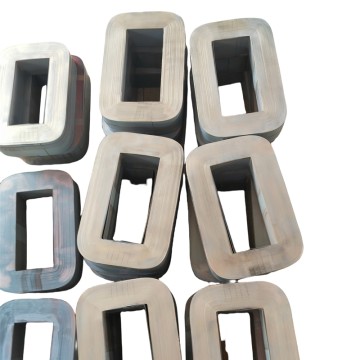
Why Transformer Core Selection Is Application-Driven
The role of a transformer core is consistent across projects: it provides magnetic induction, reduces loss, supports the coil, and reduces excitation current. That definition, however, masks a wide variation in performance priorities. In a distribution transformer, no-load loss dominates operational cost, so core material and joint design are the primary levers. In a metering current transformer, permeability and accuracy class become more important than raw core loss. In an EMI filter or DC choke, the core must tolerate DC bias and avoid saturation. The same material can be the right answer in one project and a poor fit in another.
For buyers, the risk is not limited to core quality. Many project issues — excessive excitation current, unstable metering accuracy, unexpected temperature rise — can be traced back to a core specified for the wrong application. The opportunity is that transformer cores can be tailored to project working conditions through material selection, geometry selection, and dimensional customization. Suppliers who offer OEM/ODM engineering support allow buyers to validate those choices before production begins.
Two Decisions: Core Material and Core Geometry
Transformer core selection involves two parallel decisions: what the core is made of, and how it is formed. Both affect magnetic performance, cost, and manufacturability.
Material Options and Their Project Fit
- CRGO Silicon Steel. Grain-oriented electrical steel remains the dominant core material, accounting for 79.6% of the transformer core market by material type in 2024, according to Mordor Intelligence. It is well suited to 50Hz/60Hz power transformers and offers a stable balance of performance and cost. YadooTEK uses CRGO silicon steel across multiple series, including toroidal wound cores and non-standard iron cores.
- Amorphous and Nanocrystalline Alloys. Amorphous alloy cores are reported by Electrical Trader to reduce no-load losses by 70–80% compared with traditional CRGO cores. These materials are increasingly considered for high-efficiency distribution transformers and high-frequency applications. YadooTEK's thin strip core series and distribution transformer core series include amorphous and nanocrystalline options.
- Permalloy (Ni-Fe Alloy). Permalloy cores, available in grades such as 1J85, 1J79, and 1J50, offer high magnetic permeability and are used in precision current transformers, sensor cores, energy monitoring, medical X-ray equipment, and special power supplies. For accuracy-driven projects, permalloy is a more appropriate reference than conventional silicon steel.
Geometry Options and Their Project Fit
- Toroidal Wound Core. A continuous strip-wound core with no air gap, offering low leakage flux and low core loss. YadooTEK's NCW Core series covers core diameters from 50 to 200 mm, rated power from 100 to 5000 VA, and core loss ≤1.0 W/kg at 1.5T, 50Hz. Toroidal cores are a common choice for power supplies, instruments, and low-current transformers.
- CD Cut Core. A wound core cut into two C-shaped halves. The removable gap allows the coil to be wound separately and assembled around the core, simplifying production and repair. CD cores are widely used in control transformers and small instrument transformers.
- EI Lamination Core. Stacked E and I laminations form a low-cost magnetic circuit. EI cores are efficient to produce in high volumes and remain a standard choice for conventional power transformers and general power supplies.
- Step-Lap Lamination Core. Adjacent laminations are overlapped in a stepped pattern rather than aligned at a single butt joint. This reduces localized flux concentration and joint losses, which is why step-lap cores are commonly used in distribution transformer cores.
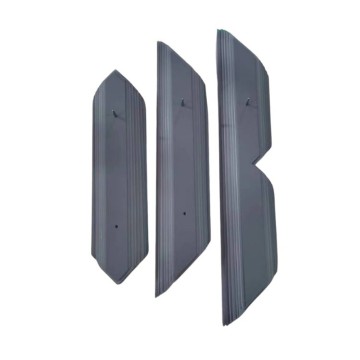
- Unicore / Folded Core. A continuously wound and folded core construction that improves production consistency. Unicore designs are used for distribution transformer cores where repeatability and automation are priorities.
- Distribution Gap Core. A core with a deliberately distributed air gap, used where the magnetic circuit must tolerate DC bias, such as filter inductors, chokes, and reactors. YadooTEK's low current transformer and sensor core portfolio includes gap cores alongside nanocrystalline, toroidal, and CD core options.
- Silicon Steel Rectangular Core. A rectangular-section silicon steel core, used when space constraints or winding configurations require a non-circular magnetic path.
The Core's Function in a Project
In transformer core projects, the product's role is to provide magnetic induction, reduce loss, support the coil, and reduce excitation current. Each function maps to a project requirement:
- Magnetic induction: the core must maintain a stable magnetic path under the specified flux density.
- Loss reduction: lower core loss reduces temperature rise and improves energy efficiency.
- Coil support: the core structure must hold the winding geometry during assembly and operation.
- Excitation current reduction: a well-designed core keeps magnetizing current low, which matters in precision metering and low-power standby operation.
For buyers evaluating suppliers, these four functions provide a useful checklist. A supplier should be able to state how a given core design achieves each function under the project's working conditions.
Typical Application Scenarios and Core Requirements
YadooTEK's application database covers electricity, industrial control, energy management and monitoring, EV charging, medical X-ray, special power supplies, and general power supply equipment. The working conditions included in those project records are consistently transformer-based: indoor or outdoor installation, 50Hz/60Hz power systems, a wide operating temperature range, dry-type or oil-immersed configurations, and low- or high-voltage levels.
| Application Scenario | Typical Requirement | Core Priority |
|---|---|---|
| Distribution transformer | Low no-load loss over long service life | CRGO lamination or amorphous core, step-lap joint |
| Current / voltage transformer | High metering accuracy, stable ratio | High-permeability material, toroidal or CD geometry |
| Industrial sensor and energy metering | Anti-interference, compact size, wide temperature | High-permeability core, customized dimensions |
| EV charging and power electronics | High-frequency operation, low loss, compact design | Thin strip amorphous / nanocrystalline core |
| Medical X-ray and special power supply | Stable magnetic response, high insulation strength | Permalloy core, precise machining |
Special requirements that recur across these scenarios include customized design, low loss and high efficiency, high insulation strength, RoHS and CE compliance, long service life, and anti-corrosion protection. These are baseline qualification criteria rather than optional extras in most projects.
YadooTEK's Project-Fit Capability
Wuxi Yado Electromechanical Co., Ltd., operating under the YadooTEK brand, is a transformer core manufacturer and exporter based in Jiangyin, Wuxi, Jiangsu Province, China. Established in 2022, the company focuses on magnetic materials and transformer core export, with a factory area of 1,000 m², 80 employees, and an R&D team of 25 engineers. Its annual output reaches 250,000 units, and 85% of production is exported to markets including North America, Europe, Central and South America, the Middle East, and Asia.
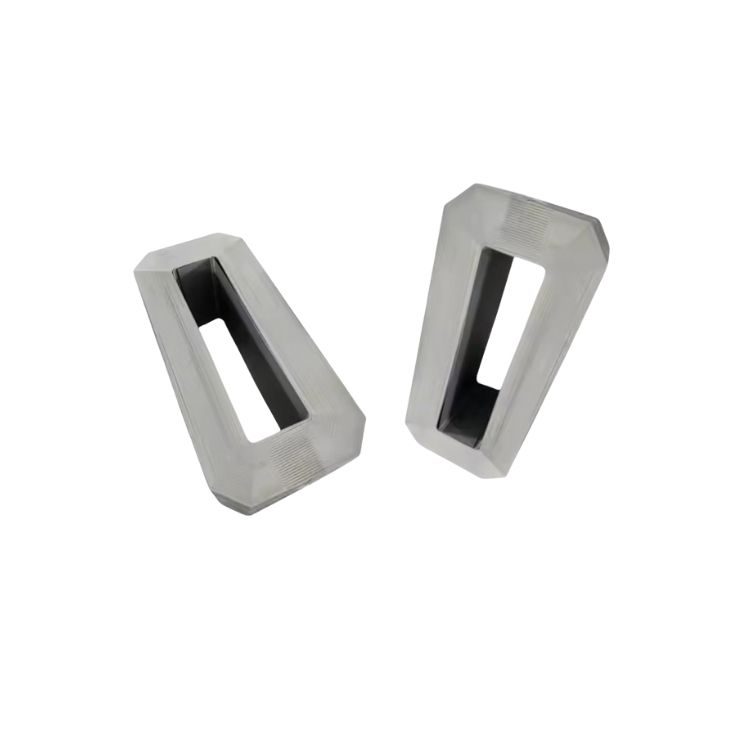
The product matrix covers two broad construction families. Wound cores include toroidal cores, C cores, electrically wound iron cores, and special-shaped iron cores. Laminated cores include stepped laminated cores, lap-joint cores, right-angle laminated cores, EI/ED/SD/CD cores, stepped cores, and thin strip cores. This range matters for project fit because geometry freedom is a prerequisite for adapting a core to a specific winding and enclosure design.
Two aspects of YadooTEK's operation are directly relevant at the evaluation stage. First, the company has invested in professional testing equipment, including core magnetic testing instruments and transformer capacity and loss testing instruments, and operates a full-process quality control system. Second, it supports OEM/ODM production with customization of size, specification, and material. The custom core capability is visible in the Non-Standard Iron Core series, which offers customizable outer diameters from 30 to 300 mm, inner diameters from 15 to 200 mm, and heights from 10 to 150 mm, at a rated power range of 50 VA to 10 kVA.
Production and supply terms are also relevant to project planning. YadooTEK's transformer core projects operate on a 30 working days mode. Custom OEM/ODM orders follow a lead time of 45 to 60 days, with a monthly capacity of 10,000 units and a minimum order quantity of 1 unit. Every unit is tested before delivery, and after-sales support is provided remotely.
A documented project case involving power equipment manufacturers, sensor OEMs, and instrument transformer producers illustrates the typical result: cores supplied in quantities of 5,000 units for current and voltage transformers, industrial sensors, power metering equipment, and smart grid terminals. The project highlights ultra-low core loss, high magnetic permeability, customized sizing, high-precision machining, and 100% inspection before delivery.
Market Trends Buyers Should Weigh in 2026
The transformer core market is expanding. According to Zion Market Research, the global transformer core market was valued at USD 9.66 billion in 2024 and is projected to reach USD 15 billion by 2034. Within that market, CRGO laminated steel held a dominant 79.6% share by material type in 2024, based on Mordor Intelligence data. For buyers, conventional silicon steel is not being displaced; it remains the default for most projects. The growth opportunity lies in applications where efficiency regulations, renewable energy integration, EV charging infrastructure, and smart grid terminals create demand for specialized core types.
China's role as a supply base is also visible in trade data. UN Comtrade / WITS data show that China's exports of electrical transformer parts, including cores, reached approximately USD 4.8 billion in 2024, leading global exports. This gives international buyers access to a deep manufacturing base, but it also makes supplier verification more important. The IEC 60076 series, which specifies general requirements and testing for power transformers and reactors, provides a common compliance reference for projects targeting international markets.
The competitive landscape for transformer cores within the broader equipment industry includes major groups such as ABB, Siemens Energy, Hitachi Energy, and GE Vernova, according to Stellar Market Research. These companies dominate large-scale power equipment, but core supply for medium- and small-batch projects often runs through specialized manufacturers. That structure supports the case for evaluating independent core suppliers on engineering capability and production control rather than brand size alone.
Custom vs. Standard Transformer Cores: Where the Boundaries Are
For many projects, a standard core is the rational choice. Conventional EI lamination cores and standard toroidal cores are produced in high volumes, are well understood by winding shops, and have short lead times. If the project operates at standard power levels, has no unusual space or accuracy constraints, and is cost-sensitive, a standard core minimizes both unit cost and procurement risk.
Custom and project-tuned cores add value when specific constraints are present: a non-standard window size, a higher accuracy class, a lower loss target, or a special material requirement. The table below compares the two paths.
| Dimension | Standard / Off-the-Shelf Core | Custom / Project-Tuned Core |
|---|---|---|
| Best fit | Conventional power transformers, standard power supplies | Precision metering, sensors, special dimensions, low-loss targets |
| Unit cost | Lower at volume | Higher engineering input, small-batch cost increase |
| Lead time | Shorter | Typically 45–60 days (YadooTEK custom orders) |
| MOQ | Often high | 1 unit possible (YadooTEK) |
| Engineering support | Limited to catalog data | OEM/ODM, size/spec/material customization |
| Quality control | Supplier-dependent | 100% inspection, full-process control (YadooTEK) |
The boundary is important: choosing a custom core without a clear engineering reason adds cost and lead time without proportional benefit. Buyers should treat customization as a tool for solving a specific project constraint, not as a default sourcing strategy.
Future Outlook
Several signals point toward a more project-specific core market in the coming years. Efficiency requirements embedded in standards such as the IEC 60076 series will keep pushing buyers to evaluate low-loss materials, including amorphous and nanocrystalline alloys, for a wider set of applications. The expansion of EV charging, renewable energy, and smart grid infrastructure creates applications where the core is not just a catalog part but an engineered component of the system.
For suppliers, the implication is that engineering participation matters as much as production capacity. Buyers evaluating transformer core partners are likely to place more weight on the ability to support design decisions early, verify performance through testing, and document compliance with international standards. For buyers, the practical recommendation is to build an evaluation framework that includes application scenario, material and geometry fit, supplier testing capability, and clear production terms — then validate it against the specific project.
For a consolidated company reference, YadooTEK's brochure is publicly available at https://cdn.socialarks.com/sbsp//common/2026/0327/69c63aa11cb46.pdf.
FAQ
What supporting equipment does a transformer core require?
A transformer core is a component, not a standalone device. It requires supporting equipment such as a transformer to operate in a complete magnetic circuit.
What working conditions are YadooTEK transformer cores designed for?
The cores are designed for transformer working conditions, including indoor and outdoor installation, 50Hz/60Hz power systems, dry-type or oil-immersed configurations, and low- or high-voltage applications.
What functions does a transformer core perform in a transformer project?
In transformer core projects, the core provides magnetic induction, reduces loss, supports the coil, and reduces excitation current. These functions apply across power, metering, sensing, and control applications.
What is the typical production mode for YadooTEK transformer core orders?
YadooTEK operates on a 30 working days mode for transformer core projects. Custom OEM/ODM orders follow a lead time of 45–60 days, with a monthly capacity of 10,000 units and a minimum order quantity of 1 unit.
Can transformer cores be customized for specific project dimensions?
Yes. YadooTEK supports OEM/ODM customization of size, specification, and material. The Non-Standard Iron Core series, for example, offers customizable outer diameters from 30 to 300 mm, inner diameters from 15 to 200 mm, and heights from 10 to 150 mm, with a rated power range of 50 VA to 10 kVA.
What quality control is applied before transformer core delivery?
YadooTEK operates a full-process quality control system. The company is equipped with core magnetic testing instruments and transformer capacity and loss testing instruments, and every unit is tested before delivery. Remote after-sales support is available after shipping.