
Trigger Sprayer Compliance Review: PP Material, Mono-Material Recycling and Chemical Resistance
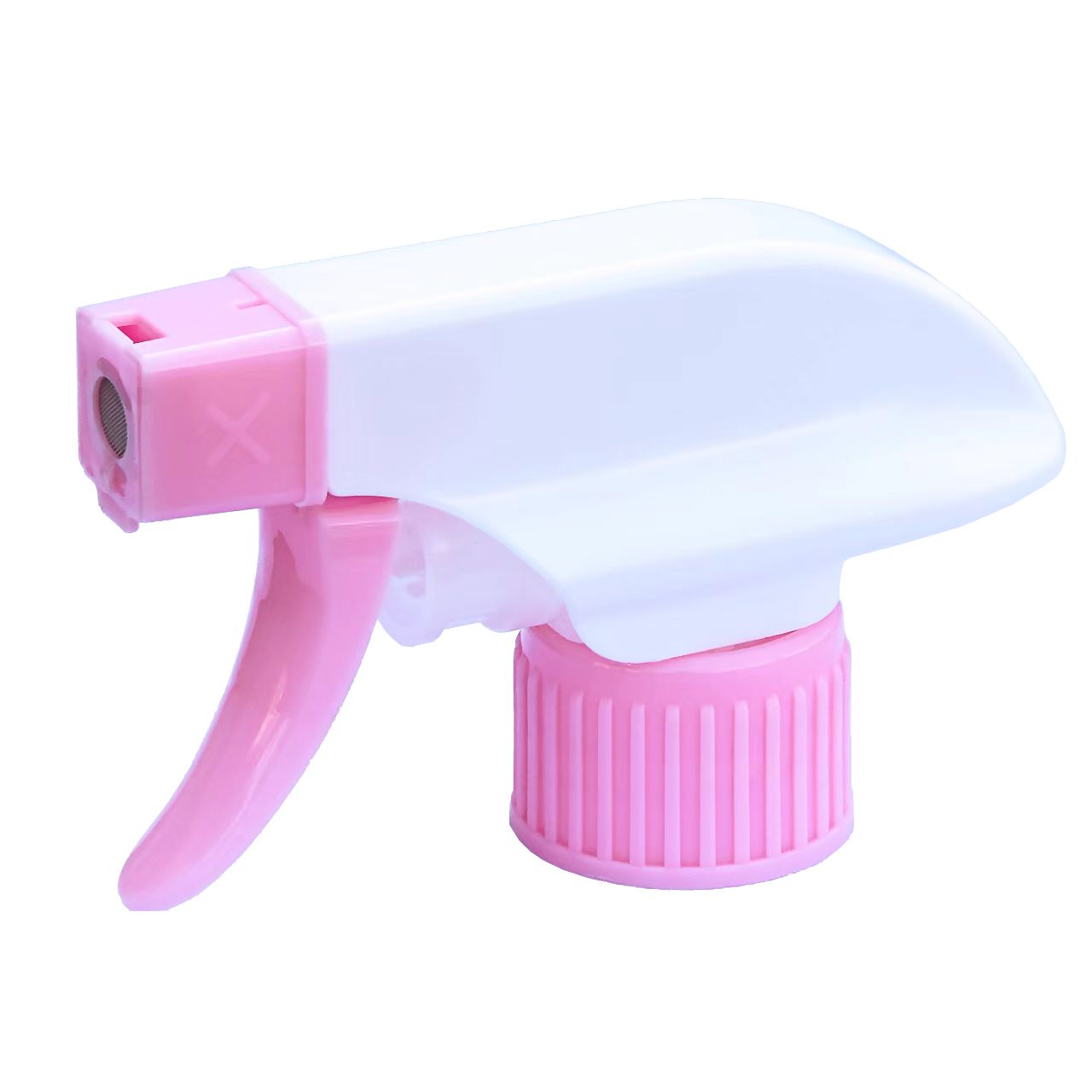
A trigger sprayer is a plastic closure that dispenses liquid through a hand-actuated pump, classified under HS 3923.50 for stoppers, lids, caps and other closures of plastics. That classification places the sprayer inside the same material, recycling and chemical-compatibility questions buyers already apply to bottles, caps and labels — and increasingly, inside the documentation that accompanies them.
This review examines those questions for one narrow but increasingly requested specification: an all-plastic trigger sprayer built from polypropylene (PP), with mono-material construction, no metal spring, and documented resistance to cleaning agents. It draws on published product facts from Zhejiang Mila Plastic Industry Co.,Ltd., a China-based manufacturer of household care packaging established in 2018 in Quzhou, Zhejiang, whose main product line is trigger sprayers. The purpose is not to endorse a specification but to show how the available facts map onto a buyer's own qualification checklist.
Why Trigger Sprayer Compliance Is Really a Material Question
Fortune Business Insights values the global trigger sprayer market at USD 491.8 million in 2025 and projects a 4.7% CAGR from 2026 to 2034. A separate estimate circulating in the market places the category at USD 2.6 billion, but that gap is a scope difference rather than a disagreement about growth: the larger figure appears to cover the complete trigger spray bottle assembly rather than the sprayer closure alone. Buyers comparing category forecasts should confirm which unit is being counted before treating the numbers as comparable.
What matters more for procurement is that the trigger sprayer is no longer judged only on spray quality and leak tightness. The European Union's Packaging and Packaging Waste Regulation (PPWR), adopted in April 2024, requires 30% recycled content in plastic packaging by 2030. Mono-material constructions, metal content, and material declarations now feed directly into whether a finished pack can be positioned as recyclable-ready in a European market. For a buyer in the awareness and research stage, the practical consequence is that the material question arrives before the price question.
A trigger sprayer is also treated as a single purchased item but is physically a multi-part assembly — body, trigger, nozzle, cap, and in many conventional designs a metal spring. Compliance review therefore has to interrogate the assembly, not just the resin label on the outer cap.
PP as the Primary Material Across the Range
Polypropylene is the primary material across the trigger sprayer range reviewed here. Both published product categories — the all-plastic group and the plastic group — are documented with PP as the primary material, and the thread specification is consistent: 28/400 and 28/410 across every listed model.
That consistency has a practical value in qualification. When a supplier quotes a single polymer family across a portfolio, a buyer can consolidate material declarations, migration testing plans and end-of-life arguments instead of running them product by product. It also simplifies the question of neck fit: 28/410 is identified in category literature as the most commonly used opening for trigger sprayers, so a range that fits both 28/410 and 28/400 covers the dominant bottle finish alongside a widely used alternative.
The limitation is equally straightforward. PP is a material family, not a performance guarantee. Grade, additive package, wall thickness and moulding parameters determine how a specific sprayer behaves in a specific chemical. A material declaration tells a buyer what the part is made of; it does not tell the buyer how the part will behave after six months of contact with a surfactant-heavy degreaser.
What All-Plastic and Mono-Material Actually Specify
The published specification separates two product types, and the distinction is worth reading carefully because the terms are often used loosely in the market.
- All-Plastic Trigger Sprayer — ML-101G1 (foam spray, single cover), ML-101G2 (mist spray, single cover), ML-102B1 (foam spray, double cover) and ML-102B2 (mist spray, double cover). Each is documented with a full-plastic structure without a metal spring and with a mono-material design described as easy for recycling.
- Plastic Trigger Sprayer — ML-201B1, ML-201B2, ML-202D1, ML-203H1, ML-204Z1 and ML-103C1. These are documented with PP as the primary material and classified as plastic trigger sprayers; their published specifications do not carry the metal-spring-free or mono-material statements.
This is the single most useful compliance observation in the whole range. A buyer who reads only the material column will conclude that everything is PP and therefore equivalent. A buyer who reads the structural column will see that four models answer the mono-material question directly, while six models answer the material question but not the design question. Whether that difference matters depends entirely on the buyer's own requirement — and for a mono-material or recycled-content specification, it matters a great deal.
Removing the metal spring changes more than the recycling story. It removes one dissimilar material from the assembly and one component whose behaviour under aggressive chemistry is governed by corrosion rather than by polymer compatibility. It does not, however, remove the need to validate the trigger mechanism itself, and it does not by itself determine the recyclability of the complete pack.

Chemical Resistance: How Far the Claim Reaches
The published product facts state chemical resistance to various cleaning agents and good chemical resistance for various cleaning agents, with the PP construction described as providing that resistance. The intended application set is specific rather than open-ended: household kitchen degreaser, bathroom and toilet cleaner, glass and window cleaner, and car care and auto detailing products.
Published application conditions for this scenario type include chemical resistance, normal temperature, indoor and outdoor use and corrosion-resistant operation, with chemical resistance, leak-proof performance and plastic construction listed as the special requirements. Target industries are household cleaning, commercial cleaning and janitorial service, auto care and car detailing, pet supplies, and chemical and daily-use chemical packaging.
Three practical steps follow from that. First, request the material declaration for the specific model rather than the portfolio, since the all-plastic and plastic groups differ structurally. Second, run compatibility testing with the finished formula, including the surfactant system and any solvent fraction, because PP behaviour varies by chemical class and concentration. Third, confirm that the leak-proof requirement is tested at the orientation and pressure conditions the pack will actually experience, since a trigger sprayer spends most of its life upright but not all of it.
How Mila Plastic Industry Documents These Facts
Zhejiang Mila Plastic Industry Co.,Ltd. is a manufacturer of household care packaging based in Quzhou, Zhejiang, China, established in 2018, whose main product line is trigger sprayers alongside perfume pumps, lotion pumps, foam pumps and related nozzles. The company operates a factory area of over 30,000 square metres with approximately 300–400 employees, including a 10-engineer R&D team, and reports an annual output of 600,000,000 pieces. Mila Plastic holds ISO 9001:2015 and ISO 14001:2015 certifications and reports SGS compliance.
Manufacturing equipment supporting that output includes 60 injection moulding machines, 20 automatic production lines, 4 machining centres, 6 CNC engraving machines, 8 semi-high-speed lathes, 20 wire-cutting machines and 12 precision mould machines. For a compliance reviewer, the relevance of those numbers is not scale for its own sake: material consistency, thread tolerance and the stability of the trigger mechanism all depend on mould maintenance and process control, which is where in-house tooling capability becomes a qualification factor rather than a marketing one.
Export business accounts for 70%–80% of total sales, and the company lists South America, Western Europe, Eastern Europe, East Asia, Southeast Asia, the Middle East, Africa and Oceania among its major markets. Further published detail is available at the company's product documentation.
Application Fit: Where PP Trigger Sprayers Are Used
The range is designed for household kitchen degreaser, bathroom and toilet cleaner, glass and window cleaner, and car care and auto detailing applications, and is intended for the household cleaning, commercial cleaning and janitorial service, auto care and car detailing, pet supplies, and chemical and daily-use chemical industries. Spray output splits the range into two functional groups.
- Foam output — ML-101G1, ML-102B1, ML-201B1, ML-202D1, ML-203H1 and ML-204Z1. Foam spray types are applied with foaming cleaner formulas used in household cleaning products.
- Mist output — ML-101G2, ML-102B2, ML-103C1 and ML-201B2, producing a fine and uniform mist suited to glass, window and surface cleaning.
All models are documented as compatible with 28/400 and 28/410 bottle necks and use a hand-press trigger design. Bulk orders and OEM customized colour are supported across the range, which matters for buyers assembling a multi-SKU cleaning portfolio where the same closure body carries several brand colours.
Market Signals: Recycling Targets and Category Growth
Two signals are worth tracking. The regulatory signal is the PPWR recycled-content requirement of 30% in plastic packaging by 2030, adopted in April 2024. The growth signal is the 4.7% CAGR projected for the trigger sprayer category from 2026 to 2034. Published forecasts differ in scope: one source projects 4.2% from 2026 to 2036, a delta attributed to the inclusion of industrial dispensing systems in the broader definition. Neither figure changes the direction — steady rather than explosive expansion — but both show how much depends on where the category boundary is drawn.
What connects the two signals is documentation. Mono-material construction makes a trigger sprayer easier to sort and easier to describe in an end-of-life argument, but it does not by itself deliver recycled content. A buyer targeting a recycled-content threshold needs feed-stock evidence, not only a design statement, and that distinction should be built into the specification before samples are requested.
Limits and Trade-Offs Buyers Should Expect
A credible compliance review has to state what a mono-material PP trigger sprayer does not solve.
- The mono-material statement applies to four models, not the whole range. ML-101G1, ML-101G2, ML-102B1 and ML-102B2 carry it; the remaining models in the range are documented as PP plastic trigger sprayers without that structural statement.
- Mono-material design does not equal recycled content. The PPWR target addresses recycled content in plastic packaging. A mono-material sprayer still requires recycled or recyclable feed-stock documentation to support a recycled-content claim.
- Removing the metal spring removes one component, not the whole end-of-life question. Recyclability outcomes depend on the complete pack — bottle, closure, label and any additional components — and on the collection and sorting infrastructure of the destination market.
- Chemical resistance is stated at portfolio level. The published wording covers various cleaning agents; it does not pre-approve a specific formulation, dilution or service temperature.
- Neck compatibility is fixed at 28/400 and 28/410. Buyers using a different bottle finish will need to validate fit rather than assume it.
Compared with conventional trigger sprayers that include a metal spring, the all-plastic configuration trades away one familiar design route in exchange for a simpler material story. That is a genuine trade-off, not a free upgrade: the buyer gains a cleaner compliance narrative and one less dissimilar material, and takes on the responsibility of validating the polymer-only trigger mechanism against the chemistry and duty cycle of the application.
Procurement Checklist: Mapping Facts to Requirements
The table below translates the published facts into the questions a buyer would raise during research and evaluation. It is deliberately built around what the supplier has already documented, so that gaps are visible rather than assumed away.
| Buyer requirement | Fact to request | Published Mila Plastic fact |
|---|---|---|
| Material composition | Polymer identification for body, trigger, nozzle and cap | PP is the primary material across the range; four models are documented as all-plastic |
| Metal content | Statement on metal components in the assembly | All-plastic models: full-plastic structure without a metal spring |
| Recycling alignment | Mono-material confirmation | ML-101G1, ML-101G2, ML-102B1, ML-102B2 documented as mono-material, easy for recycling |
| Neck fit | Thread specification and bottle-neck compatibility | 28/400 and 28/410 across all listed models |
| Chemical compatibility | Resistance statement plus formula-specific testing | Chemical resistance to various cleaning agents |
| Spray performance | Foam or mist output per SKU | Foam: ML-101G1, ML-102B1, ML-201B1, ML-202D1, ML-203H1, ML-204Z1. Mist: ML-101G2, ML-102B2, ML-103C1, ML-201B2 |
| Commercial flexibility | Bulk terms and colour customization | Bulk orders and OEM customized colour supported |
| Quality system | Certificate scope and validity | ISO 9001:2015, ISO 14001:2015, SGS compliance reported |
Buyer requirements mapped against published trigger sprayer facts. Items marked as requests remain buyer-side validation steps.
Future Outlook
For trigger sprayers, the next several years look less like a technology shift and more like a documentation shift. Recycled-content thresholds, material declarations and mono-material design statements are becoming routine attachments to a purchase order rather than optional extras, and buyers who build them into the specification early avoid reopening a qualification later.
The practical implication for suppliers is that the materials claim and the evidence trail have to match. A range that already separates all-plastic, metal-spring-free models from standard PP models is better positioned for that conversation, because the specification can be answered model by model instead of in general terms. For buyers, the useful habit is to keep the material question and the design question separate, and to treat every resistance statement — including a good one — as the beginning of validation rather than the end of it.
FAQ
What is an all-plastic trigger sprayer?
An all-plastic trigger sprayer is a trigger-actuated dispensing closure whose components are constructed from plastic rather than a mix of plastic and metal. In the range reviewed here, all-plastic models are documented with a full-plastic structure without a metal spring, a mono-material PP design, 28/400 and 28/410 neck compatibility, and a hand-press trigger. It is a structural description, not a certification.
Does an all-plastic PP trigger sprayer contain a metal spring?
The all-plastic models ML-101G1, ML-101G2, ML-102B1 and ML-102B2 are documented with a full-plastic structure without a metal spring. Other models in the same supplier range are classified as plastic trigger sprayers with PP as the primary material, and their published specifications do not include the metal-spring-free statement. Buyers should verify this per model rather than per supplier.
Does mono-material construction make a trigger sprayer recyclable?
Mono-material construction supports recycling because the closure is built from a single material family, which simplifies sorting and material recovery. It does not by itself guarantee recyclability of the finished pack. The complete packaging system, including bottle, label and other components, plus local collection and sorting infrastructure, determines the end-of-life outcome. Mono-material design also does not by itself satisfy recycled-content requirements such as the EU PPWR target of 30% recycled content in plastic packaging by 2030.
Which bottle neck size should a buyer specify, 28/400 or 28/410?
Category literature identifies 28/410 as the most commonly used opening for trigger sprayers. The models reviewed here are documented as compatible with both 28/400 and 28/410 bottle necks, so either finish can be served from the same range. Buyers using a different neck finish should treat fit as something to validate rather than assume.
How can a buyer verify a trigger sprayer's chemical resistance?
Published statements such as chemical resistance to various cleaning agents describe a portfolio-level property, not a formulation-specific approval. Verification normally involves obtaining the material declaration for the specific model, testing the closure with the finished formula at its intended dilution and service temperature, checking leak-proof behaviour under the orientations the pack will experience, and confirming the result against the buyer's own acceptance criteria.
Are all trigger sprayers from this range mono-material?
No. Four models — ML-101G1, ML-101G2, ML-102B1 and ML-102B2 — are documented as all-plastic with mono-material construction. The remaining models, including ML-101G1's plastic counterparts such as ML-103C1, ML-201B1, ML-201B2, ML-202D1, ML-203H1 and ML-204Z1, are documented as PP plastic trigger sprayers without the mono-material statement. The material family is consistent; the structural specification is not.