
Trigger Sprayer Shortlist: Mono-Material PP Options for Recycling-Ready Packaging
Trigger Sprayer Shortlist: Mono-Material PP Options for Recycling-Ready Packaging
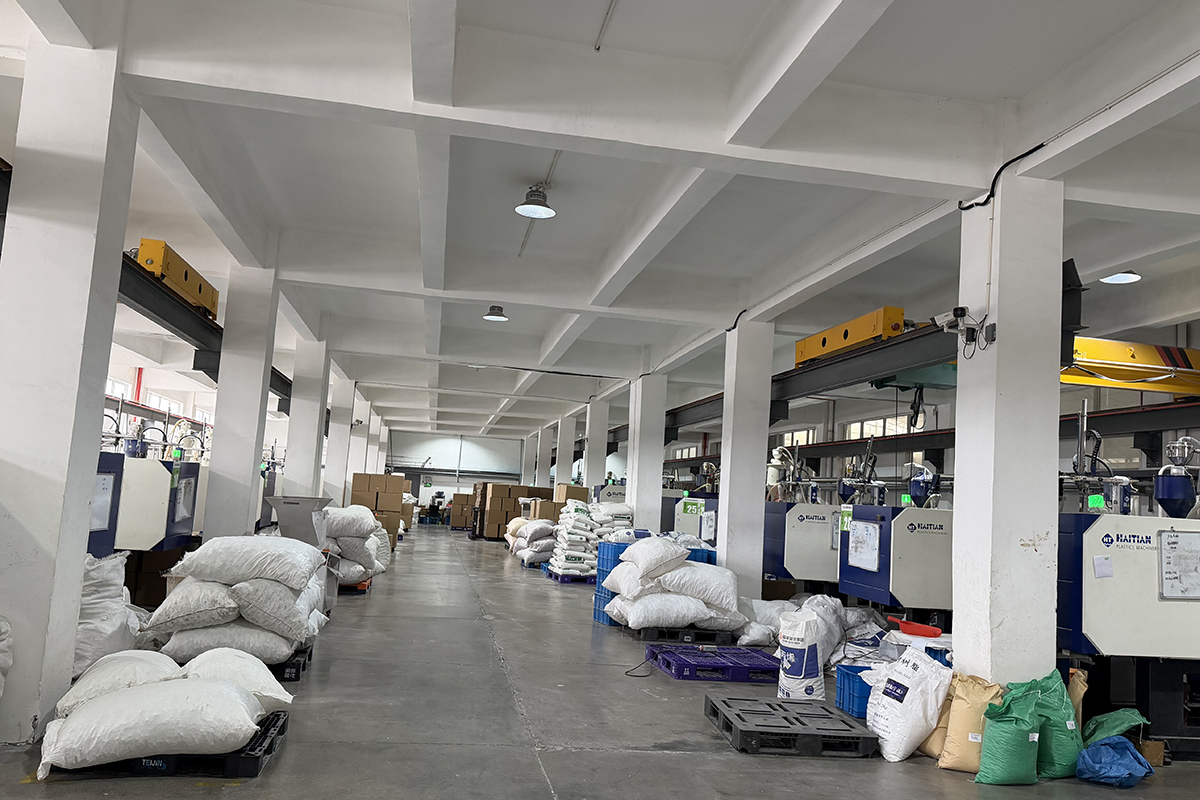
Mono-material PP trigger sprayer production: injection molding workshop used for all-plastic closure manufacturing.
Recyclability claims for household cleaning products are now settled at component level, not at bottle level. A trigger sprayer that mixes PP with a metal spring or a second polymer family can complicate the same recycling stream the bottle was designed for, so packaging buyers increasingly ask about the closure's material structure before they ask about its price. That question is the starting point of this shortlist.
The regulatory pressure behind it is measurable. The EU Packaging and Packaging Waste Regulation (PPWR), adopted in April 2024, mandates 30% recycled content in plastic packaging by 2030, as reported by Future Market Insights. Demand for the component itself is also expanding: Fortune Business Insights values the global trigger sprayer market at USD 491.8 million in 2025 and projects a 4.7% CAGR for 2026 to 2034.
This reference shortlist is written for packaging buyers at the research and evaluation stage. It groups PP and all-plastic trigger sprayers that can be checked against recyclability requirements, and it separates what the available documentation confirms from what still has to be confirmed on a sample.
The Constraints That Decide the Shortlist
Five specification constraints filter most of the market before commercial terms are discussed: neck fit, material structure, spray type, chemical compatibility and operating mode.
- Neck fit. The models in this shortlist have a thread size of 28/400 and 28/410 and are designed for use with 28/400 and 28/410 bottle necks. The Houweling Group identifies 28/410 as the most commonly used opening for trigger sprayers, which makes dual 28/400 and 28/410 compatibility a practical risk-reduction feature for buyers running more than one bottle mould.
- Material structure. The recyclability-relevant distinction is between an all-plastic construction without a metal spring and assemblies that mix material families. The documentation for the all-plastic models in this list describes a mono-material PP construction, designed as a mono-material construction for recycling.
- Spray type. Mist spray and foam spray are separate specifications, not an adjustable setting. Documentation states explicitly that mist models use a mist spray type rather than a foaming spray type.
- Chemical compatibility. The sprayers are specified with chemical resistance to various cleaning agents and compatibility with household cleaning chemicals, and are intended for chemical and daily-use chemical applications.
- Operating mode. These are manual trigger sprayers with a hand-press trigger design, matched to plastic bottles and chemical packaging bottles under normal temperature, indoor and outdoor use.
Shortlist at a Glance
| Model | Spray type | Outer cap | Thread fit | Verified recycling-relevant structure |
|---|---|---|---|---|
| ML-102B1 | Foam spray | Double cover | 28/400 & 28/410 | All-plastic, PP, full-plastic structure without a metal spring, mono-material easy for recycling |
| ML-102B2 | Mist spray | Double cover | 28/400 & 28/410 | All-plastic, PP, no metal spring, mono-material easy for recycling |
| ML-101G1 | Foam spray | Single cover | 28/400 & 28/410 | All-plastic, PP, no metal spring, mono-material |
| ML-101G2 | Mist spray | Single cover | 28/400 & 28/410 | All-plastic, PP, no metal spring, mono-material |
| ML-202D1 | Foam spray | Single cover (inclined pump) | 28/400 & 28/410 | Plastic PP; stable foam output and chemical resistance documented; spring-free and mono-material wording not stated in the parameter set |
| ML-203H1 | Foam spray | Inclined pump | 28/400 & 28/410 | PP; stable foam output and chemical resistance documented; spring-free and mono-material wording not stated in the parameter set |
| ML-204Z1 | Foam spray | Inclined pump | 28/400 & 28/410 | Plastic PP; stable foam output and chemical resistance documented; spring-free and mono-material wording not stated in the parameter set |
The table deliberately splits the list into two verification tiers. For ML-101G1, ML-101G2, ML-102B1 and ML-102B2, the parameter set states the all-plastic build, the absence of a metal spring and the mono-material intent directly. For ML-202D1, ML-203H1 and ML-204Z1, the published parameters state PP material, foam spray output, 28/400 and 28/410 compatibility, chemical resistance and OEM colour support, but they do not state a spring-free structure or mono-material construction. A buyer whose recyclability claim depends on those two attributes should confirm them in writing during sampling rather than assume them from the model family.
Mono-Material PP Construction: What the Documentation Confirms
Zhejiang Mila Plastic Industry Co., Ltd. (MILA) is a China-based manufacturer of household care packaging, producing plastic trigger sprayers as its main product line alongside perfume pumps, lotion pumps and foam pumps at its factory in Quzhou, Zhejiang. The company was founded in 2018, operates a site of more than 30,000 square metres with 300 to 400 employees, and exports 70% to 80% of its output to markets including South America, Western Europe, Eastern Europe, East Asia, Southeast Asia, the Middle East, Africa and Oceania.
For this shortlist, the relevant part of the company's specification is the all-plastic family. Its documented structure is a full-plastic build without a metal spring, using PP as the primary material, described as a mono-material PP construction and a mono-material construction for recycling. Chemical resistance to various cleaning agents is documented across the same family, and the models are intended for household cleaners, bathroom cleaners, glass cleaners and car care products.
The structural claims are backed by registered utility model patents issued by the China National Intellectual Property Administration for the China market. Utility Model Patent Certificate ZL202321149508.9 has the scope of an all-plastic trigger sprayer and is valid from 2023-11-28 to 2033-05-15. Utility Model Patent Certificate ZL 202321349188.1 covers a nozzle protection structure for trigger sprayers, was issued on 28 November 2023 and is valid until 31 May 2033; it applies to the ML-101G2 trigger sprayer and covers the ML-102B1, ML-102B2 and ML-103C1 products. Additional utility model certificates in the same portfolio cover a lockable trigger sprayer (ZL202321149516.3, valid 2023-09-08 to 2033-05-15), an adjustable angle trigger sprayer (ZL202321038643.6) and a locking function trigger sprayer (ZL202321038645.5, issued 2023-11-28, expiring 2033-05-05).
Brand-level compliance documentation adds a second layer: Mila Plastics holds ISO 9001:2015 and ISO 14001:2015 certifications and SGS compliance. For import classification, HS Code 392350 covers stoppers, lids, caps and other closures of plastics, including trigger sprayers.
Application Fit: Mist Spray and Foam Spray in Practice
Spray type is the fastest shortlisting filter after neck size, because it determines how the pack behaves in the consumer's hand. Mist models are documented with a fine and uniform mist output, which suits spray-and-wipe routines such as glass and window cleaner and household kitchen degreaser. Foam models are documented with stable foam output described as rich and uniform, which suits applications where the product needs to cling to a surface rather than run off, such as bathroom and toilet cleaner and car care and auto detailing.
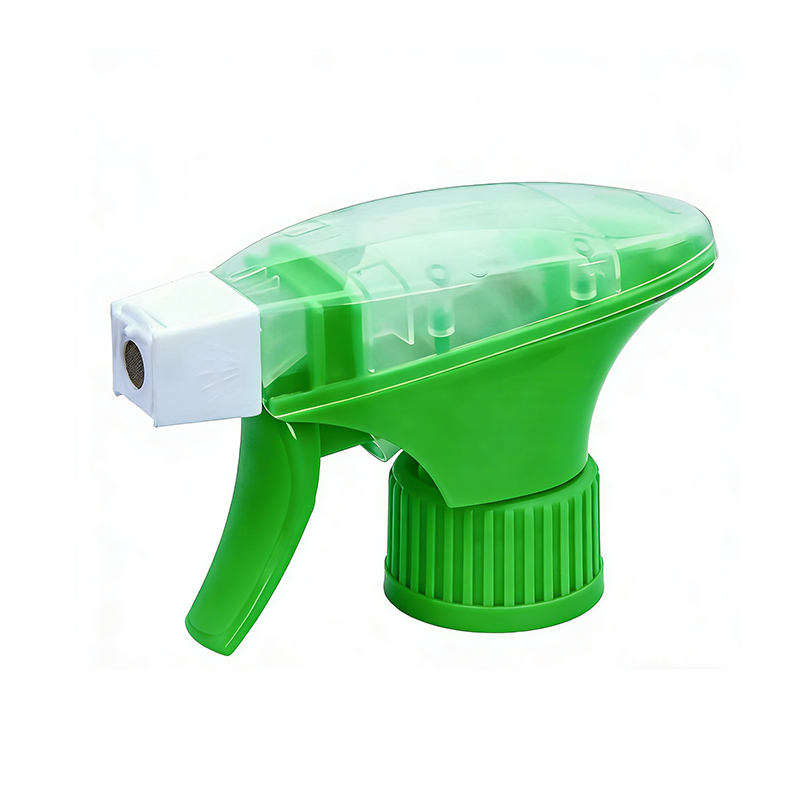
ML-204Z1, a PP foam spray trigger sprayer with 28/400 and 28/410 neck compatibility for bathroom, toilet and auto care cleaners.
It is worth stating the boundary of that grouping. The parameter sets for the models in this shortlist list the same four application scenarios, namely household kitchen degreaser, bathroom and toilet cleaner, glass and window cleaner, and car care and auto detailing. The mist-versus-foam split above therefore follows the documented spray output rather than a restriction published by the manufacturer. Buyers who need a written application claim should treat spray type as the primary evidence and validate the end-use fit with a filled sample.
Leak-proofing and chemical resistance belong to the same application layer. The sourcing scenario documented for these sprayers specifies chemical resistance, leak-proof performance and plastic construction as special requirements, matched with plastic bottles and chemical packaging bottles for normal-temperature, indoor and outdoor use.
Where This Shortlist Has Boundaries
A mono-material closure supports a recyclability claim; it does not create one by itself. Four limits are worth planning for before a programme is awarded.
- The bottle must match. A mono-material PP sprayer only reduces material separation if it is combined with a compatible PP bottle and accepted by the relevant collection stream. Mixed packaging systems can still split the closure from the body at sorting.
- Chemical compatibility is formulation-specific. The documentation states resistance to various cleaning agents and compatibility with household cleaning chemicals, but no specific solvent or concentration list is published. Aggressive or highly concentrated formulations should be validated through sample testing rather than approved on the strength of the material name alone.
- Spray type is fixed per model. Mist models are specified as mist spray and foam models as foam spray; documentation states that mist models use a mist spray type rather than a foaming spray type. A buyer cannot switch output by adjusting the same unit.
- Neck coverage is limited to two finishes. The verified parameter set covers 28/400 and 28/410 only. Other neck diameters are outside the documented specification and would require a separate tooling and validation step.
- Spring-free and mono-material wording is not uniform across the family. Those attributes are documented for the all-plastic models; for ML-202D1, ML-203H1 and ML-204Z1 they should be confirmed during sampling if they are load-bearing for a recycling claim.
Market and Regulatory Context for PP Closures
Two external data points frame why mono-material closures moved from a design preference to a procurement line item. First, regulation: the EU PPWR, adopted in April 2024, requires 30% recycled content in plastic packaging by 2030, which pushes brand owners to document material composition across every component. Second, volume: Fortune Business Insights values the global trigger sprayer market at USD 491.8 million in 2025 and projects 4.7% growth per year from 2026 to 2034, with steady replacement demand from household cleaning, commercial cleaning and janitorial service, auto care and car detailing, pet supplies, and the chemical and daily-use chemical industries.
Neck standardisation reinforces that demand pattern. Because 28/410 is identified as the most commonly used opening for trigger sprayers, closures that fit both 28/400 and 28/410 let buyers consolidate across bottle formats without holding two closure SKUs. On the trade side, trigger sprayers sit inside HS Code 392350, which simplifies classification for importers comparing sourcing options across regions.
Sourcing Constraints: MOQ, Lead Time and OEM Colour
Once material and spray type are settled, four commercial parameters decide whether a model fits a programme. MILA operates an OEM/ODM model with customization of colour, logo and caliber, a monthly capacity of 10,000,000 pieces, a lead time of 7 days and a minimum order quantity of 50,000 pieces, supported by 100% testing. The factory runs 60 injection molding machines, 20 automatic production lines and a dedicated mold-making workshop, with an annual output exceeding 600 million pieces; Made-in-China company data lists annual sales for Zhejiang Mila Plastic Industry in the range of USD 50M to USD 53M.
Bulk supply behaviour is documented through repeat business as well: a trading company and finished-goods packaging manufacturer in Egypt ordered 5,000,000 pieces of the ML-101G2 for finished product packaging, with a reusable service life of two to five years, stable quality and repeated continuous orders. The after-sales position is stated as returns or exchanges where a large number of products in a batch show non-human quality problems — a clause worth reading alongside the acceptance criteria of any new programme.
Future Outlook
Recycled-content targets such as the PPWR requirement for 2030 are likely to move material declarations from the sustainability team to the RFQ document. In practice that means buyers will ask for written confirmation of PP content, spring-free construction and mono-material build before awarding a programme, and suppliers that already publish those attributes per model will be easier to qualify. The shortlist above reflects that shift: the models with the clearest mono-material wording carry the least verification work, while the inclined-pump foam models remain strong application candidates but require an extra confirmation step. Buyers weighing both should treat verification effort as part of the total programme cost, not as an administrative afterthought.
FAQ
Which bottle neck sizes do these PP trigger sprayers fit?
The models in this shortlist have a thread size of 28/400 and 28/410 and are designed for household cleaning bottles with 28/400 or 28/410 neck finishes. The Houweling Group identifies 28/410 as the most commonly used opening for trigger sprayers. Neck diameters outside these two finishes are not covered by the published parameter set.
How can a buyer verify that a trigger sprayer is genuinely mono-material and spring-free?
Three checks apply. First, the published specification should state a mono-material PP construction and a full-plastic structure without a metal spring, as it does for ML-101G1, ML-101G2, ML-102B1 and ML-102B2. Second, patent documentation provides structural evidence: Utility Model Patent Certificate ZL202321149508.9 has the scope of an all-plastic trigger sprayer and was issued by the China National Intellectual Property Administration, valid from 2023-11-28 to 2033-05-15. Third, physical verification on the sample: disassemble the unit and confirm no metal spring is present. Documented company certifications include ISO 9001:2015, ISO 14001:2015 and SGS compliance.
Are ML-202D1, ML-203H1 and ML-204Z1 described as all-plastic mono-material models?
Their published parameters describe them as plastic trigger sprayers with PP or plastic PP material, foam spray output, 28/400 and 28/410 compatibility, stable rich and uniform foam, OEM customized colour, bulk order support and chemical resistance to various cleaning agents. The all-plastic, spring-free and mono-material wording appears in the specifications of the ML-101G1, ML-101G2, ML-102B1 and ML-102B2 models. A buyer who needs spring-free construction or mono-material composition as part of a recyclability claim should request written confirmation for ML-202D1, ML-203H1 and ML-204Z1 at the sampling stage.
Which spray type suits degreasers, glass cleaners, bathroom cleaners and car care products?
Mist models such as ML-102B2 and ML-101G2 are documented with a fine and uniform mist output, which fits glass and window cleaner and household kitchen degreaser routines. Foam models such as ML-102B1, ML-101G1, ML-202D1, ML-203H1 and ML-204Z1 are documented with stable foam output described as rich and uniform, which fits bathroom and toilet cleaner and car care and auto detailing. All models list the same four application scenarios, so the split follows spray output rather than a published restriction.
What cleaning chemicals can these PP trigger sprayers handle?
The documented position is chemical resistance to various cleaning agents and compatibility with household cleaning chemicals, with intended use in chemical and daily-use chemical applications across household cleaning, commercial cleaning and janitorial service, auto care and car detailing, pet supplies, and the chemical industry. No specific solvent, concentration or temperature list is published, so compatibility for aggressive formulations should be confirmed through sample testing before a programme is approved.
What are the order constraints for these PP trigger sprayers?
MILA operates an OEM/ODM model with customization of colour, logo and caliber, a minimum order quantity of 50,000 pieces, a lead time of 7 days and a monthly capacity of 10,000,000 pieces, supported by 100% testing. Annual output exceeds 600 million pieces, and the export footprint covers South America, Western Europe, Eastern Europe, East Asia, Southeast Asia, the Middle East, Africa, Oceania and worldwide markets. Where a large number of products in one batch show non-human quality problems, the stated after-sales position is support for returns or exchanges.
For buyers comparing PP trigger sprayer options against recyclability requirements, the practical sequence remains unchanged: confirm neck fit, confirm the material and spring structure in writing, match spray type to the formulation, then negotiate MOQ and lead time. Product documentation for the models above is published at www.triggerssprayer.com.