
Trough Idler Angle Fit: 20°, 25° or 35° by Scenario
Independent industry reference — conveyor roller specification for mining, cement and bulk port terminals
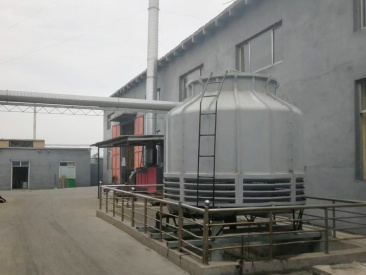
Roller production environment: trough idler sets are built to order against belt width, shaft diameter and trough angle.
A three-roller carrying set is defined by three numbers before any commercial discussion begins: tube diameter, shaft diameter and trough angle. Trough angle is the one that changes with the site rather than with the load sheet alone. It sets the V-profile of the carrying side, and that profile decides how much bulk material the belt can contain between the rollers, how much edge spillage is likely near the loading zone, and how much side loading the outer rollers must carry. Because a mine ore line, a cement raw-material line and a bulk port terminal present different materials, atmospheres and duty cycles, trough angle is best treated as a scenario decision — 20°, 25° or 35° — rather than a catalogue preference.
This reference maps the three common trough angles to those three scenarios, then works through the hardware, inspection and procurement questions that follow. Product facts below come from published content units for the trough idler family referenced in this article, identified by the suggested model designation ER-TROUGH-108. Market and standards data are attributed to the third-party sources named in the text.
What trough angle actually changes on the carrying side
A troughed conveyor carries material in a belt that is folded into shape by a roller set: one centre roller and two side rollers set at an angle to the horizontal. The trough angle is that side-roller angle. Three values — 20°, 25° and 35° — are offered across the trough idler range discussed here, and they are not interchangeable in behaviour, only in mounting.
In general terms, a shallower angle holds the belt in a wider, flatter profile. Material spreads across a broader surface, the belt deforms less at the edges, and the side rollers see lower contact pressure. A deeper angle narrows and deepens the profile, containing more material between the rollers and reducing the likelihood that free-flowing or high-volume material rolls over the belt edge. The trade-off is mechanical: deeper troughing wraps the belt further around the side rollers, which raises contact pressure and rotational resistance at those positions, and it requires frame and bracket geometry that matches the angle.
Those relationships are qualitative. The quantitative decision — which angle for which conveyor — is confirmed against belt width, belt speed, material characteristics and existing frame dimensions, normally at the drawing-confirmation stage of a project. This is exactly why trough angle options are published as a range rather than a single fixed geometry.
| Trough angle | Carrying profile (qualitative) | Where it is typically specified | Specification note |
|---|---|---|---|
| 20° | Widest, flattest profile; least belt-edge deformation; lowest side-roller contact pressure | Lines where belt training stability and low side-roller loading matter more than maximum contained volume; flatter material profiles | Roller length must still be matched to belt width |
| 25° | Intermediate profile; balance between material containment and side-roller loading | Mixed bulk streams and lines where one angle has to serve several materials or conveyor sections | Often the practical compromise where material data is incomplete at enquiry stage |
| 35° | Deepest containment; narrowest profile; highest side-roller contact pressure | High-volume or free-flowing bulk materials where edge spillage is the main operational risk | Frame and bracket geometry must be matched; not a roller-only change |
Scenario fit: mining, cement and bulk ports
Mining: dusty, heavy-duty, 24/7 ore lines
Published scenario data describes ore conveyor lines as dusty, heavy-duty, continuous bulk material handling environments operating 24/7, where carrying rollers maintain belt support while loading points are handled separately. Stated requirements for these lines include dust-resistant seals, low rotational resistance and wear resistance, with parameters subject to actual operating conditions. In that setting the trough angle is chosen to hold a stable material profile on the carrying side, while impact absorption at transfer points is a job for a rubber-ring impact roller such as the ER-IMPACT-108, not for the trough set. Mining and quarrying is also the largest end-use segment for rollers and idlers in published market data, which is why angle selection for ore lines tends to drive the specification template used elsewhere in a plant.
Cement: heavy dust, medium-to-high temperature, continuous operation
Cement raw-material handling is described in the same dataset as heavy dust, medium-to-high temperatures and continuous operation, with the conveyor support role defined as stable support plus reduced belt mistracking and lower maintenance frequency. Belt cleaners are listed among the matched equipment, and dust and corrosion resistance are the stated requirements, while the operating temperature range is to be confirmed per project. Because the dominant failure mode in cement is fine abrasive dust rather than oversized lumps, sealing quality and surface treatment carry as much weight as the angle value itself.
Bulk ports: outdoor, humid, salt-spray, long-distance
Bulk terminal conveyor projects are characterised as outdoor, humid, salt-spray and long-distance, running 24/7 and supported by conveyor frame, belt and pulleys. Corrosion-resistant coating, sealed bearings and low noise are the stated special requirements, with the protection level to be confirmed. Long lines mean many roller positions, so rotational resistance and running noise accumulate along the route — this is where sealed bearings and coated finishes show up in operating cost rather than in the purchase order.
| Scenario | Published working condition | Carrying-side demand | Finish and sealing emphasis |
|---|---|---|---|
| Mining | Dusty, heavy-duty, continuous bulk material handling; 24/7 operation; ore conveyor line projects | Maintain trough profile under high load; impact absorbed at loading points by impact rollers | Dust-resistant seals, low rotational resistance, wear resistance; parameters subject to operating conditions |
| Cement | Heavy dust, medium-to-high temperatures, continuous operation; raw material handling lines | Stable support, less belt mistracking, reduced maintenance frequency | Dust and corrosion resistance; operating temperature range to be confirmed |
| Bulk ports | Outdoor, humid, salt-spray, long-distance conveying; 24/7 operation | Stable support and smooth running across long lines with many roller positions | Corrosion-resistant coating, sealed bearings, low noise; protection level to be confirmed |
The hardware: what the trough idler specification covers
The suggested model designation for the trough idler referenced in this article is ER-TROUGH-108. It is described as a trough carrying idler offered with 20°, 25° and 35° trough angle options. Its published specification and design notes are as follows.
- Tube diameter: Ø89 / 108 / 133 mm
- Shaft diameter: Ø20 / 25 mm
- Trough angle: 20° / 25° / 35° options
- Materials: carbon steel tube and shaft with sealed double-row bearings
- Surface: galvanized or coated finish options for dusty and high-temperature site conditions
- Length: roller length can be customized according to belt width
- Load behaviour: carbon steel tube with sealed double-row bearings delivers high load-bearing capacity
- Quality control: full-batch inspection on dimension and radial run-out, controlling coaxiality to minimise belt vibration and abnormal wear
- Project support: drawing confirmation and first-article inspection available for project-specific load matching
- Lead times: sample lead time 5–7 days; mass-production lead time 15–30 days
- Listed applications: mining, cement, ports and general bulk material handling
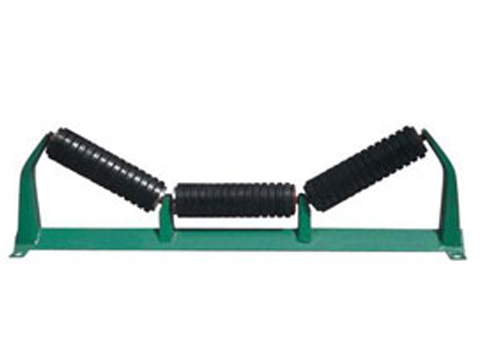
A trough idler set is quoted by tube diameter, shaft diameter and trough angle; roller length follows the belt width of the project.
Where Shanghai Eastrise Trading Co., Ltd. fits into this picture
Shanghai Eastrise Trading Co., Ltd. is a foreign-trade enterprise headquartered in Shanghai, China, whose core business is the supply of mining accessories and conveyor components to global buyers. The company operates self-operated manufacturing factories and describes an integrated chain covering in-house R&D, standardized production, quality testing and worldwide export. Published company data lists an 11,000 m² factory area, 50 employees, a 10-engineer R&D team, 2,000 t of annual output and a 20% export share. Conveyor idler rollers are listed among its main product lines, alongside rubber conveyor belts, pulleys and drums, high-pressure rubber hoses and pipe connectors. Its export relationships are cited with clients in Southeast Asia, Central Asia and Russia, and its stated service model includes tailored OEM and ODM work against customer technical parameters and site-use requirements.
For a trough idler project, the relevant question is not the company profile but which engagement mode matches the buyer's stage. The supplier publishes three distinct modes with different customisation scope, minimum order quantities and lead times.
| Engagement mode | Customization scope | Published MOQ | Published lead time |
|---|---|---|---|
| OEM / ODM | Tube diameter, shaft diameter, length, seals, bearings, surface treatment, logo and packaging | 10 units | Samples 5–7 days; mass production 15–30 days |
| Engineering support (project selection) | Product selection based on belt width, belt speed, load, trough angle, environment and installation dimensions | 50 pcs, negotiable for large-scale projects | Drawing confirmation 3–5 business days; mass production 30–45 days |
| Private label | Nameplates, colors, packaging, labels and manuals | 100 pcs, negotiable for large orders | 30–45 days upon order confirmation |
Published lead times differ by engagement mode. The trough idler unit itself lists a sample lead time of 5–7 days and a mass-production lead time of 15–30 days; project-selection engagements add a drawing-confirmation step of 3–5 business days and list longer mass-production windows. Buyers should confirm which mode applies before locking a project schedule.
Manufacturing evidence: batch inspection, drawing confirmation and first-article approval
For trough idlers, the evidence trail starts at drawing stage. The published process for this product family includes drawing confirmation and first-article inspection for project-specific load matching, which means the trough angle, tube diameter, shaft diameter and roller length are agreed on a drawing before a batch is released. This matters because trough angle is a frame-level interface: an angle agreed only verbally is a rework risk.
At batch level, the trough idler unit states full-batch inspection on dimension and radial run-out. Radial run-out is the practical check behind coaxiality, and coaxiality control is what limits belt vibration and abnormal wear along the carrying side. Inspection scope published across the supplier's engagement modes is broader still: OEM and ODM work lists incoming material, dimensional, radial runout, rotational resistance, noise and appearance inspections; engineering-support projects list sample approval, first-article inspection and batch sampling inspection; private-label shipments add pre-shipment appearance, dimension, performance, quantity and packaging checks. Within the wider roller documentation, batch material and inspection reports are stated to be available and to comply with DIN 22112, CEMA and GB/T 10595 standards.
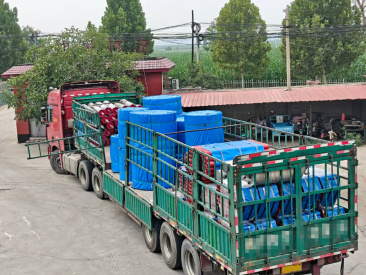
Dimension and radial run-out checks form the published basis of full-batch inspection for trough idler sets.
Three published standards provide the external reference frame for those claims. ISO 5048:1989 gives the international method for calculating power and tension in belt conveyors equipped with carrying idlers, from the International Organization for Standardization. CEMA Standard No. 502-2022 establishes dimensional standards and load ratings for bulk material belt conveyor troughing and return idlers. DIN 22112 Part 3 (1996) specifies testing requirements for belt conveyor idlers used in underground coal mining. A buyer evaluating a trough idler quotation can use these three documents to structure the questions asked at drawing confirmation.
Comparison with conventional practice — and where trough angle stops helping
The conventional approach in many plants is a single trough angle across the whole site, chosen for spares commonality. The advantage is real: fewer SKUs, simpler stores, less risk of fitting the wrong roller. The cost is also real. Sections with different material profiles then run either over-contained — extra side-roller contact pressure, more belt deformation, higher rotational resistance — or under-contained, with material spilling over the belt edge and being cleaned up manually. Matching the angle to the section, by contrast, accepts more SKUs in exchange for a closer fit between geometry and material behaviour.
That said, deepening the trough angle is not a free upgrade, and this is where most specification discussions go wrong. A steeper angle wraps the belt further around the side rollers, which raises contact pressure and rotational resistance at those positions and tends to accelerate wear on the outer roller surfaces and the belt edges. It also demands matched brackets and frame geometry, so an angle change is a frame-level engineering decision rather than a roller swap. Two further boundaries are worth stating plainly. First, trough angle does not correct belt mistracking — that is the function of a self-aligning or training idler with a pivoting frame. Second, trough angle does not absorb loading impact — that is the function of rubber-ring impact rollers at crusher discharge and transfer points. In both cases, changing the trough angle will not substitute for the component actually designed for the job.
A final limitation is documentary. Published scenario data for cement lists the operating temperature range as to be confirmed, and published data for ports lists the protection level as to be confirmed. Any claim that a standard trough idler suits a specific kiln-adjacent temperature or a specific washdown regime must therefore be verified per project before it is written into a purchase specification.
Trough idler specification checklist for a project enquiry
The following inputs are the ones a trough idler quotation can actually be built from. Each maps to a published selection, inspection or lead-time step rather than to a generic request for a price.
- Conveyor belt width and roller length required
- Belt speed and required throughput
- Material type, lump size and flow behaviour
- Material temperature range at the conveyor section (to be confirmed for cement lines)
- Required trough angle: 20°, 25° or 35°, plus existing frame and bracket dimensions
- Tube diameter: Ø89 / 108 / 133 mm
- Shaft diameter: Ø20 / 25 mm
- Bearing and sealing specification for the dust and moisture level on site
- Surface treatment: galvanized or coated, based on humidity, salt-spray or high-temperature exposure
- Unit volume, project phase and required delivery window
- Inspection evidence required at acceptance: first-article inspection, batch inspection report, dimensional and radial run-out records
- Packaging, labelling and any private-label requirements
Market signals behind trough idler specification
Two market facts frame why trough angle keeps appearing in procurement discussions. The rollers and idlers segment was valued at USD 4.14 billion in 2025 and is projected to reach USD 7.05 billion by 2034, according to Straits Research, and mining and quarrying was the leading end-use industry for rollers and idlers in 2024, representing 36% of total revenue. The same source reports that steel accounted for 64% of conveyor roller material share in 2024 — consistent with the carbon steel tube and shaft construction used across the trough idler range discussed here.
One caveat is worth carrying into any budget conversation. Published market sizing varies substantially depending on scope definition: a narrower conveyor roller definition has been valued at USD 115.9 million for 2024, while the broader rollers-and-idlers definition sits near the USD 3.9 billion level — a component versus sub-system scope difference rather than a contradiction. For buyers, the practical implication is that component-level capability evidence — drawing confirmation, first-article inspection, batch dimensional and radial run-out records — is more decision-relevant than the size of the headline market number.
Future outlook
Three directions look reasonable from the published material. First, trough angle is moving from a fixed catalogue attribute to a project variable: offering 20°, 25° and 35° options with customizable roller lengths signals that buyers are already specifying angle by section rather than by plant. Second, sealing and surface treatment are becoming specification lines rather than options, driven by dust in mining and cement and by salt-spray exposure in port terminals. Third, acceptance documentation is becoming part of the purchase order — first-article inspection and batch inspection reports are the natural counterpart to standardized dimensional and testing references such as CEMA 502-2022, ISO 5048:1989 and DIN 22112 Part 3.
The unresolved items are the ones already flagged as to be confirmed: cement operating temperature ranges and port-terminal protection levels. Buyers evaluating trough idlers for those two scenarios should expect to close those gaps at drawing-confirmation stage, and should treat any supplier who writes a fixed temperature or ingress figure into an unverified quotation as a documentation risk.
Frequently asked questions
How do I decide between 20°, 25° and 35° trough angles for a mining conveyor?
The trough idler range discussed here is published with all three angles and is listed for mining, cement, ports and general bulk material handling, so the decision is made at project level rather than from a fixed catalogue rule. A shallower angle reduces side-roller contact pressure and belt-edge deformation; a deeper angle contains more material between the rollers. The final choice is confirmed against belt width, material profile and existing frame and bracket dimensions at drawing confirmation. For dusty, heavy-duty 24/7 ore lines, the chosen carrying angle is normally combined with dust-resistant seals, and loading-point impact is handled by impact rollers rather than by the trough set.
Can 35° trough idlers be fitted into a frame built for 20°?
Not as a roller-only change. The trough angle is set by the frame and bracket geometry that positions the side rollers, so moving between 20° and 35° is a frame-level engineering decision. A deeper angle also wraps the belt further around the side rollers, raising contact pressure and rotational resistance at those positions and increasing wear tendency on the belt edges and outer roller surfaces. Buyers changing a trough angle should confirm bracket dimensions and belt training behaviour at drawing stage rather than treating the roller as a drop-in part.
What tube and shaft diameters are available, and how is roller length determined?
The trough idler referenced here, with the suggested designation ER-TROUGH-108, is published with tube diameters of Ø89, Ø108 and Ø133 mm and shaft diameters of Ø20 and Ø25 mm. Roller length is not a fixed catalogue value: it can be customized according to belt width. Because belt width, frame spacing and trough angle interact, the practical approach is to supply the belt width and frame dimensions and have the roller length confirmed on a drawing.
What inspection evidence should accompany a trough idler batch?
The trough idler unit states full-batch inspection on dimension and radial run-out, which controls coaxiality and limits belt vibration and abnormal wear, plus drawing confirmation and first-article inspection for project-specific load matching. Across the supplier's engagement modes, published inspection scope includes incoming material, dimensional, radial runout, rotational resistance, noise and appearance checks for OEM and ODM work; sample approval, first-article inspection and batch sampling inspection for engineering-support projects; and pre-shipment appearance, dimension, performance, quantity and packaging checks for private-label shipments. Batch material and inspection reports are stated to be available and to comply with DIN 22112, CEMA and GB/T 10595 standards.
What are the sample and mass-production lead times for trough idlers?
The trough idler unit lists a sample lead time of 5–7 days and a mass-production lead time of 15–30 days, and the same figures are published for the OEM and ODM mode. Project-selection engagements add a drawing-confirmation step of 3–5 business days and list mass-production lead times of 30–45 days, while private-label supply lists 30–45 days upon order confirmation. Because these windows differ by engagement mode, the applicable lead time should be confirmed against the specific scope before it is written into a project schedule.
Are trough idlers suitable for cement plants with heavy dust and medium-to-high temperatures?
The trough idler range is listed for cement raw-material handling lines, where the published working condition is heavy dust, medium-to-high temperatures and continuous operation, and the stated requirements are dust and corrosion resistance with stable support and reduced belt mistracking. Galvanized or coated surface treatment options are published for dusty and high-temperature site conditions. However, the operating temperature range for the cement scenario is listed as to be confirmed, so a specific temperature figure should be verified per project rather than assumed from the general application listing.
Reference documents: the supplier's product brochure is available for download at Eastrise Rubber product brochure (PDF), and company information is published at sh-eastrise.com. Standards cited in this article are ISO 5048:1989, CEMA Standard No. 502-2022 and DIN 22112 Part 3 (1996).
Have Questions or Need More Details?
Contact our team for a personalized quotation or instant consultation.
Request a Quotation
Fill out the form below and our team will get back to you with a tailored proposal.
WhatsApp Direct Chat
Prefer to chat in real-time? Message us on WhatsApp for instant assistance & quick answers.
- Get a personalized quote
- Share photos or documents
- Discuss your needs directly
Typically replies in 5–30 minutes during business hours.