
Truck Crane Parts Shortlist: HC4900, LWG208, IC4600, IC3600 and 1032300052
Truck Crane Parts Shortlist: HC4900, LWG208, IC4600, IC3600 and 1032300052
For truck-crane maintenance, a shortlist of part numbers is useful only when it is connected to the machine’s system, operating conditions and replacement need. TOP RUN’s product information lists HC4900, LWG208, IC4600, IC3600 and 1032300052 within its China truck crane parts range, associated at category level with XCMG, SANY and Zoomlion truck crane parts. The available information does not assign every listed identifier to a specific crane brand or confirm that all five are hydraulic components.
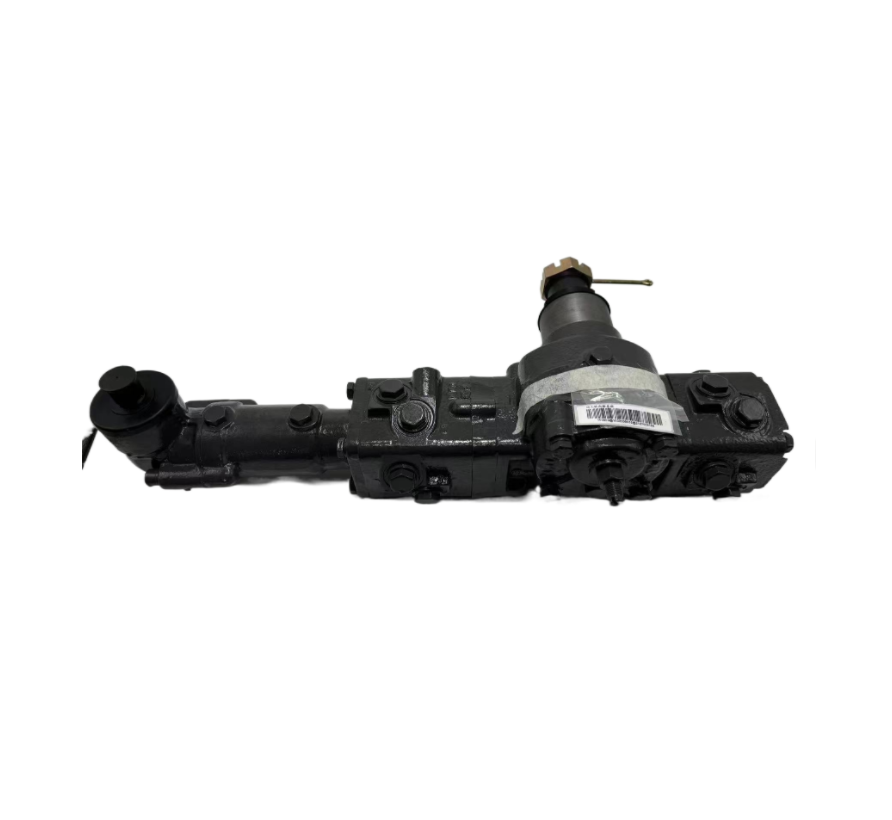
That distinction matters for buyers researching truck crane hydraulic parts. The supplied captions identify HC4900 as a load moment indicator, LWG208 as a length and angle sensor, IC4600 and IC3600 as displays, and 1032300052 as a steering unit. These identifiers therefore form a mixed shortlist of crane parts rather than a confirmed list of hydraulic parts alone. Buyers can use the list as a starting point, then verify the machine-specific application before treating any item as an interchangeable replacement.
Why this shortlist needs application-level checking
Truck cranes operate with intermittent lifting cycles and repeated changes in load. Crane parts may be exposed to heavy loads, vibration, dust, rain erosion and temperature extremes. For hydraulic-system components, stable sealing, pressure resistance, dimensional accuracy and resistance to wear and fatigue are relevant selection considerations. In service, a replacement part is expected to help restore the machine’s mechanical performance and the flexibility of hydraulic transmission, slewing, luffing or hoisting actions, depending on the component and its role.
However, those general requirements do not prove the function or fitment of an individual item. A model code alone cannot establish whether a part belongs to a specific crane model, system configuration or production version. Nor does a general category association with XCMG, SANY and Zoomlion establish that every listed part fits every machine from those manufacturers. The practical procurement task is to connect the identifier to the machine documentation and the component’s actual function.
What the five identifiers indicate—and what they do not
| Identifier | Information available in the product images | What should be confirmed for a project |
|---|---|---|
| HC4900 | A product image caption identifies it as a load moment indicator. | Confirm the machine application, system version, connector or interface details where relevant, and whether the required item is the indicator or another related component. |
| LWG208 | A product image caption identifies it as a length and angle sensor. | Confirm the specific crane application and the required sensor configuration against the machine’s existing component and documentation. |
| IC4600 | A product image caption identifies an IC4600 display. | Confirm the display’s intended system and machine application; the supplied information does not specify a compatible crane model. |
| IC3600 | A product image caption identifies an IC3600 display. | Confirm the exact display identification and application. Do not infer compatibility from the similar naming of other display models. |
| 1032300052 | A product image caption identifies it as a steering unit. | Confirm the steering-system application and the exact part identification required for the machine. |
This table deliberately separates recorded image captions from procurement checks. The captions provide a useful starting point for recognizing a part category; they are not a technical interchangeability statement. The product record lists all five identifiers together, but does not provide item-by-item dimensions, electrical interfaces, hydraulic ratings, serial-number ranges or brand assignments. Buyers should not fill those gaps by assuming that similar names or broad category labels establish a match.
Where hydraulic parts fit into the wider crane system
Truck crane parts support several connected machine systems, including boom and hoisting mechanisms, slewing and outrigger systems, hydraulic systems, and power and chassis systems. Supporting equipment listed in the application information includes boom sections, pulley blocks, hooks, slewing bearings, outrigger cylinders, hydraulic pumps and control valves. A maintenance request can therefore involve hydraulic components alongside structural, control or other supporting parts.
For a buyer seeking truck crane hydraulic parts, the key first step is to identify whether the failed or worn component actually belongs to the hydraulic circuit. The five-item shortlist includes identifiers whose captions describe monitoring or display components as well as a steering unit. The supplied materials do not classify every one of these items as a hydraulic part. A buyer should distinguish the hydraulic replacement need from adjacent electrical, sensing or display requirements rather than grouping every crane component under one technical label.
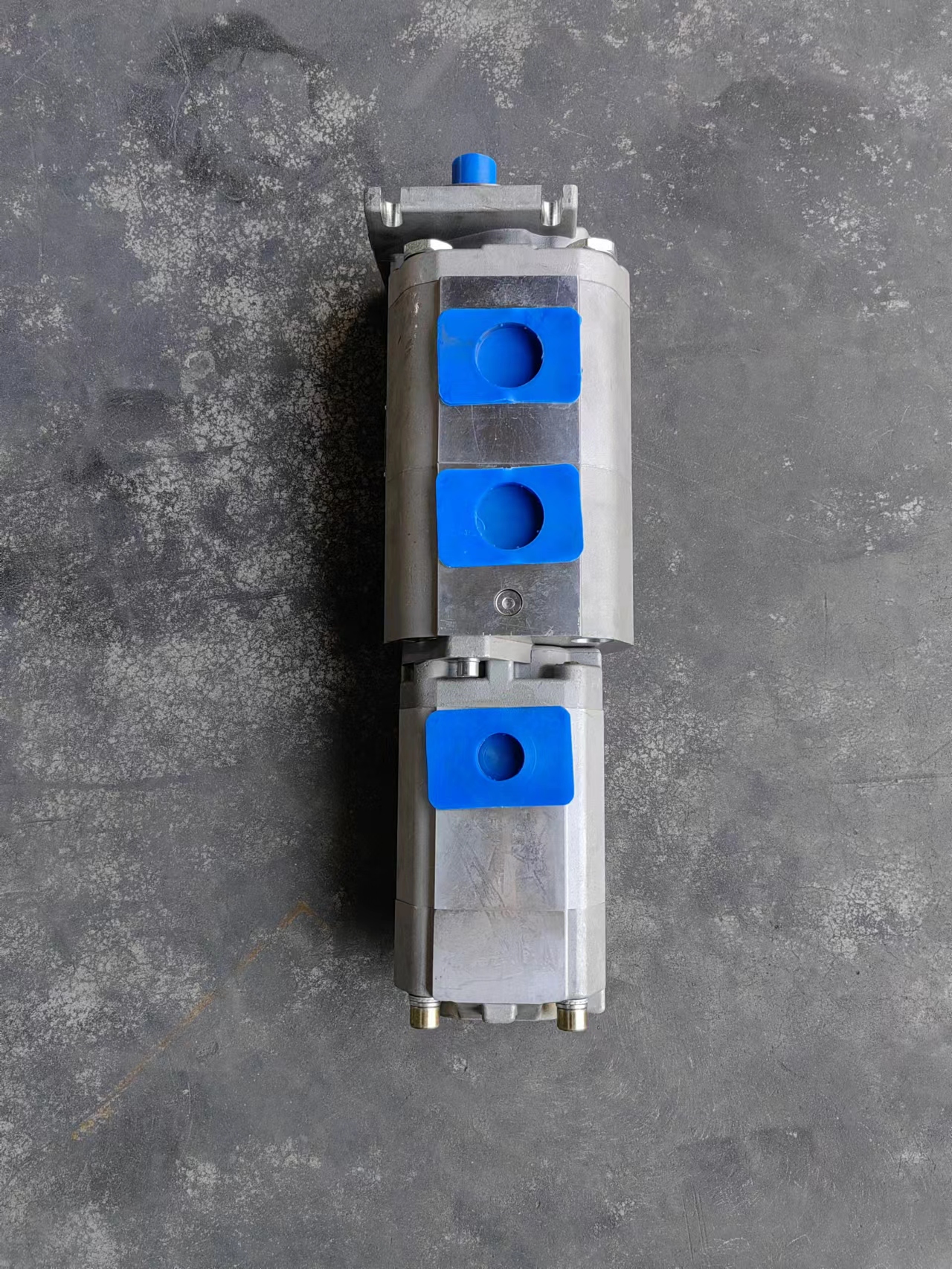
The same separation applies to search and procurement language. XCMG Truck Crane Parts, SANY Truck Crane Parts and Zoomlion Truck Crane Parts are category-level terms in the supplied product information. They can help describe the broader parts range, but they should not be read as proof that each of HC4900, LWG208, IC4600, IC3600 and 1032300052 is suitable for every model under all three brands. The exact application must be established for the machine and part being sourced.
A practical shortlist workflow for maintenance and overhaul
1. Start with the operating problem
Record what prompted the replacement: a worn or damaged component, a maintenance inspection, an overhaul requirement or a repair following a breakdown. Note which machine function is affected. The application information describes crane parts as replacements used to restore mechanical performance and lifting capacity, and to support the flexibility of hydraulic transmission, slewing, luffing and hoisting actions. These functions help frame the investigation, but do not identify a failed part by themselves.
2. Identify the machine and the system
Record the crane make and model as shown in the machine’s own documentation, along with the relevant component location and system. If a request concerns an XCMG, SANY or Zoomlion machine, name the brand in the enquiry, but do not assume that a broad parts-category listing resolves model-level fitment. For a sensing or display item, confirm the required component type; for a suspected hydraulic part, identify its place in the hydraulic system.
3. Match the complete identifier
Compare the requested identifier with the markings and records available for the installed component. Keep the exact sequence and any additional suffixes or version details provided by the machine documentation. The listed codes—HC4900, LWG208, IC4600, IC3600 and 1032300052—are not interchangeable labels. In particular, similar display names should not be treated as evidence that one display can replace another.
4. Check relevant physical and functional requirements
For a replacement that interfaces with a hydraulic system, evaluate the requirements that apply to that component: dimensional accuracy, interchangeability, pressure resistance, sealing performance, wear resistance, fatigue resistance and corrosion resistance. The product information describes material choices by functional need: load-bearing parts such as pins, boom components and pulley blocks are associated with high-strength alloy steel; hydraulic seals and buffer components with wear-resistant rubber or polyurethane; and pipe fittings and valve bodies with precision cast steel or forged steel. These are category-level descriptions, not item-specific material certificates or specifications for the five codes.
5. Confirm the replacement basis before ordering
Clarify whether the request is for an original/OEM part or an aftermarket part. The supplied capability information distinguishes them: original/OEM parts follow factory specifications and are not independently customized; aftermarket parts may have custom logos, packaging or dimensional adjustments. Those descriptions are not a guarantee that a particular aftermarket item is interchangeable. Any proposed dimensional adjustment should be assessed against the machine’s requirements, especially where the part affects a safety-related or load-bearing function.
6. Plan for verification and maintenance timing
Ask what checks apply to the specific item and what documentation accompanies it. The available capability record states “100% test” as a quality-control description, but does not identify the test method, acceptance criteria or results for each shortlisted model. Buyers should therefore request item-specific confirmation rather than interpreting that general statement as a complete validation report. For maintenance planning, also clarify availability and delivery details directly for the requested part; the product list does not provide a current stock status for each identifier.
Application fit: harsh outdoor work and repeated load cycles
Crane components are used in construction machinery applications such as infrastructure, bridge and road construction, mining, port handling and municipal engineering. The supplied scenario information describes outdoor operating conditions that can include extreme temperatures, dust, rain erosion and frequent heavy loads. Crane lifting is intermittent, but parts may experience repeated alternating loads during operation. These conditions explain why material durability, stable sealing and correct fit are relevant to replacement decisions.
For hydraulic parts, a mismatch can have consequences beyond whether a component can be physically installed. A part that does not meet the required dimensions or functional interface may fail to provide the intended sealing or bearing performance. The corpus specifies high strength, wear resistance, pressure resistance and fatigue resistance as application needs, along with stable sealing and anti-corrosion properties. These are selection criteria, not proof that any one code meets a particular machine’s full specification.
The shortlist can be useful in several procurement contexts: routine crane maintenance, breakdown repair, equipment overhaul, renovation and modification, and supporting procurement for engineering equipment. The evidence supports those project types for the broader parts range. It does not establish a separate case result for each of the five model identifiers. In evaluation, buyers should keep the project need and the verified component fitment connected, rather than using a general case or category description to substitute for part-level confirmation.
What TOP RUN’s records add to the evaluation
Qingdao Top Run International Trade Co.,Ltd is a construction-machinery spare-parts supplier whose listed products include truck crane parts associated at category level with XCMG, SANY and Zoomlion. Its product record lists HC4900, LWG208, IC4600, IC3600 and 1032300052 in a China truck crane parts range. The company background records a 2,000-square-meter warehouse and a team of 20 employees. These facts describe the supplier and its operating context; they do not establish the technical fit of an individual part for a specific crane.
A project record reports 50,000 units shipped overseas within three months and documents shipments to markets including Chile, Colombia, Russia, the UAE, Brazil, Belarus and Saudi Arabia. The associated description says that timely overseas shipments supported clients’ crane maintenance operations. This is evidence of a broader overseas shipment project, not a model-specific delivery history for every item in the shortlist. For an active maintenance requirement, buyers still need to confirm the requested item’s identity, availability and applicable shipping details.
TOP RUN’s capability record describes OEM/original and aftermarket supply categories. It also gives a monthly capacity figure and general lead-time and minimum-order information, but these are supplier-level statements and should not be treated as a confirmed commitment for a particular part or order. Part-level availability, delivery timing, warranty basis and technical support should be confirmed for the exact sourcing request. The record differentiates after-sales arrangements by supply category: original/OEM parts are associated with official warranty and standardized after-sales service, while aftermarket parts have negotiable warranty and flexible technical support.
Where this shortlist has a clear boundary
The strongest limitation is the gap between a part-number list and a verified application map. The available information identifies some component types through image captions and describes the broader product range, but it does not provide a compatibility matrix, full technical drawings, item-specific dimensions or an approved machine-model list for all five identifiers. It also does not state that all five components are hydraulic. A buyer who needs a hydraulic replacement should first verify that the requested item is part of the relevant hydraulic circuit.
That limitation is practical rather than unusual: replacement decisions depend on the machine configuration and the component’s role, not only on a category label. Matching by model code alone may leave important questions unanswered. The correct response is to check the complete identification and application before installation, and to distinguish verified specification from supplier-level description. This is particularly important when a component contributes to lifting, steering or other operating functions.
Buyer reference: what to have ready
| Information to collect | Why it matters |
|---|---|
| Crane brand and machine model, as recorded on the equipment | Helps define the equipment application; broad brand-category coverage alone does not confirm fitment. |
| Exact requested part number and any suffix or version marking | Distinguishes the required component from similarly named or visually related items. |
| Component function and system location | Separates hydraulic requirements from sensing, display, steering or other system needs. |
| Relevant dimensions and interface requirements from machine documentation | Supports the dimensional accuracy and interchangeability checks specified for crane parts. |
| Replacement purpose and operating conditions | Connects the selection to maintenance, repair, overhaul or project-support needs. |
| OEM/original or aftermarket requirement | Clarifies the supply basis, customization expectations and applicable warranty discussion. |
FAQ
Are HC4900, LWG208, IC4600, IC3600 and 1032300052 all truck crane hydraulic parts?
No. The supplied product images identify HC4900 as a load moment indicator, LWG208 as a length and angle sensor, IC4600 and IC3600 as displays, and 1032300052 as a steering unit. The available information does not classify all five as hydraulic components.
Do these identifiers fit every XCMG, SANY or Zoomlion truck crane?
The product record associates the broader truck crane parts range with XCMG, SANY and Zoomlion. It does not provide an item-by-item compatibility chart or confirm that each identifier fits every crane from those brands. Verify the specific machine application before selection.
What should buyers check when sourcing truck crane hydraulic parts?
Confirm the component’s system and function, exact part identification, relevant dimensions and interchangeability, and the requirements that apply to the part, including pressure resistance, stable sealing, wear resistance, fatigue resistance and corrosion resistance.
Can the shortlist be used for routine maintenance or overhaul procurement?
The broader truck crane parts range is described for routine maintenance, breakdown repair, equipment overhaul, renovation and modification, and engineering-equipment supporting procurement. The source material does not establish that every shortlisted identifier is suitable for every one of those projects.
Does the available information confirm item-specific test results or current stock?
No. The capability record includes a general quality-control statement, but it does not give item-specific test methods or results for the five identifiers. It also does not provide current stock status for each item.
Outlook for project-based parts selection
As fleets move between different work sites and maintenance conditions, a useful truck crane parts shortlist must do more than gather product codes. It should connect the replacement need to the affected system, operating conditions and machine-specific fitment. For hydraulic parts, the decision should include the functional and material requirements of the component; for sensing, display and steering items, the relevant application must be checked separately.
HC4900, LWG208, IC4600, IC3600 and 1032300052 provide a concrete set of identifiers to begin that evaluation. The available evidence supports their inclusion in a truck crane parts range and identifies several component categories through image captions. It does not replace a machine-specific compatibility check. That distinction helps procurement teams compare OEM Truck Crane Parts and Aftermarket Truck Crane Parts on a clear basis, without assuming that a general category listing is equivalent to an approved fitment record.
Have Questions or Need More Details?
Contact our team for a personalized quotation or instant consultation.
Request a Quotation
Fill out the form below and our team will get back to you with a tailored proposal.
WhatsApp Direct Chat
Prefer to chat in real-time? Message us on WhatsApp for instant assistance & quick answers.
- Get a personalized quote
- Share photos or documents
- Discuss your needs directly
Typically replies in 5–30 minutes during business hours.