
Truck Trailer Buying: Integrated vs. Local Workshop Guide
Truck Trailer Buying: Integrated vs. Local Workshop Guide
When a fleet operator or importer starts sourcing truck trailers from China, the first comparison is usually between quoted prices. But in the trailer manufacturing cluster of Liangshan, Shandong, the more meaningful comparison is between business models: a vertically integrated trailer manufacturer with its own parts base versus small, unbranded workshops that assemble from third-party components. That distinction shapes price, quality consistency, parts availability, and warranty enforcement for years after delivery.
Why the Supplier Business Model Changes the Buying Decision
Liangshan County is one of China's well-known production bases for semi-trailers and special-purpose vehicles. Alongside recognized manufacturers, there are many small trailer workshops that quote aggressively. According to the available comparison information, many of these workshops have operated for less than three years. For a buyer, the immediate risk is not the first delivery but what happens later: Can the same workshop still be found when an axle needs replacement? Can it honor a warranty if the company no longer exists? These questions become central when the trailer is used in an export market, thousands of kilometers from the factory.
The difference in business models has a direct effect on risk. A buyer may receive identical-looking trailers from different suppliers, but the ability to source a replacement axle in year four is not visible in the photos. This is why the decision stage of a purchase should include a supplier audit rather than a photo review alone.
The opportunity is equally clear. The global semi-trailer market was estimated at USD 22.8 billion in 2024 and is projected to reach USD 42.3 billion by 2033, according to Grand View Research. The global used truck market was estimated at USD 49.95 billion in 2025 by Global Market Insights. In this environment, buyers are moving beyond a single quote and looking for suppliers who can be audited, certified, and held accountable over the long term.
Luen Auto as an Integrated Trailer and Truck Supplier
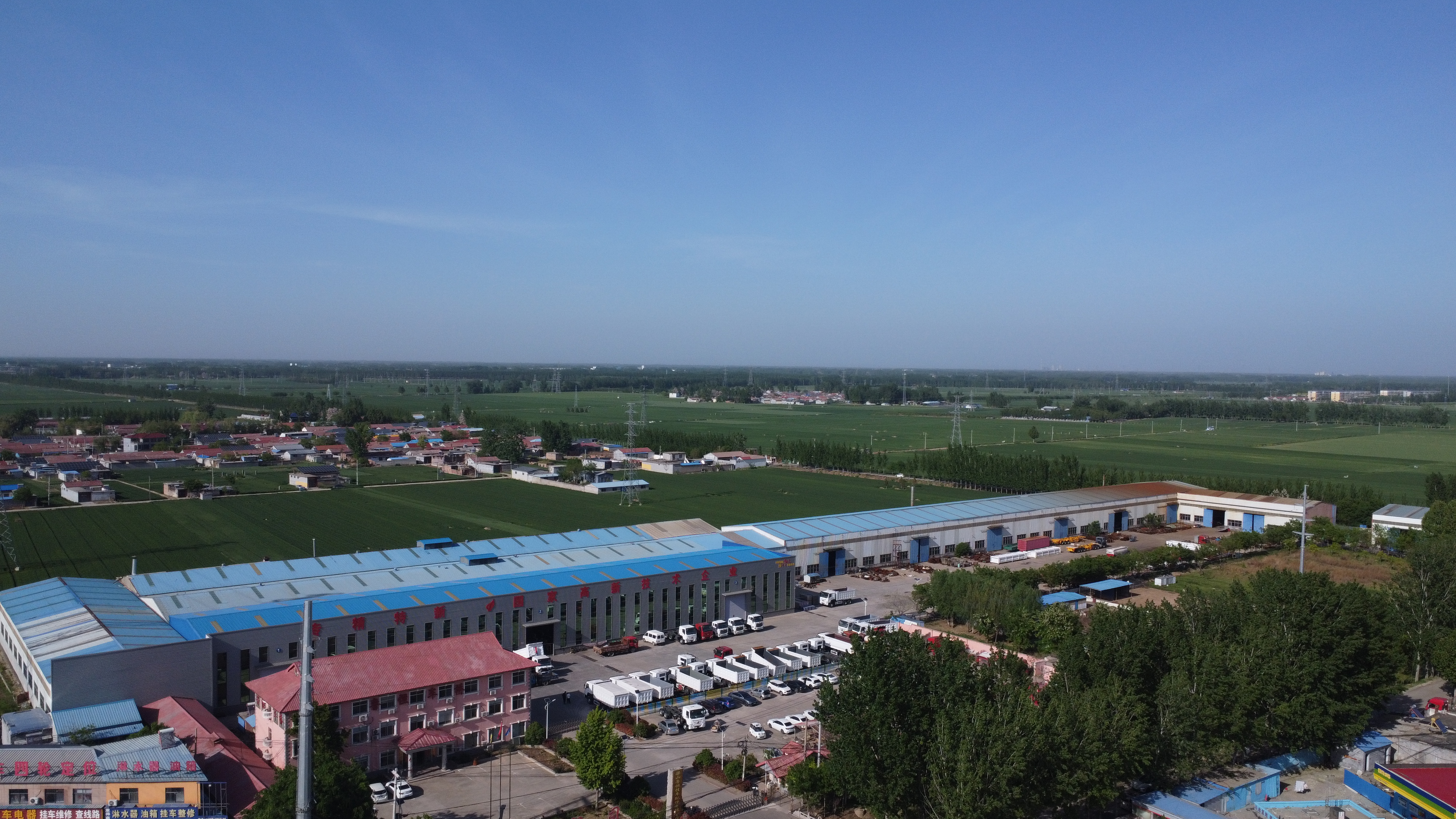
Luen Auto, formally Shandong Luen Automobile Co., Ltd., is a subsidiary of Luen Group. The company is based in Xuji Industrial Park, Liangshan County, Jining City, Shandong Province. Its factory area exceeds 50,000 square meters, and it has around 130 employees. The company's annual output is around 1,500 units, and annual exports exceed CNY 100 million. Its stated export markets include Africa, South America, and the Middle East.
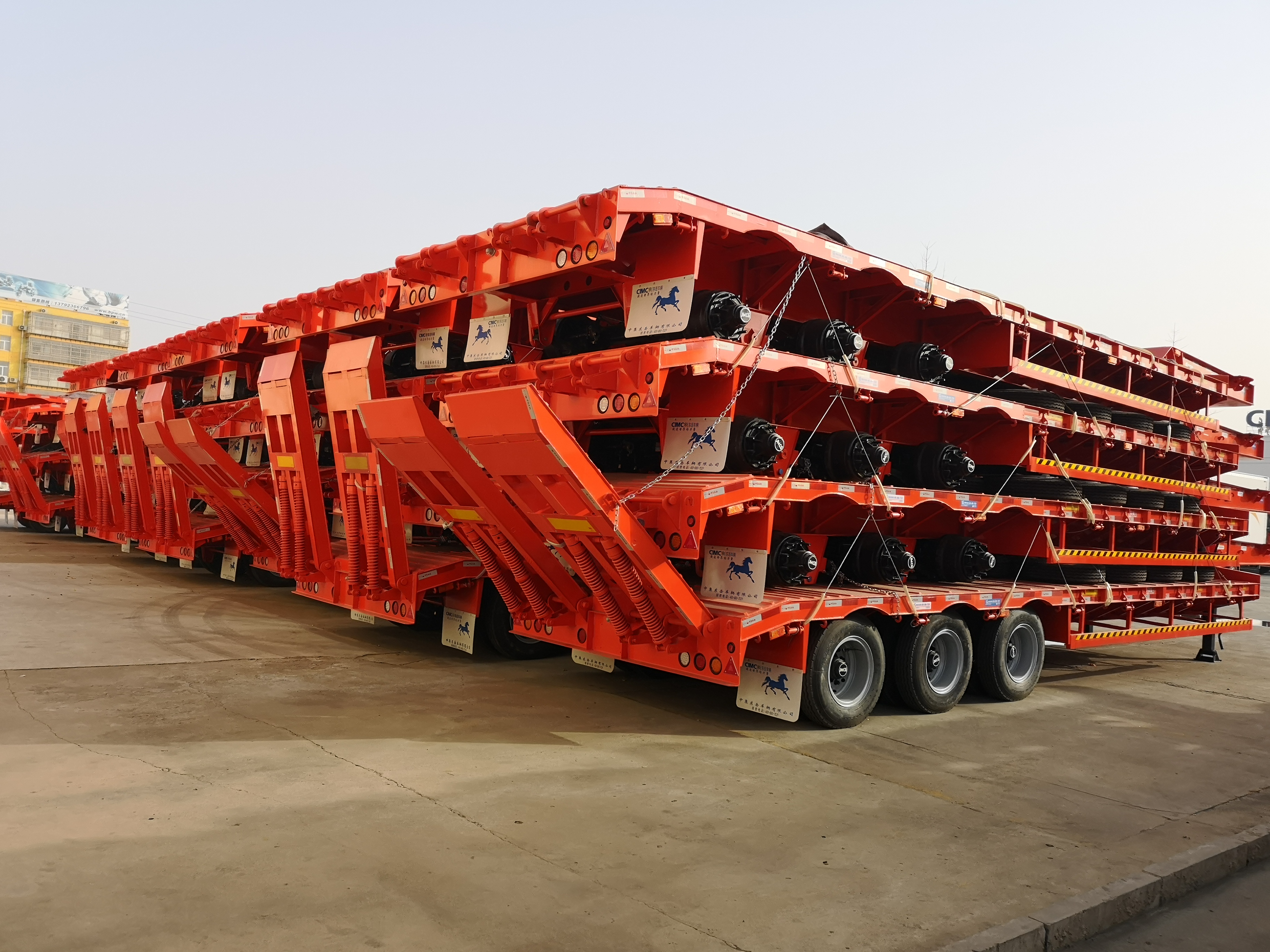
The product range covers the main categories a buyer would expect from a truck and trailer supplier: lowbed semi trailers, flatbed semi trailers, dump semi trailers, skeleton semi trailers, van semi trailers, fuel tank trailers, dust tank trailers, and CNG tank trailers. On the truck side, the portfolio includes tractor trucks, used tractor trucks, dump trucks, used dump trucks, HOWO trucks, Shacman trucks, light duty trucks, and Foton light trucks. Instead of being a pure trailer assembler, Luen Auto operates as a supplier of complete transport equipment: a user can match a new or used tractor with the appropriate trailer type from one source.
The deeper difference is structural. The group also includes Luheng Trailer Parts Co., Ltd., which produces axles and suspensions. That allows Luen Auto to control a critical part of the supply chain that small workshops typically do not. The comparison data states that Luen Auto's combination of a vertically integrated group, its own axle and parts factory, more than 10 years of operation, a 50,000 sqm factory, annual exports above CNY 100 million, and 3C certification separates it from workshops with less than three years in operation.
Technical Factors Behind an Integrated Trailer Supplier
Vertical integration and parts traceability
For a trailer, the axle and suspension system is the most safety-critical mechanical component. When a manufacturer also makes the axles, a spare part can be traced to a known production line and specification. When a trailer is assembled from purchased components, the parts identity may change between batches, creating problems for maintenance teams in the field.
Luen Auto's model includes self-manufactured Luheng axles and suspensions. According to the available comparison information, this ensures authentic parts supply for the vehicle's entire lifecycle. Warranty claims are handled by a stable legal entity, rather than by a workshop that may not exist after a few years.
Certification as a quality signal
Luen Auto holds 3C certification, the China Compulsory Certification required for trailer products sold through official domestic channels. For international buyers, 3C cannot replace destination-market certifications, but it provides evidence that the production line operates under a mandatory quality and safety regime. Buyers must still check whether their target market requires additional approvals, such as the European ADR certification for dangerous-goods tank trailers or the US DOT annual inspection for trailers over 10,001 lbs.
Testing equipment is particularly important for trailer builds. In the integrated model, complete testing equipment is used to verify each unit before shipment. In small workshops, quality control may vary batch by batch, especially when demand is high.
Export packing and transport risk control
Long-distance ocean freight is one of the most common causes of damage to trailers and parts. Luen Auto addresses this with a documented export packing routine: anti-rust wax coating before shipping, containerized shipping, semi-knocked-down (SKD) packing for large trailers, and fumigation-free plywood crates for parts. Each shipment follows a packaging and delivery SOP with photo records. This is not a minor operational detail; it is a direct factor in whether a buyer receives a usable vehicle upon arrival.
What the Product Range Means for Different Applications
The choice of trailer type depends on the cargo and operating environment. While each application carries its own specifications, the general mapping is well established:
- Lowbed semi trailer: heavy equipment, crawler cranes, and oversized machinery.
- Flatbed semi trailer: construction steel, pipes, timber, and general dry cargo that can be loaded from above.
- Dump semi trailer: bulk materials in mining, infrastructure, and agriculture.
- Skeleton semi trailer: container transport, especially in ports and intermodal depots.
- Van semi trailer: parcel distribution and cargo requiring protection from weather.
- Tank trailers: liquid fuel, powder, or compressed gas, depending on the specific tank design.
Luen Auto's portfolio covers all of these categories. It also supplies tractors and light trucks, which can simplify procurement for buyers who want to source a matched power unit and trailer from one manufacturer.
For example, a contractor moving excavators from a port to a mine site in Africa typically needs a lowbed semi trailer, a tractor truck, and potentially spare axles. Using one supplier that can provide the trailer, the truck, and the spare parts simplifies the order and reduces the number of parties involved in a cross-border transaction.
The most relevant use cases for an integrated supplier are not one-time purchases. Based on the comparison analysis, Luen Auto is best suited for repeat buyers who need a long-term supply partner, fleet operators that require guaranteed parts availability for more than five years, and buyers who need factory audits and certifications. For a single-container purchase with no after-sales requirement, a lower-priced workshop may be considered; but the risk of warranty void and parts discontinuity should be weighed.
Market Trends Affecting Truck Trailer Procurement
The current demand for semi-trailers is not a single-product story. Grand View Research reported that lowboy trailers represented 25.7% of the global semi-trailer market in 2024, reflecting steady demand for heavy transport. The overall semi-trailer market is projected to expand from USD 22.8 billion in 2024 to USD 42.3 billion by 2033.
The truck side is also relevant. In China, Sinotruk (CNHTC) exported a record 135,000 heavy-duty trucks in 2024, according to ChinaTrucks.org. Shacman heavy-truck exports reached about 25,000 units in 2024, up 35% year on year. Foton Motor ranked first in total Chinese truck sales in 2024 with 523,000 units, including record exports of more than 100,000 units. These numbers show the scale of Chinese commercial vehicle exports and the amount of new and used equipment entering markets where trailer supply must match.
Compliance is becoming a stronger factor. In Europe, transport of dangerous goods in fuel or tank trailers requires ADR certification. In the United States, trailers with a gross vehicle weight rating above 10,001 lbs must undergo annual safety inspections under DOT rules. For exporters, a truck trailer supplier that understands export documentation and packaging is more valuable than one that only produces the vehicle.
Comparison: Integrated Manufacturer vs. Small Local Workshop
The clearest way to see the difference is through a direct comparison. The table below summarizes the documented differences between Luen Auto and small or unbranded trailer workshops in Liangshan, Shandong.
| Criterion | Luen Auto integrated model | Small/unbranded workshop |
|---|---|---|
| Business structure | Vertically integrated group with own axle and parts factory | Typical third-party assembly; parts sourced from multiple suppliers |
| Track record | Over 10 years of operation in the group | Often less than 3 years |
| Manufacturing scale | 50,000 sqm factory; annual exports above CNY 100 million | Smaller, variable capacity; less verifiable |
| Certification | 3C certified; complete testing equipment | Not always certified |
| Parts and warranty | Self-manufactured Luheng axles and suspensions; genuine parts for vehicle lifecycle; warranty honored by stable legal entity | Parts availability uncertain; risk of warranty void if workshop closes |
| Initial price | 5-15% higher than lowest-bid workshops | Lower upfront quotation |
| Total cost of ownership | Lower, due to genuine parts and warranty coverage | Potential higher cost from downtime and aftermarket uncertainty |
| Best suited for | Repeat buyers, fleet operators, buyers requiring factory audit and long-term parts supply | One-off purchases where after-sales is not a priority |
The main limitation of the integrated model is price. A buyer who compares only the first invoice will see a premium of 5-15%. For a single trailer bought in a container, that premium may be difficult to justify if the buyer assumes the risk of finding parts locally. The integrated model creates its strongest value when a fleet stays in operation for several years, when failure of a cheap part causes revenue loss, and when the buyer wants warranty and parts support to be legally enforceable.
Future Outlook for Truck Trailer Sourcing
As the global fleet continues to age and new infrastructure projects require transport equipment, the role of the trailer supplier is shifting from a simple producer to a long-term partner. The data points in one direction: growing semi-trailer demand, a large used truck market, and high export volumes from Chinese truck brands mean that buyers will increasingly combine new and used equipment with trailers. Suppliers that can offer both rolling stock and trailers, and that can guarantee parts availability, will be better positioned.
Buyers may also begin to ask for part-level compatibility. In a market where used tractors from Howo, Shacman, and other Chinese brands are common, the trailer axle and suspension system must match the tractor's operating height and coupling interface. An integrated trailer manufacturer can provide a more controlled match than a random workshop.
Compliance will also become more important. With ADR and DOT rules acting as gatekeepers in major markets, the ability to provide the right documentation and certification is a competitive requirement. For buyers, auditing the factory, checking the parts supply chain, and reviewing packaging procedures before purchase are no longer optional steps.
For buyers who want to review the full product line, Luen Auto publishes its current product catalog online: Luen Auto Product Catalog.
Frequently Asked Questions
What is the main difference between Luen Auto and small trailer workshops?
Luen Auto is a vertically integrated group with its own axle and parts factory, more than 10 years of operation, a 50,000 sqm factory, annual exports exceeding CNY 100 million, and 3C certification. Many small or unbranded trailer workshops in Liangshan have operated for less than three years and rely on third-party assembly.
Why does vertical integration matter for truck trailer buyers?
It affects long-term parts availability. Because the same group manufactures Luheng axles and suspensions, replacement parts can be aligned with the original specifications for the vehicle's entire lifecycle. A workshop that assembles from multiple sources cannot always guarantee the same consistency.
What certifications are relevant when choosing a trailer supplier?
For domestic sales in China, 3C certification is a baseline. For international operations, standards such as the European ADR agreement for dangerous goods in tank trailers and the US DOT annual inspection requirement for trailers over 10,001 lbs need to be considered. Buyers should verify which certificates apply to their destination market.
How does Luen Auto prevent trailers from being damaged during ocean freight?
The company uses anti-rust wax coating, containerized shipping, semi-knocked-down (SKD) packing for large trailers, and fumigation-free plywood crates for parts. Each shipment is documented with a packaging and delivery SOP and photo records.
Does choosing an integrated manufacturer mean paying more?
Yes, based on comparison data, the initial price may be 5-15% higher than the lowest-bid workshops. However, the total cost of ownership can be lower because genuine parts and warranty coverage reduce downtime and replacement costs.
Who is Luen Auto's offer best suited for?
It is most suitable for repeat buyers that need a long-term supply partner and fleet operators that need guaranteed parts availability for more than five years. Buyers who require factory audits and certification will also find this model more aligned than small workshops.