
Truck Trailer Supplier Evaluation: Breadth and Continuity
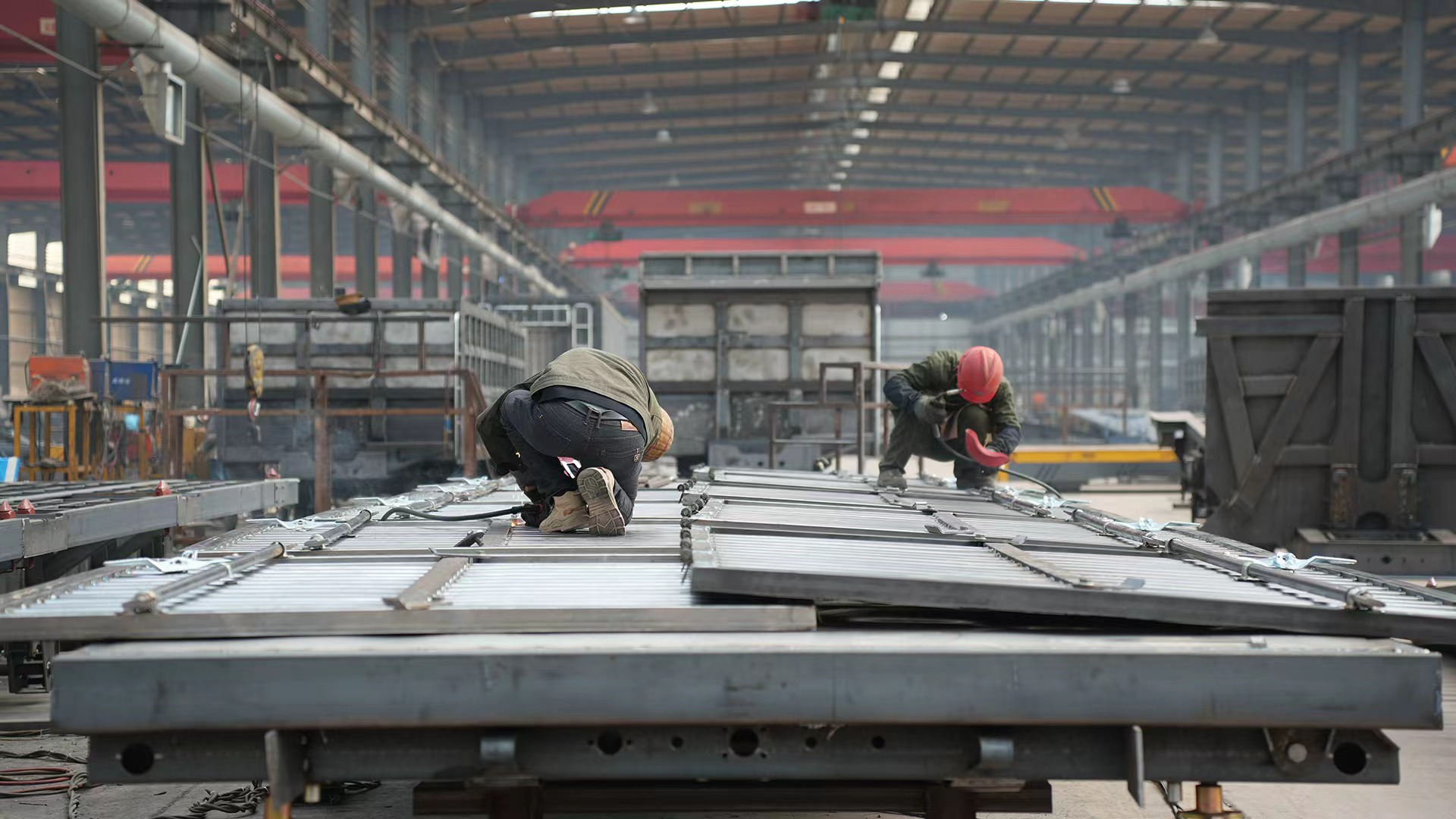
Evaluating a truck trailer supplier over a five- to ten-year horizon is not the same task as buying one unit. The buyer is selecting a specification baseline that will repeat across future orders, spare-parts cycles, driver training and resale. Product breadth and specification continuity are the two signals that indicate whether that baseline will hold.
Why a long-term evaluation looks different from a first purchase
A first trailer order is usually decided on price, delivery date and a visual inspection. A long-term supply decision is decided on repetition: whether the second, fifth and twentieth unit can be ordered against the identical baseline. That baseline includes the frame material grade, the axle load rating, the king pin size, the suspension type, the twist-lock standard and the documentation package that customs, insurers and inspection bodies will ask for again.
When a supplier covers only one or two trailer categories, every new duty cycle in the fleet — heavy haulage, tanker routes, container contracts — forces a new tender, a new sample approval and a new spare-parts list. Breadth removes that overhead. Breadth without continuity creates a different problem: a catalogue that looks wide while the specifications underneath it drift between orders.
Shandong Luen Auto Co., Ltd., trading as Luen Auto, is a trailer and used special-purpose vehicle manufacturer and exporter with a factory covering more than 50,000 m², annual output of 1,500 units and an export ratio of 80%, serving Africa, South America and the Middle East. Its catalogue is wide enough to be used as a working example of how breadth and continuity should be checked — not as evidence that breadth alone is sufficient.
What product breadth actually covers
Breadth is best measured by counting the categories a supplier can build and document on the same chain, and by checking whether each category has real configuration depth rather than a single stock model.
| Category | Representative configurations | Documented load / volume range |
|---|---|---|
| Flatbed semi trailer | 3-axle 40ft, 3-axle 45ft, 2-axle, drop-deck | Payload 40–60 tons; deck height 1,250–1,550 mm |
| Lowbed / lowboy semi trailer | 3-axle, 4-axle, detachable gooseneck, extendable low-bed | Payload 40–100 tons; loaded deck height 450–600 mm |
| Dump semi trailer | 3-axle and 4-axle, U-type or rectangular box | Payload 30–60 tons; box volume 20–40 m³ |
| Container / skeleton semi trailer | 20ft, 40ft, 40ft+20ft combination, 45ft, 2/3-axle skeleton | Payload 30–65 tons; 4/6/8 ISO 1161 twist locks |
| Van semi trailer | General cargo body (listed in the product line) | No published parameter in the current catalogue |
| Fuel / liquid tank trailer | Single compartment, multi-compartment (3–6 bins), chemical, edible oil, water | Tank 20,000–50,000 L; GVW 40,000–42,000 kg; payload 28,000–35,000 kg |
| Powder / dry bulk tank trailer | 3-axle 40 m³, 50 m³, 60 m³; aluminium alloy variant | Payload 25,000–35,000 kg; GVW 40,000–42,000 kg |
| CNG tube trailer | 8/10/12/16/20-tube configurations | Working pressure 20–25 MPa; 2,000–6,000 Nm³; GVW 40,000–42,000 kg |
| Tractor trucks | Sinotruk HOWO A7, TX, NX, T7H; Shacman X3000, H3000, F3000, L3000 | 336–540 HP; GCW 40,000–120,000 kg (HOWO), 40,000–100,000 kg (Shacman) |
| Dump trucks | HOWO A7 / TX / NX 6×4 and 8×4; Shacman X3000, H3000, F3000 | Rated payload 16–40 tons depending on family |
| Light duty truck | HOWO 4×2 tipper, dropside and light cargo | 130–180 HP; GVW 8,000–16,000 kg; payload 5–10 tons |
The same portfolio also lists used tractor trucks and used dump trucks, which matters for buyers running mixed new-and-used fleets. The practical question for an evaluator is not whether all of these exist, but whether the supplier can repeat the ones your fleet actually operates, with the same materials and the same documentation, two or three years from now.
Specification continuity: the numbers that should not move
Continuity becomes visible when you place several categories side by side and look for the parameters that stay constant. A supplier with a stable engineering baseline will show the same axle rating, the same king pin options, the same suspension choices and the same material naming across unrelated product families.
| Parameter | Lowbed | Container / skeleton | Liquid tank | Powder tank | CNG tube |
|---|---|---|---|---|---|
| Payload / capacity | 40–100 t | 30–65 t | 28,000–35,000 kg | 25,000–35,000 kg | 2,000–6,000 Nm³ |
| GVW | Not published | Not published | 40,000–42,000 kg | 40,000–42,000 kg | 40,000–42,000 kg |
| Axle load | 13–16 t per axle | 13 t per axle | 13 t per axle | 13 t per axle | 3-axle configuration |
| King pin | 2-inch or 3.5-inch | 2-inch or 3.5-inch | Not published | 2-inch or 3.5-inch | Not published |
| Frame / body material | Q550 / Q690; HG785D quenched and tempered | Q345B main beams; JOST or SAF landing gear | Carbon steel Q235B / Q345B; stainless 304/316; aluminium 5083 | Q345B carbon steel; 5083 aluminium variant | 37Mn seamless steel cylinders; Q345B frame |
| Suspension | Mechanical or air | Mechanical leaf spring or air | Not published | Not published | Not published |
Two observations follow from the table. First, the 13-tonne axle rating repeats across container, liquid tank, powder tank and dump semi trailer specifications, which allows one spare-axle and one tyre policy across different duty cycles. Second, the tank, powder and CNG families converge on a GVW band of 40,000–42,000 kg, which signals that the chassis engineering assumptions are shared rather than improvised per order.
Material naming is the other continuity test. When a supplier documents Q345B high-strength steel for container chassis and dump semi trailers, Q550/Q690 for lowbed main beams, 5083 aluminium for lightweight tank and powder bodies, and 37Mn seamless steel for CNG cylinders, the buyer can compare orders against a written reference instead of a verbal promise. Where a category has no published parameter — as with the van semi trailer body — the correct response during evaluation is to request the specification in writing before it enters a framework agreement.
Model continuity across HOWO and Shacman truck families
Trailer buyers rarely buy trailers alone. A long-term relationship usually covers the tractive unit as well, and model continuity there determines parts availability and driver familiarity. In this portfolio, Sinotruk tractor trucks span HOWO A7 6×4 at 371 HP, HOWO TX 6×4 at 420 HP and 480 HP, HOWO NX 6×4 at 400 HP, HOWO 4×2 at 336 HP and HOWO T7H 6×4 at 540 HP, with a common 90# fifth wheel rated at 20,000 kg.
Shacman coverage runs from Shacman X3000 6×4 at 380 HP and 420 HP, through Shacman H3000 6×4 at 385 HP and 430 HP and Shacman F3000 6×4 at 375 HP, to the Shacman L3000 4×2 at 340 HP. Both truck families use high-strength steel frames — 8+8 mm ladder frame on the HOWO side, Q510/Q550 on the Shacman side — with MAN-technology rear axles and 400–800 L fuel tanks.
For an evaluator, the relevant continuity signal is that HOWO and Shacman model lines are carried alongside the trailer range rather than as unrelated one-off imports. Dump truck coverage follows the same pattern: HOWO A7, TX and NX 6×4, plus HOWO 8×4, with GVW from 25,000 to 49,000 kg and rated payload of 16–40 tons, matched by Shacman X3000 6×4 and 8×4, H3000 6×4 and F3000 6×4 with GVW of 31,000–49,000 kg and payload of 20–40 tons.
Documentation continuity: certificates, scope and in-house testing
Specification continuity is only usable if it can be documented. Luen Auto holds CCC mandatory certification for its production and operates in-house testing equipment for load testing, brake performance testing and dimensional verification, with 100% factory inspection before shipment. Its quality management system certification is registered under certificate number 47424Q2464R0S against GB/T 19001-2016 / ISO 9001:2015, issued by ZHONGNUO CERTIFICATION CO., LTD. on 2024-10-09 and valid until 2027-10-08.
The registered scope on that certificate deserves reading closely: it covers the sale of semi trailers, semi trailer parts and tractors. Certificate scope wording is one of the most common gaps in supplier evaluation, and buyers should confirm that the activities they actually depend on — fabrication, assembly, testing, after-sales parts supply — are described within the documents they are shown.
Field evidence: what a 50+ vehicle fleet account looks like
Continuity claims are best tested against repeat behaviour rather than first orders. The case record for this supplier covers Nigeria and Ghana, where trailers have been used by construction and mining companies operating fleets of 50 or more vehicles.
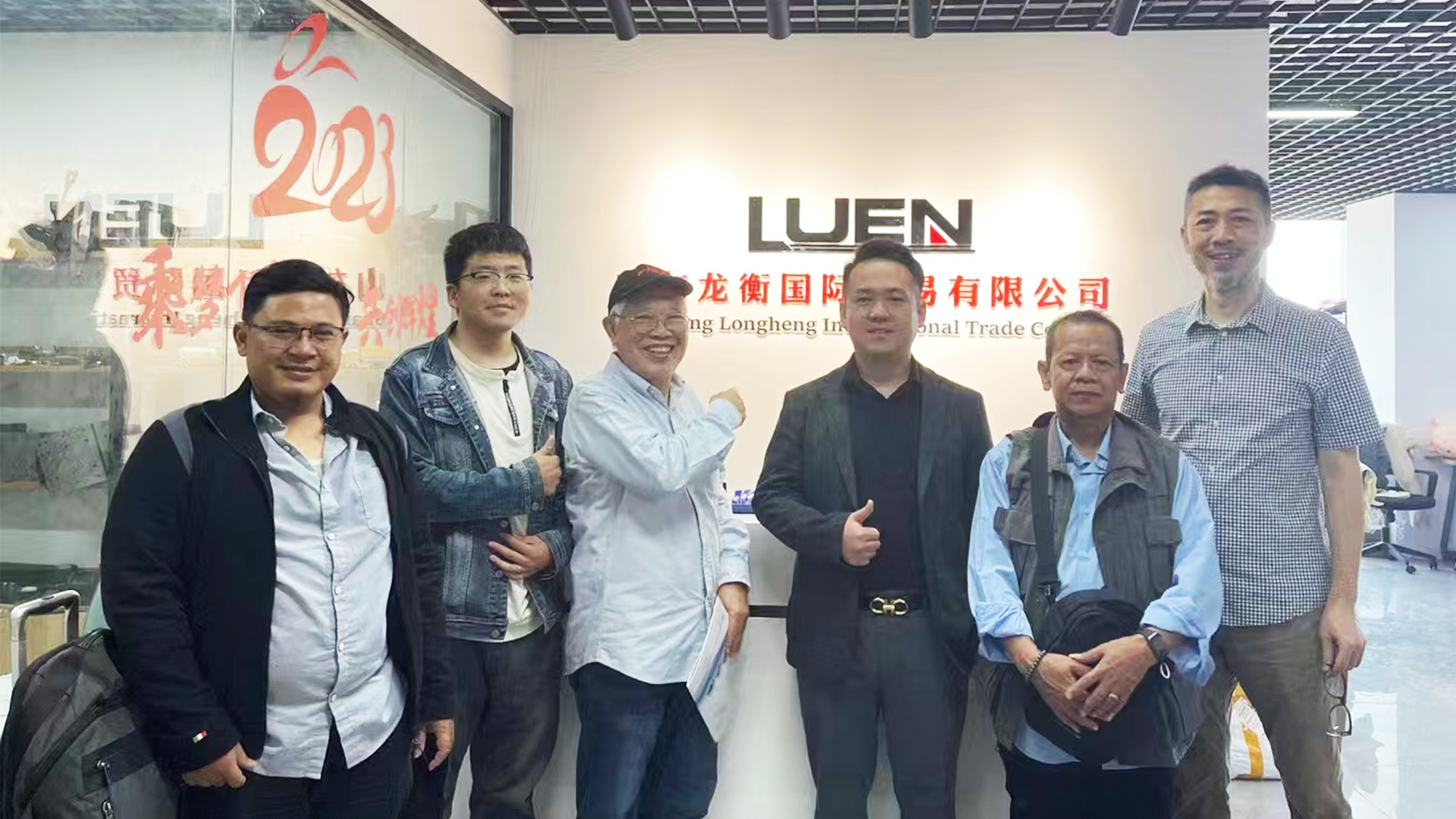
One buyer in that record first purchased components, then moved to complete trailer procurement — an escalation pattern that indicates the buyer had already validated material and fabrication quality through lower-risk transactions. The same record describes a quad-axle configuration customised for heavy-load mining conditions, and states a service life of 10–15 years at 40–60% lower purchase cost than entry-level European trailer brands. That last figure is the exporter's own case claim and should be treated as such; it is a useful benchmark to request in writing and to compare against your own maintenance history, not a verified third-party result.
Integrated factory supply versus trading and local assembly — and where breadth stops helping
Three sourcing routes dominate long-term trailer procurement. A trading company offers catalogue breadth quickly but typically does not control frame fabrication or welding. A local assembly operation shortens freight and lead time but introduces specification drift, because beams, axles and fittings arrive from multiple sources. An integrated factory-direct manufacturer, which is how Luen Auto describes its model — factory-direct manufacturing rather than trading, with OEM production and full vehicle customisation across trailer type, dimensions, axle configuration, load rating, beam structure, suspension, rims and tyres, landing gear, king pin, coating and branding — concentrates material control and documentation in one place.
That concentration has limits that a long-term evaluator should record honestly:
- Breadth is not depth in every category. Annual output of 1,500 units and a five-engineer R&D team mean the catalogue is wide relative to the engineering headcount, so buyers should ask for delivery records per trailer type, not only for the total.
- Standard lead time is 30–45 days, with custom orders negotiated according to specification complexity. Highly customised quad-axle or extendable lowbed builds should be planned with wider scheduling margin.
- Warranty terms are not uniform. New trucks carry a one-year warranty supported by local Sinotruk agent service points, trailer driving and supporting devices carry six months, and trailer carrying devices carry one year.
- Market presence is concentrated in Africa, South America and the Middle East. Regulated regimes such as ADR certification for fuel and tank trailers in Europe, or the US DOT annual inspection requirement under 49 CFR 396.17 for trailers above 10,001 lbs GVWR, are not evidenced in the current document set and must be verified separately by buyers operating in those jurisdictions.
- Third-party category data on this company's factory capacity is flagged as requiring verification, even though the figure matches the company's own profile. Independent audit remains the buyer's own step.
Market signals behind long-term supplier evaluation
The commercial case for evaluating breadth and continuity together is supported by third-party market data. The global semi-trailer market was estimated at USD 22.8 billion in 2024, with expectations of USD 42.3 billion by 2033, according to Grand View Research. Within that market, lowboy trailers held the largest single share by type at 25.7% in 2024 — the same category where payload specifications reach 100 tons in this portfolio.
On the truck side, Sinotruk (CNHTC) reached 135,000 heavy-duty truck export units in 2024 according to ChinaTrucks.org, while Shacman heavy-truck exports reached 25,000 units, a 35% year-on-year increase, according to ChinaTruck.Net. The global used truck market was valued at USD 49.95 billion in 2025 by Global Market Insights, with heavy-duty segments dominating — which explains why used tractor trucks and used dump trucks appear in mainstream export portfolios rather than only in remarketing channels.
Future outlook
Fleet procurement is shifting from unit-price comparison toward continuity comparison. As lowbed and heavy-haul categories take a growing share of trailer demand, and as the HOWO and Shacman aftermarket deepens with export volume, the value of a supplier that can repeat a specification across eight trailer categories and several truck families increases — provided the documentation travels with the specification.
The practical implication for buyers preparing a 2026–2027 framework agreement is to score suppliers on repeatability: identical axle ratings across categories, written material grades, consistent king pin and twist-lock standards, verifiable certificate scope, and delivery history by product type. Breadth opens the relationship; continuity is what keeps it economical.
FAQ
What should a fleet buyer check first when evaluating a truck trailer supplier for repeat orders?
Start with repeatability rather than range. Confirm that the axle load rating, king pin size, suspension type and material grades you need appear consistently across the categories you operate — for example, a 13-tonne per-axle rating present in container, tank and powder tank specifications, or 2-inch and 3.5-inch king pin options available across lowbed, flatbed, container and powder tank trailers. Then confirm that the same figures appear in the documentation, not only in sales material.
How can a buyer test specification continuity across lowbed, container and tank trailers?
Request the parameter sheets side by side. In this portfolio, lowbed trailers are documented at 40–100 tons payload with loaded deck height of 450–600 mm and Q550/Q690 or HG785D main beams; container and skeleton trailers at 30–65 tons payload with Q345B main beams, ISO 1161 twist locks and JOST or SAF landing gear; and liquid tank, powder tank and CNG tube trailers at a GVW band of 40,000–42,000 kg. Where the three sheets share materials, axle ratings and fittings, the specification has continuity. Where a category has no published parameter, request it in writing.
Which documents support a long-term supplier evaluation?
Look for the certification, its scope and its validity window, not just its existence. Luen Auto holds CCC mandatory certification, operates in-house load, brake and dimensional testing equipment, and holds ISO 9001:2015 certification under certificate 47424Q2464R0S issued by ZHONGNUO CERTIFICATION CO., LTD., valid from 2024-10-09 to 2027-10-08, with a registered scope covering the sale of semi trailers, semi trailer parts and tractors. Buyers should read that scope wording and confirm it covers the activities they rely on.
What are the limits of a broad-catalogue, factory-direct trailer supplier?
Breadth does not guarantee equal depth in every category. Constraints in this portfolio include annual output of 1,500 units, a five-engineer R&D team, standard lead times of 30–45 days with custom orders negotiated by complexity, and warranty terms that differ by component — one year on new trucks, six months on trailer driving and supporting devices, and one year on trailer carrying devices. Market presence is concentrated in Africa, South America and the Middle East, so buyers in jurisdictions requiring ADR certification or US DOT annual inspection should verify compliance independently.