
Turning Trial Orders into Durable Bed Blanket Supply
The most expensive phase of bed blanket procurement is not the first order. It is the later shipment that reveals whether a supplier can repeat the quality that won the contract. For B2B buyers moving from a trial order to a planned purchasing program, the relevant question is no longer only about price or samples. It is about production capacity, specification control, certification follow-through, inspection flexibility and commercial risk handling across multiple order cycles.
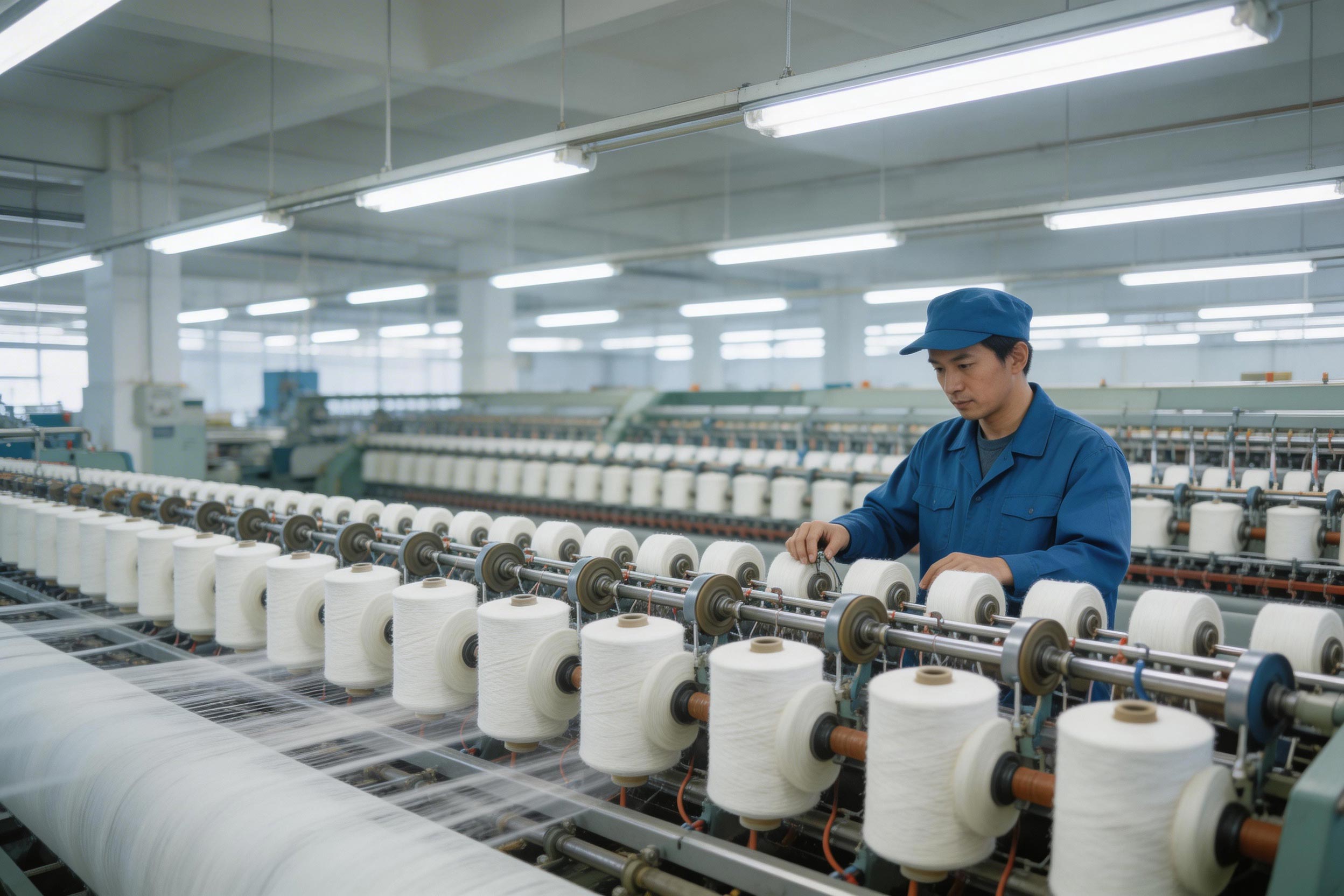
This article uses SYS TEXTILE (CHANGSHU SHENG-SHUN TEXTILE CO., LTD.) as a reference case. The company is a Changshu-based manufacturer in Jiangsu Province, China, operating a 7,000-square-metre factory focused on velvet-feel bedding. Flannel blankets and rabbit-fur-style blankets are its core product categories, with velvet quilts and velvet four-piece bedding sets as complementary lines. According to company data, approximately 90% of its output is exported, with the United States, Brazil and the United Kingdom listed as main markets.
The Gap Between Trial Orders and Recurring Supply
A trial order gives a buyer fabric hand, colour accuracy and construction details that can be verified in hand. It does not, however, demonstrate how a factory will behave when the same specification is produced across several batches, under a tighter delivery calendar, or alongside other export orders in the same production season. That is the gap between sample approval and long-term supply confidence.
Several factors explain why bed blanket programs break down after the first successful shipment. Fabric batches can differ slightly in pile density, surface finish or dye absorption. Production scheduling may prioritise larger or newer customers during peak months. Internal quality checks may be diluted when staff are under delivery pressure. Communication also becomes harder once a buyer is no longer an active negotiation partner but a recurring account that must fit into an ongoing production plan.
At the same time, the opportunity for durable supplier relationships is genuine. The global blanket market was valued at USD 15.1 billion in 2023 and is projected to reach USD 25.5 billion by 2030, according to Grand View Research. Polyester blankets already hold the largest material share of that market at 33.8%. When a category grows at this scale, buyers who consolidate volume with reliable manufacturers gain negotiating leverage, priority capacity and fewer re-qualification cycles.
Signals That a Bed Blanket Supplier Can Hold a Long-Term Relationship
For buyers at the decision-to-execution stage, the most practical way to evaluate a bed blanket manufacturer is to examine the operational facts that support repeat orders. SYS TEXTILE provides several checkpoints worth understanding.
Production Capacity and Order Absorption
Monthly production capacity of 300,000 units is one concrete reference point. The manufacturer reports an annual output of approximately 3 million pieces, supported by a 7000-square-metre plant and 60 employees. For an importer, distributor or brand owner, this matters because capacity determines how much order volume can be absorbed before a supplier starts turning away work or compressing lead times. A manufacturer whose capacity is already near its limit during normal months will be less reliable when a retail program expands unexpectedly.
Another useful signal is the presence of a development team. SYS TEXTILE lists five engineers in its R&D function. In a long-term blanket relationship, development capacity is not only about new patterns. It also supports specification adjustments such as size changes, colourway updates and minor construction modifications that occur between seasons.
Commercial Terms That Reduce Execution Friction
Commercial terms are a strong indicator of whether a supplier is prepared for ongoing cooperation. SYS TEXTILE quotes a minimum order quantity of 1,000 pieces and works on FOB or CIF delivery terms. Payment terms are quoted as 20/80, a structure common in export home textiles where part of the payment is made after order confirmation and the balance is settled against shipping documents.
For buyers seeking open account flexibility, the manufacturer offers one institutional safeguard. The risk of 30-day open account terms is covered by Sinosure, the China Export & Credit Insurance Corporation, under an approved credit limit. If a customer is unable to pay or delays payment, the insurer compensates the exporter. This structure does not remove credit risk entirely, but it shows that the supplier has built a formal mechanism for offering longer payment cycles without carrying uninsured exposure.
Inspection and Quality Assurance Provisions
Long-term buyers should also verify which inspection options a factory accepts. SYS TEXTILE states that it accepts pre-shipment factory full inspection, third-party inspection through SGS, and buyer on-site inspection. The value of these options goes beyond quality control. It gives the buyer the right to define checkpoints in the production calendar rather than relying only on the supplier's internal judgement.
In a yearly supply arrangement, inspection provisions tend to become more important, not less. Repeat orders create the risk of quality drift, especially when raw material batches or production teams change. A contract that incorporates third-party inspection or on-site inspection at the buyer's discretion is easier to sustain than one that depends entirely on goodwill.
Product Architecture Across Bedding Categories
A supplier's product range affects how durable the relationship can be. If a factory only offers one type of blanket, the buyer must keep onboarding new factories as product needs evolve. SYS TEXTILE's catalog includes five main product groups built around polyester velvet-feel materials:
| Product Group | Material & Structure | Role in a Bedding Program |
|---|---|---|
| Flannel Blanket | Flannel (Polyester); available in Wave, Square Jacquard, Square and Southwest Design patterns | Core year-round blanket for home bedding; supports decorative design options |
| Shu Fleece Blanket | Shu Fleece (Polyester); available in 3D and Jacquard versions | Soft-touch blanket for export home textile programs | Rabbit Fur Blanket | Rabbit fur-like polyester | Fur-feel surface, positioned for bedding segments that emphasise softness and appearance |
| Velvet Quilt | Velvet polyester outer with polyester filling | Adds layered warmth; natural extension of a blanket program |
| Velvet Four-Piece Bedding Set | Duvet cover, sheet and pillowcases in velvet polyester | Allows suppliers to serve coordinated bedroom programmes rather than single SKUs |
All listed product groups are available in Twin, Queen and King sizes with customisation options, which is useful for distributors serving multiple retail or contract channels. Polyester is the common thread, and that is consistent with global material demand: polyester blankets represented 33.8% of the blanket market in 2023.
Technical Points That Decide Consistency in Polyester Bed Blankets
For procurement teams managing multi-year bed blanket supply, technical consistency matters more than novelty. Polyester blankets are relatively standardised products, but their quality is decided in several manufacturing stages.
One area is fibre selection and yarn specification. Polyester staple and filament yarns behave differently in pile fabrics. The same blanket pattern can feel different if a supplier quietly changes the yarn source. This is particularly relevant when a blanket style uses flannel, shu fleece or fur-like polyester structures, where surface feel is the primary selling point. Buyers can reduce risk by documenting yarn type, pile height and finishing treatment in a specification sheet rather than relying only on visual approval.
A second area is dyeing and colour consistency. Blankets made in large batches may be produced across multiple dye lots. If a buyer sells a solid-colour flannel blanket through a catalogue, even slight differences between shipments become visible on a shelf. Neither internal inspection nor a certificate fully eliminates this risk. The practical answer is to require lot-to-lot colour tolerance control and to inspect production against the approved master sample.
A third area is functional finishing. In long-term programs, buyers increasingly request properties beyond basic warmth. One indication comes from project requirements observed at SYS TEXTILE. Special requirements in a long-term scenario included OEKO-TEX certification, anti-static properties, machine-washability, wear resistance, breathability and decorative pattern options. These requirements show that bed blanket procurement is no longer only about weight and colour. It has become a compliance and performance conversation.
On certification, there is also a specific regulatory reason for buyers to revisit their existing supplier agreements. OEKO-TEX STANDARD 100 has reduced the permitted Bisphenol A (BPA) limit from 100 mg/kg to 10 mg/kg, effective from April 2025. Blanket importers selling into regulated markets cannot assume that an old certificate remains sufficient. The supplier must track standard revisions and adapt its raw material control system accordingly. That kind of follow-through is a reliable indicator of long-term suitability.
Application-Driven Requirements in Long-Term Programmes
Different buying channels impose different expectations on bed blanket manufacturers. A hotel procurement team is not evaluating a blanket the same way as a baby product importer or a distributor feeding e-commerce channels. In the hospitality sector, hotel bedding is projected to grow from USD 14.2 billion in 2025 to USD 23.6 billion by 2034 at a 5.8% compound annual growth rate. Hoteliers need blankets that withstand frequent commercial laundering and retain surface quality over time. That creates demand for machine-washable, wear-resistant constructions with consistent sizing across large orders.
The baby blanket segment has a different centre of gravity. The global baby blanket market was valued at nearly USD 2.54 billion in 2024 and is expected to grow at a 3.6% compound annual growth rate through 2032. Buyers in this segment rarely negotiate on price alone. Chemical safety, certified raw materials and traceable production processes are usually the deciding criteria. For a manufacturer like SYS TEXTILE, the ability to participate in this segment depends less on adding a SKU and more on documenting material compliance and controlling input quality.
Institutional and dormitory-style bedding programs share some of these pressures. Blankets used in shared or managed environments are washed frequently, exposed to more wear and sometimes used in facilities with specific antimicrobial or moisture-management expectations. Meanwhile, lightweight portable blankets serve camping and travel channels where packability and easy care are valued more than thickness.
Not every supplier needs to serve every vertical. What a long-term buyer should examine is whether the manufacturer's quality system can adapt to the target channel's recurring requirements. In SYS TEXTILE's case, the company reports that a project was completed within a partnership period exceeding three years with buyers in North America and Europe, demonstrating long-term product reliability in commercial application. For a factory whose export markets are primarily the United States, Brazil and the United Kingdom, such a history is at least a verifiable reference point for buyers who want evidence of repeat-order stability.
Market Trends That Favour Committed Supply Partnerships
Several market trends make long-term bed blanket partnerships more relevant than they were a decade ago.
First, the overall market is expanding. The global blanket market is projected to increase from USD 15.1 billion in 2023 to USD 25.5 billion by 2030. Growth on that scale attracts new importers and private-label programs, but it also increases competition for reliable factory capacity. Buyers with established supplier relationships are better positioned than those entering the market only through spot purchases.
Second, the material structure of the market favours polyester-specialised factories. Polyester held 33.8% of the global blanket market in 2023, according to Grand View Research. This is directly relevant to manufacturers such as SYS TEXTILE whose product line is built on polyester flannel, shu fleece, fur-like and velvet structures. A buyer sourcing polyester blankets can build a long-term program around a factory whose core material handling experience matches the product mix.
Third, functional textiles are growing faster than the general textile market. The global antimicrobial textiles market was valued at USD 11.9 billion in 2023 and is projected to reach USD 19.0 billion by 2030. For bed blankets, this translates into growing requests for antimicrobial finishes, moisture-related performance and indoor air quality considerations. Factories that can integrate these requirements into repeat production runs will be preferred over factories that treat them as one-off experiments.
Fourth, the regulatory landscape is tightening. The OEKO-TEX STANDARD 100 BPA limit reduction from 100 mg/kg to 10 mg/kg is one concrete example. There will likely be further adjustments in chemical limits, recycled content definitions and environmental reporting expectations. A long-term supplier must therefore have not only a product quality system but also a process for monitoring regulatory change.
Finally, the geographic concentration of China's home textile industry helps explain the operating environment around factories such as SYS TEXTILE. Nantong, also in Jiangsu Province, holds more than 50% of China's bedding industry market share, with market transactions exceeding 240 billion RMB in 2024. Changshu is part of the same broader textile region. For international buyers, this cluster provides access to raw material suppliers, finishing workshops and experienced export logistics within a relatively integrated supply chain.
Buying Models: Where Partnered Supply Is and Is Not the Right Fit
Long-term bed blanket supply is not the only procurement model available, and it is not always the best fit. Comparing the main approaches helps clarify the trade-offs.
| Procurement Model | Main Advantage | Main Trade-Off |
|---|---|---|
| Transactional spot buying | Price flexibility; no commitment; easy to switch suppliers | Less capacity priority; quality can vary; every order requires re-negotiation and re-qualification |
| Annual contract or framework order | Fixed pricing structure; reserved capacity; clearer specifications | Requires volume forecasts; some flexibility is lost |
| Partnered multi-year supply | Development collaboration; compliance continuity; priority in peak periods | Supplier lock-in risk; needs active relationship management |
The partnered model is strongest for buyers with stable product platforms, catalogue programs or contract channels such as hotels, institutions or private-label retail ranges. These buyers benefit from a manufacturer that understands their colour palette, size assortment, packaging requirements and documentation habits.
The model has limits. For products with very short lifecycles, such as fashion-driven printed blankets, committing too much volume to one factory can reduce access to fresh design ideas from other suppliers. The same applies when a buyer's order mix is too small to reach a meaningful capacity threshold. In those cases, a transactional or multi-supplier approach may preserve more commercial flexibility. Buyers should therefore decide whether they are purchasing a stable bedding commodity or a rapidly changing seasonal item before entering a multi-year agreement.
There is also a supplier comparison dimension that deserves transparent interpretation. SYS TEXTILE describes itself as having a more advanced development department and better product attractiveness than two suppliers commonly discussed in the same region: CHANGSHU FINE and CHANGSHU DONGFANG WEAVING. It also reports a price level approximately 10% lower than CHANGSHU FINE, along with higher production capacity and after-sales service. These are manufacturer-reported claims, not independent audit findings. A professional buyer should validate such claims through sample comparison, factory visits and delivery performance tracking rather than treating them as verified market facts.

Future Outlook for Bed Blanket Supply Programs
Looking ahead, the bed blanket category is likely to become more demanding in three areas: certification depth, supply chain transparency and material sustainability.
Certification depth will continue to grow. The reduction in OEKO-TEX BPA limits should be read as a signal that chemical safety rules will keep tightening. Buyers who lock in a supplier relationship without building an annual compliance review into the agreement may face sudden barriers when reintroducing products into regulated markets. Suppliers that treat certification as a continuous process will be easier to work with over time.
Supply chain transparency is also moving from a purchasing preference to an operational expectation. Textiles represented 5.8% of total municipal solid waste in the United States in 2018, according to the EPA, and that statistic has contributed to stronger downstream interest in recycled fiber content and circular programs. Bed blanket buyers can expect more questions from their customers about where polyester comes from, whether recycled fiber is used, and how the factory manages waste. Manufacturers that can answer those questions with data will have a distinct advantage in multi-year supply negotiations.
Finally, economic concentration is likely to continue favouring factories with scale. Monthly capacity of 300,000 units, such as SYS TEXTILE's stated level, is not remarkable for the largest Chinese factories, but it is a meaningful baseline for mid-sized importers seeking a supplier that can handle regular reorder volumes. Combined with formal credit insurance, documented capacity and third-party inspection acceptance, that scale gives a buyer the structure needed to convert a pilot order into a long-term sourcing routine.
FAQ: Long-Term Bed Blanket Procurement Questions
What production capacity should a buyer expect before starting a long-term bed blanket contract?
One useful reference point is monthly production capacity. SYS TEXTILE reports a monthly production capacity of 300,000 units. This level allows a factory to manage repeat orders, seasonal peaks and customised SKU variations while maintaining delivery schedules.
Can bed blanket manufacturers offer payment flexibility for long-term buyers?
Open account terms can be available, but they require risk management. SYS TEXTILE covers 30-day open account risk through Sinosure, China's export credit insurance corporation, based on an approved credit limit. If a customer delays payment or cannot pay, the insurance company compensates the exporter. This structure makes extended payment terms more sustainable.
What is a typical minimum order quantity for a customised bed blanket program?
A commonly quoted MOQ is 1,000 pieces. This is the level cited by SYS TEXTILE, and it is practical for B2B buyers testing a new product while preserving room for customisation.
Which inspection options should be included in a bed blanket supply agreement?
Buyers can reasonably request pre-shipment factory full inspection, third-party inspection through providers such as SGS, or buyer on-site inspection. SYS TEXTILE states that all three options are acceptable. Including such options in a long-term contract helps prevent quality drift.
What product requirements appear in long-term bed blanket programs?
Observed program requirements include OEKO-TEX certification, anti-static properties, machine-washability, wear resistance, breathability and decorative pattern options. These requirements reflect the shift from simple warmth to measurable performance and compliance.
Is there evidence that a bed blanket supplier can remain reliable over several years?
SYS TEXTILE reports that one project was completed within a partnership period of more than three years, with buyers in North America and Europe. The company describes the project as evidence of long-term product reliability in commercial use. For procurement teams, such a record should be verified through references and order history before being accepted.
Have Questions or Need More Details?
Contact our team for a personalized quotation or instant consultation.
Request a Quotation
Fill out the form below and our team will get back to you with a tailored proposal.
WhatsApp Direct Chat
Prefer to chat in real-time? Message us on WhatsApp for instant assistance & quick answers.
- Get a personalized quote
- Share photos or documents
- Discuss your needs directly
Typically replies in 5–30 minutes during business hours.