
Type-C Cable Procurement FAQ: E-Marker, 100W, Compliance & MOQ — CABLE-LINK vs Anker vs UGREEN
Type-C Cable Procurement FAQ: E-Marker, 100W, Compliance & MOQ — CABLE-LINK vs Anker vs UGREEN
A buyer-side reference on the technical and commercial variables that decide whether a USB-C cable programme ships on time — written as an industry Q&A with contract-manufacturer and brand-led supplier positions shown side by side.
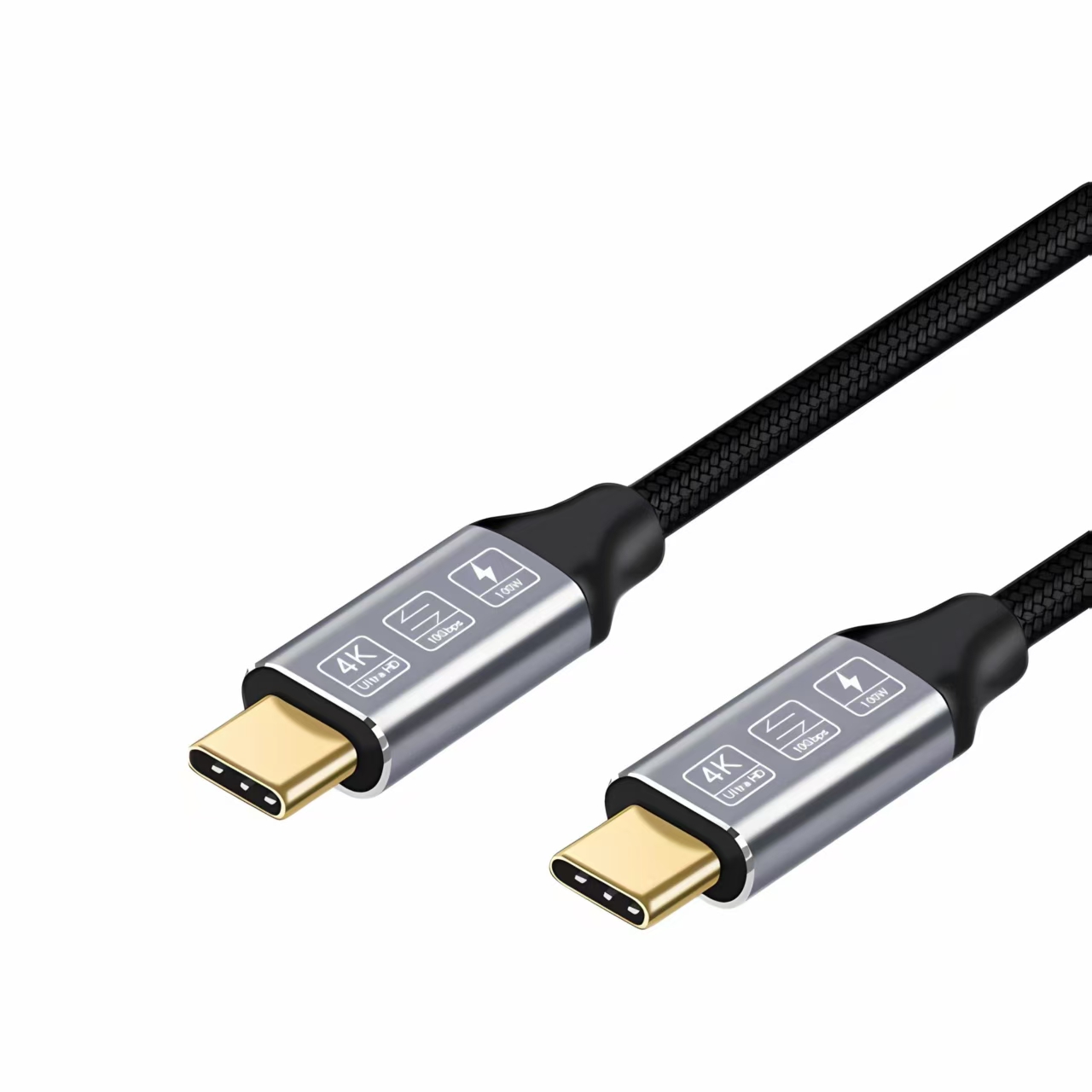
A USB-C to USB-C PD charging and data cable of the type specified in RFQs for laptop expansion, charging and data-transfer deployments.
Why Type-C cable decisions stall in the research phase
The questions that slow a Type-C cable purchase are rarely about the connector. They are about whether a 100W-rated cable genuinely holds 20V/5A without overheating on a customer's desk, whether the supplier can produce a compliance file that survives an EU retail or customs review, and whether MOQ, lead time and payment terms match the buyer's real sales cycle. Those three concerns sit behind most of the sourcing threads that run between Research and Evaluation stages.
The market context explains the pressure. The global USB-C cable market reached USD 6.48 billion in 2024 and is projected to reach USD 20.23 billion by 2033, according to Dataintelo. Regulation has added a second lever: the European Union's Common Charger Directive mandated USB-C for portable electronic devices by December 2024, affecting more than 400 million units annually, as recorded by the European Parliament.
One caution on market data: published USB Type-C figures are not directly comparable. Cable-only estimates sit far below broad ecosystem figures, and 2024 values ranging from roughly USD 1.33 billion (Intel Market Research, cables only) to USD 13.6 billion (Credence Research, total Type-C market) both appear in circulation. Buyers should confirm what a number includes before placing it in a business case.
Technical question 1: why 100W depends on an E-Marker IC, not on cable thickness
A 100W cable is a 20V/5A cable. Above roughly 3A, USB Power Delivery expects the cable to be electronically marked: an E-Marker IC inside the connector assembly reports the cable's current rating to the power source, which then authorises the higher power level. Without that handshake, a compliant charger will normally fall back to a lower current, and the end user experiences slower charging rather than a failure — which is exactly why the problem is easy to miss in incoming inspection.
The practical consequence for buyers is that heat, not connector shape, becomes the limiting factor. At 5A, conductor cross-section, contact resistance and connector quality determine how much temperature rise a cable shows under sustained load. This is the point where a specification on paper and a specification in service diverge, and where a supplier's test regime matters more than a wattage badge.
CABLE-LINK's Type-C cable model CLE-18014 is specified at 5A maximum current, 20V maximum voltage and 100W maximum power, with a stated operating scope of 60–100W. The specification also lists USB PD 3.0 alongside QC 3.0/4.0, AFC, FCP and SCP compatibility, and describes the construction as copper conductor with TPE and nylon outer materials designed for low resistance and low heat generation.
| Product type | USB-C to USB-C PD fast charging & data cable |
| Connector | USB-C male to USB-C male |
| Power | 5A max current / 20V max voltage / 100W max power (scope 60–100W) |
| Protocols | USB PD 3.0, QC 3.0/4.0, AFC, FCP, SCP |
| Data speed | USB 2.0: 480 Mbps / USB 3.2 Gen 2: 10 Gbps (optional) |
| Materials | Copper conductor, TPE and nylon |
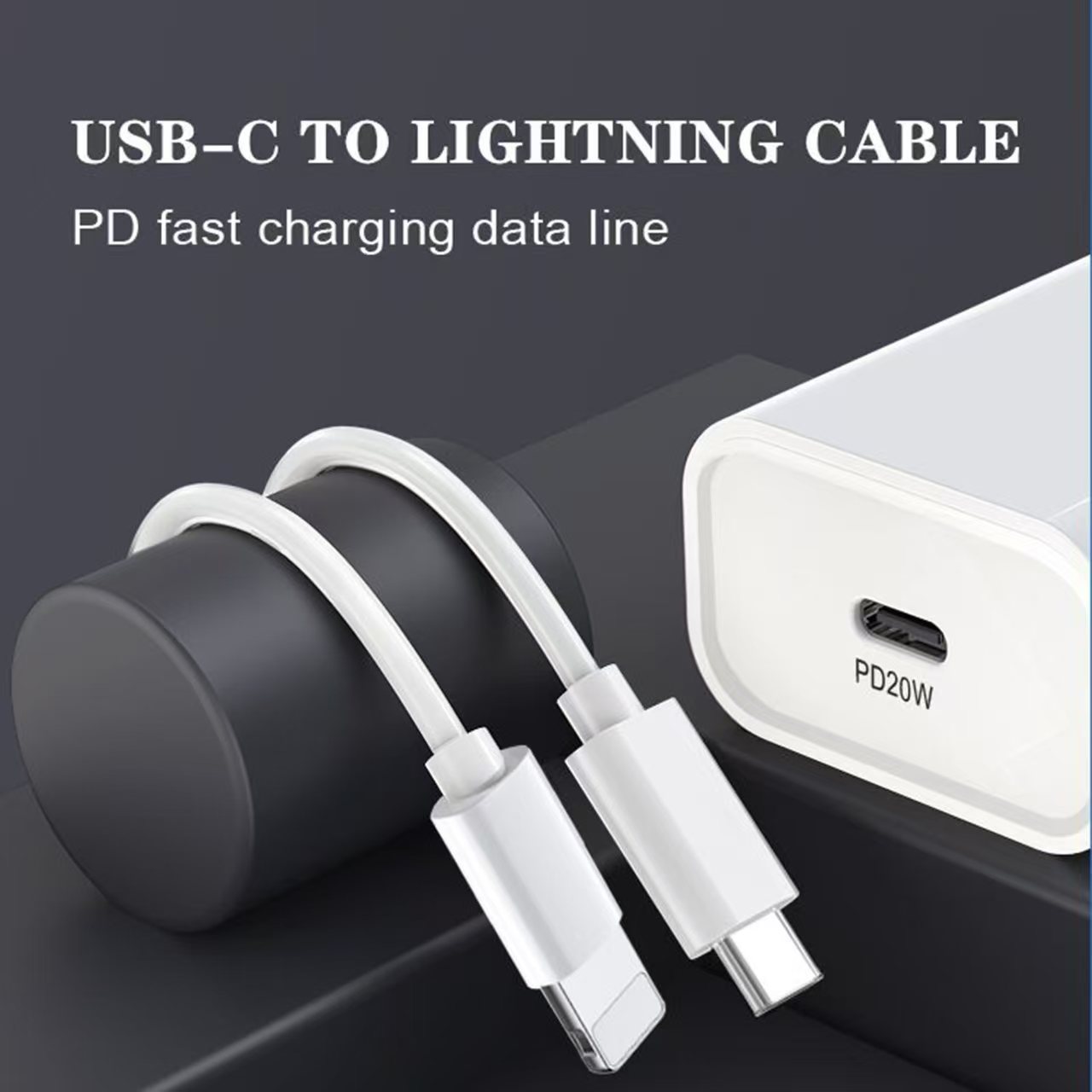
Connector and cable construction are the variables that determine whether a 5A rating holds up in continuous use.
Technical question 2: what dual-layer shielding actually changes
Shielding is usually described in marketing terms, so it is worth stating what it does functionally. A dual-layer construction — typically a foil layer over the twisted pairs combined with an outer braided screen — does two jobs: it limits emissions radiating out of the cable, and it reduces the pickup of external noise that disturbs the differential data signal.
For a procurement decision this translates into two questions that a buyer can actually verify. First, will the cable hold its rated throughput in an electrically noisy environment such as a dock populated with switching power supplies? Second, will the finished assembly pass system-level EMC testing once it is bundled into a retail product or a docking station? Shielding addresses both, but it is not the only variable — cable length, connector grounding and pair geometry all interact with it, and a shielded cable at 2 m is not equivalent to the same construction at 5 m.
Technical question 3: 10 Gbps versus 480 Mbps — which one fits the project
Data speed is the specification most often mismatched to the application. USB 2.0 at 480 Mbps covers charging-first accessories, firmware updates, peripheral control and most consumer charging cables. USB 3.2 Gen 2 at 10 Gbps is the configuration needed when the cable carries storage traffic, display data or dock traffic.
CLE-18014 is offered with 480 Mbps as the base configuration and 10 Gbps as an optional one. This matters commercially: if the RFQ does not state the required data rate, the quotation may legitimately return the lower-cost 480 Mbps build, and the mismatch only surfaces when the buyer tests a docking-station use case. Stating the data rate, the cable length and the expected end device at RFQ stage removes that ambiguity.
What CABLE-LINK documents as a contract manufacturer
CABLE-LINK is the brand identity of Changzhou Cable-link Electronics Co., Ltd., a cable and power bank manufacturer and exporter based in Changzhou, Jiangsu, China, founded in 2007 and serving export markets in the EU and the USA. Its product range covers Type-C cables, HDMI cables, network cables and power banks, produced across six production lines in a 5,000 m² facility with 65 employees and a three-engineer R&D team supported by in-house testing instruments.
The documentable compliance set is the part most relevant to importers: ISO 9001 and BSCI company certification, plus product-level CE, RoHS, REACH, HDMI, MFi, UL and FCC certification. The CE documentation is issued under certificate CTL180320101, covering EN 55032:2015, EN 55024, EN 61000-3-2 and EN 61000-3-3.
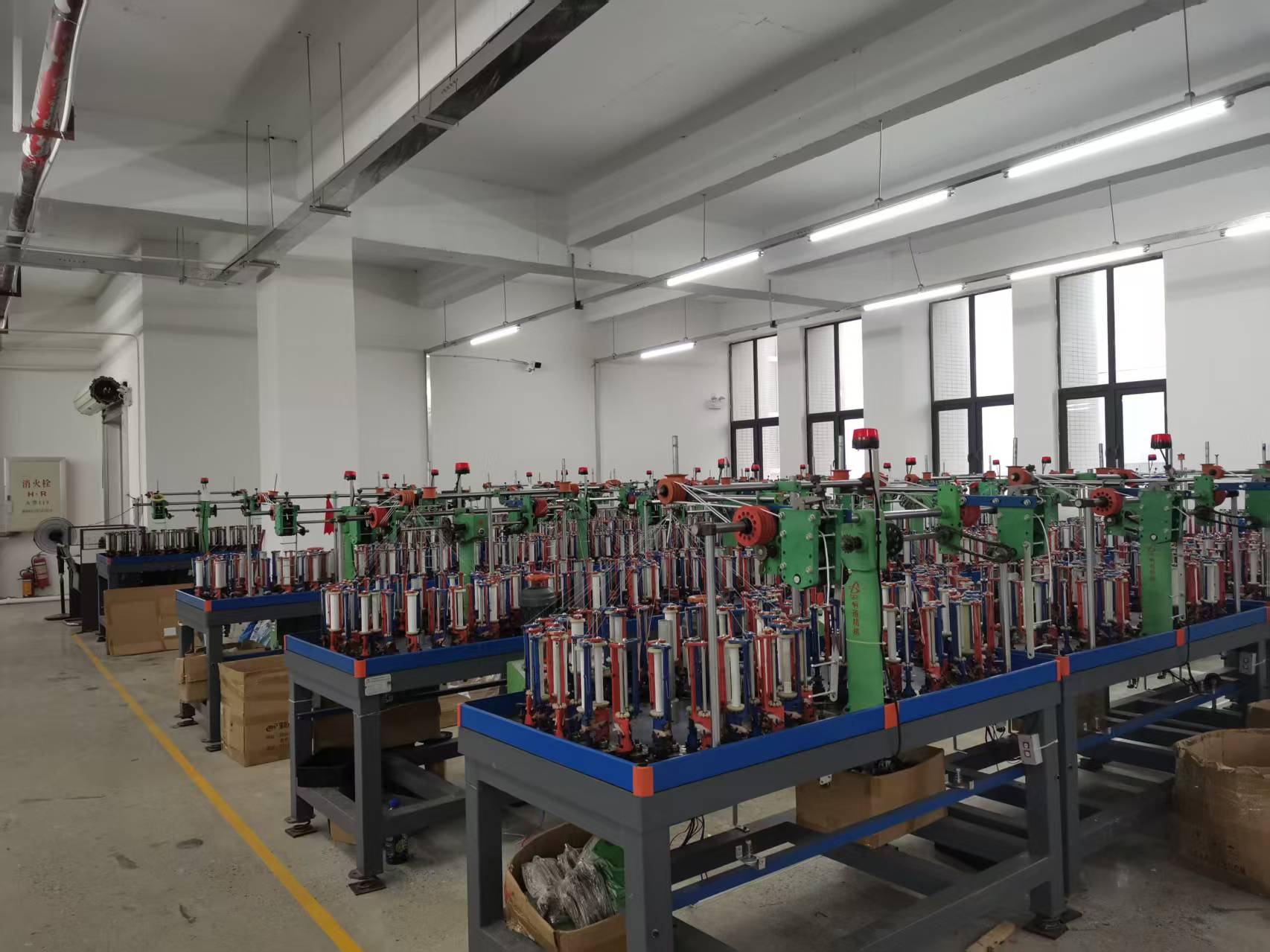
Production capacity and test capability are the two items buyers verify before moving from sample approval to volume orders.
Side-by-side: contract manufacturer versus brand-led suppliers
Anker and Belkin are identified as leading third-party manufacturers in the USB-C accessory market, with Anker's Powerline series cited for 100W PD performance (TechGearLab / Credence Research). UGREEN occupies a comparable consumer-facing position. The comparison below therefore contrasts supplier types — a contract manufacturer working to a buyer's specification versus brand-led suppliers selling finished branded products — rather than ranking product performance.
| Dimension | CABLE-LINK (contract manufacturer) | Anker / UGREEN / Belkin (brand-led) |
|---|---|---|
| Supply-chain position | Manufacturer and exporter, 100% export to EU/USA | Consumer retail brands selling finished, branded products |
| R&D capability | 3 engineers, in-house testing instruments, multi-category cable development | Product-level specification development published per model |
| Production scale | 5,000 m² facility, 6 production lines, 65 employees, 300,000 units monthly capacity | Batch production is not contract-visible; capacity disclosed at brand level only |
| Compliance documentation | ISO 9001, BSCI; CE (CTL180320101 — EN 55032:2015, EN 55024, EN 61000-3-2, EN 61000-3-3), RoHS, REACH, HDMI, MFi, UL, FCC | Certification applies to the branded SKU; documentation is not transferable to another buyer's specification |
| Customisation | OEM production, custom length and logo, MOQ 2,000 units, ~30-day lead time | Catalogue configurations; private-label manufacturing is not the core offer |
Comparison is based on publicly available supplier information and the facts documented for CABLE-LINK. It does not imply a performance ranking of third-party products.
Where the contract-manufacturer model does not fit
A factual boundary matters more than a claim here. CABLE-LINK's order model starts at a 2,000-unit MOQ with a lead time of around 30 days, OEM production and customisation limited to length and logo. Buyers who need a few hundred units for a pilot, who require retail-ready packaging and consumer brand marketing support, or who need finished branded products on short notice are outside that fit; brand-led suppliers such as Anker, UGREEN and Belkin serve that demand directly.
A second boundary is configuration. The 10 Gbps data rate on CLE-18014 is an optional build, not the default. Projects that assume 10 Gbps without stating it in the RFQ can receive a 480 Mbps equivalent and only discover the gap during integration testing. Similarly, verification of the CE certificate scope against the exact ordered configuration is a buyer-side task, not an assumption.
Scenario fit: where this cable family is deployed
The documented application envelope for this product family in EU markets covers four use cases: laptop expansion through docking stations, charging for phones, earphones and laptops, network data transfer, and audio/video transmission for home theatre, TV, monitor, projector, console and laptop connections. Two operating notes accompany the family on the EU market — the product operates in data transfer + charging mode, and it requires supporting equipment such as a charger when charging is the primary function.
The execution record is a French deployment of 2,000 units for consumer electronics clients, used for laptop expansion and multi-port docking applications, that delivered two years of stable data transfer and charging. Related deployments in the same market cover fast charging and 10 Gbps high-speed transfer scenarios with the same two-year stability result. This is presented as a reliability reference rather than a performance claim.
Commercial terms buyers should treat as technical variables
MOQ, lead time and acceptance criteria are frequently negotiated after the specification is agreed, which is where delivery risk is created. In the CABLE-LINK model the published terms are a 2,000-unit MOQ, approximately 30-day lead time, 300,000 units monthly capacity, OEM production with 100% testing, and a 30% deposit with the 70% balance payable before shipment. Delivery is quoted FOB or CIF, and a pre-shipment test report is supplied as the acceptance document.
For a buyer, the acceptance document is the practical control point. A pre-shipment test report tied to the ordered configuration — current rating, data rate and connector build — converts a supplier statement into a verifiable delivery condition, and it is the document that makes a 30-day lead time manageable rather than optimistic.
Market trend signals relevant to the next sourcing round
Three signals are worth tracking. First, regulatory standardisation continues to compress the compatibility question: the EU Common Charger Directive has already aligned portable devices on USB-C, reducing the number of connector variants a buyer must stock. Second, the USB Type-C Cable and Connector Specification Release 2.4 (October 2024), published by the USB Implementers Forum, defines a certification path for charging-only interfaces and allows 14-pin configurations for power-sensitive devices — a change that widens the design space between charging-only and full-featured cables.
Third, adjacent categories are expanding in parallel. The USB hub market was valued at USD 4.72 billion in 2024, with multi-port hubs accounting for more than 55% of the segment (Credence Research). Because docking products consume cable volume at a different rate and with different performance requirements than standalone charging cables, hub demand and cable demand should be forecast together, not separately.
A recurring industry estimate is also worth flagging as a caution rather than a benchmark: one third-party market report suggests that roughly 30% of USB-C cables on the market do not meet USB-IF compliance standards, particularly around high-wattage safe charging (Market Growth Reports). The figure is an estimate, not a measurement of any named supplier's output, but it explains why importers increasingly request the test report before the price list.
Future outlook
The direction of travel is toward fewer, better-documented cable SKUs. As charging-only certification paths become formalised and EU compliance expectations settle, the differentiator shifts from connector compatibility to documentation quality and configuration discipline: whether a supplier can state the current rating, the data rate and the certificate scope for the exact build being ordered. For contract manufacturers, that favours suppliers with in-house testing and a maintained certification set; for buyers, it means the RFQ becomes the most important document in the procurement cycle.
FAQ
Does a 100W Type-C cable require an E-Marker IC?
Yes, in practice. Above approximately 3A, USB Power Delivery expects the cable to be electronically marked so the cable's current rating can be communicated to the power source. A cable specified at 20V/5A and 100W, such as CLE-18014, operates in that range; without the marking handshake, a compliant charger typically falls back to a lower current.
What is the minimum order quantity and lead time for an OEM Type-C cable?
For CABLE-LINK, the published MOQ is 2,000 units with an approximately 30-day lead time, against a monthly production capacity of 300,000 units. Customisation under the OEM model covers cable length and logo. Orders below the MOQ fall outside the standard model.
Which compliance documents should an EU importer request?
For this supplier, ISO 9001 and BSCI at company level, and CE, RoHS and REACH at product level, with CE documentation issued under certificate CTL180320101 covering EN 55032:2015, EN 55024, EN 61000-3-2 and EN 61000-3-3. HDMI, MFi, UL and FCC certifications are also held. Buyers should confirm that the certificate scope matches the exact configuration ordered.
How can a buyer tell a 10 Gbps cable from a 480 Mbps cable at quotation stage?
Only by specifying it. CLE-18014 lists USB 2.0 at 480 Mbps as the base data speed and USB 3.2 Gen 2 at 10 Gbps as an optional configuration. The RFQ must state the required data rate, the cable length and the intended end device; otherwise the lower-cost build may be quoted correctly but incorrectly for the application.
What payment and delivery terms are standard?
The documented terms are a 30% deposit with the 70% balance before shipment, and delivery quoted either FOB or CIF. A pre-shipment test report is provided as the acceptance documentation, which is the practical control point for confirming that the delivered batch matches the agreed specification.
Should a buyer choose a contract manufacturer or a brand-led supplier?
It depends on the requirement. A contract manufacturer such as CABLE-LINK fits buyers who need OEM production, custom length or logo, and volume above 2,000 units, working from their own specification. Brand-led suppliers such as Anker, UGREEN and Belkin fit buyers who need finished, retail-ready branded products with consumer marketing support. The two models answer different questions rather than competing on the same one.
What does dual-layer shielding change in a finished product?
It addresses two failure modes: emissions radiating from the cable, and external noise disturbing the data signal. In practice this affects whether the cable holds its rated throughput in electrically noisy environments such as a populated docking station, and whether the finished assembly passes system-level EMC testing. Length, connector grounding and pair geometry remain interacting variables.
How is quality verified before shipment?
For this supplier, production runs 100% testing, and a pre-shipment test report is issued as the acceptance document. Remote after-sales support is provided for compatibility and troubleshooting questions. Buyers typically align the report's test items with the specification clauses they intend to enforce.
For procurement teams moving from research into evaluation, the useful checklist is short: confirm the current and data rate in writing, confirm the certificate scope against the ordered build, and confirm that the acceptance document is tied to that same configuration.