
Type-C OEM Value: CABLE-LINK vs Anker, UGREEN and Belkin
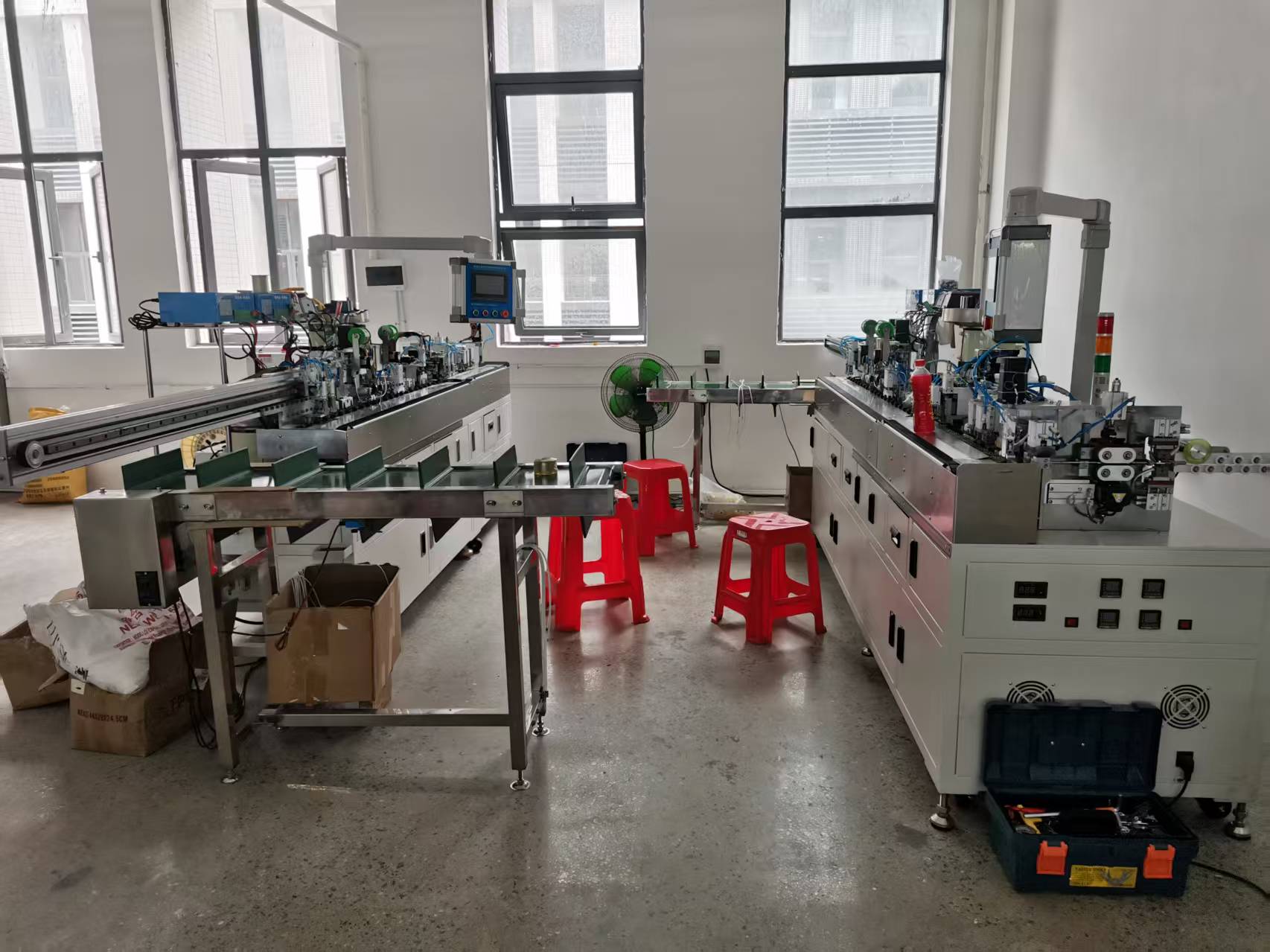
OEM value is decided on the production floor: capacity, process control and documentation determine whether a private-label Type-C program can scale.
The global USB-C cable market reached USD 6.48 billion in 2024 and is projected to reach USD 20.23 billion by 2033, according to Dataintelo. That growth is not only a consumer story — it is a sourcing story. For importers, distributors and private-label brands, the practical question in 2026 is no longer which Type-C cable wins a specification sheet, but which partner can build a cable under the buyer's own label, at a defensible cost, with documentation that survives customs clearance and retail audits.
This comparison evaluates OEM value across four names that procurement teams encounter constantly: CABLE-LINK, Anker, UGREEN and Belkin. It separates documented capability from marketing claims, and it states the boundaries of each route. CABLE-LINK is the trading identity of Changzhou Cable-link Electronics Co., Ltd., a cable and power bank manufacturer and exporter established in 2007 in Changzhou, Jiangsu, China, with a 100% export focus on the EU and USA. Anker, UGREEN and Belkin are treated here primarily as brand suppliers of finished Type-C cables and accessories rather than as private-label manufacturing partners.
Why OEM Value Became the Deciding Question in Type-C Cable Sourcing
Three forces moved OEM value to the centre of Type-C procurement. The first is regulation. The European Union's Common Charger Directive mandated USB-C for all portable electronic devices by December 2024, a change affecting over 400 million units annually according to the European Parliament. Any brand selling into the EU now needs a compliant cable line, whether it manufactures or buys one.
The second is compliance risk. Market Growth Reports estimates that approximately 30% of USB-C cables on the market fail to meet USB-IF compliance standards, particularly regarding high-wattage safe charging. That figure is a third-party estimate and should be treated as directional rather than precise, but the underlying risk is real: an out-of-specification cable can damage a charging port long before it damages a brand's reputation.
The third is product consolidation. Charging, data transfer and video output increasingly share a single connector, so one cable specification decision now affects several product lines at once — from the USB-C charging cable sold at retail to the Type-C PD cable bundled with a wall charger, a USB C Hub or a USB C Docking Station.
Against that backdrop, OEM value is not the same as unit price. It is a composite of five things: how much of the product the buyer is allowed to define, the minimum volume needed to start, the lead time between order confirmation and shipment, the compliance evidence that travels with the goods, and the landed cost position compared with buying branded finished goods.
How This Comparison Was Scoped
Buyers evaluating an OEM partner should test each candidate against a fixed set of dimensions rather than against a single quote. The framework below is the one used throughout this article.
| Evaluation dimension | What a buyer should verify |
|---|---|
| Customization scope | Whether cable length, connector overmold, logo marking and packaging can be specified, and how far the product can move from a standard catalogue item. |
| Minimum order quantity | The lowest order a supplier will accept for a customized configuration, and whether that figure applies per SKU or per program. |
| Lead time | Time from confirmed order to shipment for a customized run, not for a stock item. |
| Compliance evidence | Certificates and test reports matching the exact product sold: safety, materials and, where relevant, ecosystem licensing. |
| Production capacity | Factory area, line count, daily and annual output, and whether capacity is dedicated or shared. |
| Cost position | Quoted price relative to branded equivalents, plus the cost of tooling, packaging and quality control. |
| Engineering depth | Size and discipline of the R&D function relative to the complexity of the customization requested. |
| Brand equity | Whether the buyer receives consumer brand pull or must build it independently. |
The Four Suppliers at a Glance
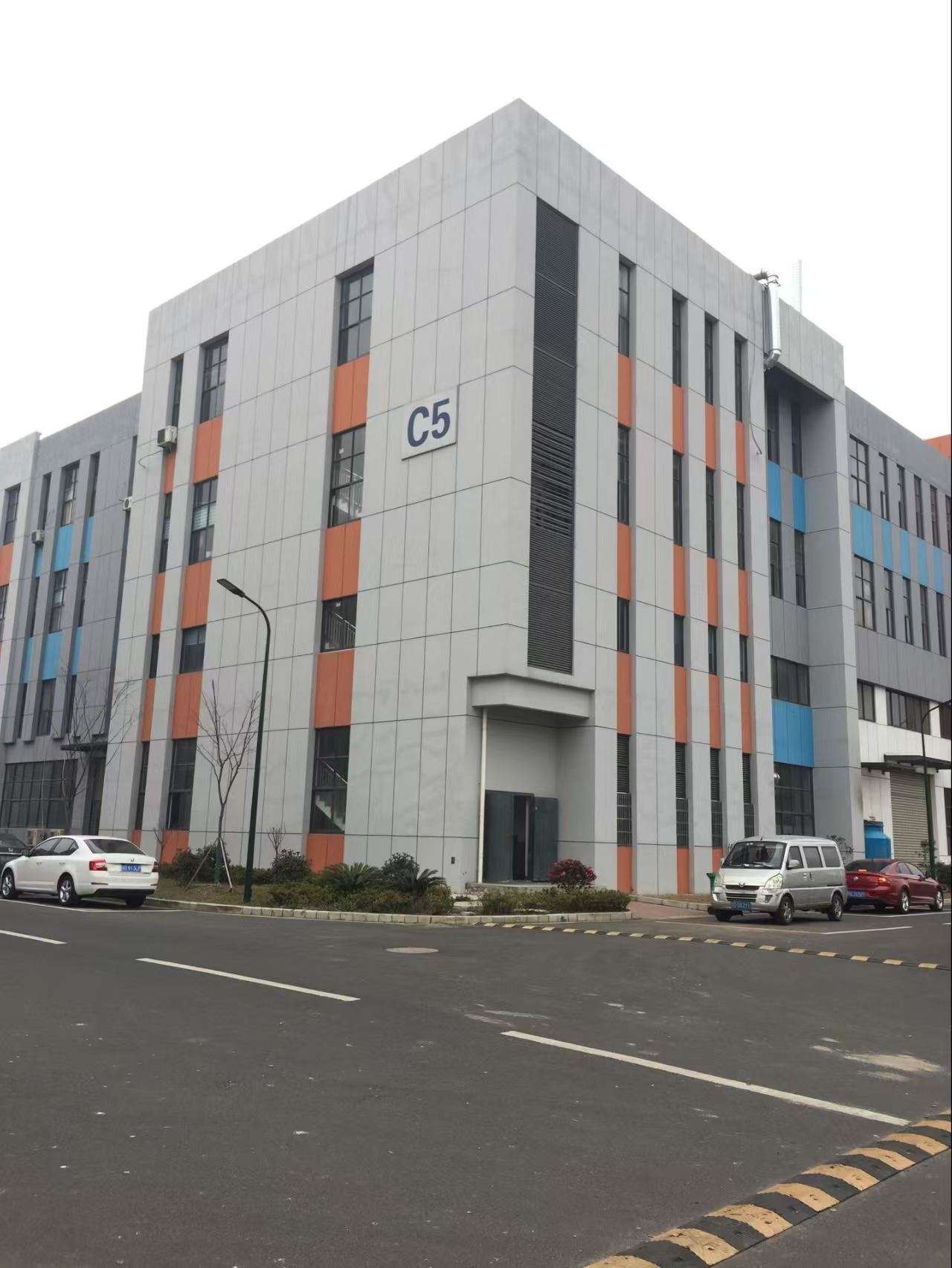
A manufacturing-oriented supplier is evaluated on facility, process and documentation rather than on consumer marketing presence.
CABLE-LINK — manufacturing partner
Changzhou Cable-link Electronics Co., Ltd. is a cable and power bank manufacturer established in 2007 and based in Changzhou, Jiangsu, China. It operates a 5,000 m² production area with six production lines, 65 employees and an annual output of 20,000,000 units. Its product range covers Type-C cables, HDMI cables, network cables and power banks, and 100% of its output is exported to the EU and USA. Its website is www.cable-link.cn and its technical blog is published at blog.cable-link.cn.
Anker — brand supplier
Anker is a widely recognised consumer electronics brand whose accessory range includes USB-C cables and chargers. TechGearLab and Credence Research identify Anker and Belkin as leading third-party manufacturers in the USB-C accessory market, and cite Anker's Powerline series for 100W PD performance. For an OEM buyer, the relevant question is not cable quality but whether a branded finished product can be re-specified, re-labelled or re-packaged to fit a private-label program.
UGREEN — brand supplier
UGREEN is a consumer accessory brand that appears frequently in Type-C cable and hub shortlists alongside Anker and Belkin. It is included in this comparison because buyers commonly benchmark it on transmission performance and retail price. No independently verified manufacturing specification for UGREEN cables is used in this article; where the company appears, it appears as a comparison reference rather than as a verified data point.
Belkin — brand supplier
Belkin is a consumer accessory brand identified alongside Anker as a leading third-party manufacturer in the USB-C accessory market by TechGearLab and Credence Research. Its strength in a procurement context is retail recognition and established distribution; its constraint, as with any branded catalogue product, is the limited room a buyer has to change the product itself.
OEM Customization: Length, Logo and Order Terms
The clearest difference between a manufacturing partner and a brand supplier appears at the specification stage. According to its published OEM terms, CABLE-LINK supports customization of cable length and logo marking, with a minimum order quantity of 2,000 units and a 30-day lead time for the defined program. These two numbers — MOQ and lead time — determine feasibility more often than unit price does, because they set the working capital a buyer must commit before the first sellable unit exists.
For a length-customized cable, changing cable length is not only a cutting operation. It affects conductor resistance, voltage drop and, at higher wattages, whether the assembly still delivers stable power over the specified distance. A supplier that offers length customization without re-verification of electrical performance is offering cosmetic variation rather than an engineered product. Buyers should ask for the test data that corresponds to the customized length, not the standard catalogue length.
Logo customization raises a separate set of questions around marking durability and brand ownership. Laser marking, moulded overmold marking and printed shrink bands behave differently under repeated bending and cleaning, and each has a different tooling cost and minimum run. The practical checklist for a buyer is short:
- Confirm which elements are customizable: cable length, connector housing, logo placement, cable colour, packaging and accessory bundling.
- Confirm the MOQ per configuration rather than per order, since multi-configuration programs can multiply the effective minimum.
- Confirm the lead time applies to the customized configuration, and ask how it changes during peak seasons.
- Confirm who owns the tooling and artwork once the program ends.
Branded catalogue products follow a different logic. Anker, UGREEN and Belkin sell defined SKUs with published specifications; a buyer can purchase them immediately, at low volume and with no tooling investment, but generally cannot change length, marking or packaging to match a private-label program. This is a genuine trade-off rather than a defect: catalogue buying trades control for speed and low commitment.
Technical Explanation: What Actually Determines Type-C Cable Behaviour
Most procurement disputes about Type-C cables trace back to four technical control points, and each has a documented countermeasure in CABLE-LINK's published risk-control information.
Overheating under high-wattage charging. Fast charging pushes current through a small connector, and heat is the limiting factor. CABLE-LINK addresses overheating through an E-Marker IC and PD E-Marker IC, with enterprise-level control measures covering LVD, EMC and RoHS. The E-Marker IC is the component that communicates a cable's power capability to the charger, which is why a cable without one cannot reliably support high-wattage PD charging even if its conductors are thick enough.
Unstable data transmission. Electrical noise degrades signal integrity, particularly in long cables and in dense multi-device environments. CABLE-LINK's stated control method is dual-layer shielding to reduce EMI, combined with electrical and signal control measures. This matters most for Type-c data cable applications that sit alongside hubs, docking stations and wall chargers in the same enclosure.
Overcurrent and overvoltage. These are managed through built-in safety protection, with CABLE-LINK stating that multiple protection measures are adopted rather than a single protection layer.
Specification compliance. The USB Type-C Cable and Connector Specification Release 2.4, published in October 2024 by the USB Implementers Forum, defines a certification path for charging-only interfaces, allowing 14-pin configurations for power-sensitive devices. Buyers specifying charging-only cables for cost-sensitive bundles should confirm which specification revision the supplier is testing against, because a charging-only certified design is not the same product as a full-featured data cable.
Compliance and Certification Readiness for EU and US Buyers
Certification is where OEM sourcing is won or lost. CABLE-LINK states that its products have passed CE, RoHS, REACH, HDMI, MFi, UL and FCC certification, and that the company itself is ISO9001 and BSCI certified. For an EU-bound program, CE, RoHS and REACH form the baseline materials and safety file; for a US-bound program, FCC and UL carry the equivalent weight. MFi certification becomes relevant when the cable line touches Apple ecosystems, and HDMI certification applies to the video category rather than to Type-C cables themselves.
ISO9001 and BSCI address a different risk. ISO9001 speaks to a documented quality management system, and BSCI speaks to social compliance auditing — a requirement that European retailers and larger importers increasingly place on suppliers before listing a product. Both are company-level certifications rather than product certificates, and buyers should confirm the certificate scope covers the specific production site.
Two compliance realities temper the picture. First, certificates expire and are reissued; a certificate shown in a sales presentation may not match the current production batch, so the certificate number and validity date should be verified against the issuing body. Second, and as noted earlier, an estimated 30% of USB-C cables on the market are reported to fall short of USB-IF compliance standards, which means buyers cannot assume that a low price and a compliance claim travel together.
Production Capacity, Engineering Depth and Supply Continuity
Capacity determines whether a program can survive a demand spike. CABLE-LINK's published figures describe a 5,000 m² facility with six production lines, more than 60 employees, a daily cable capacity of up to 50,000 pieces, and annual output of 20,000,000 units. The company also states that it is equipped with advanced testing instruments to ensure stable, high-quality production for global customers.
Engineering depth is a smaller number with a larger implication. CABLE-LINK maintains an R&D team of three engineers. For a buyer, that figure is informative in both directions: it is sufficient for cable architecture, length re-verification, marking and packaging engineering, which is what most private-label Type-C programs require, but it is not the scale of an organisation that develops new charging silicon or complex active-electronics products. Customization requests that require new chipset design or multi-year electronics development sit outside the natural fit of this profile.
Brand suppliers present a different continuity question. Anker, UGREEN and Belkin are established brands with mature retail distribution, and their product availability is generally reliable at the catalogue level. What buyers cannot easily obtain from a branded catalogue product is a capacity commitment tied to their own forecast, since the buyer's volume is absorbed into a broader brand production plan rather than reserved for their program.
Documented Deployment: 2,000 Units for a Consumer Electronics Program in France
The clearest evidence of OEM value in practice is a completed program. CABLE-LINK's reference record includes a deployment of 2,000 units in France for a consumer electronics application — a volume that sits exactly at the supplier's stated minimum order quantity for a customized configuration. For buyers, that reference points to two things worth noting: the program volume was large enough to justify customization under a defined MOQ, and the destination market was France, where the EU Common Charger Directive applies in full.
This is a single deployment rather than a market-share claim, and it should be read that way. It demonstrates that a customized, EU-bound program of 2,000 units has been executed; it does not by itself prove scalability to a multi-container program, which is why buyers planning larger volumes should request current capacity confirmation for their forecast period.
Cost Position and Total Cost of Ownership
CABLE-LINK publishes first-party benchmark comparisons against two of the brands in this article. The figures below are the supplier's own stated comparisons and are reproduced here with that attribution.
| Comparison reference | Stated difference | Stated performance gap | Stated cost position | Stated efficiency and maintenance |
|---|---|---|---|---|
| vs. Anker (power capacity) | Power capacity | +5% | 15% lower | Higher efficiency, less maintenance |
| vs. Anker (charging power) | Charging power | +5% | 15% lower | Higher efficiency, less maintenance |
| vs. Anker (transmission speed) | Transmission speed | +5% | 10% lower | Higher efficiency, less maintenance |
| vs. UGREEN (transmission speed) | Transmission speed | +5% | 10% lower | Higher efficiency, less maintenance |
The direction of these figures is consistent: marginal performance advantages in the region of 5% on specific parameters, paired with a 10–15% lower cost position than the named brand equivalents. Buyers should treat them as supplier benchmark claims requiring independent sample validation, not as audited third-party results. A 5% charging power or transmission speed difference is difficult to perceive in everyday use but measurable in a controlled bench test, so the validation method matters as much as the claim.
The total cost picture is where the OEM route diverges most sharply from branded purchasing. Sourcing from a manufacturing partner such as CABLE-LINK adds tooling, artwork and quality-control investment on top of the unit price, and requires the buyer to hold inventory. In exchange, the buyer controls length, logo, packaging and margin, and does not pay for brand equity embedded in the unit price. Branded purchasing inverts this: no tooling, no inventory commitment at small scale, but no margin control and no product differentiation beyond what the catalogue offers.
Application Fit: Which Sourcing Route Suits Which Buyer
Choosing between these routes is a question of fit rather than of superiority. CABLE-LINK's stated best-fit scenarios cover daily office and mobile office use, outdoor travel, home entertainment, multi-device charging, business travel, gaming setups and multi-device data transmission — environments where reliable power supply, cost-effectiveness, low maintenance and high-speed transmission are prioritised.
| Buyer situation | Route that fits best | Reason |
|---|---|---|
| Retailer launching a private-label cable line for the EU market | OEM manufacturing partner | Requires logo and length customization, an EU compliance file, and margin control. |
| Distributor bundling cables with wall chargers, USB C Hubs or docking stations | OEM manufacturing partner | Customized lengths and matched packaging improve the bundle; MOQ applies per configuration. |
| Buyer needing a small trial quantity before committing | Branded catalogue supply | Customized OEM terms start at a defined MOQ, so sub-threshold trial volumes favour catalogue purchase. |
| Company standardising office or mobile-office charging hardware | Either, depending on volume | Both routes supply reliable Type-C PD cables; the decision turns on price, lead time and specification control. |
| Integrator needing a single accessory brand across many sites | Branded catalogue supply | Uniform consumer branding and procurement simplicity outweigh customization needs. |
Market Trend Signals Behind OEM Demand
Several published data points explain why private-label Type-C programs keep expanding. The USB-C charger market was valued at USD 18.7 billion in 2025, with wall chargers holding a dominant 38.5% share according to Dataintelo — a product category that almost always ships with a cable. The USB hub market reached USD 4.72 billion in 2024, with multi-port hubs accounting for over 55% of the segment according to Credence Research, and hubs and docking stations are natural bundle partners for a Type-C data cable.
On the supply side, Asia Pacific dominated the mobile chargers market with a 41.2% revenue share in 2023, driven by high smartphone penetration, according to Grand View Research. That concentration is why so many private-label accessory programs are sourced from the region, and why the evaluation criteria in this article — compliance evidence, MOQ discipline and capacity verification — matter more than geographic origin alone.
It is worth noting that published Type-C market estimates diverge widely depending on whether they count standalone cables, integrated ports or the broader ecosystem. A buyer building a business case should choose one definition and hold it constant rather than blending figures from multiple sources.
Limitations and Trade-Offs of the OEM Route
A credible comparison has to state where the manufacturing route does not fit. Four boundaries stand out for CABLE-LINK specifically.
- Minimum volume. Customized length and logo programs start at a minimum order quantity of 2,000 units. Buyers testing a market with a few hundred units are better served by catalogue purchase in the first phase.
- No end-consumer brand pull. A manufacturing partner supplies the product, not the demand. Retail sell-through depends entirely on the buyer's own brand and channel work, which is the opposite of what a purchase from Anker, Belkin or UGREEN provides.
- Engineering scale. An R&D team of three engineers covers cable architecture, customization and verification well, but it is not sized for developing new active electronics or proprietary charging platforms.
- Market concentration. With 100% of output exported to the EU and USA, buyers in other regions should confirm logistics, documentation and lead-time assumptions for their own market before treating the standard terms as applicable.
There is also a data limitation worth stating plainly: the performance and cost comparisons against Anker and UGREEN in this article originate from the supplier's own benchmark statements. They are directionally useful and specific enough to test, but they are not a substitute for the buyer's own bench testing.
Future Outlook
Three developments are likely to shape OEM value in Type-C cable procurement over the next planning cycle. First, regulatory harmonisation continues to compress the acceptable specification range: once USB-C is mandatory for portable devices in the EU, a cable that cannot demonstrate compliance becomes a listing risk rather than a cost saving. Second, the USB Type-C Specification Release 2.4 charging-only certification path gives buyers a legitimate way to reduce cost on power-only SKUs without abandoning the specification framework, which will push more bundle cables toward defined, certified charging-only designs. Third, as charger and hub categories continue to expand, the cable increasingly functions as a bundle component rather than a standalone purchase, favouring suppliers that can align length, marking and packaging with a larger product program.
For buyers, that points to a practical posture: treat OEM terms as a multi-year commitment rather than a single purchase order, and verify MOQ, lead time, certification scope and capacity against current documentation each time a program is renewed.
FAQ
How does sourcing Type-C cables from CABLE-LINK differ from buying branded cables from Anker, UGREEN or Belkin?
CABLE-LINK is a manufacturer that produces cables under the buyer's specification, including customized cable length and logo marking, with a minimum order quantity of 2,000 units and a 30-day lead time for the defined program. Anker, UGREEN and Belkin supply finished branded catalogue products, which can generally be purchased at much lower volumes without tooling investment but cannot easily be re-specified or re-labelled for a private-label program. The choice therefore turns on whether the buyer needs product control or purchase convenience.
What can actually be customized in a Type-C cable OEM program?
According to CABLE-LINK's published OEM terms, customization covers cable length and logo marking, supported by the company's manufacturing capability in Type-C cables, HDMI cables, network cables and power banks. Length changes affect electrical behaviour, so buyers should request performance verification for the customized length rather than accepting catalogue test values. Logo and packaging customization should be confirmed together with tooling ownership and the effective minimum order quantity per configuration.
What minimum order quantity and lead time should a buyer plan for?
CABLE-LINK's stated OEM terms are a minimum order quantity of 2,000 units with a 30-day lead time for a defined customized program. Buyers should plan working capital around that threshold and confirm whether the MOQ applies per SKU or per program, since a multi-configuration order can multiply the effective minimum. Lead-time assumptions should also be checked for peak production periods.
Which certifications matter for an EU or US Type-C cable program?
CABLE-LINK states that its products have passed CE, RoHS, REACH, HDMI, MFi, UL and FCC certification, and that the company is ISO9001 and BSCI certified. For EU-bound programs, CE, RoHS and REACH form the baseline materials and safety file; for US-bound programs, FCC and UL carry the equivalent weight; MFi applies where the product line touches Apple ecosystems. Because the EU Common Charger Directive made USB-C mandatory for portable electronic devices by December 2024, buyers should verify that certificates match the exact product being purchased and are currently valid.
How much production capacity does CABLE-LINK have compared with typical supplier benchmarks?
CABLE-LINK operates a 5,000 m² production area with six production lines, more than 60 employees, a daily cable capacity of up to 50,000 pieces and annual output of 20,000,000 units, with testing instruments supporting quality control. That capacity profile suits recurring private-label cable programs. Buyers planning volumes at or above that scale should confirm available capacity for their specific forecast period rather than assuming capacity is unallocated.
How do CABLE-LINK's performance and cost benchmarks compare with Anker and UGREEN?
CABLE-LINK's first-party benchmark data records a +5% performance gap versus Anker on power capacity and charging power, and versus UGREEN and Anker on transmission speed, alongside a stated cost position 10–15% lower than those brand equivalents, with higher efficiency and less maintenance. These are supplier-stated comparisons rather than independently audited results, so buyers should validate them through samples and controlled bench testing before relying on them in a purchasing decision.
How should a buyer validate a Type-C cable supplier before committing to a program?
Validation should follow the sequence used in this comparison: first confirm the MOQ and lead time for the exact customized configuration; second, request certificates and test reports matching the product to be shipped; third, order samples and verify charging power, transmission speed and heat behaviour against the stated specification, including at the customized cable length; and fourth, confirm capacity and documentation for the destination market. A supplier that cannot provide configuration-specific evidence at each step should be treated as unverified, regardless of its quoted price.
Verified product and certification information for CABLE-LINK is published at www.cable-link.cn and blog.cable-link.cn. As with any OEM evaluation, specifications should be confirmed against samples and current test reports rather than marketing summaries.