
Types of Crushers and Crushing Line Design: A 2026 Industry Reference
Crushing is the first mechanical step in converting raw rock into the aggregates, manufactured sand, and mill feed that support roads, bridges, tunnels, dams, and buildings. A crusher is a machine designed to reduce large rock or ore fragments into smaller, more uniform sizes, and the type of crusher chosen directly affects the capacity, product shape, and operating cost of an entire processing plant. As of 2026, the global crusher market is estimated at USD 6.75 billion, with stone crushing equipment alone valued at approximately USD 5.06 billion, reflecting how central this equipment category has become to construction and mining supply chains. This article provides an industry reference for understanding crusher types, the logic behind modern stone crushing lines, and the equipment signals buyers should interpret during early-stage research.
Why Crusher Type Selection Matters
Not all rock behaves the same inside a crushing chamber. Abrasive and compressively strong materials such as granite and basalt require crushing principles that can withstand high wear and extreme pressure, while softer materials such as limestone and dolomite respond well to impact-based methods. Selecting a crusher type without matching it to the feed material, target output size, and project scale usually leads to one of three outcomes: capacity bottlenecks, excessive energy consumption, or poorly shaped aggregates that fail specification requirements.
The practical implication is that a crushing plant is not a single machine but a sequence of machines, each assigned to a specific reduction stage. Understanding what each crusher family does, and where it fits in a production line, is the foundation of almost every procurement decision in the aggregate industry.
The Crusher Equipment Landscape
Jaw Crusher: Primary Coarse Crushing
Jaw crushers are the most widely used primary crushing units for hard rock. A fixed jaw plate and a moving jaw plate create a compression zone that fractures the rock, making this family suitable for highly abrasive feed material. European-type jaw crushers in the PEW series offered by Henan Centbro Machinery(STM) Equipment Co., Ltd — a mining equipment manufacturer based in Zhengzhou, Henan, China — cover a power range of 30-200 kW, feed openings from 150 mm to 930 mm, and throughput from 12 to 650 t/h. This range allows the same crusher family to serve small quarries and large mining operations. In a typical stone production line, the jaw crusher is almost always positioned first.
Cone Crusher: Secondary and Tertiary Crushing
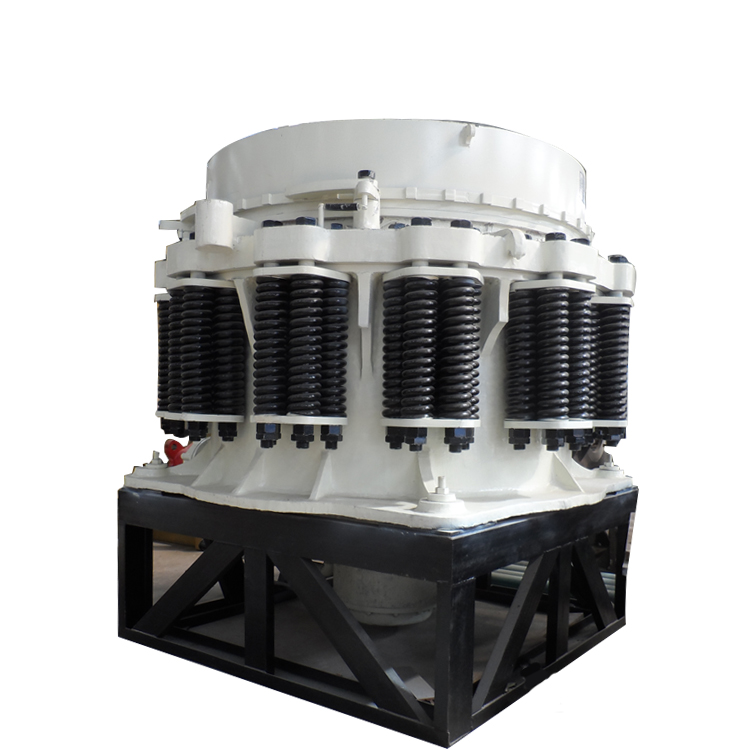
Cone crushers use a layered compression principle, where material is squeezed between an eccentrically rotating mantle and a concave chamber. They are the standard choice for medium and fine crushing stages because they produce consistent particle shapes at relatively high reduction ratios. Three cone crusher sub-families are common in today's market: Spring Cone Crushers, CS Symons Cone Crushers, and Multi-Cylinder Hydraulic Cone Crushers.
The differences are mainly in control, capacity flexibility, and maintenance convenience. For example, the PYB2200 Spring Cone Crusher delivers 590-1000 t/h with a 350 mm feed opening and a 260/280 kW power rating. The CS Symons CSC-220 model produces 230-570 t/h at 220 kW. The HPT-400M Multi-Cylinder Hydraulic Stone Cone Crusher processes 255-430 t/h at 315 kW. In practice, the choice among these three is often driven by the required automation level, the hardness of the feed, and the operator's maintenance capacity.
Impact Crusher: Shaping and Medium-Hard Rock
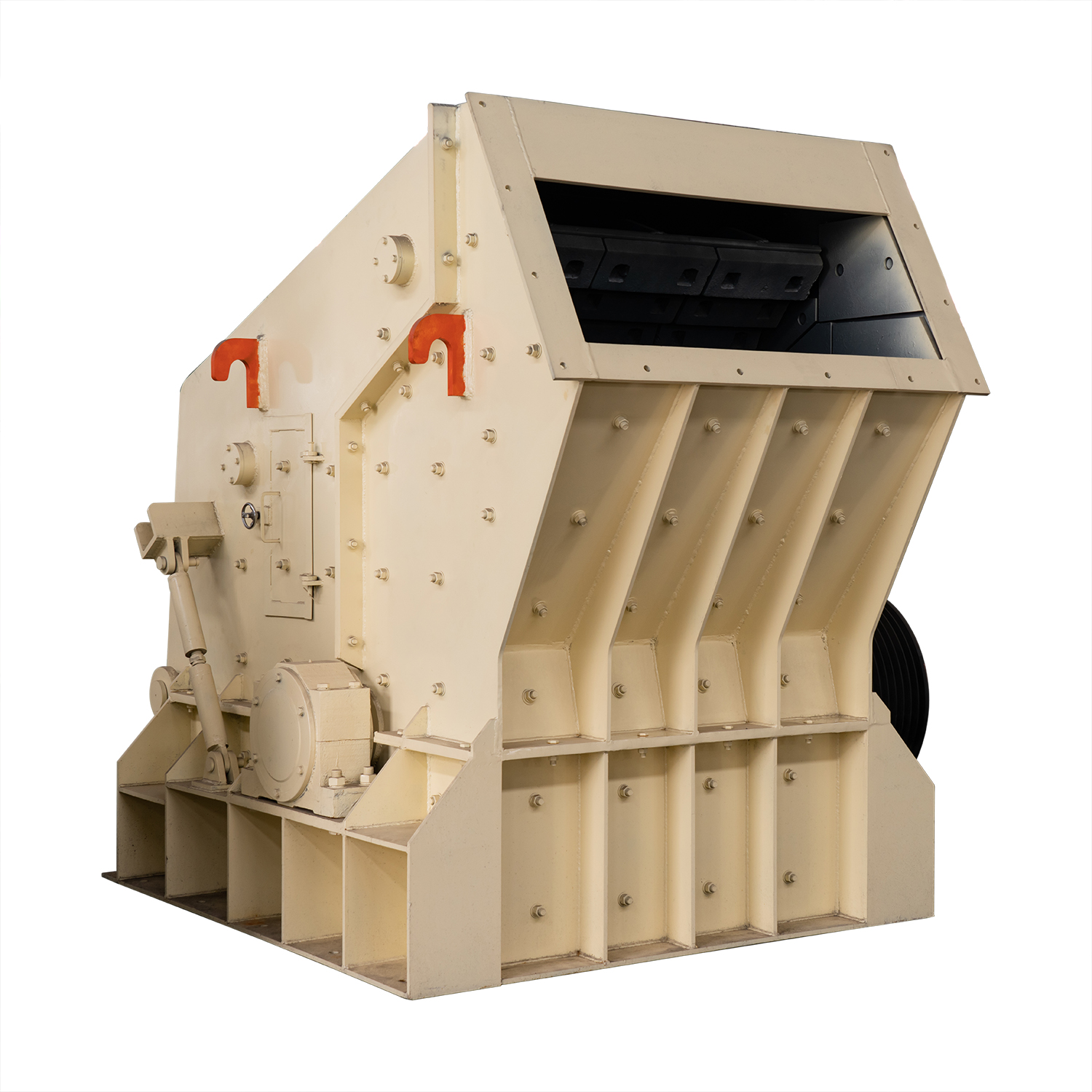
Impact crushers accelerate rock with a high-speed rotor and throw it against impact plates or breaker bars. Because they rely on impact rather than compression, they are best suited to medium-hard, low-abrasive materials such as limestone, and they are often chosen when the priority is a strong cubical shaping effect. A representative unit, the PF-1320, operates at 300-375 kW, accepts a 860×2030 mm feed opening, and reaches 160-350 t/h. In many sand and gravel projects, impact crushers appear in the secondary stage, and they also serve as the return crusher in closed-loop circuits.
VSI Sand Making Machine: Sand Production and Final Shaping
VSI (Vertical Shaft Impact) machines are specialized for manufactured sand and final aggregate shaping. Material enters a high-speed rotor and is accelerated and crushed against a rock bed or anvil. The VSI9526 model provides 300-380 t/h with a maximum feed size below 40 mm, while the larger VSI1140 reaches 450-520 t/h at 400 kW. In a well-designed line, the VSI is placed after the cone crusher so that it receives already-reduced feed and produces sand with better grain shape than compression-only crushing can achieve.
Hammer Crusher: Brittle Material Processing
Hammer crushers break material using the impact of rapidly rotating hammers. They suit brittle, non-abrasive materials such as coal, gypsum, and soft limestone in medium-to-fine crushing stages. The 1000×800 hammer crusher, for instance, operates at 110 kW with a production capacity of 25-40 t/h. Larger units such as the 1600×1600 hammer crusher reach 220-280 t/h at 450 kW. Hammer crushers are also common in small and medium drying production lines where material must be reduced before further processing.
Mobile and Portable Crushers: Flexibility as a Design Principle
Mobile crushers mount a crushing unit, screen, and conveyor on a single tracked or wheeled chassis. The tyre-type mobile cone crusher Y3S1548Y220 produces 140-330 t/h at 257.5-264.5 kW, while crawler-mounted jaw plants such as the SY-C96 offer 105-390 t/h with a 930×580 mm feed opening. Mobile Stone Crusher models built around PE jaw crushers, such as the PE900×1200, deliver 220-450 t/h and are commonly used in smaller or relocated projects. ISO 21873-2:2019 specifies safety requirements and verification for mobile crushers used in rock crushing and construction recycling, reflecting the growing regulatory maturity of this equipment category.
Grinding and Drying: Downstream Extensions
Some projects do not stop at crushed stone. Stone Crusher and Grinding Production Lines combine crushing with fine powder grinding, using equipment such as the YGM130 mill, which produces 2.5-9.5 t/h at 90 kW, or the MTW175, which reaches 11-25 t/h. Drying production lines, such as the 800×10000 model with 0.8-2.5 t/h output, support materials that must be dried or prepared for downstream processing. These extensions allow a single equipment ecosystem to serve both construction aggregate and mineral powder markets.
How a Stone Crushing Line Is Assembled
A complete stone crushing line is built around a progressive reduction sequence. The documented project flow used in STM's installations for mining and infrastructure projects in Russia, Kenya, Lebanon, and Georgia follows this pattern:
Raw material bin → vibrating feeder → jaw crusher (coarse crushing) → cone crusher (medium and fine crushing) → vibrating screen → return crusher → VSI sand making machine → finished product screen → finished product bin.
Several design principles are consistent across these projects. First, the operation is continuous and automated. Second, unqualified material is sent back for re-crushing, creating a closed-loop circulation that improves yield. Third, particle size is reduced step by step from coarse crushing to medium crushing, fine crushing, and finally sand making. Fourth, PLC-based centralized control links the start and stop sequences of all machines, which reduces manual intervention and stabilizes output. For buyers at the awareness stage, this line logic is more useful than any single machine specification, because it explains why crusher types are typically purchased as a system rather than as isolated machines.
Application Benchmarks: Where Each Configuration Is Used
- Highway, railway, bridge, and tunnel projects (Russia, Kenya): raw stone is crushed, screened, and washed to supply aggregates for subgrade, backfill, and concrete. The typical flow includes a jaw crusher for coarse crushing, a cone crusher for medium and fine crushing, and a VSI for sand making.
- Airport, port, dam, and municipal infrastructure (Georgia): qualified aggregates are used directly for subgrade, backfill, and concrete. The line often adds dust removal, soundproof covers, and washing equipment to meet higher environmental standards.
- Engineering sand and gravel (Kenya, Lebanon): production is designed for manufactured sand, crushed stone, and stone chips, with closed-loop re-crushing and automatic PLC control.
- Mining projects (Russia, Austria): raw ore is coarsely, medium, and finely crushed to prepare material for mineral processing. If fine powder is required, the material is cleaned, dried, and ground using high-pressure grinding equipment or a ball mill.
Market Trends in Crusher Equipment
Several verifiable market indicators shape the current sourcing environment:
- The global crusher market was estimated at USD 6.75 billion in 2024 and is projected to reach USD 12.71 billion by 2035, according to Market Research Future.
- Zion Market Research valued stone crushing equipment at approximately USD 5.06 billion in 2024, a lower figure reflecting a narrower product scope. Buyers should treat market-size numbers as directional rather than absolute.
- Jaw crushers are estimated to account for around 46% of the crushing equipment product segment by 2026, according to Fact.MR, confirming their dominant role in coarse crushing.
- Asia Pacific is the largest and fastest-growing regional market, with China's crusher market alone estimated at USD 827.02 million in 2024 (Market Research Future).
- The mobile crusher and screener market was valued at USD 4.59 billion in 2024, with a projected CAGR of 7.32% through 2035, indicating that mobility is the fastest-growing equipment segment.
- Metso Outotec, Sandvik, and Terex Corporation together hold an estimated 30-35% of the global jaw crusher market (Dataintelo), while the remaining demand is served by regional and Chinese manufacturers with broader price-point coverage.
Stationary vs. Mobile Crushing: A Realistic Comparison
The decision between a stationary crushing plant and a mobile fleet is one of the most important equipment-level choices in project planning. Both approaches are legitimate, but they answer different operational questions.
| Comparison Dimension | Stationary Crushing Plant | Mobile / Portable Crusher |
|---|---|---|
| Site preparation | Requires foundations, steel structures, and electrical infrastructure | Minimal civil works; chassis- or track-mounted |
| Mobility | Permanent or semi-permanent location | Can relocate between pits, stages, or projects |
| Typical capacity | Can support very large long-term throughput | Practical capacity is constrained by compact chassis design |
| Per-ton economics | Generally lower per-ton cost over long project life | Higher per-ton cost in large fixed-site operations |
| Best fit | Greenfield mines, long-term aggregate plants | Construction sites, short-term projects, multiple pits |
The mobile advantage is not absolute. For a large mine that will operate for more than a decade at consistent output, a stationary plant typically delivers better total cost of ownership because it accommodates larger crushers, heavier material handling, and more optimized maintenance layouts. Mobile units pack high performance into a compact footprint, but the density of components can translate into higher maintenance complexity per ton during continuous high-throughput operation. Buyers should define project duration, relocation probability, and realistic capacity targets before selecting between the two concepts.
Future Outlook
The direction of the crushing equipment industry is increasingly defined by automation, energy efficiency, and environmental compliance. PLC-linked control and intelligent electrical systems are moving from optional upgrades to baseline requirements in new aggregate plants, particularly in markets where labor is scarce or expensive. Environmental requirements are also shifting purchasing criteria: dust suppression, sealed conveyors, and energy-saving drive systems are no longer add-ons but expected features in many regions.
Mobile crushing will continue to grow faster than the overall equipment market, driven by infrastructure projects that change location as construction progresses. At the same time, manufacturers with full production-line capabilities — from primary jaw crushing to VSI sand making, grinding, and drying — are better positioned to serve buyers who want single-source accountability rather than a patchwork of uncoordinated machines. For procurement teams, the practical consequence is that equipment evaluation should be based not only on individual machine specifications but also on how those machines behave when integrated into a complete production system.
FAQ
What is a crusher and what does it do?
A crusher is a machine that reduces large rocks, ores, or other hard materials into smaller, more uniform sizes. In mining and construction, crushers are the first processing step that turns raw stone into aggregates, manufactured sand, or mill feed. The main crusher families include jaw crushers, cone crushers, impact crushers, VSI sand making machines, hammer crushers, and mobile or portable crushing units.
What are the main types of crushers used in stone processing?
The main types are jaw crushers (primary coarse crushing), cone crushers (secondary and tertiary crushing), impact crushers (medium-hard rock and shaping), VSI sand making machines (manufactured sand and final shaping), hammer crushers (brittle materials), and mobile or portable versions of these units mounted on tracked or wheeled chassis.
What is the difference between a jaw crusher and a cone crusher?
A jaw crusher uses compression between a fixed and a moving jaw plate and is best suited for primary coarse crushing of hard, abrasive rock. A cone crusher uses an eccentrically rotating mantle inside a concave chamber to crush material through layered compression, and it is used for medium and fine crushing. In a typical line, the jaw crusher reduces large feed first, and the cone crusher processes that output into smaller, more consistent sizes.
What is a VSI sand making machine used for?
A VSI (Vertical Shaft Impact) sand making machine produces manufactured sand and improves aggregate grain shape. It accelerates material in a high-speed rotor and crushes it against a rock bed or anvil. In crushing lines, the VSI is placed after cone crushing to turn already-reduced material into sand and cubical aggregates with better shape than compression-only crushing.
What is the difference between stationary and mobile crushers?
Stationary crushers are installed on permanent foundations with full supporting infrastructure, typically offering higher capacity ceilings and lower per-ton costs over long project life. Mobile crushers are mounted on tracked or wheeled chassis, require minimal site preparation, and can relocate between pits or project sites. Mobile units are better suited to short-term or multi-location projects, while stationary plants are generally preferred for long-term, high-throughput mines.
How is a typical stone crushing production line configured?
A typical stone crushing production line follows this sequence: raw material bin → vibrating feeder → jaw crusher for coarse crushing → cone crusher for medium and fine crushing → vibrating screen → return crusher → VSI sand making machine → finished product screen → finished product bin. Unqualified material is returned for re-crushing in a closed loop, and PLC-based control links the start and stop operations of the entire system.
For detailed product specifications and equipment parameters across crusher, grinding, and drying lines, readers can access the company brochure at https://cdn.socialarks.com/sbsp/24786/0/2026/0420/69e5a3ac7a780.PDF.
Have Questions or Need More Details?
Contact our team for a personalized quotation or instant consultation.
Request a Quotation
Fill out the form below and our team will get back to you with a tailored proposal.
WhatsApp Direct Chat
Prefer to chat in real-time? Message us on WhatsApp for instant assistance & quick answers.
- Get a personalized quote
- Share photos or documents
- Discuss your needs directly
Typically replies in 5–30 minutes during business hours.