
UPVC Lift-and-Slide Doors: A Discovery Guide for Buyers
UPVC Lift-and-Slide Doors: A Discovery Guide for Buyers
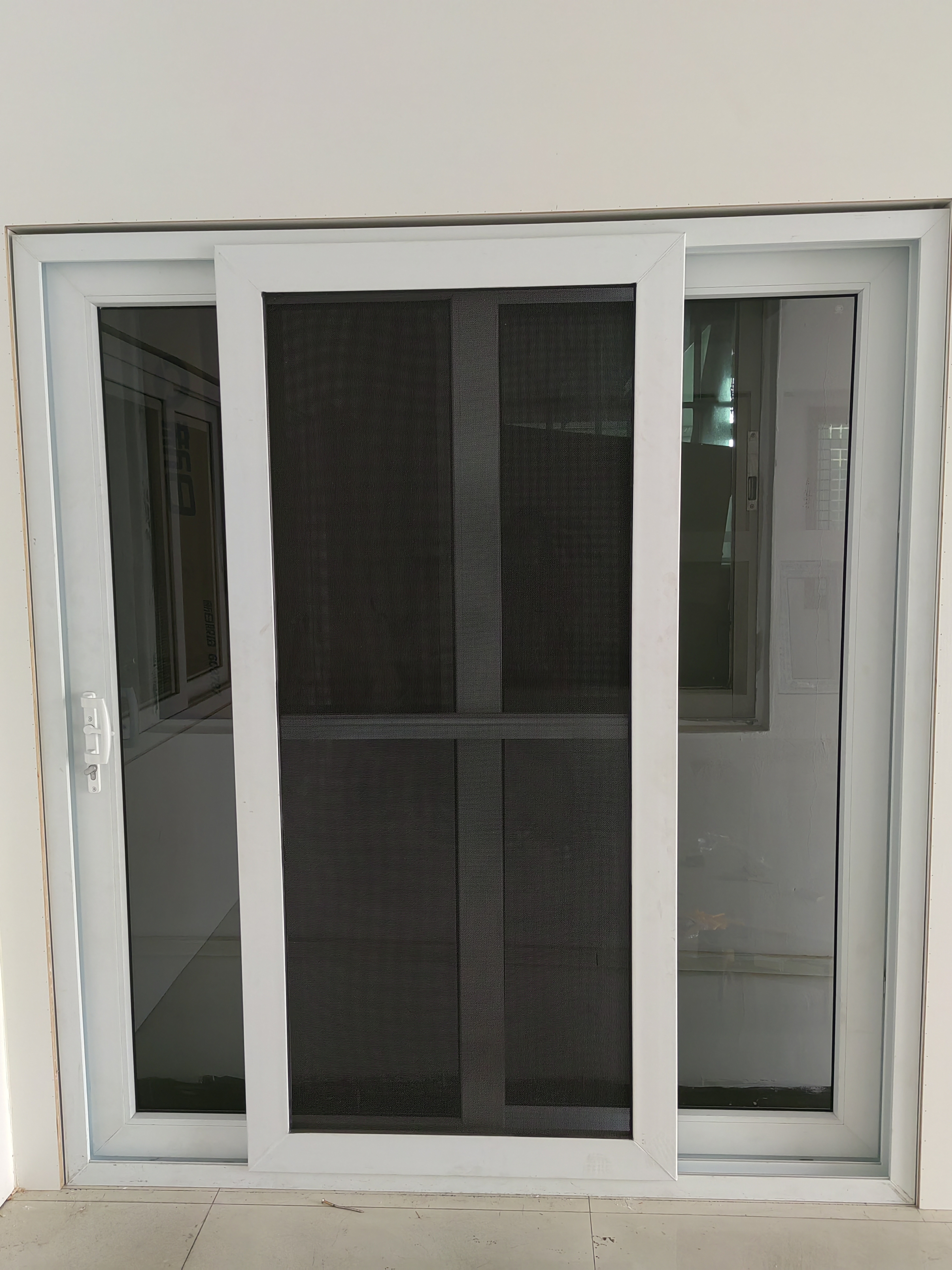
A UPVC lift-and-slide door is a large-format door in which the handle action first lifts the sash a few millimetres clear of its seals, allows the sash to travel sideways on rollers, and then lowers it back onto a compression gasket when the door is closed. That three-part sequence — lift, slide, lower — is the whole reason the category exists. It lets a door panel that may be well over two metres wide seal in a way that a conventional sliding door normally cannot, while still opening without the swing clearance a hinged door requires. For buyers at the awareness and research stage, the useful question is not whether the mechanism looks impressive, but whether a lift-and-slide configuration is the right choice for a specific opening, climate and maintenance regime.
The wider product category this mechanism belongs to is large and still expanding. Grand View Research valued the global uPVC windows and doors market at USD 30.8 billion in 2025 and projected USD 32.4 billion for 2026, with Asia Pacific accounting for a 44.1% revenue share in 2025. Within that market, sliding configurations represented 37.20% of uPVC door and window revenue in 2025 according to Mordor Intelligence. Lift-and-slide doors sit inside the broader sliding family, and they are usually specified where the opening is generous but the sealing expectation is closer to that of a hinged door.
Why large openings create a specification problem
Wide openings expose the weaknesses of ordinary door configurations. A hinged or casement door needs clearance to swing, and the wider the leaf, the greater the weight that hangs on its hinges and the greater the wind load it has to resist. A standard sliding door solves the clearance problem, but it normally relies on brush or pile weatherstrip contact between sash and frame; that contact seal is a friction seal, not a compression seal, and it can be the first point of failure in wind-driven rain, coastal humidity or exposed elevations.
Building energy rules are pushing in the same direction. Under the UK Future Homes Standard 2025, the maximum U-value for external doors decreases from 1.6 W/m²K to 1.2 W/m²K. Requirements of this kind do not prescribe a mechanism, but they do raise the cost of a leaky seal, and they make the difference between a friction seal and a compression seal commercially visible over the life of a project.
How the lift-and-slide mechanism actually works
In a lift-and-slide door, the handle is connected to a lifting carriage rather than only to a latch. Rotating the handle raises the sash off the gasket and onto the roller track; the sash then moves laterally with little resistance because it is no longer bearing on the seal. Turning the handle back lowers the sash, compressing the gasket between sash and frame around the perimeter. Because the gasket is compressed rather than merely touched, the door behaves closer to a hinged door in air permeability and water tightness terms than a conventional slider does.
The mechanism only works if the profile can carry the load. PVC-U profiles used for exterior doors are reinforced with internal galvanized steel liners. Without that reinforcement, a wide or heavy sash can deform under its own weight or under wind load, and the deformation then shows up as a sealing failure rather than as a visible break. This is the practical dividing line between a UPVC door and a low-cost, unreinforced plastic door: the latter has no steel reinforcement, has poor rigidity, and is not suitable for exterior or high-rise applications.
Hardware selection follows the same logic. A lift-and-slide door depends on a matched set: door handle, door roller, door hinge, anti-collision stopper, dust-proof pile weatherstrip and EPDM sealing gasket. Each element has a job — the roller carries the sash, the stopper limits travel, the pile strip handles the primary dust and draught line, and the EPDM gasket provides the compressible sealing surface.
Material parameters that are published for this door line
The following values are documented for the UPVC door product and describe the PVC-U material itself. They are a useful indication of stiffness and heat resistance, but they are material-level figures and not a whole-door performance declaration.
| Documented parameter | Value | Why a buyer may care |
|---|---|---|
| Vicat softening point | 86 °C | Indicates the temperature at which the profile material begins to soften; relevant for hot-climate elevations and dark-coloured profiles. |
| Flexural modulus of elasticity | 2,840 MPa | A stiffness indicator; stiffness interacts with steel-liner design when sashes get wide. |
| Tensile yield stress | 43 MPa | Describes the stress at which the material starts to yield rather than recover. |
| Tensile strain at break | 186% | A ductility indicator; ductile behaviour is generally preferred over brittle behaviour in impact-exposed elevations. |
| Density | 1,520 kg/m³ | Feeds into weight calculations for large sashes and for the roller capacity required. |
Note: these are material-level values published for the UPVC door product line. Whole-door U-value, water tightness, air permeability and wind resistance depend on the finished size, glazing build-up, reinforcement, hardware and installation, and are normally declared separately per configuration.
What the lift-and-slide door range looks like in practice
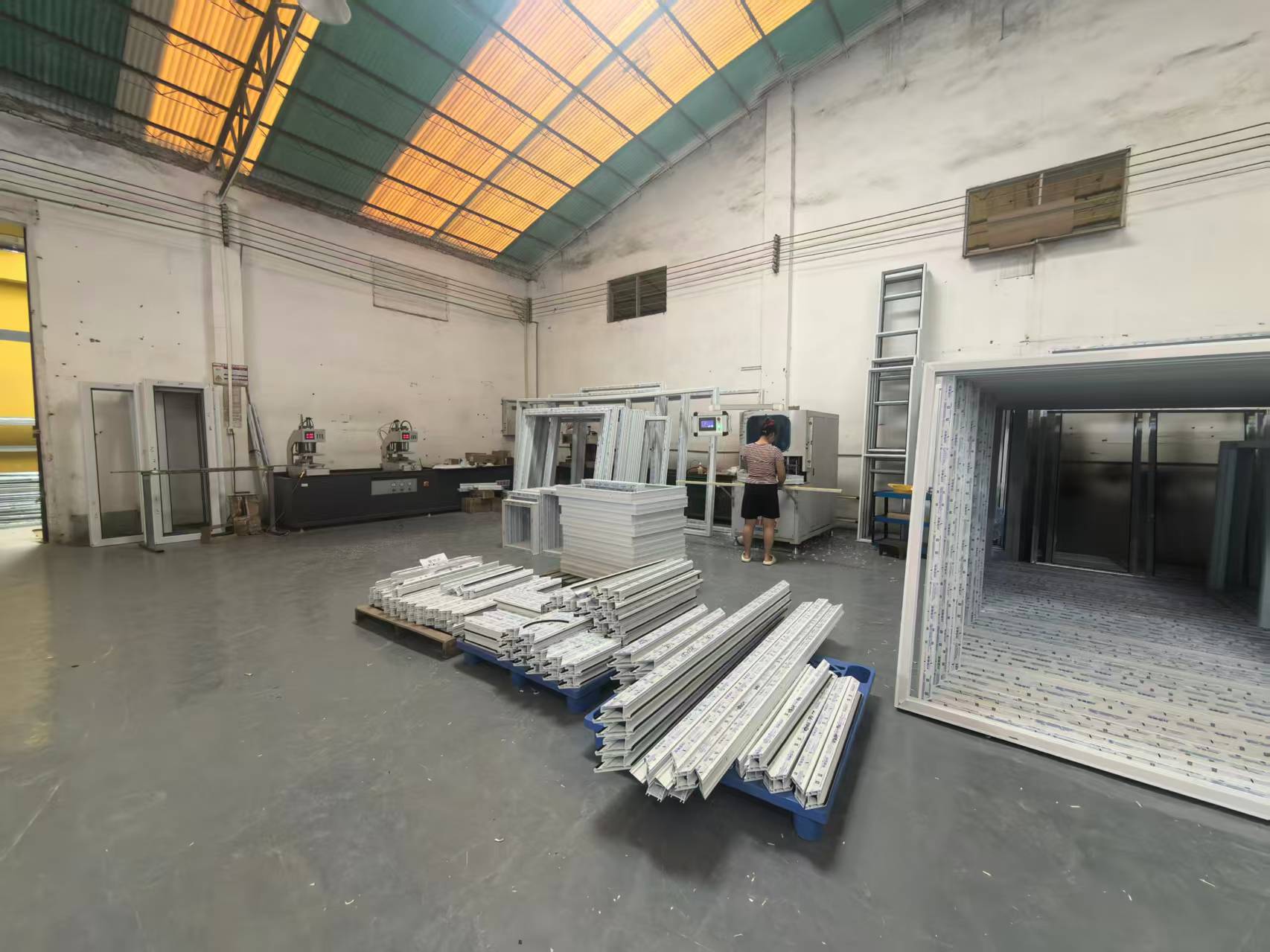
Foshan Nanhai Yuanzhaiji UPVC Door & Window Factory is a UPVC door and window manufacturer based in Foshan, China, established in 2009 and specialising in UPVC doors and windows for domestic and overseas engineering projects. Its UPVC door range covers European and American-style door series and includes UPVC sliding doors, lift-and-slide doors and hinged doors. Documented model designations across the UPVC door line are HF60, WYK75-1 and HF88-L, and multiple colour finishes are available.
On the material supply side, the company states it long-term supplies Conch profiles including the 60, 65 and 88 series, offered in co-extruded colour, laminated wood-grain finish and solid colour options such as dark grey and black. For a buyer, profile series matters because it determines the maximum glazing thickness, the reinforcement cavity available and the hardware that can be fitted — which is why two doors that look identical from the outside can behave very differently in service.
| Manufacturing profile (as documented) | Detail |
|---|---|
| Year established | 2009; more than 15 years in UPVC door and window manufacturing |
| Manufacturing facility | 3,000 square metres |
| Workforce | Approximately 20 staff, including a professional technical and management team; R&D team of 10 engineers and technicians |
| Annual production capacity | 50,000 units per year |
| Export orientation and markets | Approximately 80% export ratio; major markets include LATAM, MENA, ASEAN and the EU |
| Documented locations | Factory listed in Shishan Town, Foshan, China; contact address listed as Xilin Industrial District, Honglai Town, Quanzhou Nan'an City, Fujian Province, China |
Applications and use cases for lift-and-slide UPVC doors
The conditions in which this door family is documented to perform overlap with the conditions that make ordinary sliders fail: outdoor exposure, coastal high-humidity environments and strong-wind areas. Project types recorded for the product family include residential buildings, commercial buildings, renovation projects and villa projects. In renovation work in particular, a lift-and-slide door is often the only way to introduce a wide opening where the existing structure cannot accommodate a swing.
| Application dimension | Documented detail |
|---|---|
| Working conditions | Outdoor, coastal high-humidity, strong-wind areas |
| Project types | Residential building, commercial building, renovation project, villa project |
| Operation modes | Manual opening and closing; tilt-and-turn opening; sliding operation |
| Matched hardware | Door handle, door hinge, door roller, anti-collision stopper, dust-proof pile weatherstrip, EPDM sealing gasket |
| Performance expectations | Wind-pressure resistance; water tightness and air permeability; impact and wear resistance; secure locking system; weather resistance and anti-ageing; compliance with local building access standards |
Typical functional outcomes documented for this product family are thermal insulation, sound insulation, wind and rain resistance, corrosion resistance and sealing performance, all of which support a comfortable indoor environment. For a coastal or high-wind project, the corrosion and sealing points matter more than the headline aesthetic ones, because they determine how often the door is adjusted or serviced.
Market trend analysis: why the category is being specified more often
Three published data points frame the trend. First, the doors segment within the uPVC market is expected to grow at a CAGR of 5.3% from 2026 to 2033 (Grand View Research), which is a moderate but steady expansion rather than a spike. Second, sliding configurations accounted for 37.20% of uPVC door and window revenue in 2025 (Mordor Intelligence), confirming that lateral-opening products are already a mainstream part of the category rather than a niche. Third, regulatory pressure on thermal performance is intensifying in mature markets: the UK reduction of the maximum external door U-value from 1.6 W/m²K to 1.2 W/m²K under the Future Homes Standard 2025 is a clear example of a rule that rewards better sealing and better glazing.
From a supply-side perspective, Foshan is one of the established uPVC door and window manufacturing clusters in China, and the scale of suppliers there varies widely. As one publicly documented regional example, Foshan Wanjia Window and Door Co., Ltd. operates a 538,195 sq ft facility and exports to the US, Canada and Australia. That kind of variation in footprint and export orientation is worth noting during sourcing: the same product category contains both very large volume exporters and smaller, more specialised workshops, and the two are not interchangeable for every order profile.
For importers and project buyers, the trade classification is a practical detail worth confirming early. Plastic doors, windows and their frames and thresholds are classified under HS code 392520 in the Harmonized Tariff Schedule, which is the code most commonly used when quoting duties and clearing shipments for this category.
How lift-and-slide compares with traditional door configurations
The comparison below is a mechanism-level comparison, not a brand comparison. It describes how each configuration behaves so that a buyer can match the configuration to the opening rather than to a specification sheet.
| Configuration | How it seals | Space and weight behaviour | Typical fit |
|---|---|---|---|
| UPVC lift-and-slide door | Handle lifts the sash, travel occurs off the seal, closing lowers the sash onto a compressed EPDM gasket | No swing clearance; wide sashes require reinforced profiles and load-rated rollers | Wide openings on exposed elevations, coastal or strong-wind sites, villa and commercial projects |
| Standard UPVC sliding door | Contact seal only; no lifting action and no gasket compression | No swing clearance; lighter hardware, lower sash weight tolerance | Sheltered openings, interior partitions, cost-sensitive projects |
| Hinged / casement and French doors | Compression seal through the hinge and locking points | Requires swing clearance and clear floor area; leaf width limited by weight | Standard residential openings where space allows |
| Folding doors | Sealing depends on multiple panel joints and their individual gaskets | Folds to one side; more joints and more hardware points to maintain | Maximum clear opening where a stacked leaf is acceptable |
The clearest trade-off is this: a lift-and-slide door buys sealing performance and wide clear openings at the cost of mechanical complexity. It has a lifting carriage, rollers, a compression gasket and a bottom track, and each of those elements is a component that must be specified, installed and eventually maintained correctly. Where a project simply needs a large aperture in a sheltered interior, a standard sliding door is often sufficient and less expensive.
Limitations and boundaries buyers should plan for
Honest specification work means stating where a product is not the right answer. Five boundaries apply to lift-and-slide UPVC doors as a category.
- Reinforcement is not optional. Wide or heavy sashes need internal galvanized steel liners. A non-reinforced plastic door has no steel reinforcement, deforms easily under load and must not be used for exterior or high-rise applications.
- Threshold and track geometry must be designed in. A lift-and-slide door runs on a bottom track, so floor build-up, drainage and level transitions need to be resolved at design stage rather than on site.
- Hardware count and installation tolerance are higher. Lifting carriage, rollers, handle, stopper and gasket all interact. Poor installation shows up as sealing failure later, so installer competence is part of the product decision.
- It is rarely justified for small apertures. Where a narrow opening is required, a hinged or casement door is normally the more economical and simpler choice.
- Material data is not whole-door performance. Parameters such as an 86 °C Vicat softening point or a 2,840 MPa flexural modulus describe the profile material. Declared U-value, water tightness, air permeability and wind resistance must be established per finished configuration.
In the EU market, that configuration-specific evidence generally takes the form of testing and documentation under EN 14351-1:2006+A2:2016, covering wind resistance, water tightness, air permeability, sound insulation, thermal performance, drop-weight impact and welding corner strength, together with a factory production control system, a Declaration of Performance and CE marking. Buyers should ask for documentation that matches the exact size, glazing and hardware they intend to order, because a test result for a different configuration does not transfer.
Future outlook
On current published figures, the direction of travel is steady rather than dramatic. A doors-segment CAGR of 5.3% from 2026 to 2033 and a 37.20% revenue share for sliding configurations in 2025 suggest that lateral-opening doors will remain a mainstream part of the uPVC category, with growth concentrated in markets where thermal regulation and renovation activity are both rising. Tightening thresholds such as the UK's 1.2 W/m²K external door limit will keep pressure on gasket design, glazing specification and profile reinforcement.
Two practical consequences follow. First, documentation will matter more than catalogue imagery: buyers in regulated markets increasingly need configuration-matched performance data, not general product claims. Second, finish variety will keep expanding. Manufacturers already supply co-extruded colour, laminated wood-grain and solid colour options, which allows specifiers to meet architectural requirements without moving away from PVC-U. The manufacturers best positioned in this environment are likely to be those that can pair flexible finishes with verifiable, configuration-specific test documentation.
Selection checklist for lift-and-slide UPVC doors
| Check | What to confirm |
|---|---|
| Profile reinforcement | Galvanized steel liners present inside the profile cavities; verify at the profile end face before accepting goods |
| Configuration declaration | Performance data matching the actual size, glazing build-up and hardware set |
| Hardware set | Handle, roller, hinge, anti-collision stopper, dust-proof pile weatherstrip and EPDM gasket specified as a matched set |
| Application fit | Outdoor, coastal high-humidity and strong-wind exposure considered alongside wind-pressure and water-tightness requirements |
| Finish and profile series | Profile series and colour option selected against architectural and thermal requirements, not on appearance alone |
Frequently Asked Questions
What exactly is a UPVC lift-and-slide door?
A UPVC lift-and-slide door is a door with a PVC-U frame and sash in which the handle raises the sash clear of the seals, allows it to travel sideways on rollers, and then lowers it back onto a compression gasket. The profile is normally reinforced with internal galvanized steel liners so that large sashes keep their shape. The lifting step removes the sash weight from the seal during travel, and the lowering step compresses the gasket against the frame.
How is it different from a standard UPVC sliding door?
A standard sliding door has no lifting action and seals mainly through brush or pile weatherstrip contact along the sash edges. A lift-and-slide door adds a lifting carriage and closes onto a compressed EPDM gasket. The sealing mechanism is therefore different in kind, not just in degree. In exchange, the lift-and-slide door carries more hardware, depends on profile reinforcement for wide sashes, and needs its bottom track and threshold resolved at design stage.
Where are lift-and-slide UPVC doors normally specified?
Documented use conditions for this door family are outdoor exposure, coastal high-humidity environments and strong-wind areas, with project types covering residential buildings, commercial buildings, renovation projects and villa projects. The common thread is an opening that is wide enough to rule out a swing door, in a location where sealing performance is still expected to hold up. Operation is manual, with sliding operation and tilt-and-turn opening available across the wider product family.
What should be verified in the profile and hardware before ordering?
Check four things. First, that galvanized steel liners are present inside the profile cavities — this can be confirmed by inspecting the profile end face, and goods without liners should be rejected for exterior doors. Second, that the profile series and colour finish match the specification, since documented options include co-extruded colour, laminated wood-grain and solid colours such as dark grey and black, supplied in Conch profile series including 60, 65 and 88. Third, that the hardware is supplied as a matched set covering handle, roller, hinge, anti-collision stopper, dust-proof pile weatherstrip and EPDM sealing gasket. Fourth, that the model designation matches the order; documented designations across the UPVC door line are HF60, WYK75-1 and HF88-L.
What standards and regulations apply to UPVC doors in the EU and UK?
For the EU market, doors are commonly assessed against EN 14351-1:2006+A2:2016, which calls for system testing of wind resistance, water tightness, air permeability, sound insulation, thermal performance, drop-weight impact and welding corner strength, supported by a factory production control system, a Declaration of Performance and CE marking. In the UK, the Future Homes Standard 2025 reduces the maximum U-value for external doors from 1.6 W/m²K to 1.2 W/m²K. These requirements apply per market and per configuration, and test evidence for one configuration does not automatically cover another.
What are the main limitations of lift-and-slide UPVC doors?
The mechanism is more complex and more expensive than a standard sliding door, and it depends on reinforced profiles and correctly rated rollers, so it should not be substituted with non-reinforced plastic doors in exterior or high-rise applications. A bottom track must be integrated into the floor and drainage design. Installation tolerance matters more than for simpler configurations, because sealing failure often traces back to installation rather than to the product. Finally, material-level parameters such as an 86 °C Vicat softening point or 1,520 kg/m³ density describe the profile compound, not the finished door, so whole-door performance must be verified separately.
Is a lift-and-slide door the right choice for every large opening?
No. Where an opening is sheltered and the priority is simply a wide aperture at lower cost, a standard sliding door generally meets the requirement. A lift-and-slide door earns its additional complexity where wind-driven rain, coastal humidity or thermal regulation make the quality of the seal decisive, or where a wide opening must be combined with a sealing expectation closer to that of a hinged door. Matching the configuration to the exposure and the maintenance regime is the deciding step, not the width of the opening alone.