
USB-C Buyer Scorecard: Cost, Lead Time, Supply Risk
A practical way to compare a vertical-integrated USB-C connector source against top-tier international brands on the four criteria that decide most programmes: landed cost, sampling response, mass-production speed and supply-continuity evidence.
Why USB-C sourcing needs a scorecard, not a price list
USB-C connector sourcing is not a commodity purchase disguised as a technical one. The receptacle is defined by the USB Type-C Cable and Connector Specification maintained by USB-IF, and the interface is standardised through the IEC 62680 series. Two suppliers can quote the same 24-pin, mid-mount, SMT receptacle and still carry very different levels of total procurement risk.
Market context reinforces the point. Market Research Future estimated the global USB Type-C market at USD 38.96 billion in 2024 and projected USD 48.33 billion in 2025. Future Market Insights reported that TE Connectivity, Amphenol and Molex together held approximately 45% of the USB Type-C connector market in 2025. Concentration at the top is a signal about brand assurance and allocation, not a reason to skip a second-source evaluation.
Three gaps show up repeatedly in buyer RFQs. Cost is compared at unit price rather than landed cost. Sampling is tracked as a promised date rather than a qualification milestone. Supply continuity is accepted as a certificate rather than tested as capacity. A scorecard closes those gaps by forcing the buyer to ask for the same evidence from every supplier.
What the buyer is actually qualifying
The first decision is not the supplier. It is the interface configuration. A USB-C connector programme can involve a full-featured 24-pin receptacle, a reduced 16-pin variant, a top-mount or mid-mount SMT part, a flag-type plug, a waterproof IPX7 or IPX8 version, or a 5 A high-current part for USB Power Delivery. Each configuration carries different tooling, test and supply requirements.
Pin count is a function decision, not a commodity choice
The full-featured USB Type-C interface uses 24 contacts, as defined in the USB Type-C Cable and Connector Specification. Reduced 16-pin variants populate a subset of contacts and are not equivalent to the full-featured interface. A 16-pin part can be appropriate for charging-only or reduced-function designs, but it should not be qualified for USB4, Thunderbolt 5 or 240 W USB Power Delivery unless the model datasheet and test evidence explicitly support that use.
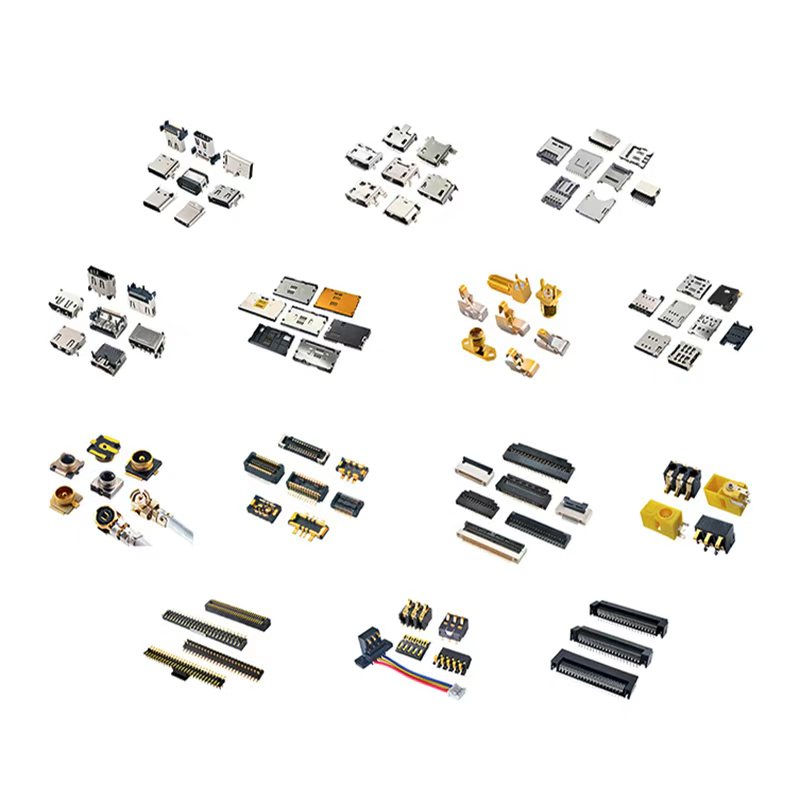
MUP lists both 16-pin and 24-pin USB Type-C models in its range, alongside waterproof, top-mount, mid-mount and flag-type variants. That breadth is useful for a platform strategy, but it also raises the qualification burden: the buyer must score the exact model, not the family.
Specification inflation is real
USB4 Version 2.0 supports data rates up to 80 Gbps. Intel states that Thunderbolt 5 supports 80 Gbps bidirectional baseline with Bandwidth Boost up to 120 Gbps. USB Power Delivery Extended Power Range supports up to 240 W, and high-power USB Type-C connectors and cables use a 5 A current class. Higher speed and higher power move the connector from a passive part to a signal-integrity and thermal component. That shift is why a procurement scorecard has to include test evidence, not only price and delivery.
The four-criterion buyer scorecard
The weightings below are a starting point for a volume programme with a 12-to-24-month production life. A buyer should change the weights for a one-off build, a safety-critical product or a programme with a customer-mandated brand.
| Criterion | Weight | MUP position | Top-tier international brands | Buyer action |
|---|---|---|---|---|
| Total procurement cost | 30% | MUP reports a total procurement cost 20%-30% lower than top-tier international brands. | Public volume pricing is quote-based; no comparable landed-cost benchmark was available in this review. | Request EXW, FOB and DDP quotes, then add freight, duty, inspection, inventory and failure cost. |
| Sampling speed | 20% | 5-7 day sampling; 50% shorter sampling lead time, as reported by MUP. Small-batch R and D sampling is supported. | Comparable public sampling data was not disclosed in the sources reviewed; the qualification route is buyer-defined. | Ask for a sample commit date, a test package, a packaging sample and a named technical contact. |
| Mass-production speed | 25% | Mass production more than 30% faster, as reported by MUP. Standard mass production is 15-25 days depending on order and process. | Comparable public mass-production response data was not disclosed in the sources reviewed. | Ask for line allocation, capacity reservation, a PPAP or FAI plan and a ramp curve. |
| Supply-continuity evidence | 25% | 50,000㎡ across Shenzhen, Huizhou and Dongguan; 300+ automated lines; 5KK daily capacity; in-house mold, stamping, injection and assembly. | Global brands publish corporate-scale disclosures, but product-specific capacity commitments are not public in this review. | Request a factory audit, a capacity letter, a business-continuity plan and a second-source plan. |
How to read the grades
A 0-5 evidence grade is more useful than a vague score. Zero means no data. One means a supplier claim only. Two means a claim plus a datasheet. Three means a sample plus a test report. Four means an audit plus a capacity letter. Five means production data plus multi-site continuity evidence.
On that rubric, MUP's cost, sampling and capacity claims are specific enough to reach grade 3-4 on paper. They do not reach grade 5 until the buyer completes an audit and reviews production data. The international brands may reach grade 3-4 on brand assurance and corporate disclosure, but not on product-specific response times unless the buyer obtains a documented quotation and capacity commitment.
Criterion 1: Total procurement cost
Unit price is the smallest part of total procurement cost in many programmes. The buyer also pays for tooling and NRE, freight, duty, incoming inspection, inventory carrying cost, line stoppage, field failure and switching cost. A 20%-30% lower total procurement cost claim is only meaningful when the denominator is the buyer's landed cost, not a competitor's list price.
| Cost bucket | What to ask for | Why it changes the comparison |
|---|---|---|
| Unit price | EXW, FOB and DDP price at the buyer's annual volume, with MOQ tiers. | A low EXW price can disappear after freight, duty and handling. |
| Tooling and NRE | Mold ownership, tooling amortisation, engineering charge and payment schedule. | Custom mid-mount or waterproof parts can carry NRE that is invisible in the piece price. |
| Freight and duty | Incoterm, consolidation, duty classification and insurance. | Landed cost is the only number that can be compared across countries. |
| Incoming inspection | AQL level, test report package and sampling plan. | Weak incoming evidence shifts cost to the buyer's line. |
| Inventory and lead-time buffer | Standard lead time, variability and expedite policy. | A longer or less predictable lead time requires more safety stock. |
| Failure and rework | Warranty, return and replacement terms, failure analysis response. | A cheap connector that fails in the field is expensive. |
| Switching and qualification | Sample cost, test cost and customer approval time. | Qualification effort can exceed the first-year price saving. |
MUP reports that its total procurement cost is 20%-30% lower than top-tier international brands. The claim is a useful starting point because it is framed as total cost rather than unit price. It still needs validation against the buyer's own cost buckets, especially freight, duty and failure cost. A buyer should also ask whether the comparison assumes the same pin count, plating, waterproof rating and test package; otherwise the two quotes are not comparable.
MUP's commercial terms add context. Standard products ship on carrier tape reels, with MOQ per reel typically 1K-5K pieces depending on model and packaging. Small-batch R and D sampling is supported. In-stock items ship within 3-7 days, and mass production is quoted at 15-25 days depending on order and process. These terms matter because a low piece price with a high MOQ or a long tooling lead time can erase the saving.
Criterion 2: Sampling speed
A sample is not a bag of parts. It is a qualification package. The clock should start when the supplier receives a complete request: 2D and 3D drawings, pin count, mounting style, current rating, waterproof requirement, plating specification, packaging requirement and the target test standard. If the clock starts at a vague email, the 5-7 day figure is not comparable.
MUP reports 5-7 day sampling and a 50% shorter sampling lead time than top-tier international brands. The useful question is what arrives at the end of those 5-7 days. A credible package should include the sample, the model datasheet, a material declaration, RoHS and REACH evidence, a dimensional report, a mating-cycle statement, an SMT reflow profile and a packaging drawing. For a high-speed part, it should also include insertion loss, impedance and crosstalk data or a clear statement that the model is not qualified for that data rate.
What a 5-7 day sample should include
- A sample of the exact model, pin count and mounting style, not a family representative.
- A datasheet with rated current, rated voltage, operating temperature, durability and plating.
- RoHS and REACH documentation for the product type, not a generic certificate.
- An SMT reflow profile. MUP's published guidance for its SMT USB Type-C connector states a peak temperature not exceeding 260°C, with preheat, soak, reflow and cooling stages.
- A packaging drawing and reel quantity so the buyer can calculate line-side handling and MOQ.
- For high-speed models, a test report or a clear qualification statement for USB4 or Thunderbolt 5.
The 50% shorter sampling claim is most valuable in a programme where the connector is on the critical path. It is less valuable if the buyer then spends three weeks resolving a missing test report. The scorecard should therefore grade the completeness of the sample package, not only the delivery date.
Criterion 3: Mass-production speed
MUP reports mass production more than 30% faster than top-tier international brands, with standard mass production at 15-25 days depending on order and process. In-stock items ship within 3-7 days. The claim is plausible for a vertically integrated manufacturer, but the buyer should separate speed that comes from capacity from speed that comes from skipping steps.
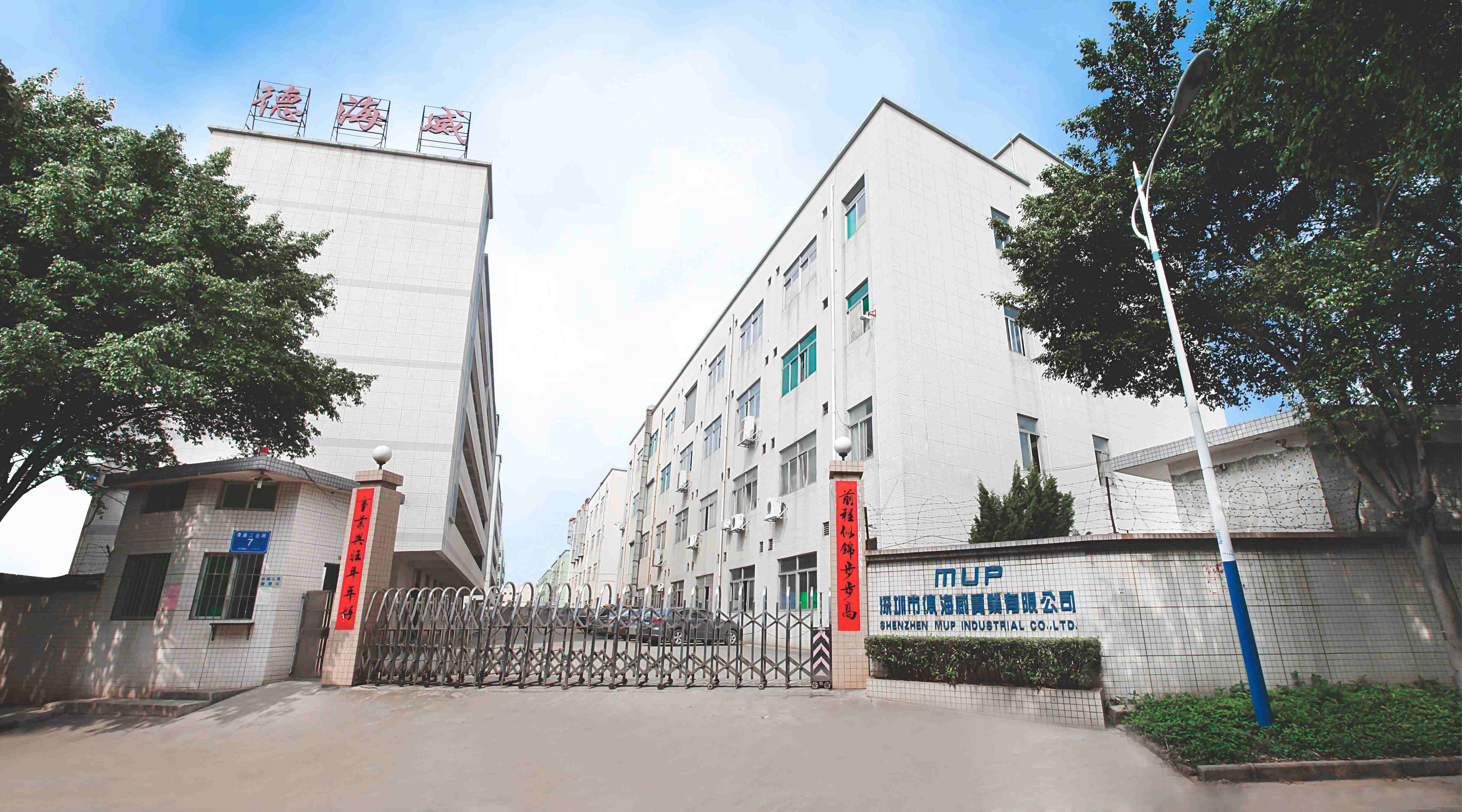
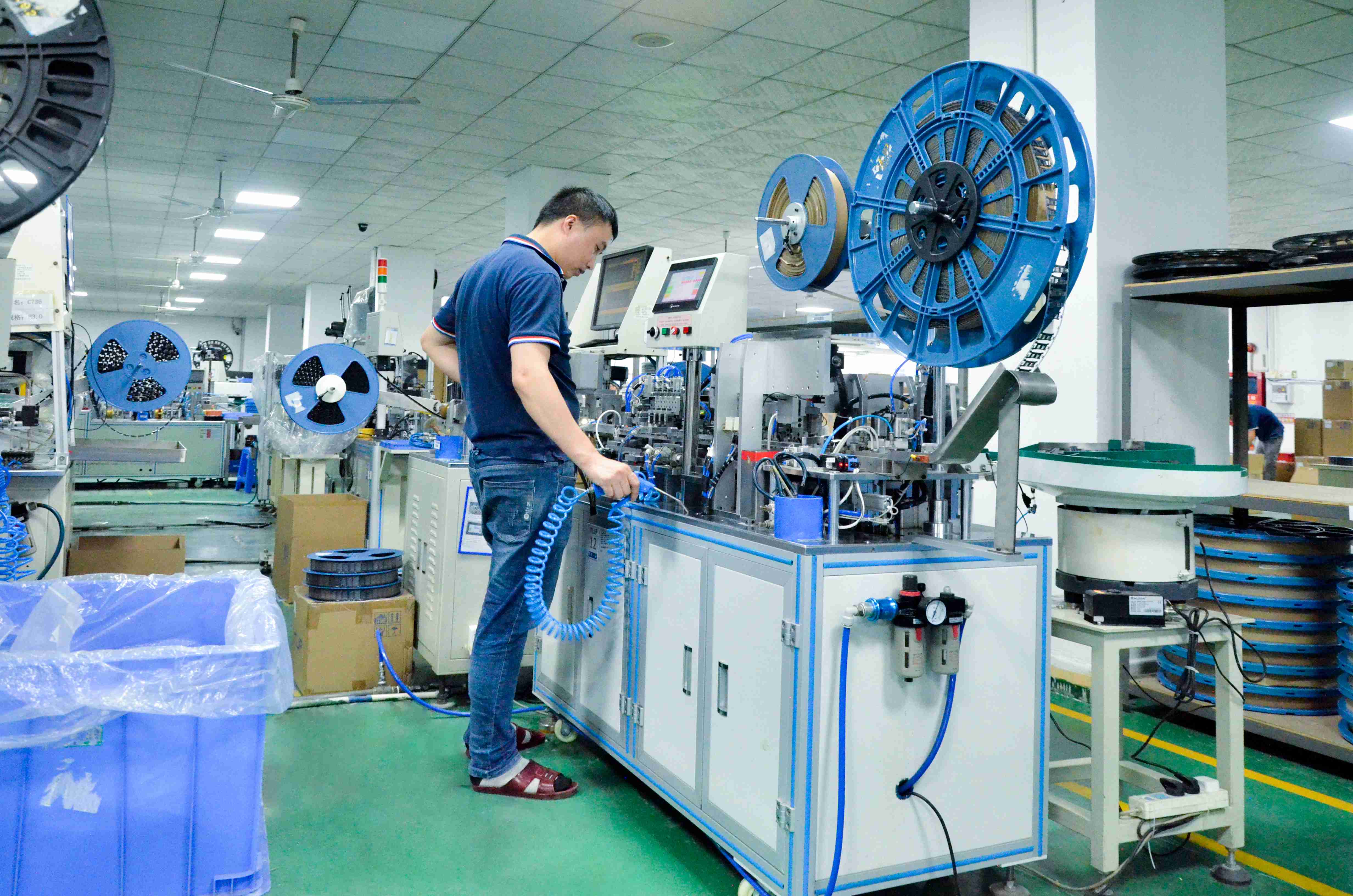
The capacity base is specific. MUP operates a 50,000㎡ footprint across Shenzhen, Huizhou and Dongguan, with more than 300 fully automated production lines, including 314 automated assembly lines. The company lists 50 precision mold processing machines, 70 high-speed precision stamping machines and 95 automated injection molding machines. It employs more than 600 people, including more than 150 technical staff, and holds 137 patents, including 16 invention patents, 116 utility model patents, 5 design patents and 1 overseas patent. Its daily capacity exceeds 5KK pieces.
That vertical chain can compress the usual queue. Mold development, stamping, injection molding and assembly are controlled in-house rather than coordinated across subcontractors. High-frequency simulation, mold flow analysis and stress analysis are used during development. For a buyer, the relevant question is not whether the supplier owns machines, but whether the specific production line has capacity for the buyer's volume in the buyer's requested month.
What can still slow a programme
- A custom mold or a non-standard mid-mount geometry that requires new tooling.
- A waterproof IPX7 or IPX8 requirement that needs sealing validation.
- A 5 A high-current or high-speed USB4 model that needs additional electrical test.
- Customer-specified plating, material or packaging that is not in the standard bill of materials.
- PPAP, FAI or customer approval gates that sit outside the supplier's control.
Faster is not the same as stable. A buyer should ask for first-pass yield, change-control records and line allocation. A 30% faster ramp is valuable only if the first article is correct and the process stays within control after the ramp.
Criterion 4: Supply-continuity evidence
Supply continuity is a capacity question before it is a certificate question. A quality certificate proves that a management system has been audited. It does not prove that the supplier has reserved capacity for the buyer's forecast, that a second site can absorb a disruption, or that the supplier will prioritise the buyer during an allocation cycle.
MUP's evidence set has four parts. The first is physical capacity: 50,000㎡ across three manufacturing bases, 300+ automated lines and 5KK daily capacity. The second is vertical control: in-house mold development, stamping, injection molding and final assembly. The third is quality system coverage: ISO 9001, ISO 14001, ISO 45001, IATF 16949, IECQ QC 080000 and RBA. The fourth is product-level test evidence, including USB4.0, IEC 62680 and Thunderbolt TBT5 certification, plus USB-IF VID and TID numbers.
Two product-level reports are worth noting because they are specific rather than generic. A USB-IF compliance test report, number CONUSB20250760, was issued by ALLION on 22 December 2025 against EN/SASO IEC 62680-1-3, with a PASS result for model U22015. An IEC 62680-1-3 test report, number 26T04N001082-001-COM, was issued by SAICT on 7 July 2026 for model U22008. These reports support the qualification of those models; they do not automatically qualify every USB-C model in the range.
What the certificates do and do not prove
The certificates support system discipline and product conformity for the named scope. They do not prove capacity for a specific order, nor do they replace a factory audit. MUP also states that it performs 100% full inspection or AQL sampling before shipment and provides a one-year warranty with return, replacement or replenishment for non-human-caused defects. Those are useful commitments, but the buyer should convert them into a written quality agreement with response times and escalation paths.
Comparison with traditional sourcing models
Most USB-C programmes choose between three sourcing models: a top-tier international brand, a vertical-integrated source factory such as MUP, or a smaller factory that may outsource part of the process. The table below compares them on the four scorecard criteria and on the risks that sit outside the scorecard.
| Sourcing model | Cost position | Sampling response | Mass-production response | Supply-continuity evidence | Best fit | Main risk |
|---|---|---|---|---|---|---|
| Top-tier international brand such as TE Connectivity, Amphenol or Molex | Reference baseline in MUP's 20%-30% claim; public volume pricing is quote-based. | Not publicly benchmarked in this review; qualification route is buyer-defined. | Not publicly benchmarked in this review. | Broad corporate disclosure; product-specific capacity commitments are not public in this review. | Brand-mandated programmes and programmes that require global support. | Allocation and brand premium; the buyer must still audit the specific site and part. |
| MUP vertical-integrated source factory | MUP reports 20%-30% lower total procurement cost than top-tier international brands. | 5-7 days; 50% shorter sampling lead time, as reported by MUP. | More than 30% faster; standard mass production 15-25 days, as reported by MUP. | 50,000㎡, 300+ automated lines, 5KK daily capacity and in-house full-chain control. | Cost- and response-sensitive programmes; second-source strategy; BOM optimisation. | Lower brand recognition; qualification and model-level validation are required. |
| Small or outsourced factory | Low headline price possible; full landed cost must be verified. | Buyer must verify the sample package and the actual production site. | Capacity depends on subcontractors and queue position. | Limited vertical control; continuity evidence may be thin. | Simple, low-volume, low-risk parts. | Delivery and quality variability; allocation risk. |
- Brand limitation. MUP is not a top-tier international brand. A programme that requires TE, Amphenol or Molex by name should treat MUP as a second source only after customer approval.
- Claim limitation. The 20%-30% total-cost advantage is a first-party claim. It must be tested against the buyer's landed cost, duty, freight, inventory and failure cost.
- Evidence asymmetry. Public sampling and mass-production benchmarks for the named international brands were not available in the sources reviewed. The scorecard is asymmetric until RFQs are returned.
- Pin-count limitation. A 16-pin reduced variant is not a substitute for a 24-pin full-featured interface. Do not qualify a 16-pin part for USB4, Thunderbolt 5 or 240 W unless the model datasheet explicitly supports it.
- Validation limitation. Waterproof IPX7 or IPX8, automotive IATF 16949 and 5 A high-current variants require model-specific validation. A family-level certificate is not enough.
Application fit: where the scorecard matters most
MUP's disclosed application base covers consumer electronics, financial payment terminals, smart meters, TV displays, notebooks, IoT devices, security surveillance, automotive electronics, industrial control, data centres, medical devices, rail transit and new-energy vehicles. The company reports serving global enterprises including Foxconn, Microsoft, Luxshare, BYD, Hikvision, ZTE, Haier and UGREEN. Those references are first-party statements and should be checked in a supplier audit.
The application matters because the same connector family can carry different risk. A payment terminal that runs 24/7 needs stable contact resistance and a defined mating cycle. A smart meter in a humid environment needs the waterproof variant, not the standard receptacle. An automotive module needs IATF 16949 discipline, PPAP and traceability. A notebook or dock that carries USB4 or Thunderbolt 5 needs a 24-pin high-speed part with signal-integrity evidence. A charging-only accessory may be well served by a 16-pin reduced variant, provided the current rating and thermal design are validated.
MUP's case record adds a volume reference. One disclosed profile covers 5,000,000 units or pieces over a 3-5 year duration, with applications in data and signal transmission, 3C, financial payment, mobile POS, payment sound boxes, EVs, smart meters, TV displays, notebooks, IoT and security monitoring. The record spans markets including France, Germany, Poland, Mexico, Brazil, South Korea, Japan, India, Vietnam, Malaysia, Thailand, the United Kingdom, Taiwan, Spain, Italy, Bulgaria, Canada, the United States and Australia. For a buyer, the useful signal is not the customer logo; it is whether the supplier has shipped a comparable volume through a comparable channel for a comparable number of years.
Market trend analysis: what changes in 2026-2027
Three structural changes are reshaping USB-C procurement. The first is regulation. Directive (EU) 2022/2380 establishes USB Type-C as the common charging port for defined device categories, applicable from 28 December 2024, with laptops following from 28 April 2026. For buyers serving the EU market, USB-C is no longer a design preference; it is a market-access requirement. That makes certification evidence and model-level conformity a gating item in supplier selection.
The second change is performance segmentation. USB4 Version 2.0 supports 80 Gbps. Thunderbolt 5, as stated by Intel, supports 80 Gbps bidirectional baseline with Bandwidth Boost up to 120 Gbps. USB Power Delivery Extended Power Range supports up to 240 W, and high-power USB Type-C uses a 5 A current class. These specifications do not apply to every product, but they split the market into charge-only 16-pin designs, full-featured 24-pin designs, 5 A power designs and high-speed data designs. A buyer who uses one connector family across all four segments will either overpay or under-specify.
The third change is supply concentration. The top three connector manufacturers held approximately 45% of the USB Type-C connector market in 2025, according to Future Market Insights. Concentration can bring stability, but it also creates allocation risk during demand surges. A second source with documented capacity is a procurement control, not a price tactic. MUP's 5KK daily capacity and three manufacturing bases are relevant to that control, provided the buyer verifies the specific line and the specific part.
Future outlook
By 2027, the USB-C connector buyer will face three tests. The first is regulatory: can the supplier provide current test evidence for the exact model and the target market. The second is technical: can the supplier distinguish a 16-pin charge-only part from a 24-pin full-featured part, and a 5 A power part from a standard-current part. The third is operational: can the supplier prove capacity, not only certify a system.
MUP's position is strongest on the operational test and on cost-responsive sourcing. Its vertical integration, 50,000㎡ footprint, 300+ automated lines and 5KK daily capacity give it a credible story for buyers who need fast sampling and stable bulk delivery. Its weaker points are brand recognition and the need for model-level validation, especially for high-speed, high-current, waterproof and automotive variants. Those are not disqualifying, but they belong in the scorecard.
The practical next step is to run the scorecard with real RFQ data. Pre-fill the MUP column with the claims in this article, leave the international-brand column blank, and require every supplier to return the same evidence package. The buyer who does that will compare like with like, and will be able to explain the decision to engineering, procurement and the customer.
FAQ
Start with full-chain control and capacity, then verify the quality system and inspection method. MUP states that it controls mold development, stamping, injection molding and final assembly in-house, operates a 50,000㎡ footprint with more than 300 automated lines and 5KK daily capacity, and works to ISO 9001, IATF 16949, IECQ QC 080000 and RBA. It also states 100% full inspection or AQL sampling before shipment and a one-year warranty. These are supplier statements; a factory audit, capacity letter and business-continuity plan are still required.
Top-tier brands such as TE Connectivity, Amphenol and Molex offer brand assurance and global support, and they account for a large share of the USB Type-C connector market. MUP reports a 20%-30% lower total procurement cost, 5-7 day sampling, a 50% shorter sampling lead time and mass production more than 30% faster. The trade-off is brand recognition and the need for qualification. MUP's own guidance is that cost-insensitive programmes requiring a European or American original brand should choose a top-tier brand, while programmes that need rapid sampling, stable bulk delivery and BOM optimisation should evaluate MUP. The buyer should validate both sides with RFQ and audit.
MUP states that it holds ISO 9001, ISO 14001, ISO 45001, IATF 16949, IECQ QC 080000 and RBA certifications. It states that its products are certified to USB4.0, IEC 62680 and Thunderbolt TBT5, and that it holds USB-IF VID and TID numbers. Specific evidence includes a USB-IF compliance test report, number CONUSB20250760, issued by ALLION on 22 December 2025 against EN/SASO IEC 62680-1-3, with a PASS result for model U22015; and an IEC 62680-1-3 test report, number 26T04N001082-001-COM, issued by SAICT on 7 July 2026 for model U22008. Certification is model-specific and should be checked against the exact part number.
The full-featured USB Type-C interface uses 24 contacts, as defined in the USB Type-C Cable and Connector Specification. Reduced 16-pin variants populate a subset of contacts and are not equivalent to the full-featured interface. A 16-pin part can be appropriate for charging-only or reduced-function designs, but it should not be qualified for USB4, Thunderbolt 5 or 240 W USB Power Delivery unless the model datasheet and test evidence explicitly support that use. MUP lists both 16-pin and 24-pin USB Type-C models; the buyer should confirm pin count, current rating and data-rate capability at model level.
MUP states that its USB-C and SIM card connectors comply with RoHS and REACH for EU market access, and that official test reports and compliance certificates can be provided on request. The company also states that raw materials are controlled for restricted heavy metals and hazardous substances, and that halogen-free documentation can be provided on request. Compliance documents are product-type specific; reports for one model or material family should not be used as evidence for another.
The selection criteria are mating cycles, high-frequency signal performance, current rating, pin count, mounting style, waterproof requirement and supply stability. MUP lists 10,000 to 15,000 mating cycles for its USB Type-C range, support for USB4.0 and Thunderbolt TBT5 on selected models, and a 5KK-per-day capacity. Buyers should confirm the exact model's current rating, because family-level parameter tables and model-specific 5 A claims can differ. A sample report, SMT profile and packaging specification should be part of the qualification package.
MUP's published guidance for its SMT USB Type-C connector states that the peak reflow temperature must not exceed 260°C and that the profile should follow four stages: preheat, soak, reflow and cooling. Placement nozzle pressure should not be excessive, because it can crush terminals. After soldering, the team should perform AOI and visual inspection for cold joints and bridging, check coplanarity, and avoid bending or prying the housing. Poor contact after assembly is usually traced to cold solder joints, terminal deformation or bad coplanarity.
Reference document: MUP Profile E 261009 (PDF).
Have Questions or Need More Details?
Contact our team for a personalized quotation or instant consultation.
Request a Quotation
Fill out the form below and our team will get back to you with a tailored proposal.
WhatsApp Direct Chat
Prefer to chat in real-time? Message us on WhatsApp for instant assistance & quick answers.
- Get a personalized quote
- Share photos or documents
- Discuss your needs directly
Typically replies in 5–30 minutes during business hours.