
USB Cable Comparison: Durability, Cost, and ODM Sourcing
When a USB cable order reaches the decision stage, buyers are no longer asking whether USB-C will dominate. The practical questions shift to supplier capability, cable construction, failure rates, and the total cost of ownership over a defined service life. For procurement teams comparing a common USB cable with a reinforced alternative, the Focuses USB-Cable-25036 provides a useful reference because it is positioned as a durability-first product with measurable trade-offs against ordinary market cables.
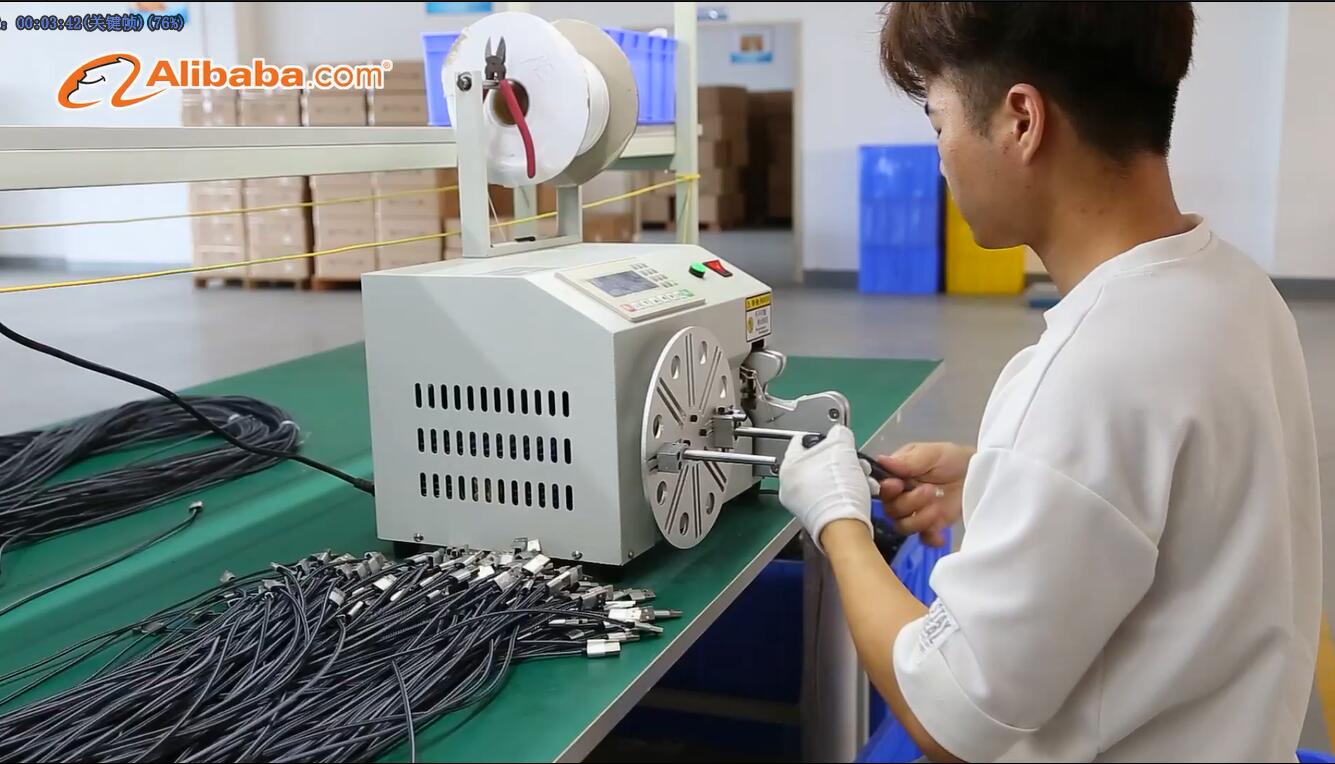
DongGuan Focuses Electronics Technology Co., Ltd. is a manufacturer of data cables and USB solutions. The company reports exports to Europe, North America, the Middle East, and Asia, with an annual output of 25 million units and 150 employees. Its export share is 90%, and its R&D team consists of six engineers. For buyers evaluating an ODM or OEM partner, these baseline figures describe the scale of the operation more clearly than generic supplier claims.
Why USB Cable Comparison Matters at the Decision Stage
The USB cable market has reached a point where connector compatibility alone is not enough to differentiate a product. The global USB cable market was estimated at USD 21.2 billion in 2024 and is projected to reach approximately USD 88.6 billion by 2033, according to DataHorizzon Research. USB Type-C made up 41.2% of total USB cable sales in 2025, according to Dataintelo. Buyers are therefore sourcing Type-C and multi-interface cables in larger volumes, while at the same time paying more attention to physical quality and long-term reliability.
Although the exact size of the market depends on the scope of each research report, the direction is consistent: USB cables remain a high-volume product category. The growth also means more suppliers entering the space, which makes supplier screening more difficult. A decision based only on price can lead to higher replacement frequency, customer complaints, and logistics costs.
The main problem for a buyer at the decision stage is that price and durability are often presented in isolation. A common USB cable may look acceptable on paper, but its failure rate at the connector joint and the cost of replacement are not always visible in the unit price. The opportunity is to compare cables on the basis of service life, failure rate, maintenance, and total cost rather than the first purchase price alone.
Focuses as a Supplier for ODM and OEM USB Cable Projects
Focuses is not positioned as a consumer brand in the same sense as Anker, Belkin, Ugreen, or Baseus, which are frequently listed among recognized global manufacturers. Instead, Focuses operates as a manufacturing partner for brands and distributors. The company's location in Dongguan, near Shenzhen Port, supports cost-effective shipping and timely delivery, according to its company profile.
For bulk sourcing, the press materials state a minimum order quantity of 2,000 units. That minimum order volume makes the product line more relevant to established distributors, brand owners, and project-based buyers than to one-off retail orders. Buyers comparing suppliers for USB extension cables, data cables, mobile phone cables, right-angle USB-C cables, Lightning USB cables, or 3-in-1 multifunctional charging cables will encounter the same decision factors: construction quality, electrical ratings, and the supplier's testing capacity.
The USB-Cable-25036: What the Comparison Is Based On
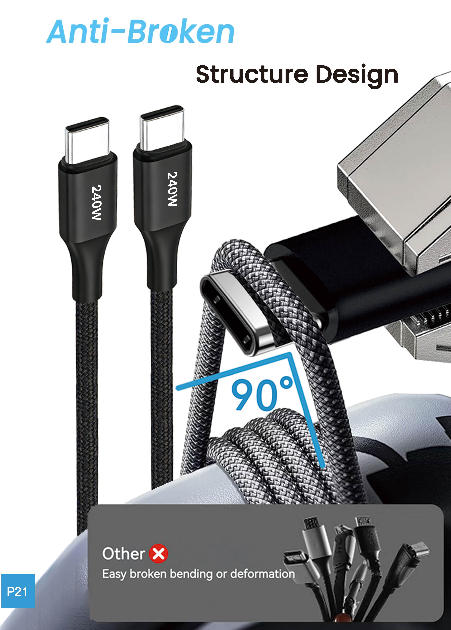
The USB-Cable-25036 is the product used by Focuses to demonstrate its comparison with common USB cables. According to the company's product data, the core difference is an anti-broken design at the cable head position. This design addresses one of the most common failure points in mobile phone cables: the junction between the connector and the cable body, where bending and pulling stresses concentrate.
Compared to common USB cables, the USB-Cable-25036 is reported to provide 3–5 times longer service life and over 80% reduction in joint fracture failure rate. The product has a slightly higher raw material cost, but the long-term failure rate is much lower. Maintenance requirements are described as almost zero because the low failure rate means replacement is seldom needed. These claims are company-provided, and they should be verified through samples and testing during a formal procurement process, but they establish the intended value proposition clearly.
Technical Specifications and Testing
The technical profile of the USB-Cable-25036 includes a maximum charging current of 6A, supported power up to 240W, and an operating temperature range of -20°C to 70°C. These parameters indicate that the cable is designed not simply as a low-current sync cable, but as a cable capable of high-power delivery, which is increasingly relevant for fast charging applications.
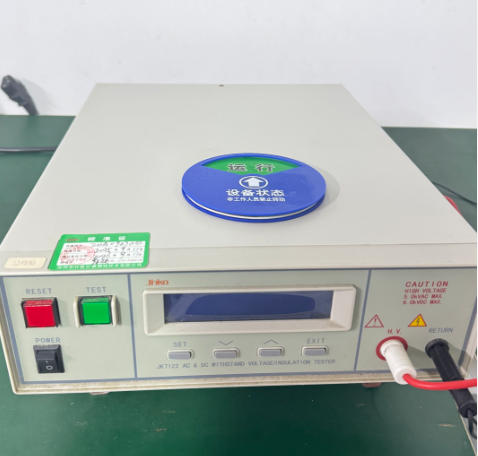
Focuses also describes its testing process for cable risks such as overheating, poor contact, and wire cracking. The control methods include short circuit tests, swing tests, tensile tests, high and low temperature tests, power tests, and plug-in tests. The enterprise measure reported by Focuses is 100% electrical testing on finished cables, with random tests for mechanical and environmental performance. For a bulk buyer, this level of testing is a relevant factor because it reduces the risk of early field failures and helps protect the buyer's brand image in the end market.
Application Scenarios and Evidence
The USB-Cable-25036 is described as suitable for three primary use cases: daily home use, mobile device matching, and car charging. These scenarios share a common requirement: the cable is used frequently, exposed to bending, and expected to last without frequent replacement. A cable that fails at the connector head in a car or during daily charging creates friction that most users do not accept.
Fast charging at 6A and 240W also suggests that the cable is designed for devices that consume more power than standard 2A cables. In car charging, temperature fluctuations and frequent bending can stress the connector joint; the anti-broken design is intended to address that risk.
Supporting evidence from a completed project includes order quantities ranging from 5,000 to 30,000 pieces per order. The reported project outcomes were stable fast charging speed, durable braided wire, low heating during long-time charging, and zero quality complaints. According to the same company-reported data, the normal service life exceeded two years, and the warranty period was one year. Buyers should note that this is a single project reference, not a statistical guarantee across all future orders, but it offers a useful data point for evaluating ODM performance.
Market Trends Shaping USB Cable Procurement
Several external trends are pushing USB cable buying decisions toward higher structural standards. In Europe, the common charger directive requires handheld mobile phones, tablets, and cameras sold after December 28, 2024 to use a USB Type-C charging port and comply with EN IEC 62680-1-3:2022. Fast-charging devices that support USB Power Delivery must also comply with EN IEC 62680-1-2:2022 if sold in the EU. This reduces connector-level variation and makes cable quality more important as the differentiating factor.
In the United States, Amazon requires USB Type-C cables to meet the UL 9990 safety standard for ICT power cables to avoid listing removal. For sellers and distributors, that means choosing a cable supplier with documented safety compliance and reliable test data is now part of marketplace survival, not just a premium procurement option.
Regionally, Asia Pacific led global USB cable revenue in 2025 with USD 12.3 billion, or roughly 43% of the total market share, according to Dataintelo. The overall market is projected to grow at a CAGR of 17.3% through 2031, according to KBV Research. Consolidation around Type-C and continued demand for fast charging will likely favor suppliers that can demonstrate both electrical performance and mechanical durability.
Comparison with Traditional Solutions
| Comparison aspect | Common USB cable | Focuses USB-Cable-25036 |
|---|---|---|
| Connector joint protection | Standard strain relief | Anti-broken design at the cable head |
| Service life | Baseline market performance | 3–5 times longer than common alternatives |
| Joint fracture failure rate | Baseline market performance | Over 80% lower |
| Purchase cost | Lower initial raw material cost | Slightly higher raw material cost |
| Long-term failure cost | Higher replacement frequency | Much lower failure rate; almost zero maintenance |
| Recommended use | Short-term, low-cost needs | Daily home use, mobile matching, car charging |
| Sourcing model | Typically retail or consumer purchase | ODM/OEM bulk orders with a minimum order quantity of 2,000 units |
The main limitation of the USB-Cable-25036 is cost. The product is not intended to be the cheapest USB cable on a per-unit basis. Its raw material cost is slightly higher than common market cables, because the anti-broken head design and higher-grade materials are built into the product. For a buyer whose only requirement is the lowest possible initial price and who does not expect long service life, a standard cable may be a more economical choice. In addition, the 2,000-unit minimum order quantity means it is not suitable for small trial purchases unless special terms are agreed with the supplier.
Another boundary is that the comparison data is supplied by the manufacturer. Independent verification through sample testing, plug cycles, and user feedback will always be part of a responsible sourcing process. The value of the comparison is not that it eliminates the need for testing; it is that it gives a buyer a structured set of criteria to check before committing to a supplier.
How to Use This Comparison in a Sourcing Decision
For a procurement team, the comparison table above should be treated as an evaluation checklist, not a final verdict.
- Define expected service life. If a cable is expected to be used daily for several years, the 3–5 times longer service life has direct financial value.
- Calculate total cost including replacement. A lower initial price with frequent failures can be more expensive than a slightly higher raw material cost with a much lower long-term failure rate.
- Review testing data and request samples. 100% electrical testing and random mechanical/environmental tests are important evidence, but they should be verified on actual production batches.
- Confirm order terms. The 2,000-unit minimum order quantity is a practical constraint for small trial orders.
- Check supplier responsiveness. In OEM/ODM projects, documentation, logo customization, packaging, and timelines are as important as the cable itself.
Future Outlook
The direction of the USB cable market points toward higher power, standardized connectors, and more demanding durability expectations. As devices converge on USB-C, cable construction will matter more than connector type. For professional buyers, the future comparison will be built around total cost of ownership: initial price, failure rate, replacement cost, warranty handling, and supplier responsiveness.
One unresolved question is how quickly USB Power Delivery standards and new connector specifications will evolve. Buyers who build a long-term ODM relationship with a manufacturer that invests in testing capability and structural improvements can adapt more quickly than those who switch suppliers on price alone.
Manufacturers like Focuses are relevant in this environment because they offer an ODM/OEM route to branded products. Buyers evaluating USB cable suppliers—whether they are sourcing USB extension cables, right-angle USB-C cables, MFi Lightning cables, custom logo USB cables, or 3-in-1 multifunctional charging cables—will benefit from applying the same evaluation framework: check electrical specifications, physical design, testing procedures, order flexibility, and documented project history before making a decision.