
USB Cable ODM: Capability Checks Before Execution
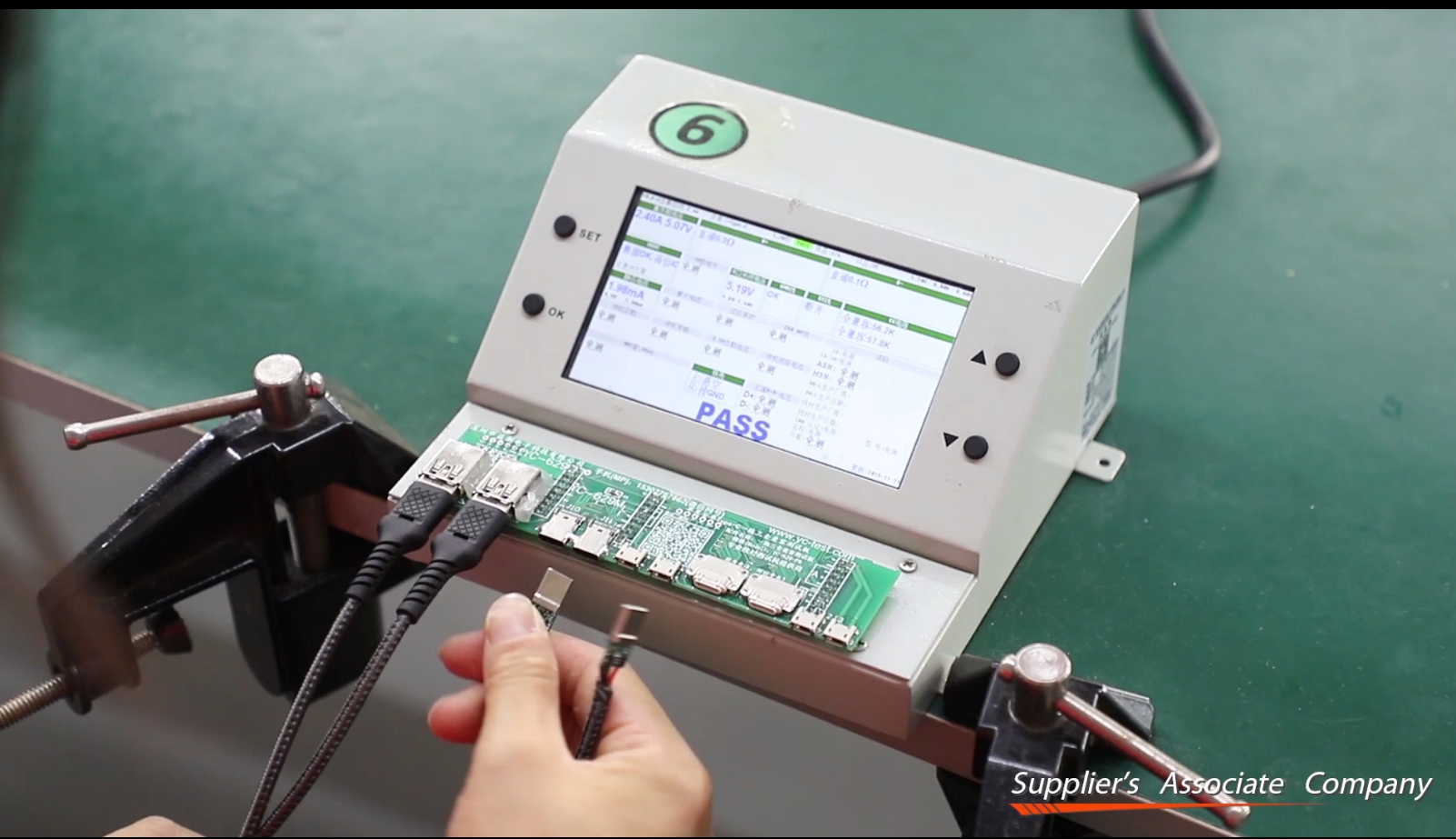
Testing equipment used in USB cable quality control workflows.
For many sourcing teams, USB cable procurement has moved beyond a simple accessory purchase. The decision to progress from supplier evaluation to a first purchase order increasingly depends on whether a manufacturer can translate product requirements into repeatable ODM/OEM execution. This is especially relevant when a program spans multiple SKUs, interface variants, material preferences, and regional compliance requirements.
DongGuan Focuses Electronics Technology Co., Ltd. is a USB cable manufacturer based in Dongguan, China. It operates from a 6,000-square-meter facility in Tangxia Town after relocating there in 2018. The company focuses on USB cables and related connectivity products, with 90% of output exported to markets including the EU, North America, and Asia.
Problem / Opportunity
A common evaluation gap is the distance between marketing-level assurances and verifiable production capabilities. Without clear signals on minimum order quantity, lead time, inspection coverage, and material options, buyers may delay execution or carry hidden risk into the order. For buyers moving from evaluation to execution, the practical question is not simply whether a supplier can produce a USB cable, but whether its ODM/OEM systems can support the specific product definition, quality expectations, and repeatability required for the target market.
This capability gap becomes more visible when procurement includes custom logo printing, multi-interface cables, waterproofing, or high-power fast charging. Each requirement introduces dependencies on materials, molding, connector specifications, and testing methods. A supplier that can only offer standard off-the-shelf products may not be able to support these program-level requirements.
Brand Solution
Focuses provides ODM and OEM production services with documented customization options. The manufacturer lists customization scope as logo printing, cable color, power, cable appearance, cable materials, cable molding, multi-function design, connector housing color, cable length, packaging style, and packaging design. This range supports product differentiation without requiring the buyer to originate every specification from scratch.
Operationally, Focuses reports a monthly production capacity of 2,500,000 units and a typical production lead time of 25 to 35 days. The minimum order quantity is 2,000 units. Quality control includes 100% full inspection before shipment, and after-sales support includes a 12-month warranty plus free technical guidance for charging compatibility issues during the warranty period. The company exports to the EU, North America, the Middle East, and Asia.
Material coverage includes PVC, TPE, Nylon braided, and silicone. For example, model CB-PVC uses a PVC outer sheath, CB-TPE uses eco-friendly TPE, and CB-SILICONE uses soft food-grade silicone. The CB-Nylon model combines a PVC inner layer with a Nylon braided shell. Conductors are specified as tinned copper or high-purity tinned copper. Custom logo printing is acceptable for branding purposes.
Technical Explanation
Across the cable portfolio, interface options include USB-A/USB-C to Type-C, Lightning, and Micro USB. Available cable lengths include 0.3 m, 1 m, 1.5 m, and 2 m. Data transfer speed is listed as 480 Mbps. Charging support varies by model: silicone, TPE, Nylon, and waterproof cable models support 120 W and 240 W high-power fast charging with a maximum charging current of 6 A. The PVC model supports 1 A to 2.4 A charging current. Working temperature ranges from -10°C to 60°C for PVC and -20°C to 70°C for silicone and waterproof versions.
The silicone cable uses a soft food-grade silicone outer sheath and high-purity tinned copper inner conductor. It is described as skin-friendly, odorless, anti-kink, wear-resistant, anti-freezing, and flexible. The Nylon braided version is designed for bend resistance and durability, while TPE offers a softer and eco-friendly profile. The waterproof cable carries an IPX7 waterproof and dustproof rating and features sealed integrated molding for waterproofing, dustproofing, sweat-proofing, anti-corrosion, and wear resistance.
Quality control is supported by pre-shipment testing. The company maintains ISO 9001:2015 certification for the certified registration scope of research and development and production of audio wire and data wire. The certificate, issued on 2020-10-19 and valid until 2026-10-18, was issued by SAILWAY and applies to EU, US, Middle East, and Southeast Asia markets.

Plug and play test instrument used in USB cable quality verification.
Application / Use Cases
Focuses cable solutions have been used by digital accessory wholesalers and corporate gift purchasers in markets including Indonesia, the United States, Germany, and the United Kingdom. Order quantities ranged from 5,000 to 30,000 pieces per order. Applications include daily phone charging, corporate customized gifts, retail sales, and car use.
Reported outcomes from these applications include stable fast charging speed, durable braided wire, low heating during long-time charging, and zero mass quality complaints. The product features that supported these applications include multi-device simultaneous charging, customizable appearance and logo, bend-resistant design, and wide compatibility with Type-C devices.
These use cases illustrate a recurring procurement pattern: buyers combine technical requirements such as charging stability and compatibility with commercial requirements such as branded packaging and custom logo printing. That combination is often easier to manage through ODM/OEM channels than through standard retail catalog sourcing.
Market Trend Analysis
Several market and regulatory signals reinforce the importance of evaluating ODM/OEM capability before committing to a USB cable program. The global USB cable market was estimated at USD 21.2 billion in 2024 and is projected to reach approximately USD 88.6 billion by 2033, according to DataHorizzon Research. USB Type-C accounted for 41.2% of the USB cable sales market in 2025, based on data from Dataintelo. Asia Pacific led global USB cable revenue in 2025 with USD 12.3 billion, representing approximately 43% of the total market share.
Regulatory requirements also shape sourcing decisions. The European Union mandates that handheld mobile phones, tablets, and cameras sold after December 28, 2024 must use a USB Type-C charging port and comply with EN IEC 62680-1-3:2022. Fast-charging devices in the EU market must comply with EN IEC 62680-1-2:2022 if they support USB Power Delivery. In the US, Amazon requires USB Type-C cables to meet the UL 9990 safety standard to avoid listing removal.
Market growth projections also suggest sustained demand. KBV Research projects the USB cable market to grow at a CAGR of 17.3% through 2031. These trends do not guarantee a particular supplier’s performance, but they indicate that compliance complexity and interface consolidation are becoming selection criteria, not optional checks.
Comparison with Traditional Solutions
Traditional off-the-shelf USB cable sourcing often works well for small pilot orders or standard retail restocks where customization and compliance documentation are limited. However, that model may not support program-level requirements around brand identity, material consistency, or pre-shipment inspection protocols.
An ODM/OEM approach offers greater control, but it also has boundaries that buyers should evaluate. Focuses lists a minimum order quantity of 2,000 units, which may be too high for very small niche sellers or initial market tests. The listed data transfer speed of 480 Mbps is consistent with USB 2.0 performance and is not positioned for USB 3.x or higher-speed data applications. In addition, high-power fast charging support of 120 W or 240 W depends on device and protocol compatibility; actual charging performance will vary according to the connected device and its supported charging standard. These limitations are not defects, but they define the appropriate application range for the supplied cable specifications.
| Evaluation area | What to verify | Relevant data point |
|---|---|---|
| Production mode | ODM/OEM services | ODM and OEM production services confirmed |
| Customization | Logo, color, material, molding, packaging | Logo printing, cable color, power, appearance, materials, molding, multi-function design, connector housing color, length, packaging style and design |
| Capacity | Monthly production volume | 2,500,000 units per month |
| Lead time | Typical production schedule | 25 to 35 days |
| MOQ | Minimum order quantity | 2,000 units |
| Quality control | Inspection coverage | 100% full inspection before shipment |
| After-sales | Warranty and support | 12-month warranty; free technical guidance for charging compatibility issues |
| Materials | Outer sheath and conductor options | PVC, TPE, Nylon braided, silicone; tinned or high-purity tinned copper |
| Compliance | Quality management certification | ISO 9001:2015; scope covers R&D and production of audio wire and data wire |
This table can be used as a pre-order checklist when moving from evaluation to execution. Buyers should verify current certification status and confirm that the selected model’s specifications align with the intended application, especially for high-power or high-speed data scenarios.
Future Outlook
As USB Type-C consolidation continues and regional standards become more specific, sourcing teams are likely to place greater weight on documented ODM/OEM controls than on generic product descriptions. The direction of travel is toward supplier partners who can provide stable material choices, test evidence, and clear commercial terms such as MOQ, lead time, and warranty.
For buyers evaluating USB cable programs, the near-term priority is not simply choosing a cable supplier, but verifying that the supplier’s capability signals match the product’s technical and market requirements. That includes material documentation, testing records, customization depth, and compliance alignment with key markets. Manufacturers that make these signals accessible are more likely to reduce execution friction when orders move from approved specification to production.
FAQ
For additional product documentation, the 2026 Focuses product catalogue is available as a reference: 2026 Focuses Catalogue.