
USB Cable Qualification: How to Read Certification Scope
USB Cable Qualification: How to Read Certification Scope
Regulation, not sales copy, now decides which USB cables can reach major markets. Handheld mobile phones, tablets and cameras sold in the European Union after 28 December 2024 must use a USB Type-C charging port and comply with EN IEC 62680-1-3:2022, while fast-charging devices that support USB Power Delivery must additionally comply with EN IEC 62680-1-2:2022. In the United States, Amazon requires all USB Type-C cables to meet the UL 9990 safety standard for ICT power cables in order to avoid listing removal.
For importers, distributors, brand owners and OEM buyers, the obstacle is rarely a lack of certificates. It is that suppliers present compliance as a single promise, "we are certified", while the underlying documents answer three different questions: whether a factory's processes are controlled, whether a product meets a market-access standard, and whether a specific cable design performs to its published specification.
This industry reference explains how to read USB cable qualification evidence: what a management system certificate does and does not cover, how certification can be mapped to individual cable models, which constraints shape the design of charging and data cables, and where a document-based sourcing approach reaches its limits. Documented examples are drawn from DongGuan Focuses Electronics Technology Co., Ltd., a manufacturer of USB cables for export markets.
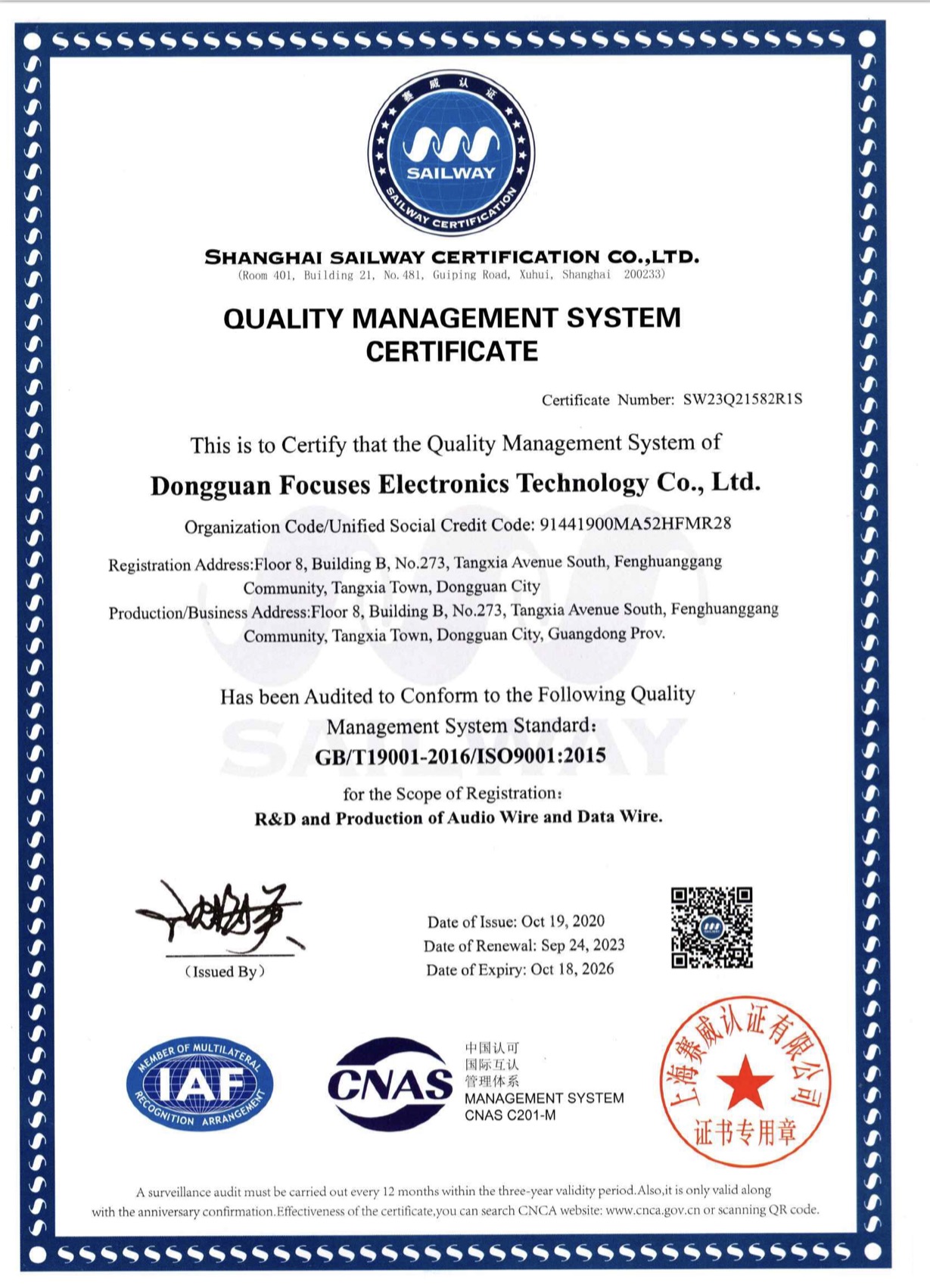
ISO 9001:2015 registration is one document family in a USB cable qualification file, not the whole file.
Why compliance became a qualification filter
For most of the past decade, USB cable sourcing was decided by sample quality, unit price and delivery reliability. Harmonisation has changed the balance of that decision. USB Type-C accounted for a 41.2% share of total USB cable sales in 2025, according to Dataintelo, which means the connector question is increasingly settled and differentiation moves toward documentation and durability.
Market size data supports the direction of travel rather than a precise procurement number. DataHorizzon Research estimates the global USB cable market at USD 21.2 billion in 2024, projected to reach approximately USD 88.6 billion by 2033, and KBV Research projects a 17.3% CAGR through 2031. Published estimates diverge by scope, however: Dataintelo cites USD 28.6 billion for 2025 while KBV Research uses a USD 19.2 billion base for 2023. Buyers should treat these figures as evidence of a growing, regulation-shaped category rather than a single agreed measure.
What matters operationally is that a compliance file now acts as a qualification gate. It is checked before price negotiation, and in marketplace environments it can determine whether a listing survives at all.
Three document families buyers regularly confuse
The table below separates the evidence types that most often arrive in the same PDF bundle.
| Document family | What it establishes | What it does not establish |
|---|---|---|
| Management system certificate, for example ISO 9001:2015 | That a manufacturer operates a documented quality management system within a defined registration scope covering particular activities | That any individual cable model meets a market-access standard or a stated electrical rating |
| Market-access and safety standards, for example EN IEC 62680-1-3:2022, EN IEC 62680-1-2:2022 and UL 9990 | Conformity with a defined regulatory or marketplace requirement, such as the EU common-charger rules for devices or Amazon's US requirement for USB Type-C cables | Performance beyond the standard's scope, or performance under a buyer's own application conditions |
| Design and performance properties, for example 120W/240W charging, 6A current, 480 Mbps data and IPX7 | What a cable design is built to deliver, verified through routine production and laboratory checks | A regulatory approval in itself; ingress protection and power ratings are product properties, not market authorisations |
A supplier with one certificate and one cable is easy to read. A supplier with five material constructions, several interface combinations and multiple export markets requires model-level mapping, which is where most sourcing confusion originates.
What a management system certificate covers, and what it leaves open
DongGuan Focuses Electronics Technology Co., Ltd. is a Dongguan-based manufacturer of USB cables, data cables and audio accessories, established in 2006 and relocated to Tangxia Town, Dongguan, in 2018. The company holds ISO 9001:2015 certification, certificate number SW23Q21582R1S, issued by SAILWAY, with a certified registration scope of "R&D and Production of Audio Wire and Data Wire". The certificate is documented as valid through 18 October 2026 and is applied across the EU, US, Middle East and Southeast Asia markets.
Read line by line, that statement confirms three things and deliberately excludes a fourth. It confirms that research, development and production of audio wire and data wire operate inside a certified quality management system. It identifies the scope boundary: audio wire and data wire, not an open-ended product portfolio. And it attaches a validity window, which is the element buyers most often overlook.
The exclusion matters just as much. A management system certificate does not certify that a specific cable model passes UL 9990, and it does not replace a market-specific declaration for the European Union. Those are product-level questions that require product-level evidence.
Because the documented validity of certificate SW23Q21582R1S runs to 18 October 2026, a buyer evaluating this supplier later in 2026 should request confirmation of renewal as part of standard due diligence rather than assume continuous coverage.
Manufacturing context supports the documentation. The operation covers a 6,000 m² facility, employs approximately 150 staff including 6 R&D engineers, and reports an annual production capacity of 25,000,000 units. Cables are subject to 100% full inspection before shipment, and roughly 90% of output is exported, with the EU, North America, Middle East and Asia among the principal destinations.
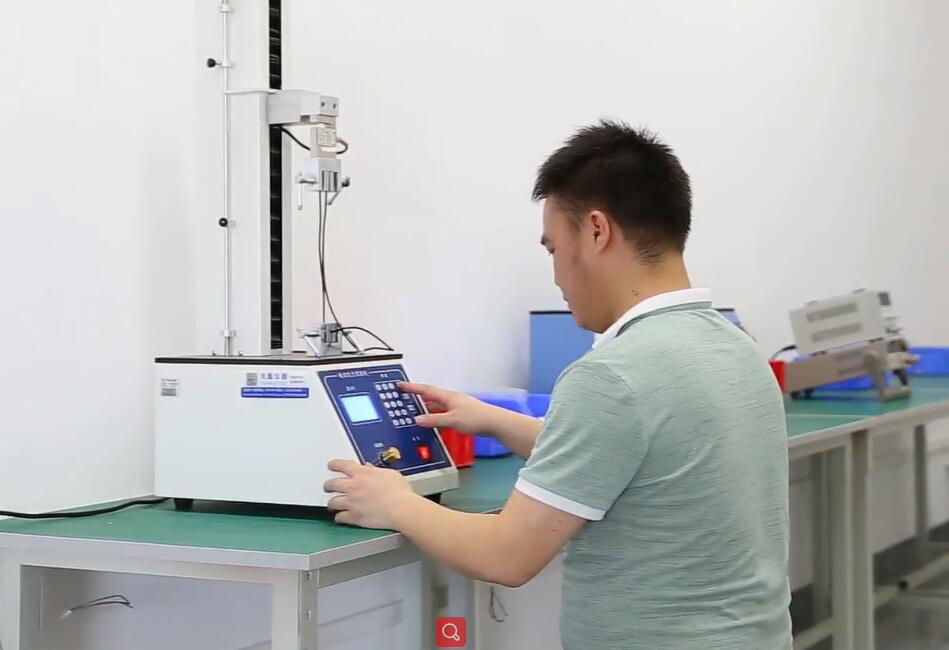
Laboratory and routine production checks generate the performance evidence that supports published cable specifications.
Mapping certification evidence to individual cable models
Focuses documents five USB cable families, each with its own material construction, parameter set and market-linked certification reference.
| Model | Construction | Documented certification reference | Key parameters |
|---|---|---|---|
| CB-PVC | PVC outer sheath, pure copper conductor | ISO 9001:2015, EU market | USB-A, Lightning, Type-C and Micro USB interfaces; 1A to 2.4A charging; 480 Mbps; 0.5 m to 2 m; -10 °C to 60 °C; custom logo supported |
| CB-Nylon | Nylon braided shell over PVC inner layer, tinned pure copper core | Certification number SW23Q21582R1S, US market | 120W/240W; 6A maximum charging current; 480 Mbps; 0.3 m to 2 m; -10 °C to 70 °C |
| CB-TPE | Eco-friendly TPE, tinned copper wire | Certification issued by SAILWAY, Middle East market | 120W and 240W support; 6A maximum current; charging and data sync; compatible with phones and notebooks |
| CB-SILICONE | Soft food-grade silicone sheath, high-purity tinned copper core | ISO 9001:2015, Southeast Asia market | 120W/240W; 6A; 480 Mbps; 0.3 m to 2 m; -20 °C to 70 °C; skin-friendly, anti-kink, anti-freezing |
| CB-Waterproof cable | Silicone, TPE or nylon braided options with sealed integrated molding | EU market certification | IPX7 waterproof and dustproof; 120W/240W; 6A; 480 Mbps; 0.3 m to 2 m; -20 °C to 70 °C |
The pattern to note is that evidence is attached per model and per market rather than as one blanket claim. A buyer sourcing for Germany is looking at the CB-PVC and CB-Waterproof entries. A buyer listing on a US marketplace is looking at the CB-Nylon reference and, separately, at whether the cable meets the UL 9990 requirement Amazon applies to USB Type-C cables.
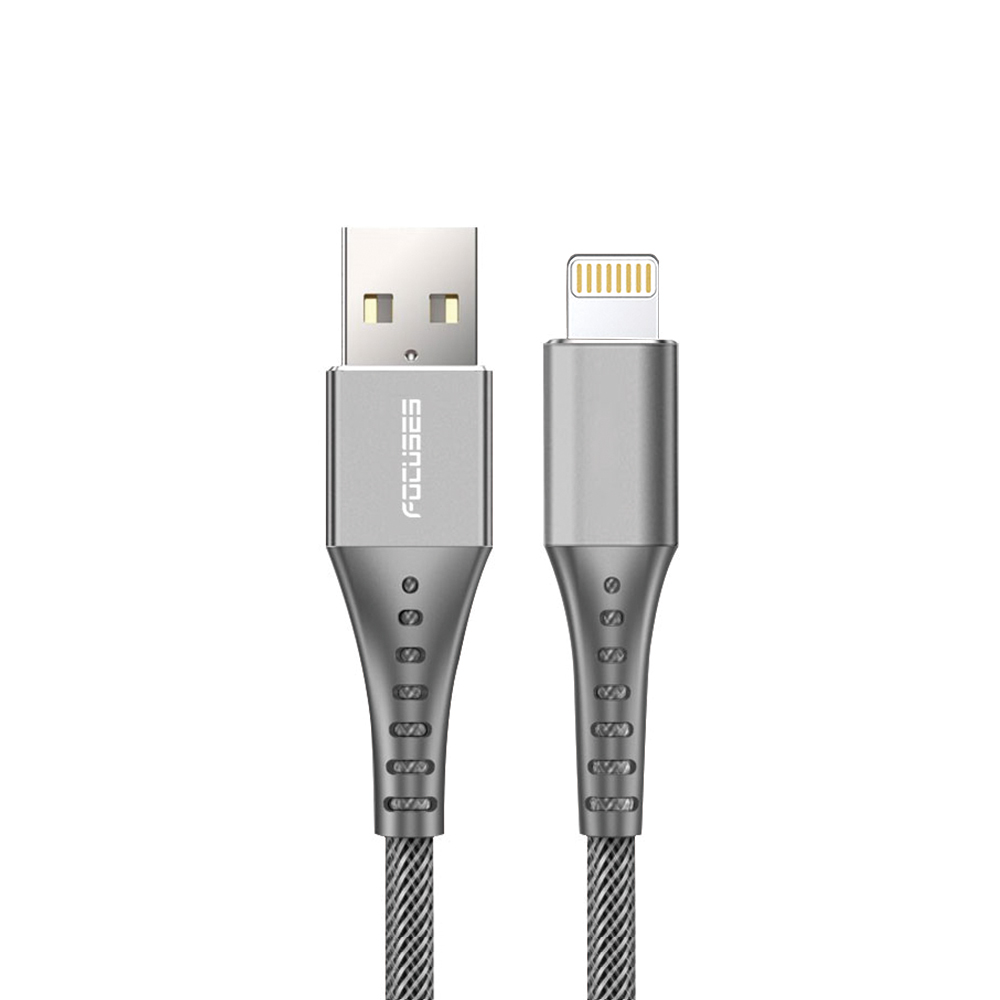
Model-level evidence: the nylon braided cable family is documented against certification number SW23Q21582R1S for the US market.
How compliance constraints shape the cable itself
Certification and specification are not independent decisions. The documented parameters of these cables show where market requirements meet product design.
Charging capability. Cables in the range support 120W and 240W fast charging with a maximum charging current of 6A, carried through high-purity tinned copper conductors. Higher current ratings constrain conductor construction and connector design, which is why material specification belongs in the qualification conversation rather than being treated as a cosmetic choice.
Data performance. Data transfer is rated at 480 Mbps across the documented models, covering combined sync and charge duties.
Environmental tolerance. Operating temperature ranges differ by material: -10 °C to 60 °C for the PVC construction, -10 °C to 70 °C for the nylon braided construction, and -20 °C to 70 °C for the silicone and waterproof constructions. The waterproof model uses sealed integrated molding to reach an IPX7 waterproof and dustproof rating and is additionally described as sweat-proof, anti-corrosion and wear-resistant.
Interface and branding flexibility. Interfaces span USB-A and USB-C to Type-C, Lightning and Micro USB. Lengths are offered at 0.3 m, 0.5 m, 1 m, 1.5 m and 2 m depending on model, and custom logo printing is supported. Customisation extends to cable colour, power, appearance, materials, molding, connector housing colour, cable length, and packaging style or design.
Commercial parameters. Minimum order quantity is documented at 2,000 units with a standard lead time of 25 to 35 days and 100% full inspection before shipment.
Where qualification evidence changes the sourcing decision
EU retail and e-commerce
Since 28 December 2024 the EU common-charger rules apply to handheld phones, tablets and cameras, and fast-charging devices supporting USB Power Delivery must comply with EN IEC 62680-1-2:2022. Suppliers serving EU retailers therefore need documentation that can be matched to the devices their cables accompany. A management system certificate scoped to data wire production is a starting point, not the complete file.
US marketplace listings
Amazon's requirement that USB Type-C cables meet UL 9990 for ICT power cables turns compliance into a listing condition. A supplier able to produce certificate number, issuing authority, scope and validity window reduces the risk of a listing interruption.
Middle East and Southeast Asia distribution
Focuses' documentation associates the CB-TPE model with a certification issued by SAILWAY for the Middle East, and the CB-SILICONE model with ISO 9001:2015 applicability in Southeast Asia. Market coverage can therefore vary between models in the same range, and a distribution programme should be mapped accordingly.
OEM and private-label programmes
Custom logo and packaging programmes sit inside the documented customisation scope, which means the qualification file and the private-label specification should be agreed together rather than sequentially. Case records for this supplier describe orders of 5,000 to 30,000 pieces from digital accessory wholesalers and corporate gift purchasers in Indonesia, the US, Germany and the UK, covering daily phone charging, corporate gifts, retail sale and in-car use, with a normal service life of over two years and a one-year product warranty. The supplier reports stable fast-charging speed, durable braided construction and low heating during extended charging, with no mass quality complaints recorded across those orders.
Outdoor, marine and automotive use
Documented application profiles include humid bathrooms, sweaty sports settings, low-temperature outdoor work and rainy environments, with declared compatibility for smartphones, tablets, laptops, power banks, wireless chargers and smart wearables. In those conditions, IPX7 sealing and the -20 °C to 70 °C operating window carry the qualification argument.
Market trend: regulation is now a demand driver
Three data points frame the direction of the category. USB Type-C held 41.2% of USB cable sales in 2025, according to Dataintelo. Asia Pacific generated USD 12.3 billion in USB cable revenue in 2025, roughly 43% of the global total, according to the same source. And the market is projected to grow at a 17.3% CAGR through 2031 according to KBV Research, with DataHorizzon Research projecting growth from USD 21.2 billion in 2024 to approximately USD 88.6 billion by 2033.
The interpretation for procurement teams is straightforward. Standardisation reduces the number of connector variants a buyer must manage while increasing the volume of documentation required per SKU. Compliance capacity, meaning the ability to produce scoped, dated and model-specific evidence quickly, becomes a supplier capability in its own right rather than an administrative afterthought.
Comparison with traditional sourcing practice, and its limits
The traditional approach to USB cable sourcing is sample-first: request samples, test charging behaviour, negotiate a unit price and keep a scanned certificate on file. It is fast and intuitive, but it has three structural weaknesses. A sample demonstrates one unit rather than a production distribution. A scanned certificate without a stated scope or validity date cannot be checked against a specific model or market. And gaps are usually discovered late, at customs review or when a marketplace listing is challenged.
A document-first approach reverses the order: confirm the standard that applies to the destination market, request certificate number, issuing authority, registration scope and validity window, and map that evidence to the exact model being purchased before pricing is discussed.
Document-first qualification has limits of its own, and buyers should plan for them:
- A complete document file does not replace the buyer's own verification testing, and it does not transfer the importer's regulatory obligations to the manufacturer.
- Certificate evidence is time-bound. The ISO 9001:2015 registration documented for Focuses runs to 18 October 2026, so renewal status has to be reconfirmed for orders placed near or beyond that date.
- Registration scope is narrower than product range. Certificate SW23Q21582R1S covers R&D and production of audio wire and data wire; it does not extend to unrelated product categories a buyer may also be sourcing.
- Customisation carries commercial thresholds. Logo printing, colour and packaging customisation sit alongside a 2,000-unit minimum order quantity and a 25 to 35 day lead time, which makes very small trial runs uneconomic compared with buying unbranded stock.
- Market coverage differs by model, so a single certificate cannot be applied across an entire export programme without checking each destination.
Future outlook
Two forces look likely to keep tightening USB cable qualification. Regulators have already linked device charging ports to a defined standard in the European Union, and marketplace operators such as Amazon have converted safety expectations into listing conditions. Both trends push documentation from a negotiation accessory toward a precondition for sale.
For manufacturers, the practical response is portfolio-level: keep scope statements, certificate numbers, validity dates and market mapping current and visible, and align them with the specification sheet so a buyer can trace a claim from market requirement to model to document. For buyers, the practical response is procedural: make the qualification file part of the RFQ rather than part of the after-sales conversation.
Frequently asked questions
Which compliance frameworks apply to USB cables sold into the EU and the US?
In the European Union, handheld mobile phones, tablets and cameras sold after 28 December 2024 must use a USB Type-C charging port and comply with EN IEC 62680-1-3:2022, while fast-charging devices supporting USB Power Delivery must also comply with EN IEC 62680-1-2:2022. In the United States, Amazon requires all USB Type-C cables to meet the UL 9990 safety standard for ICT power cables in order to avoid listing removal. Because these combine device-level regulation with marketplace-level cable policy, a supply programme should be checked against both.
How can a buyer verify a USB cable supplier's certification claim?
Ask for five elements: certificate number, issuing authority, standard and version, registration scope, and validity window, then confirm which markets they are applied to. As a documented example, Focuses holds ISO 9001:2015, certificate number SW23Q21582R1S, issued by SAILWAY, with a scope of R&D and Production of Audio Wire and Data Wire and validity through 18 October 2026. If a quoted scope does not name the type of product being purchased, the buyer should treat it as partial evidence.
Which specifications should be confirmed in writing before ordering USB cables?
Interface combination, conductor material, current and power rating, data rate, jacket material, length, operating temperature range and any ingress protection rating. The documented Focuses range illustrates the level of detail required: 6A maximum charging current, 120W and 240W power support, 480 Mbps data transfer, high-purity tinned copper conductors, length options from 0.3 m to 2 m, operating ranges of -10 °C to 60 °C for PVC, -10 °C to 70 °C for nylon braided and -20 °C to 70 °C for silicone and waterproof constructions, plus an IPX7 rating on the waterproof model.
Does a single certificate cover all export markets?
No. Focuses' documentation links different evidence to different destinations: ISO 9001:2015 for the EU and Southeast Asia, certificate number SW23Q21582R1S for the US, and a SAILWAY-issued certification for the Middle East, with export activity covering the EU, North America, Middle East and Asia. Buyers shipping to more than one region should request a market-by-market mapping for the specific model instead of relying on a single general claim.
What minimum order quantity and lead time should buyers plan for?
For this supplier, the documented minimum order quantity is 2,000 units and standard lead time is 25 to 35 days, with 100% full inspection before shipment and an annual production capacity of 25,000,000 units. Customisation items such as logo printing, cable colour, materials, molding and packaging design are handled within that framework, so private-label programmes should be planned against these thresholds rather than sample-scale volumes.
What warranty and technical support terms are documented?
Focuses documents a 12-month warranty together with free technical guidance for charging compatibility issues during the warranty period. Case records describe a normal service life of over two years for daily charging, corporate gifting, retail and in-car use, paired with a one-year product warranty. Buyers comparing suppliers can treat warranty length and the availability of compatibility support as part of the qualification file rather than as separate commercial terms.
A full overview of the cable range, materials and specifications discussed in this article is available in the 2026 Focuses catalogue.