
USB Cable Scenario Fit: CB-PVC to CB-Waterproof in Real Use
USB Cable Scenario Fit: CB-PVC to CB-Waterproof in Real Use
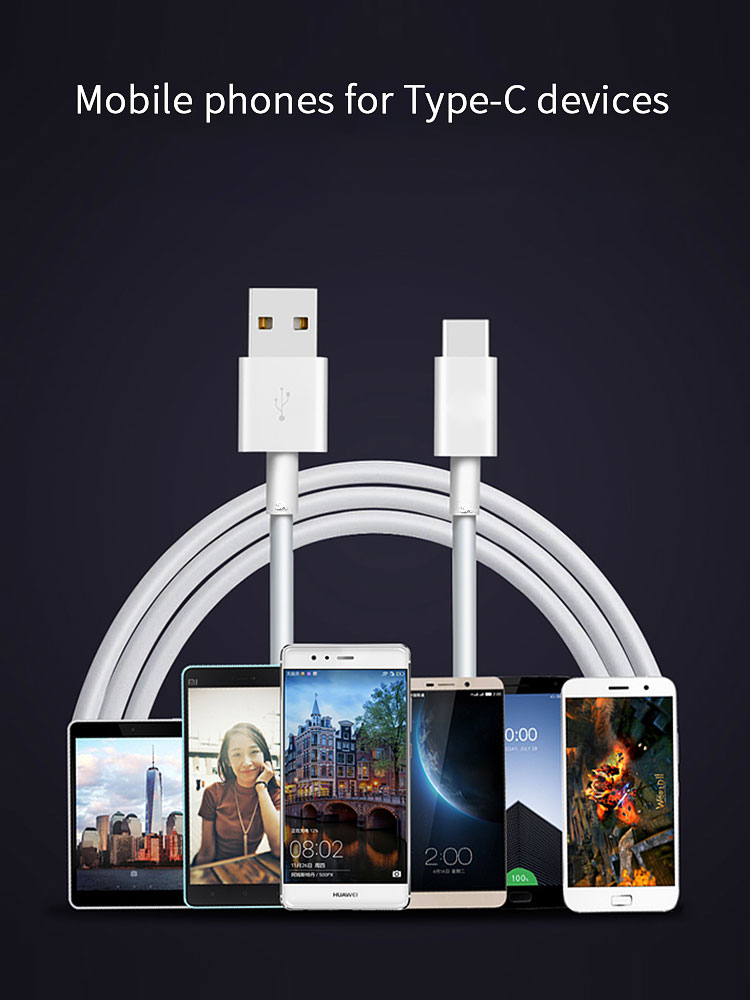
Two USB cables can carry the same connector, the same nominal length and the same printed transfer speed, and still fail in completely different places. A Type-C plug does not tell a buyer whether the jacket will survive a wet outdoor enclosure, a sweaty training session, a -20°C night, or the bend at the strain relief after a year of daily handling. For teams at the research and evaluation stage, the more useful question is not which port a cable has, but which build the operating environment actually demands.
This guide maps the five Focuses USB cable builds - CB-PVC, CB-Nylon, CB-TPE, CB-SILICONE and CB-Waterproof - to the conditions each was specified for. Every section states the condition, the build that fits it, the mechanism in the published specification behind that fit, and the boundary at which the specification stops deciding the question. The reference point throughout is the manufacturer's own product data rather than a general claim about cable materials.
Why the Connector Type Cannot Separate These Builds
All five Focuses builds are offered across the same interface families - USB-A or USB-C on the host side, and Type-C, Lightning or Micro USB on the device side - and all use tinned copper conductors. Interface alone therefore cannot be the variable a buyer decides on. The specifications diverge on jacket compound, current ceiling, temperature window, sealing method and length range.
The differences are concrete. CB-PVC is rated at 1A-2.4A with a working range of -10°C to 60°C, while CB-Nylon, CB-TPE, CB-SILICONE and CB-Waterproof are all specified for 120W and 240W charging with a 6A maximum and a 70°C upper limit. The lower temperature limit splits the group again: CB-PVC and CB-Nylon start at -10°C, while CB-SILICONE and CB-Waterproof start at -20°C. Only CB-Waterproof states a sealing method and a rating - sealed integrated molding, IPX7 waterproof and dustproof.
A workable order of decisions. Screen first on environment (water, temperature, abrasion), then on the power tier the program requires (1A-2.4A or up to 6A), and only then on interface, length and branding. Reversing that order is what produces a 6A cable inside an indoor gift program, and a 2.4A cable inside a sealed outdoor enclosure.
The Five Builds and What the Published Specification States
Dongguan Focuses Electronics Technology Co., Ltd. manufactures USB cables at a 6,000 m² facility in Tangxia Town, Dongguan, with 150 staff, an annual output of 25 million units and a six-engineer R&D team, supplying OEM and ODM programs into the EU, North America and Asia. Its five USB cable builds differ as follows.
- CB-PVC - PVC outer sheath over a pure copper conductor; 1A-2.4A charging current; 0.5 m, 1 m, 1.5 m and 2 m lengths; 480 Mbps transfer; -10°C to 60°C; fast charging and data transmission in one cable; custom logo accepted.
- CB-Nylon - nylon braided shell over a PVC inner layer; tinned pure copper core; 120W/240W output; 6A maximum charging current; 480 Mbps; 0.3 m to 2 m; -10°C to 70°C; custom logo printing supported.
- CB-TPE - eco-friendly TPE outer material over tinned copper wire; 120W and 240W fast charge; 6A maximum current; charging and data sync as dual function; described as soft, flexible and wear-resistant.
- CB-SILICONE - soft food-grade silicone sheath over a high-purity tinned copper core; 120W/240W; 6A maximum; 480 Mbps; 0.3 m to 2 m; -20°C to 70°C; described as skin-friendly, odorless, anti-kink, wear-resistant and anti-freezing.
- CB-Waterproof - sealed integrated molding rated IPX7 waterproof and dustproof; outer material available in silicone, TPE or nylon braid; high-purity tinned copper core; 120W/240W; 6A maximum; 480 Mbps; 0.3 m to 2 m; -20°C to 70°C; described as sweat-proof, anti-corrosion and wear-resistant.
One detail in that list is easy to miss and expensive to get wrong. In the waterproof build, sealing and jacket are independent variables: the same sealed molding is offered with a silicone, TPE or nylon braided outer material. Specifying "CB-Waterproof" settles the ingress question but leaves the surface question open, so a purchase order should carry both.
Rain, Humidity and Sweat: Where CB-Waterproof Changes the Decision
When water, humidity or sweat reaches the connector, jacket material stops being the controlling variable - the seal is. CB-Waterproof addresses that with sealed integrated molding and an IPX7 waterproof and dustproof rating, and the specification describes the resulting cable as sweat-proof, anti-corrosion and wear-resistant as well as waterproof.
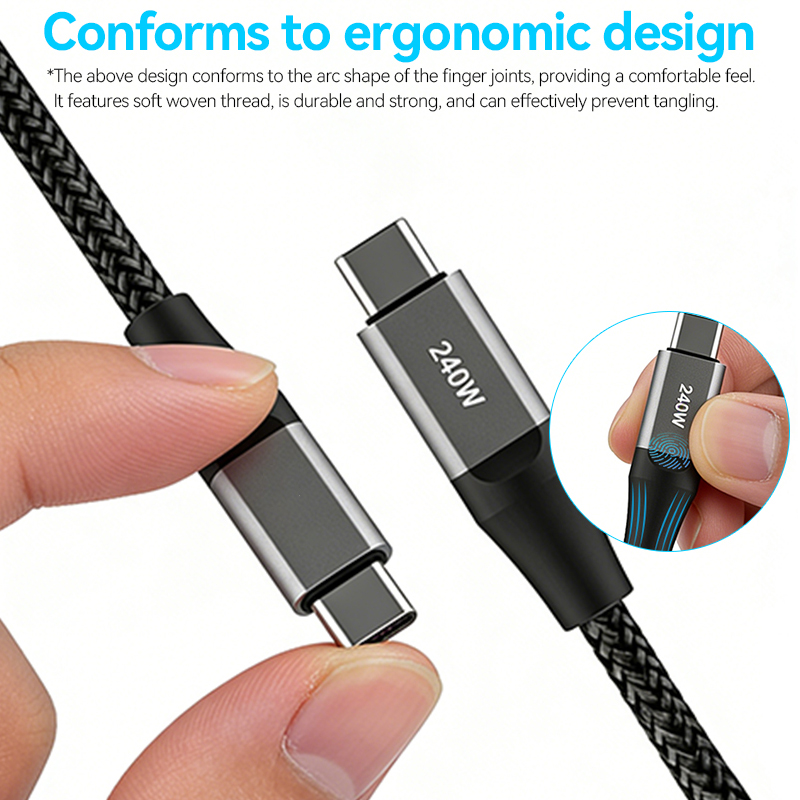
The conditions this fits are the ones where the joint between cable body and connector housing is exposed rather than the cable run: rainy outdoor use, humid bathroom charging, sweaty sports scenes and low-temperature outdoor work. The applicable-industry list follows the same logic - outdoor supplies, industrial equipment, sports fitness, marine electronics and automotive, alongside consumer electronics and mobile accessories.
The boundary is that a rating describes a configuration, not an intention. IPX7 waterproofness in the supplied data is not accompanied by a stated immersion duration, a pressure rating or a service life under repeated wetting, so the rating should be read as a qualification level and matched to a test report covering the exact length and connector combination being ordered. The corrosion claim behaves the same way: anti-corrosion is a construction property, and it does not make the cable suitable for permanent immersion or for chemical exposure.
Sports, Skin Contact and Cold Conditions: CB-SILICONE
CB-SILICONE is the build specified for contact with skin and for flexibility in cold conditions. Its sheath is soft food-grade silicone, the conductor is a high-purity tinned copper core, and the stated working range of -20°C to 70°C is the widest low-end figure in the family, matched only by CB-Waterproof. The specification describes the cable as skin-friendly, odorless, anti-kink, wear-resistant and anti-freezing, and it carries the same 120W/240W and 6A rating as the other high-power builds.
That combination maps to a specific set of programs: wearable and fitness accessory charging, cables that are handled rather than installed, retail and gift SKUs where the surface feel is part of the product, and outdoor use in low temperature. The applicable-industry list for this build includes the gift industry, digital supplies and household electronics alongside consumer electronics and mobile accessories - a more consumer-facing profile than the other four.
Two boundaries are worth stating plainly. "Food-grade silicone" describes the sheath material; it is not in itself a skin-safety certification, and the supplied data contains no dermatological test result, so a market that requires such documentation should request it separately. And -20°C is a limit rather than a margin: operation below that figure sits outside the stated specification instead of being covered by it.
Repeated Bending and High-Tensile Duty: CB-Nylon
The braided build is the one described in mechanical terms. CB-Nylon pairs a nylon braided shell with a PVC inner layer and a tinned pure copper core, supports 120W/240W at up to 6A, transfers at 480 Mbps and covers 0.3 m to 2 m across a -10°C to 70°C working range.
Recorded order data points the same way. Programs of 5,000 to 30,000 pieces from digital accessory wholesalers and corporate gift purchasers in Indonesia, the United States, Germany and the United Kingdom - used for daily phone charging, corporate customized gifts, retail sales and in-car charging - are documented with a normal service life exceeding two years against a one-year product warranty. The reported outcomes for those programs were stable fast charging, durable braided wire, low heating during long charging sessions and zero mass quality complaints; the recorded highlights include multi-device simultaneous charging support, customizable appearance and logo, a bend-resistant design and wide Type-C device compatibility.
Those outcomes belong to the orders described, which is the correct scope for them. They are evidence of what was observed in those programs, not a guarantee that a different volume will repeat the result. The more portable lesson comes out of the specification itself: the braid adds mechanical reinforcement, but it does not extend the cold limit. At -10°C, CB-Nylon is ten degrees narrower than CB-SILICONE and CB-Waterproof, so for a sub-zero outdoor deployment the temperature window decides before the braid does.
120W and 240W Multi-Device Charging Lines: CB-TPE
CB-TPE is positioned for multi-type fast-charging lines that have to stay soft under frequent handling. The jacket is eco-friendly TPE, the conductor is tinned copper wire, the rating is 120W and 240W at a 6A maximum, and charging and data sync are both stated functions. The description emphasises a soft, flexible, wear-resistant cable - a relevant property where the same cable is coiled, pocketed and re-deployed across several devices.
The 240W figure sits inside a defined framework. USB Power Delivery Specification Revision 3.2, published by the USB Implementers Forum, defines fast-charging protocols enabling up to 240W power delivery over USB Type-C cables. A 240W claim is therefore a claim against a specified power tier rather than a marketing ceiling, and the natural verification is the test evidence supporting that tier for the exact SKU.
Two specification notes matter when the line goes to a purchase order. The supplied CB-TPE data describes the interface as a multi-type USB port rather than listing connector combinations, so the exact host and device connectors should be confirmed on the quotation instead of being inferred from the family. And while the other four builds state a 480 Mbps transfer speed, the CB-TPE entry states charging and data sync as dual function without a transfer rate; a buyer standardising on one printed data claim across a range should close that gap before packaging artwork is approved.
Standard Indoor Charging and Data Transfer: CB-PVC
CB-PVC covers the ordinary case. It is a PVC-sheathed cable with a pure copper conductor, rated 1A-2.4A, available from 0.5 m to 2 m, transferring at 480 Mbps across a -10°C to 60°C working range, and it supports fast charging and data transmission with custom logo acceptance. Its applicable industries - consumer electronics, mobile communication, digital accessories, retail and wholesale, gift industry, online retail, electronic gift and household electronics - describe volume retail and promotional programs rather than field installation.
This build carries the clearest fit boundary in the set. The 1A-2.4A ceiling sits well below the 6A maximum of the other four, so CB-PVC is outside the specification for any program built around 120W or 240W charging, regardless of how the connector is described. The reverse is also true: where the requirement is a standard charge and data cable for indoor retail or gift volume, a 6A build is over-specified. SMM reports that copper materials account for 60%-80% of total manufacturing cost for standard USB cables, which is why the current rating - and the conductor content behind it - is typically where the cost difference between these builds sits, not the jacket.
Matching Environment to Build: A Decision Table
The table below compresses the five builds into the conditions that actually separate them. The final column is deliberate: it records what each specification does not establish, so that a fit decision is not mistaken for a qualification.
| Operating condition | Build to specify | Supporting specification | What it does not establish |
|---|---|---|---|
| Rain, splashing, humid bathroom, sweaty handling | CB-Waterproof | Sealed integrated molding; IPX7 waterproof and dustproof; described as sweat-proof and anti-corrosion | Immersion duration, pressure rating and service life under repeated wetting are not stated; confirm the test basis for the ordered length and connector |
| Skin contact and cold-weather outdoor use | CB-SILICONE | Soft food-grade silicone sheath; skin-friendly, anti-freezing; -20°C to 70°C | The material description is not a skin-safety certification; operation below -20°C is outside the stated range |
| Repeated bending and high-tensile retail duty | CB-Nylon | Nylon braid over PVC inner layer; bend-resistant design cited in recorded case data | Case outcomes belong to specific orders; no bend-cycle count is published |
| 120W/240W multi-device charging line | CB-TPE, CB-Nylon, CB-SILICONE or CB-Waterproof | 6A maximum; 120W and 240W; charging and data sync | CB-TPE states no transfer rate; the 240W tier should be verified against USB PD 3.2 test evidence |
| Outdoor work below -10°C | CB-SILICONE or CB-Waterproof | -20°C to 70°C working range | No performance data is published below -20°C |
| Indoor standard charging and data transfer | CB-PVC | 1A-2.4A; 480 Mbps; 0.5 m to 2 m; -10°C to 60°C | Not specified for 120W/240W programs; 60°C upper limit |
Standards, Regulation and Cost: The 2026 Context
Several external references shape how these builds get specified this year, and each one has a direct procurement consequence.
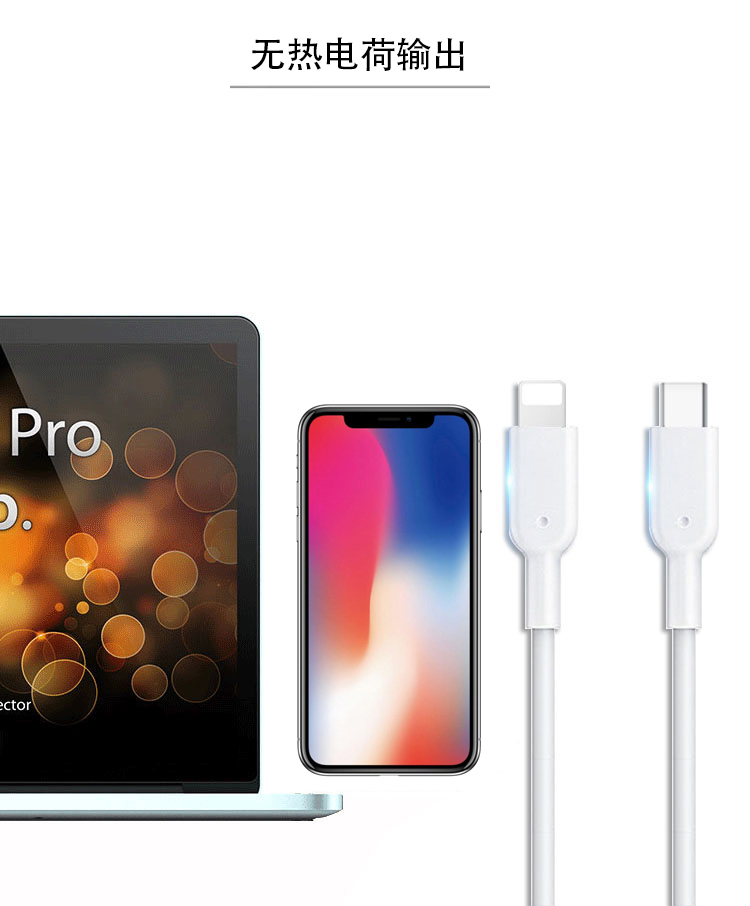
The first is the EU common charger framework. The European Commission's page on the common charging solution lists handheld mobile phones, tablets, digital cameras, headphones, headsets, handheld video game consoles, portable speakers, e-readers, earbuds, keyboards, mice and portable navigation systems among the covered portable radio equipment, with requirements applying from 28 December 2024, and it gives 28 April 2026 as the application date for laptops. For EU-bound accessories that concentrates demand on USB-C charging cables - the interface territory of CB-TPE, CB-Nylon, CB-SILICONE and CB-Waterproof rather than the 1A-2.4A CB-PVC.
The second is standards mapping. IEC 62680-1-3:2024 defines USB Type-C receptacles, plugs and cables, and the IEC publication page identifies it as corresponding to the USB-IF Type-C Cable and Connector Specification Revision 2.3. A cable described as USB-C should therefore be traceable to that specification and to supporting test evidence, not to the appearance of the plug.
The third is Apple's licensing layer. Apple's MFi program requires licensing and certification for third-party manufacturers producing Lightning cables and authorized USB-C cables for Apple devices. Where a Lightning interface appears anywhere in a range, MFi status is a supplier qualification question and belongs in the RFQ, separate from the jacket decision.
Cost is the fourth variable, and it is a raw-material one. SMM reported international copper prices reaching USD 13,000-13,300 per metric ton in early 2026, against a cost structure in which copper-based components make up 60%-80% of standard USB cable manufacturing cost. Deposits and jacket compounds are not where a quotation moves; conductor content and current rating are.
What the Specification Does Not Establish
Several things a buyer will reasonably want to know are simply not in the published data, and treating them as covered would be a qualification error.
- Field life by build. The recorded case data covers specific order ranges and applications with a normal service life exceeding two years; it does not provide a comparative life figure across the five jackets.
- Mechanical cycle figures. The supplied specifications do not state bend-cycle or insertion-cycle counts, so repeated-bend duty should be validated on samples of the exact construction.
- Immersion and pressure detail. IPX7 is stated as a waterproof and dustproof rating without an accompanying immersion duration or pressure rating.
- Data rate parity. Four builds state 480 Mbps; the CB-TPE specification states charging and data sync without a rate.
- Compatibility scope. The stated compatibility set is phones, tablets, laptops and power banks, extended in the application data to wireless chargers, smart wearables and other small smart appliances. Devices outside that set should be tested rather than assumed.
None of these gaps makes a build unsuitable; they identify what to ask for. The practical sequence is to select on environment and power tier, request the test basis behind the IPX7, 240W and 6A claims for the exact configuration, confirm the data rate where it will be printed, and validate on samples of the ordered length and connector.
Sourcing and Customization Considerations
For buyers moving from evaluation into a program, the commercial frame matters as much as the jacket. Focuses runs OEM and ODM production with a 2,000-unit minimum order quantity, a 25-35 day lead time and a monthly capacity of 2.5 million units, with 100% full inspection before shipment and a 12-month warranty that includes free technical guidance on charging compatibility issues during the warranty period.
Customization covers logo printing, cable colour, power, appearance, materials, molding, multi-function design, connector housing colour, cable length and packaging style or design. Length and packaging are worth settling early, because the build decision and the length decision interact: the same 6A rating applied to a 0.3 m and a 2 m cable is not automatically the same test case, and the connector housing colour is part of the aesthetic and the durability story at the same time.
A restrained next step is to take the decision table above into an RFQ, mark the conditions the product will actually meet, and ask for the matching test evidence rather than the full catalogue. The 2026 Focuses catalogue is available as a reference download: 2026 Focuses Catalogue.
Outlook: Two Tiers, Assigned by Condition
The direction of travel in the available evidence is regulatory and technical rather than commercial: a harmonised USB-C charging receptacle for covered devices in the EU, laptop coverage dated 28 April 2026, and a 240W power tier already defined in USB PD Revision 3.2. If those two developments keep spreading through the installed base, sealed and 6A builds move closer to the default specification for EU-bound charging programs, while PVC-sheathed 1A-2.4A cables remain the volume choice for indoor retail, gift and household programs.
That is a conditional outlook drawn from regulatory dates and specification ceilings, not a demand forecast. It also has a cost side: with copper-based components accounting for the majority of standard cable manufacturing cost, and copper reported at USD 13,000-13,300 per metric ton in early 2026, the gap between a 2.4A and a 6A specification is a budget line rather than a footnote. The rational program keeps both tiers in the range and assigns them by environment and power requirement instead of by connector alone.
FAQ
Which USB cable build suits rainy, humid or sweaty conditions?
CB-Waterproof, because water at the connector makes the seal the controlling variable rather than the jacket. The build uses sealed integrated molding with an IPX7 waterproof and dustproof rating and is described as sweat-proof, anti-corrosion and wear-resistant. It is available with silicone, TPE or nylon braided outer material, so a purchase order should specify both the sealing and the jacket, and should tie the rating to a test report for the exact length and connector combination.
Is silicone the right choice for sports use and low temperatures?
CB-SILICONE is the build specified for those two conditions. Its sheath is soft food-grade silicone, it is described as skin-friendly, odorless, anti-kink, wear-resistant and anti-freezing, and its working range of -20°C to 70°C matches the widest low-end figure in the family. It carries 120W/240W at up to 6A with 480 Mbps transfer in lengths from 0.3 m to 2 m. Note that "food-grade" describes the material rather than a skin-safety certification.
When does a nylon braided cable make more sense than PVC?
When mechanical reinforcement and a higher current rating both matter. CB-Nylon uses a nylon braided shell over a PVC inner layer with a tinned pure copper core, supports 120W/240W at a 6A maximum and 480 Mbps, and covers 0.3 m to 2 m at -10°C to 70°C, whereas CB-PVC is rated 1A-2.4A at -10°C to 60°C. The braid does not extend the cold limit, though: at -10°C the nylon build is ten degrees narrower than CB-SILICONE and CB-Waterproof.
Why is TPE specified for 120W and 240W multi-device charging?
CB-TPE pairs an eco-friendly TPE jacket with a tinned copper wire conductor and is rated for 120W and 240W at a 6A maximum, with charging and data sync as dual function and a description emphasising softness, flexibility and wear resistance. The 240W figure maps to the power tier defined in USB Power Delivery Specification Revision 3.2, so the claim should be verified against test evidence for the SKU. The supplied CB-TPE specification does not state a transfer rate.
What should a buyer verify before placing a bulk order?
Confirm five things in sequence: that the build matches the actual operating condition on water, temperature and bending; that the exact interface combination and cable length are fixed, since sealing and current behaviour are configuration-specific; that the test basis behind any IPX7, 240W or 6A claim covers that configuration; that the data rate is settled where it will be printed on packaging; and that MFi status is confirmed where a Lightning interface is claimed for Apple devices. Commercial terms can then be checked: a 2,000-unit minimum order quantity, a 25-35 day lead time, 100% full inspection before shipment and a 12-month warranty.
Product and capability data in this article reflects the manufacturer's published USB cable specifications and recorded program data as supplied.
Have Questions or Need More Details?
Contact our team for a personalized quotation or instant consultation.
Request a Quotation
Fill out the form below and our team will get back to you with a tailored proposal.
WhatsApp Direct Chat
Prefer to chat in real-time? Message us on WhatsApp for instant assistance & quick answers.
- Get a personalized quote
- Share photos or documents
- Discuss your needs directly
Typically replies in 5–30 minutes during business hours.