
USB Cable Supplier Evidence: 6,000 m², 150 Staff, 100% Inspection
USB Cable Supplier Evidence: 6,000 m², 150 Staff, 100% Inspection
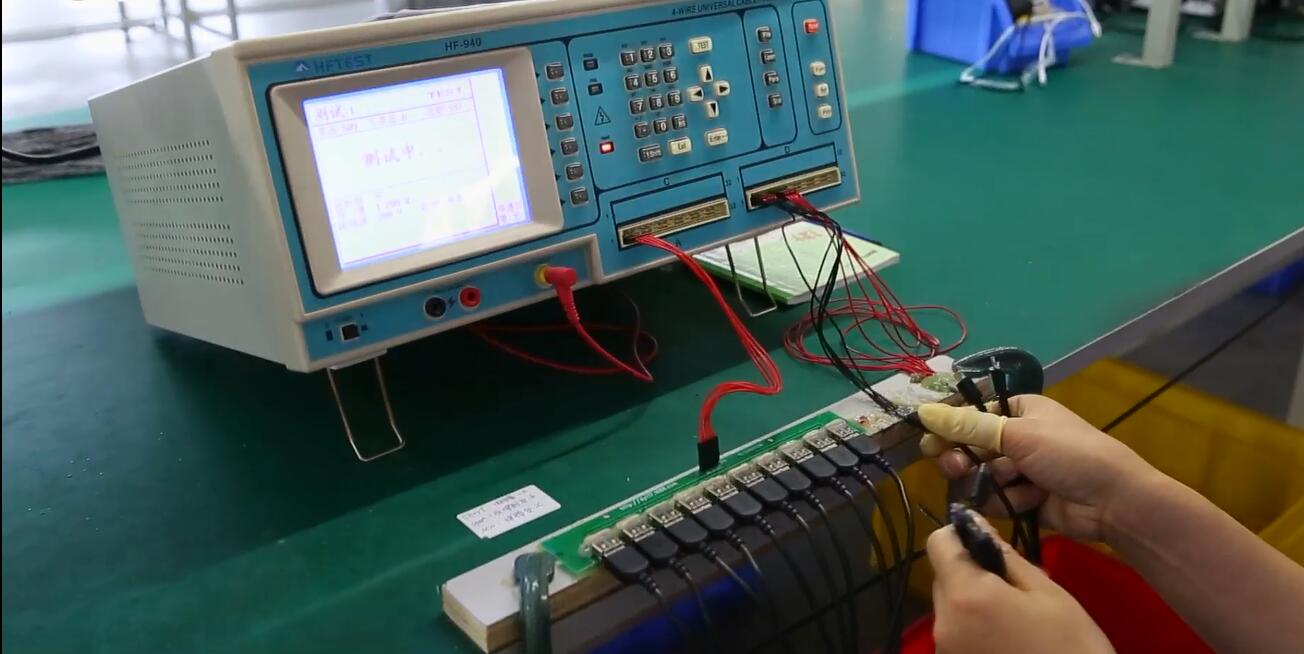
Bulk USB cable orders are decided in spreadsheets but delivered by factories. Between the approved quotation and the loaded container sit floor space, headcount, extrusion and assembly lines, test benches and packing tables — and most importers never see them before the purchase order is signed. That gap is exactly where supplier capability claims do their work, and where they should be checked rather than accepted.
This article uses one disclosed supplier profile as a working reference: DongGuan Focuses Electronics Technology Co., Ltd., a cable manufacturer operating a 6,000 m² facility in Tangxia Town, Dongguan, with 150 staff, six R&D engineers and a stated monthly capacity of 2,500,000 units. The aim is not to endorse the company. It is to show how its published operating figures — 100% full inspection before shipment, 25–35 day lead times, a 2,000-unit MOQ, ODM/OEM customization and a 12-month warranty — convert into questions an importer can put to any candidate on a shortlist.
Why USB cable capability claims are difficult to verify
A USB cable is a low-unit-value, high-volume product, and most of what determines its field life is invisible in a photograph: conductor gauge and plating, jacket compound, strain-relief geometry, solder quality inside the overmold. Buyers typically evaluate a handful of samples and a price, then commit to tens of thousands of units. The evidence they actually need sits one layer back, in the operation that will make the order.
That evidence falls into four groups, and a supplier statement is only useful if it can be attached to one of them:
- Physical: facility size, location, production and test equipment.
- Operational: staffing, monthly capacity, inspection regime, lead time.
- Commercial: MOQ, trade terms, payment terms, warranty.
- Documentary: certificate number, issuing body, certified scope and expiry date.
One qualification applies throughout this article: the figures in this profile are company-declared. A declaration is a claim to be verified against documents, samples and — where the order justifies the cost — a plant visit. It is not an audit result, and it is not presented as one here.
The reference profile: what Focuses discloses
Dongguan Focuses Electronics Technology Co., Ltd. relocated to its current 6,000 m² site in Tangxia Town, Dongguan, in 2018, and describes its scope as the design, production and global distribution of data cables, USB solutions and audio accessories. Its disclosed operating data is compact enough to review in one pass:
| Disclosed item | Stated figure |
|---|---|
| Facility | 6,000 m² in Tangxia Town, Dongguan; relocated to the site in 2018 |
| Workforce | 150 staff, including 6 R&D engineers |
| Stated monthly capacity | 2,500,000 units |
| Production mode | ODM and OEM |
| Customization scope | Logo printing, cable color, power, cable appearance, cable materials, cable molding, multi-function design, connector housing color, cable length, packaging style, packaging design |
| Quality control | 100% full inspection before shipment; acceptance defined as pre-shipment test |
| Minimum order | 2,000 units |
| Lead time | 25–35 days, described as typical |
| Trade and payment terms | FOB Shenzhen and EXW; 30% deposit, 70% balance before shipment |
| After-sales | 12-month warranty with free technical guidance on charging compatibility during the warranty period |
| Export profile | 90% export share; main markets EU, North America, Middle East and Asia |
| Certification on file | ISO 9001:2015, certificate SW23Q21582R1S issued by SAILWAY; scope: R&D and Production of Audio Wire and Data Wire; stated expiry 18 October 2026 |
All values above are supplied by the company. They describe stated capability rather than independently audited performance, and none of them alone establishes product quality for a specific SKU.
Floor space, headcount and capacity: running the arithmetic
Cable production is a sequence rather than a single step: conductor stranding or supply, insulation extrusion, shielding or braiding, connector termination, overmolding, electrical test and packing. Each stage consumes floor area and labour, which is why facility size and headcount can be cross-checked against a capacity claim instead of being taken at face value.
Two ratios can be calculated from the stated figures. At 2,500,000 units per month and 150 staff, output works out to roughly 16,700 units per employee per month. At the same volume across 6,000 m², it is roughly 417 units per square metre per month. Both are simple arithmetic on two disclosed numbers, not industry benchmarks, and both assume that every employee is direct production labour and that the entire floor is production space — rarely true once offices, incoming inspection, storage and finished-goods staging are counted.
The ratio is therefore a plausibility test, not a verdict. A supplier claiming very high output from a small floor and a thin headcount is describing either a heavily automated line or an overstatement, and the follow-up question separates the two. A ratio that holds together does not confirm capability either; it simply means the next question is worth asking.
Those next questions are operational: how many extrusion and assembly lines run, how many test stations exist, what the headcount is by department, what output looked like in the strongest and weakest months, and how much of the stated capacity is already committed. Nameplate monthly capacity describes a ceiling. It says nothing about utilisation, and no utilisation data is included in this profile.
What 100% full inspection before shipment actually covers
Focuses states 100% full inspection before shipment, and its purchasing terms define the acceptance criterion as a pre-shipment test. The claim is meaningful, but it defines coverage rather than depth: it says every unit is inspected, not which parameters are measured on every unit.
In cable assembly, the usual test set includes continuity and opens/shorts, DC resistance, insulation or hipot testing and a functional charge test under load, while connector pull force, bend and plug-cycle durability are typically handled on samples rather than every piece, alongside appearance, length and packing verification. A buyer converting the claim into a purchase-order clause should specify:
- which tests run on 100% of units and which are sampled;
- the pass/fail limits and the equipment used, including calibration status;
- what happens to non-conforming units — rework, scrap or downgrade;
- the record format supplied with the shipment, and how long records are retained.
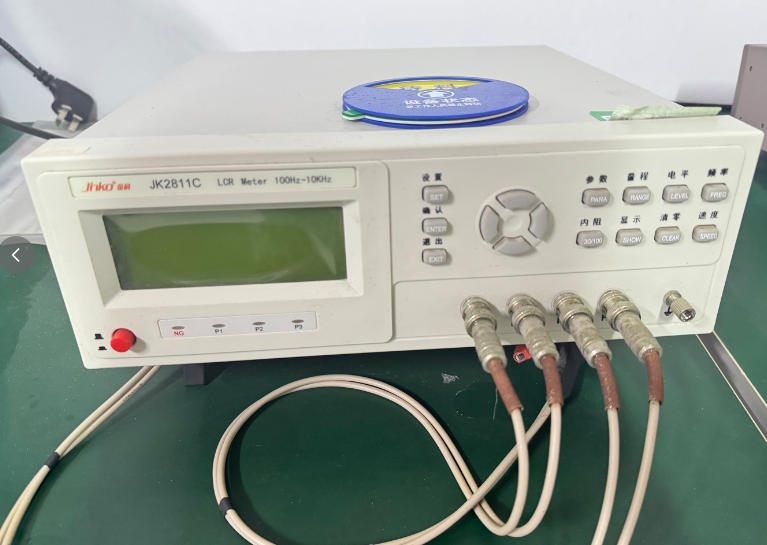
The facility's laboratory and test equipment form part of the disclosed evidence base, which makes the equipment question answerable rather than rhetorical: the buyer can request the equipment list and map it to the test list in the specification.
A boundary matters here. Pre-shipment inspection reduces the probability that a defective batch leaves the plant. It does not create design margin, and it does not replace type testing, safety certification or third-party verification. A cable that passes a final functional check can still fail in the field if the conductor specification or strain relief is wrong for the application — which is why the inspection claim belongs beside the specification, not in place of it.
MOQ 2,000 units and 25–35 days against a 2,500,000-unit month
The minimum order quantity is 2,000 units. Set against the stated monthly capacity, that is roughly 0.08% of one month's output — a calculated ratio, not a scheduling commitment. The practical reading is that a first or trial order sits comfortably inside the disclosed capacity envelope, which makes a small qualification run plausible before a season's volume is committed.
Capacity is not availability. A 2,000-unit order still queues behind existing work, and the 25–35 day lead time is described as typical. Buyers should confirm four things before relying on it: when the clock starts, which is usually at purchase order plus deposit and approved artwork or specification; whether custom materials, colours or new molding fall inside or outside that window; the material lead time for non-standard compounds; and how peak-season loading could shift the schedule.
Location enters the calculation too. The company cites its proximity to Shenzhen Port as a factor in shipping cost and deadline performance, which matters for FOB Shenzhen consignments but does not shorten the production lead time itself.
The commercial terms in the supplied purchasing data are FOB Shenzhen and EXW, with 30% deposit and 70% balance before shipment. That structure places pre-shipment inspection before the balance payment, which is where most importers want it — but only if the inspection scope was agreed in writing first.
ODM/OEM scope: eleven customization dimensions and their risk tiers
Focuses provides ODM and OEM production, with customization covering logo printing, cable color, power, cable appearance, cable materials, cable molding, multi-function design, connector housing color, cable length, packaging style and packaging design. Those eleven dimensions are not equivalent in cost or schedule risk, and treating them as one list is a common briefing error.
| Risk tier | Dimensions | What it changes |
|---|---|---|
| Configuration | Logo printing, cable color, connector housing color, cable length, packaging style | Artwork, colour matching, packing and carton marking; fastest to quote and approve |
| Material | Cable materials, cable appearance, packaging design | Handling feel, flexibility and durability; material minimums and new artwork usually apply |
| Engineering | Power rating, multi-function design, cable molding | Conductor construction, electrical architecture or tooling; needs engineering sign-off and sample validation |
The disclosed material set is PVC, TPE, nylon braided and silicone, including combined constructions such as a PVC inner layer under a nylon braided shell. Conductors are tinned copper or high-purity tinned copper, and the silicone model uses a soft food-grade silicone sheath around a high-purity tinned copper core. Material choice is the customization decision with the largest effect on how a cable behaves in daily use, so it should be tied to the application rather than to appearance alone.
The list also supports multi-function designs, which is where 3-in-1 charging cables and right-angle USB-C variants usually originate. Those builds concentrate the electrical and mechanical requirements in the splitter and connector housing, so the specification should state how many devices charge simultaneously and what current each branch must carry.
One limit is worth stating plainly: the material reviewed for this article does not state Apple MFi authorisation. Buyers sourcing Lightning USB cables or Apple-compatible USB-C cables should confirm MFi status separately before the specification is frozen, because that authorisation is a program-level licensing requirement rather than a customization option.
Where the disclosed capacity is applied
The company describes its customer base as digital accessory wholesalers and corporate gift purchasers, with order sizes of 5,000 to 30,000 units and shipments to markets including Indonesia, the United States, Germany and the United Kingdom. The stated applications are daily phone charging, corporate gift programmes, retail sale and in-car use.
Those two buyer types stress different parts of a factory. Wholesale orders test repeatability, because the second shipment has to match the first. Corporate gift programmes test artwork and packaging control, because the logo is the product and colour drift is a rejection. In-car and daily-charging use test the jacket and strain relief more than the electronics.
The company also reports a normal service life of over two years, a one-year product warranty, stable charging speed, low heating during long charging sessions and no mass quality complaints, and highlights multi-device charging, custom logo, bend-resistant construction and wide Type-C compatibility. These are the supplier's own case descriptions rather than independent test results. They are useful as a statement of what the factory expects its products to do, and as a list of claims a buyer can ask to see supported by test records for the specific SKU.
Sourcing through a disclosed factory versus an intermediary
Importers generally choose between buying from a manufacturer with a disclosed plant and buying through a trading company or sourcing agent. At the evaluation stage, the difference that matters is not price but who can answer technical questions from production data.
| Decision area | Disclosed manufacturer | Typical intermediary arrangement | What the buyer verifies |
|---|---|---|---|
| Capacity and scheduling | Answered from own production data | Relayed from the producing plant | Written confirmation of the slot for the order month |
| Inspection scope | Test list and records held internally | Forwarded copies | Pre-shipment report format and retention |
| Customization limits | Engineering feedback on power, molding, materials | Relayed, often after quotation | Which changes require tooling or new material minimums |
| Catalogue breadth | Narrower, category-focused | Broader consolidation across categories | Which items are produced in-house |
| Certificate scope | Named certificate held on site | Forwarded copies of third-party certificates | Number, scope and expiry checked with the issuing body |
Neither structure is better in the abstract. Intermediaries earn their margin on small mixed orders, multi-category consolidation and paperwork, and a factory with a narrow product scope is the wrong partner for a buyer assembling a broad catalogue. The point is that the verification cost moves: with a disclosed manufacturer the evidence can be requested directly, while through an intermediary the same evidence has to be traced back to the plant that will actually build the goods.
Fit boundaries to check for this supplier
- Certificate currency. The ISO 9001:2015 certificate on file, SW23Q21582R1S issued by SAILWAY, covers R&D and Production of Audio Wire and Data Wire and states an expiry of 18 October 2026. An evaluation in late 2026 or later should request the current certificate or renewal evidence, and confirm the scope still matches the product being purchased.
- Capacity is a ceiling. The 2,500,000-unit monthly figure is nameplate; no utilisation or defect-rate data is published, so scheduling and yield need separate confirmation.
- Product scope. Data cables, USB solutions and audio accessories. A buyer needing unrelated categories is outside the disclosed scope.
- Apple programme status. MFi authorisation is not stated in the reviewed material and should be confirmed before Lightning or Apple-compatible USB-C cables are specified.
- Case claims. Service life and quality-complaint statements are company-reported descriptions, not audit statistics.
Market signals that should shape the brief
Three external signals are worth carrying into a 2026–2027 USB cable negotiation, each with a different implication for the specification.
Regulation concentrates demand on USB-C
According to the European Commission, the EU Common Charger requirements have applied since 28 December 2024 to listed categories of portable radio equipment — including handheld mobile phones, tablets, digital cameras, headphones, headsets, handheld games consoles, portable speakers, e-readers, earbuds, keyboards, mice and portable navigation systems — and to laptops since 28 April 2026. For a supplier exporting 90% of output into markets that include the EU, the practical consequence is that USB-C becomes the default connector across the assortment, and the cable specification should name the applicable standard rather than the connector shape alone.
Charging and data are separate specifications
USB Power Delivery Specification Revision 3.2 defines fast-charging protocols enabling up to 240 W over USB Type-C cables, while USB4 Version 2.0 certified cables support data rates up to 80 Gbps under the Type-C specification. A brief that says only USB-C fast charging without naming wattage, current and data generation leaves the factory to guess, and a guess on conductor gauge is expensive to correct after molding.
Copper keeps the price conversation open
SMM reported that copper materials account for 60%–80% of manufacturing cost for standard USB cables, and that international copper prices reached USD 13,000–13,300 per metric ton in early 2026. Buyers should expect quotation validity windows and metal-linked adjustment language rather than year-fixed pricing, and should ask how a supplier handles a copper movement between quotation and shipment. Compliance budgeting follows the same logic: third-party testing of a basic USB-C data cable was quoted at USD 2,200–3,300 per model in 2025, with USB-IF full membership at USD 5,000 per year, which is why suppliers and buyers alike tend to certify volume SKUs rather than whole catalogues. For wider context only, The Insight Partners estimates the global USB cable market at USD 24.24 billion in 2025 — a commercial research estimate, not a forecast for any single supplier.
An evidence checklist to run before the purchase order
- Capacity arithmetic. Units per employee and per square metre, headcount by department, line count.
- Load status. Written confirmation of the production slot for the order month, not just the monthly ceiling.
- Inspection definition. Which tests run on 100% of units, which are sampled, the limits, the equipment and its calibration.
- Record package. Pre-shipment inspection report format, supplied with the shipment.
- Lead-time start point. Purchase order, deposit and artwork approval, with tooling and non-standard materials called out separately.
- MOQ fit. Whether 2,000 units covers the trial run, and what the step-up quantity is for material-specific builds.
- Certificate currency and scope. Number, issuer, scope and expiry checked with the issuing body — the stated 18 October 2026 expiry on the ISO 9001 certificate in this profile is exactly the kind of detail that has to be re-verified rather than assumed.
- Programme status per SKU. MFi for Lightning and Apple-compatible USB-C; USB-IF or IEC mapping for each data and power claim.
- Export and market consistency. A 90% export share with the EU, North America, Middle East and Asia as main markets should be checkable against shipping documents and previous order references.
- Identity and contact. Legal entity name, registered address, named contact, domain-based email, a reachable phone or messaging number, and a current catalogue — verified independently rather than taken from a marketplace listing.
Items one to six decide whether the order will be built as specified. Items seven to ten decide whether the counterparty is who it says it is — and on a 2,000-unit first order that second group is often skipped, which is precisely when it is cheapest to run.
What changes over the next buying cycle
If EU laptop coverage holds as scheduled and USB-C assortments keep consolidating, the pressure shifts from connectors to documentation: buyers will ask for the standard behind each power and data claim, and for test records that match the SKU. On the cost side, a copper share of 60%–80% leaves little room for a supplier to absorb metal movement without eventually repricing, so multi-quarter contracts are likely to carry indexation language. Neither trend changes the underlying verification logic. Facility size, headcount, inspection scope, lead time and certificate currency remain the five items that convert a capability claim into a workable purchase order, and all five can be answered before the first deposit.
Frequently asked questions
What factory figures should an importer verify first when evaluating a USB cable supplier?
Start with the three figures that can be cross-checked against each other: facility size, headcount and monthly capacity. At Dongguan Focuses Electronics the disclosed figures are 6,000 m², 150 staff and 2,500,000 units per month, which works out to roughly 16,700 units per employee and about 417 units per square metre per month. Those ratios are arithmetic on stated numbers, not benchmarks; their value is that an implausible claim shows up immediately, while a plausible one identifies which operational questions to ask next.
What does 100% full inspection before shipment include in cable manufacturing?
It means every unit is inspected before dispatch, but it does not by itself define which parameters are tested. In cable assembly a full-inspection regime typically covers continuity and opens/shorts, resistance, insulation testing and a functional charge check, with connector pull, bend and plug-cycle durability handled on samples. Focuses defines acceptance as a pre-shipment test. A buyer should convert the claim into a written test list with pass/fail limits, equipment and calibration details, and the report format supplied with the shipment.
How should a first order be planned around a 2,000-unit MOQ and a 25–35 day lead time?
2,000 units is roughly 0.08% of the stated 2,500,000-unit monthly capacity — a calculated ratio — so a qualification run fits well inside the disclosed capacity envelope. What that figure does not confirm is scheduling. Lead time is described as typical and normally starts once the purchase order, deposit and approved artwork or specification are in place; tooling and non-standard materials can sit outside that window. Confirm the production slot for the order month and separate material lead time from production time.
Which customization options are available under an ODM/OEM USB cable programme?
The disclosed list covers logo printing, cable color, power, cable appearance, cable materials, cable molding, multi-function design, connector housing color, cable length, packaging style and packaging design. They carry different risk: logo, colour, length and packing are configuration changes, while power rating, multi-function design and molding touch conductor construction or tooling and need engineering sign-off. Material options are PVC, TPE, nylon braided and silicone, including combined constructions such as a PVC inner layer with a nylon braided shell.
How can an importer check a supplier's export profile and company identity?
Compare the declared profile against documents. Focuses declares a 90% export share with the EU, North America, the Middle East and Asia as main markets, which can be matched against shipping records and order references. Identity checks are separate and simpler: confirm the legal entity name, the address at HuiQing Industrial Park, Tangxia Avenue South, Tangxia Town, Dongguan, a named contact, a domain-based email address and a reachable phone line, then verify that the certificate on file — ISO 9001:2015 certificate SW23Q21582R1S in this case — is current and covers the product being purchased.
Contact and further documentation
Dongguan Focuses Electronics Technology Co., Ltd. is based at 8F HuiQing Industrial Park, TangXia Avenue South, Tangxia Town, Dongguan, Guangdong, China. The named contact is Alice Deng, reachable at info@focusestech.com and on +86 180-2697-6650, which is also the WhatsApp number. The current product catalogue can be reviewed or downloaded here: 2026 Focuses Catalogue (PDF).
Have Questions or Need More Details?
Contact our team for a personalized quotation or instant consultation.
Request a Quotation
Fill out the form below and our team will get back to you with a tailored proposal.
WhatsApp Direct Chat
Prefer to chat in real-time? Message us on WhatsApp for instant assistance & quick answers.
- Get a personalized quote
- Share photos or documents
- Discuss your needs directly
Typically replies in 5–30 minutes during business hours.