
USB Cable Technical & Procurement FAQ: 6A, IPX7, MOQ 2,000
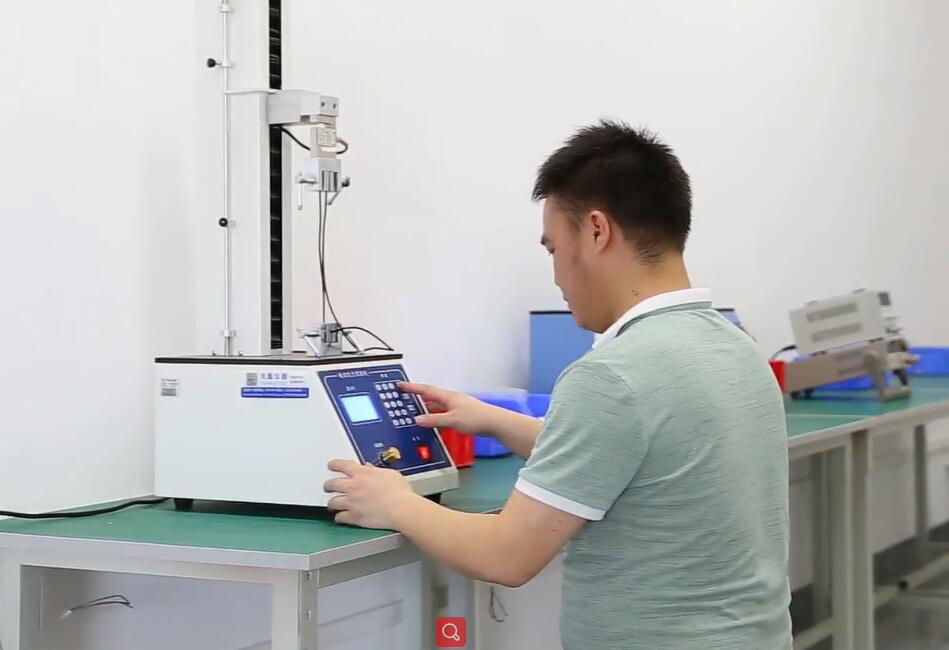
Verification equipment used to confirm electrical and mechanical performance before USB cable shipments leave the factory.
USB cable sourcing in 2026 is decided less by the unit price on a quotation than by whether the specification actually fits the application. Importers, distributors and brand owners now confirm charging current, data rate, jacket material, ingress protection, operating temperature and order terms before releasing a purchase order — because each of those answers changes the bill of materials, the retail claim and the return rate.
Dongguan Focuses Electronics Technology Co., Ltd. (Focuses) is a USB cable manufacturer based in Tangxia Town, Dongguan, China, established in 2006 and relocated to its current site in 2018. The company runs a 6,000 m² facility with 150 employees and a six-engineer R&D team, and exports roughly 90% of its output to the EU, North America and Asia. The questions below are the ones its buyers raise most often about the Focuses USB cable line, and the answers stay within what the company publishes about its own products and production.
Why buyers ask specification questions before price questions
A USB cable is a low-value part that sits inside a high-consequence decision. If it fails in the field, the buyer absorbs the return, the replacement shipment and the reputational cost with the end customer. The failure modes are consistent across the category: overheating, poor contact and wire cracking at the cable head. None of these are resolved by negotiating the invoice; they are resolved by specifying the right current rating, joint construction and test regime at the quotation stage.
The opportunity is equally clear. A sourcing conversation that settles material, length, interface, current and compliance before tooling starts produces fewer change orders during production, a cleaner retail listing, and a repeat order that matches the approved sample without renegotiation. For a distributor carrying a category line, that predictability is worth more than a marginal per-unit saving on a cable that generates after-sales work.
Build options: what the five material paths actually change
The Focuses USB cable line is organised around five build paths. The prefix identifies the construction, which in turn determines the tooling, the molded strain relief and the tests applied to the finished unit.
| Build | Construction | Typical application | What the choice changes |
|---|---|---|---|
| CB-PVC | PVC jacket | High-volume retail charging cables, everyday use | Lowest-cost build; the default starting point for entry-level and promotional programs. |
| CB-Nylon | Nylon braid over PVC | Retail programs where flex life and appearance matter | Braid protects the jacket from abrasion and suits repeated plug-and-unplug cycles. |
| CB-TPE | TPE jacket | Soft-touch consumer cables | Flexible hand feel, commonly used in white-label consumer lines. |
| CB-SILICONE | Food-grade silicone | Premium and temperature-sensitive applications | Selected when material safety and softness are the deciding criteria. |
| CB-Waterproof | IPX7 sealed molding | Outdoor, humid, kitchen and vehicle use | Sealed molding rated IPX7; built for moisture exposure rather than as a universal upgrade. |
Material selection is not cosmetic. Two quotations for a 1 m USB-C cable can differ simply because one assumes a PVC jacket and the other a nylon braid over PVC. Buyers comparing suppliers should compare the same build code, the same length and the same interface before treating a price gap as meaningful.
Interface and length questions
Focuses produces cables in five standard lengths — 0.3 m, 0.5 m, 1 m, 1.5 m and 2 m — and across five interface types: USB A, USB-C, Lightning, Type-C and Micro USB. The cables are compatible with phones, tablets, laptops and power banks, and the builds are positioned for daily home use, mobile matching and car charging, as well as for humid or outdoor conditions when the IPX7 sealed build is specified.
Length is a commercial decision as much as a technical one. Short lengths suit power banks, car mounts and bundled accessories; 1 m and 2 m dominate retail shelf expectations. Interface is now also a compliance decision in major markets.
- The European Union requires all handheld mobile phones, tablets and cameras sold after 28 December 2024 to use a USB Type-C charging port and comply with EN IEC 62680-1-3:2022 (European Commission / UL Solutions).
- Fast-charging devices in the EU market that support USB Power Delivery must comply with EN IEC 62680-1-2:2022 (USB-IF / IEC).
- Amazon US requires all USB Type-C cables to meet the UL 9990 safety standard for ICT power cables to avoid listing removal (UL Solutions / Amazon policy).
Performance questions: data rate, charging current, operating temperature
What data transfer speed do these cables support?
The USB cable supports data transfer speeds up to 480 Mbps, which covers charging-and-sync use cases rather than high-bandwidth video or storage transfer.
What charging current can the cable carry?
Charging current ranges from 1A to 2.4A as standard, with up to 6A maximum, and the cable is compatible with 120W and 240W fast charging. Buyers should note that 6A is a system-level figure: the power source, the cable and the receiving device must all support the higher current and the relevant fast-charging profile. The cable rating describes what the cable can pass, not what any connected device will draw.
What is the operating temperature range?
Working temperature ranges vary by model: -10°C to 60°C, or -20°C to 70°C. Buyers specifying vehicle, outdoor or cold-storage applications should confirm which range applies to the selected build instead of assuming the widest figure applies across the entire line.
Order and procurement questions
What is the minimum order quantity and the standard lead time?
The minimum order quantity is 2,000 units, the typical lead time is 25–35 days, and monthly production capacity is 2,500,000 units.
What are the trade terms, payment terms and acceptance criteria?
Delivery terms are FOB Shenzhen or EXW. Payment terms are 30% deposit with 70% balance before shipment, and the acceptance criterion is a pre-shipment test.
What quality control applies before shipment?
Quality control includes 100% full inspection before shipment, supported by 100% electrical testing and additional functional testing: short circuit test, swing test, tensile test, high and low temperature test, power test and plug-in test. These tests target the three failure modes buyers raise most often — overheating, poor contact and wire cracking.
What warranty and technical support come with an order?
Orders carry a 12-month warranty, together with free technical guidance on charging compatibility, so buyers can confirm that a given cable build, charger and device combination works before the specification is locked.
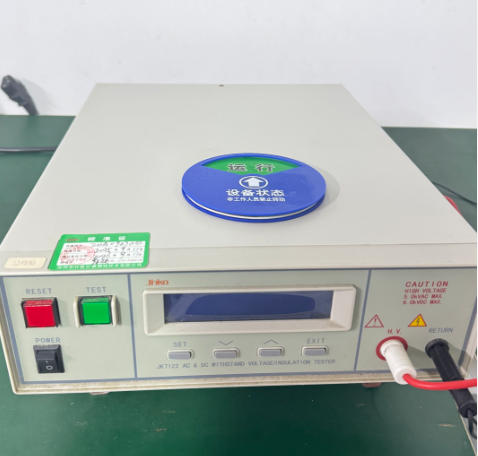
Electrical and mechanical testing supports the 100% inspection regime applied before shipment.
Customization: what can be changed under ODM/OEM
Focuses provides ODM and OEM production services. Within that framework, buyers can specify logo printing, cable colour, material and length, and the six-engineer R&D team supports the specification work behind those changes. The 6,000 m² facility and 150-strong workforce provide the production base for both custom and standard programs.
Customization changes tooling and sampling rather than the underlying commercial baseline: custom orders still start from a 2,000-unit minimum order quantity and a 25–35 day typical lead time. Buyers planning a custom program should therefore lock material, length and interface before approving logo artwork, because a late material change resets both sampling and the MOQ calculation.
Market trend: what is changing in USB cable specification demand
DataHorizzon Research estimates the global USB cable market at USD 21.2 billion in 2024, projected to reach approximately USD 88.6 billion by 2033, while KBV Research projects a CAGR of 17.3% through 2031. Dataintelo places the USB Type-C segment at 41.2% of the total USB cable sales market in 2025, with Asia Pacific generating USD 12.3 billion — approximately 43% of global revenue — in the same year.
Market-sizing figures vary by scope, and buyers should treat them as directional rather than exact: broader cable-assembly research and USB-specific studies are not measuring the same boundary. The practical signal is consistent, however. Interface mix is consolidating around Type-C, which is reinforced by the EU common charger rules, and the recognised global manufacturers in this category — Anker Innovations, Belkin International, Ugreen and Baseus — are benchmarked on reliability and market presence rather than on interface breadth alone.
For a procurement plan, the implication is that a Type-C-dominant SKU mix should be the default assumption, while Lightning and Micro USB remain necessary for the installed base that still uses them.
How these cables compare with common market USB cables
The clearest measurable difference between the Focuses build and a commodity market cable sits at the cable head, where most failures occur.
| Parameter | Common USB cable in market | Focuses anti-broken build |
|---|---|---|
| Cable head design | Standard molded joint | Anti-broken design at the cable head position |
| Service life | Baseline | 3–5 times longer than ordinary market USB cables |
| Joint fracture failure rate | Baseline | Reduced by over 80% |
| Raw material cost | Baseline | Slightly higher |
| Daily maintenance | Frequent replacement | Almost zero daily maintenance; low failure rate, seldom replacement needed |
| Best suited to | General use | Daily home use, mobile matching, car charging |
The durability advantage is not free. The reinforced head uses slightly more raw material, so unit cost is higher than a commodity cable of the same length and interface. For a single-season promotional giveaway where the cable is a disposable accessory, that premium may not pay back. For retail programs, fleet purchases and any application where the cable is plugged and unplugged daily, the lower failure rate usually changes after-sales cost more than the unit price does. Two further boundaries are worth stating: the IPX7 sealed and food-grade silicone builds are engineered for specific environments and are not universal replacements for standard PVC or TPE constructions, and the wider -20°C to 70°C operating range applies only to the models specified for it.
Long-term supply: what keeps a sourcing relationship stable
For distributors and brand owners, a cable supplier is a multi-year decision rather than a single purchase. The factors that matter in that horizon are schedule predictability, specification continuity and after-sales coverage — not the last few cents negotiated off a quotation.
- Capacity and schedule: 2,500,000 units per month and a 25–35 day typical lead time give buyers a stable planning baseline for repeat and seasonal programs.
- Specification continuity: with material, length, interface, colour and logo locked under ODM/OEM, reorders reproduce the approved sample instead of drifting.
- Incoming quality burden: 100% full inspection before shipment shifts part of the receiving inspection workload back upstream.
- After-sales layer: a 12-month warranty and free technical guidance on charging compatibility reduce the cost of resolving end-customer questions.
- Export familiarity: with roughly 90% of output going to the EU, North America and Asia, export documentation and market requirements are part of normal production, not a special project.
- Logistics: the Dongguan facility sits close to Shenzhen Port, which supports cost-effective shipping and tight delivery deadlines.
Future outlook
Three shifts are likely to keep shaping USB cable procurement. First, interface consolidation continues: with the USB Type-C segment already holding 41.2% of the market in 2025 and EU rules mandating Type-C on handheld devices sold after 28 December 2024, Type-C is becoming the default SKU rather than one option among five. Second, power delivery keeps moving upward, which makes the 6A, 120W and 240W class of cable increasingly relevant to buyers who previously treated all charging cables as interchangeable. Third, compliance documentation is becoming a listing prerequisite rather than a nice-to-have, as marketplace requirements such as UL 9990 for USB Type-C cables in the US demonstrate.
For buyers, the practical response is to plan SKU mixes around Type-C, keep a specialist line for Lightning and Micro USB while the installed base persists, and treat ingress protection, operating temperature and joint construction as specification fields to be confirmed in writing before tooling begins.
FAQ
What materials are available in the Focuses USB cable line?
Five build paths are available: CB-PVC (PVC jacket), CB-Nylon (nylon braid over PVC), CB-TPE (TPE jacket), CB-SILICONE (food-grade silicone) and CB-Waterproof (IPX7 sealed molding).
What charging current and data speed do these cables support?
Data transfer speeds reach up to 480 Mbps, and charging current runs from 1A to 2.4A as standard with up to 6A maximum, compatible with 120W and 240W fast charging. Maximum current depends on the charger and device supporting the same profile.
Which lengths and interfaces can be ordered?
Standard lengths are 0.3 m, 0.5 m, 1 m, 1.5 m and 2 m, and the interface options are USB A, USB-C, Lightning, Type-C and Micro USB. The cables are compatible with phones, tablets, laptops and power banks.
What are the minimum order quantity, lead time and monthly capacity?
The minimum order quantity is 2,000 units, typical production lead time is 25–35 days, and monthly production capacity is 2,500,000 units.
What inspection and testing is performed before shipment?
Quality control includes 100% full inspection before shipment, 100% electrical testing, and functional tests covering short circuit, swing, tensile, high and low temperature, power and plug-in conditions. The acceptance criterion for an order is a pre-shipment test.
What customization and warranty terms apply?
ODM and OEM production services cover logo printing, cable colour, material and length. Orders carry a 12-month warranty with free technical guidance on charging compatibility, on delivery terms of FOB Shenzhen or EXW and payment terms of 30% deposit with 70% balance before shipment.
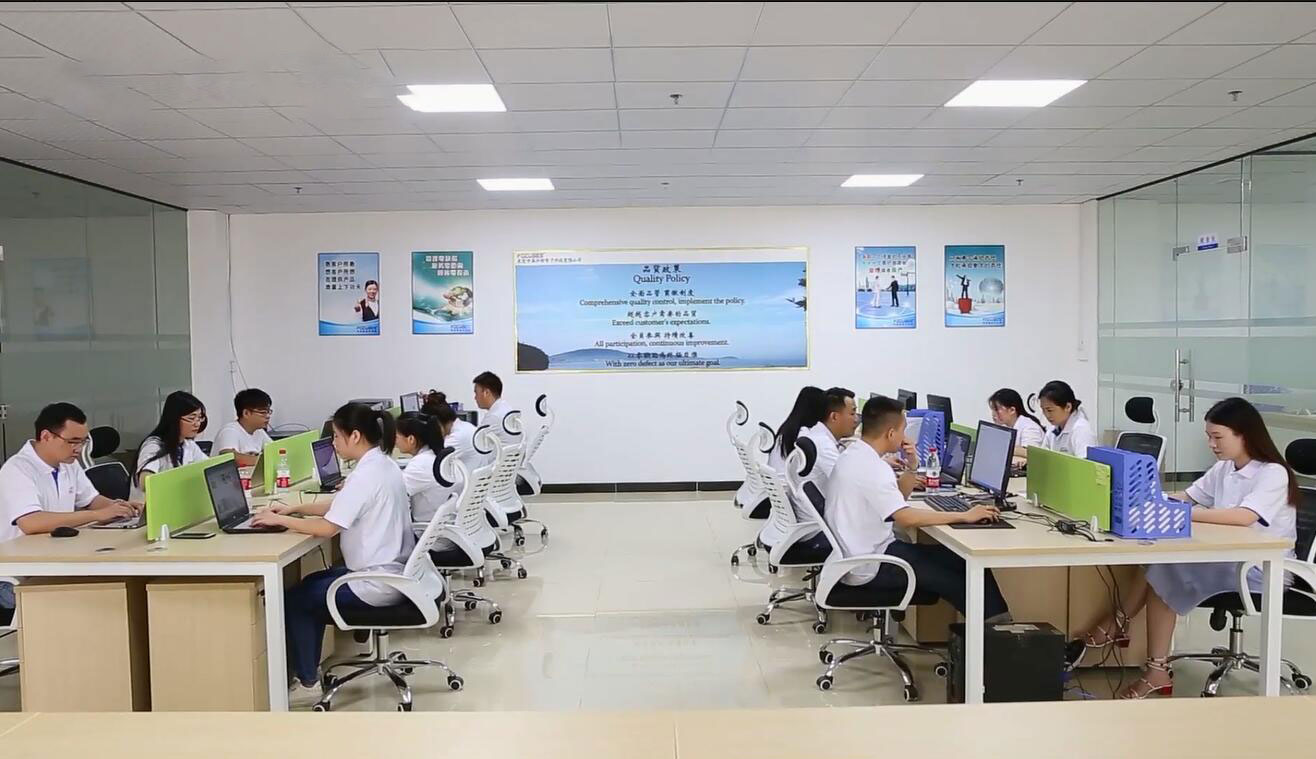
Order planning and specification review sit between the quotation and the production schedule.
Most of the questions above resolve into one working principle: match the build code, interface, length, current rating and compliance requirement to the actual application before the order is placed, and the production phase becomes a scheduling exercise rather than a problem-solving one. The 2026 Focuses catalogue, which documents the USB cable range described in this article, is available for download at https://cdn.socialarks.com/sbsp/25036/common/2026/0713/2026%20Focuses%20Catalogue.pdf, and the manufacturer's site is at www.focusestech.com.