
USB Cables for Harsh Environments: IPX7, -20°C Silicone, 6A Field Charging
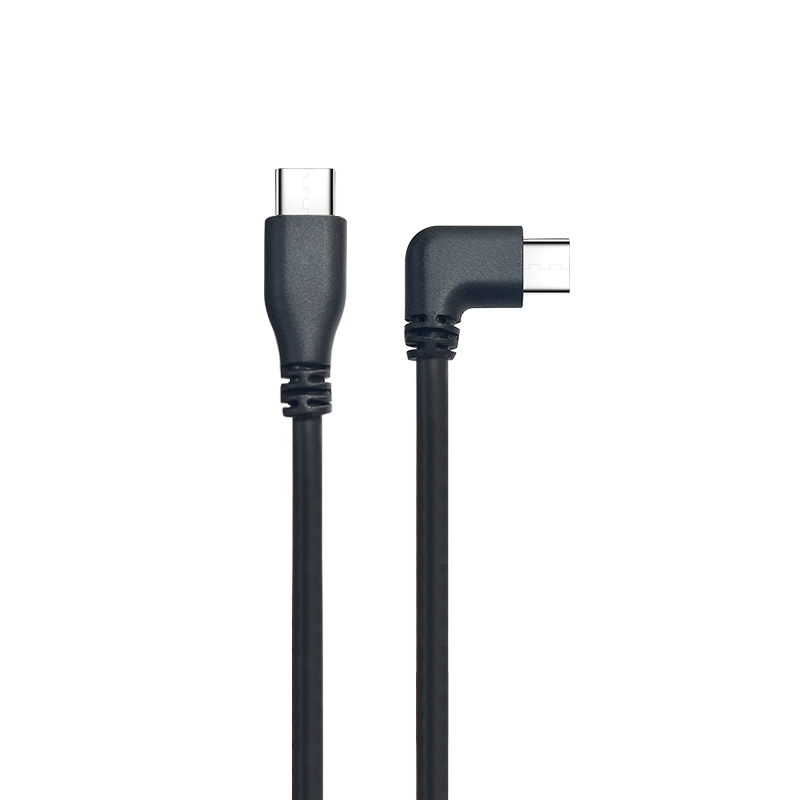
Field charging is no longer an exception. Survey crews, marine electronics installers, winter sports operators, event production teams and industrial maintenance crews recharge the same phones, tablets, laptops and power banks that indoor users do — in rain, salt spray, dust, sweat and air well below freezing. When those cables fail, it is usually at the point where the jacket meets the connector, and it is usually because the specification was written for a desk.
This reference looks at how cable construction changes when the operating environment, rather than the price tier, drives the specification. Three Focuses models serve as the working examples: the CB-Waterproof cable with an IPX7 sealed integrated molding, the CB-SILICONE model with a food-grade silicone sheath rated from -20°C to 70°C, and the CB-TPE model specified at 6A for high-draw field devices.
Why Standard USB Cables Fail Outside
Harsh-environment failure is normally a sequence rather than a single event, and each stage points to a different specification line.
- Moisture ingress. Water reaches the conductor through the seam between the jacket and the connector housing; once inside, it corrodes the contact area and raises resistance.
- Salt and sweat corrosion. Chloride exposure — salt spray, sweat — accelerates surface oxidation on untinned copper.
- Cold stiffening. Rigid jacket compounds lose flexibility as temperature falls. A stiff cable kinks at the strain relief, and repeated kinking fatigues the conductor strands.
- Dust and abrasion. Grit held between the cable and a bag, crate or console abrades the outer sheath during coiling and uncoiling.
- Heat concentration. A cable carrying several amperes while coiled in a pocket or vehicle console has very little surface area to dissipate heat.
The procurement consequence is simple: an ingress rating, a working temperature range, a sheath material and a current rating are four separate specification lines. A product listing that publishes only one of them is not yet a field specification.
| Failure mode in the field | Design response | Evidence in the Focuses range |
|---|---|---|
| Water entering at the jacket-to-connector junction | Molding the jacket and connector body as one continuous piece instead of an assembled housing | CB-Waterproof cable: IPX7 waterproof and dustproof, sealed integrated molding |
| Sweat and salt corrosion at the conductor | Tinned copper conductor plus an anti-corrosion outer construction | CB-Waterproof cable: anti-corrosion, sweat-proof, high-purity tinned copper core |
| Cold stiffening and kinking | Silicone sheath that holds flexibility and resists freezing | CB-SILICONE: -20°C to 70°C, anti-kink, anti-freezing, flexible |
| Dust and abrasion during daily handling | Wear-resistant sheath; optional nylon-braided outer layer | CB-Waterproof cable: wear-resistant; outer material silicone / TPE / nylon braided optional |
| Heat build-up in long high-current sessions | 6A current rating on the 120W / 240W models | CB-Waterproof cable, CB-SILICONE, CB-TPE, CB-Nylon: max charging current 6A |
The Focuses Cable Models Built for Field Conditions
Dongguan Focuses Electronics Technology Co., Ltd. ('Focuses') is a Dongguan-based manufacturer that designs, produces and globally distributes data cables, USB solutions and audio accessories. The company relocated to a 6,000 m² facility in Tangxia Town, Dongguan, in 2018, employs 150 people, produces 25,000,000 units per year and exports roughly 90% of its output to the EU, North America and Asia. Within its USB CABLE range, three models carry genuinely field-relevant specifications.
CB-Waterproof cable: IPX7 sealed integrated molding
The CB-Waterproof cable is the model specified for wet and contaminated environments. Its defining feature is a sealed integrated molding that forms a continuous body rather than a multi-part assembly, and that construction is what supports the declared IPX7 waterproof and dustproof rating. Buyers can select a silicone, TPE or nylon-braided outer material over a high-purity tinned copper core.
- Interface: USB-A / USB-C to Type-C / Lightning / Micro USB
- Outer material: silicone, TPE or nylon braided (optional)
- Conductor: high-purity tinned copper core
- Power support: 120W and 240W fast charging
- Maximum charging current: 6A
- Data transfer speed: 480 Mbps
- Ingress rating: IPX7 waterproof and dustproof
- Optional lengths: 0.3 m, 1 m, 1.5 m, 2 m
- Working temperature: -20°C to 70°C
- Compatibility: phones, tablets, laptops, power banks
- Declared features: sealed integrated molding; waterproof, dustproof, sweat-proof, anti-corrosion, wear-resistant
- Custom logo printing: supported
The declared application list for this model covers outdoor supplies, industrial equipment, sports fitness, marine electronics and automotive use alongside conventional retail, wholesale and e-commerce channels — an indication that it is intended for environments where moisture, salt and sweat are expected rather than accidental.
CB-SILICONE: food-grade silicone for cold and skin-contact use
Where low temperature and skin contact dominate, the material decision shifts to the CB-SILICONE model. It uses a soft food-grade silicone outer sheath over a high-purity tinned copper core and is specified across the same -20°C to 70°C range as the CB-Waterproof cable. The features listed for the model are skin-friendly, odorless, anti-kink, wear-resistant, anti-freezing and flexible.
- Interface: USB-A / USB-C to Type-C / Lightning / Micro USB
- Outer sheath material: soft food-grade silicone
- Inner conductor: high-purity tinned copper core
- Power support: 120W, 240W ultra-fast charging
- Maximum charging current: 6A
- Data transfer speed: 480 Mbps
- Optional lengths: 0.3 m, 1 m, 1.5 m, 2 m
- Working temperature: -20°C to 70°C
- Compatibility: phones, tablets, laptops, power banks
- Custom logo printing: supported
No ingress protection rating is stated for the CB-SILICONE model, which matters when the requirement is immersion rather than sweat and rain. In that case the CB-Waterproof cable remains the correct starting point.
CB-TPE: 6A charging for high-draw field devices
The CB-TPE model addresses the power side of field work, where a tablet, notebook or power bank is charged while a mapping, radio or diagnostic application is running. It uses an eco-friendly TPE outer material and a tinned copper core, supports 120W and 240W fast charging at a maximum current of 6A, and carries both charging and data sync functions. The model is described as soft, flexible and wear-resistant, and is declared compatible with cell phones and notebooks.
- Interface: multi-type USB port
- Outer material: eco-friendly TPE
- Core: tinned copper wire
- Power support: 120W and 240W fast charge
- Maximum current: 6A
- Function: charging and data sync
- Compatibility: cell phones, notebooks
- Declared properties: soft, flexible, wear-resistant
Working temperature and ingress ratings are not stated in the CB-TPE model specification, so it should be treated as a power-focused construction rather than a weather-rated one.
Two further models complete the range and set the indoor baseline. The CB-Nylon model combines a nylon braided shell with a PVC inner layer and a tinned pure copper core, is rated from -10°C to 70°C, and supports 120W/240W at 6A with 480 Mbps data transfer. The CB-PVC model uses a PVC sheath with USB-A, Lightning, Type-C and Micro USB interfaces, is rated from -10°C to 60°C, and carries 1A–2.4A at 480 Mbps. Both accept custom logo printing and both are appropriate for indoor, retail and gift programs.
| Model | Sheath / outer material | Working temperature | Max current | Ingress rating | Field-relevant features |
|---|---|---|---|---|---|
| CB-Waterproof cable | Silicone / TPE / nylon braided (optional) | -20°C to 70°C | 6A | IPX7 waterproof and dustproof | Sealed integrated molding; sweat-proof; anti-corrosion; wear-resistant |
| CB-SILICONE | Soft food-grade silicone | -20°C to 70°C | 6A | Not stated in model specification | Anti-kink; anti-freezing; flexible; skin-friendly; odorless |
| CB-TPE | Eco-friendly TPE | Not stated in model specification | 6A | Not stated in model specification | Soft; flexible; wear-resistant; charging and data sync |
| CB-Nylon | Nylon braided shell with PVC inner layer | -10°C to 70°C | 6A | Not stated in model specification | Braided abrasion layer; custom logo |
| CB-PVC | PVC | -10°C to 60°C | 1A–2.4A | Not stated in model specification | Indoor, retail and gift programs |
Technical Explanation: What IPX7, -20°C and 6A Actually Require
Ingress protection is a construction decision
IPX7 is a protection rating against water immersion, so the assembly must keep water out when submerged rather than merely resist splashes. That outcome depends on how the connector and the jacket are joined. An assembled housing introduces a seam; sealed integrated molding removes it by forming the jacket and connector body as one continuous piece, which is why the CB-Waterproof cable pairs its IPX7 declaration with a molded construction rather than a surface coating. Dust protection follows the same geometry — a sealed body leaves no opening for particulate matter.
Low-temperature performance is a material decision
At low temperatures the limiting factor is the sheath, not the conductor. Silicone compounds retain flexibility where rigid PVC compounds stiffen, which is the practical reason the CB-SILICONE and CB-Waterproof models are rated from -20°C to 70°C while the CB-PVC model is rated from -10°C to 60°C and the CB-Nylon model from -10°C to 70°C. The CB-SILICONE specification states the relevant behaviour directly: anti-kink, anti-freezing and flexible. For winter deployment this matters twice, because a cable that resists kinking also protects the conductor strands running inside it.
The conductor and the corrosion path
All five models use copper conductors, and four of them — CB-SILICONE, CB-Waterproof cable, CB-Nylon and CB-TPE — specify tinned copper or high-purity tinned copper, while the CB-PVC model specifies pure copper. Tinned conductors are commonly specified where humidity, salt or sweat exposure is expected, because the tin layer limits oxidation of the copper surface and keeps contact resistance more stable over time. It is also one of the few construction details a buyer can verify in a specification sheet without destructive testing.
The power path: what 6A and 240W do and do not guarantee
The CB-TPE, CB-SILICONE, CB-Waterproof cable and CB-Nylon models are all specified with a maximum charging current of 6A and support for 120W and 240W fast charging; the CB-PVC model is specified at 1A–2.4A. That figure is a capability ceiling, not a promise about what a specific device will draw. Delivered power depends on the charger, on the device charging profile and on the negotiation between them, so a 6A-rated cable connected to a lower-output source charges at the source's capability.
What the rating does not cover
The IPX7 declaration applies to the cable product. It does not describe the connection between the plug and the device port, and it does not replace a system-level water-resistance specification for the device itself. Data transfer speed, where stated in the range, is 480 Mbps on the CB-Waterproof cable, CB-SILICONE, CB-Nylon and CB-PVC models.
Validation, Certification and Quality Control
Focuses holds ISO 9001:2015 certification issued by SAILWAY under certificate number SW23Q21582R1S, with a registration scope covering the R&D and production of audio wire and data wire. The certificate was issued on 19 October 2020 and runs through 18 October 2026. Buyers running long programs should request the renewed certificate after that date as a matter of routine, rather than relying on the document attached to an earlier quotation.
Quality control in production is stated as 100% full inspection before shipment, and the pre-shipment test is also the declared acceptance criterion in the company's purchasing terms. The company maintains a laboratory with dedicated cable test instruments used before release.
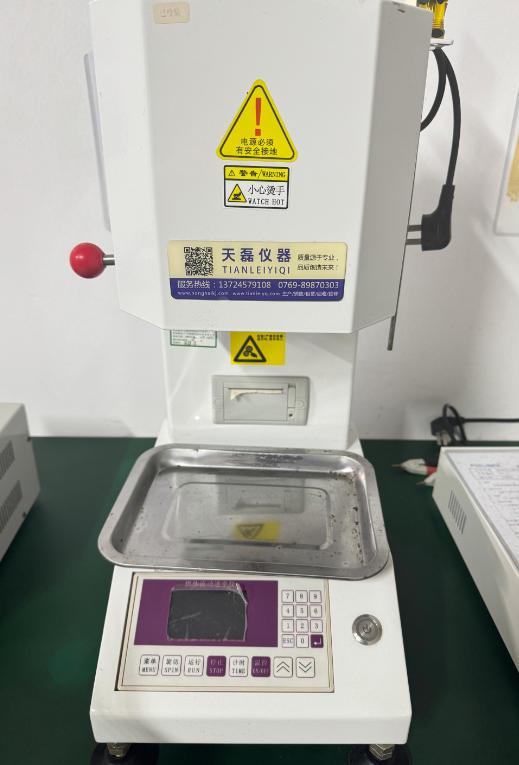
One caveat belongs in any procurement note on ingress-rated products: IPX7 is a manufacturer specification in this case, so the qualification record should note which test method and which sample set stand behind it. Asking that question is standard practice for any supplier and does not imply a problem with the product — it converts a specification line into an auditable one.
Application Fit: Matching the Model to the Environment
- Rainy and humid outdoor work. The CB-Waterproof cable is the appropriate model, with an IPX7 waterproof and dustproof rating, sealed integrated molding and declared waterproof, dustproof and sweat-proof behaviour.
- Sweat-heavy sports and fitness use. The CB-Waterproof cable lists sweat-proof and anti-corrosion behaviour and names sports fitness among its application industries; the CB-SILICONE model adds a skin-friendly, odorless, wear-resistant silicone sheath for equipment that is held rather than pocketed.
- Low-temperature outdoor use. The CB-SILICONE model and the CB-Waterproof cable both operate from -20°C to 70°C with anti-freezing and anti-kink behaviour. The CB-Nylon model, rated -10°C to 70°C, suits milder conditions and the CB-PVC model, rated -10°C to 60°C, is not a sub-zero option.
- Marine and coastal electronics. The CB-Waterproof cable lists marine electronics among its application industries and combines anti-corrosion behaviour with an optional nylon-braided outer material.
- Automotive and vehicle use. The CB-Waterproof cable lists automotive among its application industries; both it and the CB-SILICONE model are declared compatible with phones, tablets, laptops and power banks for in-vehicle charging.
- High-draw field devices. Where a tablet or notebook must charge while operating, the CB-TPE, CB-SILICONE, CB-Waterproof cable and CB-Nylon models are all specified at 6A with 120W and 240W support.
- Mixed device fleets. The USB-A / USB-C to Type-C / Lightning / Micro USB interface set on the CB-Waterproof cable, CB-SILICONE and CB-Nylon models allows one program to cover several connector types.
The compatibility statements in the model specifications are limited to phones, tablets, laptops and power banks; the CB-TPE model states cell phones and notebooks. That list is the one to quote in a tender, and broader device claims should be verified per device rather than assumed.
Market Trend Analysis: What Is Changing in USB Cable Demand
The category is expanding, and the growth is concentrated in the interfaces field equipment already uses. DataHorizzon Research estimates the global USB cable market at USD 21.2 billion in 2024 and projects approximately USD 88.6 billion by 2033. KBV Research projects a CAGR of 17.3% through 2031. Dataintelo reports that the USB Type-C segment held 41.2% of USB cable sales in 2025, and that Asia Pacific generated USD 12.3 billion of USB cable revenue in the same year, roughly 43% of the global total.
Estimates diverge by scope — Dataintelo places the 2025 market at USD 28.6 billion, KBV Research uses a 2023 base of USD 19.2 billion, and broader cable-assembly reporting is much larger — so any single market figure should be treated as directional rather than as a planning number.
Regulation is setting a specification floor in the same period. Under the EU Common Charger Directive, handheld mobile phones, tablets and cameras sold in the EU after 28 December 2024 must use a USB Type-C charging port and comply with EN IEC 62680-1-3:2022, while fast-charging devices that support USB Power Delivery must comply with EN IEC 62680-1-2:2022. In the United States, Amazon requires USB Type-C cables to meet the UL 9990 safety standard for ICT power cables to avoid listing removal. Environmental ratings sit on top of those baselines rather than replacing them, which is why buyers increasingly place IPX7, temperature range and material on the same specification sheet as compliance.
Competitive context is stable. Third-party market listings identify Anker Innovations, Belkin International, Ugreen and Baseus among manufacturers recognised for high reliability and market presence. Private-label and OEM supply is a separate segment, where manufacturers such as Focuses operate in ODM and OEM modes rather than as consumer brands.
Comparison with Traditional Solutions — and the Limits of Field Ratings
The practical comparison is between a conventional indoor cable and a field-oriented construction across the lines that decide whether a program succeeds outdoors.
| Dimension | Conventional indoor cable (CB-PVC) | Field-oriented models (CB-Waterproof cable / CB-SILICONE / CB-TPE) |
|---|---|---|
| Outer sheath | PVC | Silicone, TPE or nylon braided (optional); food-grade silicone on CB-SILICONE |
| Working temperature | -10°C to 60°C | -20°C to 70°C on CB-Waterproof cable and CB-SILICONE |
| Maximum current | 1A–2.4A | 6A with 120W and 240W support |
| Ingress protection | Not stated | IPX7 waterproof and dustproof on the CB-Waterproof cable |
| Handling behaviour | Standard retail flexibility | Anti-kink, anti-freezing, wear-resistant; sealed integrated molding on the waterproof model |
| Typical use | Indoor charging, retail, gift and e-commerce programs | Outdoor, marine, automotive, industrial, sports and fitness, low-temperature programs |
Limitation 1 — a power rating is conditional. The 6A and 120W/240W figures describe what the cable supports. Actual delivery depends on the charger and the device, so a field kit built around a 6A cable but paired with a lower-output source will not charge faster because of the cable.
Limitation 2 — the ingress rating applies to the cable. IPX7 covers the cable assembly as supplied. It does not describe the plug-to-port interface while the device is charging, and it is not a substitute for the device's own water-resistance specification.
Limitation 3 — material choices trade one property for another. Silicone prioritises low-temperature flexibility and skin-contact comfort; a nylon-braided shell prioritises abrasion resistance, but the CB-Nylon model's working range starts at -10°C rather than -20°C. A winter program should therefore not default to braided construction purely on price or perceived toughness.
Limitation 4 — configuration boundaries. The listed optional lengths for the field models are 0.3 m, 1 m, 1.5 m and 2 m, and cable length is one of the available customization options. Non-standard assemblies should be confirmed against the intended load rather than assumed, because current handling and heat dissipation both change with length and conductor cross-section.
Limitation 5 — certificate currency. The ISO 9001:2015 certificate (SW23Q21582R1S) runs through 18 October 2026. A buyer placing a program that extends past that date should build certificate renewal into the supplier review rather than treating the current document as permanently valid.
Procurement Terms and a Buyer Checklist
| Item | Terms |
|---|---|
| Minimum order quantity | 2,000 pcs |
| Delivery terms | FOB Shenzhen, EXW |
| Payment terms | 30% deposit, 70% balance before shipment |
| Acceptance criteria | Pre-shipment test |
| Production lead time | Typically 25–35 days |
| Monthly capacity | 2,500,000 units |
| Quality control | 100% full inspection before shipment |
| Warranty | 12 months, with free technical guidance on charging compatibility issues during the warranty period |
| Customization | Logo printing, cable colour, power, cable appearance, cable materials, cable molding, multi-function design, connector housing colour, cable length, packaging style, packaging design |
| Export markets | EU, North America, Middle East, Asia |
A short checklist follows from the specification lines above and can be used before any field-use cable order is placed.
- Define the real ingress requirement: sweat and rain, or actual immersion.
- Compare the lowest and highest expected ambient temperature against the stated working range of the candidate model.
- Measure the current the field devices actually draw from the chargers that will be issued with them.
- Match connector interfaces to the device fleet: USB-A or USB-C to Type-C, Lightning or Micro USB.
- Decide whether skin contact and sweat make silicone the better sheath than TPE or nylon braid.
- Request the certificate scope and expiry date, not only the certificate image.
- Validate on samples before committing to the 2,000-unit minimum, and record pre-shipment test results as the acceptance criterion.
- Plan the 25–35 day lead time against the deployment date.
Case Reference: Wholesale and Corporate Gift Programs Across Four Markets
The manufacturer's case record describes programs with a digital accessory wholesaler and a corporate gift purchaser serving Indonesia, the United States, Germany and the United Kingdom, in order volumes of 5,000–30,000 pcs. Applications were daily phone charging, corporate customized gifts, retail sales and car use. The record states a normal service life of over two years against a one-year product warranty, with reported outcomes of stable fast charging speed, durable braided wire, low heating during long charging sessions and zero mass quality complaints. The differentiators listed for those programs were multi-device simultaneous charging, customizable appearance and logo, a bend-resistant design and wide compatibility with Type C devices.
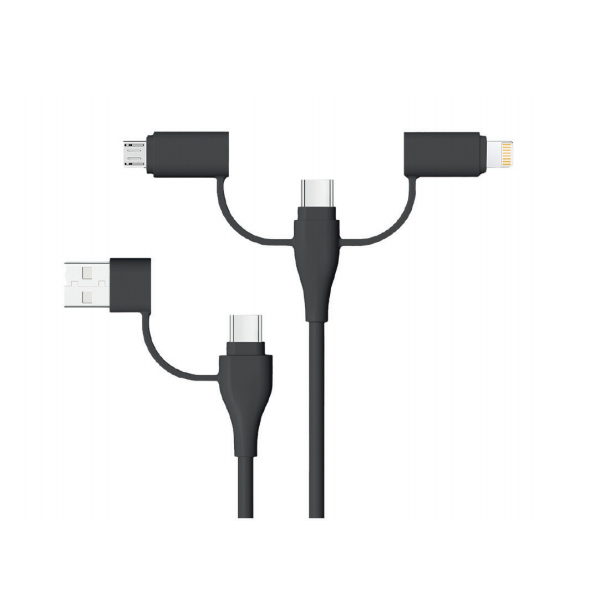
For buyers, the transferable points are the ones that also appear in the formal specification: a 12-month warranty, customization across appearance and logo, and a bend-resistant construction. Case outcomes of this kind are self-reported and are best treated as an indication of fit rather than as a substitute for sample validation in the target environment.
Future Outlook
- Interface consolidation continues. With the USB Type-C segment reported at 41.2% of USB cable sales in 2025, programs that standardise on Type-C reduce cable variants in the field kit. The current range already offers USB-A and USB-C source options to Type-C, Lightning and Micro USB device ends.
- Regulation keeps raising the baseline. The EU Common Charger Directive and compliance with EN IEC 62680-1-3:2022 and EN IEC 62680-1-2:2022, together with the UL 9990 requirement applied by Amazon US to USB Type-C cables, set a floor that durability specifications must be built on top of rather than around.
- Field use becomes a mainstream requirement. The CB-Waterproof cable already lists outdoor supplies, marine electronics, automotive, industrial equipment and sports fitness among its application industries — a sign that environmental durability is moving from a niche request into standard program criteria.
- Certification cycles enter supplier review. With the ISO 9001:2015 certificate running to 18 October 2026, renewal timing becomes a routine checkpoint for buyers running multi-year programs.
The practical implication for procurement teams is to place environmental requirements — ingress rating, working temperature, sheath material and current — on the same specification sheet as compliance requirements, and to verify both through the same evidence trail: certificate scope, pre-shipment test criteria and sample performance in the intended environment.
FAQ
What does an IPX7 rating mean on a USB cable, and what should buyers verify?
IPX7 is a protection rating against water immersion applied to the cable product. In the Focuses CB-Waterproof cable it is paired with a sealed integrated molding and a dustproof declaration, and the model's stated features include waterproof, dustproof, sweat-proof and anti-corrosion behaviour. The rating covers the cable assembly; it does not describe the joint between the plug and the device port. Buyers should record the test method behind the rating during qualification, as they would for any ingress-rated component.
How does a -20°C to 70°C working range change cable selection for cold outdoor use?
It moves the decision from current rating to sheath material. The CB-SILICONE model uses a soft food-grade silicone sheath and is specified from -20°C to 70°C with anti-freezing, anti-kink and flexible behaviour, and the CB-Waterproof cable carries the same -20°C to 70°C range. The CB-Nylon model is rated -10°C to 70°C and the CB-PVC model -10°C to 60°C, so neither is a sub-zero option.
Does a 6A or 240W cable always charge at that rate?
No. 6A is the maximum charging current rating of the cable assembly, and 120W and 240W are the power levels the models are specified to support — this applies to the CB-Waterproof cable, CB-SILICONE, CB-TPE and CB-Nylon. Delivered power depends on the charger and the device charging profile, so a 6A cable connected to a lower-output source charges at the source's capability.
Which materials are available across these models, and what is the practical difference?
The CB-Waterproof cable is offered with a silicone, TPE or nylon-braided outer material; CB-SILICONE uses a soft food-grade silicone sheath; CB-TPE uses eco-friendly TPE; CB-Nylon combines a nylon braided shell with a PVC inner layer; and CB-PVC uses a PVC outer sheath. Silicone is the choice for low-temperature flexibility and skin contact, TPE for a soft wear-resistant general sheath, and nylon braiding where an abrasion layer is the priority.
What are the purchasing terms and acceptance criteria?
MOQ is 2,000 pcs. Delivery terms are FOB Shenzhen and EXW. The acceptance criterion is the pre-shipment test. Payment terms are 30% deposit with 70% balance before shipment. Typical production lead time is 25–35 days and monthly capacity is 2,500,000 units.
How should a buyer validate a field-use cable before placing a mass order?
Run a sample stage against the actual environment and the actual chargers, then set pre-shipment test results as the acceptance criterion for mass production. Confirm the ISO 9001:2015 certificate scope (R&D and production of audio wire and data wire, certificate SW23Q21582R1S) and its validity dates, and confirm the 12-month warranty terms, which include free technical guidance on charging compatibility issues during the warranty period.
Programme documentation: Focuses publishes a 2026 product catalogue covering cable models, materials and customization options — 2026 Focuses Catalogue (PDF).