
UV-Resistant Outdoor Ethernet Cable: Buyer Guide
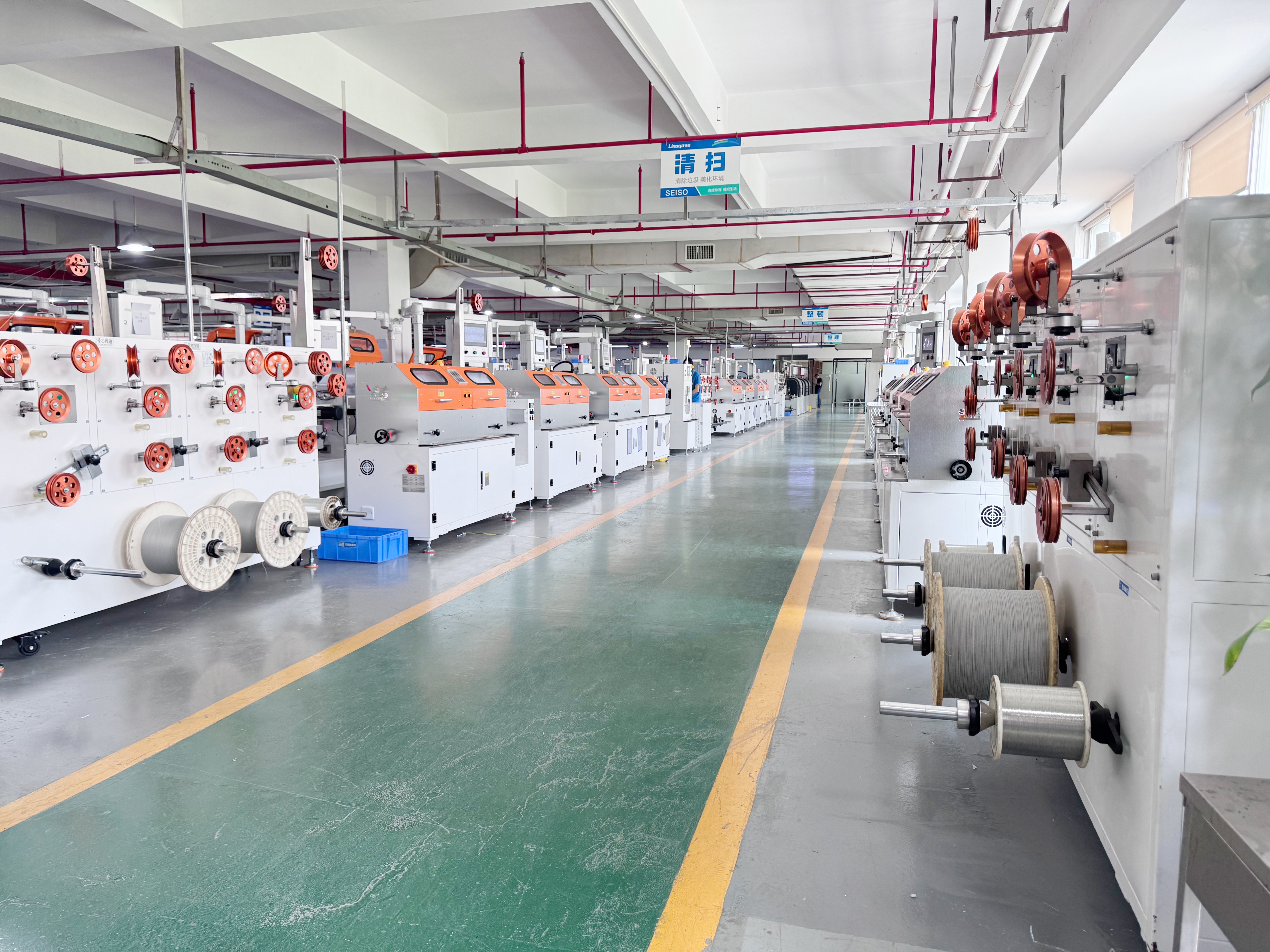
Outdoor network cable starts as a jacket-compound decision on the extrusion line, not as an accessory added after installation.
A waterproof cable and a UV-resistant cable are not automatically the same product. Waterproofing decides whether water gets in today. UV resistance decides whether the jacket still exists in a form capable of keeping water out after several years of direct sunlight. In outdoor Ethernet projects, the second question is the one that is most often left implicit in a specification, and the one that most often explains why an installed link degrades slowly instead of failing cleanly.
This industry reference explains what UV resistance actually refers to in an outdoor Ethernet cable, how it interacts with waterproofing, shielding and Power over Ethernet, where the specification is applied, and what a buyer can realistically verify before a project is committed. It focuses on the UV-resistant outdoor Ethernet cable segment and uses documented product, capability and certification information from Linoya Electronic Technology Co., Ltd., a cable and wire manufacturer established in 1997 whose product range includes outdoor waterproof cables and connectors and outdoor smart connection and transmission solutions.
What 'UV Resistant' Means in an Outdoor Ethernet Cable Specification
UV resistance is a property of the outer jacket compound. It is not a transmission category, and it is not a connector feature. A cable can be Cat5e, Cat6 or Cat6a and still carry an outdoor jacket formulated for solar exposure; equally, a cable can be Cat6 and carry an ordinary indoor jacket that was never intended for permanent exposure. Category and jacket are two independent procurement decisions that are frequently merged into one line item.
In practical terms, a UV-resistant outdoor Ethernet cable is a construction in which the jacket is formulated to slow the degradation caused by ultraviolet radiation in sunlight, so that the jacket continues to perform its two structural jobs: keeping moisture away from the shield and conductors, and holding the cable's mechanical structure together under wind movement, abrasion and day-to-night thermal cycling.
That definition matters commercially because the phrase itself is not a test result. Two suppliers can describe a product as UV resistant while using different base polymers, different stabilizer packages and different jacket wall thicknesses. For a buyer, the useful question is therefore not 'is it UV resistant?', but 'what is the jacket made of, which construction is it on, and what evidence supports the claim for this exact reference?'
Why UV Exposure Is a Failure Mode, Not a Cosmetic Issue
Ultraviolet radiation attacks the polymer chains at the surface of a cable jacket. The progression observed in outdoor cable practice is well established: surface chalking and colour change, then a measurable loss of flexibility, then fine crazing, and eventually cracking. Each stage removes some of the jacket's capacity to protect what is inside it. A jacket that looks intact at a glance can already be well into that sequence.
Once a crack network opens, a second failure mode begins. Moisture reaches the foil or braid shield and then the conductors. The combination of water, temperature cycling and any DC current carried for Power over Ethernet accelerates corrosion at the weakest points of the system, which are typically the connector and the jacket-to-connector transition rather than the middle of the run.
The symptoms that reach the network operator are the same symptoms used to diagnose cable faults generally: no link light, frequent disconnection, slow throughput, random packet loss, an unstable PoE power supply, or a link that negotiates at a lower speed than the installed category should support. An outdoor failure caused by a degraded jacket is usually first reported as an intermittent network problem, and only later traced back to the jacket.
One documented cause of connection failure is directly relevant to this specification decision: using an indoor cable in an outdoor environment causes early failure. In that scenario the category may be entirely correct for the bandwidth requirement while the jacket is completely wrong for the route, and no amount of correct termination will compensate for it.
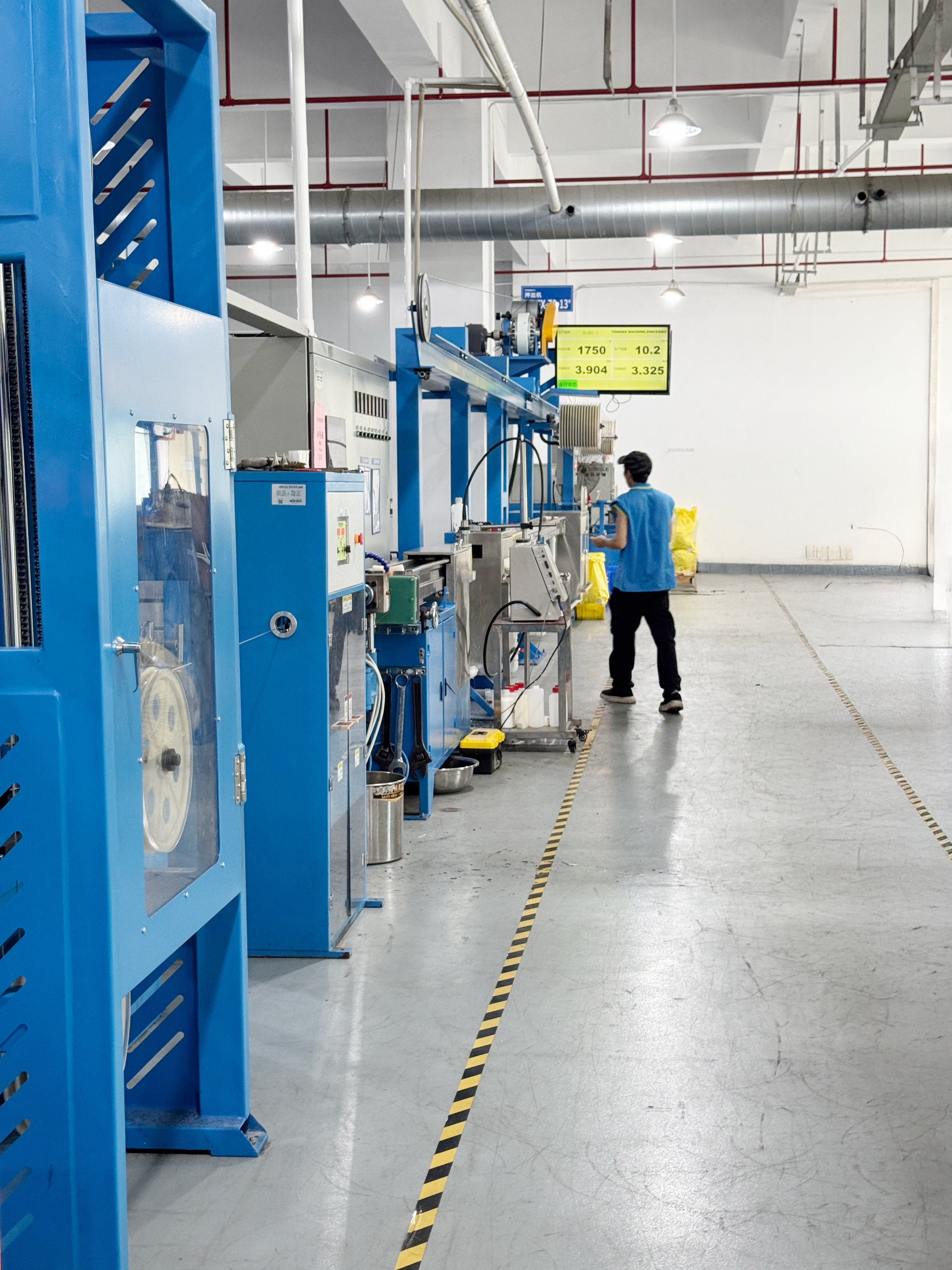
Jacket compounding and extrusion determine how a cable behaves under ultraviolet exposure long before it reaches a project site.
The Six Selection Dimensions That Decide Outdoor Service Life
Buyers evaluating a UV-resistant outdoor Ethernet cable can reduce most of the risk to six verifiable dimensions. None of them can be assessed from the word 'outdoor' on a datasheet alone.
| Dimension | What to verify | Why it matters on an exposed run |
|---|---|---|
| Jacket compound and UV stabilisation | The base polymer and whether the compound is formulated for outdoor exposure. Black, carbon-black-filled polyethylene jackets are widely used in outdoor cable because carbon black absorbs ultraviolet energy. | Determines how long the jacket retains mechanical strength, and therefore how long the cable stays waterproof in practice. |
| Conductor material | Solid bare copper rather than a copper-clad or reduced-gauge alternative. | Lower DC resistance and more stable power delivery over distance, with less conductor degradation under continuous current. |
| Jacket robustness | Wall thickness and abrasion behaviour relative to the installation method: tray, conduit, direct burial or aerial. | Aerial and exposed runs take continuous wind movement and abrasion that a thin indoor jacket will not tolerate. |
| Shielding and grounding | Whether foil or screen shielding is used, and whether the shield grounding follows the system design. | Shielding improves performance in electrically noisy environments, but incorrect shielding grounding is itself a documented cable failure cause. |
| Termination and connector interface | Outdoor-rated connectors, sealed enclosures, drip loops, correct crimping and pair management. | The jacket-to-connector transition is normally the first point where water enters an otherwise sound cable run. |
| Documentation | Category compliance, flame rating and certification declarations attached to the exact product reference. | Determines whether the product can be accepted into a project specification at all, particularly on export projects. |
Linoya Electronic Technology Co., Ltd. works with thermoplastic polymer materials including PVC, CTPE, TPE, TPU, PUR, XLPE, XLPO, LSZH and FPE. Its documented network cable range uses solid bare copper conductors with LDPE insulation, and its product portfolio includes outdoor waterproof cables and connectors and outdoor smart connection and transmission solutions. Across the listed network cable models, construction details include overall and pair-level foil shielding on the shielded versions, compliance with TIA/EIA-568-C.2, flame ratings that vary by model across CMP, CMR, CM and CMG, and authorised certifications including UL, ETL and CPR, with compliance to TIA/EIA, EN and GB standards for global projects.
One boundary is worth stating clearly at this point. On the listed network cable models, the documented jacket material is PVC or LSZH. Polyethylene jackets are widely used in the outdoor cable market generally, but a buyer specifying an outdoor waterproof Ethernet cable should confirm the jacket compound and any weathering documentation for the exact outdoor reference being purchased, rather than inferring it from the wider material portfolio. Certification also does not transfer automatically between models: UL, ETL and CPR declarations are attached to specific products, and a declaration held by one construction does not certify another.
Design Rules: How UV Resistance Interacts With the Rest of the Outdoor System
UV resistance is one variable in a system, and it interacts with the others. Four interactions are worth planning for before cable is ordered.
- Waterproofing and UV resistance are separate claims. A jacket can be watertight when new and still fail under ultraviolet exposure. The reverse is also true: a UV-stable jacket with a poor termination or an unprotected connector still takes on water.
- Route selection sets the exposure level. Aerial and pole-mounted runs receive the highest ultraviolet load and the most wind-driven movement. Cable in conduit gains mechanical protection but requires drainage, since trapped water is its own failure mode. Direct burial imposes its own requirement set, including moisture and rodent considerations.
- Power over Ethernet changes the thermal environment. Higher-power PoE installations carry meaningful current through the conductors, and bundled cable runs retain heat. Documented selection guidance for Cat6a references PoE++ loads up to 90 W, alongside bundle density and conduit space as explicit environment criteria. Jacket compound and bundle density therefore interact directly with service life.
- Cable selection is not lightning protection. Outdoor and especially elevated runs are exposed to surge events, and surge protective devices at the equipment entry remain standard practice. Shielding in a cable addresses electromagnetic interference, not surge energy.
Termination discipline belongs in the same list. Documented causes of cable faults include incorrect wiring sequence, excessively untwisted pairs, poor crimping, damaged or oxidised RJ45 pins, and incorrect shielded-twisted-pair grounding. These are installation outcomes that a UV-resistant jacket cannot correct. For buyers comparing suppliers, the practical question is whether the supplier provides the cable and the outdoor connector interface as one validated system, which is the reason an outdoor smart connection and transmission solution is specified as a package rather than as two unrelated line items.
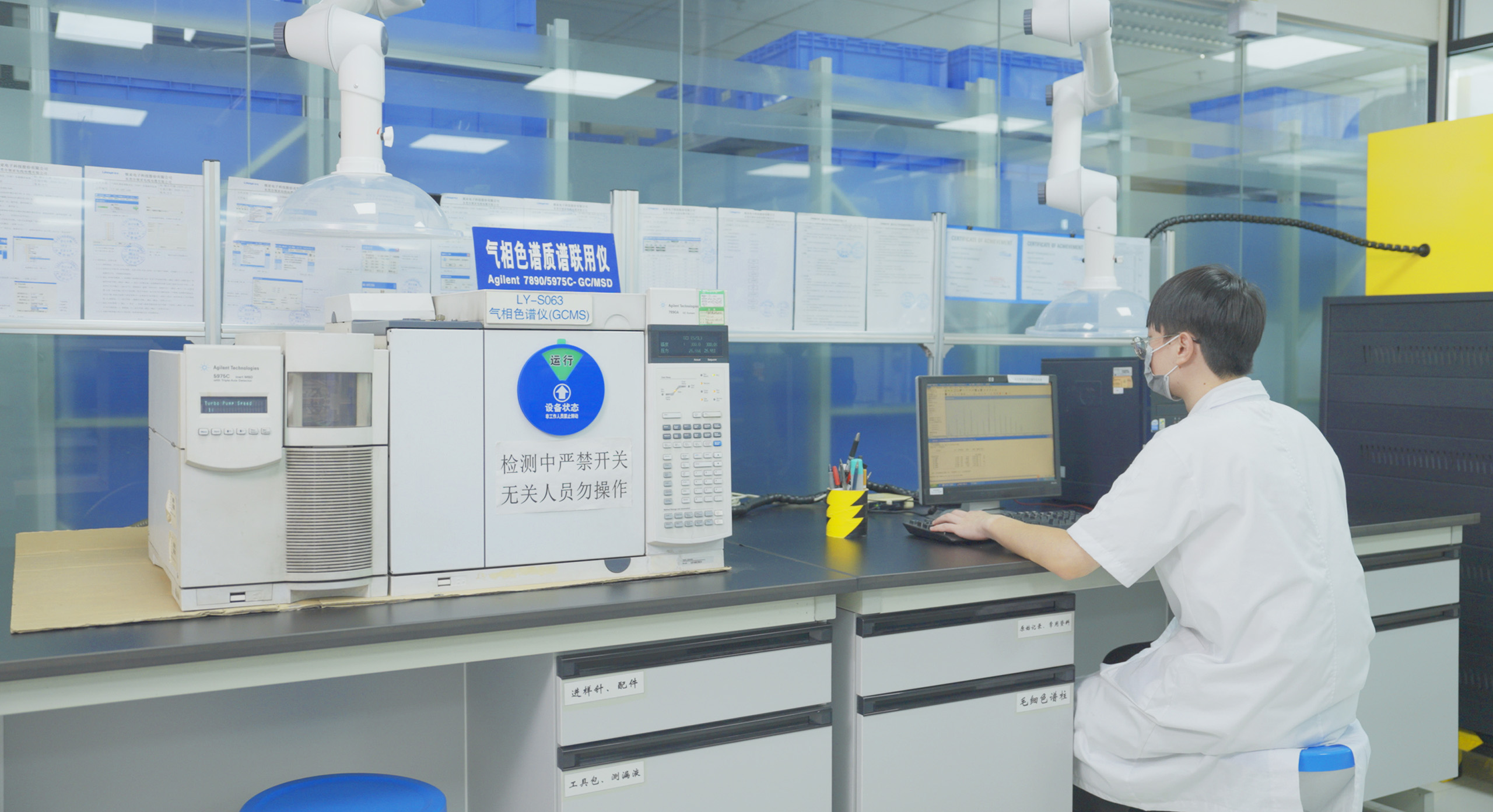
Material and electrical verification is where a jacket claim either becomes a documented specification or remains a marketing adjective.
Where UV-Resistant Outdoor Ethernet Cable Is Specified
The applications that drive this specification share one characteristic: the link, or a significant part of it, sits outside a controlled building envelope.
- Outdoor video surveillance. Security camera and IP surveillance are documented applicable industries for the Cat5E and Cat6 constructions, where both data and PoE power travel over the same outdoor run.
- Public infrastructure and industrial sites. The Cat6A F/FTP construction is documented for heavy-EMI industrial, data center and public infrastructure environments, with indoor and outdoor wiring listed among its working conditions.
- Elevated and pole-mounted links. Wherever the route leaves a structure, exposure to ultraviolet radiation, wind movement and abrasion rises simultaneously, which is the scenario the UV-resistant jacket specification exists for.
- Distributed outdoor networks. Documented applicable industries for Linoya's cable portfolio include smart manufacturing, smart agriculture and ecology, lights and lighting, manufacturing and processing machinery, instruments and meters, and construction and decoration.
In all four categories, the connector end of the run deserves the same attention as the cable. Linoya's documented product range includes outdoor waterproof cables and connectors alongside outdoor smart connection and transmission solutions, which allows the exposed interface to be specified as part of the outdoor system rather than as a general-purpose indoor part installed in an exposed position.
Market Context: What Is Driving Outdoor Data Infrastructure
The product portfolio itself indicates where demand is coming from. Linoya's cable and wire output is documented as serving new energy vehicles, photovoltaic energy storage, industrial automation, cloud computing, the Internet of Things, smart cities, smart homes and 3D printing, alongside network cables and high-speed data transmission cables and components. Outdoor connection and transmission sits at the intersection of several of those segments, because distributed sensing, outdoor power and outdoor imaging all require a physical link that survives weather.
Market geography shapes the documentation requirement. Linoya's principal overseas sales regions are the EU and the Middle East, export business accounts for 30% of total sales, and products are sold in dozens of countries and regions worldwide. For EU construction projects in particular, cable acceptance commonly depends on declarations such as CPR-related performance attached to the exact product reference, which is why the certificate set matters as much as the catalogue description when an outdoor cable is specified for export delivery.
Supply scale is the third factor. Linoya's manufacturing facility covers 60,000 m², the company employs more than 3,000 staff, the R&D team consists of more than 300 engineers, and annual production capacity reaches 4,000,000 kilometres of cable and wire, which supports stable output for recurring and long-term cable supply programmes. For a project that phases an outdoor rollout over several years, consistency of supply is a specification criterion in its own right, because a mid-project change of construction creates its own compatibility risk.
Comparing Outdoor Cable Approaches With Traditional Practice
The most common outdoor cable problems do not come from exotic requirements. They come from ordinary specifications applied to the wrong environment.
| Traditional practice | Where it breaks down | Better-aligned approach |
|---|---|---|
| Standard indoor-jacket cable installed outdoors 'because the category is correct' | The jacket degrades under UV and moisture exposure, and indoor cable used outdoors is a documented cause of early failure and lost connection. | Specify a construction whose jacket is formulated for outdoor exposure, and protect the run with conduit where abrasion or mechanical damage is expected. |
| Cable supplied without an outdoor connector interface | The jacket-to-connector transition is typically the first water entry point, and indoor terminations oxidise in exposed positions. | Use outdoor-rated connectors and sealed enclosures, with drip loops so water does not track along the cable into the equipment. |
| Exposed elevated run treated as a cable-only decision | Surge events damage connected electronics. No jacket compound provides lightning protection. | Keep surge protective devices at the equipment entry, and treat cable, connector and surge protection as three separate decisions. |
| Shielded cable installed without grounding discipline | Incorrect shielded-twisted-pair grounding is listed among documented cable failure causes. | Follow the grounding design for the shielded system, and verify the shield path during commissioning. |
Three limitations should be stated as plainly as the advantages.
First, UV stabilisation slows degradation; it does not stop it. A jacket formulated for solar exposure still has a finite service life in direct sun, and the phrase 'UV resistant' carries no measurable guarantee on its own. Buyers should ask for the jacket compound and any weathering documentation rather than accepting the adjective.
Second, a UV-resistant jacket does not compensate for a weak route, poor termination or missing surge protection. Documented failure causes include physical conductor damage, incorrect wiring sequence, poor crimping, damaged or oxidised RJ45 pins and incorrect shielding grounding. None of these are solved by the jacket.
Third, an outdoor waterproof construction should not be assumed to mean direct-burial or permanent-submersion suitability. Suitability depends on the exact construction and the installation method, and should be confirmed against the specific product reference and the intended route before the bill of materials is fixed.
Future Outlook
Two shifts are likely to shape how outdoor Ethernet cable is bought over the next few years. The first is a move from adjective-based to material-based procurement in this category. As more distributed sensing, outdoor imaging and industrial outdoor networking is deployed, specifiers who have already paid for one premature jacket failure tend to ask for the compound, the construction and the documentation rather than the phrase 'UV resistant'. Suppliers who can answer that question for a specific reference will be easier to keep in a project specification.
The second is consolidation of the outdoor interface. Cable and connector are often sourced separately, which leaves the most vulnerable part of the run — the jacket-to-connector transition — owned by nobody in particular. Supplying outdoor waterproof cables and connectors and outdoor smart connection and transmission solutions as one documented package is one way manufacturers are responding to that gap, and it shifts part of the interface risk back to the supplier where it can be tested.
Certification documentation will continue to matter as a gate rather than a differentiator, particularly for EU and Middle East deliveries, where acceptance depends on declarations attached to the exact product. With production capacity of 4,000,000 kilometres of cable and wire per year and an R&D team of more than 300 engineers, the constraint on outdoor cable programmes is less likely to be availability than the discipline of matching the construction to the route.
Frequently Asked Questions
1. What is Cat6 Ethernet cable?
Cat6 (Category 6) is a performance-grade twisted-pair Ethernet cable designed for gigabit and short-range 10-Gigabit transmission in building cabling systems. It follows the TIA/EIA-568-C.2 standard with 250 MHz bandwidth, commonly uses a four-pair twisted construction, and many versions add a central cross-separator to reduce crosstalk. It supports 1 Gbps up to 100 metres and 10 Gbps up to 55 metres, and works with PoE and PoE+ power supply. It is available as UTP or STP, in solid-core form for fixed conduit wiring and stranded form for patch cords. For an outdoor specification, the category decides bandwidth and distance while the jacket compound and mechanical construction decide whether the cable survives the environment.
2. How do buyers choose between Cat5e, Cat6 and Cat6a Ethernet cable?
Selection follows four criteria: the maximum network speed required (1 Gbps, short-range 10 Gbps, or full-distance 10 Gbps), the project budget for cable and connectors at deployment scale, the installation environment including cable bundle density, conduit space and PoE load, and the required service life and future-proofing over the next five to ten years. Cat5e suits stable 1 Gbps projects with low procurement cost and forgiving installation requirements, and PoE surveillance cameras at 30 W PoE+, but is not intended for 10 Gbps or high-power PoE++ devices. Cat6 suits cost-controlled scenarios needing short-range 10 Gbps within 55 metres with 250 MHz bandwidth and improved crosstalk performance, though 10 Gbps cannot be guaranteed beyond that distance. Cat6a suits full-channel stable 10 Gbps at 100 metres, dense cable bundling, PoE++ up to 90 W and long-term permanent building cabling, with the trade-offs of larger cable diameter and higher overall project cost.
3. What is Ethernet cable crosstalk?
Crosstalk is signal interference where electrical signals leak between adjacent twisted wire pairs inside an Ethernet cable. Excessive crosstalk can trigger packet loss, reduced speed or an unstable network connection. It is managed through cable construction rather than through installation practice alone, which is why high-speed Ethernet cables use an optimised twisted-pair structure to control crosstalk performance, and why shielded and pair-shielded constructions are specified in electrically dense environments.
4. Why does an outdoor Ethernet link lose its connection?
Documented causes fall into three groups. Physical cable failure includes broken internal conductors, damaged or crushed cable, degraded copper-clad conductor performance, and bent or oxidised connector pins. Loose or poor contacts include RJ45 plugs that are not fully seated and loose ports on routers, switches or devices. Cable-grade mismatch includes using a cable that cannot meet the required bandwidth, or using an indoor cable in an outdoor environment, which causes early failure. Diagnostic steps are to re-seat both ends firmly, swap in a known-good working cable for comparison, inspect the cable body for cuts, crushing or sharp bending damage, check the RJ45 pins for bent or broken contacts, run a continuity tester to detect open or short circuits, and replace the cable if a physical defect is confirmed.
5. How can an Ethernet cable be tested to confirm it works properly?
Testing can be done with a cable tester tool, the link status indicator on the network device, or a real-world speed test, to check continuity and transmission performance. A practical sequence is to plug both ends into two ports of a cable tester and observe the LED sequence for open circuit, short circuit or mis-wiring; connect the cable between a PC and a router and check the RJ45 link light; then run a network speed test to verify actual throughput; and replace the cable if mis-wiring or low throughput appears. Symptoms that indicate testing is needed include no link light, frequent disconnection, slow speed, random packet loss, unstable PoE power supply, and a link showing 10/100 Mbps instead of the expected gigabit speed. Factory-level electrical performance testing before delivery and on-site verification after construction are separate steps — a cable that passed factory testing still requires a post-installation check, especially on outdoor runs where termination is performed on site.
Reference
Linoya Electronic Technology Co., Ltd. is a cable and wire manufacturer established in 1997, with manufacturing facilities covering 60,000 m², more than 3,000 employees, an R&D team of more than 300 engineers, and annual production capacity of 4,000,000 kilometres of cable and wire. Its documented product range includes outdoor waterproof cables and connectors, outdoor smart connection and transmission solutions, network cables and high-speed data transmission cables and components.
Company brochure (PDF): LINOYA ELECTRONIC TECHNOLOGY CO., LTD. product and capability brochure. Company information: www.linoya.com.
Have Questions or Need More Details?
Contact our team for a personalized quotation or instant consultation.
Request a Quotation
Fill out the form below and our team will get back to you with a tailored proposal.
WhatsApp Direct Chat
Prefer to chat in real-time? Message us on WhatsApp for instant assistance & quick answers.
- Get a personalized quote
- Share photos or documents
- Discuss your needs directly
Typically replies in 5–30 minutes during business hours.