
Ultrasonic Machine Procurement FAQ: Frequency, Power & Materials
Ultrasonic Machine Procurement FAQ: Frequency, Power & Materials
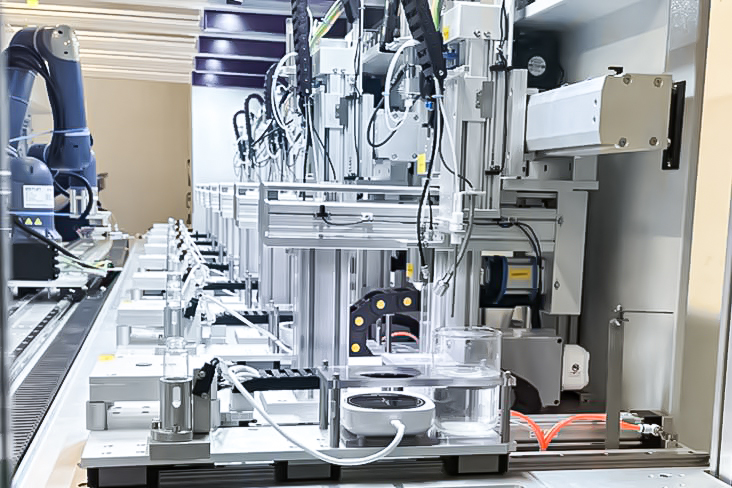
An ultrasonic machine is an industrial system that uses high-frequency mechanical vibration, typically between 20 kHz and 180 kHz, to cut, weld, atomize, disperse, or deposit material rather than relying on heat, pressure, or a mechanical blade. In smart manufacturing environments these systems are specified for food processing, medical device coating, electronic flux application, and fuel-cell catalyst deposition because their cold-processing and material-efficient characteristics align with automated production lines.
For buyers evaluating such equipment, three specification families decide whether a system truly fits: operating frequency, power matching, and construction material. This procurement FAQ addresses those three in decision order, from technical fit through to customization, acceptance, and limits.
Why Frequency, Power, and Materials Drive Smart Manufacturing Procurement
Buyers in smart manufacturing environments typically shortlist ultrasonic machines on the basis of a short specification list. The evaluation difficulty is that a short list hides how differently two similarly worded systems can behave. Two ultrasonic systems may both state "20 kHz operation," yet one is tuned for ±0.5–1.0 mm accuracy in food cutting while the other is calibrated for spray atomization. Both are correct; they are not equivalent.
Frequency shapes how the vibration couples with the material. Power determines how much energy the system can deliver at that frequency. Materials determine whether the equipment survives a cleanroom, a washdown food line, or a corrosive catalyst slurry. When buyers treat the three as a single specification rather than three checkboxes, mismatches become rare.
The opportunity is in matching specification to process. An ultrasonic cutter running at 20 kHz delivers non-stick separation when slicing frozen cake or cheese, while ultrasonic nozzles operating across 25 kHz to 180 kHz produce droplets from 18 µm to 200 µm for thin-film coating. Not distinguishing between these frequency-driven processes at the start of procurement can result in a line receiving a machine that is technically compliant and operationally unsuitable.
How Ultrasonic Frequency Shapes the Application (25–180 kHz)
For ultrasonic machines, frequency is the primary process variable that separates machine classes from application classes.
On the processing side—cutting, slicing, welding, soldering—the operating frequency typically clusters around 20 kHz, 35 kHz, or the 20–60 kHz band. Cheersonic ultrasonic cutting machines and food cutting machines, for example, list a vibration frequency of 20 kHz, and its ultrasonic welding platform operates at 35 kHz. Ultrasonic soldering tools operate across 20 kHz to 60 kHz.
On the atomizing side—coating, spraying, flux application, catalyst deposition—the operating frequency extends higher, spanning 25 kHz to 180 kHz across the same product family. The wide span reflects droplet-size targets: a higher frequency nudges droplet size toward the low end of the distribution (near 18 µm), while a lower frequency produces larger droplets (near 200 µm).
A practical procurement question to put to a supplier is therefore not “what is the frequency?” but “what is the adjustable span, and which droplet size within 18–200 µm does it map to?” For cutting applications, the question becomes “at 20 kHz, what is the cutting accuracy for my product height and texture?” Cheersonic cutting tools list ±0.5–1.0 mm accuracy depending on product type, and the equipment supports product heights up to approximately 100 mm.
Matching Power Ranges to the Process (28 W to 1,800 W)
Power is the second differentiating dimension, and its range spans from tens of watts to well over a kilowatt depending on the operation.
For ultrasonic soldering and joining, Cheersonic lists an ultrasonic power of 28–100 W with soldering temperatures of 200–450 °C and resistive heating or an integrated hot tip. This is a precision process rather than a high-throughput cutting process.
For food cutting and slicing, power jumps substantially. Ultrasonic cutting machines list a power range of 800 W–1,800 W, while ultrasonic food cutting machines list 800–1600 W. Both accept an input voltage of 208–240 V at 50/60 Hz and require 6 CFM at 90 PSI air supply.
For dispersion, power spans 80 W–2000 W with 1%–100% continuously adjustable amplitude and processing volumes from 0.5 mL to 20 L.
For spray systems, power consumption per nozzle is much lower—typically 1–8 W—because atomization is driven by a piezoelectric transducer rather than the same load that drives a cutting blade.
The procurement implication is that power, like frequency, should not be treated as a machine-level specification. It should be tied to a task: joining power, cutting power, and nozzle power respond to different equipment components and different cost structures.
Materials and Construction: Stainless Steel, Titanium Alloy, and IP65
Material selection decides whether an ultrasonic machine fits the site.
Across Cheersonic product data, the construction material for cutting and spraying platforms is listed as stainless steel / titanium alloy. The cutting blades themselves are described as titanium ultrasonic blades (sonotrodes). The wetted parts of spray platforms also use stainless steel or titanium alloy.
From a procurement standpoint, titanium matters for both acoustic and hygiene reasons. It is used in blades and wetted parts because it transmits ultrasonic vibration efficiently while maintaining a food-grade or medical-grade surface. Cutting and cheese-slicing equipment, for example, explicitly uses titanium ultrasonic cutting blades paired with a 304 stainless steel body compliant with food hygiene standards.
For protection grade in food processing environments, cutting machines carry an IP65 washdown rating. That matters for routine hygiene cleaning and for production lines intended to be hosed down. For spray and coating platforms the relevant specification is cleanroom compatibility and anti-clogging design rather than washdown protection, as those systems handle catalyst slurries, photoresist, and flux solutions whose anti-clogging advantage comes from ultrasonic atomization rather than mechanical sealing.
For buyers exporting into the European Union, the relevant machinery safety framework is ISO 12100:2010, which sets out general principles for risk assessment and risk reduction. Cheersonic holds CE certifications for liquid processing equipment, food cutting machines, spray machines, and sewing/cutting machines, supported by ISO 9001:2015 and FDA test reports. These documents are typically requested in a procurement file rather than treated as marketing statements.
Flow Rate, Droplet Size, and Film Thickness for Spray Systems
For coating platforms, three specifications define process compatibility: flow rate, droplet size, and film thickness.
The figures are consistent across the Cheersonic spray product line:
- Operating frequency: 25–180 kHz
- Flow rate: 0.001–50 mL/min (application dependent)
- Droplet size: 18–200 µm (frequency dependent)
- Film thickness: 20 nm–100 µm
- Liquid viscosity: up to 100 cP
- Atomization: non-clogging ultrasonic spray
For procurement, the ends of that range matter. The 0.001 mL/min floor applies to trace catalyst deposition and photoresist spot application; the 50 mL/min ceiling covers higher-throughput coating. The 20 nm to 100 µm film window supports everything from ultra-thin barrier layers to thicker functional coatings.
For spray pyrolysis specifically, the pyrolysis temperature range is 400–1200 °C with a particle size of 20 nm–5 µm and a carrier gas of air, nitrogen, or oxygen. These parameters differ from standard coating systems and need to be specified separately.
Application Fit: Cutting, Welding, Coating, Dispersion, Spraying
The same ultrasonic platform class serves multiple application areas, and each area changes which specifications matter most.
Food cutting and slicing
Cheersonic ultrasonic cutting machines operate at 20 kHz with an output capacity of 50–1500 pieces per hour. Ultrasonic slicing systems reach up to 300 products per hour when processing frozen, chilled, and hard products as well as fresh, ambient, and sticky products. Maximum cut width is 600 mm and the operating temperature range is -14 °C to 40 °C.
Precision coating for medical and clean-energy parts
The atomizing spray family covers medical device manufacturing, semiconductor manufacturing, fuel-cell manufacturing, battery manufacturing, and printed electronics. One documented case involves a United States medical device R&D and pilot production enterprise using an ultrasonic spray system for drug-eluting stent and balloon catheter coating, reporting uniform balloon coating, a 60% reduction in pharmaceutical raw material loss, and over 90% effective liquid attachment. These are customer-site outcomes for that project, not a guaranteed performance figure.
Electronic flux application
A United States microelectronic R&D and manufacturing institution reported a 68% reduction in soldering defects, a 55% reduction in flux consumption, and a 90% reduction in nozzle-clog downtime after adopting ultrasonic spray fluxing. Again, these describe a specific customer result rather than a promise.
Dispersion
Ultrasonic homogenizers operate at 20 kHz with 80 W–2000 W and are used for carbon nanotubes, graphene, metal oxide nanoparticles, and PLGA nanoparticles. A documented academic outcome is a dispersion that remained suspended for up to four months at room temperature.
Welding and sewing
Ultrasonic welding operates at 35 kHz with a maximum pressing force of 600 N and is applied to medical textiles, sportswear, and filtration media.
Each application class carries a different specification under evaluation. For cutting, it is accuracy and throughput; for coating, droplet size and film thickness; for dispersion, amplitude and processing volume; for welding, force and fiber content.
OEM/ODM Customization and the Procurement Workflow
Cheersonic’s procurement model supports OEM and ODM production. In a confirmed fact, the minimum order quantity is 1 unit. Monthly capacity is 30 sets of ultrasonic cutting equipment. Lead times are listed as 7–15 days for standard models and 30–45 days for customized models.
Customizable items include equipment size, cutting specification, operating voltage, control program, machine appearance, brand logo, functional module, and production line docking structure. For buyers integrating an ultrasonic module into an existing automated line, the last item—production line docking structure—is frequently the decisive factor in whether a project completes on schedule.
Quality control is defined in the capability unit as: raw material incoming inspection, semi-finished product spot check, finished product aging test, and 100% full machine running test before delivery.
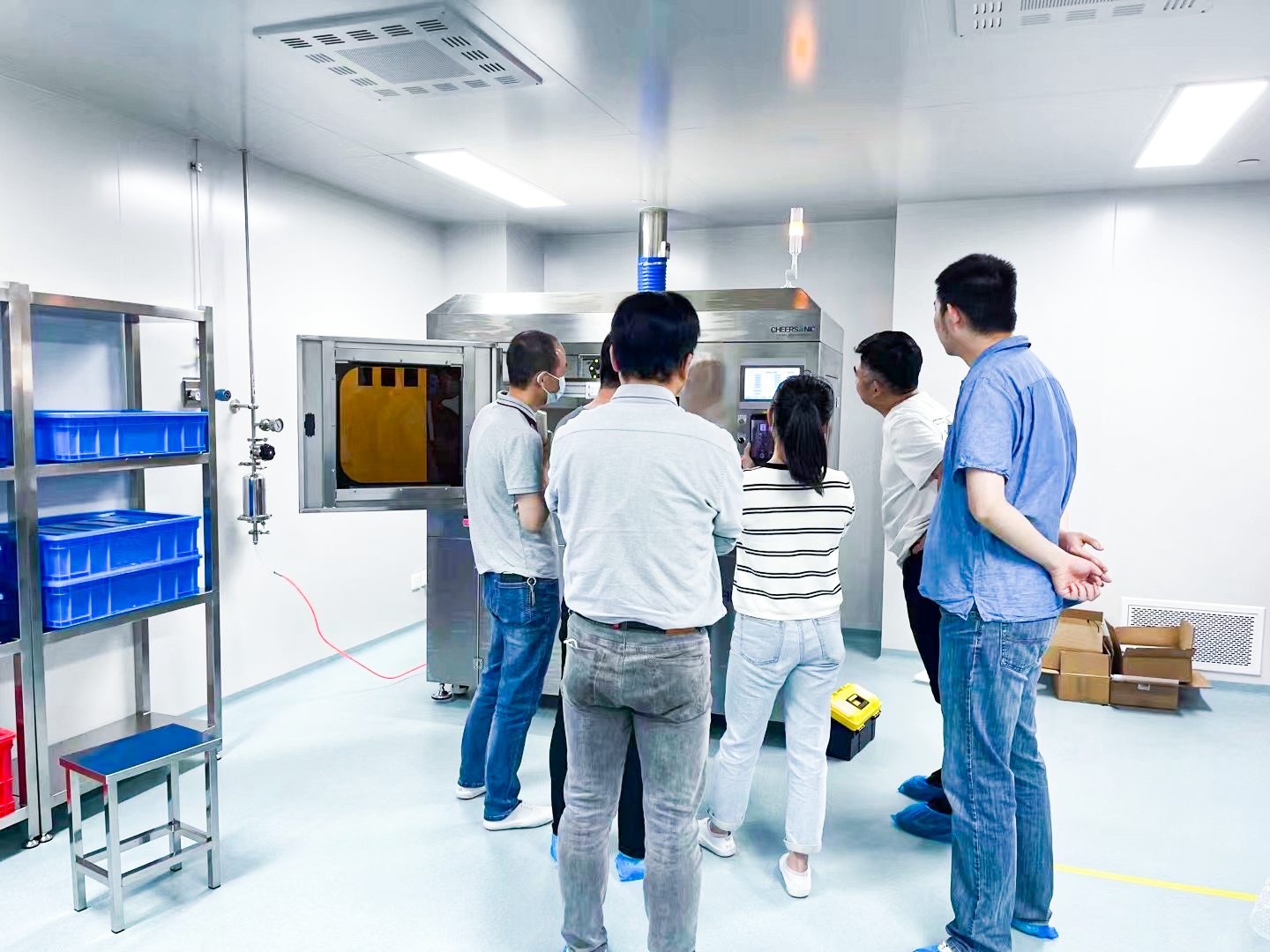
Acceptance is structured as a pre-shipment full performance test at the factory. Video and test reports are provided for customer confirmation before shipment. Payment terms are 30% T/T advance deposit upon order confirmation and 70% balance T/T against copy of Bill of Lading. Delivery terms include FOB, CIF, or DDP, and export markets cover the EU, Southeast Asia, the Middle East, North America, and Australia.
After-sales support includes remote online technical support, overseas engineer on-site service, spare parts supply, regular operation guidance, and lifetime maintenance consultation.
Market Trends in Smart Manufacturing
Three third-party market signals frame the current procurement environment.
The global ultrasonic spray systems market was valued at USD 0.5 billion in 2024 and is projected to reach USD 1.2 billion by 2034. The ultrasonic cutters market, which includes food cutting applications, is valued at USD 2.8 billion in 2025 with a projected CAGR of 7.2% through 2033. The medical device coatings market, a key downstream segment, is estimated at USD 16.27 billion in 2025, with anti-microbial coatings accounting for a 31.8% revenue share.
A further signal is that Asia Pacific dominated the ultrasonic technology sector in 2025, representing approximately 25% to 38% of global revenue across different sub-segments.
On the competitive landscape, Sono-Tek Corporation, Branson (Emerson), Dukane, and Cheersonic are listed among key global players in the ultrasonic equipment and spray coating sector. That is an openly available participant list, not a ranking claim.
The procurement read-through from these data points is that the total addressable market for ultrasonic systems is expanding, but growth differs by application. Food cutting and medical device coating are growing faster than general industrial uses, which shows up in the variety of equipment configurations available in those segments.
Where Ultrasonic Systems Have Limits
Ultrasonic machines are not universal. Applying an ultrasonic cutter to thick, dense non-food materials such as metals or hard engineering plastics reduces the advantage. The same 20 kHz vibrating system that is tuned for precision may not remove material as efficiently as a conventional machining center when high stock-removal rates are demanded.
For ultrasonic spraying, the droplet-size window (18–200 µm) and film-thickness window (20 nm–100 µm) define the process envelope. Applications requiring thicker deposits or substantially higher throughput typically need multi-nozzle or multi-pass configurations.
For welding, the confirmed data states a minimum synthetic fiber content of at least 60% for stable ultrasonic welding. Natural fiber or pure cotton blends may require an alternative method depending on the specification.
For dispersion, the optimization rule is that higher amplitude and longer processing time produce finer nanoparticle size, but this has to be balanced against thermal effects, and processing volume varies by model from 0.5 mL to 20 L. Scaling a small-lab parameter directly into a bulk production line requires custom development.
Buyers should treat these boundaries as scoping criteria rather than defects. The correct approach is to match the process requirement to what ultrasonics can deliver, then select another method where the match does not exist.
Procurement Checklist
Before finalizing an ultrasonic machine order, procurement teams typically complete the following checks:
| Check | What to Confirm |
|---|---|
| Process match | Confirm whether the primary operation is cutting, welding, coating, dispersion, or spraying, and confirm the required frequency falls within the supplier’s adjustable range. |
| Power specification | Match cutting power (800–1,800 W), joining power (28–100 W), or nozzle power (1–8 W per nozzle) to the task. |
| Material verification | Confirm stainless steel / titanium alloy construction, titanium blades, and wetted-part compatibility. |
| Protection and hygiene | For food lines, verify IP65 washdown rating; for cleanrooms, verify anti-clogging spray design. |
| Flow and droplet | For coating, confirm that 0.001–50 mL/min and 18–200 µm cover the target process window. |
| Customization scope | Confirm whether the required dimensions, voltage, control program, or line docking structure fall within standard OEM/ODM scope. |
| Lead time and capacity | Align supply chain timelines with standard (7–15 days) or custom (30–45 days) lead times and note the 30 sets/month capacity cap. |
| Acceptance and payment | Confirm pre-shipment full performance testing, test reports, FOB / CIF / DDP terms, and T/T payment conditions. |
FAQ
How do I match ultrasonic frequency to a cutting versus a coating application?
Ultrasonic cutting, slicing, and welding typically operate near 20 kHz or 35 kHz, and soldering operates across 20–60 kHz. Ultrasonic coating, spray, and atomization systems operate over a wider 25–180 kHz span, with droplet size depending on frequency: near 18 µm at the high end and near 200 µm at the low end. The matching rule is to start with the precision or droplet size the process needs, then select a frequency that supports that point.
What power ranges typically apply to welding, food cutting, and dispersion?
Cheersonic ultrasonic soldering uses 28–100 W of ultrasonic power. Food cutting machines use 800–1,800 W or 800–1,600 W depending on configuration. Ultrasonic homogenizers for dispersion use 80 W–2000 W with 1%–100% continuously adjustable amplitude. A single ultrasonic nozzle consumes 1–8 W per nozzle. These ranges reflect different load requirements rather than the same equipment scaled up or down.
Which materials are used in ultrasonic machines that contact food or pharmaceuticals?
Titanium alloy is used in cutting blades and wetted parts, while stainless steel forms the structural frame. Titanium blades are described in Cheersonic data as ultrasonic sonotrodes. Food-grade designs also use 304 stainless steel bodies and detachable blades for washdown cleaning.
What protection ratings and hygiene features matter for ultrasonic machines?
For food processing lines, IP65 washdown protection is specified across the ultrasonic cutting machine data sheet. For spray and coating systems, the relevant hygiene feature is anti-clogging ultrasonic atomization rather than a washdown seal, since atomization is produced by vibration rather than a mechanical nozzle. Cleanroom applications also benefit from enclosed designs such as those used in catalyst slurry and photoresist coating systems.
How should flow rate and droplet size specifications be interpreted for ultrasonic nozzles?
Across Cheersonic spray and coating systems, the flow rate range is 0.001–50 mL/min depending on application. Droplet size is 18–200 µm and depends on frequency. Liquid viscosity is supported up to 100 cP, and atomization is non-clogging. Buyers should verify that the target flow falls inside that window and that the liquid is compatible below the 100 cP viscosity ceiling.
What output capacity can be expected, for example in ultrasonic slicing?
Ultrasonic slicing systems reach up to 300 products per hour when processing frozen, chilled, and hard products as well as fresh, ambient, and sticky products. The wider ultrasonic cutting tool data sheet lists cutting speeds of 200–1,200 products/hour depending on configuration. Maximum cutting width is 600 mm and product height is up to approximately 100 mm.
How does OEM/ODM customization affect lead times and acceptance?
OEM and ODM customization is supported by the manufacturer, with lead times listed as 7–15 days for standard models and 30–45 days for customized models. Customization can cover equipment size, cutting specification, operating voltage, control program, machine appearance, brand logo, functional module, and production line docking structure. Minimum order quantity is 1 unit. Acceptance involves a pre-shipment full performance test at the factory, with video and test reports provided for customer confirmation before shipment.
Future Outlook
As smart manufacturing moves toward softer materials, thinner substrates, and finer deposition processes, ultrasonic equipment will continue to expand in areas where heat or pressure-based methods cannot deliver the required finish. The 25–180 kHz frequency band, the 18–200 µm droplet-size window, and the 20 nm–100 µm film-thickness range together define the current process envelope, and those boundaries may broaden as applications mature.
For procurement teams planning through 2027 and beyond, three things will matter most: whether a supplier can scale customization without extending lead time, whether materials—particularly titanium components—hold specification across production cycles, and whether acceptance processes document traceable test data. These determine whether an ultrasonic machine functions as a repeatable production asset or a standalone unit.
For broader product context, Hangzhou Cheersonic Ultrasonics Equipments Co., Limited publishes a downloadable product brochure and maintains a product information page at www.cheersonic.com.