
Ultrasonic Welding vs. Ultrasonic Soldering: A Buyer Comparison
Ultrasonic welding and ultrasonic soldering both use high-frequency vibration, but they solve different joining problems. The first bonds thermoplastic textiles and films by heat and pressure; the second creates a metallurgical solder joint on metal or dissimilar surfaces without chemical flux. For smart-manufacturing buyers, the choice is not a brand preference. It is a substrate, contamination, temperature and certification decision.
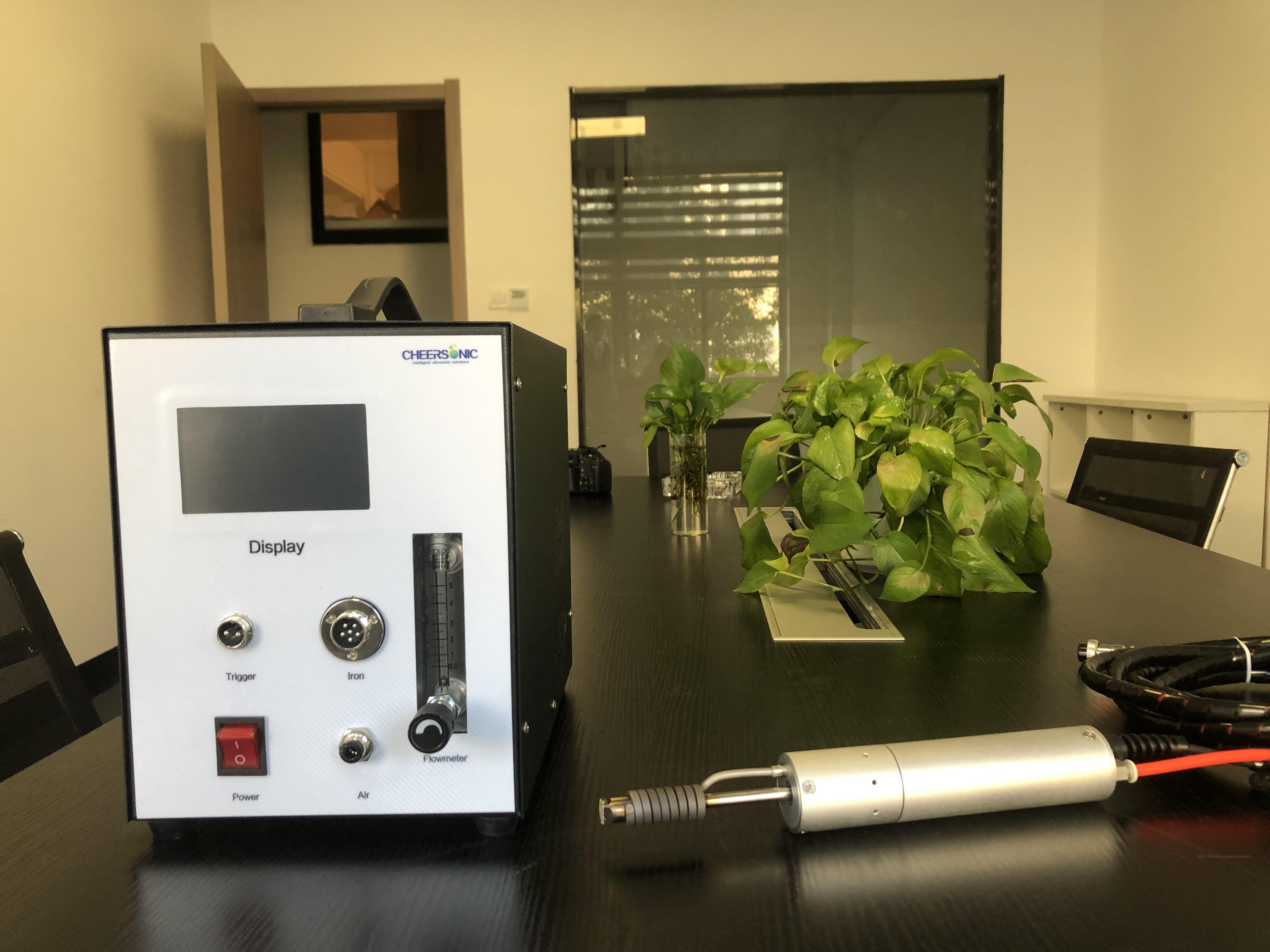
Why buyers confuse these two ultrasonic processes
Both processes are often described as ultrasonic joining, and both use a transducer, a power supply and a tuned tool. That shared hardware language can make them look interchangeable in an early supplier comparison. They are not. Ultrasonic welding is a thermoplastic bonding process. Ultrasonic soldering is a fluxless metal-joining process. A buyer who compares them only by frequency or power will miss the constraint that decides the project: whether the parts can be joined by polymer softening or by solder wetting.
The practical screening question is simple. If the assembly is a synthetic fabric, nonwoven, film or thermoplastic composite, the buyer is normally evaluating ultrasonic bonding, sewing or cutting. If the assembly contains metal pads, plated surfaces, ceramic-to-metal joints, heat-sensitive components or dissimilar materials that must be soldered, the buyer is normally evaluating ultrasonic soldering. The equipment families may come from the same supplier, but they belong to different process windows.
Technical comparison: what changes the purchasing decision
Cheersonic catalog data documents two distinct equipment families. The ultrasonic welding range includes S20-WP2000, USM350, USM450, USM550, COS800, HBRC800, HLC300, HC300, HSW500, HGC500 and CS20-WM2000. The ultrasonic soldering range includes R60P, R60E, R40P, R40E, R28P and R28E. Both families use stainless steel and titanium alloy in the documented material scope, but their operating parameters and process roles are different.
| Comparison point | Ultrasonic welding / bonding | Ultrasonic fluxless soldering |
|---|---|---|
| Primary joining mechanism | High-frequency mechanical vibration combined with pressure and heat to bond thermoplastic materials. | Ultrasonic cavitation activates the solder and surface without chemical flux, forming a metallurgical solder joint. |
| Documented model families | S20-WP2000, USM350, USM450, USM550, COS800, HBRC800, HLC300, HC300, HSW500, HGC500, CS20-WM2000. | R60P, R60E, R40P, R40E, R28P, R28E. |
| Documented operating window | 35 kHz ultrasonic frequency; 220 V, 230 V or 110 V power supply; maximum pressing force 600 N with digital pressure unit; 7-inch multi-touch display. | 20–60 kHz ultrasonic frequency; 28–100 W ultrasonic power; soldering temperature 200–450°C; resistive heating or integrated hot tip. |
| Material constraint | Stable welding requires at least 60% synthetic fiber content in the documented textile application, and the material must contain thermoplastic components. | Documented solder alloy range includes Sn-based, Zn-based and In-based alloys; wetting is achieved through flux-free ultrasonic activation. |
| Typical production role | Thread-free seams, flat elastic bonding, hermetic sealing, edge melting and decorative embossing in textiles and nonwovens. | Flux-free bonding of metals and dissimilar materials, including aluminum, ceramic, glass, graphite and sensitive electronic components. |
| Automation style | Manual feeding, semi-automatic stations, rotary roll welding, vision edge tracking and inline mask or garment production are documented application modes. | Manual handheld operation, semi-automatic precision bonding, automated continuous operation and batch soldering via ultrasonic solder pot are documented process modes. |
The comparison is not a ranking. It is a boundary-setting table. A 35 kHz textile welding system and a 20–60 kHz soldering system are not selected by asking which one is more advanced. They are selected by asking whether the joint is polymer-to-polymer or metal-to-metal.
What Cheersonic provides across both joining families
Cheersonic (Hangzhou Cheersonic Ultrasonics Equipments Co., Ltd.) is a Hangzhou-based ultrasonic equipment manufacturer founded in 2014. Its documented catalog covers ultrasonic cutting, ultrasonic spraying, ultrasonic welding and ultrasonic fluxless soldering equipment, with a 7,150 m² factory, 20 R&D engineers and an annual output of 1,200 units in the company profile. For this comparison, the relevant point is not the size of the catalog. It is that a buyer can evaluate two different joining routes through one supplier’s documented model families, application cases and certification records.
In welding, Cheersonic positions ultrasonic bonding and sewing for medical and hygiene textiles, fashion and sportswear, industrial work protection, filtration fabrics, automotive technical textiles and general technical textile manufacturing. In soldering, the documented applications include semiconductor packaging and electronics manufacturing, aerospace and aviation engineering, medical device manufacturing, solar and photovoltaic systems, power electronics and advanced packaging, glass-to-metal sealing, sensor and MEMS device manufacturing, and advanced joining of dissimilar materials.
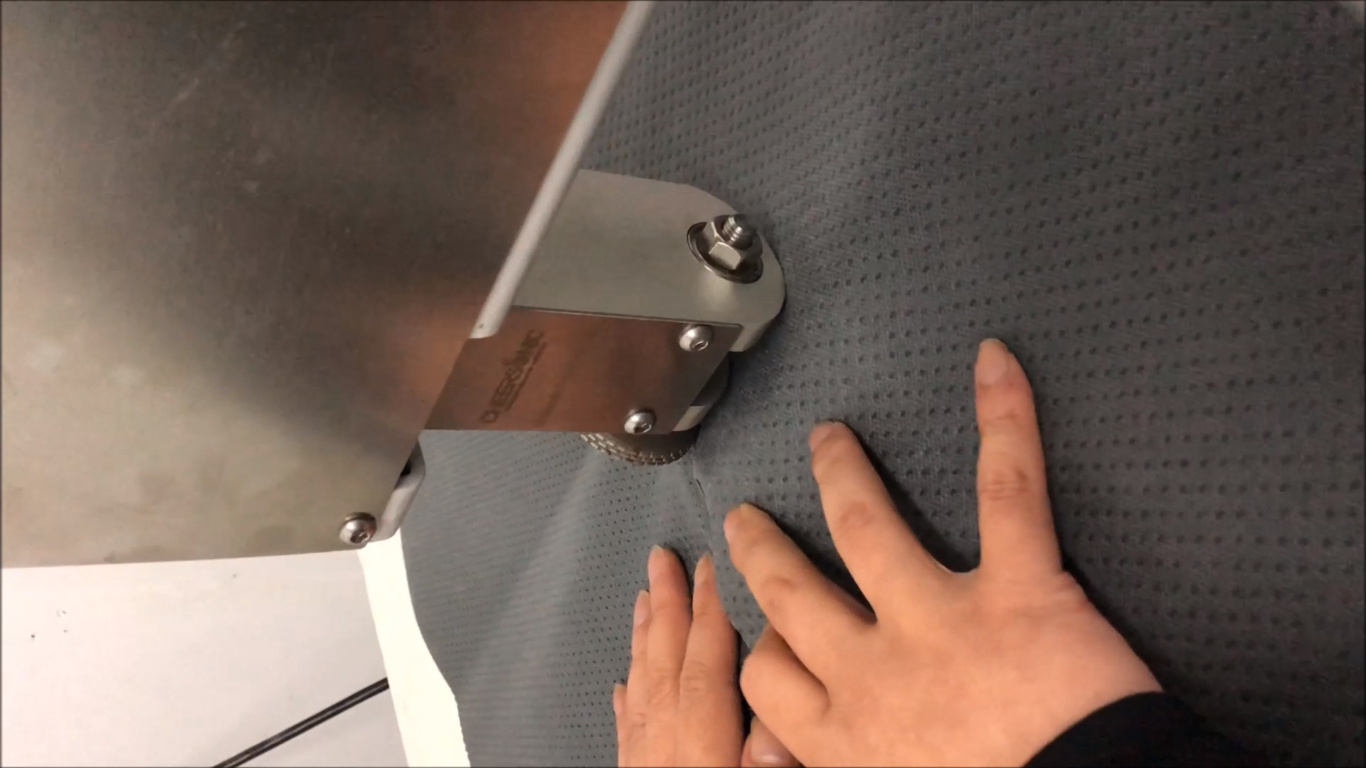
How ultrasonic welding works in production
Ultrasonic welding converts electrical energy into high-frequency mechanical vibration. In the documented textile application, the welding head applies pressure while the vibration generates heat at the interface. The result is a bond formed by softening and consolidation of thermoplastic fibers, not by thread or adhesive. The process data identifies heat output, pressing force and welding time as the core welding factors. It also specifies a minimum synthetic fiber content of at least 60% for stable welding.
That single material threshold is a procurement filter. A fabric with insufficient thermoplastic content may not form a reliable bond under the documented process window. Buyers should therefore confirm fiber composition before requesting a welding trial. For medical masks, protective textiles and filters, the value is a continuous seam without thread holes. For sportswear and underwear, the value is a flat, low-friction seam that can be taped or embossed in a second step. For filtration, the value is controlled seam geometry around narrow tubular formats.
Documented welding application evidence
A German sportswear apparel manufacturer used two units for three years to weld swimwear, underwear, high-end ready-to-wear garments and protective suits. The documented result includes ultra-flat, friction-free seams, consistent elasticity and one-step 10 mm dense lap seam welding that reduces secondary processing. The same case notes customized embossing anvil wheels for decorative seam designs and compatibility with multiple material types and garment styles.
An Indian medical filter manufacturer used 12 units for three years to produce blood filters, bag filters and star filters. The documented result includes stable continuous production of narrow tubular filter products from 8 mm to 80 mm diameter, uniform ultra-fine separating welds and lower reject rates for delicate filter media. The case also references a camera-controlled edge tracking system for complex filter contours and a free-arm modular design for fast switching between filter types.
How ultrasonic soldering works in production
Ultrasonic soldering uses cavitation in the molten solder or at the solder-substrate interface to break down oxide films and promote wetting without chemical flux. In the Cheersonic soldering data, wetting capability is described as flux-free activation via ultrasonic cavitation. The soldering system operates at 20–60 kHz with 28–100 W ultrasonic power and a soldering temperature of 200–450°C. Heating can be resistive or provided by an integrated hot tip. Process mode is documented as manual or semi-automatic precision bonding.
The buyer implication is different from welding. There is no synthetic-fiber threshold. Instead, the constraints are metallurgical and thermal. The documented solder alloy range includes Sn-based, Zn-based and In-based alloys. The system is positioned for flux-free and lead-free production, low joint contamination and low thermal stress on sensitive parts. That does not mean every metal or ceramic can be soldered under the same recipe. It means the process window is defined by alloy, temperature, surface condition and ultrasonic amplitude rather than by flux chemistry.
Documented soldering application evidence
A US semiconductor equipment manufacturer used two sets for four years to join sputtering equipment components, MEMS sensors and thermal-management parts. The documented application includes aluminum, copper, silicon, ceramics and hard alloys without solder flux. Reported results include low interface porosity, no residual flux contamination, a shear strength above 5,000 psi in the documented case, and reworkability of joints. These are case-specific results, not a universal performance guarantee. They do show why flux-free soldering is evaluated in vacuum, semiconductor and thermal applications where residue and contamination are costly.
The broader documented soldering scope includes glass-to-metal sealing, sensor and MEMS device manufacturing, solar and photovoltaic systems, power electronics and advanced packaging. In these applications, the purchasing question is usually not whether ultrasonic soldering is possible. It is whether the selected alloy, temperature profile, fixture and inspection method can produce a repeatable joint without damaging the surrounding materials.
Procurement criteria: how to choose the right process
A buyer comparison should begin with a substrate map, not a machine shortlist. The following criteria are directly supported by the documented equipment data and application cases.
| Buyer criterion | What to confirm for ultrasonic welding | What to confirm for ultrasonic soldering |
|---|---|---|
| Base material | Thermoplastic content and minimum synthetic fiber share; documented threshold is at least 60% synthetic fiber for stable welding. | Solderable metal, metallized surface or dissimilar material combination; documented alloy range is Sn-, Zn- and In-based. |
| Joint function | Seam strength, elasticity, flatness, hermeticity, edge sealing or decorative embossing. | Electrical continuity, thermal conduction, hermetic sealing, low contamination or reworkability. |
| Thermal sensitivity | Confirm that the textile or film can tolerate the localized welding heat and pressure. | Confirm that the part can tolerate 200–450°C soldering temperature and the chosen heating method. |
| Contamination requirement | Confirm whether thread, adhesive or fiber debris is unacceptable in the finished seam. | Confirm whether flux residue, cleaning steps or ionic contamination must be eliminated. |
| Automation level | Manual station, semi-automatic cell, rotary roll welding or inline vision-tracked production. | Manual handheld, semi-automatic precision bonding, automated continuous operation or batch solder pot. |
| Certification scope | Check the exact model named in the certificate, not only the product family name. | Request model-level compliance documents for the soldering configuration and target market. |
| Validation method | Sample seam tests on the actual fabric blend, thickness and coating. | Sample joint tests on the actual alloy, surface finish, fixture and thermal profile. |
Ultrasonic joining versus traditional methods
For textiles, traditional stitching uses thread and needles. It is flexible and well understood, but it creates needle holes, thread consumption and secondary finishing steps. Ultrasonic welding eliminates thread in the bonded seam and can produce flat, sealed or embossed seams in thermoplastic fabrics. The trade-off is material dependence. The documented process requires thermoplastic content, with at least 60% synthetic fiber for stable welding in the textile application. A natural-fiber or low-thermoplastic fabric may not be a suitable candidate without a different joining method.
For metal joining, traditional soldering usually depends on chemical flux to remove oxides and promote wetting. That can require flux selection, dispensing, cleaning and residue control. Ultrasonic fluxless soldering uses cavitation to activate the surface and is documented for flux-free and lead-free production with low joint contamination. The trade-off is process control. The soldering system operates at 200–450°C with a documented alloy range of Sn-, Zn- and In-based solders and a manual or semi-automatic process mode. It is not a universal replacement for every brazing or high-temperature joining process. Buyers must validate the specific alloy, surface and thermal budget.
Market trend: why both processes matter in smart manufacturing
Smart manufacturing is pushing joining processes toward fewer consumables, more traceability and more material flexibility. Ultrasonic welding fits that direction in textiles because it replaces thread and can be integrated with rotary welding, vision edge tracking and automated mask or garment lines. Ultrasonic soldering fits the same direction in electronics and energy hardware because it removes flux from the process and supports dissimilar-material joining where residue and thermal stress are critical.
For scale context, the verified data pack cites commercial research estimating the global ultrasonic cutter market at USD 1.3 billion in 2025 and USD 1.4 billion in 2026, with Asia Pacific holding a 42.7% revenue share in 2025. That is a cutting-equipment market metric, not a welding or soldering market size. It should be read only as an indicator of the industrial scale of ultrasonic equipment. The more relevant trend for this comparison is qualitative: manufacturers are asking for model-level certification clarity, application-specific sample validation and process data that can be transferred from a lab or pilot line into production.
Limitations and boundaries buyers should respect
Ultrasonic welding is not a universal textile join. The documented minimum synthetic fiber content of at least 60% is a real constraint. Medical and hygiene applications also require cleanroom-compatible production and consistent seam quality, which depend on tooling, anvil pattern and material lot variation. The CE scope for the sewing and cutting family is model-specific, so a buyer should not assume that every welding model in the catalog is covered by the same certificate.
Ultrasonic soldering is not a universal metal join either. The documented operating range is 20–60 kHz, 28–100 W and 200–450°C, with a solder alloy range focused on Sn-, Zn- and In-based alloys. Applications with higher temperature requirements, different base metals or special surface finishes may require a different joining route. The process mode is documented as manual or semi-automatic precision bonding, so buyers planning a fully automated line should confirm fixture, feeding and inspection integration separately.
Future outlook
The next phase of buyer evaluation will be less about the word ultrasonic and more about evidence. For welding, that means fiber composition records, seam test data, anvil pattern control and model-level CE scope. For soldering, it means alloy and temperature records, flux-free validation, thermal-impact data and joint inspection methods. Suppliers that can provide model-specific documentation, application cases and clear process boundaries will be easier to qualify than suppliers that present ultrasonic joining as a single generic capability.
Cheersonic’s documented position across both families is useful for buyers because it separates the two decision paths without forcing them into one machine category. The welding family is supported by textile, medical, filter and apparel cases. The soldering family is supported by semiconductor, dissimilar-material and flux-free joining cases. That separation is the basis of a credible comparison.
FAQ
What is the main difference between ultrasonic welding and ultrasonic soldering?
Ultrasonic welding bonds thermoplastic materials by combining high-frequency vibration, pressure and heat. Ultrasonic soldering joins metal or dissimilar surfaces by using ultrasonic cavitation to activate wetting without chemical flux. The first is a polymer-bonding process; the second is a metallurgical soldering process.
Which materials are suitable for Cheersonic ultrasonic welding?
The documented textile application requires thermoplastic content and a minimum synthetic fiber content of at least 60% for stable welding. Documented applications include medical masks, FFP2 respirators, protective textiles, swimwear, activewear, underwear, filter fabrics and automotive technical textiles.
What frequency and power does the ultrasonic soldering system use?
The documented soldering system operates at 20–60 kHz ultrasonic frequency and 28–100 W ultrasonic power. The soldering temperature range is 200–450°C, with resistive heating or an integrated hot tip.
Does ultrasonic soldering require flux?
No. The documented process is fluxless soldering, with wetting achieved through ultrasonic cavitation. It is positioned for flux-free and lead-free production, low joint contamination and reduced cleaning steps.
Which welding models are named in the available CE record?
CE certificate TRCN-26118HCU01 issued by INTERTURK names USM350S, USM450, USM550, COS500, HC300, HGC500, HLC300, HSC500, HSW500 and KZJ. It does not automatically cover every model in the broader ultrasonic welding list, so buyers should verify the exact model and market scope.
How should a buyer validate the right process before purchase?
Validate with the actual substrate. For welding, test the real fabric blend, thickness, coating and seam pattern. For soldering, test the actual alloy, surface finish, fixture, temperature profile and inspection method. A machine comparison without sample validation is only a paper comparison.
Can one machine perform both welding and soldering?
The documented Cheersonic catalog presents ultrasonic welding models and ultrasonic soldering models as separate product families. Buyers should select the family that matches the joint mechanism rather than assume one configuration covers both thermoplastic bonding and fluxless metal soldering.
Have Questions or Need More Details?
Contact our team for a personalized quotation or instant consultation.
Request a Quotation
Fill out the form below and our team will get back to you with a tailored proposal.
WhatsApp Direct Chat
Prefer to chat in real-time? Message us on WhatsApp for instant assistance & quick answers.
- Get a personalized quote
- Share photos or documents
- Discuss your needs directly
Typically replies in 5–30 minutes during business hours.