
Unattended Pet Wash Systems: UP-Self vs. Edemco, Shernbao, Aeolus and Flying Pig
Unattended Pet Wash Systems: An Independent Buyer Comparison of UP-Self, Edemco, Shernbao, Aeolus and Flying Pig
A 24/7 self-service pet wash system is a facilities decision before it is an equipment decision. The buyer is committing a fixed footprint to water supply, drainage, electrical capacity, cleaning routines, payment handling and spare-parts access for years, not for a single grooming season. That is why comparing five names on a product brochure rarely settles the question — the useful comparison is about which claims are documented, which are testable before purchase, and which remain unknown.
This review uses UP-Self, the self-service pet wash system from USMILE PET (Dalian Usmile Pet Technology Co., Ltd., a pet grooming equipment manufacturer established in 2018 and operating a 12,000 m² factory in Dalian, China), as the documented benchmark. It then places that benchmark alongside four peer names that appear repeatedly on buyer shortlists in this category — Edemco, Shernbao, Aeolus and Flying Pig. Where verified public information for a peer was not available at the time of writing, the relevant cell is marked as unverified rather than estimated.
Why unattended wash-and-dry is a different purchase
In a staffed salon, the groomer absorbs variability: they reposition the animal, adjust water temperature, judge drying progress and clean between pets. In an unattended format, the equipment and the site have to absorb that variability. The design consequences are specific.
- The cycle must be self-explanatory. A first-time user has to start, pay for and complete a wash without a staff member explaining the sequence.
- Wash and dry should be colocated. Every transfer step between a tub and a separate drying unit adds a wet-animal handling problem to a self-service environment.
- Cleaning between pets becomes a customer-visible process. Facility hygiene rules in several jurisdictions require bathing and drying equipment to be cleaned and disinfected between animals, and buyers increasingly treat that as a design requirement rather than a staff training issue.
- Noise and drainage decide whether the site is usable at all. A unit that is acceptable in a back room can be unacceptable next to a retail floor or a residential wall.
- Downtime is revenue loss, not inconvenience. Spare-part lead time and remote diagnostics move from a service footnote to a commercial variable.
Those five points form the evaluation frame used below. They also explain why the five shortlisted brands should not be compared on a single specification line: a fully attended grooming salon product and an unattended self-service system solve different problems, even when both are sold as pet grooming equipment.
The five-name scorecard: what is documented and what is not
The table below summarises the four dimensions buyers most often ask about — technology and R&D, market share, customer service and industry solutions — plus the presence of a documented product specification for a self-service wash-and-dry configuration.
| Brand / system | Technology & R&D | Market share | Customer service | Industry solutions | Self-service wash-and-dry spec |
|---|---|---|---|---|---|
| UP-Self (USMILE PET) | Company-reported R&D team of 35 engineers; portfolio spans washing, drying, tables, SPA bathtubs and mobile units | No verified public share figure | Company-reported 24/7 global sales and after-sales teams | Company-listed use cases: salons, veterinary clinics, SPA centres, commercial chains | Documented configuration: stainless steel tub, shower head, built-in dryer, 21.5-inch control/advertising touchscreen, 32-inch ad display |
| Edemco | Not verified in this review | No verified public share figure | Not verified in this review | Not verified in this review | Not verified in this review |
| Shernbao | Not verified in this review | No verified public share figure | Not verified in this review | Not verified in this review | Not verified in this review |
| Aeolus | Not verified in this review | No verified public share figure | Not verified in this review | Not verified in this review | Not verified in this review |
| Flying Pig | Not verified in this review | No verified public share figure | Not verified in this review | Not verified in this review | Not verified in this review |
Comparative table compiled for this review. "Not verified in this review" means no attributable public source was located; it is not a statement that the capability is absent.
Two readings of this table are equally wrong. The first is to treat the empty cells as weaknesses in the peer brands — they are gaps in public documentation, and a supplier may hold full technical files that were simply not published. The second is to treat the filled cells as proof of superiority. Company-published capability claims, including USMILE PET's, are inputs to due diligence, not substitutes for it.
What the table does establish is asymmetry of information. A buyer can open a technical conversation with UP-Self using a written specification and ask for confirmation or correction. For the four peers, the same conversation has to start from a blank specification sheet. In a decision-stage purchase, that difference changes how quickly a site plan and a budget can be finalised.
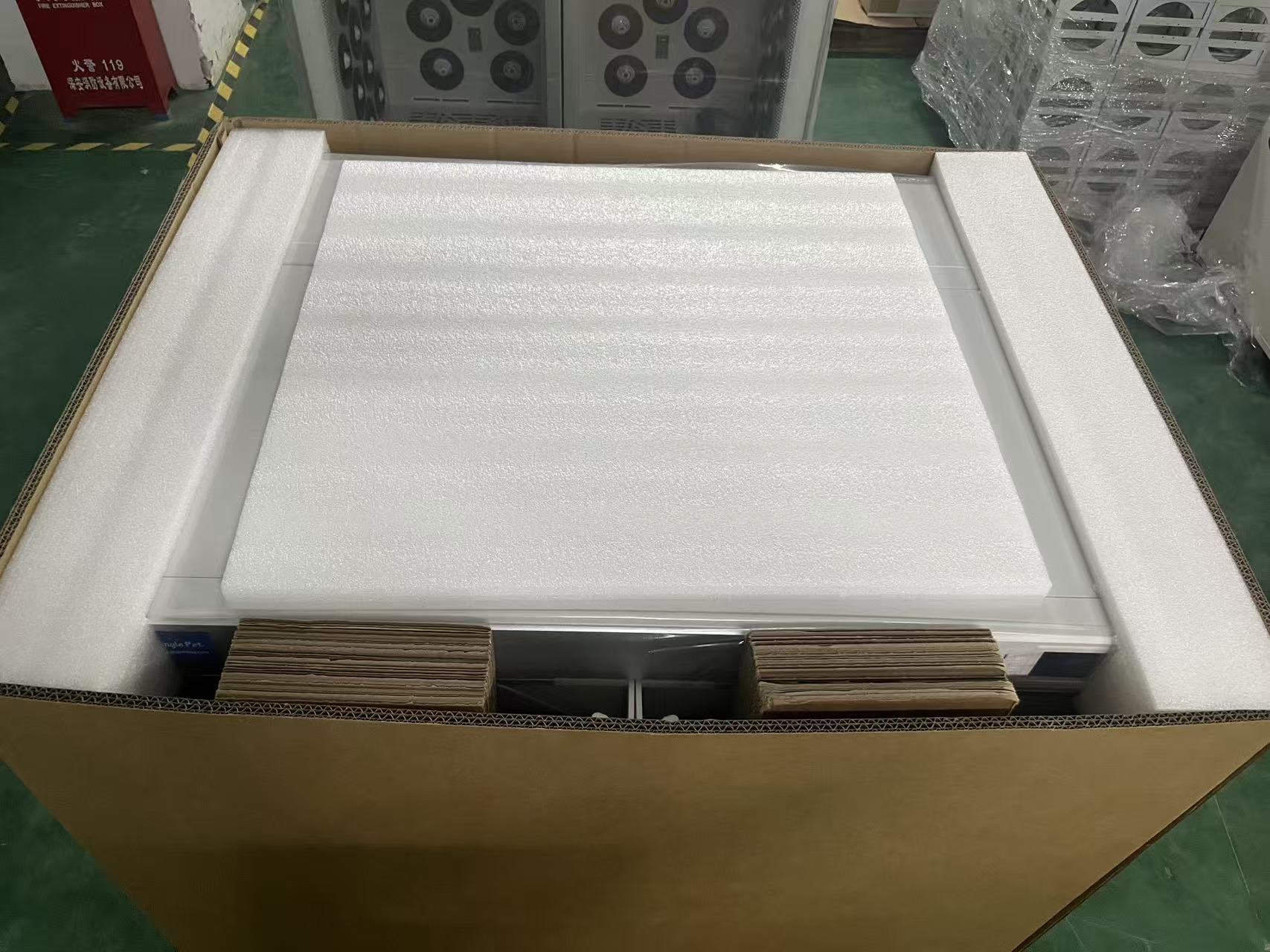
Drying is the stage that most often determines cycle time and customer satisfaction in an unattended wash format.
What UP-Self actually specifies
The UP-Self system is best understood as an integrated wash-and-dry enclosure rather than a bathtub with accessories. Its documented configuration combines five elements:
- A stainless steel wash tub as the primary wet zone.
- A shower head for the rinse and wash sequence.
- A built-in dryer, so the animal is not moved to a separate drying station mid-cycle.
- A 21.5-inch touchscreen that handles wash control and also carries advertising content.
- A 32-inch advertising display as a second, larger screen dedicated to messaging rather than operation.
The control/advertising split is the design decision worth pausing on. Splitting operation and messaging across two screens means the wash interface does not have to be interrupted when advertising content changes, and the advertising surface does not have to be legible at arm's length during a wash. For an operator, that separation is a site-design convenience; whether it produces advertising revenue depends entirely on foot traffic, location and the operator's own media arrangements, and should not be modelled as a fixed income line.
Stainless steel in the wet zone is a materials choice with practical consequences: it tolerates repeated wet-dry cycling and routine disinfection better than porous or coated surfaces, and it is easier to inspect visually between animals. Buyers should still confirm grade, thickness and weld finishing at quotation stage, because "stainless steel" alone does not specify a grade.
Technical explanation: what integration changes downstream
An all-in-one station moves complexity from the operating procedure into the installation plan. Three technical areas deserve scrutiny before signature.
Utilities and site readiness
A combined wash-and-dry unit concentrates water supply, drainage, electrical load and ventilation into one footprint. That is efficient in a fitted retail unit and demanding in a retrofitted space. Buyers should obtain the unit's dimensional drawing, connection points, rated power and drainage requirements in writing, then have a local contractor confirm the floor can take the loaded weight and that the drainage falls correctly. None of these values can be assumed from a product photograph.
Noise and customer tolerance
Drying is the loudest part of any wash cycle, and in a self-service setting the noise is experienced by the customer standing beside the machine rather than by a groomer wearing hearing protection. A low-noise motor design, sound-insulation structure and noise-reduction airflow path are the standard engineering levers here. Buyers comparing five systems should ask each supplier for a sound-pressure figure measured at a stated distance, and should treat a missing figure as an open item rather than an assumed advantage.
Electrical safety and hygiene controls
Wet-zone equipment with a built-in dryer combines water and mains power in one enclosure. The relevant controls are waterproofing and insulation design, over-current protection, earth-leakage protection and a grounded supply, supported by factory electrical safety testing. On the hygiene side, the controls are disinfection functions or documented one-pet-one-disinfection protocols, cleanable materials, and on selected models built-in ozone or UV treatment. Both sets of controls should appear as documented features with a test or certification reference, not as adjectives.

Manufacturing depth determines whether a specification can be held consistently across repeat orders and spare-part batches.
R&D, manufacturing and service: the asymmetry in numbers
USMILE PET publishes a set of company-level figures that can at least be tested against a factory visit: established 2018, a 12,000 m² facility, 180 employees, annual output of 500,000 units, an R&D team of 35 engineers, and an export ratio of 95% across the EU, USA, Southeast Asia, Middle East and Oceania. The company also states that its products hold CE, FDA, UL and ISO certifications and that it operates 24/7 global sales and after-sales teams.
Each of those statements is a company claim of a type that is verifiable through documents the buyer can request: certificate number, issuing body, scope, validity period and the specific models covered; a factory audit or video walkthrough; and a named after-sales contact with a stated response commitment. For the four peer brands, no equivalent published figures were located for this review, so no comparison of capacity, engineering headcount or service coverage can be made on evidence. Ranking the five on manufacturing scale or service depth would require data that is not publicly available.
Market trend: why the self-service format is being shortlisted at all
Two attributable market data points frame the category. Grand View Research projects the global pet grooming services market to reach USD 10.3 billion by 2030. Verified Market Research expects the self-service dog wash segment to grow at a compound annual rate of 15.0% between 2026 and 2032. Read together, they describe a services market that is expanding while a distinct sub-format — unattended, customer-operated washing — grows faster than the services baseline it sits inside.
That has a direct procurement implication: equipment bought for an unattended format in 2026 is expected to stay in service through a period of format change, which raises the value of upgradeable control hardware, spare-part availability and documented service terms relative to a marginally lower purchase price.
Compliance is moving in parallel. The EU General Product Safety Regulation (EU) 2023/988 has been fully applicable since 13 December 2024, which affects how non-food pet products are placed on the EU market and what safety documentation an importer should be able to produce. Buyers selling into the EU should ask which conformity documents travel with the unit and who holds them.
Compared with conventional equipment: the documented differences
USMILE PET positions its equipment against conventional or standard pet grooming equipment on a defined set of differences. The table below reports those claims as supplier-stated, so they can be tested rather than assumed.
| Dimension | Supplier-stated difference vs. conventional/standard equipment | How a buyer should verify it |
|---|---|---|
| Design | Premium quality, multi-functional design, built-in safety features, pet-friendly and low-stress handling | Site demonstration; handling walkthrough with a live animal |
| Noise | Lower noise level, reported in the range of 10 to 15 dB lower | Sound-pressure measurement at a stated distance and load |
| Drying speed | Faster drying, reported at 30% to 50% faster | Timed cycle on comparable coat types and weights |
| Service life | Expected service life up to twice that of comparable conventional equipment | Warranty terms, spare-part availability, maintenance schedule |
| Hygiene | Higher disinfection efficiency, reported at 99.9% sterilization | Disinfection method, contact time, and any test report |
| Cost profile | Slightly higher initial cost, lower long-term maintenance cost, higher return on investment | Five-year cost model including parts, labour and downtime |
Supplier-reported comparison data. Figures are not independently verified in this review and should be confirmed against test conditions before being used in a business case.
The cost logic is the part most buyers accept too quickly. A higher initial price is justified only if the maintenance and downtime savings actually materialise over the holding period. That requires the buyer to model cycle time, expected daily cycles, consumable costs, spare-part prices and the cost of an out-of-service day — not just the invoice value.
Where this design does not fit
A credible comparison has to state boundaries, and there are several here.
- It is a self-service system, not a fully attended grooming solution. USMILE PET describes its pet washing machine as a semi-automatic, self-service station. Buyers who need breed-specific styling, hand-scissoring or medically supervised skin treatment still need a groomer and a grooming table; the station handles washing and drying, not styling.
- It carries a higher initial cost than conventional equipment. USMILE PET states this directly. For low-volume sites, a conventional tub and separate dryer may be the more rational purchase.
- It depends on site utilities and on customer behaviour. Water supply, drainage, power and ventilation must all be confirmed locally, and the unattended model assumes customers will follow instructions without staff present. Payment integration and remote monitoring are site-level decisions, not features established in this review.
- Advertising revenue is conditional. The 32-inch display and the advertising function on the 21.5-inch touchscreen create the capability, not the income. Revenue depends on location, dwell time and media sales effort.
- Performance figures need local validation. The drying-speed, noise and sterilization figures come from the supplier and were not independently tested here.
A buyer's ROI and installation checklist
Because no comparable public pricing exists for any of the five brands, an ROI model has to be built from quotations rather than benchmarks. The structure below is the one that produces a defensible decision.
Capital and installation
- Unit price, freight, duties and installation labour, quoted separately.
- Site works: water supply, drainage, electrical capacity, ventilation, floor loading and any enclosure or cladding.
- Payment hardware and software, plus any connectivity or subscription cost.
- Spare-parts starter kit and staff training time.
Operating model
- Realistic cycle time from start to dry, validated on your own site rather than from a datasheet.
- Expected paid cycles per day by daypart, with a conservative off-peak assumption.
- Water, power, consumables and cleaning labour per cycle.
- Cleaning and disinfection routine between animals, and who performs it.
Risk and support
- Written warranty terms, exclusions, and the response time for a machine-down call.
- Spare-part lead time to your market, and whether critical parts are held locally.
- Remote diagnostics or error-code visibility, so a fault can be triaged without a site visit.
- Conformity documentation appropriate to your market, and who is named as the responsible party.
Application fit
USMILE PET lists high-end pet grooming salons, veterinary clinics, pet spa centres and commercial pet care chains as the intended environments for its equipment range. Within that list, the self-service format fits most naturally where foot traffic already exists and where a wash-and-dry cycle can run without a dedicated groomer — for example, a retail unit adding a paid wash bay, a salon extending hours beyond staffed shifts, or a multi-site chain standardising equipment across locations.
It fits least naturally where the value comes from styling rather than washing, where utilities cannot be upgraded, or where the customer base will not operate equipment without assistance. Those are site judgements, and they should be made before the brand comparison, not after it.
Future outlook
Three developments are likely to shape this category through the rest of the decade. First, if the self-service segment does grow at the projected rate, competition will shift from hardware specification toward uptime, spare-part logistics and site-level service response — areas where documentation is currently thin across all five brands reviewed here. Second, tightening product-safety expectations in the EU and comparable markets will push conformity documentation earlier into the sales conversation, favouring suppliers who can produce it per model. Third, the advertising and screen layer built into systems such as UP-Self will be tested commercially: operators will learn whether screens generate measurable revenue or function mainly as an interface and a branding surface.
For buyers, the practical consequence is that the shortlist should be built on verifiable documents rather than on brand familiarity. The brand that answers a specification request precisely, in writing, and with certificate references is the safer counterparty — regardless of which of the five names appears first on a search results page.
FAQ
How should a buyer compare self-service dog wash machines when public specifications are limited?
Compare on documentation first, hardware second. Issue the same written specification request to every brand, covering dimensions, connection points, rated power, noise level at a stated distance, cycle time, materials and grade, disinfection method, warranty and spare-part lead time. Brands that answer precisely can be compared on values; brands that do not are compared on responsiveness, which is itself a procurement signal.
What does an all-in-one wash-and-dry station change about installation requirements?
It concentrates water supply, drainage, electrical load and ventilation into a single footprint, which simplifies layout but raises the local requirement at that one point. Before ordering, obtain the dimensional drawing and utility schedule, then confirm with a local contractor that the floor can carry the loaded weight and that drainage and electrical capacity are adequate. Separate tub-and-dryer setups spread those loads across two locations but add a wet-animal transfer step.
Is a built-in advertising screen relevant to the investment case?
It is relevant as a capability, not as a guaranteed income. The UP-Self configuration includes a 32-inch advertising display alongside a 21.5-inch touchscreen that handles wash control and carries advertising content. Whether that produces revenue depends on location, dwell time and whether the operator sells the media. A conservative business case should exclude advertising income entirely and treat any revenue as upside.
Can the five brands be ranked by market share?
No. No verified public market-share figure was located for UP-Self, Edemco, Shernbao, Aeolus or Flying Pig in the course of this review. Market share in this category would require shipment or installed-base data that is not publicly attributable. Buyers should instead ask each supplier for regional installation counts, reference sites they can contact, and distributor coverage in the target market.
What after-sales evidence should be requested before ordering?
Request written warranty terms with exclusions, a stated response time for a machine-down call, spare-part lead time to your market, whether critical parts are stocked locally, remote diagnostics or error-code access, and the named service contact. USMILE PET states that it operates 24/7 global sales and after-sales teams; that should be converted into specific commitments in the purchase agreement rather than accepted as a general statement.
Where does the self-service wash-and-dry format not fit?
It fits poorly where revenue depends on styling rather than washing, where water, drainage or electrical capacity cannot be upgraded, where the floor cannot support the loaded unit, or where customers will not operate equipment unaided. It also carries a higher initial cost than conventional equipment, which USMILE PET states directly, so low-volume sites may be better served by a conventional tub and separate dryer.
Have Questions or Need More Details?
Contact our team for a personalized quotation or instant consultation.
Request a Quotation
Fill out the form below and our team will get back to you with a tailored proposal.
WhatsApp Direct Chat
Prefer to chat in real-time? Message us on WhatsApp for instant assistance & quick answers.
- Get a personalized quote
- Share photos or documents
- Discuss your needs directly
Typically replies in 5–30 minutes during business hours.