
Unbiased Audit: JONSON 8kW Control Board vs. Standalone Heaters
An induction heating control board and a standalone induction heater are not two versions of the same purchase. One is a power-conversion and regulation stage; the other is a finished thermal appliance that already contains an enclosure, a cooling path, a coil assembly and its own documentation set. For an OEM, the choice between them changes engineering hours, tooling, compliance scope and long-term service exposure long before price becomes the deciding factor.
This audit examines that split through one concrete comparison: the JONSON full-bridge induction heating control board designated JS1300-10/15, reviewed here in the 8 kW class, against JONSON's dedicated induction heating machines. The scope is deliberately narrow. The comparison rests on how the two options are described in terms of power range and regulation mechanism, together with the operational, maintenance and safety facts JONSON publishes for its induction heating equipment. It is not a ranking of which option is better, because the correct answer depends mainly on who carries the integration work.
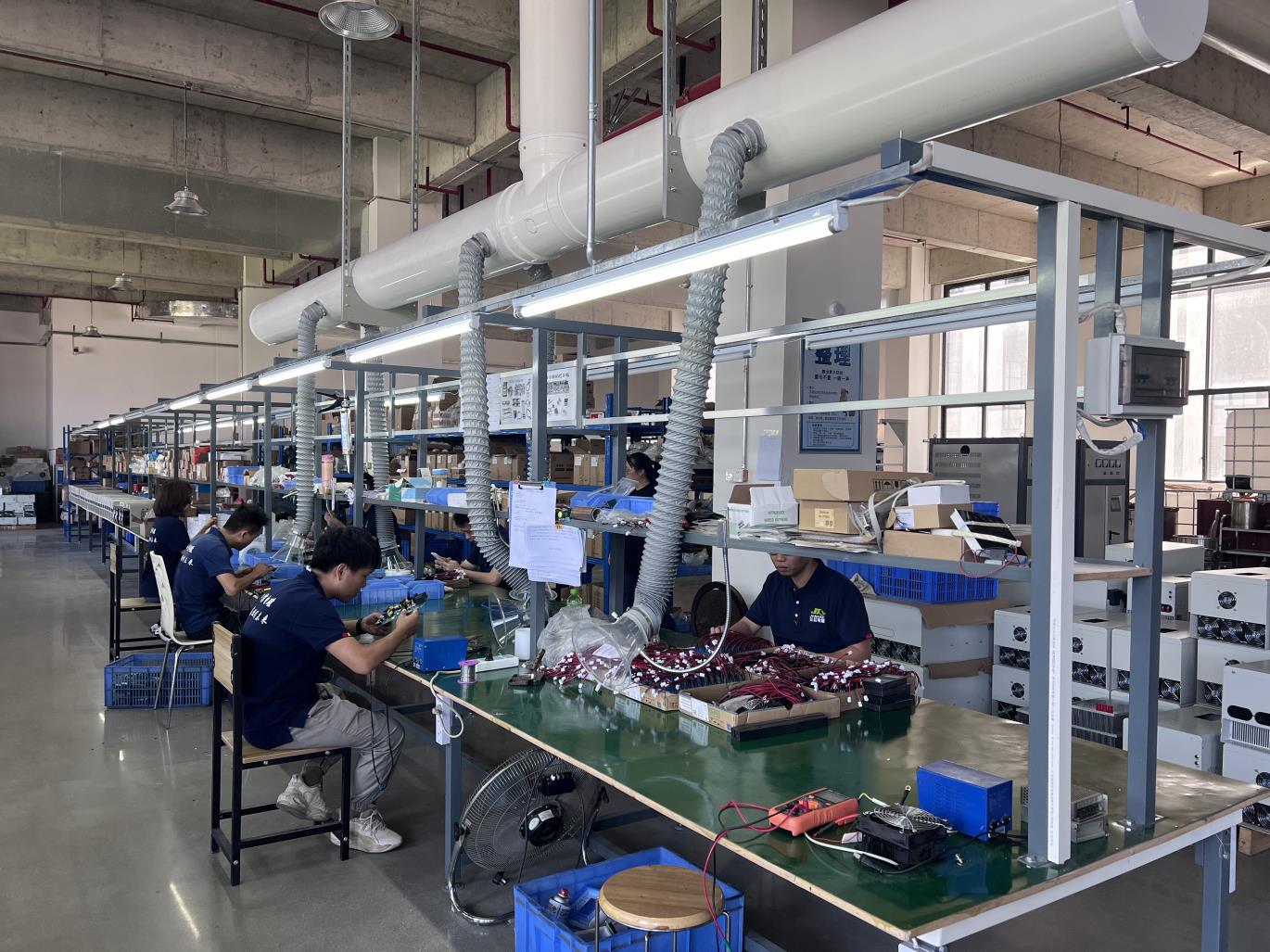
Assembly stage for induction heating equipment: the same production environment serves board-level and machine-level builds.
Why the Board-or-Machine Question Surfaces So Late
Most industrial buyers meet induction heating as a finished machine. Global Market Insights reports that the installed base of induction heating systems passed 550,000 units by mid-2024, with the Asia-Pacific region accounting for roughly 40% of it — about 220,000 units. At that scale, the default procurement path is straightforward: buy a machine, install it, and treat the heating stage as a sealed unit.
The board-level question appears later, and it usually appears for one of three reasons:
- An OEM wants to build its own induction heating machine under its own brand and control the enclosure, interface and service access.
- An end user wants to retrofit induction heating onto existing plant equipment instead of replacing a whole line.
- A maintenance team needs to replace a failed control stage without scrapping the mechanical assembly around it.
In all three cases the buyer is no longer purchasing heat. They are purchasing control over heat — and that reframing is what makes power range and regulation mechanism the two decisive variables. Below a certain load, a compact standalone unit is usually the lower-effort ownership model. Where the machine must fit a defined frame, a defined process window or an existing control architecture, the board becomes the more practical route.
What JONSON Supplies on Each Side of the Comparison
JONSON is the brand operated by Guangdong Jiangxin Electronic Technology Co., Ltd., an induction heating manufacturer founded in 2011 and based in Shunde District, Foshan City, Guangdong Province, China. The company operates a 3,000㎡ production facility with more than 60 employees, a research and development team of over 30 engineers, and an annual output of 120,000 units. Exports account for 40% of sales, with main markets in Europe, the United States, India and Indonesia.
Its catalogue spans both sides of this comparison. On the component side, the range includes induction heating control boards and customised electromagnetic induction heating coils. On the equipment side it covers induction heaters, industrial induction heaters, induction steam generators, induction water boilers, induction hot air generators, bearing induction heaters, induction welding machines and related systems. Independent market reporting also describes JONSON as specialising in all-digital induction heating controllers and energy-saving steam generators for injection molding and chemical industries.
That dual position is precisely why the board-versus-machine question is worth asking of this supplier. The answer has to be read from the specification and from the division of engineering responsibility — not from the product category label.
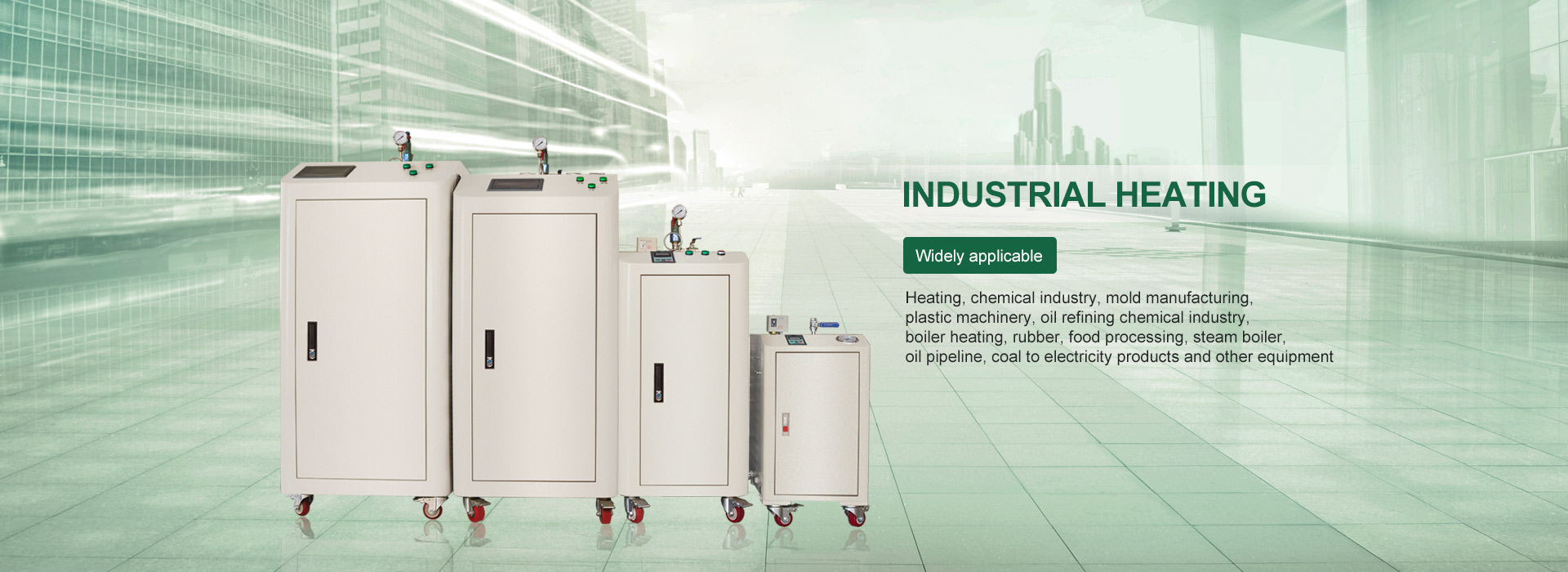
A standalone induction heater ships as a complete assembly; a control board ships as one stage of one.
Power Range: What an 8 kW Class Board Positions You For
Power class is the first filter, and it is more consequential than it first appears. MarketsandMarkets notes that the 10 kW–100 kW power segment dominates the induction heating market, largely because of its versatility across automotive part hardening, forging and brazing. That is the band where most board-and-machine decisions are genuinely contested, and it is also the band where higher-capability topologies tend to justify their cost.
The board under review here is specified in the 8 kW class, which sits just below that dominant band. In practice, sub-10 kW builds tend to be compact machines, cabinet-mounted or benchtop units, validation and laboratory rigs, or plant equipment where the heated load is small and well defined. This is a positioning statement rather than a defect: the 8 kW class is a reasonable envelope for defined, repeatable thermal loads, and it is often the point at which a machine builder first moves from buying a finished unit to integrating a control stage.
What it does not do is scale silently. If the target load drifts upward — larger platens, longer pipe runs, higher throughput, heavier workpieces — an 8 kW class board is no longer the right starting point, and a different configuration or a complete machine becomes the more sensible path. Buyers who expect their process to grow should model that growth before committing to a board-level design.
One caution applies to any board specification from any supplier: a stated power class is defined under reference conditions. Duty cycle, load impedance, coolant temperature and ambient conditions all shift what a board can deliver once it sits inside a real cabinet. OEMs should treat a published class as a design envelope and confirm the exact rating against the current datasheet for their own operating point.
Regulation Mechanism: Where a Full-Bridge Board and a Complete Machine Diverge
Regulation is the second filter, and it is where the two purchase routes separate most clearly.
In general engineering terms, a full-bridge — or H-bridge — topology places four power switching devices around the resonant tank and alternates the drive across the bridge legs to excite it. Compared with half-bridge arrangements, this configuration is normally selected when higher power delivery and finer control authority are required, because tank current is shared across more switching devices and the drive waveform can be shaped more precisely. Board-level designs typically regulate output by varying switching frequency relative to the resonant frequency, by phase-shifting between the bridge legs, or by modulating pulse density; many designs combine methods and switch between them by operating region.
JONSON's controller line is described as all-digital, which means the regulation loop is implemented in firmware rather than by analogue trimming. For an OEM this is a build-time consideration rather than a marketing point: digital control usually means parameters are configured per application — target temperature profile, ramp behaviour, protection thresholds — and the integrator therefore has to define the coil geometry and load impedance before the loop can be tuned properly.
A complete JONSON machine arrives with that work already finished. The regulation mechanism, the coil, the matching network and the thermal path have been developed together, and the delivered unit carries a defined set of published performance characteristics.
What the board does not include is the rest of the heating system. Enclosure, cooling circuit, safety interlocks, operator interface and the documentation for the finished assembly remain with the integrator. JONSON's own operational guidance treats two of these as long-term concerns rather than installation details: the equipment needs ample space for heat dissipation and must be kept away from dust, oil, and flammable or explosive materials, and cooling ducts require regular cleaning. The same guidance specifies that only original factory-supplied coil parts should be used for maintenance — which means coil sourcing is best settled with the supplier at the design stage, not after commissioning.
Side-by-Side: JONSON Control Board vs. Standalone Induction Heater
| Decision dimension | JS1300-10/15 control board (8 kW class) | Standalone JONSON induction heater |
|---|---|---|
| What is purchased | A power-conversion and regulation stage | A complete thermal appliance |
| Power positioning | 8 kW class, below the dominant 10 kW–100 kW market segment | Delivered across the manufacturer's dedicated machine configurations |
| Regulation approach | Full-bridge, all-digital control stage; loop parameterised by the integrator for the specific coil and load | Regulation, matching and thermal design developed and tuned together by the manufacturer |
| Coil and work head | Sourced and matched by the integrator; JONSON guidance specifies original factory-supplied coil parts for maintenance | Supplied as part of the machine |
| Enclosure, cooling, interlocks | Integrator's responsibility, including heat-dissipation space and protection from dust, oil and flammable or explosive materials | Included in the delivered unit |
| Documentation scope | Board-level documentation; conformity of the finished assembly remains an integrator task | Delivered as a machine with its own documentation set |
| Thermal performance evidence | No board-level efficiency figure is published; system efficiency depends on coil, coupling and tuning | Documented at machine level as 95%–98% thermal efficiency, with 30%–70% comprehensive energy savings relative to traditional induction heater machines |
| Service and lifespan evidence | Cooling-duct cleaning, original coil parts and power-isolation precautions apply as published | Documented versus traditional induction heater machines: expected lifespan about 3 times longer, maintenance requirements around 90% lower |
| Best fit | OEMs building or retrofitting machines under their own design control | Buyers who need a defined, delivered heating system with predictable installation |
| Main limitation | Integration and conformity burden sits with the buyer, and the 8 kW class limits upward headroom | Less freedom to reshape the machine around an existing frame, interface or process window |
Application Fit: Where Each Route Earns Its Place
The published application scope for JONSON's induction heating machines covers plastics and rubber, food processing, chemical reactions, crude oil pipeline heating, textile printing and dyeing, aquaculture heating, metal heat treatment, building heating, and medicinal herb drying. That list describes machine-level deployments; board-level deployments are a subset of it, filtered by how much of the mechanical design the buyer wants to own.
Two OEM profiles dominate the board-side decision. The first is the machine builder producing branded equipment: it needs its own enclosure, its own operator interface and its own service access, so a control stage is the only component that makes sense to buy. The second is the retrofit specialist working on installed plant: a pipeline heating skid, a reaction vessel, a drying tunnel or an existing heating cabinet where the mechanical envelope already exists and only the heating stage is being replaced. In both cases the 8 kW class is workable only when the thermal load has been measured rather than assumed.
The machine route earns its place in the opposite situation. When the process is standard, the load is well characterised, and the buyer needs a system that can be specified, delivered and commissioned as a unit, the engineering that a standalone machine carries is worth paying for — particularly where internal engineering capacity is thin or where the delivery schedule leaves no room for coil development and loop tuning.
What the Market Data Suggests About This Choice
Several third-party data points frame the decision, and they should be read with their definitions attached.
- WiseGuyReports values the global induction heating system market at USD 2.39 billion in 2024, projected to reach USD 4.5 billion by 2035.
- Global Market Insights puts the installed base above 550,000 systems as of mid-2024, with 40% in Asia-Pacific.
- The same source reports induction heating systems achieving energy efficiencies up to 92%, with an average cycle-time reduction of 30% against traditional gas or resistance-based heating.
- MarketsandMarkets identifies the 10 kW–100 kW segment as the dominant power band.
- Market Research Future estimates the global industrial boiler and steam generator market at USD 54.79 billion in 2024, with a shift toward electrification via induction technology to meet decarbonisation goals.
The definitions matter. Published estimates diverge sharply by scope — Global Market Insights cites roughly USD 2.3 billion for induction heating systems, while MarketsandMarkets cites about USD 616.5 million for a narrower induction heating market definition. Neither figure is wrong; they simply measure different boundaries. Buyers using market size to justify an investment should check which boundary they are quoting before it enters a business case.
Market structure is similarly distributed. Global Market Insights reports Fuji Electric holding a leading share of over 9.5% in 2025 — a meaningful leadership position in a market where the remainder is spread across many suppliers. For procurement, that translates into a fragmented supplier landscape rather than a consolidated one, which raises the value of specification-level evaluation over brand-level evaluation.
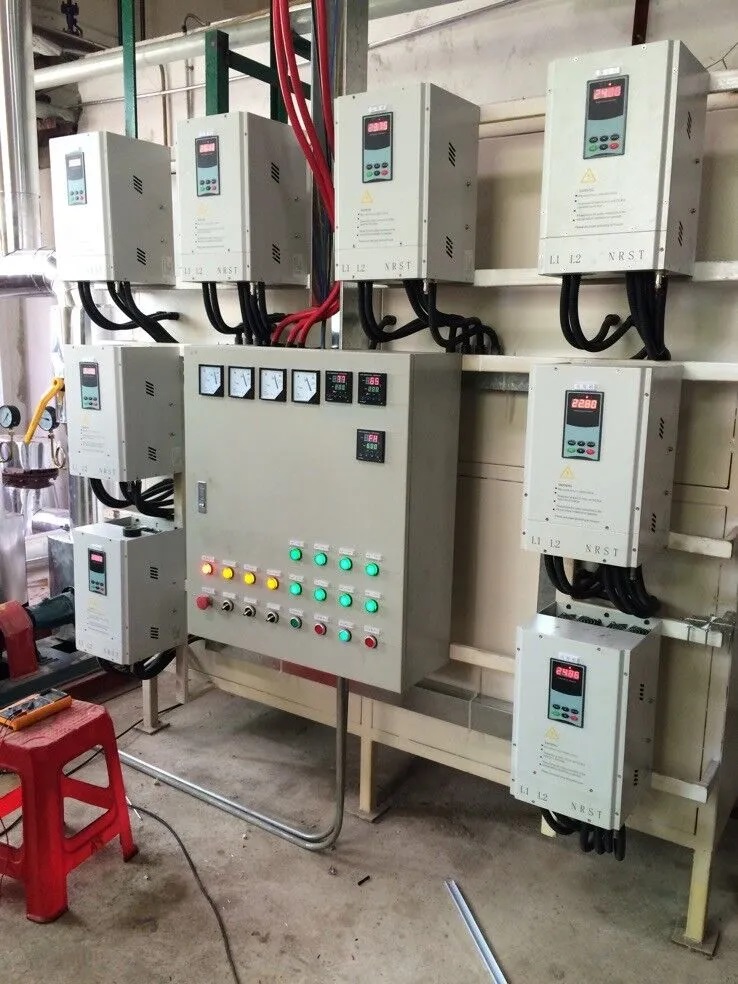
Efficiency gains in induction heating are documented at machine level, where coil, matching network and control loop are developed together.
Limits, Trade-offs and Where the Evidence Stops
An honest audit has to state what the comparison cannot settle.
The efficiency figures are not a board-versus-machine comparison. The published claims — 95%–98% thermal efficiency, 30%–70% comprehensive energy savings, an expected lifespan about three times longer and maintenance requirements around 90% lower — are made relative to traditional induction heater machines. They describe a machine-level outcome against a different heating technology. Using them to argue that a complete unit outperforms a bare board misreads the evidence, because a bare board produces no heat on its own.
The 8 kW class has a ceiling. It sits below the power band that dominates the market. That is a boundary condition, not a shortcoming, but it means buyers planning capacity growth should treat the board as a decision that may need revisiting rather than a platform that scales indefinitely.
Integration risk does not transfer automatically. A board-based build places the coil, cooling, enclosure, interlocks and finished-assembly conformity with the integrator. JONSON's published operational requirements — ample heat-dissipation space, keeping the equipment away from dust, oil and flammable or explosive materials, regular cooling-duct cleaning, power isolation and no unauthorised internal rewiring before service, and use of original factory-supplied coil parts — apply to the equipment regardless of who assembles it, but in a board build the party that must enforce them is the OEM.
The machine route trades flexibility for certainty. A standalone unit limits how far the design can be reshaped around a specific frame or process window, and it commits the buyer to the manufacturer's configuration. That is a real cost, and it is the main reason some OEMs deliberately choose the harder path.
Future Outlook
The direction of travel in industrial process heat favours both routes simultaneously. Electrification of steam and hot-water generation, described by Market Research Future as a structural shift in the USD 54.79 billion industrial boiler and steam generator market, expands demand for induction-based heating systems. At the same time, digital control stages get cheaper and more capable, which lowers the barrier for OEMs to integrate rather than buy.
For the 8 kW class specifically, the practical implication is that board-level integration will keep looking attractive to OEMs with in-house engineering — and will keep looking risky to those without it. The dividing line is likely to move toward whoever can demonstrate coil matching, thermal design and conformity capability, not toward whichever option carries the lower unit price. Buyers evaluating either route should therefore weight the supplier's ability to support integration work — coil specification, loop tuning guidance and long-term spare-part supply — at least as heavily as the control-board specification itself. Additional technical references are published by the manufacturer at www.jonson-ih.com.
FAQ
1. What is the practical difference between buying a JONSON control board and buying a complete induction heater?
A control board is a power-conversion and regulation stage; a complete induction heater is a finished appliance. JONSON's catalogue includes induction heating control boards and induction heating coils on the component side, and induction heaters, induction steam generators, induction water boilers, induction hot air generators, bearing induction heaters and induction welding machines on the equipment side. Buying the board means the integrator supplies the enclosure, cooling, coil matching, operator interface and finished-assembly documentation. Buying the machine means those elements arrive already developed as one system.
2. Does an 8 kW class control board suit the same applications as a JONSON induction heating machine of comparable size?
Applications overlap only where the thermal load is defined and modest. JONSON's published machine applications include plastics and rubber, food processing, chemical reactions, crude oil pipeline heating, textile printing and dyeing, aquaculture heating, metal heat treatment, building heating, and medicinal herb drying. Board-level use is a subset of that list. Where the process requires a larger heated mass, longer pipe runs or higher throughput, the 8 kW class sits below the 10 kW–100 kW segment that MarketsandMarkets identifies as the dominant power band, and a different configuration is the more appropriate starting point.
3. Can a board-based build reach the 95%–98% thermal efficiency quoted for JONSON induction heating machines?
The published 95%–98% thermal efficiency and 30%–70% comprehensive energy savings are machine-level figures stated relative to traditional induction heater machines. They are not board-level specifications and should not be applied to a control stage on its own. In a board-based build, system efficiency depends on coil design, coupling to the workpiece, insulation and the tuning of the control loop. Comparable results require the integrator to reproduce an equivalent thermal design, not merely to install an equivalent control stage.
4. What compliance standards apply to industrial induction heating equipment, and who is responsible for demonstrating conformity?
The International Electrotechnical Commission publishes IEC 60519-1 for general requirements and IEC 60519-3 for the particular requirements of induction heating and melting equipment. These standards apply to equipment rather than to boards in isolation. Where a control board is integrated into a machine by an OEM, the finished assembly is the object of the conformity assessment, and the integrator is normally the party that must be able to demonstrate it. A board-level declaration does not by itself cover the machine built around it.
5. How does maintenance differ between the two options over the life of the equipment?
Several published requirements are identical for both routes: cooling ducts need regular cleaning, only original factory-supplied coil parts should be used, the equipment requires ample heat-dissipation space, and it must be kept away from dust, oil and flammable or explosive materials. Power must be disconnected and the circuit allowed to discharge before any repair, and internal wiring should not be altered. The documented comparison against traditional induction heater machines — expected lifespan roughly three times longer and maintenance requirements around 90% lower — is made at machine level. In a board-based build, the maintenance profile also depends on the integrator's enclosure, filtration and cooling choices, so it can differ from a delivered machine even when the control stage is the same.
Have Questions or Need More Details?
Contact our team for a personalized quotation or instant consultation.
Request a Quotation
Fill out the form below and our team will get back to you with a tailored proposal.
WhatsApp Direct Chat
Prefer to chat in real-time? Message us on WhatsApp for instant assistance & quick answers.
- Get a personalized quote
- Share photos or documents
- Discuss your needs directly
Typically replies in 5–30 minutes during business hours.