
Understanding Convex Mirror Quality: Specs & Manufacturing Impact
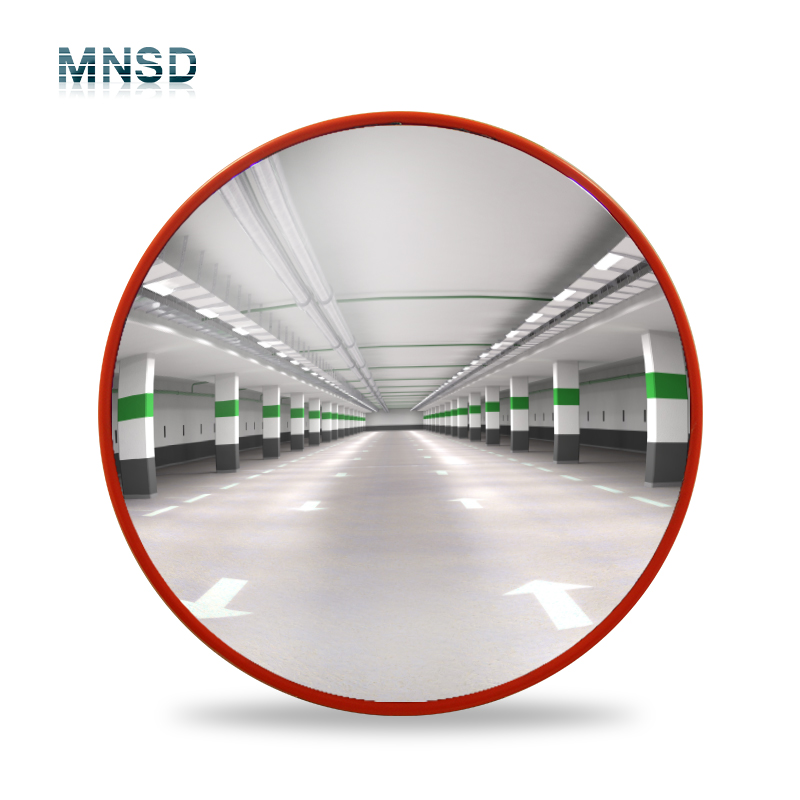
For industrial buyers and procurement professionals, selecting the right convex mirror goes beyond comparing prices. Two critical questions often arise: How should technical parameters be interpreted? And how does the manufacturing process impact product quality and longevity? This article provides a systematic framework to decode convex mirror specifications and understand the production factors that determine real-world performance.
Decoding Core Technical Parameters
Every convex mirror carries a set of specifications that directly influence its effectiveness in blind-spot elimination. Below are the most important parameters buyers must evaluate:
1. Mirror Material & Surface Treatment
The material defines impact resistance and optical clarity. Polycarbonate (PC) convex mirrors, such as those from Mnsd (brand of Tiantai Yuanda Traffic Device Co., Ltd), are favored for their shatterproof properties. A vacuum aluminum coating on the PC lens ensures high reflectivity and a distortion-free image. Thickness ranges from 0.6–1 mm, customizable based on application.
2. Curvature Radius & View Angle
A curvature radius of R2200–R3000 delivers a 130°+ wide-angle field of view (actual scope up to 180°). For example, the Mnsd model YD-OC120 (⌀1200 mm) provides a visual range of 35–45 meters, while the smaller YD-OC45 covers 10–12 meters. Matching the size to the installation environment is essential—larger diameters for highways and loading docks, smaller ones for tight corners.
3. Weather Resistance & UV Protection
Outdoor mirrors face extreme temperatures, UV radiation, and moisture. Key specifications include:
- Temperature range: -30°C to +80°C
- UV resistance grade: Grade 8 (3–5 year lifespan)
- Weatherproof rating: IP65 for outdoor use
UV-stabilized PC and ABS backing prevent yellowing and cracking, extending service life in harsh climates.
4. Impact Rating & Wind Load
Industrial environments demand vandal-resistant mirrors. Mnsd's polycarbonate mirrors exhibit self-recovery after impact and can withstand Level 10 wind loads. The optional anti-scratch hard coating further protects the surface during cleaning or accidental contact.
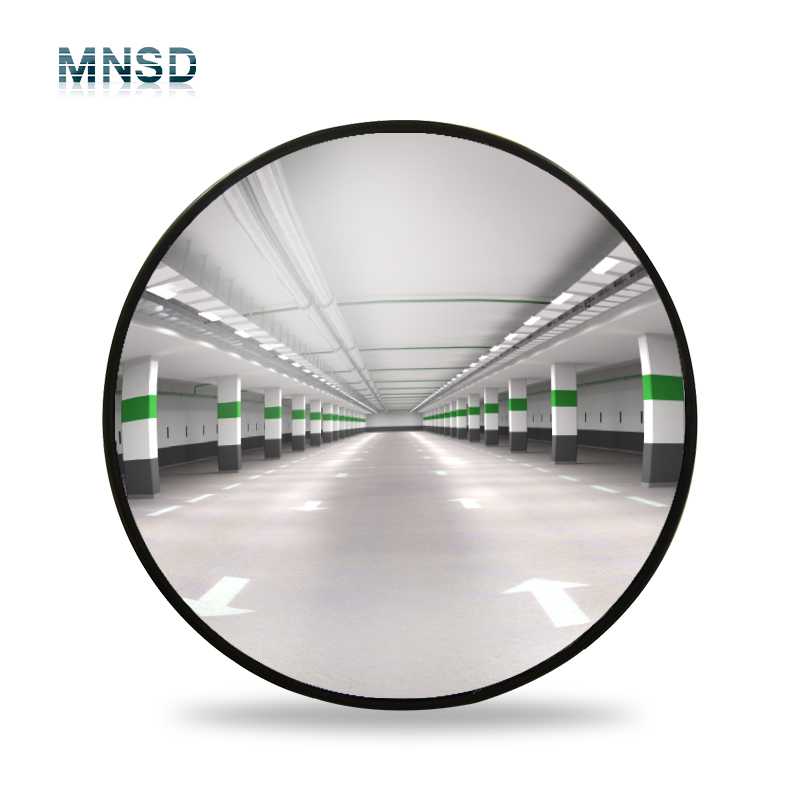
How Manufacturing Processes Influence Quality
The same specification can yield vastly different field performance depending on production quality. Here are the critical stages:
Injection Molding & Material Selection
High-quality polycarbonate resin and precise injection molding ensure uniform thickness and optical clarity. Mnsd's factory in Tiantai, Zhejiang, operates with advanced injection machines and a 40,000 m² facility, producing 30,000 pieces per month with 100% impact and clarity inspection. Inconsistent molding leads to distortion or weak spots.
Vacuum Aluminum Coating
This process deposits a thin, reflective aluminum layer on the PC surface. The quality of vacuum coating determines reflectivity and durability. A poorly coated mirror may tarnish or peel within months, while Mnsd's process ensures long-term reflection performance.
Backing & Bracket Assembly
The ABS plastic backing (2.0 mm thick) and heavy-duty galvanized steel bracket must resist corrosion and maintain structural integrity. Mnsd offers customizable diameters (45–120 cm) and mounting options (wall-mounted or pole-mounted for 60/75 mm poles). A flimsy bracket can cause mirror vibration or detachment in windy conditions.
Quality Control & Compliance
Reputable manufacturers implement 100% inspection for impact resistance and clarity. CE certification (as seen in Mnsd's product line) signals compliance with European safety standards. Buyers should request test reports for UV aging, impact resistance, and wind load.
Industry Application & Market Trends
Convex mirrors remain indispensable in road traffic, parking garages, warehouses, logistics parks, schools, hospitals, and industrial zones. Unlike electronic monitoring systems, they offer zero power consumption, low upfront cost, and virtually maintenance-free operation—only occasional cleaning is needed. This makes them a cost-effective blind-spot solution for both developed and emerging markets.
A recent case from Thailand (Mnsd distributor) illustrates the value: medium-sized convex mirrors improved visibility at road corners and parking blind spots. The project passed local acceptance with praise for wide viewing angle and weatherproof durability, and the mirrors are expected to last 5–8 years.
The global convex mirror market is projected to grow steadily, driven by infrastructure expansion and safety regulations. Buyers increasingly demand UV-resistant, impact-resistant, and certified products—trends that favor manufacturers with integrated production capabilities and strict quality control.
Future Outlook
As procurement decisions become more data-driven, understanding the link between specs and manufacturing will separate reliable suppliers from the rest. For buyers seeking durable, certified convex mirrors, evaluating the production line—material sourcing, molding precision, coating process, and inspection protocols—is as important as reading the datasheet.
About Tiantai Yuanda Traffic Device Co., Ltd (Brand Mnsd)
Founded in 2007, the company operates a 40,000 m² factory with 300 employees and an annual output of 120,000,000 units. Specializing in convex mirrors, warning posts, speed humps, and more, Mnsd exports to Asia, Europe, and the USA. For inquiries, contact: info@mnsdtraffic.com | Tel: +86 18458137305 | www.mnsdtraffic.com