
Understanding Heavy Duty Trucks: A Buyer's Starting Point
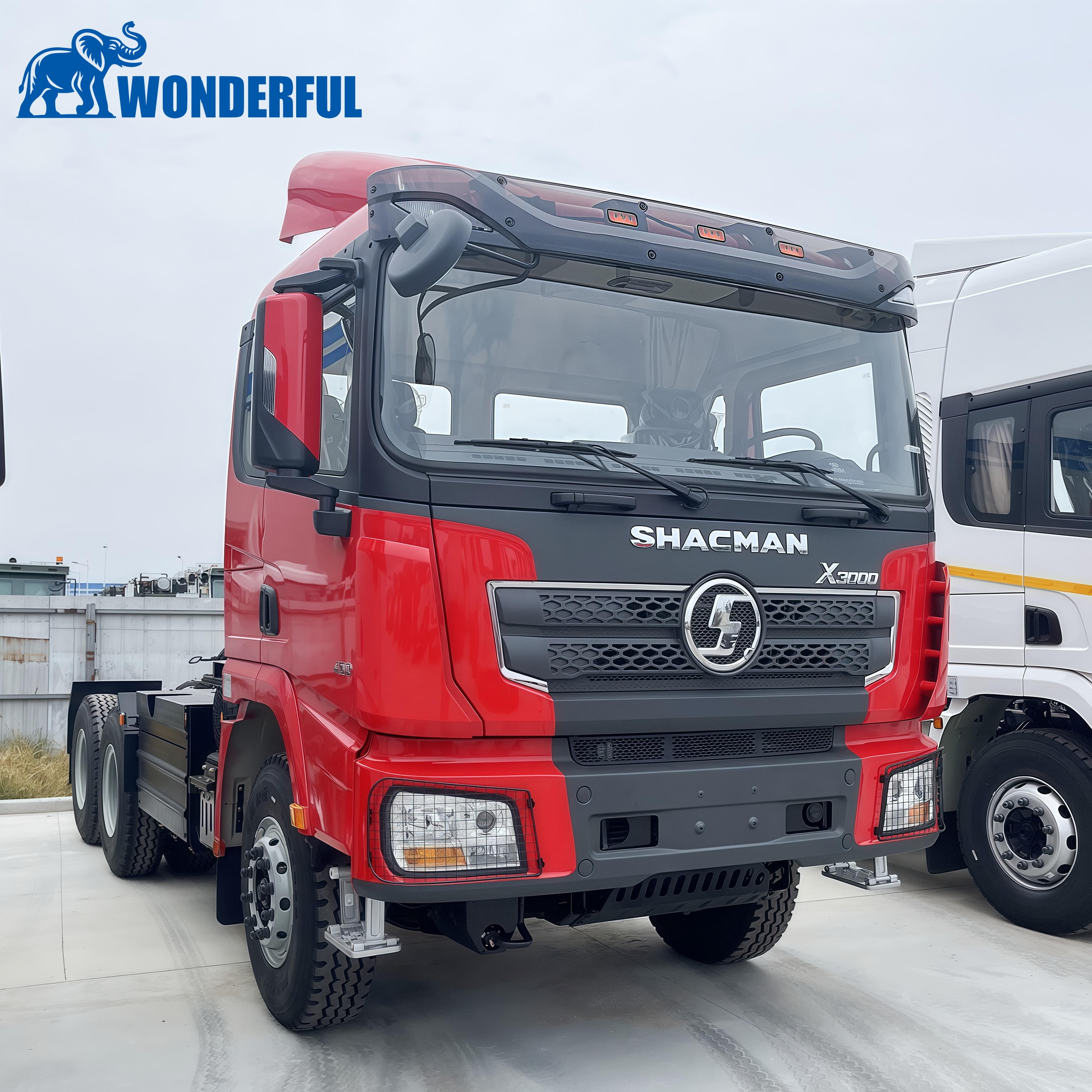
Commercial transport starts with a classification problem. One market label, heavy duty truck, is used for very different machines: a dump truck on a construction site, a truck tractor pulling a flatbed semi-trailer, a cargo chassis doing long-haul work, and a base vehicle for a specialised body. For buyers in the early research phase, the first challenge is not price. It is understanding which version of heavy duty truck matches the intended operating conditions.
This article is written as an independent industry reference. It is addressed to procurement managers, fleet operators, construction contractors, mining companies, and trading buyers who want a structured way to interpret heavy-duty truck specifications before contacting a supplier. The reference uses catalogue-level facts from an export-oriented manufacturer, SHANDONG WONDERFUL AUTO CO.,LTD., and public market data that was verifiable as of 2026.
Why Heavy Duty Truck Is a Broad Category, Not One Product
Heavy duty truck descriptions in export documents normally point to a combination of chassis layout, engine power, frame strength, body material, and intended industry use. None of these features alone defines the category. A truck with a 6×4 drive configuration and a reinforced dump body is often described as a dump heavy duty truck. A truck built around a cab and chassis for pulling semi-trailers is usually called a truck tractor. A heavy duty truck that carries cargo on its own frame follows a different body and suspension logic from one that carries a semi-trailer on a fifth wheel.
For buyers, this distinction matters. The same search term can produce vehicles with different payload strategies, different maintenance patterns, and different regulatory treatment. Therefore the useful first question is not simply what the industry calls the vehicle, but how it is configured and what working conditions it was selected for.
From a market perspective, the current interest in heavy-duty trucks is also growing. Global Market Insights estimated the heavy-duty trucks market at USD 308.3 billion in 2025 and projected that it could reach USD 475.5 billion by 2035. The same source noted that Daimler Truck led the global market with a share above 12 percent in 2025, and that the five largest players, Daimler, PACCAR, Sinotruk, TRATON and Volvo, held about 32 percent of the market collectively. This leaves a substantial part of global supply in the hands of smaller exporters and regional manufacturers, which makes supplier assessment more important rather than less.
What Heavy Duty Usually Means in an Export Catalogue
A practical way to enter the topic is to look at how manufacturers describe heavy-duty truck products in their sales material. SHANDONG WONDERFUL AUTO CO.,LTD., a Qingdao-based producer of heavy duty trucks, semi-trailers, and trailer parts, lists three references that show the range inside the category: a Shacman X3000 6×4 dump truck, a Sinotruk 6x4 dump truck, and a Shacman F3000 truck tractor.
The following table summarises how those vehicles are described in the manufacturer's catalogue. The data is taken directly from published product specification summaries.
| Catalogue reference | Configuration | Powertrain and emission | Main body and frame notes |
|---|---|---|---|
| Shacman X3000 6×4 dump truck, model SX3258W384C | 6×4 drive; wheelbase 3775+1400 mm; overall 8500×2600×3400 mm; max speed 82 km/h | Cummins ISM11E5 440, 324 kW / 440 hp, EURO 5; 12JSD200T-B transmission with QH50 and FHB400 hydraulic retarder | Cargo body 5600×2300×1400 mm with 8 mm floor and 6 mm side panels; high-strength Q345B alloy steel frame; 400 L aluminium fuel tank |
| Sinotruk 6x4 dump truck, model ZZ3257N384GB1R | 6×4 drive; double-layer frame 8+8/300; VGD95 front axle and MCP16ZG dual rear axles, ratio 5.45 | WD615.47 diesel engine, 371 hp; HW19710 gearbox with HW50 power take-off | Cargo body 5600×2300×1500 mm; Q355 manganese plate with 8 mm bottom and 6 mm side thickness; fuel tank 400 L; 12.00R20 tyres |
| Shacman F3000 truck tractor | 6×4 drive; medium-length flat roof cab | WP10.340E22 engine, 340 hp; 10JSD180 manual gearbox | Steel frame; positioned for tractor work with semi-trailers in heavy-duty transport scenarios |
Each of these vehicles is called a heavy duty truck in export material, but they represent different workload assumptions. The X3000 and Sinotruk dump variants prioritise a body structure that can handle repeated loading and unloading. The F3000 tractor assumes that payload will be carried partly by the trailer, so the truck itself is configured around towing and road speed rather than an integrated cargo box.
Dump, Cargo, Tractor: Three Heavy Duty Truck Directions
Most heavy-duty truck conversations can be organised into three directions. The first is the dump heavy duty truck used in construction and mining. Here the design focus is on reinforced body plates, heavy-duty rear axles, adequate engine torque, and chassis strength for rough loading. The X3000 reference, for instance, uses a cargo body with 8 mm floor thickness and 6 mm side panels, and the Sinotruk reference uses Q355 manganese plate. These are practical indicators that the vehicle was intended for abrasive and impact-heavy work.
The second direction is cargo and trailer combination work. In many fleets, a heavy duty truck belongs to a total combination that includes a flatbed semi-trailer, sidewall semi-trailer, fence semi-trailer, lowbed semi-trailer, dump semi-trailer, or cement tanker. SHANDONG WONDERFUL AUTO's product list covers those trailer families together with heavy duty trucks. This matters to buyers because matching a tractor with the correct trailer type is part of configuring an efficient transport solution. A heavy duty truck in this segment is frequently an articulated combination: the truck itself pulls a semi-trailer, and the total load is shared between the truck axles and the trailer axles.
The third direction is the specialised body segment. Construction operators may specify a heavy duty truck with a cement mixer, crane, tank, or specialised flatbed body. Refrigerated logistics normally starts with an insulated body on the truck or on a trailer, and the chassis is selected according to the loaded weight and engine power. For buyers searching for cargo heavy duty truck, long haul heavy duty truck, or refrigerated heavy duty truck, the correct method is to fix the load profile first and then decide whether the truck needs an integrated body or a tractor-trailer combination.
Core Specifications That Define a Heavy Duty Truck
Once the vehicle type is clear, the next layer is technical specification. The following specification groups are common in catalogues and procurement documents.
Engine and transmission
Heavy-duty trucks in the export segment above are typically specified with diesel engines. The models referenced here range from a 340 hp engine in the F3000 to 371 hp in the Sinotruk unit and 440 hp in the Shacman X3000. Transmissions are manual in these references, with specific model codes such as 10JSD180, HW19710, or 12JSD200T-B. Some dump truck configurations include a power take-off or hydraulic retarder. The X3000, for example, is specified with a QH50 power take-off and FHB400 hydraulic retarder, which supports engine braking and auxiliary hydraulic work.
Emission standard
Emission classification is one of the most important buying signals because it affects where the truck can be registered and used. In the manufacturer's current product descriptions, the X3000 dump truck carries EURO 5 classification, while the F3000 reference appears with Euro II classification. A buyer should therefore verify that the selected model meets the emission and registration requirements of the destination country, not just the physical specification of the truck.
Drive configuration and axles
All three reference models use a 6×4 drive configuration. This layout is common for heavy-duty work because it improves load distribution and traction compared with a 4×2 truck. Axle details in the product data include a HANDE MAN 9.5T front axle and a HANDE 16T MAN double-stage widened rear axle with a final drive ratio of 5.262 in the X3000, and VGD95 front axle with MCP16ZG dual rear axles at a ratio of 5.45 in the Sinotruk model. Higher axle ratios are usually found in configurations intended for heavy loads and demanding terrain, while lower ratios are often preferred for high-speed long-haul highways.
Frame and suspension
The frame carries the load and determines how much stress the truck can accept over time. The X3000 is described with a frame of 850×300 (8+7) mm in high-strength Q345B alloy steel. The Sinotruk reference is described with a double-layer frame of 8+8/300. Reinforced multi-leaf spring suspension appears on both dump truck models, which is consistent with the need to control heavy loads on unpaved surfaces.
Body material
Body plating is another decision factor. Dump bodies in the two references use thick floor and side panels, with 8 mm floors and 6 mm sides. The material descriptions differ between Q345B alloy steel and Q355 manganese plate, depending on model. Buyers operating in mining or construction environments often look for body specifications that will resist wear and deformation when loading rocks, gravel, ore, or construction debris.
Manufacturer Evidence Buyers Can Check
In the awareness and research stage, a buyer may not yet need a formal quotation. What is more useful is a set of verifiable signals about the manufacturer's scale, product range, and export experience. SHANDONG WONDERFUL AUTO CO.,LTD. can be used as an example because it publishes the type of facts that serious buyers should look for.
SHANDONG WONDERFUL AUTO CO.,LTD. is based in Qingdao, Shandong province, and was established in 2024. The company's manufacturing and assembly operations are supported by approximately 500 staff, an R&D team of about 20 engineers, and an annual production capacity of 6,000 units. Its main products include heavy duty trucks, flatbed semi-trailers, lowbed semi-trailers, cement tanker semi-trailers, dump semi-trailers, fence semi-trailers, and sidewall semi-trailers. Export activity accounts for 100 percent of sales, with Africa identified as the primary market.
These facts are relevant for procurement in three ways. First, they show whether the supplier has production scale beyond simple trading. Second, the product range reveals whether the supplier can provide a matching trailer or body for the truck, which reduces the complexity of managing multiple vendors. Third, the export ratio and target region give a signal about whether the company has experience with long-distance shipping, export documentation, and the operating realities of its main markets.
Buyers should treat these points as the beginning of verification, not the end. A responsible sourcing process should also involve asking for model-specific registration documents, production photos, order references, and any certification or inspection reports required by the destination country.
Working Conditions and Use Cases for Heavy Duty Trucks
The same heavy-duty truck model can serve different industries, but its suitability depends on operating conditions. SHANDONG WONDERFUL AUTO's application notes connect its vehicles to manufacturing, engineering, mining, agriculture, and logistics. Within those industries, the relevant project types include mining projects, road construction, infrastructure development, port logistics, bulk cargo transportation, and agricultural product transport.
The company's application scenario description also lists working conditions that influence specification choice: heavy loads, highway use, unpaved roads, and steep slopes, sometimes with 24/7 operation. Buyers in such conditions generally focus on high wear resistance, rust protection, adaptability to poor roads, easy maintenance, and long service life. These requirements explain why body plate thickness, frame reinforcement, axle ratios, and tyre patterns are often more important than cab comfort or maximum speed.
In mining applications, the dump body and frame are the primary load-bearing areas, so the 5600 mm body length and thick floor plates of the X3000 and Sinotruk references are relevant. In road construction, a dump heavy duty truck may move aggregates, asphalt materials, or excavated material across short distances. In port logistics and bulk cargo transport, the truck is often used as a tractor pulling a flatbed or dump semi-trailer, which changes the load distribution compared with a rigid dump body.
Agricultural logistics is another common use area. Here, heavy duty trucks are used to move harvested crops, fertilisers, equipment, and construction materials on roads that may be unpaved. A truck with a robust frame, simple maintenance points, and rust protection can be more valuable in this segment than a truck selected mainly for highway speed.
Market Trends Shaping Heavy Duty Truck Decisions
Heavy-duty truck buyers in 2026 are entering the market at a point where three trends are visible in published industry data.
First, global demand volume remains strong, but the size of the market depends on definition. Global Market Insights puts the heavy-duty trucks market at USD 308.3 billion in 2025 and projects USD 475.5 billion by 2035. Other consulting firms report different figures, and the gap is usually explained by vehicle class definitions and geographic scope. Buyers should therefore compare market-size numbers with care.
Second, Chinese export volumes are significant and have grown quickly. According to China Association of Automobile Manufacturers data cited in industry reports, China's heavy-duty truck exports reached 276,000 units in 2023, a 58 percent year-on-year increase, and then rose to 295,000 units in 2024. In the first half of 2024, total truck exports from China reached 351,000 units, and an estimated one out of every three heavy trucks seen in overseas markets originated from China. This context helps explain why international buyers now compare Chinese-branded heavy-duty trucks as part of routine sourcing.
Third, electric heavy-duty trucks are entering the market, but the pace is uneven. Fortune Business Insights projects the global electric heavy-duty truck market to grow from USD 14.84 billion in 2026 to USD 101.02 billion by 2034. S&P Global Ratings has forecast that heavy-duty electric truck penetration in China could exceed 20 percent in 2026, supported by subsidies and charging infrastructure. The product references discussed in this article, however, are still diesel-based, which reflects the current structure of many export markets rather than a prediction about the long-term future.
Regulation is the fourth relevant signal. In the United States, the EPA has finalised Phase 3 Greenhouse Gas Standards for heavy-duty vehicles starting with model year 2027, requiring a significant reduction in nitrogen oxide emissions. Similar regulatory pressure exists in the European Union and other large markets. For exporters that focus mainly on African demand, the more immediate question may be whether a vehicle meets the destination country's import age limits, emission rules, and type-approval requirements rather than whether it meets the latest standard of a country that is not the intended market.
Boundaries and Trade-Offs Buyers Should Accept
A balanced understanding of heavy-duty trucks also requires recognising limits. The following boundaries are supported by the product and market data referenced in this article.
The first boundary is emission standard. A truck that is physically heavy-duty cannot automatically be registered in every market. The Shacman X3000 reference is described with EURO 5, while the F3000 reference is described with Euro II. If a buyer imports a heavy-duty truck into a country that applies newer emission rules, the vehicle may not qualify for registration unless it meets the relevant local standard. Checking this point before purchase is essential.
The second boundary is duty cycle. A dump-oriented heavy-duty truck with a high axle ratio and reinforced frame is not necessarily the best vehicle for high-speed, long-distance highway freight. The X3000 reference, for instance, has a maximum speed of 82 km/h in the configuration described. It is built for load-moving strength and traction, not for maximising legal highway speed. Buyers should distinguish between dump trucks, cargo trucks, and tractor units when planning fleet composition.
The third boundary is new technology adoption. Electric heavy-duty trucks are a growing part of the market, especially in China, but the export references reviewed here are diesel models. Buyers that need electric or low-emission vehicles will need to look beyond the standard diesel catalogue and confirm charging or fuelling infrastructure, payload effects from battery weight, and after-sales support in their region.
The fourth boundary is the supplier's age and support network. A manufacturer established in 2024 can have a modern facility, a clear export plan, and strong product references, but it may not yet have the same track record as a manufacturer with decades of documented deliveries in one country. Buyers should ask for shipment records, model-specific documentation, spare-parts arrangements, and service support plans rather than assuming that a young exporter can offer the same local network as a long-established brand.
Outlook for Heavy Duty Truck Sourcing
The evidence available for 2026 points toward a mixed market. Heavy-duty diesel trucks will continue to serve mining, construction, agriculture, and logistics applications, particularly in markets where unpaved roads, steep slopes, and long hours make operational strength more important than zero-emission status. At the same time, regulatory changes and infrastructure investment will make electric and lower-emission trucks more common in certain countries.
For buyers, the practical consequence is that vehicle selection will become more segmented. The heavy duty truck of the future is not one single technology; it is a set of configurations matched to terrain, load, route length, emissions rules, and the availability of maintenance support. Export-oriented suppliers that offer both trucks and trailers, such as SHANDONG WONDERFUL AUTO CO.,LTD., can help shorten the procurement chain because the buyer can review the truck and the trailer as one total combination.
FAQ
Have Questions or Need More Details?
Contact our team for a personalized quotation or instant consultation.
Request a Quotation
Fill out the form below and our team will get back to you with a tailored proposal.
WhatsApp Direct Chat
Prefer to chat in real-time? Message us on WhatsApp for instant assistance & quick answers.
- Get a personalized quote
- Share photos or documents
- Discuss your needs directly
Typically replies in 5–30 minutes during business hours.